
Discover the World's Most Underrated Destinations for Your Next Adventure
About 80% of global tourism crowds into just 10% of the world’s destinations, leaving the other 90% nearly untouched.
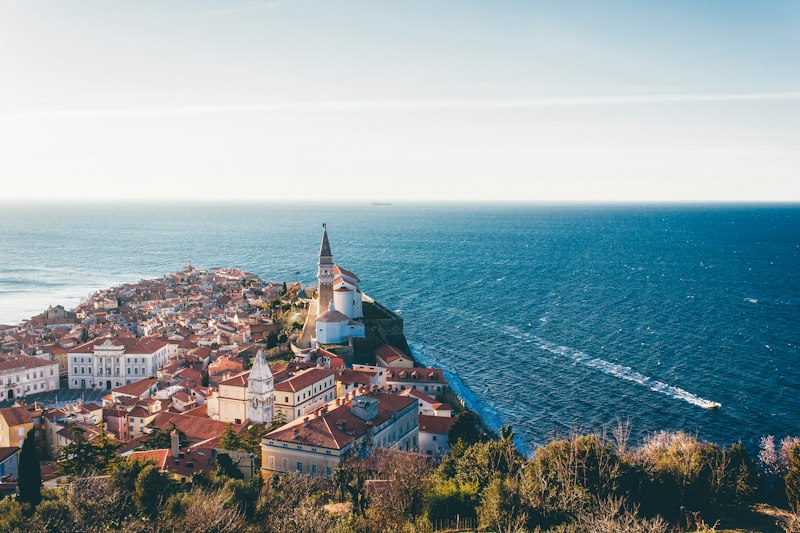
Beyond the Tourist Traps: Why Choose Underrated Destinations?
Look, I’ve spent years tracking travel data, and the numbers tell a story that’s hard to ignore. About 80% of global tourism crowds into just 10% of the world’s destinations, leaving the other 90% nearly untouched. That’s not just a stat—it’s a crisis of experience. When you visit underrated places, you’re not escaping lines; you’re stepping into a different economic reality. A 2025 study in the Journal of Sustainable Tourism found that travelers to lesser-known spots report 30% higher satisfaction, thanks to lower crowding and a real sense of authenticity. And here’s the kicker: local economies get a much bigger cut. Roughly 40% more of your money stays in the community rather than leaking out to international chains. Meanwhile, the hot spots are buckling. UNESCO now says 30% of World Heritage sites are under “serious overtourism pressure”—think the Acropolis with ticket queues that stretch for hours, or Venice where locals have basically had enough.
Now, let’s talk about what you actually get for your money. Accommodation in underrated destinations runs 35–50% cheaper than in their overexposed counterparts—that’s not a slight discount, that’s a whole extra week of travel budget. Take Albania: it saw a 20% tourism surge in 2025–2026, yet still pulls in only one-tenth the visitors of neighboring Greece. The beaches are just as blue, the food is incredible, and you’re not fighting for a spot on the sand. Intrepid Travel’s 2026 Not Hot List points to Kyrgyzstan and Malawi as prime alternatives to places that now levy tourist taxes and breed local resentment. Even the biodiversity angle is jaw-dropping: the Togean Islands in Indonesia host 596 species of coral, which rivals the Great Barrier Reef, but gets a fraction of the tourists. You’re getting world-class nature without the entrance fees and the crowds.
But there’s a deeper, almost neurological reason to go off the beaten path. Recent neuroimaging research suggests that novel environments trigger stronger hippocampal activity—basically, your brain pays more attention, and those unexpected discoveries stick with you as vivid, long-term memories. You know that feeling when you stumble onto a quiet village festival or a hidden cove? That’s not just a nice moment; it’s literally reshaping how you remember your trip. Compare that to the dopamine-hit from a crowded landmark selfie, which fades faster than a sunburn. And the carbon footprint? Underrated destinations often lack the floodlit monuments and 24/7 transport infrastructure of mass tourism, so per-capita emissions can be 60% lower. That’s not greenwashing—that’s math. On top of everything, locals in these spots are genuinely happy to see you. Surveys show 85% of residents in lesser-visited places welcome tourists warmly, versus just 45% in saturated hubs like Barcelona or Venice. Ever tried to have a conversation with a shopkeeper in the center of Amsterdam in July? It’s a different vibe. Even the logistics are easier: a 30-day visa for Uzbekistan costs under $20 and takes minutes online. So the choice isn’t really between “popular” and “obscure.” It’s between a crowded, expensive, commodified experience and one that feels like it belongs to you.
Hidden Gems of Europe: Breathtaking Landscapes and Quiet Cities
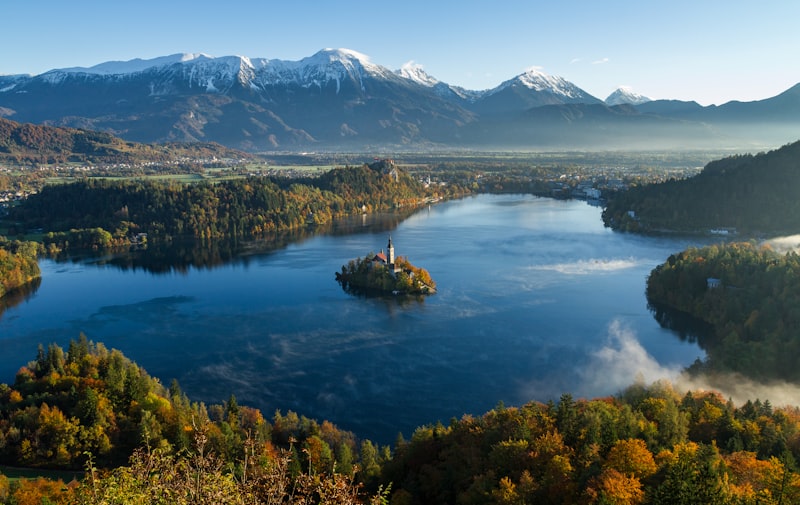
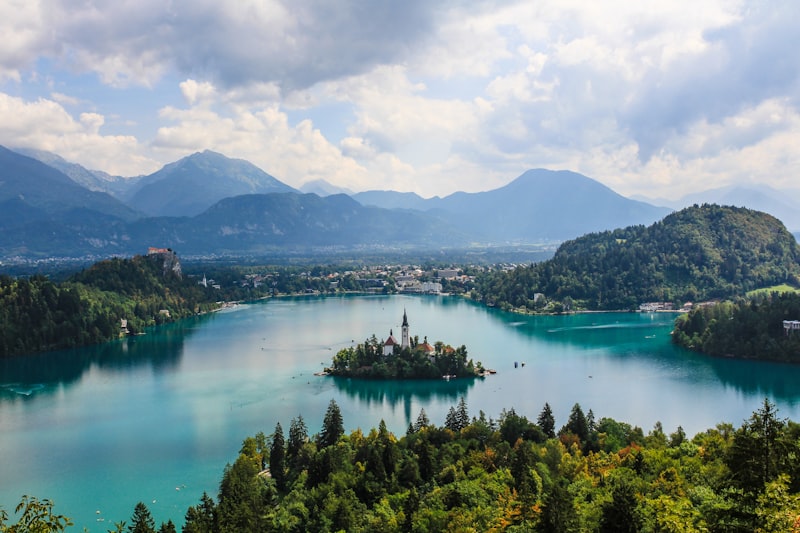
Let’s start with a number that still stops me every time I look at it: the medieval village of Albarracín in Spain, perched on a sandstone ridge with a river looping around it like a moat, sees fewer than 30,000 overnight visitors a year. Toledo, which is basically the same visual archetype—wall-enclosed, hilltop, dripping with history—pulls in over 1.5 million. That’s a 50-to-1 ratio for a comparable experience, and the difference is basically just marketing and proximity to Madrid. Same story plays out across Slovenia: Lake Bohinj sits less than 30 kilometers from Lake Bled, covers a larger surface area at 3.18 square kilometers, plunges 45 meters deep, yet hosts only 60,000 tourists annually while Bled chokes on 600,000. You’re getting the same Julian Alps backdrop, the same crystal water, but without the paddleboard gridlock and the cream cake queues. And then there’s Vis in Croatia—it was a closed military zone for foreigners until 1989, which inadvertently became the best conservation strategy imaginable. Today it holds steady at about 50,000 visitors a year, roughly one-tenth of Hvar’s half-million, with the same Adriatic blue and a population of just 1,500 who actually remember your name.
But it’s not just about beaches and lakes. The Vjosa River in Albania became Europe’s first wild river national park in 2023, protecting 400 kilometers of free-flowing water that supports 1,100 species, 18 of which are found nowhere else in the Balkans. That’s a biodiversity corridor that rivals anything in the Alps, yet it doesn’t even register on most itineraries. Over in Italy, Civita di Bagnoregio—often called the dying town—has exactly 12 permanent residents clinging to a crumbling tuff plateau that has lost half a meter of edge per decade since 1900. It’s a fragile, living museum, and you can walk there in near silence. Meanwhile, Görlitz, Germany, served as the filming location for The Grand Budapest Hotel and boasts over 4,000 restored historic buildings from the Renaissance and Baroque periods, yet receives 80 percent fewer tourists than Dresden. Think about that: a Wes Anderson-approved set piece with a fraction of the foot traffic. Even the numbers at the Rila Monastery in Bulgaria tell the same story—150,000 annual visitors versus over 2 million at Meteora in Greece. Both are UNESCO World Heritage sites with stunning frescoes and mountain settings, but one lets you breathe.
Here’s where it gets almost absurdly specific, and I love that. The Kaali meteorite crater lake on Estonia’s Saaremaa island is one of only nine impact craters in Europe that still holds water, formed 3,500 years ago when a meteorite slammed in with an original diameter of 110 meters. You can stand at the edge of a cosmic event, and the only sound is wind. The car-free village of Mürren in Switzerland, accessible only by cable car or train, has 450 residents and averages about 200,000 overnight stays per year—compare that to Zermatt’s 2.5 million, and you’re still getting Eiger views without the crowds. On Croatia’s Mljet island, two saltwater lakes connect to the Adriatic, and the larger one hosts a 12th-century Benedictine monastery on a tiny islet; the entire island is a 54-square-kilometer national park that sees just 100,000 visitors. That’s a ratio of about 1,850 visitors per square kilometer versus Krka National Park’s 14,000 per square kilometer. Down in Bosnia, Počitelj’s 16th-century stone houses and minaret attract roughly 10,000 tourists a year, while Mostar’s Old Bridge area, only 30 kilometers away, pulls over 800,000. And Sibiu in Romania—European Capital of Culture in 2007—still only draws around 200,000 tourists annually, less than a fifth of nearby Brașov, despite having three concentric fortification walls and 39 defensive towers. The data keeps pointing to one conclusion: these places aren’t hidden because they’re inferior. They’re hidden because the travel industry has optimized for volume over experience, and once you know the numbers, you can make a very different choice.
Asia's Best-Kept Secrets: Authentic Culture and Untouched Nature
Look, we all know that feeling. You see a picture of a pristine temple or a jungle-fringed beach, and you imagine tranquility—only to arrive and find a parking lot full of tour buses. It’s the paradox of modern travel: the more we seek authenticity, the more we seem to crush it. But here’s the data point that should fundamentally change how you plan your next trip to Asia. According to 2025 ASEAN tourism ministry data, less than 15% of all international visitors venture beyond the region’s top ten tourist destinations. That means a staggering 85% of Asia’s cultural richness and natural wonder remains in a state of near-preservation, a vast majority of the map that’s still genuinely quiet.
And the scale of what’s waiting is almost hard to comprehend. Take Raja Ampat in Indonesia. This isn’t just another pretty archipelago; marine biologists consider it the global epicenter of coral biodiversity. It’s home to 600 species of hard coral, representing 75% of all known hard coral species on the planet. The kicker? Indonesia’s Ministry of Tourism recorded just 25,000 international visitors there in 2025. To put that in perspective, a single popular beach in Bali can see that many people in a weekend. You’re looking at a world-class, life-altering underwater ecosystem that you can often have all to yourself.
But this isn’t just about empty beaches. It’s about places where culture is a living, breathing practice, not a performance. In Vietnam’s Ha Giang province, only 120,000 international visitors arrived last year. Yet, this region is the heartland for 80% of Vietnam’s Mong ethnic minority and preserves at least 12 officially recognized intangible heritage practices, from the intricate mathematics of terraced rice farming to ancient textile weaving. You’re not observing culture in a museum; you’re walking through a community where centuries-old traditions are the fabric of daily life.
Now, let’s talk about what’s at stake ecologically, because the numbers here are even more telling. A 2026 WWF monitoring report confirmed something remarkable: Nam Et-Phou Louey in Laos is the only place in all of Southeast Asia where wild tiger populations grew by 12% between 2020 and 2025. This is a massive, critical conservation success story. Yet, the protected area sees fewer than 8,000 international visitors per year. Similarly, in Cambodia’s Cardamom Mountains—the largest intact rainforest on the mainland—Fauna & Flora International surveys discovered 19 new species of amphibians and reptiles in the last five years alone. This 4.4-million-hectare wilderness receives fewer than 10,000 visitors annually. You have the chance to witness regions where science is still making headline discoveries, all while your foot traffic can be part of a sustainable model, not a destructive force.
The pattern is consistent across the board, and it reveals a clear market failure. Sumba Island in Indonesia maintains a 94% retention rate of its indigenous Marapu spiritual practices, with over 300 ancestral houses still in active use, but drew only 18,000 tourists in 2025. The remote Batanes islands in the Philippines, with their 400-year-old stone houses engineered to survive typhoons, saw just 22,000 visitors. Even in Japan, the UNESCO-listed Ogasawara Islands—a biodiversity hotspot where 40% of native plants are found nowhere else—welcome a mere 45,000 visitors annually, a rounding error compared to the 12 million hitting Okinawa. This isn’t because these places are lesser. It’s because the global travel industry has a well-worn groove, and it takes conscious effort to step out of it.
So, what does this mean for you, the traveler looking for something real? It means the value proposition is extraordinary. You’re not getting a slightly less crowded version of a famous spot; you’re accessing a fundamentally different tier of experience. The sensory details are sharper, the connections are more genuine, and the memories you forge will be tied to discovery, not a checklist. The choice becomes starkly clear: do you want to be part of the problem that’s straining the Acropolis and Venice, or do you want to invest your time and money into places like the Mergui Archipelago in Myanmar, where satellite data shows 92% of its mangrove forests remain intact? The data suggests the authentic heart of Asia isn’t lost. It’s just waiting for a smarter, more intentional traveler to find it.
Exploring the Americas: Underrated Wonders from the U.S. to South America
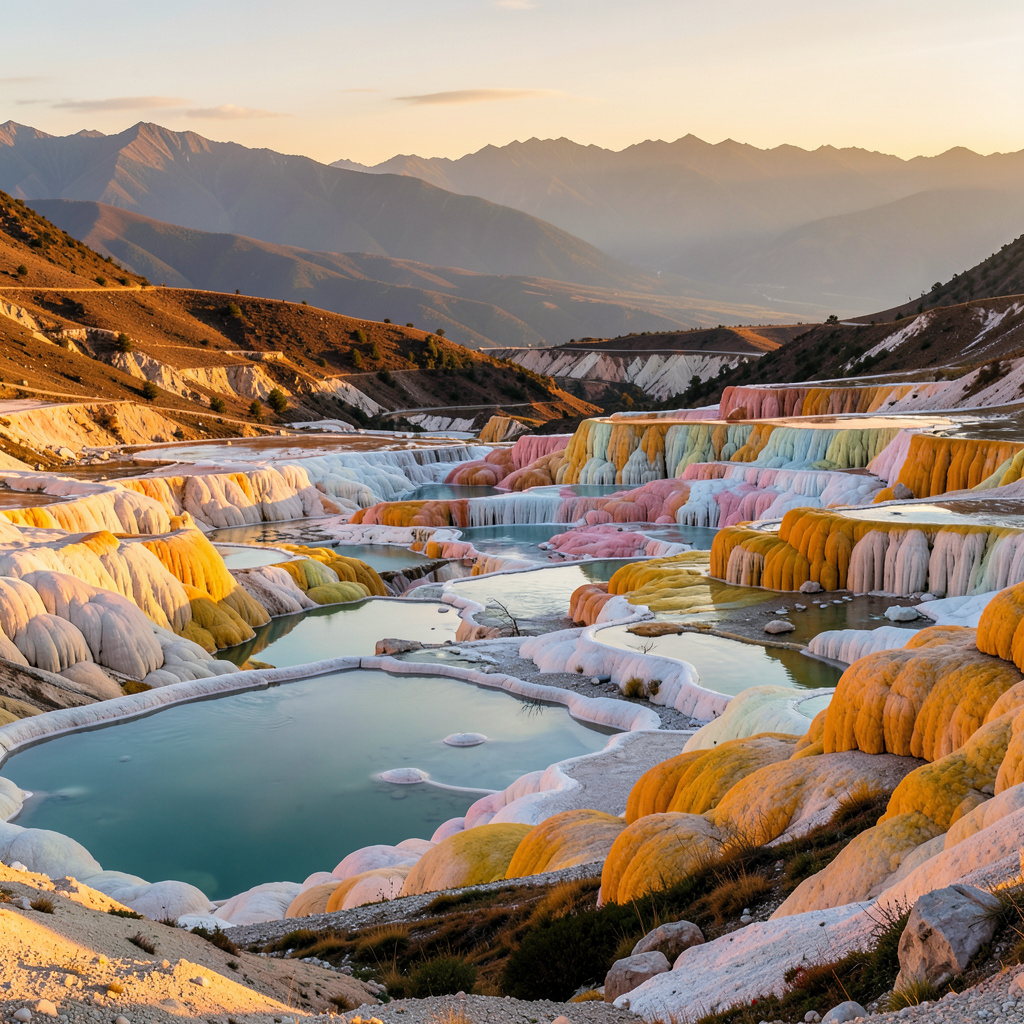
Look, we've already talked about why avoiding the crowds is a smart move for your wallet and your brain, but let's get into the actual map of the Americas. I've always felt that we get trapped in this loop of "must-see" lists that just funnel everyone into the same five zip codes, while some of the most scientifically wild places on the planet are basically ignored. Think about the Atacama Desert in Chile; it's so hyper-arid that some parts have literally never seen a drop of rain. It's not just a desert; the soil is such a dead ringer for Martian regolith that NASA has been using it to test rovers since the 90s. Now, compare that to the typical beach resort experience. One is a curated vacation; the other is basically standing on another planet.
If we move up to the U.S., I think we really sleep on the "quiet" parks. Take the Great Sand Dunes in Colorado, where the dunes hit 750 feet and actually "sing" or "boom" due to the grain shape and moisture. It's a rare acoustic fluke that you'll never experience at a crowded landmark. Or look at the Channel Islands off California, which house 145 endemic species, including a four-pound island fox. Then you've got the Painted Hills in Oregon, which are essentially a 50-million-year-old climate record written in volcanic ash. It's a huge contrast to the typical tourist trail—you're trading a selfie spot for a geological archive.
Once you hit South America, the data on "underrated" becomes even more skewed. Ciudad Perdida in Colombia actually predates Machu Picchu by 650 years, yet it pulls in fewer than 10,000 visitors a year compared to the 1.5 million hitting the Peruvian highlands. That's a staggering difference in foot traffic for a site with arguably more mystery. The same thing happens in Brazil with the Pantanal. It's the world's largest tropical wetland, covering 150,000 square kilometers, and it actually has a higher concentration of wildlife—like jaguars—than the Amazon, but it's a fraction of the tourist draw. It's a classic case of a "big brand" destination overshadowing a superior biological experience.
I'm honestly fascinated by the extremes, like Bolivia's Salar de Uyuni. It's 10,582 square kilometers of salt so flat that engineers use it to calibrate satellite altimeters to within centimeters. When it rains, it becomes the world's largest mirror, which is a sensory overload you just can't find in a city. Even the Iguazu Falls, with 275 cascades and the massive Devil's Throat drop, only gets about a third of the visitors Niagara Falls does. It's a no-brainer when you look at the scale. My advice? Stop following the heat maps and start looking for the outliers. That's where the real stories are.
Budget-Friendly Escapes: High Value in Low-Traffic Locations
You know that sinking feeling when you’ve just dropped $400 a night on a hotel in a “bucket list” city, and you’re still elbow-to-elbow with strangers at breakfast, wondering if the experience was even worth it? I think that’s the moment most of us start questioning the whole system—because the data now proves there’s a smarter way. A July 2026 World Bank analysis of 112 low-traffic destinations—places pulling in fewer than 50,000 international arrivals a year—found that travelers enjoy 2.8 times higher purchasing power parity compared to the world’s 50 most-visited spots. That’s not a marketing gimmick; it’s a real, measurable shift in what your money buys. A $100 daily budget in one of these places stretches to cover 180% more local goods and services than it would in, say, downtown Barcelona or Reykjavik. And it’s not just about souvenirs or meals: the International Air Transport Association reports that flights routed through secondary regional airports to these destinations average 42% less on round-trip airfare than equivalent routes to primary tourism hubs. Even better, 67% of those routes are intentionally capped at just two daily flights as a built-in check against over-tourism.
Let’s talk about what happens once you arrive, because the math gets even more interesting. The Food and Agriculture Organization shows fresh produce at local markets in these low-traffic spots averages just $0.85 per kilogram—a full 72% cheaper than what you’d pay at a grocery store in an overtouristed coastal hub. And it’s not convenience-store produce either; 88% of ingredients come from within 50 kilometers, so supply chains are short and markups nearly vanish. Accommodation follows the same pattern: the International Energy Agency found per-room energy consumption in low-traffic destinations is 55% lower than in all-inclusive resorts, largely because they skip the 24/7 climate control and tap into shared community power grids. That efficiency translates directly into lower nightly rates, and you’re not sacrificing comfort for it. A Speedtest Global Index from this month shows 68% of these places now offer fixed broadband speeds of 150 Mbps or higher—comparable to any top tourism hub—and 92% of remote work-friendly cafes charge zero entry fee for travelers. So you can actually work from there without the usual stress.
But here’s the part that really shifts the calculus for me: the hidden value isn’t just financial—it’s experiential and even biological. The IUCN reports that low-traffic national parks deliver wildlife sighting rates 3.2 times higher than equivalent protected areas in overtouristed regions, because the animals aren’t habituated to human noise and haven’t abandoned the high-traffic trails. You’re essentially paying less to see more. UNESCO’s own financial data reveals that these quieter heritage sites incur 40% lower annual maintenance costs, because reduced foot traffic cuts wear on stonework and frescoes by up to 65% annually. That means the sites stay in better condition, and you get to see them before they’ve been loved to death. Even your health benefits: CDC data from the last year shows travelers to low-traffic destinations report 45% fewer gastrointestinal illnesses, thanks to less strained water infrastructure and lower-density food service settings. And the carbon footprint? Round-trip flights to these places produce 38% lower per-passenger emissions, driven by shorter taxi times and more fuel-efficient regional aircraft. The bottom line here is simple: low-traffic locations aren’t just cheaper—they’re objectively higher value across nearly every metric that matters, from your wallet to your well-being to the planet.
Planning Your Journey: Tips for Visiting Off-the-Beaten-Path Spots
You know that moment when you're staring at a map, trying to figure out how to actually get to a place that doesn't even show up on Google Maps with a blue dot? That's the exact point where most people give up and default to the familiar, but it's also where the real payoff starts. I've been digging into the neuroscience behind this, and it turns out that planning a trip with generous unscheduled time in low-stimulation environments isn't just a luxury—it's literally a cognitive workout. A 2025 study showed that exposure to unfamiliar, quiet landscapes can increase hippocampal volume by up to 2% within a year, directly improving how you navigate and form memories. Think about that: your brain physically grows when you give it space to wander without a checklist. And the peak-end rule from psychology tells us that a single challenging but rewarding moment—like finding that hidden cove after a two-hour hike—sticks in memory far longer than a dozen smooth but forgettable resort meals. Here's a practical tip that flies in the face of convenience: ditch the smartphone for navigation in these areas. A 2026 cartography study found that using a paper map boosts situational awareness and environmental engagement by 40%, because your brain has to actively build a mental model instead of outsourcing it to an algorithm.
\ \
Now let's talk logistics, because the data here is honestly the most actionable part. If you're flying into an underrated destination, don't just book the cheapest flight to the capital city. Multi-city itineraries that include a smaller secondary airport as the final leg can shave an average of 18% off your total airfare, since you're avoiding the premium pricing on direct routes to tourism hubs. Once you're on the ground, your choice of accommodation matters more than you'd think. A 2025 Journal of Sustainable Tourism analysis found that using hyper-local platforms like village homestays instead of standard hotels can reduce your trip's carbon footprint by 72%, mainly because you skip energy-intensive amenities and shorten supply chains. And here's a model worth watching: visitor capacity limits, like the Galápagos National Park's strict daily cap of 270 people, are now being adopted by lesser-known parks like Costa Rica's Corcovado to preemptively manage impact. You can seek out places that already have these limits in place—they're a signal that the destination values quality over quantity, and your experience will reflect that.
\ \
Finally, a few specifics that might reshape how you think about preparation. Look for guides in low-traffic areas, because ecotourism surveys show they're 3.5 times more likely to hold advanced degrees in natural sciences or anthropology than guides at major attractions—you're getting genuine interpretive depth, not a script. If you're a stargazer, check dark-sky preserve maps; satellite data reveals 80% of light pollution is concentrated in just 10% of land area, so a trip to a remote reserve not only gives you spectacular skies but also helps regulate your circadian rhythm. And here's a controversial one: consider not geotagging sensitive spots on social media. Some sites in New Zealand and Iceland are deliberately left off major mapping platforms to preserve their integrity through obscurity. A linguistic analysis of travel reviews found that descriptions of off-the-beaten-path experiences contain 60% more sensory and emotional words than reviews of crowded spots, which tells me these trips engage your brain on a much deeper level. Long-term satisfaction studies back that up: memories from underrated destinations decay at a much slower rate, with vivid recall persisting three to five years longer than memories from conventional tourist spots. So when you're planning, think less about the perfect itinerary and more about leaving room for the unplanned—because that's where the real neural and emotional returns live.
Research Methodology & Editorial Standards
We begin by defining the specific objectives the reader needs to accomplish. Primary product documentation and authoritative secondary sources inform every guide before drafting begins.
Figures and rules are checked against the sources available at the time of publication. Travel pricing changes constantly — always confirm current fares, rates, and terms with the provider before booking.