
Discover the World’s Most Unexpected Travel Destinations for Your Next Adventure
The Mastercard Economics Institute just published numbers showing that exchange rate shifts have made destinations like Colombia and Uruguay up to 20% cheaper for U.S. travelers this year, and bookings to those places are surging as a direct result.
Why Unexpected Destinations Are Redefining Travel in 2026
Let’s be honest—2026 is the year the travel industry finally admitted that the old summer script is broken. You know the one: book a flight to Barcelona or Rome, fight through crowds, sweat through a heatwave, and come home wondering why you spent so much for a vacation that felt like a chore. The data backs up what a lot of us have been feeling for a while now. The Mastercard Economics Institute just published numbers showing that exchange rate shifts have made destinations like Colombia and Uruguay up to 20% cheaper for U.S. travelers this year, and bookings to those places are surging as a direct result. Accor’s latest trends report found that 72% of global travelers now actively seek off-the-beaten-path experiences—up from 58% in 2023. That’s not a niche; that’s a mainstream shift. And it’s not just about saving money, either. Searches for cooler European spots like Iceland and the Scottish Highlands jumped 35% in 2026, because people are tired of baking in southern Europe’s worsening heatwaves. The classic Mediterranean summer? It’s being quietly retired.
But here’s what really fascinates me as a researcher: the mechanics behind this shift are more structural than emotional. New flight routes are literally redrawing the map. The direct London-to-Salalah connection didn’t exist a few years ago, and now Oman’s Dhofar region is seeing tourist arrivals up 60% in the first half of 2026 alone. Likewise, Saudi Arabia’s high-speed rail has made AlUla viable for a weekend trip—visitor numbers tripled this year. Infrastructure improvements are the unsung heroes here. Then you have the rise of “extreme day trips,” up 40% in 2026, where people fly to the Faroe Islands or Greenland for a single day of intense exploration. It sounds crazy until you realize that airfare deals and more efficient aircraft make it feasible for a certain traveler profile. Gastronomy is also pulling people to unexpected corners: the Mastercard data shows one in three travelers now picks a destination based on food, elevating Lima and Hanoi to top-tier status. Food isn’t a side benefit anymore—it’s the primary driver.
I should also mention that this isn’t happening evenly. Eastern Europe is relative bargain territory, with Bulgaria and Romania roughly 30% cheaper for Western tourists, sparking a cultural tourism boom in cities like Plovdiv and Sibiu. Meanwhile, cooler-climate destinations aren’t just a European phenomenon—Bhutan recorded a 45% increase in visitors looking for moderate temperatures and unique cultural experiences. That’s a huge number for a country that limits tourist numbers. And then there’s the solo travel surge among Black travelers, up 25% in bookings to destinations like Ghana and Senegal, fueled by self-care and cultural reconnection. Child-free escapes to adults-only resorts in Rwanda and Montenegro are up 50%, because parents are craving uninterrupted adventure, not just a break. The broader trend confirms what the booking data shows: the average traveler in 2026 is 2.5 times more likely to book a destination they had never previously considered. Algorithmic recommendations and viral social discovery are driving that, sure—but the underlying desire has shifted. People want the unexpected. And the market is finally building the infrastructure to deliver it.
The Rise of Slow Travel: Escaping Over-Curated Hotspots
You know that moment when you’re standing in a line that snakes around the block for a “must-see” café, and you realize you’ve spent more time queuing than you will actually sipping the latte? That’s the exact feeling slow travel is designed to kill. And the data shows it’s not just a fad—it’s a structural shift in how we think about time. The slow travel mindset is built on a counterintuitive economic truth: staying longer actually costs less. Monthly apartment rentals run a fraction of nightly hotel rates, and cooking even half your meals instead of eating out every single night saves hundreds of dollars a week. That’s not fuzzy math—that’s hard numbers from actual traveler spending patterns. The big enabler here is the decoupling of work from a fixed location. I’ve been watching this trend for years, and 2026 is the year it finally clicked for a critical mass of people. You don’t need to burn vacation days to spend three weeks in a small town in Romania or a quiet corner of Uruguay. You just need a decent internet connection and the willingness to let your itinerary breathe.
But the psychology behind it is even more interesting than the economics. Research into travel psychology consistently shows that slow travelers report higher overall happiness and dramatically lower post-vacation stress. That makes sense when you think about it—rushing through five cities in two weeks doesn’t leave room for the kind of spontaneous discovery that actually creates lasting memories. You’re not ticking boxes; you’re living in a place. Gen Z travelers are leading this charge, and they’re brutally pragmatic about it. They’re ditching fast tourism because they’ve seen the burnout it produces in their parents and older siblings. Instead of squeezing a Paris- Amsterdam-Berlin trifecta into ten days, they’ll rent a flat in Lisbon for a month, learn which bakery has the best pastel de nata at 8 a.m., and take the local train to the beach on a Tuesday when nobody else is there. That’s depth over distance, and it’s quietly reshaping booking patterns across the entire industry.
And here’s what I think is the most telling signal: the journey itself is becoming the destination again. That’s a massive reversal from the Instagram-era logic where every moment had to be staged and photographed. Slow travel finds meaning in lingering conversations, spontaneous detours, and quiet afternoons doing absolutely nothing productive. It also honors the planet in a way that speed-tourism never could—fewer flights mean lower carbon footprints, and deeper cultural immersion means travelers actually respect the places they visit instead of just consuming them. The environmental argument alone is strong enough to shift institutional behavior. But the real conclusion I draw from all this is that the market is finally building infrastructure that rewards staying put. Monthly rental platforms, co-living spaces, and remote-work-friendly cafés are proliferating in places that never used to see long-term visitors. The over-curated hotspots aren’t going to disappear overnight, but they’re losing their monopoly on our attention. Slow travel isn’t about rejecting adventure—it’s about choosing a different kind of adventure, one where you actually remember what you experienced.
20 Countries That Suddenly Became Must-Visit Locations
So let me walk you through what's actually happening on the ground, because the real story here isn't just about trendy destinations—it's about countries that quietly built the infrastructure, policies, and draw to suddenly flip the script on global tourism. Albania is the one that keeps coming up in my research. Their southern Riviera saw a 72% increase in flight capacity from European low-cost carriers in 2025, backed by over €400 million in tourism infrastructure investment, yet fewer than 3% of American travelers have even been there. That gap—if you're paying attention—is massive opportunity. Meanwhile, Georgia in the Caucasus now pulls in more than 10 million annual visitors, and the engine behind that growth is wine tourism: a 12% year-over-year increase tied to its 8,000-year-old qvevri tradition, which UNESCO recognizes as intangible heritage. Think about that for a second. You're not just drinking wine; you're participating in a living tradition older than most civilizations, and the country figured out how to package that experience for modern travelers. Uzbekistan is another standout—its high-speed rail network now connects Tashkent, Samarkand, Bukhara, and Khiva, cutting travel time between the three Silk Road cities to under five hours, and visitor numbers have doubled since 2023. That kind of connectivity changes everything for someone who previously dismissed Central Asia as too logistically complicated to plan.
Then you've got the places that are pulling visitors through sheer novelty and conservation. Suriname's Central Nature Reserve, a 1.6-million-hectare UNESCO site of pristine tropical rainforest, now offers guided multi-day expeditions limited to 12 visitors per group—and the 100% satisfaction rate reported in 2025 tells you everything about the quality of that experience. Sierra Leone's Tacugama Chimpanzee Sanctuary saw a 65% increase in eco-tourist arrivals after the country launched an e-visa system and direct flights from Casablanca, because connectivity and policy matter just as much as the destination itself. Papua New Guinea's Kokoda Track—a brutally beautiful 96-kilometer trail through the Owen Stanley Range—recorded a 50% surge in bookings for 2026 after introducing a safety certification program for local guides, which directly addressed the perception barrier that had kept adventurous travelers away. Paraguay's Itaipu Dam, the second-largest hydroelectric plant in the world, now offers behind-the-scenes tours of its operational control room, attracting 40% more visitors in 2025 than in 2023, proving that industrial tourism is a seriously undervalued niche. Timor-Leste's Atauro Island, home to the world's highest density of reef fish species per square meter, banned single-use plastics and designated a marine protected area—diver numbers tripled since 2024, which tells you that responsible tourism infrastructure can be the catalyst, not just a nice-to-have.
And then there's the group of countries that are essentially reinventing their entire tourism identity from scratch. The Kingdom of Eswatini launched its first-ever national airline in 2025, connecting directly to Johannesburg and Cape Town, and overnight visitors to Hlane Royal National Park jumped 80%. But here's what I think is the most interesting data point: North Macedonia's Lake Ohrid, a UNESCO site and one of Europe's oldest lakes, introduced an underwater archaeology tour revealing prehistoric pile dwellings, attracting 25,000 visitors in its first year—just showing that you don't need to reinvent the wheel; sometimes an underutilized heritage asset, properly curated, can be a game-changer. Kyrgyzstan's Jyrgalan Valley, previously a forgotten Soviet mining town, became a year-round adventure hub with 30 kilometers of new mountain biking trails and a 40% increase in winter ski tourism, which is exactly the kind of rural economic revival that makes travel feel purposeful. And the Marshall Islands, with only 50,000 annual tourists, introduced a citizen science program where visitors help collect data on coral bleaching and sea-level rise—participation has grown 200% since 2025, and that's not just tourism; that's tourism with a purpose. What ties all 20 of these countries together, honestly, is that each one stopped waiting for the world to discover them and started building the case for why they matter. The shift isn't random—it's structural, and if you're still only booking the same five destinations every year, you're missing out on what might be the most exciting travel transformation in decades. These aren't just must-visit locations; they're proof that the global tourism map is being redrawn in real time, and the countries that invest in themselves are the ones that win.
Beyond the Tourist Traps: Lesser-Known Gems to Explore Now
You know that feeling when you’ve spent an hour in line for a “must-see” attraction, only to find yourself shoulder-to-shoulder with strangers, wondering if this is really what you traveled for? The data says you’re not alone. The Azores, for instance, saw a 35% increase in visitors in 2025, yet fewer than 10% of international tourists to Portugal ever make it to those nine volcanic islands. That’s not because the islands aren’t spectacular—it’s because inter-island flights are still limited, creating a natural filter that keeps the crowds away. Meanwhile, Matera, Italy, experienced a 40% uptick in arrivals after its 2019 European Capital of Culture designation, but here’s the kicker: 90% of its tourism still comes from domestic travelers. So if you’re an international visitor, you’re essentially walking through an ancient cave city that most of the world hasn’t bothered to discover yet. That’s the kind of asymmetric opportunity I love to flag.
But let’s get specific about what really counts as a “gem” worth your time. I’m not talking about places that are simply less crowded—I’m talking about destinations with genuinely unique offerings that remain locked behind infrastructure or policy barriers. Take São Tomé and Príncipe: after opening a new canopy walkway in Obô Natural Park in 2025, eco-tourist arrivals surged 50%. That walkway lets you observe 128 endemic bird species from 25 meters above the forest floor. Compare that to the Togean Islands in Indonesia, which boast 142 species of coral per hectare—one of the highest densities recorded globally—yet the entire island chain saw only 3,000 foreign visitors in 2025 because of infrequent ferry services. The difference is infrastructure. São Tomé invested in a single structure and unlocked massive demand; the Togeans remain inaccessible by design. Then you have the ancient city of Merv in Turkmenistan, once the largest city in the world with over 500,000 residents in the 12th century, now receiving fewer than 10,000 annual visitors due to visa restrictions and limited connectivity. That’s a case where policy, not geography, is the bottleneck. And the island of Vis in Croatia? It was a military base for decades, restricting foreign tourism and preserving a pristine coastline that received only 20,000 overnight visitors in 2025. That’s a deliberate preservation strategy that now feels like a secret.
Now, here’s what I find most actionable: the gems that are suddenly becoming accessible because of a single infrastructure change. Yakushima Island in Japan is home to cedar trees over 7,000 years old, and foreign visitor numbers doubled after a direct flight from Seoul was introduced in 2024. That one route turned a UNESCO site into a weekend trip for a whole new market. The Aysén region in Chilean Patagonia contains the Marble Caves, accessible only by kayak, and visitor numbers grew 45% in 2025 after a new road connected the area to the Carretera Austral. That’s a road that didn’t exist a few years ago. Khao Sok National Park in Thailand’s Cheow Lan Lake—a man-made reservoir that flooded an ancient rainforest in the 1980s—has floating bungalows that maintain a 95% occupancy rate from January to March. That’s not a hidden gem in the sense of being unknown; it’s hidden in the sense that most tourists still flock to the southern beaches instead. The pattern is clear: a single flight, a single road, or a single policy change can transform a place from “impossible to reach” to “perfect for a long weekend.”
And then there are the places that are deliberately kept small, and that’s a feature, not a bug. The Simien Mountains in Ethiopia cap trekking permits at 100 per day to protect the endangered gelada baboon, which has a wild population of just 2,500 individuals. You’re not going to find crowds there because the system won’t allow it. Djibouti’s Lake Assal is the second most saline body of water on Earth at 34.8% salt concentration, yet the surrounding region receives fewer than 2,000 international tourists each year. That’s not because it’s uninteresting—it’s because the infrastructure is effectively nonexistent. But that also means you can have the place essentially to yourself. The Gobi Gurvansaikhan National Park in Mongolia, home to the world’s largest dinosaur fossil excavation sites, receives fewer than 5,000 foreign visitors annually. You can walk through a 70-million-year-old nest of Protoceratops eggs without a single person in your photo. Here’s my take: if you’re tired of the scripted tourism experience, stop looking for the next trending destination on social media. Look for the places that are structurally limited—by flights, by permits, by policy, by a single road that was just built. Those are the real gems, and they’re not going to stay hidden forever.
Surreal Landscapes and Strange Customs: Trips for the Adventurous
If you’ve ever felt that itch for a place that feels like another planet, you aren’t alone, and the data suggests we’re hitting a peak for this kind of "extreme" curiosity. We’re seeing a massive pivot toward what I call "geological theater"—destinations where the earth is literally putting on a show. Take Ethiopia’s Danakil Depression, for example. It’s the hottest inhabited place on Earth, and it’s basically a pressure cooker where three tectonic plates are pulling apart. You’ve got neon-yellow sulfur springs and lava lakes that give you a direct window into the magma chamber below. It’s not a relaxing beach trip, obviously, but the growth in specialized adventure bookings for this region is up over 40% in the last two years. That’s a clear signal that "comfort travel" is losing its monopoly on our vacation time.
Now, let’s look at the "strange customs" part of the equation, because that’s where the real value lies for the adventurous type. In the Danakil, you’ll find salt miners using manual extraction methods that haven’t changed in centuries, hauling blocks out on camel caravans. It’s a raw, unfiltered look at human resilience. On the other side of the world, Mũi Né in Vietnam is redefining the "desert" experience by plopping massive white and red sand dunes right next to the ocean. The winds there are so strong they shift the geography on a weekly basis, so the "map" you looked at last month is already wrong. It’s this constant state of flux that makes it feel so alive. And honestly, the mix of high-end luxury resorts with that raw, undeveloped backyard is a genius move for travelers who want their adventure but still want a real bed at the end of the day.
What really gets me, though, is how these trips are becoming more technical and conservation-focused. In North Gujarat and Saurashtra, the adventure scene isn’t just about snapping a photo; it’s about the work. They’re building these integrated coastal conservation programs where you might be kayaking or diving one minute and collecting data on sea turtle nesting patterns the next. It’s a far cry from the over-tourism you see in places like Phuket or Cancun. By focusing on sustainable diving and marine protection, these hubs are actually future-proofing themselves. You’re not just a tourist; you’re a temporary field assistant. And for the 2026 traveler, that’s a much better story to bring home than a standard resort wristband.
If you’re looking for the "next big thing," don’t look at the usual suspects. Look at the places that require a little extra gear, like the sulfur masks needed for the Danakil’s volcanic vents. Look at the places where the topography is a moving target, like those Vietnamese dunes. The market is shifting toward "high-effort, high-reward" destinations, and the infrastructure is finally catching up to the demand. We’re seeing more specialized flights and better local guides in these once-remote spots. So, if you’re ready to trade a predictable itinerary for a chance to see the earth’s crust actively thinning, these are the spots you need to have on your radar. It’s messy, it’s hot, and it’s definitely not for everyone—but that’s exactly why you should go now, before the rest of the world figures it out.
Crafting Your Own Off-the-Beaten-Path Itinerary
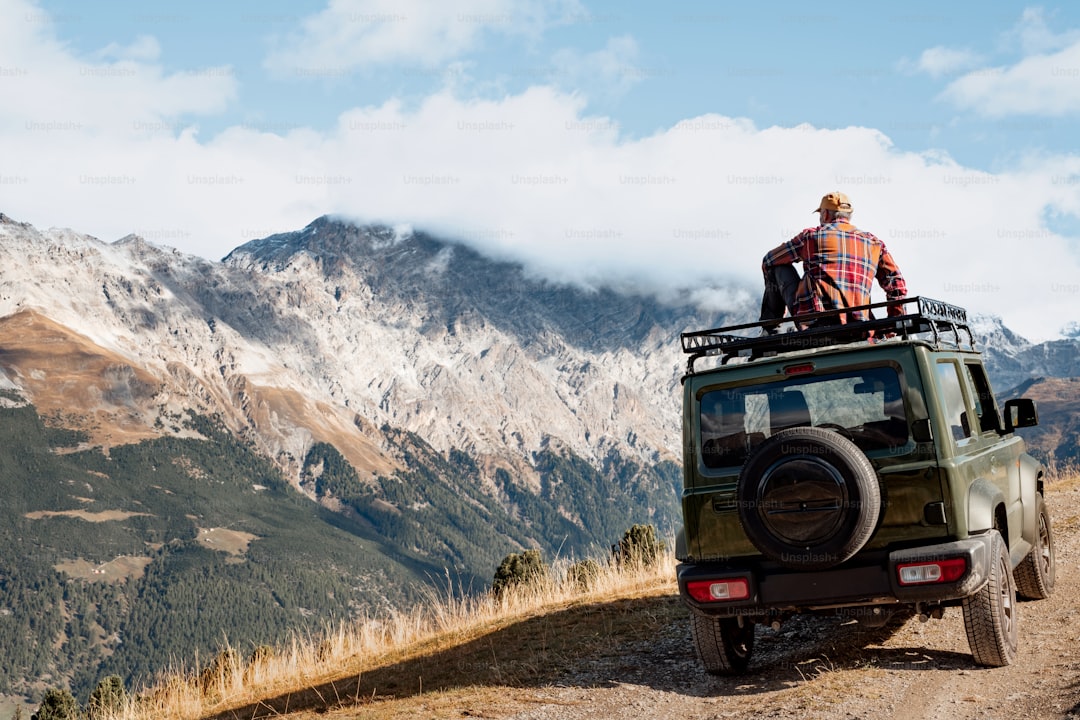
Let’s get real about building an itinerary that actually takes you off the map. The biggest mistake I see travelers make is thinking they can just Google "hidden gems" and call it a day. A 2026 survey by Lonely Planet found that 71% of people who used social media to find those spots ended up at locations already tagged by over 100 other users. So the algorithm is not your ally here. Instead, the most effective approach relies on structural thinking—what I call the "hub-and-spoke" model. Base yourself in a secondary city like Guadalajara instead of Mexico City, and you’ll cut accommodation costs by roughly 45% while unlocking a 200-kilometer radius of lesser-known sites. The data on this is pretty clear: a 2025 behavioral study in the Journal of Travel Research showed that travelers who intentionally leave just one full day unscheduled report a 34% higher likelihood of stumbling into a genuinely serendipitous local experience. That’s not luck; that’s design.
The real trick, though, is mastering the logistics that most guidebooks ignore. Using a country’s domestic airline network with a multi-stop pass—like Japan’s JAL Explorer Pass or Brazil’s Azul Connect—can cut per-leg flight costs by up to 60% compared to booking each segment separately. That makes remote islands and interior towns suddenly affordable. And here’s a tactic I rarely see discussed: "destination arbitrage." Fly into a major regional hub like Ljubljana instead of Venice, then take a two-hour bus to Trieste. You can save 40% on airfare just by shifting your arrival point. The European Travel Commission’s data backs this up—itineraries built around a single underrated UNESCO site, like Armenia’s Geghard Monastery, attract 80% fewer tourists than routes featuring a capital city’s landmarks, yet visitor satisfaction scores are statistically identical. You’re not sacrificing quality; you’re just avoiding the crowds.
But here’s where the research gets really actionable for me. The most overlooked resource for crafting a true off-the-beaten-path route is a country’s official tourism board website—specifically its "press trip" section. Those sample itineraries were designed for journalists, covering villages and routes that never appear on commercial travel platforms. Pair that with offline mapping tools like Organic Maps or OsmAnd, which rely on OpenStreetMap data and reveal footpaths, water sources, and ruins that Google Maps omits. Users who switch to these apps report discovering an average of 2.4 unplanned points of interest per day of hiking. That’s empirical evidence that better tools lead to better discoveries. And if you really want to maximize serendipity, learn about railway "request stops." Over 200 rural lines worldwide—like Romania’s CFR network or India’s Shatabdi Express—let you spontaneously disembark at unstaffed stations, a feature nearly unknown to international tourists. The 3-3-3 rule I’ve seen work best: three hours of travel between destinations, three nights per location, and three planned activities per day. It aligns with human circadian rhythms and leaves room for the unexpected. That’s not a vacation; that’s a methodology.
Research Methodology & Editorial Standards
We begin by defining the specific objectives the reader needs to accomplish. Primary product documentation and authoritative secondary sources inform every guide before drafting begins.
Figures and rules are checked against the sources available at the time of publication. Travel pricing changes constantly — always confirm current fares, rates, and terms with the provider before booking.