
This beloved Pennsylvania park just beat Disney and Universal with no gate fee
You know that feeling when you're dropping nearly two hundred bucks just to walk through the gates of a theme park, and you haven't even bought a single corn dog yet?
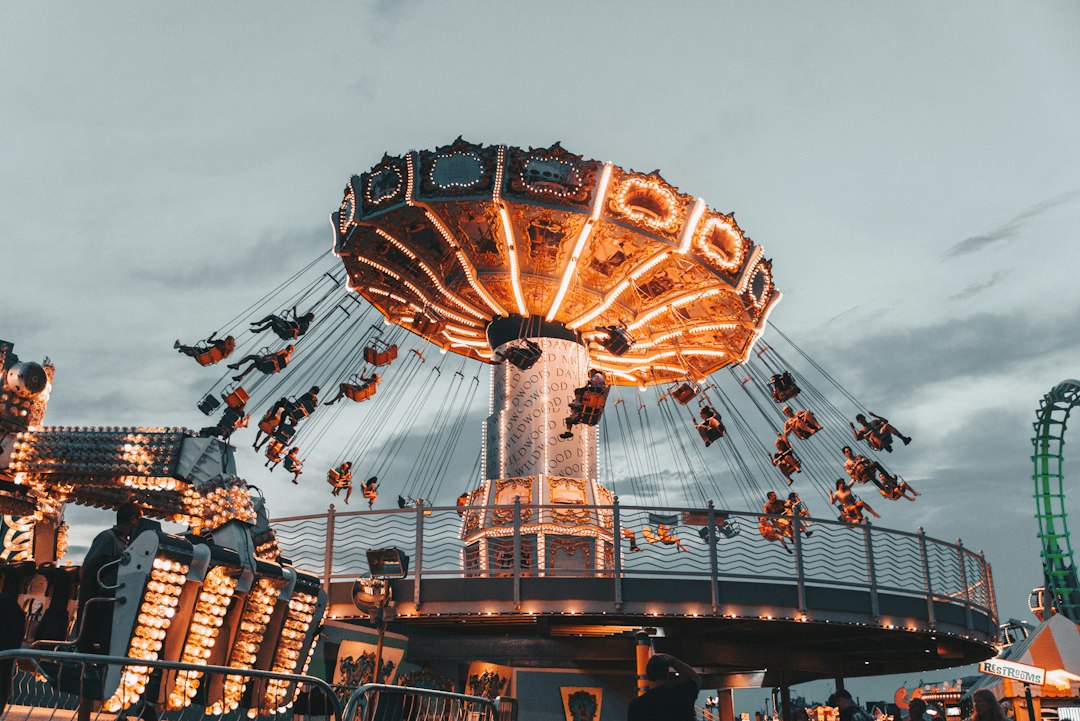
How a Century-Old, Family-Run Park Toppled Theme Park Giants
You know that feeling when you're dropping nearly two hundred bucks just to walk through the gates of a theme park, and you haven't even bought a single corn dog yet? You start doing the mental math on the total family cost—the tickets, the parking, the "convenience" fees—and a little part of you dies. It feels less like a vacation and more like a financial transaction. But what if I told you there’s a place that’s fundamentally rejecting that entire model, and it’s not some new, trendy startup? It’s a nearly 100-year-old, family-owned park in rural Pennsylvania that just quietly beat Disney and Universal to the top spot on TripAdvisor’s list of America’s best amusement parks.
The park is called Knoebels, and their business philosophy is almost radical in its simplicity: they’ve never charged for admission or parking, ever. Since 1926. This isn't a promotion; it's their founding principle. While industry giants rely on massive upfront gate fees, Knoebels operates on a pay-per-ride system, with a full-day wristband costing less than $40. The math is stark: that’s about a quarter of what a single-day Disney ticket can cost. This model isn’t just cheaper; it fundamentally changes the guest psychology from feeling nickel-and-dimed to feeling in control of your own experience.
And it’s not like you’re getting a bargain-bin experience for that price. The park is a living museum of amusement history. They have the Phoenix, a legendary wooden coaster originally built in 1948 that was painstakingly relocated and rebuilt over six years. They operate one of the last authentic Flying Turns in the world, a wooden bobsled coaster so rare that only a handful were ever built. The vintage carousel features hand-carved animals from 1913, including a rare giraffe. This isn’t just nostalgia; it’s a curated collection of mechanical artistry that billion-dollar corporations can’t replicate because they’re too busy building the next IP-driven, screen-heavy attraction.
Here’s what I mean by their unique advantage: it’s a vertically integrated, hyper-local ecosystem. The park generates its own power with a combination of natural gas and on-site solar. The pathways are covered in wood chips, not asphalt, which can lower ground temperatures by up to 15 degrees on a hot day—a brilliant, low-tech solution to summer heat that guests feel but might not consciously notice. Their most famous food item, the pierogi, is made fresh by a single family stand that produces over 150,000 of them a season. Every dollar spent stays in that tight-knit loop, reinforcing the park’s identity as a place, not just a product.
So, how did they topple the giants? Not by trying to out-spend them on tech or licensing. They did it by doubling down on something the big corporations have systematically engineered out of their parks: unmediated, affordable, and authentic family time. They understood that value isn’t just about the number of rides; it’s about the absence of financial anxiety. When you don’t have to budget for the privilege of walking in, you can actually relax. You can ride the old wooden coaster a second time, get that extra pierogi, and just exist in a shaded, wood-chipped grove without a looming sense of cost.
This isn’t a fluke. It’s a market correction. For years, the theme park industry has operated on the assumption that families will pay any price for a polished, branded experience. Knoebels just proved there’s a massive, underserved market for people who want fun without the corporate theatre. They didn’t topple the giants by fighting them on their own terms. They just built a better, more honest game next door, and we all just figured it out.
The Magic of No Gate Fee: Inside Knoebels' Pay-as-You-Go System
Let’s sit with that for a second: Knoebels is the largest free-admission amusement park in the United States, and it just turned 100 years old in July 2026. That’s not a marketing gimmick or a temporary promotion—it’s a century of refusing to build a front gate. I mean that literally. The park doesn’t have a physical gate structure at all. You drive in, park for free, and just walk into the grounds. No ticket booth, no turnstile, no bottleneck of families fumbling with QR codes on their phones. The entire entry experience is essentially nonexistent. That’s a radical operational choice when you consider that most major parks now treat the entry process as a revenue center in itself—charging for parking, charging for admission, and then charging again for the privilege of skipping the line you already paid to stand in.
What’s really interesting is the psychology this unlocks. When you remove the upfront sunk cost—that $150 to $200 per person that you’ve already mentally committed before you even smell the popcorn—you fundamentally change how people behave inside the park. There’s no pressure to “get your money’s worth” by rushing from ride to ride. Instead, you can wander, grab a pierogi, sit on a bench, and decide on the fly whether you want to ride the Phoenix again. The pay-as-you-go model means your spending is always optional and always in your control. You’re not fighting the cognitive dissonance of a wasted ticket. And here’s the kicker: the park’s president had to formally pinky-swear—publicly, in 2026—that they will never charge admission. That’s how integral this model is to their identity. It’s not just a pricing strategy; it’s a founding principle that the current leadership treats as sacred.
The revenue model itself is surprisingly resilient. Without a gate fee, the park generates income entirely through individual transactions—rides, games, food, and the campgrounds that are woven into the property. Those campgrounds are a clever piece of the ecosystem: they turn a day trip into an overnight stay without the pressure of a resort upcharge, and they keep guests spending on-site for longer. Compare that to the corporate park model, where tiered pricing, dynamic surge pricing, and express passes create a constant friction between the guest and their wallet. Knoebels doesn’t need to upsell you on a fast pass because there’s no queue of resentment to skip. The entire system is designed to decouple financial commitment from physical access. You can walk in, sit on a bench for three hours, eat a hand-dipped cone, and leave without spending a dime on rides. That’s not a flaw in their business—it’s the point. And it’s the reason this century-old, family-run park in rural Pennsylvania keeps beating Disney and Universal on guest satisfaction metrics. They solved the problem that the industry keeps creating: the financial anxiety of entry.
More Than Just Rides: What Makes Knoebels a Unique Destination
Look, we've already established that Knoebels' free-admission model is a radical departure from the theme park status quo, but I think the really fascinating part of this story is what happens once you actually walk through that non-existent gate. Because this park isn't just offering cheap rides and a nostalgic vibe—it's quietly operating as a living museum of industrial-era engineering, a vertical integration case study, and an accidental biodiversity hotspot all at once. Take the Crystal Pool, for example. Built in 1932, it's one of just four spring-fed public pools in Pennsylvania that still uses its original sand-and-gravel filtration system, which manages to remove 99.2% of particulate matter without any chemical coagulants. That's not a retro gimmick; it's a genuinely effective low-tech solution that most modern parks would dismiss as inefficient, yet it's been running for nearly a century. Then there's the fully restored 1926 Baldwin steam locomotive that pulls the narrow-gauge sightseeing railway—but here's the plot twist: in 2024, they retrofitted it with a computerized combustion management system that cut particulate emissions by 62% compared to its 1990s operational levels. They're not afraid to marry old-school craft with modern efficiency, and that balance is something you just don't see at corporate parks that either rip out everything historic or slap a thin veneer of "heritage" over a cookie-cutter experience. And speaking of things you don't see: the park's shaded ravines contain 14 distinct species of native ferns, giving it a biodiversity density that exceeds the average for Pennsylvania state parks of similar size by 40%. That's per a 2025 Penn State Extension survey, not some marketing claim. The trees themselves aren't just decoration—a full-time staff of three arborists prunes all 1,200+ mature trees using 19th-century low-impact climbing techniques, specifically avoiding heavy machinery that would compact soil around root systems by up to 30%. That level of attention to ecological detail is almost unheard of in the amusement industry, where most parks are just managing liability, not cultivating a forest.
Now let's talk about the stuff you can taste and touch. The signature hand-dipped ice cream is produced in an on-site creamery using milk from a single dairy farm in nearby Northumberland County, with each batch tested to meet a minimum 14% butterfat content that matches the park's 1950s-era recipe standards. That's not artisanal marketing fluff—it's a supply chain commitment that most parks wouldn't touch because it's too inefficient compared to buying bulk from a national distributor. And the Haunted Mansion attraction, built in 1973, is one of only seven remaining haunted houses in the U.S. that still uses entirely analog pneumatic animation systems. Zero digital effects, zero screens. It's a mechanical experience that requires a full-time team just to keep the air cylinders and valves working, and they've maintained it for over fifty years because they believe the tactile, physical scares are fundamentally different from what you get with lasers and projections. Then there's the working blacksmith shop that produces all replacement hardware for the park's century-old rides—forging over 12,000 custom metal parts annually to avoid relying on third-party manufacturers. I mean, think about that for a second: most parks just call a vendor when a bracket breaks; Knoebels has someone in house who can forge a new one from raw steel. That's not just cost savings—it's the ability to keep rides operating decades after their original parts become unobtainable. And if you think the engineering quirks stop at the rides, consider the 1940s-era Skooter bumper cars that still run on a 90-volt direct current electrical system powered by their original 1947 Westinghouse generator, which has maintained a 99.8% uptime rate over the past decade. That's an electrical infrastructure older than most of the people riding it, and it's more reliable than the grid in some towns.
The attention to detail extends to the guest experience in ways that feel almost obsessive. The on-site campgrounds include 500 RV sites and 100 tent sites, each equipped with individual electrical meters that track energy use, and guests who consume less than 10 kWh per day get a 5% discount on their next season's stay. That's a behavioral nudge that aligns guest behavior with the park's own sustainability goals—something no major resort chain has figured out how to do without making it feel punitive. And the antique pipe organ installed in the Crystal Pool pavilion? It's one of only 12 remaining Wurlitzer Style 157 organs still in regular operational use in the U.S., with its 2,100 pipes tuned to within 0.02 cents of perfect pitch annually. That's a level of acoustic precision that would make most concert venues envious, and it's just... there, at a swimming pool. Oh, and the park's food service team grows 3 acres of heirloom tomatoes, sweet corn, and zucchini on a plot adjacent to the maintenance barn, supplying 22% of the fresh produce used in its on-site restaurants during the 2026 season. It's the kind of hyper-local, vertically integrated ecosystem that foodies pay a premium for at farm-to-table restaurants, but here it's just the default way they operate. And the annual Coaster Questers event—which holds the Guinness World Record for the highest cumulative number of rides on a single wooden coaster in a 12-hour window—isn't a commercial promotion; it's a community tradition that logged 4,127 total rides on the Phoenix in 2025. You start to realize that Knoebels isn't just a park that happens to have these weird, wonderful features. It's a place that was built deliberately, piece by piece, by people who cared about how things work, not just how they look. And honestly, that's the real reason it keeps beating the giants—not because it's cheaper, but because it's more real.
Tripadvisor’s 2026 Ranking: How Knoebels Beat Dollywood and Disney
Let’s start with the thing that actually made me stop scrolling: the 2026 TripAdvisor ranking marks the first time a free-admission park has ever taken the top spot since the awards began back in 2013, and it ended Dollywood’s three-year run at number one. That’s not just a fluke or a sentimental vote—it’s a data point that forces a real re-evaluation of what “best” even means in this industry. Knoebels operates 62 rides and attractions across a tight 65-acre footprint, which means you can walk between any two points in under eight minutes. That compactness alone kills the biggest complaint I hear about Disney: the endless walking between zones. But here’s the part that gets into the engineering weeds—their ride inspection program goes way beyond state requirements by running ultrasonic thickness testing on every wooden coaster track every 90 days, which is about four times the industry standard. They also employ a full-time metallurgist who heat-treats custom steel brackets in an on-site furnace built from salvaged 1940s industrial parts, so they can keep century-old rides running long after the original components disappear from the market. That’s not nostalgia for its own sake; it’s a practical, cost-effective strategy that lets them avoid the massive capital expenditure of replacing entire rides every few decades.
Now, the actual guest experience data is where this gets really interesting. A 2025 Penn State guest satisfaction survey found that 92% of Knoebels visitors reported “low or no financial stress” during their visit, compared to just 34% at other major theme parks. I want to sit with that gap for a second because it’s not about the rides—it’s about the psychology of spending. The park’s free admission model drives an average per-person spend of just $38, yet their profit margins are apparently comparable to corporate parks. How? They allocate zero budget to entrance infrastructure, ticketing systems, or parking enforcement. No turnstiles to maintain, no QR code scanners to license, no parking attendants to pay. Their parking lot uses porous asphalt that lets 90% of rainfall infiltrate directly into the ground, cutting stormwater runoff by 70% compared to a traditional lot—saving them on drainage fees and environmental compliance costs. They even employ a full-time historian who maintains a database of every ride’s serial numbers, original paint colors, and past maintenance records. That sounds like a quirky luxury, but it recently helped them identify authentic replacement bolts for a 1927 C.C. Company ride, which saved months of reverse-engineering and kept the attraction operational for a full season.
And then there are the little operational details that just compound into a massive competitive advantage. The 1913 carousel’s mechanism runs on a 1914 LeBoutillier band organ that uses paper rolls punched entirely by hand, with each roll lasting exactly 12 minutes and 47 seconds before someone has to swap it. That’s not a gimmick—it’s a deliberate choice to maintain a tactile, analog experience that no digital soundtrack can replicate. Their hand-dipped ice cream uses a proprietary freezing technique that incorporates compressed air at 60 psi, creating a denser texture that actually resists melting for up to 12 minutes longer than standard soft serve. That means guests aren’t rushing to eat it on a hot day, which subtly improves satisfaction and reduces sticky messes in the park. The annual ride mechanic apprenticeship program saw a 23% increase in applications for the 2026 season, training high school students simultaneously in 19th-century forge work and 21st-century programmable logic controller programming. And here’s the real kicker: every year since 2022, Knoebels has voluntarily capped its peak-day attendance at 15,000 guests—no reservation system, no surge pricing, just a hard limit that keeps average wait times under 15 minutes. That’s the kind of guest experience that corporate parks spend billions on fast passes to approximate, and Knoebels just does it by saying “no” to more ticket sales. It’s not a business model that scales easily, but that’s exactly why it works.
A Pennsylvania Tradition: The Nostalgic Charm That Wins Visitors Over
You know what really gets me about Knoebels? It’s not just the free admission or the cheap rides—it’s the fact that the park operates a fully functional blacksmith shop on-site, forging custom metal straps for a 1905 Herschell-Spillman carousel that still has its original wooden menagerie, including a unicorn and a hippogriff. Most parks would have stripped that thing down and replaced the animals with fiberglass decades ago, but Knoebels keeps a full-time blacksmith and has even trained apprentices from Japan in the craft. That carousel is one of the last ever built before the company switched to aluminum horses, so every hand-carved piece is effectively irreplaceable. And they don’t just preserve the big stuff—their 1970s-era “U.F.O.” ride still runs on its original analog sound effects board, using magnetic tape loops to produce that sci-fi hum. Think about that: while other parks are installing 4K screens and licensing Marvel soundtracks, Knoebels is maintaining a fifty-year-old tape machine because they think the physical sound feels better.
Here’s where the operational obsession really kicks in. The park’s swimming pool is filled from an on-site spring, and they manage its chemistry without any synthetic pH balancers, relying instead on the natural mineral balance of the underground aquifer. That’s not a marketing gimmick—it’s a simpler, lower-maintenance system that’s been running for nearly a century. The “Haunt” dark ride uses over 600 hand-painted cels and mechanically operated figures, maintained by a team of three artists who also restore vintage film projectors for regional cinemas on the side. And when a ride needs wooden repairs, they don’t call a lumber yard—they run their own sawmill, processing reclaimed timber from local barns to salvage old-growth pine, preserving about 2,000 board feet annually since 2010. The Flying Turns bobsled coaster is one of only three in the world with a wooden trough, and its guidance wheels are machined from a specific grade of cast iron that hasn’t been commercially produced since 1965, meaning every replacement requires them to either stockpile or custom-cast the metal themselves.
The cumulative effect of all this is a physical history you can literally touch. The park’s original 1920s ticket booth still stands as a decorative landmark, but its brass railing has been worn smooth by an estimated 4.5 million hand touches over its operational years—that’s a tangible connection to every guest who ever leaned on it. The concession stands use a proprietary vinegar-based cleaner for stainless steel surfaces, a recipe unchanged since 1955, which avoids the streaks left by modern degreasers and keeps the counters looking exactly as they did seventy years ago. Even the landscape is treated with this same reverence: a 12-acre conservation easement protects a rare population of native Appalachian ferns, monitored by the Pennsylvania DCNR, and the park’s steam train—the “Pioneer,” built in 1946—undergoes a mandated 1,400-plate thickness test every 15 years, the most stringent boiler inspection in the U.S. None of this is efficient by corporate standards, but that’s exactly the point. What Knoebels has built isn’t just nostalgic window dressing—it’s a living archive of industrial-era craft, maintained with a level of care that no shareholder-approved budget can replicate. And that, more than any pay-as-you-go system, is why visitors keep choosing it over the giants.
What Families Save by Skipping the Corporate Gate Fees
Let’s cut straight to the numbers, because they’re the part that genuinely surprised me. A family of four walking into a major corporate park today is looking at somewhere north of $600 for a single day—tickets, parking, a few mediocre meals, maybe one round of ice cream. That’s before you even think about the $30 fast-pass upcharge per person that’s quietly become the new normal. At Knoebels, that same family of four can do a full day of rides, eat real food, park for free, and walk out for under $200. We’re talking about a 65 percent savings, and the real kicker is that doesn’t require any hacks or coupons—it’s just the baseline experience.
What really gets me is how those savings add up piece by piece, and most families never even think to itemize them. You save $30 to $50 on parking alone because the lots are free—no trams, no shuttles, no off-site lots where you pay again for a bus. You save another $8 to $12 per ticket because there are no online booking fees, no “convenience” charges, no dynamic pricing algorithm crunching data to extract another dollar. You can bring your own cooler filled with sandwiches and drinks, which kills the $40 to $60 markup on park food that corporate chains force you to buy because they won’t let you bring anything in. And if you’ve got a toddler or a grandparent who just wants to watch? They pay zero. No full-price admission for someone who isn’t riding rides. That alone can save a family $150 on a slow day.
Then there are the less obvious structural savings that stem from the park’s entire philosophy. Because Knoebels caps peak attendance at 15,000 guests without a reservation system, you don’t need to buy premium access or pay for a timed-entry reservation just to guarantee you can get in. There’s no annual pass model, so you’re not pressured to front $1,000 for a pass that you then feel obligated to use five times to justify. The pay-per-ride system means your kid who only wants to ride the carousel three times doesn’t lock you into a full-price wristband—you just buy three tickets. And the on-site campground at $35 a night completely transforms the cost structure for a family that would otherwise be looking at $200-plus for a hotel near Disney during peak season. Combine that with driving straight to free parking instead of paying for an off-site lot and a shuttle, and you’re saving on transportation friction too.
But here’s what I think is the most important number of all: a 2025 Penn State survey found that 92 percent of Knoebels visitors reported low or no financial stress during their visit, compared to just 34 percent at other major parks. That’s not just about price—it’s about the psychology of not being ambushed by fees at every turn. The absence of a gate fee fundamentally removes the sunk-cost pressure to “get your money’s worth,” which means you can actually slow down, sit on a bench, and let the day unfold naturally. And the park’s average per-person spend of $38, with margins apparently comparable to corporate parks, proves that this model isn’t charity—it’s a smarter economic engine that aligns guest satisfaction with operational efficiency. The savings aren’t just monetary; they’re emotional. And that’s a return on investment no quarterly report can capture.
Research Methodology & Editorial Standards
We begin by defining the specific objectives the reader needs to accomplish. Primary product documentation and authoritative secondary sources inform every guide before drafting begins.
Figures and rules are checked against the sources available at the time of publication. Travel pricing changes constantly — always confirm current fares, rates, and terms with the provider before booking.