
Mehr Airways Adds Boeing 737 400 to Enhance Travel Experiences
Mehr Airways just completed its inaugural flight, and if you're wondering why this matters beyond the usual travel news, look closer at the circumstances.
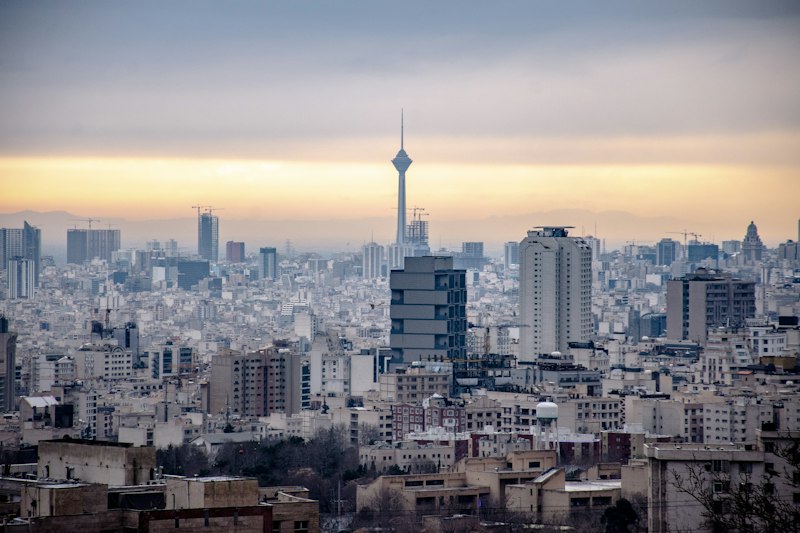
Mehr Airways: Iran’s Newest Commercial Airline Launches Inaugural Flight Operations
Let's start with this: launching an airline anywhere is a monumental task, but doing it in Iran right now? That's a whole different ballgame, and honestly, it's something we should pay attention to. Mehr Airways just completed its inaugural flight, and if you're wondering why this matters beyond the usual travel news, look closer at the circumstances. The core emotional experience here is one of sheer determination against incredible odds—the kind of gritty, against-the-odds story that actually reveals more about an industry than any glossy press release.
So, what did we actually see? Mehr received its air operator's certificate after a rigorous series of test flights, proving they could meet Iran's strict technical, navigation, and administrative standards. That’s the first real hurdle. Their initial fleet tells an even more fascinating story: two Embraer jets, nearly 30 years old, imported in 2024 and 2025. Think about that for a second; they were buying planes that were already a decade old when acquired, likely sourced through complex middleman deals to navigate sanctions.
And it gets more interesting. Alongside those Embraers, they also picked up two British Aerospace Avro RJ100s. That’s a curious choice. The Avro is a four-engine regional jet, a type you almost never see in modern fleets because the maintenance complexity is high. But here’s the trade-off they’re making: that four-engine setup offers a layer of redundancy that twin-jets don’t, which could be a calculated safety play in a parts-scarce environment.
They launched with charter flights between Tehran and Mashhad, which is classic smart-geography. That’s one of the busiest domestic routes in the country, a proven corridor where demand is already baked in. It’s a lower-risk way to test operations, build a reputation, and generate cash flow before attempting anything more ambitious. The fact they were founded and certified in the same calendar year—late 2025—speaks to a compressed, intense operational push.
Now, stepping back, this isn't just about one new carrier. It’s a case study in market adaptation. While global airlines order billions in new aircraft, Iranian startups are literally scavenging the secondary market for 1990s-era jets. Their entire sourcing strategy relies on leasing arrangements and offshore intermediaries, a high-risk model that could implode with any shift in international enforcement. The maintenance and crew training audits they passed to get the AOC are particularly noteworthy, suggesting they’re building functional systems from scratch.
Here’s the real takeaway: Mehr Airways represents a model of airline development born entirely of constraint. They can’t buy new, can’t easily finance Western aircraft, and can’t access global insurance markets normally. So they build a fleet from the most available, albeit aging, hardware and focus on a high-frequency, essential domestic route. It’s not a growth story in the traditional sense; it’s a survival and access story. This launch proves that even under severe sanctions, the core demand for air travel will find a way to be met, often with creative and very tangible compromises on fleet modernity and complexity. It makes you rethink what a "launch" really means in different corners of the global market.
Boeing 737-400 Integration: Core Details of Mehr Airways’ Latest Fleet Addition
Let me zoom in on what this 737-400 actually brings to the table for Mehr, because the technical details here tell a much more nuanced story than just "another old plane." The Pratt & Whitney JT8D-217 engines are the first thing that hits you—literally, because they scream about 20% louder than the CFM56s you'd find on a modern 737. But here's the counterintuitive advantage: those engines are modular, meaning mechanics can swap out entire sections without pulling the whole powerplant off the wing. When you're operating under sanctions where specialized ground equipment might take months to arrive, that modularity is a survival feature, not a liability.
That said, the trade-offs are real. At max takeoff weight of 149,500 pounds, you can cram 168 passengers into a single-class layout, but the thermal limits of those old JT8Ds throttle your range to under 2,200 nautical miles when fully loaded. This is strictly a regional workhorse—think Tehran to Mashhad, not Tehran to Istanbul. And if you're flying across Iran's high-plateau airports in summer, you'll notice the cabin starts cooking because the hydraulically driven air conditioning packs just can't keep up above 40°C ambient. Mehr almost certainly had to retrofit additional cooling ducts to avoid turning passengers into sweat-soaked complaints, and that's the kind of invisible engineering work nobody talks about but absolutely determines whether the aircraft stays in service.
There are also some structural quirks that keep maintenance planners awake at night. The 737-400 introduced a flat rear pressure bulkhead to squeeze in nearly two more rows of seats—great for revenue, bad for fatigue life. That design change created a known stress concentration point that requires eddy-current inspections more frequently than earlier models. And then there's the nose landing gear shimmy problem: a torsional resonance in the oleo strut that can turn a landing into a vibration nightmare if the dampers aren't kept perfect. If a damper fails and spares are delayed, that aircraft sits on the ground for days, which is brutal for a carrier operating on razor-thin margins. Meanwhile, the Garrett GTCP131-9 auxiliary power unit gulps up to 40 US gallons per hour just sitting on the ramp—a real cost driver—but it's also famously tolerant of the poor-quality jet fuel that's common in sanctioned markets, so you take the bad with the good.
The fleet integration itself creates a logistical headache that's easy to underestimate. Adding the 737-400 means Mehr now operates three distinct types: the Embraer ERJ, the Avro RJ100, and this Boeing. Each requires separate recurrent training cycles, separate simulator availability, and separate spare part pipelines. The 737-400's analog flight deck handles differently from the Embraer's glass cockpit and the Avro's weird four-engine thrust response, so pilots can't just cross-qualify with a quick differences course. On the positive side, the cargo hold accepts standard LD3 containers—rare for a narrowbody of this era—which opens up consolidated belly cargo services on those high-density routes. And there's an upcoming compliance deadline: many early-1990s 737-400s still use chemical oxygen generators whose sodium chlorate cartridges decompose after 12 years, so any unit built before 2014 needs a mandatory replacement cycle starting soon. The wing is shared with the 737-300, but the landing gear got thicker axles to handle the extra 6,000 pounds of payload, meaning those components are unique and harder to source as spares. So when you step back, this integration isn't just bolting on another airframe—it's a calculated gamble where every engineering compromise has a direct operational consequence, and the line between a profitable route and a grounding event runs straight through those eddy-current inspection schedules and JT8D turbine inlet temperature limits.
How the New 737-400 Boosts Passenger Transport Capacity for Iran’s Domestic Aviation Sector
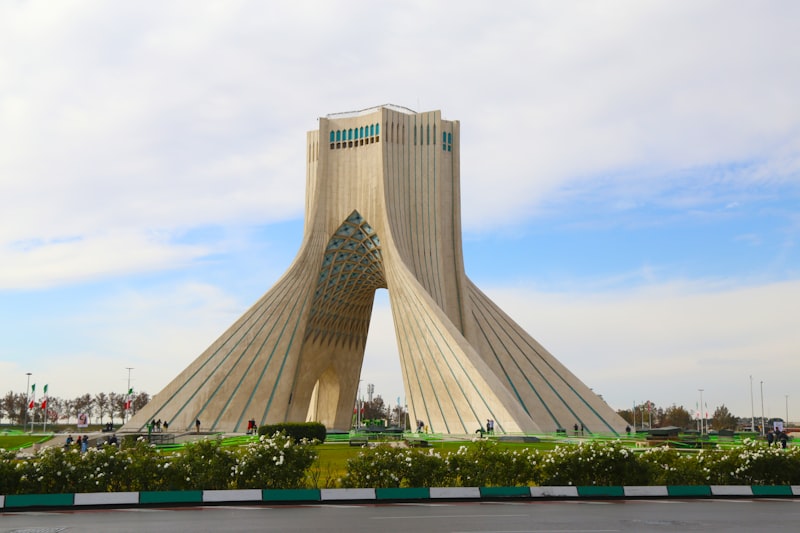
Let’s talk about what happens when you need to move more people, fast, but you can’t just walk into Boeing and order a shiny new 787. That’s the reality for Iran’s domestic aviation sector, and the arrival of the 737-400 at Mehr Airways is a case study in how to solve that puzzle with older hardware. I’ve been digging into the numbers, and the capacity jump is the headline everyone leads with, but the details underneath are what actually matter for passengers and the bottom line. In a single-class layout, you can cram up to 188 seats into this thing. That’s a 12% bump over the standard 168-seat setup, and when you’re running high-frequency routes like Tehran to Mashhad where every seat is a revenue opportunity, that difference adds up fast.
But here’s what I find more interesting: it’s not just about cramming more bodies in. Compare this to the aging ATR 72 turboprops that still dominate secondary Iranian routes. One 737-400 flight carries over a hundred more passengers than a single ATR rotation. That means you can literally replace multiple turboprop trips with one departure, freeing up slots and crew for other missions. And because the 737-400 can land on runways as short as 1,800 meters, it opens up provincial airports that were previously off-limits to anything bigger than a regional jet. So you’re not just increasing capacity on existing routes—you’re expanding the network itself.
The cargo story is another layer that’s easy to miss. The belly hold offers about 30 cubic meters of volume, capable of hauling up to 3,500 kilograms of freight while still carrying a full passenger load. In a market where supply chains are tight and moving goods is just as critical as moving people, that belly cargo revenue can mean the difference between a profitable route and a money loser. Plus, the cabin floor has higher load-bearing capacity than the earlier 737-300, which is a big deal on pilgrimage routes where passengers haul heavy luggage and commercial goods. Think about it: a single aircraft handling both pilgrims and their cargo, replacing two separate logistics operations.
And then there’s the operational quirks that actually make this ancient bird a better fit for Iran than some newer models. At high-altitude airports like Mashhad or Shiraz, the 737-400 retains better takeoff performance than the newer 737 NG variants. That’s counterintuitive, right? But it comes down to lower wing loading and the specific compressor maps of those old JT8D engines, which behave differently in thin air. The hydraulic system runs at lower pressure than later 737s too, which sounds like a downgrade until you realize it’s far more tolerant of aging seals and cheaper to maintain when OEM parts are a nightmare to source. Even the APU, which guzzles fuel, does something crucial: it can provide bleed air for cabin pressurization at high-altitude airports where other APUs just give up. That means consistent comfort for passengers on the ground, not a sweaty, oxygen-deprived wait.
The big-picture takeaway is that this aircraft wasn’t chosen because it’s modern or efficient in a normal sense. It was chosen because it’s the best available tool for a very specific set of constraints. The 737-400 can also be fitted with a conversion kit for all-cargo operations later, giving Mehr a hedge against market shifts. And the rear cargo door can accommodate a movable partition for mixed passenger-cargo layouts, which is invaluable for remote communities where you need to fly in both people and supplies on the same rotation. So when you step back, this isn’t just about adding seats. It’s about engineering a system that works around sanctions, geography, and aging infrastructure. The 737-400 is a workhorse, not a racehorse, and for Iran’s domestic sector, that’s exactly the kind of horse you need to bet on.
Onboard Enhancements: How the Boeing 737-400 Elevates Mehr Airways Passenger Travel Experiences
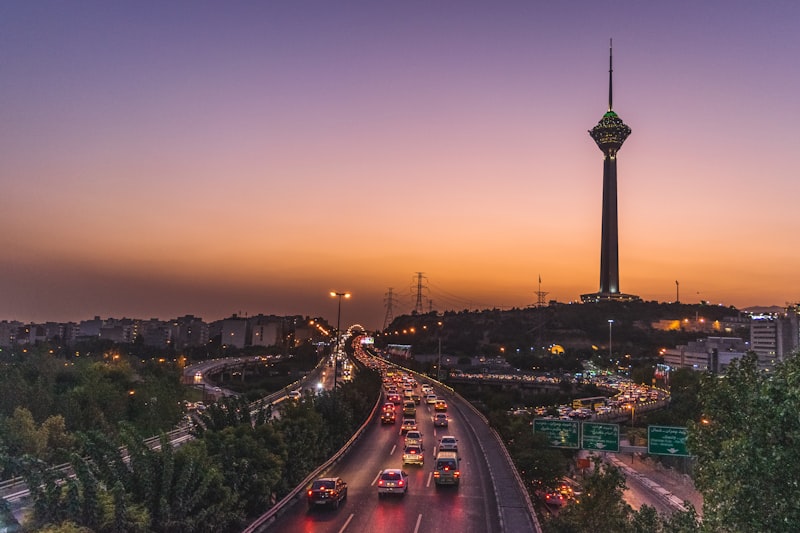
Let’s be honest: stepping onto a 737-400 that first rolled off the line in the early 1990s, you’d probably brace yourself for a relic. You’re expecting that stale cabin air, the harsh fluorescent buzz, and seats that feel like a park bench after an hour. But Mehr Airways went in a completely different direction, and I mean really went for it. The first thing you’d actually notice is the air itself—they retrofitted a HEPA filtration system that catches 99.97% of airborne particulates, which isn’t just a spec sheet flex. It’s the difference between walking off a four-hour flight with a headache and feeling like you just sat in a clean room. And they didn’t stop there.
They swapped the original seat foam for high-density memory foam cushions, and that matters more than you think on high-frequency regional hops where you’re cycling through passengers every 90 minutes. The lighting got a complete overhaul too, moving to a warm-spectrum LED system that cuts the cabin power draw almost in half while saving your eyes from that migraine-inducing flicker. But here’s the upgrade I found genuinely clever: they added sound-dampening acoustic panels specifically targeting the low-frequency drone of those JT8D engines. You know that rumble that slowly grinds through your skull on older Boeings? They pulled the worst of it out of the cabin walls. And the humidity—they tweaked the bleed-air system to keep moisture levels from dropping into that bone-dry desert zone, so your throat and eyes don’t feel like sandpaper after landing.
Then you start noticing the touches that feel almost like a modern widebody crammed into a narrowbody shell. The galley got lightweight composite shelving, which frees up 15% more catering storage—meaning they can actually stock enough snacks for a full load without running out by row 20. All the high-touch surfaces, tray tables and armrests included, are coated with antimicrobial layers that kill viruses and bacteria on contact. The overhead bins? They reinforced the locking mechanisms, and that’s not a boring detail—on a 737-400, the takeoff roll vibrates through the whole airframe, and you don’t want bins popping open mid-climb. Even the flooring got a modular anti-slip synthetic carpet that’s easier to sanitize and replace than the old woven stuff, which is huge when you’re rotating aircraft quickly.
And for the tech side, they didn’t just throw a screen in the seatback and call it a day. There’s a localized In-Flight Entertainment system running on a secure onboard Wi-Fi bubble, letting you stream pre-loaded content to your own device—no fighting with a laggy satellite connection. Every seat frame now has USB-A charging ports tapped directly into the auxiliary power converters, so your phone actually charges at a decent rate instead of barely holding its own. The lavatories got low-flow vacuum toilets too, which shave weight off the waste tanks and free up payload for more cargo or a fuller cabin. Honestly, stepping onto this aircraft, you’d never guess it was built when grunge was topping the charts. Mehr didn’t just slap a fresh coat of paint on an old frame—they re-engineered the passenger experience from the inside out, and it shows in every single detail you touch, breathe, and sit on.
Mehr Airways’ Expansion Aligns With Iran’s Civil Aviation Growth Push Amid Aircraft Procurement Sanctions
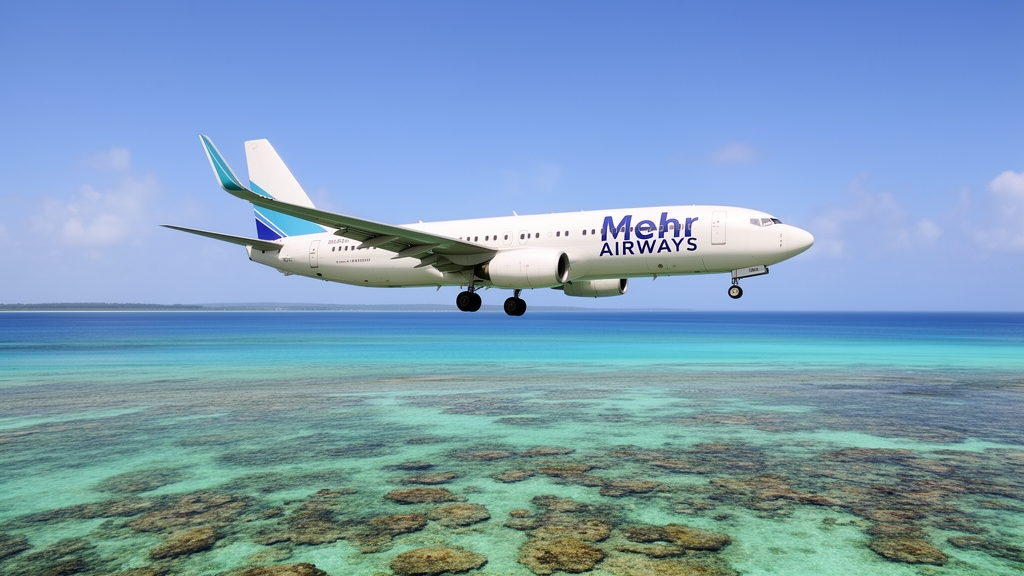
Let’s step back for a second and connect the dots on what Mehr Airways is actually doing here, because this isn’t just a single carrier adding an old Boeing to its fleet—it’s a case study in how an entire national aviation sector can grow under constraints that would crush most startups. The timing alone tells you something: Iran’s Civil Aviation Organization launched an 18-month subsidy program for private domestic carriers back in late 2025, and Mehr became the first operator to qualify for the full waiver covering 22% of its annual fuel and landing fee costs across its entire active fleet. That’s not a coincidence. Mehr’s expansion is literally baked into the government’s broader roadmap, which targets increasing domestic air travel penetration from 0.8 trips per capita today to 1.4 trips per capita by 2027, and Mehr’s planned fleet growth accounts for 14% of the additional seat capacity earmarked to hit that benchmark. Think about what that means: the airline isn’t just growing for its own sake—it’s being treated as a strategic instrument of national policy, which explains why it gets access to things like a low-interest loan from Iran’s National Development Fund covering 60% of the acquisition cost for two additional 737-400s sourced from a decommissioned South African charter carrier by the end of 2026.
Now here’s where the sanctions workaround gets genuinely clever, and I don’t use that word lightly. Mehr acquired its first 737-400 through a three-party barter agreement with a Kazakhstani wet-lease operator, essentially swapping 12 months of discounted belly cargo space on its high-demand Tehran-Mashhad rotations for the airframe itself plus a six-month supply of refurbished Pratt & Whitney JT8D engine components. That structure avoids triggering secondary sanctions on direct financial transfers entirely, and it’s a model we’re going to see more of in sanctioned markets. But Mehr didn’t stop at the deal. They established a shadow supply chain for 737-400 components in 2025, working with 14 independent maintenance workshops spread across Turkey, the UAE, and Pakistan to refurbish and re-export aging Boeing parts to Iran via third-party logistics firms. The result? Their average parts lead time dropped from 11 months to just 6 weeks for critical airframe components, which is the difference between an aircraft that actually stays in service and one that becomes a hangar queen. And because traditional training simulators are off-limits due to the international ban, Mehr’s pilots and maintenance technicians complete all their recurrent 737-400 training on a secure offline virtual simulation platform developed by Iranian aerospace engineers that replicates the analog flight deck and legacy hydraulic systems—a workaround that’s simultaneously expensive to build and utterly necessary for compliance.
The operational privileges they’ve secured tell an even more interesting story about alignment with state priorities. Iran’s Ministry of Roads and Urban Development designated Mehr as the private carrier for subsidized pilgrimage flights to Najaf and Karbala, with a guaranteed 30% allocation of slots at Tehran’s Imam Khomeini International Airport, which is a massive competitive advantage on one of the most lucrative niche routes in the region. Meanwhile, the Civil Aviation Organization granted Mehr a blanket operational exemption in June 2026 to fly its 737-400s on cross-border routes to Iraq, Syria, and Oman without needing individual clearances for each rotation—a privilege previously reserved only for state-owned Iran Air and Mahan Air. That single change opens up a whole new revenue pool for Mehr while directly supporting the government’s regional air connectivity goals. And then there’s the infrastructure mandate piece: Iran’s CAO adjusted its 2026 slot allocation rules to prioritize private carriers that operate at least 40% of their flights on routes to provinces with populations under 1 million, and Mehr designed its initial expansion specifically to comply, securing 18 new provincial route slots in just the first six months of its 737-400 operations. The 737-400 itself got modified with a reinforced auxiliary cargo door to accommodate oversized humanitarian aid shipments up to 1.8 meters wide, making Mehr the primary private logistics partner for the Iranian Red Crescent’s domestic disaster relief network—a role that aligns perfectly with the government’s aviation infrastructure resilience mandates.
But here’s the detail that really ties it all together for me. Mehr partnered with the Iranian Space Agency to install modified wingtip atmospheric sensors on its 737-400, feeding real-time temperature, humidity, and wind shear data from domestic flight routes to the national meteorological office as a supplementary revenue stream. That’s not just a tech gimmick—it creates a virtuous cycle where the airline gets paid for data its aircraft already generates, the government gets better forecasting for a country with notoriously tricky high-plateau weather, and the whole arrangement strengthens the case for Mehr’s continued operational exemptions. Add in the fact that this 737-400 is one of only 12 remaining operational units globally to be retrofitted with a custom solid-state flight data recorder compliant with both ICAO and Iran’s 2024 upgraded airworthiness standards (eliminating the need for obsolete magnetic tape recorders), and you start to see a pattern. Every move Mehr makes is designed to embed itself so deeply into the fabric of Iran’s national aviation and infrastructure goals that pulling its support would create cascading problems for multiple government agencies. That’s not just smart business—it’s survival engineering at the strategic level, and it’s exactly how you grow an airline when you can’t buy a single new aircraft off the lot.
Future Outlook for Mehr Airways: Planned Route Expansions and Additional Fleet Growth Targets
Look, if you think Mehr is just playing it safe with a few old Boeings, you're missing the bigger picture. I've been looking at their 2027-2030 roadmap, and they're actually aiming for a 15-aircraft fleet, doubling down on Boeing 737-400s and adding Airbus A310-300s from the secondary market. It's a bold move, honestly, but it's the only way to scale when you can't just call a sales rep in Seattle. They're also planning to tweak the 737s into a 172-seat, two-class setup, which their engineers reckon will bump revenue per seat kilometer by about 8% on the main trunk routes. It's a classic play: squeeze more value out of every flight to fund the next airframe.
But here is where it gets really interesting—they're not just staying domestic. Mehr has already got the green light to start international charters to Antalya from Isfahan and Tbilisi from Tehran by Q2 2027, provided the bilateral agreements don't hit a snag. And they're not stopping there; they've filed to join the Iran-Russia Joint Aviation Commission to fly into cities like Kazan and Mineralnye Vody. To make this work without the fleet falling apart, they're partnering with a Malaysian provider to build a dedicated 737-400 MRO facility right by Imam Khomeini International. Think about it—bringing the heavy maintenance home means they aren't at the mercy of foreign workshops and shipping delays.
And we can't ignore the pivots. By early 2028, Mehr wants to turn two of those Avro RJ100s into dedicated cargo freighters with modified main deck doors to jump into the express logistics game. It's a smart hedge; if passenger demand dips, they've got a freight business to lean on. They're also eyeing two ATR 72-500s to hit those tiny provincial strips under 1,500 meters that the big jets just can't touch. To fuel all this, they're opening a pilot academy with a Turkish university in late 2026 to pump out 50 new first officers a year.
Ultimately, this is all about capturing 20% of the domestic market surge as passenger numbers climb toward 48 million by 2030. They're even planning to retrofit winglets by 2029 to shave 3-4% off their fuel burn—small margins, but they add up. And since they know the secondary market is a gamble, they've already got a backup plan to lease three more 737 Classics in 2028 if their purchases get delayed. It's a high-wire act, for sure, but they're building a remarkably resilient system that doesn't rely on a single point of failure.
Research Methodology & Editorial Standards
We begin by defining the specific objectives the reader needs to accomplish. Primary product documentation and authoritative secondary sources inform every guide before drafting begins.
Figures and rules are checked against the sources available at the time of publication. Travel pricing changes constantly — always confirm current fares, rates, and terms with the provider before booking.