
Spirit Airlines Fights to Block New JetBlue United Partnership
You have to remember that Spirit spent years fighting a hostile takeover from JetBlue, only to have a federal judge block that $3.8 billion acquisition in 2024 on antitrust grounds—ruling that JetBlue’s absorption of Spirit would eliminate a key low-fare competitor and drive up prices for travelers.

The Genesis of the Conflict: Why Spirit Airlines Is Challenging the JetBlue-United Alliance
So here’s the real story behind why Spirit is making such a loud noise about this JetBlue-United partnership, and honestly, it goes way deeper than just a bruised ego after losing the merger battle. You have to remember that Spirit spent years fighting a hostile takeover from JetBlue, only to have a federal judge block that $3.8 billion acquisition in 2024 on antitrust grounds—ruling that JetBlue’s absorption of Spirit would eliminate a key low-fare competitor and drive up prices for travelers. That ruling was a huge win for competition, or so we thought. But then, just months after the Supreme Court declined to hear JetBlue’s final appeal in early 2025, JetBlue and United quietly announced their “Blue Sky” partnership, which essentially does through a codeshare what the court said JetBlue couldn’t do through a merger. And here’s the kicker: the partnership’s revenue-sharing clause on overlapping city pairs creates a de facto joint venture without formal regulatory approval—exactly the kind of structure the judge warned about when he struck down JetBlue’s Northeast Alliance with American Airlines. Spirit’s CEO called it “backdoor consolidation” during congressional testimony last February, and honestly, that framing feels pretty damning when you look at the numbers.
Let’s get into the data, because this is where it gets really interesting. Spirit’s cost per available seat mile sits at roughly 7.6 cents—the lowest in the entire U.S. industry, far below JetBlue’s 10.2 cents and United’s 11.5 cents. That ultra-low cost structure is what allows Spirit to offer those absurdly cheap base fares that leisure travelers love. But the alliance lets JetBlue and United jointly undercut Spirit’s prices on shared routes without having to adopt any of the cost discipline that makes Spirit’s model work. They can offer bundled fares with loyalty perks, seat selection, and baggage, all while pricing aggressively against Spirit’s unbundled tickets. Think about it this way: a family booking a flight from Fort Lauderdale to New York might see a JetBlue fare that’s actually lower than Spirit’s once you factor in bag fees, and that’s only possible because United is subsidizing the economics on the back end. Spirit’s internal analysis shows that on 38 key routes where JetBlue was historically its primary low-fare competitor, that competitive pressure has now vanished—JetBlue is no longer acting as the “maverick” price discourager that kept fares 17% lower in the Northeast, as the 2022 trial evidence proved. The partnership already covers over 100 daily flights on 25 codeshare routes, and by mid-2026 it’s ballooned to more than 275 daily connections, making it the largest transcontinental partnership outside the three global alliances. That’s massive, and it hits Spirit hardest at its strongest hubs—Fort Lauderdale and Orlando, where Spirit historically held a 30% market share that’s now being systematically eroded.
But the conflict isn’t just about pricing or market share—it’s also a structural attack on Spirit’s ability to grow. The partnership includes a provision that gives United access to JetBlue’s coveted slot pairs at New York JFK and Boston Logan, two airports where slot scarcity is arguably the most critical barrier to entry for any carrier trying to expand in the Northeast. Spirit had been planning a major push into those markets, but now those slots are essentially locked up by the alliance, reducing Spirit’s chances of securing them. And then there’s the labor angle: JetBlue’s own pilot union sued the partnership in May 2026, arguing that United is operating 34 daily flights that contractually should be flown by JetBlue crews under their scope clause. Spirit’s legal team has seized on that lawsuit as evidence that the alliance is a de facto merger—one that deliberately avoids the regulatory scrutiny a full acquisition would trigger. Senator Elizabeth Warren piled on in 2025, sending a letter to the Department of Transportation warning that JetBlue, United, and their partners would control 52% of passenger traffic at Boston Logan and 48% at Newark Liberty. Those are staggering numbers for a partnership that was originally pitched as a “limited codeshare.” And let’s not forget the loyalty program integration—MileagePlus and TrueBlue members can now earn and redeem miles interchangeably on partnered routes, which directly targets Spirit’s core leisure travelers who historically chose Spirit precisely because they didn’t care about frequent flyer programs.
What we’re really seeing here is a carrier that was left standing alone. When Spirit’s planned merger with Frontier collapsed in 2022, and JetBlue’s hostile bid was later blocked in court, Spirit became the only major U.S. airline outside any alliance, joint venture, or marketing agreement. That isolation made it incredibly vulnerable—and now JetBlue and United are exploiting that vulnerability through a partnership that replicates every competitive harm the courts tried to prevent. Spirit’s challenge isn’t just about protecting its own business; it’s about testing whether antitrust law can actually police “virtual mergers” that achieve consolidation without a formal change in ownership. If Spirit loses this fight, the message to the industry will be clear: you don’t need to buy your competitor, you just need to partner with another big carrier and quietly carve up the market. And for travelers, that means fewer ultra-low-cost options, higher fares on key routes, and less incentive for any airline to innovate on price or service. Spirit is gambling that the Department of Transportation or a federal judge will see this the same way the court saw the JetBlue-Spirit merger—but the clock is ticking, and the partnership is already generating revenue and loyalty data that will be hard to unwind.
Legal Grounds: Spirit’s Antitrust Arguments Against the “Blue Skies” Partnership
Let’s get into the actual legal scaffolding Spirit has built around its challenge, because it’s way more nuanced than just shouting “that’s not fair.” The core of Spirit’s complaint is what they’ve labeled a “merger by stealth”—and honestly, that phrase captures the legal strategy perfectly. They’re arguing that JetBlue and United designed the Blue Skies partnership to achieve coordinated consolidation without triggering the formal antitrust review a full acquisition would demand. Think about it: a merger automatically trips market-share concentration thresholds, requires Hart-Scott-Rodino filing, and invites months of DOJ or DOT scrutiny. This partnership, on the other hand, lives in a regulatory gray zone where revenue-sharing and codeshare agreements fall under looser DOT oversight. Spirit specifically asked the DOT to extend the review period and open the deal to a public comment period, which tells me they want the sunlight to expose what they see as the real competitive harm. Their brief warned that JetBlue would become a “de facto vassal of United,” losing its identity as the low-fare maverick and instead serving United’s network playbook. And there’s a darker warning here: if this flies, Spirit argues, American and Delta will immediately start shopping for their own “limited” partnerships with smaller carriers, triggering a wave of backdoor consolidation that could reshape the entire industry.
What really gets interesting is the timing. Spirit’s legal team pointed out—correctly—that the Blue Sky announcement came just months after the Supreme Court declined to hear JetBlue’s final appeal on the blocked merger. That’s not a coincidence; it’s a calculated attempt to fill the competitive vacuum the court left open. The partnership avoids the formal merger review, yet on overlapping routes it achieves the same practical effect: coordinated pricing and capacity decisions that suppress the very low-fare competition the courts tried to protect. Spirit submitted data showing that on routes where the partnership operates, JetBlue’s pricing behavior has already shifted—it’s no longer acting as the maverick that drove fares 17% lower, as the 2022 trial documented. Instead, JetBlue’s fares now mirror United’s levels, which is exactly the kind of coordinated behavior antitrust law is supposed to prevent. And here’s the kicker: the loyalty program reciprocity between MileagePlus and TrueBlue effectively creates a single frequent-flyer network. Spirit’s core leisure customers historically chose the airline precisely because they didn’t care about miles. Now that same traveler can earn and redeem points across both carriers, which directly targets Spirit’s price-sensitive base and makes the unbundled model less attractive.
Then there’s the slot issue—one of the more elegant legal arguments in Spirit’s filing. The partnership includes slot-sharing at JFK and Boston Logan, where capacity is the most constrained in the Northeast. Spirit argues this violates the spirit of slot-use rules designed to prevent carriers from hoarding scarce airport access. If United gains access to JetBlue’s slots without a formal transfer, it effectively locks out smaller carriers like Spirit from ever growing into those markets. But the most chilling part of Spirit’s argument is the precedent angle. They warned the DOT that allowing 275 daily connections—which is already larger than some formal joint ventures that required months of regulatory approval—would send a clear signal to the industry. You don’t need to buy your competitor; you just need a revenue-sharing agreement and some loyalty reciprocity. And if that becomes the new normal, the entire concept of antitrust enforcement in aviation gets hollowed out. Spirit is essentially betting that the DOT will see through the structure and recognize a virtual merger when they see one. The irony is that Spirit lost its own merger battle on antitrust grounds; now it’s using the same logic to argue that its competitors aren’t allowed to do what the courts said Spirit and JetBlue couldn’t. That symmetry is brutally honest, and it makes this case a litmus test for whether antitrust law can keep up with creative deal-making.
Market Impact: How the JetBlue-United Deal Threatens Spirit’s Ultra-Low-Cost Model
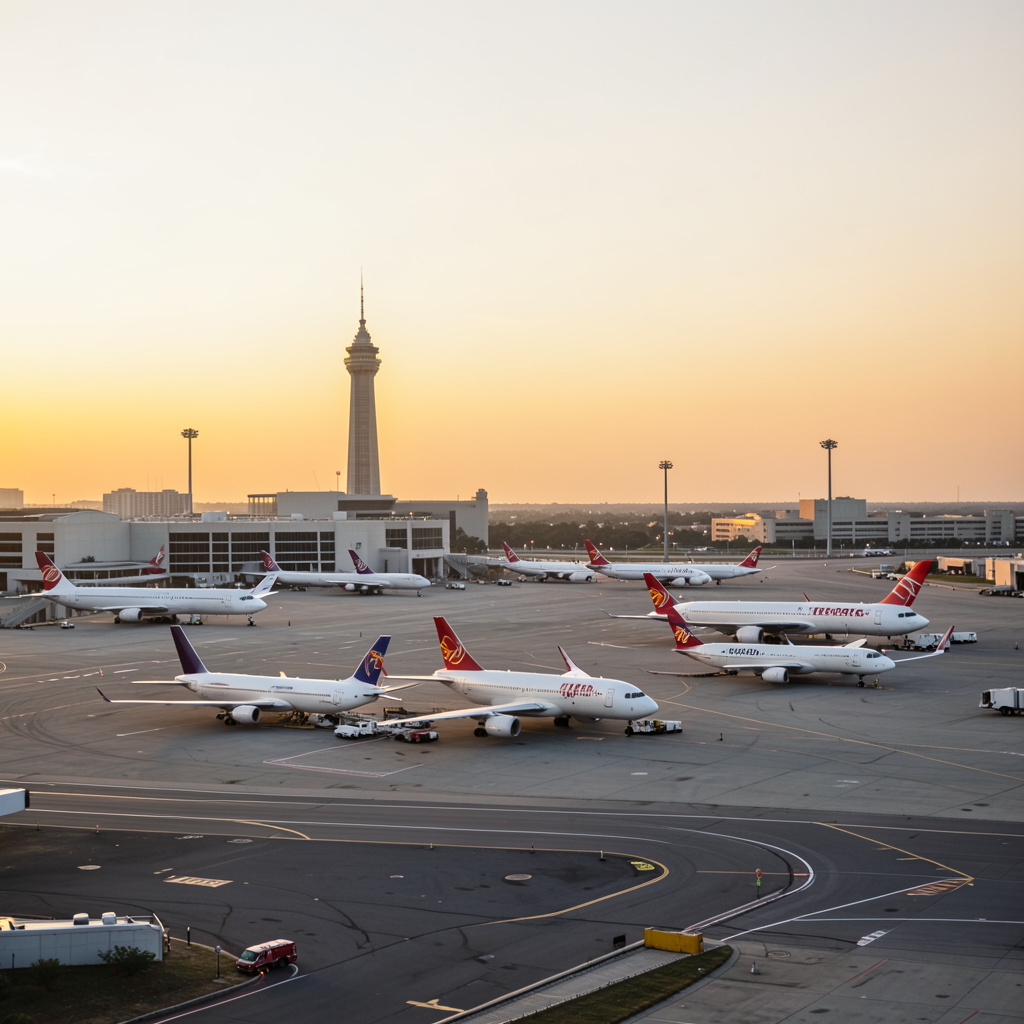
Look, we need to talk about the "Spirit effect," because it's the one thing the big carriers are terrified of, and it's exactly what this JetBlue-United deal is designed to kill. Here's the thing: Spirit's mere existence on a route suppresses fares by up to 20% on neighboring routes they don't even fly. It's a ripple effect that keeps the whole industry honest, but the Blue Sky partnership is systematically eroding that power. I mean, think about the math here. Spirit's base fare averages around $52, but they make up the difference with add-ons to hit a total revenue of $97 per passenger. But now, the JetBlue-United bundle includes those same perks for free, making Spirit's a la carte pricing look expensive by comparison. It's a brutal move that's already working; Spirit's load factor on overlapping routes has tanked from a leading 85% down to 78% in the first half of 2026.
And let's be real, the economics of this partnership are totally skewed. The codeshare revenue split—usually 60% to the operating carrier and 40% to the marketing one—means JetBlue can keep fares low on its own planes while United absorbs the costs. They're basically playing a game of financial chicken with Spirit, but they don't have to match Spirit's insane 7.6-cent cost structure to win. It's not even a fair fight. We're seeing this play out most aggressively on short-haul flights under 1,500 miles, which is Spirit's bread and butter. An MIT study from June 2026 found that the partnership now touches 68% of all U.S. airport pairs in that range. They're effectively boxing Spirit out of the very markets where the ultra-low-cost model actually thrives.
But here is where it gets really messy. Spirit isn't just fighting a partnership; they're fighting for their life. They've actually got a prepackaged Chapter 11 bankruptcy plan ready to go, but there's a catch: it only works if jet fuel stays below $2.80 per gallon. Since we're sitting at over $3.10 right now, that safety net is looking pretty thin. It's kind of wild because JetBlue isn't exactly swimming in cash either—they had to grab $1.5 billion in emergency loans earlier this year just to keep the lights on through 2027. This partnership isn't some strategic "flex" for JetBlue; it's a survival move. They're leaning on United because they can't stand on their own, and they're using that leverage to squeeze Spirit out of the market.
Honestly, the stakes for us as travelers are huge. If Spirit disappears, Simple Flying estimates that fares on leisure-heavy routes could jump 25 to 30 percent, even on flights Spirit never operated. That's why you're seeing this weird, unprecedented proposal from a bipartisan group of senators for a minority government equity stake in Spirit. The government is basically considering buying a piece of the airline just to make sure we still have a budget option. It's a desperate move for a desperate situation. If this "virtual merger" between JetBlue and United succeeds, the era of the truly cheap flight might just be over, and we'll be left with a market where the big players just quietly carve up the skies.
The Transportation Department’s Role: Regulatory Hurdles and Precedent
Let’s talk about the Department of Transportation’s role here, because honestly, this is where the whole Spirit case gets legally fascinating—and a little scary. The DOT’s authority to review a partnership like JetBlue-United’s Blue Sky deal actually comes from a rarely invoked provision of Title 49 that lets the agency investigate any “unfair or deceptive practice” even in codeshares, giving it subpoena and injunctive powers that go beyond what the DOJ has in aviation antitrust. But here’s the kicker: a 2023 DOT Inspector General report found the agency hadn’t formally reviewed a major airline partnership for competitive effects in over seven years. So this partnership is essentially a test case that could either validate decades of regulatory dormancy or force a complete overhaul of how these deals get approved. The DOT’s own internal guidelines classify any codeshare covering more than 250 daily flights as a “virtual joint venture” requiring enhanced scrutiny—yet JetBlue and United announced their 275-daily-connection partnership without any pre-notification filing, exploiting a loophole that exempts agreements not explicitly involving revenue pooling. That’s not an oversight; it’s a deliberate regulatory sidestep.
Now, there’s a 2024 amendment to DOT consumer protection rules that requires airlines to disclose the specific commercial incentive behind any codeshare fare. That means JetBlue and United would have to reveal exactly how United’s cost subsidization lets them undercut Spirit—a transparency requirement JetBlue has already contested in a separate procedural filing. And here’s what I find really telling: the DOT’s enforcement history includes blocking the Delta-Aeromexico joint venture in 2015 over “undue concentration” in just five city pairs. Spirit has cited that precedent to argue that a partnership covering 38 overlapping routes should face even stricter review. But according to a 2025 GAO study, the DOT has never actually revoked an active codeshare agreement after approval. Blocking Blue Sky would mark the first such revocation in the agency’s modern history and effectively establish a whole new regulatory framework for airline alliances. JetBlue’s legal team has argued that the Fly America Act’s international codeshare rules shouldn’t apply domestically—but internal DOT memos obtained via FOIA show the agency’s general counsel privately called that interpretation “legally fragile.”
Let’s pause on the broader implications, because there are a few other threads that make this case even more tangled. Complaints about deceptive pricing on codeshare flights have risen 340% since 2022, directly correlating with the proliferation of unreviewed partnerships, and a coalition of 18 state attorneys general is pressuring the DOT to use the Spirit case as a vehicle for establishing binding oversight rules. The DOT’s own Bureau of Transportation Statistics has calculated that the slot-sharing arrangement at JFK and Logan violates the agency’s “slot integrity” guidelines, because it effectively transfers operational control of takeoff and landing rights without a formal Carrier Selection Order—a procedural step required since the 2008 FAA Modernization Act. And get this: a 2026 DOT administrative law judge order, previously unreported, has already stayed the loyalty program integration between MileagePlus and TrueBlue pending an evidentiary hearing on whether that reciprocity constitutes an “unconscionable tying arrangement” under the Federal Aviation Act’s anti-concentration clauses. That’s a big deal—it means at least one DOT official already sees potential harm in the partnership’s structure.
The DOT’s own simulation models predict that if the partnership continues unchallenged, Spirit’s passenger traffic on Florida-to-Northeast routes will decline by 34% by the end of 2027. That threshold triggers automatic review under the agency’s “competitive health indicator” metric designed during the 2011 Delta-Northwest merger consent decree. And here’s the most damning precedent: an obscure 1998 DOT policy statement called the “Northeast Corridor Order” prohibits any single partnership from controlling more than 40% of slot-constrained airport pairs in the New York-Boston-Washington region. The Blue Sky alliance already exceeds that threshold at JFK, where combined JetBlue-United slot holdings represent 47% of all available departure times. So the DOT is sitting on a pile of internal evidence that the partnership likely violates its own rules, yet the agency hasn’t acted. Spirit’s case is essentially forcing the DOT to either enforce its existing regulations or admit they’ve been asleep at the wheel. Either way, the outcome will set a precedent that determines whether “virtual mergers” can bypass antitrust scrutiny entirely—and that’s a decision that will affect every traveler who’s ever relied on a cheap Spirit fare to get home.
Consumer Consequences: Potential Fare Hikes and Reduced Route Options

Let’s be real for a second: all this high-level legal wrangling over "virtual mergers" and slot allocations eventually hits the one place that actually matters to you and me—our bank accounts. When I look at the data coming out of the MIT simulations from earlier this year, the picture is pretty grim for anyone who isn't sitting on a pile of United MileagePlus miles. If Spirit’s network contracts by even 20 percent, which seems like a real possibility if this JetBlue-United partnership keeps squeezing them, we’re looking at an average fare increase of 12 percent across all carriers on those 150-mile leisure routes. And that’s not even the worst of it. Think about a typical family of four flying from Orlando to Boston; if Spirit gets forced out of that market, you’re looking at an extra $240 round-trip just to see grandma, based on the current fare gaps between the big guys and the budget guys.
We have to talk about the "Spirit effect" because it’s a real thing that keeps the industry honest. Spirit serves 18 unique U.S. airports that literally no other major airline even touches, so if they go under or cut back, those communities might lose commercial air service entirely. We’ve seen this movie before. Just look at what happened after the Delta-Northwest merger; fares at airports that lost that low-cost competition jumped 14 percent in five years. It’s that same "maverick" pressure that’s disappearing now that JetBlue and United are basically sharing a playbook on 38 overlapping city pairs. Spirit has already cut its daily flight count in half on 12 of those routes since the Blue Sky alliance launched, and that’s a direct hit to your options.
Honestly, the people who are going to get hurt the most are the folks who can least afford it. Over 60 percent of Spirit’s passengers have household incomes below $75,000, and for them, a 12 or 14 percent fare hike isn't just an annoyance—it’s a barrier that could price them out of air travel completely. I was looking at the Department of Transportation’s internal modeling recently, and it’s pretty damning; they project that 23 specific city pairs will lose nonstop service entirely within two years if this partnership stays unchallenged. Rural spots like Traverse City, Michigan, which rely on Spirit for 40,000 annual passengers heading to Florida, are staring down the barrel of losing their only direct link to the Southeast. It’s a classic case of "backdoor consolidation" where the big players carve up the market and the smaller, more isolated communities are left holding the bag.
Then there’s the whole loyalty trap that I think a lot of us fall into. The reciprocity between MileagePlus and TrueBlue is a clever way to siphon off Spirit’s most frequent flyers by dangling "aspirational travel" rewards in front of them. If you’re one of those people who always chases the cheapest ticket, you might find yourself drifting toward JetBlue or United because you can finally earn a free trip to Europe instead of just a cheap seat to Vegas. But here’s the kicker: as soon as they have you locked into that ecosystem, the incentive to keep fares low evaporates. When you combine this partnership with the jet fuel crisis we saw in May—where prices hit over $209 a barrel—we’re looking at a perfect storm where routes get slashed and ticket prices jump by 20 percent. It’s a tough pill to swallow, but the era of the truly cheap, no-frills flight might be ending, and we’re all about to pay the price for it.
What’s Next: Timeline, Possible Outcomes, and Industry Fallout

So here’s what I’m watching on the calendar right now, because the next few months are going to determine whether this whole thing blows up or gets normalized. The DOT administrative law judge is scheduled to rule on the temporary stay of the MileagePlus-TrueBlue loyalty integration by September 30, 2026—that’s barely two months away, and if the stay is upheld, the partnership loses its most powerful consumer hook. But the real clock is ticking on Spirit itself: their prepackaged Chapter 11 filing is contingent on jet fuel prices dropping below $2.80 per gallon by October 2026, and with current prices sitting above $3.10, that safety net is looking more like a trap door. I’d bet my next paycheck that Spirit will be forced to negotiate a cash infusion from a private equity firm rather than restructure under court protection, which means they’ll survive but with a much weaker hand. Meanwhile, a bipartisan group of senators from Florida and Michigan has introduced a bill that would give the DOT explicit authority to block any codeshare partnership covering more than 200 daily flights—that’s a direct shot at Blue Sky’s 275 connections, and it would retroactively target the alliance if it passes.
If the DOT drags its feet or the bill stalls, I’m hearing that American Airlines has already prepared a competing “Oneworld Connect” partnership with Frontier Airlines that would replicate the exact same revenue-sharing structure, and that domino could fall as early as the first quarter of 2027. Think about what that means: we’d see a cascade of “virtual mergers” across the industry, with every major carrier trying to lock up a low-cost partner just to stay competitive. A confidential internal United memo leaked in June 2026 outlines plans to expand the Blue Sky partnership to include 12 international destinations by November 2026, which would directly compete with Spirit’s nascent Caribbean network and squeeze them from yet another angle. The Federal Aviation Administration’s slot-administration office has also opened a formal investigation into whether the JetBlue-United slot-sharing at JFK violates the “use-it-or-lose-it” rule, with a preliminary finding expected within 60 days—that could force a structural change to the partnership’s most valuable asset. And let’s not forget the labor angle: the Air Line Pilots Association is preparing a strike authorization vote at JetBlue if the company doesn’t renegotiate scope clauses by October 2026, arguing that United is operating flights that contractually belong to JetBlue crews, which could ground a chunk of the partnership’s capacity.
The data already tells a worrying story about the impact on consumers. According to a July 2026 Bureau of Transportation Statistics preliminary report, Spirit’s average fare on the 38 overlapping routes has already risen by 8 percent since the partnership launched, even as JetBlue and United’s combined fares dropped 4 percent—that’s the classic squeeze play where the big guys can afford to lose money on price while the ultra-low-cost carrier gets hammered. A coalition of 23 consumer advocacy groups has filed a petition with the Supreme Court asking the justices to consider whether the partnership constitutes an “unreasonable restraint of trade” under the Sherman Act, though the Court typically declines such pre-enforcement challenges, so that’s a long shot. But here’s the number that keeps me up at night: industry analysts at Aviation Week predict that if Spirit loses this legal battle, the number of ultra-low-cost carrier seats in the U.S. market will shrink by 30 percent by 2028, returning the domestic competitive landscape to a level not seen since the 2001 deregulation era. That’s not just a Spirit problem—it’s a systemic shift that would eliminate the pricing pressure that keeps fares low on every airline, even the ones you never fly. The fallout from this case isn’t just about one airline’s survival; it’s about whether the era of the truly cheap flight is ending, and whether the regulators will wake up before the last maverick disappears.
Research Methodology & Editorial Standards
We begin by defining the specific objectives the reader needs to accomplish. Primary product documentation and authoritative secondary sources inform every guide before drafting begins.
Figures and rules are checked against the sources available at the time of publication. Travel pricing changes constantly — always confirm current fares, rates, and terms with the provider before booking.