
What the latest Ebola outbreak means for your upcoming travel plans
It's not just a "nature" problem, though, because the economic instability in these border zones means people are constantly on the move for work or safety.
Understanding the current scope and risk of the Ebola outbreak
Look, I know when you see "Ebola" in the news, your first instinct is probably to check your flight booking and wonder if you're about to get caught in a mess. It's a heavy topic, but we've got to look at the data because this isn't just another repeat of what we saw years ago. This time around, we're dealing with the Bundibugyo virus, which is a bit of a curveball compared to the Zaire strain that usually makes the front page. Think of it like a software update that changed the source code; the old rapid tests don't always catch it, so health teams are having to swap out their entire toolkit while they're already on the ground. But the real issue isn't just the biology—it's where it's happening, right along the busy border between the DRC and Uganda.
And that's where things get messy from a researcher's view. We're seeing a direct link between the current jump to humans and how we're clearing land for logging and mining. When you push deep into the forest, you're basically knocking on the door of animals that have been carrying this stuff for ages. It's not just a "nature" problem, though, because the economic instability in these border zones means people are constantly on the move for work or safety. You can't do the usual contact tracing when your "contacts" are undocumented travelers moving through three different transit hubs in a single week.
Looking at the math from the latest modeling, this movement is why the WHO just tagged this as a public health emergency of international concern. There's also some weirdness with the incubation period this time, with some cases showing up just outside that standard 21-day window we all rely on. Honestly, it's a lot to manage, especially when you factor in that monoclonal antibody treatments only really work if you get them within that first 48-hour window. If you're traveling, you're looking at a situation where the rules are being rewritten in real-time. We're also finding that the virus can stay in survivors longer than we'd like, which adds another layer of trouble to keeping communities safe long-term.
I'm not saying you should cancel every plan you have, but you've got to realize the "standard" rules were built for controlled hospitals, not these spread-out, remote areas. The health systems there are already stretched thin trying to fight off hunger and basic infection control at the same time. So, we're at a point where the risk of the virus jumping to other countries is being taken very seriously because the volume of cross-border trade is just so high. It’s a high-signal moment that demands we pay attention to more than just the headlines. Let's keep a close eye on how these genetic mutations play out, because that’s going to dictate how every airport and border crossing reacts in the coming months.
How airport health screening protocols are shifting for travelers
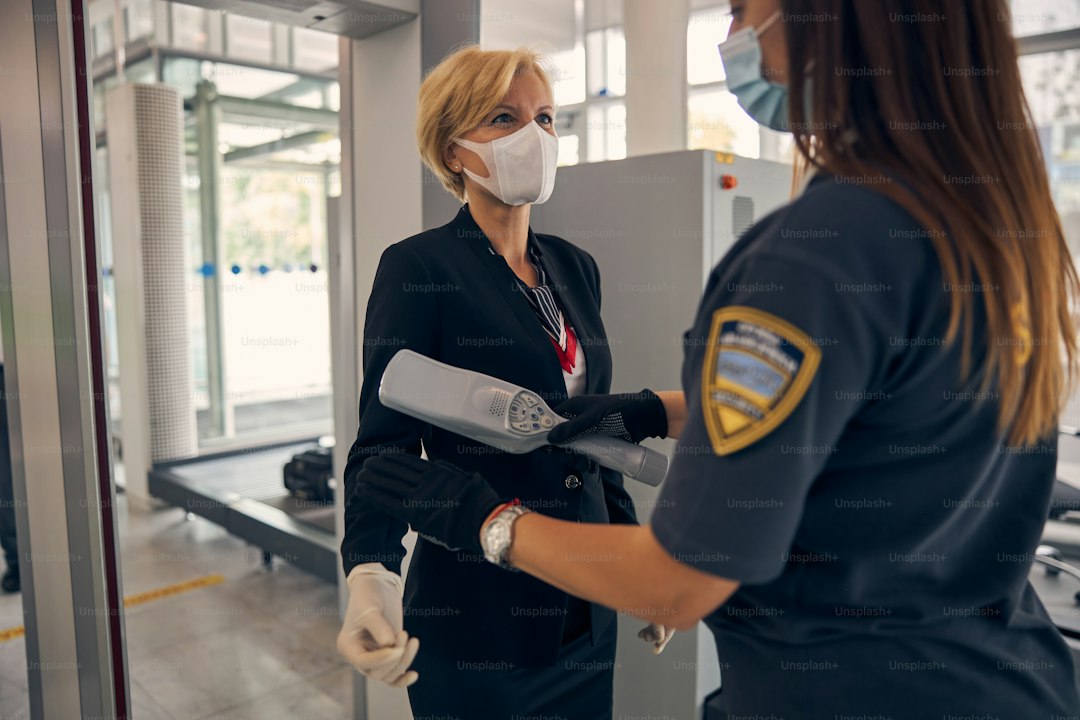
If you’ve been paying attention to the airport experience lately, you’ve probably noticed that the friction has moved well beyond just taking off your shoes or dumping out your water bottle. It feels like the entire philosophy of border health is shifting under our feet, and honestly, it’s a lot to wrap your head around when you’re just trying to make a connection. We are seeing a move toward automated thermal imaging that pulls your body temp data directly from your flight manifest in real-time, which is a massive leap from the old-school handheld scanners. It’s not just tech, either; we’re seeing a real pivot toward private security firms taking over these health checkpoints, and I know that’s been fueling some heated debates among travelers who are worried about who exactly is handling their sensitive health data. Personally, I think the shift of the burden from the arrival gate back to the airline check-in desk is the most significant change, as it forces the screening process to happen before you even step on the plane.
The way these protocols are being implemented varies wildly depending on where you land, and that inconsistency is where the real stress for travelers comes in. While Southeast Asian hubs like Indonesia, Thailand, and Vietnam have managed to weave these new health checks into their operations with almost zero impact on flight schedules, other regions are taking a much harder line. For instance, we’re seeing Bahrain implement strict travel bans for anyone coming through affected areas, while other borders are deploying rapid biometric tracking to monitor passengers who have hit multiple transit hubs in just a week. It creates a reality where your "status" as a traveler can change based on the specific math of your itinerary, which is a tough pill to swallow if you're just looking to get home.
And let’s be real about the tech itself—it’s getting smarter and faster. Airports are now testing portable diagnostic tools that can identify specific viral strains in under fifteen minutes, which is a game-changer compared to the long waits we’ve dealt with in the past. They’re also using machine learning to map out potential exposure clusters based on how we’re moving across borders, which sounds like something out of a thriller but is actually how they’re keeping terminals open rather than shutting them down. It’s also worth noting that this isn't just about one virus; we’re seeing these sensors being calibrated for things like Hantavirus, meaning the infrastructure being built now is intended to stay for the long haul. I’d suggest keeping a close watch on your airline’s mobile app in the coming weeks, as digital health verification is becoming the new standard for getting your boarding pass cleared before you even leave for the airport.
Evaluating the possibility of flight cancellations and route changes
When you’re tracking how an outbreak might actually ripple out to your own itinerary, it’s easy to focus only on the headlines, but the real story is playing out in the quiet, technical background of airline scheduling. I’ve been looking closely at the math airlines use, and honestly, it’s not just about health concerns; it’s about a complex two-dimensional evaluation framework that balances operational costs against the risk of getting aircraft or crews stuck in zones with limited medical infrastructure. When airspace is restricted or transit hubs face new health protocols, carriers are looking at massive operational overhead—sometimes burning through over 7,500 dollars an hour in extra fuel just to steer clear of sensitive zones. That’s a huge financial hit, and it’s usually what forces their hand to pull the plug on certain routes months in advance as a hedge against ongoing regional volatility.
But here is where it gets frustrating for us as travelers: you might find your flight canceled even if the route itself is technically open. This happens because airlines are increasingly relying on machine learning to consolidate passengers into high-yield hubs, often at the expense of those of us flying through secondary markets. It is a game of recovery algorithms where your connection is viewed as a data point in a much larger network optimization, not as a human trying to get home. To make matters worse, we’re seeing jet fuel shortages acting as a silent, secondary trigger; even if an outbreak doesn't force a closure, a local fuel dip can cause a cascading wave of cancellations that feels completely disconnected from the actual health situation.
If you’re wondering how to read the tea leaves, start watching the digital check-in process like a hawk. The industry has effectively pushed the burden of reliability onto your mobile device, where a minor glitch in your health verification can lead to an automated, immediate cancellation of your segment before you’ve even packed your bag. I’d suggest you don't wait for an email from the airline if you see regional health data shifting; use the airline's app to monitor for any changes in flight status that might suggest they are reallocating aircraft to safer, more stable hubs. It’s a messy, high-tech reality, but understanding that these systems are prioritizing network-wide efficiency over individual itineraries might help you stay one step ahead when those inevitable adjustments start rolling in.
Navigating travel insurance policies during infectious disease outbreaks
Let’s be real for a second: when you’re booking a trip, the fine print in your insurance policy is the last thing you want to read, but right now, it’s arguably your most important travel document. Most folks don’t realize that as soon as the WHO flags an outbreak as a Public Health Emergency, that virus becomes a "foreseen event," which basically means your standard cancellation coverage is officially off the table for any new policies. It’s a bitter pill, but insurers are now using real-time epidemiological modeling to shift their risk math daily, causing premiums for certain regions to swing by 40% in a single day. If you’re banking on a "premium" plan, you need to check the math on medical evacuation, because a bio-containment flight can easily run you $285,000, dwarfing the $100,000 caps you'll find in most mid-tier plans.
And then there's the nuance of what actually triggers a payout. Modern policies are getting incredibly granular, often distinguishing between a doctor-ordered quarantine and a government-mandated lockdown—if you don’t have a specific "civil authority" rider, you might be left footing the bill for a hotel stay you never asked for. I’ve noticed a lot of newer contracts now carry "Vaccine Compliance Clauses," which essentially void your medical coverage if you haven’t received the latest boosters at least two weeks before you leave. Even your habits matter; some insurers are now pushing for you to sync your wearable devices to their portal, and if you fail to log your biometric data, they can actually point to that as a failure to disclose symptoms to deny a claim. It feels invasive, I know, but that’s the reality of how they’re managing their own exposure to these events.
If you’re determined to keep your plans flexible, "Cancel For Any Reason" upgrades are really the only way to go, but even then, they aren't a blank check. You’re usually only getting 50% to 75% back, and that only applies if you pull the trigger on the upgrade within that tight 14-day window after your first deposit. Don't fall into the trap of thinking a "Do Not Travel" advisory will bail you out, either, because standard policies almost never cover "fear of travel." If you end up sick, you’ve also got to be careful about where you seek help; many policies now force you to use a specific tele-triage service first, and ignoring that step can hit you with a massive 50% co-pay penalty. It’s a messy, high-stakes game, so my advice is to treat your insurance policy less like a safety net and more like a technical contract that you need to audit before you even think about hitting the "confirm booking" button.
Essential health precautions for travelers in affected regions
Let’s talk about how you can actually protect yourself when you’re moving through these high-risk areas, because the standard advice you see on government websites often misses the gritty, practical details. First off, you need to understand that the Bundibugyo strain we’re dealing with right now has a tricky habit of causing milder, subclinical infections that are incredibly easy to miss, so you can’t just rely on feeling fine to assume you’re in the clear. Since this virus can survive on surfaces in cool, humid spots for days, you really want to be mindful of where you’re putting your hands; avoid touching high-contact surfaces in transit hubs, and if you have to, carry your own bleach-based wipes rather than generic ones, as those are the only things that reliably break down the virus’s lipid envelope. You should also prioritize wearing synthetic, non-porous clothing because natural fibers like cotton are basically magnets for contamination if you happen to brush against something you shouldn’t.
And here’s something most people get wrong: don't assume your N95 mask is your golden ticket here. While those are great for respiratory bugs, this virus spreads through contact with bodily fluids, so your primary defense is really about hygiene and physical distancing rather than just filtering the air. If you're planning on visiting local clinics or medical facilities, keep in mind that the virus can hide out in ocular fluid long after a patient seems recovered, which means standard care environments might carry hidden risks you wouldn’t initially spot. Also, do yourself a huge favor and steer completely clear of any bushmeat, even if it’s offered as a local delicacy; the virus stays infectious in animal tissues for hours after death, and it’s just not a risk worth taking.
Lastly, we have to talk about the math of your health monitoring after you get home. Because we’re seeing incubation periods stretching toward 25 days with this specific strain, that standard three-week self-isolation window isn't enough to be totally safe. If you get a rapid test at the airport or upon arrival, keep in mind that the false-negative rate is pretty high in those first 72 hours, so a clean bill of health on day one doesn't mean you can just drop your guard immediately. It’s also wise to stay well away from logging or mining sites, as those are the zones where you’re most likely to accidentally stumble into the path of an animal host. It’s a lot to keep track of, I know, but being this intentional with your daily habits is exactly how you stay safe when the typical protocols aren't quite enough.
Official resources for monitoring real-time travel advisories

If you’re trying to make sense of the noise when a health crisis hits, you quickly realize that standard news headlines are often days behind the actual data. Let’s pause for a moment and look at how the real experts track these things, because there is a massive infrastructure working in the background that most of us never see. Global health monitoring systems like the WHO’s Disease Outbreak News don't just wait for press releases; they integrate with automated GIS platforms to map infection clusters against live commercial airline traffic data. Many national travel advisory portals now use API-driven dashboards that pull raw numbers directly from laboratory networks to bypass the usual administrative delays. It’s a completely different way of seeing the world, where satellite imagery is deployed to track human movement patterns in rural transit hubs that contact tracers simply can’t reach on foot.
You might be surprised to learn that these models now incorporate mobile telecommunications metadata to estimate the probability of viral spread between transit points within a single 24-hour cycle. It sounds like something out of a thriller, but this is exactly how they decide whether to flag a region as high-risk before you’ve even packed your bags. I’ve noticed that specialized aviation safety databases now cross-reference flight crew schedules with local hospital occupancy rates to catch logistical bottlenecks before they turn into mass cancellations. Meanwhile, the CDC’s Global Disease Detection program employs automated environmental sensors in major international airports to monitor for biological signatures, often triggering security alerts long before any official government directive hits your inbox.
Honestly, the smartest move for you as a traveler is to look beyond the general travel pages and monitor the systems that track the underlying logistics. Machine learning algorithms are currently designed to detect anomalous patterns in passenger rebooking behavior, which acts as a leading indicator of regional instability that the media hasn't even picked up on yet. You can also find specialized consular databases that ingest real-time hospital capacity data, meaning officials can adjust safety warnings based on the actual availability of critical care beds in your destination city. Some intelligence-led resources even track the movement of medical supplies, like monoclonal antibodies, to map exactly where the health infrastructure is being overwhelmed. By paying attention to these high-signal, automated sources, you’re not just relying on general advice; you’re looking at the same technical markers that governments use to decide if they’re going to shut down a route.
Research Methodology & Editorial Standards
We begin by defining the specific objectives the reader needs to accomplish. Primary product documentation and authoritative secondary sources inform every guide before drafting begins.
Figures and rules are checked against the sources available at the time of publication. Travel pricing changes constantly — always confirm current fares, rates, and terms with the provider before booking.