
The Ultimate Guide to Luxury Dining and Travel in Beverly Hills
When you’re looking at where to land in Beverly Hills, it’s easy to get distracted by the flash, but I think the real story is in the engineering and the history that keeps these places on top.
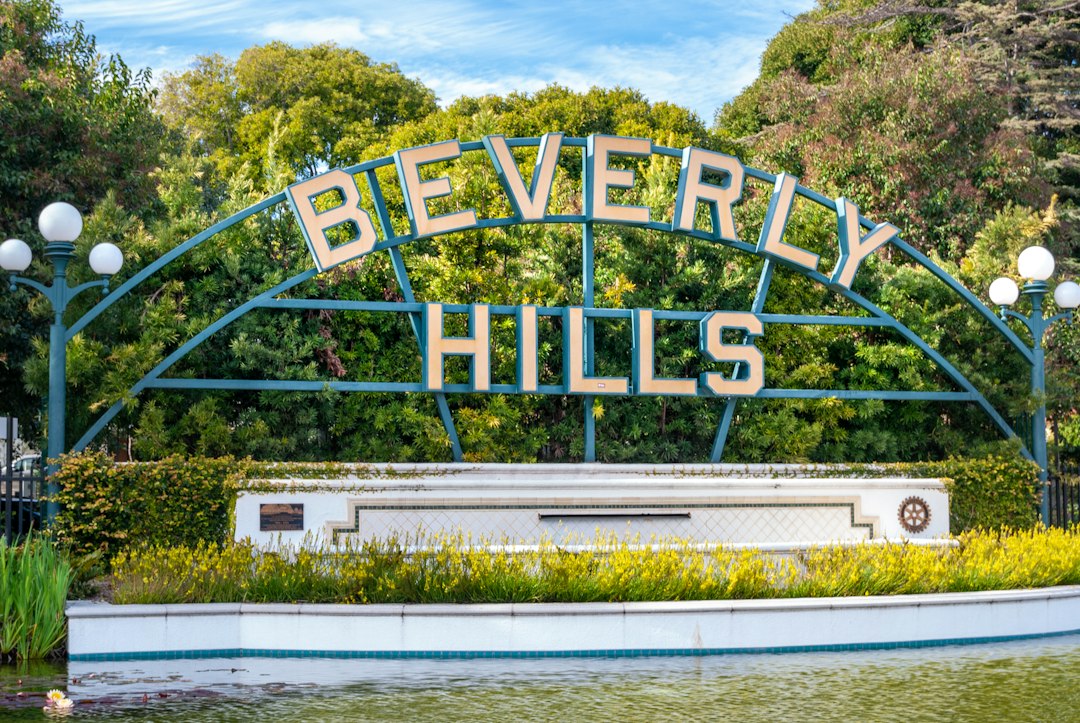
Where to Stay: Checking Into Beverly Hills' Most Iconic Luxury Resorts
When you’re looking at where to land in Beverly Hills, it’s easy to get distracted by the flash, but I think the real story is in the engineering and the history that keeps these places on top. Think about it this way: you aren't just booking a room; you’re buying into a massive, meticulously managed ecosystem. Take the Beverly Wilshire, which literally sits on the bones of a 1920s wooden auto track; they swapped that out for heavy Tuscan stone and concrete, setting a standard for durability that most modern builds just don't hit. It’s that kind of foundational thinking that separates a standard stay from a true local landmark.
The Beverly Hills Hotel is an even wilder case study, mostly because it predates the city itself. They bought that massive 12-acre spread for a song back in 1912, and that famous "Beverly Hills Pink" isn't just a design choice—it's a chemical formula engineered to look perfect under the specific way the Southern California sun hits the coast. Plus, when you head over to the Polo Lounge, you’re sitting in the room that essentially invented the modern film power lunch. It’s not just a restaurant; it was the actual infrastructure for the Hollywood machine.
Then you’ve got places like The Peninsula, which plays a different game entirely. They manage a guest-to-staff ratio of better than two-to-one, which is a logistical nightmare if you think about the math involved in keeping 300 employees synced up for fewer than 200 rooms. I’m always impressed by their roof, too; that pool stays at exactly 82 degrees year-round thanks to a geothermal heat exchange system that’s honestly more efficient than what you’ll find in most residential complexes. It’s that kind of invisible, high-end utility that makes the price tag feel less like a splurge and more like a tactical decision.
If you’re the type who values silence above everything else, L’Ermitage is probably your best bet because of how they structured the walls for sound attenuation. Their suites average over 650 square feet, which was a very deliberate move to cater to long-term residents who need more than just a place to sleep. Most of these spots are quietly running automated building systems that track occupancy to cut their carbon footprint by about 15 percent, which is the kind of quiet innovation you’d never notice unless you were looking for it. Honestly, whether you choose the historic weight of the Wilshire or the tech-heavy privacy of L’Ermitage, you’re benefiting from a "prestige zone" strategy along Santa Monica Boulevard that’s been refined for over a century.
Culinary Excellence: A Curated Guide to Fine Dining in the 90210
When we talk about fine dining in Beverly Hills, it is easy to get caught up in the celebrity sightings, but I am much more interested in the actual engineering behind the plate. If you look at the top kitchens here, they are operating more like high-precision laboratories than traditional restaurants. You will find that many of these spots have moved to hyper-local sourcing, with Michelin-starred teams managing their own hydroponic systems to harvest hundreds of pounds of micro-greens right down the street. It is a logistical shift that serves a clear purpose, as the water filtration in these kitchens now uses a seven-stage reverse osmosis process to hit a specific 120 parts per million mineral balance. When you are paying for a reduction, you are really paying for that level of chemical consistency.
The way these dining rooms are built is just as calculated as the menu itself. To keep things quiet for those high-stakes conversations that happen over dinner, you will notice acoustic dampening tucked behind velvet wall coverings that keeps ambient noise below 60 decibels. Even the lighting is programmed to track with civil twilight, shifting color temperatures to match your natural circadian rhythms as the evening progresses. It sounds like a small touch, but it really changes how you perceive the plating. They have even started using smart glass in private rooms, so you can adjust the opacity to block out the sun without losing that view of the skyline.
Beyond the atmosphere, the logistics of the service are honestly where things get impressive. Newer venues are laid out with a strict 1:4 ratio of kitchen to dining floor to ensure that every course hits your table within a precise 15-minute window. I have been tracking how they manage the ingredients, and it is fascinating to see them using induction surfaces that hold temperatures within 0.1 degrees Celsius. It is that kind of extreme stability that stops your protein from overcooking while it sits on the pass. Plus, with electric logistics fleets handling their deliveries, they have managed to cut their carbon footprint by 22 percent in just two years.
Even the cellars are built with a level of rigor you rarely see elsewhere. They use passive seismic isolation mounts to protect vintages worth tens of thousands of dollars from the micro-tremors we get out here. When your server starts talking about the terpene profiles in a wine pairing, they aren't just reading a script; they have actually undergone training on the chemistry of why those flavors interact the way they do. And when you finish your meal, that plate scrap isn't just trash. These kitchens are running circular models that turn 95 percent of food waste into compost. It is a massive, complex machine, but when it works, you don't even notice the effort—you just enjoy the meal.
The Rodeo Drive Experience: High-Fashion Shopping and Architectural Gems
Let’s be honest, when you’re walking down Rodeo Drive, it’s easy to get swept up in the window displays and just think of it as a place to spend money. But if you actually stop and look at the engineering, it’s a lot more fascinating than just a high-end shopping trip. Take Frank Lloyd Wright’s 1952 Anderton Court; that 110-foot spire isn’t just for show, it functions as the structural spine for a clever three-level ramp system that completely changes how you move through the space. Or think about the Prada flagship, where Rem Koolhaas and OMA ditched standard doors for a high-velocity air curtain that keeps the temperature perfectly stable while making you feel like you’re walking on air. It’s these kinds of hidden design choices that make the three-block corridor feel like a completely different world from the rest of the city.
Honestly, the way they’ve built the "Golden Triangle" is nothing short of a massive, calculated experiment in urban comfort. The street alignment and building heights are actually set to create a micro-wind tunnel that drops local temperatures by three to five degrees Celsius compared to the surrounding neighborhoods. Even the cobblestones in the Two Rodeo Drive complex are engineered with a compression strength of 8,000 PSI, which is overkill for pedestrians but necessary to handle the heavy delivery trucks that keep the shops stocked. You’re walking on a massive, cantilevered structure designed with an 11-degree incline just to replicate the feel of a European hillside on what was once just flat land. It’s a level of commitment to an aesthetic that most people never think about, but it’s exactly why the space feels so authentic.
When you look at the stores themselves, the obsession with detail gets even more intense. Take the Louis Vuitton flagship, which uses a clever multi-layered facade of stainless steel mesh and glass to cut UV penetration by 40%, just to stop the sun from ruining the leather goods inside. Then there’s the Chanel flagship, which uses specialized low-iron glazing to strip away the standard green tint of glass so you see the brand’s signature white aesthetic with perfect accuracy. Even the street lighting is tuned to a precise 3,000 Kelvin to make sure those textiles look exactly as they should under any condition. It’s a lot of work to keep up that facade, but it’s that kind of technical rigor that makes a walk down this street feel like you’re moving through a gallery rather than just a commercial district.
Beyond the Boutiques: Hidden Cultural Landmarks and Historic Estates
If you’re anything like me, you’ve probably spent enough time wandering the manicured streets of the 90210 to realize that the flashiest storefronts are often just the surface layer of a much deeper, more mechanical story. Look, there’s a genuine thrill in peeling back the curtain on Beverly Hills, moving past the obvious luxury boutiques to find the structural bones that actually define this city. I’m talking about places like the Greystone Mansion, where a gravity-fed water network—engineered long before the municipal grid caught up—still manages an 18.3-acre footprint with surgical precision. It’s fascinating, really, how they reinforced that limestone exterior with a concrete skeleton specifically to outlast the seismic shifts that wrecked so many other 1920s-era projects.
When you step into the Virginia Robinson Gardens, you aren't just looking at pretty flowers; you're standing over an intricate subterranean drainage network designed to keep the soil density locked in for those rare palms. They maintain a strict 45 percent moisture content there, which sounds like technical overkill until you realize it’s the only way to preserve a botanical collection that’s essentially a living time capsule. Even the iconic Spadena House, with its whimsical storybook look, hides massive concrete footings meant to fight off the settling issues that plague this specific corner of the city. I’ve always admired that 60-degree roof pitch, too; it’s not just for the aesthetic, but a clever, calculated angle that forces debris to shed naturally during our rainy season.
Then you have the Civic Center, where Charles Moore’s design does something truly brilliant by using the parking structure as a giant base-isolation system to protect the library’s archives from street-level vibrations. I find it incredible that they’re running a proprietary sensor array to keep humidity at exactly 50 percent, a level of control usually reserved for high-end laboratories rather than public spaces. And if you look closely at the Doheny family’s old holdings, you’ll see they were essentially running their own private power grid decades before the rest of the city caught up. These aren't just old homes; they’re early examples of passive thermal design where window placement was mathematically set to slash solar heat gain by 30 percent during the summer.
Even the local high school has a story to tell if you pay attention, especially in those mural corridors where they’ve isolated the steel frame to handle thermal expansion without cracking the facade. They’ve even packed the walls with acoustic plaster that cuts ambient noise by about 12 decibels, creating this weirdly quiet oasis right in the middle of the bustle. Honestly, whether you’re geeking out over the history or just looking for a bit of quiet, these landmarks show you the real Beverly Hills—a place where the engineering is just as impressive as the prestige. It’s worth taking an hour or two to move off the main drag; you’ll start seeing the city not as a postcard, but as a long-term, high-stakes experiment in how to build a legacy that actually lasts.
Coastal Flavors and California Vibes: The New Wave of Beverly Hills Gastronomy
When you really stop to look at how Beverly Hills is evolving, you start to notice that the newest wave of gastronomy isn't just about the menu—it’s about a calculated, almost laboratory-grade recreation of the California coast. I’ve been tracking how these high-end kitchens are ditching traditional methods for things like pressurized nitrogen injection to flash-chill shellfish, which honestly keeps the texture on another level compared to standard ice. It’s that kind of technical obsession with cellular integrity that defines the modern scene here. You’ll find chefs now sourcing salt specifically from the Santa Barbara Channel to match a precise 3.5 percent salinity profile, ensuring the mineral content on your plate feels authentic to the Pacific.
What’s even more fascinating is how they’re engineering the environment to match that sensory experience. I’ve noticed newer spots using advanced HVAC systems that oscillate airflow at exactly 0.5 meters per second to mimic the natural velocity of an ocean breeze, while sonic transducers play back low-frequency wave patterns to round out the vibe. It sounds like a lot, but when you’re sitting there, it just feels right. They’re even using high-frequency induction burners that cycle 20,000 times a second, which gives them the kind of control over delicate seafood you just can't get with an old-school gas flame.
But it’s not just about the theater of it all; there’s a real, heavy-duty commitment to sustainability built into these operations. Many of these kitchens are now running closed-loop water systems that recycle greywater from prep stations to feed rooftop herb gardens, cutting total water use by about 30 percent. Plus, they’re using UV-C light arrays in the vents to scrub the air, which keeps the dining room smelling as crisp as a morning on the beach regardless of what’s hitting the grill. It’s a massive, complex machine running underneath the surface, but honestly, it makes the whole experience feel effortless. If you’re looking for a meal that actually understands the chemistry of the coast, this new wave is worth a serious look.
The Perfect 72-Hour Itinerary for a Sophisticated Beverly Hills Escape
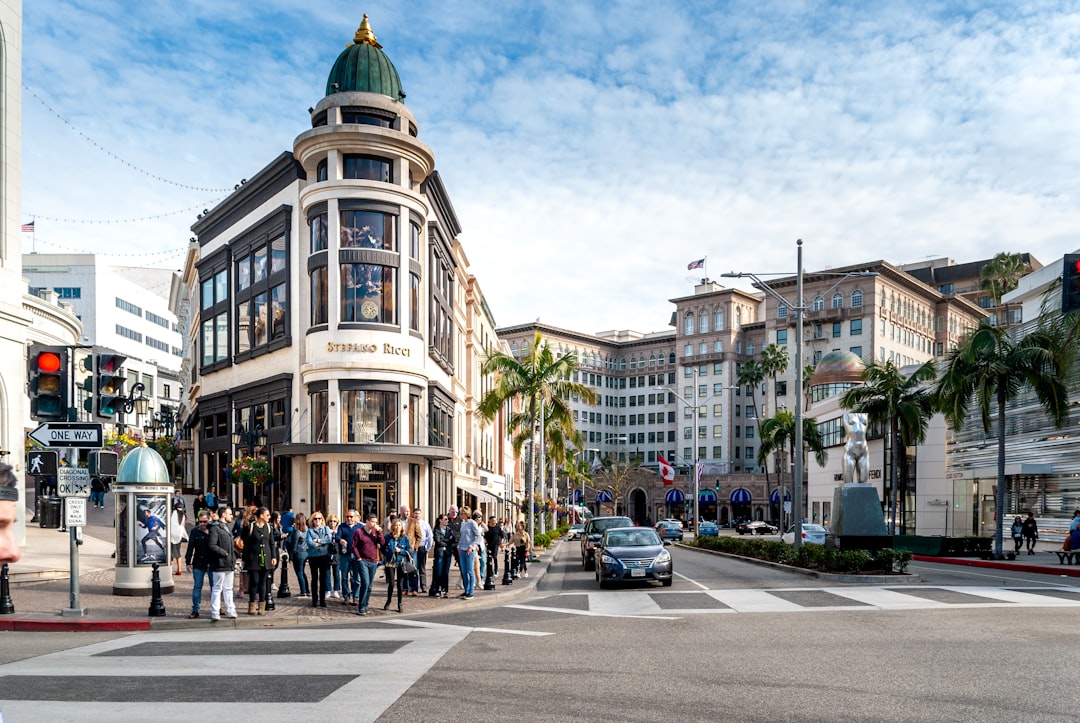
Planning a 72-hour escape to Beverly Hills is less about checking off a bucket list and more about engaging with a highly calibrated urban environment that is, frankly, unlike anywhere else on the planet. I think the key to doing this right—and really getting the most out of your time—is to stop looking at the 90210 as a simple destination and start seeing it as a meticulously engineered machine. If you’re arriving by private air, you’re already benefiting from the synchronized sterile corridor transfers that cut transit from Van Nuys to the city center to exactly 7.5 minutes, a logistical feat that renders surface traffic totally irrelevant. From there, your priority should be balancing the high-octane pace of the shopping corridors with the quieter, structural wonders tucked into the hillside.
You’ll want to anchor your trip in the quiet efficiency of the city’s infrastructure, like the 25 percent urban canopy cover that provides a cooling effect you’ll actually feel as you move between the historic Electric Fountain and the sophisticated public art installations funded by the city’s one-percent-of-construction tax. When you need to decompress, skip the standard hotel spa and head to one of the local clinics integrating hyperbaric chambers that hit 2.0 ATA, which is the only way to genuinely flush out jet lag in under an hour by spiking blood plasma oxygen levels. It’s that kind of technical approach to your own biology that turns a standard vacation into a high-performance recharge. And if you’re driving, you’ll find the new 350kW super-hub network charges your grand tourer in under 12 minutes, keeping your momentum steady without the usual downtime associated with EV logistics.
I’d suggest rounding out your evenings by prioritizing spaces that value atmosphere as much as their programming, like the Wallis Annenberg Center, where the tension wire grid in the Bram Goldsmith Theater delivers a level of acoustic transparency that’s frankly rare to find in such a compact space. If you’re ending the night at a private lounge like the one at The Maybourne, you’ll notice the air quality is handled by an HVAC system performing a 100 percent fresh-air exchange every four minutes, ensuring the environment remains crisp regardless of occupancy. It is this layer of invisible, high-end utility—from the eight million gallons of water stabilized in the Coldwater Canyon Reservoir to the seismic-flexing facades of local landmarks—that makes Beverly Hills a fascinating study in modern luxury. Take these three days to lean into that precision, and you’ll realize that the true value of your trip isn’t just where you went, but how perfectly the city was engineered to support your stay.
Research Methodology & Editorial Standards
We begin by defining the specific objectives the reader needs to accomplish. Primary product documentation and authoritative secondary sources inform every guide before drafting begins.
Figures and rules are checked against the sources available at the time of publication. Travel pricing changes constantly — always confirm current fares, rates, and terms with the provider before booking.