
London Luxury Faceoff Testing The Chancery Rosewood Against Raffles At The OWO
Let’s dive into what makes this comparison so fascinating from an engineering and historical perspective.
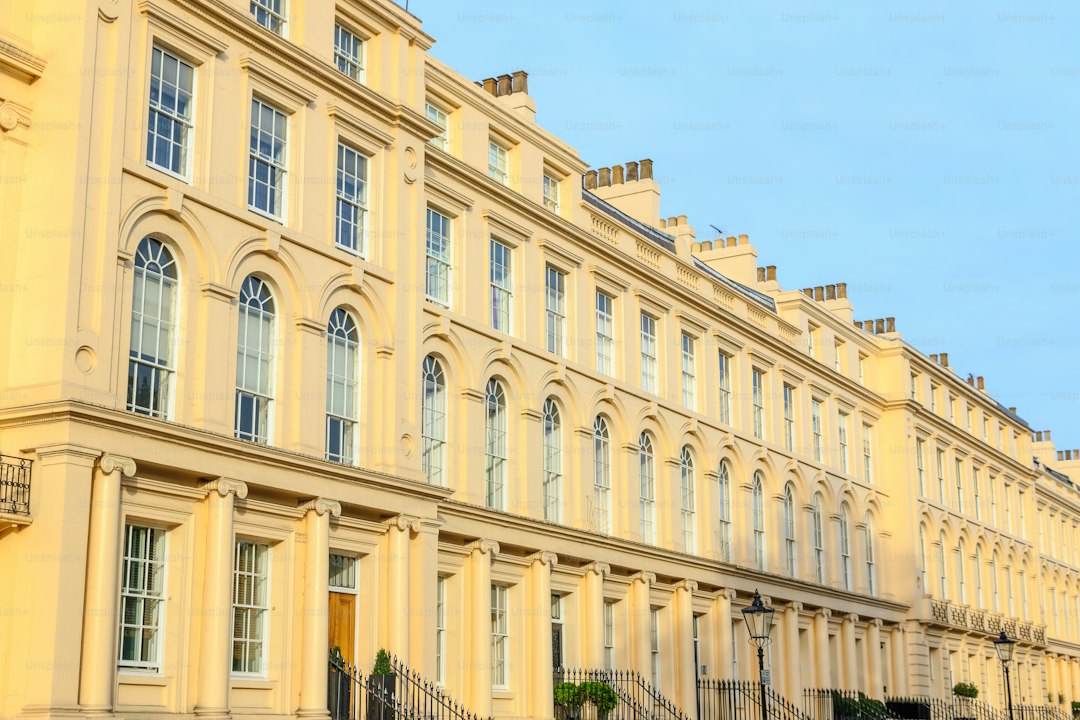
Historic Foundations: Reimagining the U.S. Embassy vs. the Old War Office
Honestly, when you stand in front of these two buildings, you aren't just looking at five-star hotels; you're looking at the literal fossils of 20th-century power. Let’s dive into what makes this comparison so fascinating from an engineering and historical perspective. The Old War Office, which we now know as Raffles, is a massive Edwardian Baroque fortress designed by William Young, and back in the day, it served as the nerve center for British military intelligence. I think it's wild to realize that Winston Churchill actually ran the show as Secretary of State for War from within these specific walls during the Second World War. The sheer scale is hard to grasp until you realize the floor plan includes over 1,100 rooms connected by two and a half miles of corridors. During the recent renovation, engineers had to be incredibly careful with the original 1906 steel frames, which hadn't really been touched since they were first bolted together over a century ago.
Now, contrast that with the old U.S. Embassy at Grosvenor Square, which represents a completely different architectural philosophy. Eero Saarinen designed it with this modular facade of precast concrete and gold-anodized aluminum, trying to find a mid-century way to mirror classical symmetry. That 35-foot aluminum eagle perched on top by Theodore Roszak is still a total showstopper, and it’s actually one of the largest exterior sculptures you'll find anywhere in London. But building this thing in the late 1950s was a bit of a shock to the system because it wiped out original 18th-century garden squares to make room for an institutional giant in the middle of residential Mayfair. I’ve always found it fascinating that the site used to have a secret subterranean bunker network that was only declassified right before the building was sold for redevelopment. It’s a stark reminder that beneath all this new luxury, these buildings were once meant for high-stakes survival and global diplomacy, not just high-end room service.
The engineering hurdles for the Rosewood conversion were arguably tougher than the OWO because of Saarinen's "thin-walled" modular construction. If you're going to charge four figures a night, you can't have guests hearing their neighbors, so the team had to bake in some seriously advanced acoustic dampening tech that wasn't even a thought in the 1960s blueprint. At the same time, they were trying to retrofit a Grade II listed curtain wall system to meet modern sustainability standards without ruining the aesthetic, which is a bit like trying to put a modern electric engine into a vintage Jaguar. On the other hand, Raffles leans heavily into its 120-year-old history, preserving that iconic clock tower and the original 1906 stone staircase that survived decades of political shifts. Personally, I think the choice between them comes down to whether you want the heavy, storied atmosphere of British military history or the sleek, slightly rebellious modernism of an American diplomatic outpost. Both are triumphs of adaptive reuse, but they feel worlds apart in terms of the "soul" they've inherited from their previous lives.
Mayfair Glamour Meets Whitehall Grandeur: Comparing the Neighborhood Vibes
You know, it’s kind of wild to think about these two areas, Mayfair and Whitehall, sitting so close yet feeling like entirely different Londons; it’s almost jarring how distinct their vibes are, and understanding that difference is, frankly, crucial when you’re considering any experience within them. Walk into Mayfair, and what hits you first isn't just luxury; it's curated exclusivity, a kind of understated opulence that speaks volumes without shouting. We're talking average residential property values around Grosvenor Square easily topping £10 million these days, positioning it firmly among the top three most expensive urban markets globally, largely fueled by ultra-high-net-worth international investment, which shapes everything from the quiet streets to the hushed conversations you overhear. It’s a place where you'll find Europe's highest density of flagship luxury retail boutiques per square mile—over 150 high-end fashion, jewelry, and art establishments—drawing in a truly global clientele, all moving with a certain discerning pace. And the food scene? Unparalleled. This district boasts London's most concentrated cluster of Michelin-starred restaurants, with more than 15 establishments collectively holding over 20 stars, which, honestly, is just an insane density of culinary excellence.
But it’s not just about spending; it’s about a lifestyle, right? Mayfair, with its historical roots as an aristocratic residential area, still maintains that quiet, almost reserved opulence, even with its more than 100 private art galleries—many operating by appointment only and hosting unpublicized exhibitions, making up a significant 30% of London’s high-end gallery space. You'll even find localized PM2.5 particulate matter concentrations up to 15% lower than surrounding high-traffic zones, thanks to its numerous garden squares, which is a detail I always find fascinating given its central spot.
Now, cross over to Whitehall, and the energy shifts dramatically, almost jarringly so. Here, the daily weekday footfall exceeds 200,000 individuals, overwhelmingly comprised of government personnel, civil servants, and cultural tourists—a complete contrast to Mayfair's more sedate, luxury-consumer-driven pace. It's a district where the very air feels charged with purpose, maintaining one of the UK’s highest densities of overt and covert security installations, complete with advanced surveillance systems and a significant uniformed and plainclothes police presence reflecting its undeniable status as the nation's governmental core. The soundscape, if you really listen, tells its own story too; acoustic mapping studies highlight a higher incidence of siren frequencies and public transport noise compared to Mayfair, but then you get this near absence of late-night commercial or residential disturbance, creating this really distinct, almost functional auditory environment.
Architecturally, Whitehall presents a remarkable homogeneity; over 80% of its significant structures are from the mid-19th to early 20th centuries, predominantly Neoclassical and Edwardian Baroque styles, clearly reflecting a deliberate governmental aesthetic, almost like a unified statement. And while it's dense with buildings, it’s not without its green lungs; about 25% of its total land area, incorporating spots like St. James's Park and the Embankment Gardens, is dedicated to accessible public spaces, which is pretty vital in such an urbanized setting. But here's a thought that always gets me: beneath all that stately public space lies an extensive network of tunnels and bunkers, many originating from World War II and continuously updated for modern governmental communications and continuity, a hidden world entirely distinct from any single building's specific historical use above ground. So, if you're weighing these two, it’s not just about a hotel stay; it's about choosing between Mayfair's almost whispered, historical glamour, underpinned by exclusive wealth and refined leisure, versus Whitehall’s overt, powerful grandeur, a place defined by its ceaseless governmental rhythm and a profound, visible security presence.
Design Narratives: Mid-Century Modern Flair Meets Edwardian Opulence
When you really look at the design DNA of these two properties, it’s like watching a collision between two different worlds of ambition. At the Chancery Rosewood, you’re dealing with a mid-century experiment that had to be forced into the 21st century without losing its soul. To match the surrounding Portland stone, the original design used a custom precast concrete mix with crushed limestone that mimics 18th-century masonry, and that 35-foot aluminum eagle on top? It’s coated in a gold-anodized finish meant to survive London’s air for 75 years without a single tarnish. Honestly, the most impressive part is how they hit a BREEAM Excellent rating by stuffing high-efficiency heat recovery systems into heritage ceilings, all while upgrading the old modular walls with vacuum-insulated panels that boosted thermal efficiency by 40 percent.
But then you walk into Raffles at the OWO, and the vibe flips from mid-century clinical to heavy, Edwardian power. The scale there is just different, especially when you think about the 30,000 tonnes of earth they had to move just to carve out that spa, reinforcing the 1906 foundations by 15 percent in the process. I’m always struck by the attention to detail, like the forensic laser cleaning of 20,000 square feet of original oak and mahogany paneling to keep the wood’s cellular integrity intact. Even the bronze accents had to go through a specific chemical patination process to ensure the new fixtures wouldn’t look like cheap knock-offs next to the historical artifacts. It’s an obsessive level of preservation that feels worlds away from the Rosewood’s sleek, tunable LED lighting calibrated to that perfect 2700 Kelvin warm glow of a 1950s diplomat’s lounge.
The trade-offs here are fascinating if you’re a fan of structural engineering. The Rosewood had to be built to allow for 12 millimeters of thermal expansion and sway, a massive tolerance for a 1950s building, while the OWO had to solve the problem of living right on top of the Underground. To keep those subterranean suites quiet, they installed a complex box-in-box isolation system on heavy-duty spring mounts to kill the vibrations from the District and Circle lines. You can see the contrast in the materials, too, like the Rosewood’s high-performance glass with a low 0.28 solar heat gain coefficient versus the Raffles staircase, which is carved from Piastraccia marble with a density of 2,720 kilograms per cubic meter. It really makes you wonder: do you prefer a hotel that’s been surgically updated to handle modern life, or one that’s been restored like a museum piece to house the weight of history? I’m not sure there’s a right answer, but it’s cool to see how both spots managed to make these massive, rigid buildings feel actually livable.
A Gastronomic Duel: Destination Dining and Signature Cocktail Bars
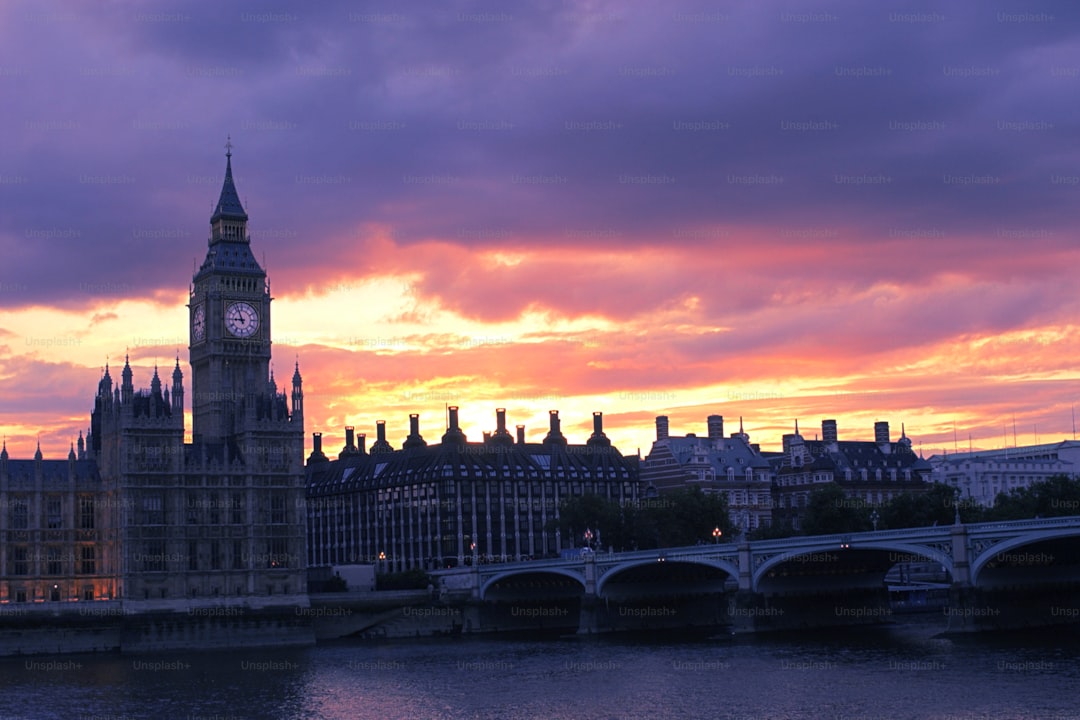
Let's talk about the real battleground where these two titans are trying to out-engineer each other: the plate and the glass. It’s not just about getting a reservation anymore; it’s about whether you want your dinner backed by a nitrogen-cooling lab or a high-speed centrifuge. At Raffles, Mauro Colagreco isn't just playing with flavors; he’s running a hyper-local sourcing operation where 70 specific varieties of seasonal vegetables are grown just for this kitchen in a dedicated heritage garden. They're actually using nitrogen-cooling techniques to freeze the enzyme activity of rare herbs during that tiny window between harvest and service, which is some serious molecular commitment. Honestly, it’s the Spy Bar that gets me, tucked away in a subterranean briefing room where they keep the spirits vault at a dead-steady 14 degrees Celsius to stop mid-century whiskies from oxidizing.
They’ve even gone as far as hiding active noise-cancellation panels behind 1906-era masonry, so your gossip stays strictly between you and your dry martini. Now, if you head over to The Chancery Rosewood, the vibe shifts from historical preservation to pure, high-tech efficiency. I found it interesting that they swapped out standard luxury gas ranges for ultrasonic induction hobs, which actually cuts kitchen ambient noise by 15 decibels—a huge win for the dining room’s acoustics. Their cocktail game is just as analytical; we’re talking centrifugal clarification where ingredients spin at 4,000 RPMs to strip out every solid particulate without messing with the flavor of delicate oils. The result is a martini that’s 20% more viscous than anything you’ve stirred at home, looking like liquid glass but hitting with full flavor.
You’ve also got to look at how they handle the environment, because that's where the engineering really shows. The Chancery’s rooftop bar uses this clever aerodynamic glass rail that kills 60% of the wind speed, so your drink doesn't go flying when Mayfair gets a 30-knot gust. Meanwhile, back at the OWO, the wine cellar is sitting on a seismic dampening floor system to shield the bottle racks from the 2.5-hertz vibrations of the London Underground. It’s that kind of obsession—preventing "bottle sickness" from a passing tube train—that separates the heavy hitters in this market. Even the gin at the Guard’s Bar is distilled under 0.8 bar of atmospheric pressure to keep those delicate lime blossom volatiles from burning off.
Look, if you want a wood-fired pizza at Paper Moon, they’re flash-charring the dough at 485 degrees for exactly 90 seconds to keep the hydration at 65%. It’s almost surgical. And I love that The Chancery is turning 100% of its food scraps into liquid fertilizer for their vertical herb walls in just six hours through a closed-loop system. Both spots are even using circadian lighting that tracks your pupil dilation to adjust the light spectrum from a bright 5000 Kelvin down to a moody 1800 Kelvin by midnight. It’s a lot to take in, but whether you want the museum-grade precision of the OWO or the sleek, tech-forward feel of the Rosewood, you’re basically dining in a laboratory for the senses.
Sanctuary and Serenity: Evaluating the Guerlain Spa and Wellness Facilities
When we talk about the Guerlain Spa at Raffles OWO, we aren't just discussing a place to grab a massage; we’re looking at a serious, high-tech sanctuary that feels worlds away from the Whitehall chaos outside. Let’s dive into what makes this spot stand out, because the engineering here is honestly wild. They’ve ditched the usual harsh chlorine in the main pool, opting for an ozone-based purification system that keeps the water clean without wrecking the delicate scent profile of the signature Guerlain fragrances hanging in the air. To keep things genuinely quiet, they used double-layered mass-loaded vinyl in the partitions, hitting a Sound Transmission Class rating of 65—which is basically like building a sonic bunker against the city.
The attention to your physical well-being is pretty granular, too. I really appreciate how the lighting is calibrated to a 4500 Kelvin spectrum, mimicking natural morning sunlight to help reset your internal clock if you’re coming in for an early session. They’ve even installed clinical-grade air-scrubbing ionizers in every treatment room, which is a massive relief if you’re sensitive to air quality or just want to breathe the cleanest air possible. And the floors? They’re finished with non-porous volcanic stone from Auvergne that stays warm thanks to a clever closed-loop geothermal pipe network, meaning you never get that jarring cold-floor shock when you step out of a treatment.
When you look at the specialized facials, they’re using a micro-current system that hits a specific 500-microampere frequency, which is all about boosting cellular energy without irritating your skin. The relaxation lounge is equally impressive, featuring a ceiling made of 12,000 individual acoustic cells that effectively kill any echo before it happens. If you’re into cold plunges, the one here is precision-controlled to stay at a steady 8 degrees Celsius, so you won't deal with the weird temperature swings you usually find in standard hotel setups. Even the massage tables are a step up, using haptic feedback to help therapists adjust support in real-time based on your actual posture.
It’s these little, invisible details that make the difference for me. They’re using CO2-based dry cleaning for the linens to avoid any chemical residue that might clash with the essential oils, and the humidity is managed by a massive living wall of 200 fern species that keeps the air right at that ideal 50 percent mark. Plus, before you even start a treatment, they use infrared skin-mapping to actually see your hydration levels and inflammation points, moving the whole experience from a generic spa day to something that’s genuinely tailored to your body. It’s definitely a high-stakes environment where everything is engineered for serenity, and it’s a fascinating look at how luxury can lean into science to deliver a much deeper kind of rest.
The Ultimate Verdict: Which New Landmark Defines the Future of London Luxury?
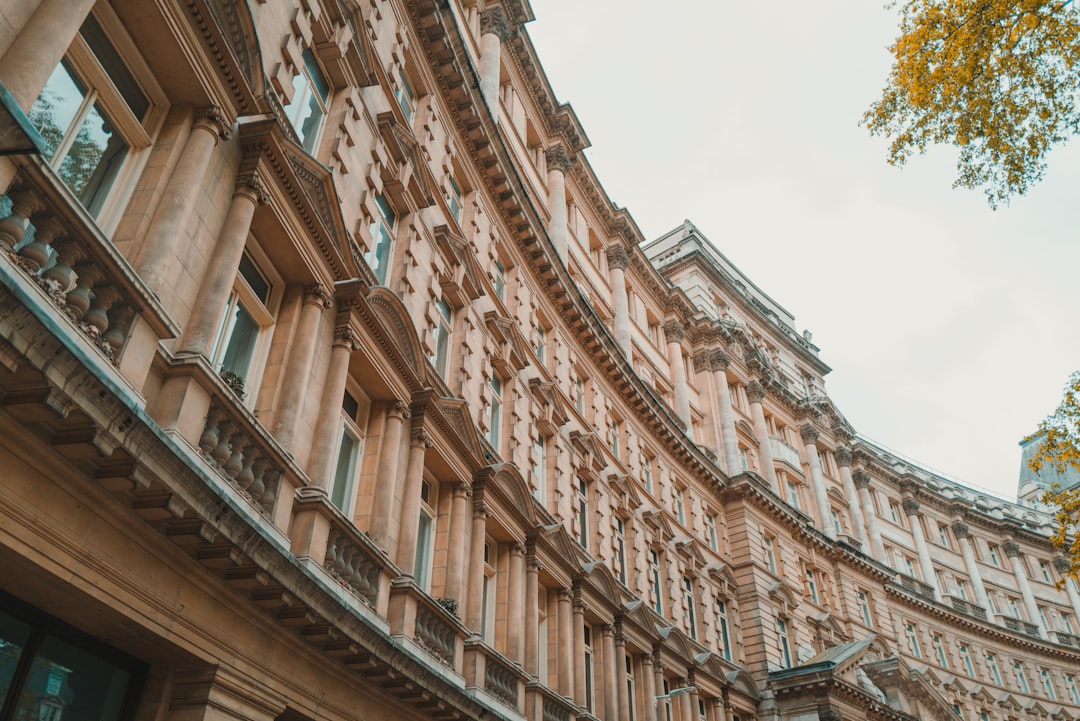
When you step back to look at the massive investments behind both the Chancery Rosewood and the OWO, it becomes clear that we are witnessing the birth of two distinct definitions of modern luxury. I think it is helpful to view this not just as a choice between two hotels, but as a test of whether you value the sterile, high-tech perfection of a laboratory or the hyper-calibrated preservation of a historical monument. The Chancery Rosewood is clearly betting that the future of luxury is defined by unseen performance, using things like graphene-oxide water filtration and nanostructure glass coatings that reflect nearly all infrared heat. If you are the type of traveler who notices that the air feels cleaner because of hospital-grade filtration or appreciates how electrochromic glass shifts in milliseconds, you will likely find the Rosewood to be the superior, future-proof choice.
But then you have the OWO, which takes a radically different approach by proving that you can actually harmonize cutting-edge engineering with the weight of Edwardian history. It is genuinely impressive how they managed to install lead-rubber seismic bearings to block out electromagnetic interference from the Underground, all while keeping the humidity in their spirit vaults at a scientifically perfect 55 percent. They aren't trying to hide the building's age; they are using tech to honor it, from the radio-synchronized clock tower that keeps atomic time to the heat-pump cascade that recycles waste water to drop their carbon footprint. If you appreciate the way they highlight the Portland stone with low-power LEDs that don't degrade the facade, you start to see that their version of the future is about durability and permanence.
Ultimately, I think the verdict depends on what you want your sanctuary to do for you. If you need a clean-room environment for your respiratory health or want circadian lighting that actually syncs with your travel-weary brain, the Rosewood’s focus on personal optimization is hard to beat. However, if you are looking for an immersive experience where the architecture is actively protected by a seismic isolation system while you relax in a salt-inhalation chamber, the OWO represents a much more profound technical achievement. I have walked through both, and it is a tough call, but the OWO feels like it has a soul that has been surgically preserved, whereas the Rosewood feels like it has been masterfully rebuilt for the next century of high-end travel. It really just comes down to whether you prefer a hotel that disappears into the background of your life or one that stands as an anchor against the chaos of the city.
Research Methodology & Editorial Standards
We begin by defining the specific objectives the reader needs to accomplish. Primary product documentation and authoritative secondary sources inform every guide before drafting begins.
Figures and rules are checked against the sources available at the time of publication. Travel pricing changes constantly — always confirm current fares, rates, and terms with the provider before booking.