
Why Turkiye’s Black Sea coast is the must visit destination for 2026
If you're tired of fighting for a square inch of sand on a packed Mediterranean beach, I think it's time we look toward the Black Sea.
Escaping the Crowds: Why the Black Sea is the Mediterranean’s Best Alternative
If you're tired of fighting for a square inch of sand on a packed Mediterranean beach, I think it's time we look toward the Black Sea. While everyone else is stuck in traffic near the French Riviera, the Black Sea offers a quieter, more temperate alternative that feels genuinely untouched. The water here is less saline than what you're used to in the Mediterranean, creating a brackish environment that feels different on your skin and supports a totally unique ecosystem. Plus, you won't deal with those massive tidal shifts, which means the coast stays consistent and calm for your entire trip. It’s honestly the kind of place where you can actually hear the waves instead of the crowds.
There's a real scientific advantage here, too. Because the Black Sea is essentially a massive meromictic basin, the deeper waters don't mix with the surface, which keeps things surprisingly clean. You'll find way lower levels of microplastics here compared to the Mediterranean, which makes for a much better swimming experience in my book. The summer water temperatures hover right around 25 degrees Celsius, giving you that perfect, warm dip without the sweltering, record-breaking heat waves that have been roasting the south lately. It’s just a more comfortable, manageable climate for anyone who actually wants to enjoy their time outdoors.
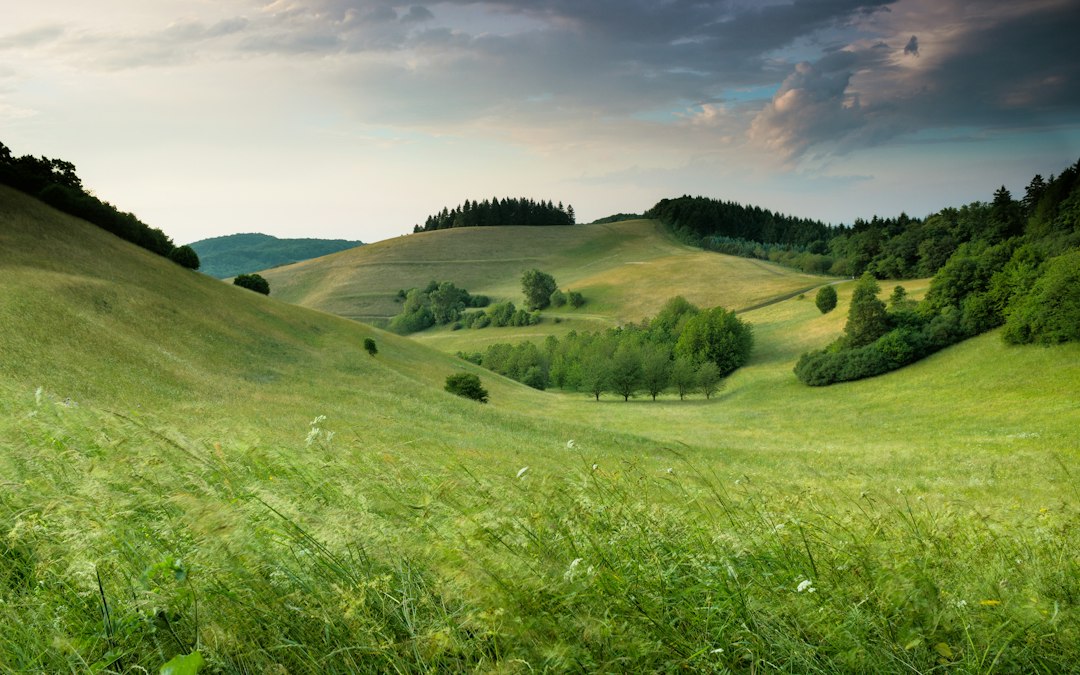
Beyond the water, the geography is just staggering and completely different from the dry, scrubby terrain you find further south. You’ve got these lush temperate rainforests, especially as you move into the eastern zones, which get plenty of rain to keep everything green and vibrant. I’m always struck by how much more alive the coast feels, especially with the huge numbers of migratory birds passing through regions like Artvin. You aren't just visiting a beach; you're stepping into a high-functioning, productive ecosystem. It’s a much lower-impact way to travel, especially since the infrastructure here isn't overwhelmed by the constant churn of massive cruise ships.
Lush Landscapes and Untamed Beauty: Exploring Türkiye’s Greenest Coastline
When I look at the map of Turkey, most people instantly think of the Aegean beaches, but the true biological engine of the country is hiding up north. If you want to understand why this coastline looks like a temperate rainforest rather than a dry scrubland, you have to look at the rain. Rize province pulls in over 2,500 millimeters of precipitation annually, which creates the perfect environment for the tea fields that cover more than 60 percent of the nation’s output. This constant humidity prevents the desert-like plants you’d find down south and keeps the broad-leaved deciduous forests looking remarkably vibrant. It’s a complete shift in geography that honestly changes how you perceive the entire region.
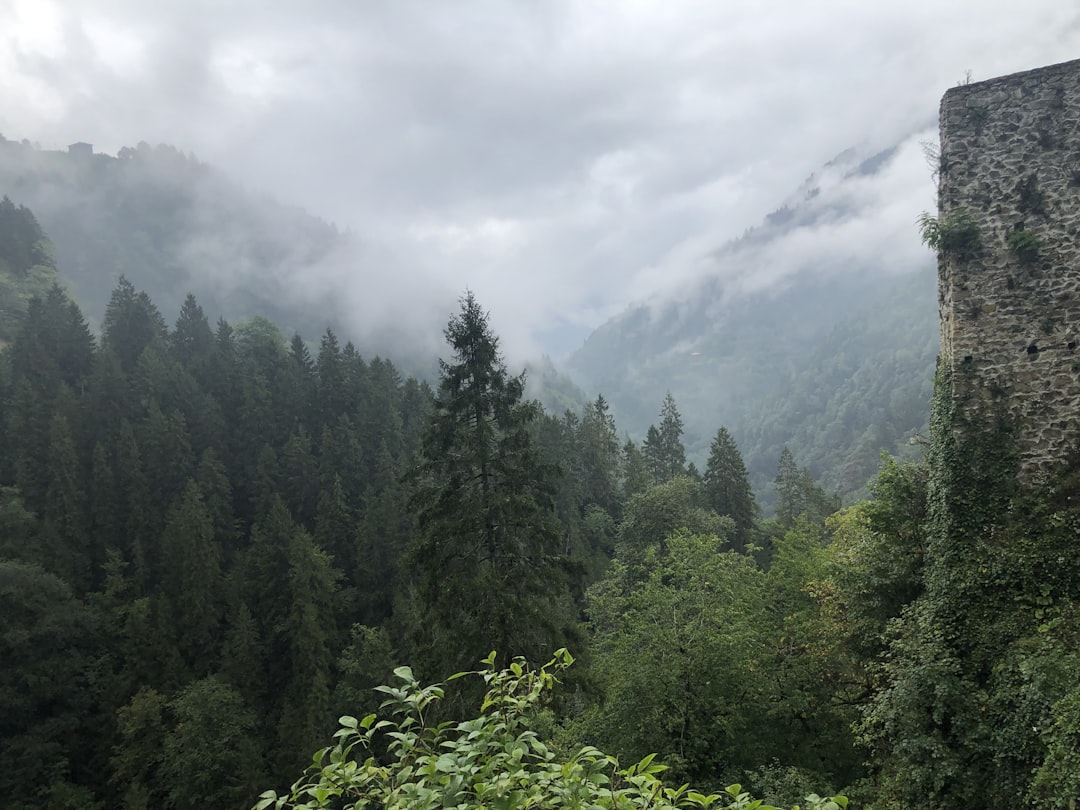
The steep, volcanic terrain here is just as fascinating as the greenery. You’ve got the Fırtına Valley acting as a primary biological corridor, sheltering rare species like the Caucasian lily, while the Macael district houses one of our last remaining primary old-growth rainforests. If you’re a bird watcher, the Artvin region is essentially a highway for raptors during their massive spring and autumn migrations, as they squeeze through that narrow gap between the mountains and the sea. You’ll even find the rare Caucasian Grouse hanging out in the high-altitude rhododendron scrublands, a sight you won’t catch anywhere else. It’s wild to think that this area functions as a perfectly balanced, high-functioning natural machine.
Beyond the biology, there’s a real human element to how this landscape has been shaped over centuries. The local high-pasture cultures, or Yayla, use seasonal grazing to keep these alpine meadows healthy, a practice that actually supports the region's overall biodiversity. And if you’re into history, you might be surprised to learn that the Giresun mountains were the original source for the cherries Roman legions first brought back to Europe. You can see the human ingenuity on display at the Sumela Monastery, which is carved directly into a sheer cliff at 1,200 meters. The builders used the stability of the local igneous rock to keep it standing, and honestly, standing on that ledge gives you a perspective on the terrain you just can’t get from a standard tour bus.
When you’re planning your trip, don’t ignore the Kaçkar Mountains. They are home to the southernmost glaciers in the Northern Hemisphere, which creates an alpine climate that feels completely out of place given how far south you actually are. While the hazelnut trees do the heavy lifting by anchoring the soil on these crazy steep slopes, the volcanic soil beneath them is what really makes everything grow so aggressively fast. It’s a dense, untamed version of Turkey that feels like a discovery every single time I look into it. If you’re after a place that hasn't been manicured for mass tourism, this is where you need to point your compass.
A Cultural Deep Dive: Authentic Villages and Ancient Highland Traditions
When you really start digging into the Black Sea highlands, you stop seeing them as just another scenic backdrop and start realizing they’re a living archive of human ingenuity. Take the wooden houses in the Çamlıhemşin district, for instance; they’re built entirely without nails, relying instead on complex joinery that’s been handed down for generations to handle the heavy rainfall and seismic shifts. It’s wild to think that this kind of structural engineering has kept these homes standing for centuries without a single piece of modern hardware. You’ve also got the Hemshin people living here, holding onto an archaic linguistic heritage that stands completely apart from what you’d hear in the rest of Turkey. It really makes you appreciate how these isolated valleys became pockets where ancient traditions didn't just survive—they actually thrived.
And if you’re looking for the heartbeat of these villages, just listen for the kemençe, that three-stringed bowed instrument that drives the rhythm of the horon dance. It’s honestly the pulse of the region, and when you pair that with a bowl of kuymak—a cheesy, cornmeal-based porridge that’s been fueling these mountain communities since maize arrived in the 17th century—you get a sense of how the land dictates the lifestyle. The local diet isn't just about taste; it’s a masterclass in agricultural adaptation to high humidity. Plus, you’ll notice stone arch bridges like the Çifte Bridge scattered throughout the terrain, built during the Ottoman era to conquer turbulent rivers that would’ve otherwise cut these villages off from the world.
Then there’s the sheer resilience of the local economy, which feels almost like a throwback to a more sustainable way of living. You can still see traditional wooden water mills grinding grain using nothing but the energy from the fast-flowing mountain streams, a system that’s remarkably efficient even by today’s standards. The women here have historically been the backbone of that economy, managing tea and hazelnut harvests while maintaining a level of independence that’s defined the social structure of these villages for a long time. Even the textiles, like the feretiko cloth made from local nettle fibers, show you just how much they’ve historically relied on their own resources. It’s not just a vacation destination; it’s a rare look at how communities can balance tradition with the raw, uncompromising demands of a high-altitude environment.
Gastronomy Beyond the Coast: Discovering the Unique Flavors of the Black Sea
I’ve spent a lot of time looking at food supply chains, and honestly, the Black Sea is where you see the most direct link between a specific ecosystem and what ends up on your plate. We’re talking about a region that produces roughly 70 percent of the world’s hazelnuts, and that’s not an accident; it’s the result of volcanic soil packed with potassium and phosphorus that gives the Giresun-origin nuts a higher oil content than anything you’ll find in Italy or Oregon. But if you really want to understand the local pulse, you have to look at the hamsi, or the Engraulis encrasicolus anchovy. These aren't the salty little things you find on a cheap pizza; they’re harvested in massive quantities during their migration through the Bosphorus and treated with almost religious fervor. I think the hamsi pilav is the perfect example of local engineering—they steam rice inside a protective crust of these fish to lock in moisture, which is a clever way to handle a protein that can dry out in seconds.
Let’s talk about the tea for a second, because the microclimate in Rize is actually doing something pretty cool on a chemical level. Since the average humidity sits above 70 percent, the tea plants don’t develop the bitter tannins that you’d usually find in drier regions like India or Sri Lanka. This means you’re getting a clearer, brighter infusion from those young leaves that’s much easier on the palate. Then there’s the mıhlama, or kuymak, which is basically a high-fat masterclass in fermentation. It relies on kolot cheese, which gets its signature elasticity from specific lactic acid bacteria that only thrive in the high-pasture environments of the Kaçkar range. When you see that cheese stretching across the table, you’re looking at the result of centuries of selective dairy farming in a very specific alpine tundra.
It’s also fascinating to see how the geography forced a total shift in the local diet back in the 17th century when maize first arrived. Wheat just can’t handle these steep, soggy slopes, so the locals pivoted to cornmeal, creating dense, moisture-wicking breads like mısır ekmeği that could survive the humidity. You’ll see this same resourcefulness in how they use wild-harvested greens like ısırgan, or nettle, which they pick before the plant blooms to maximize the iron and chlorophyll levels. Even the honey is different here because they use Caucasian honey bees, a subspecies that’s tough enough to forage at lower temperatures and higher altitudes than your standard European bee. This lets them tap into nectar from flora at elevations over 2,000 meters that most other honey producers simply can't reach.
I’m always struck by the science of their preservation, too, like the bletting process they use for medlar fruit. They basically let the fruit undergo a controlled chemical breakdown of tannins into simple sugars until it reaches a custard-like texture that’s honestly unlike any other preserve I’ve tried. And if you look into the kitchens, you’ll notice they still swear by copper vessels for their stews. It’s not just for show; the thermal conductivity is essential for the slow-simmering techniques these dense vegetable dishes need, and it even adds a tiny, consistent boost of essential minerals to the diet. When you put it all together—the volcanic soil, the high-altitude bees, and the humidity-resistant grains—you realize this isn't just local food. It’s a highly specialized biological output that you can't replicate anywhere else on the planet.
Sustainable Adventure: Hiking and Outdoor Exploration in the Kackar Mountains
If you’re the type of traveler who finds the standard mountain resort experience a bit too manicured, the Kaçkar Mountains are going to shift your entire perspective on what a wilderness trek can actually look like. We’re talking about an extreme vertical gradient here, where the terrain punches from sea level to nearly 4,000 meters in just 40 kilometers, forcing moisture-laden air upward to feed about 50 distinct glaciers and high-altitude lakes. It’s essentially a massive, natural hydrological engine for the entire plateau, and honestly, the jagged granitic peaks that result from all that glacial sculpting feel more like a remote Himalayan outpost than anything you’d expect to find in Turkey. You’re not just hiking a trail; you’re moving through a landscape that acts as a natural biological fortress, keeping invasive species out and allowing over 2,500 plant species—a huge chunk of which you literally won’t find anywhere else on Earth—to thrive in total isolation.
When you’re out there on the high passes, you’ll notice the transition from the dense, humid forests into the alpine tundra happens way faster than it does in the Alps. That’s because the constant fog drip at the 2,000-meter mark creates a unique microclimate that keeps everything lush even when the rest of the country is baking in a drought. It’s incredibly wild to think that while you’re scrambling over granite, you’re often crossing tectonic fault lines that have been shifting for millions of years, often bubbling up into the thermal springs that make for the best post-hike recovery you could ever ask for. Plus, the ecosystem is so well-balanced by these weird, specific conditions that you’ve got rare birds like the Caucasian Grouse relying entirely on the high-altitude rhododendron scrub, a setup that’s been protected by the sheer, brutal ruggedness of the mountains themselves.
The best part of exploring here is that the land feels so fundamentally untamed because it hasn't been re-engineered for mass tourism. The local yayla culture—those seasonal high-pasture grazing patterns—actually plays a key role in keeping the meadows healthy, essentially stopping the forests from swallowing up the grasslands and keeping the biodiversity levels high. It’s a low-impact way to see a place that’s still functioning as a wild, high-functioning natural machine. Just keep in mind that the terrain is relentless, and the rapid snowmelt in the spring can turn those river basins into high-velocity zones, so you’ll want to time your trip to match the mountain's own rhythm. If you’re looking for an adventure that feels like a genuine discovery rather than a pre-packaged tour, pointing your compass toward these peaks is probably the smartest move you’ll make all year.
Planning Your 2026 Black Sea Expedition: Best Routes and Seasonal Tips
Let's talk about how to actually map out your 2026 expedition, because the Black Sea coast isn't your typical beach holiday where you just show up and wing it. If you’re planning to navigate along the coast, you need to keep in mind the Black Sea Rim Current, which can clock in at a full knot; that might sound minor, but it’ll definitely eat into your fuel budget and arrival times if you’re heading west. You’ll want to prioritize up-to-date hydrographic charts too, especially near river deltas like the Kızılırmak, where the shoreline is constantly shifting due to rapid erosion and accretion. It’s a dynamic, living coast, and relying on older maps might leave you looking for an anchorage that quite literally isn't where it used to be.
If your heart is set on hitting the Kaçkar Mountains for some trekking, timing is everything because the weather window for truly clear, snow-free passes is tighter than you might think, usually opening up in late July and closing again by early September. Don't even bother trying to push it earlier, because the spring snowmelt turns those quiet mountain basins into dangerous, high-velocity torrents that are no joke to navigate. And while you’re out there, just be aware that the Pontic rhododendron creates some incredibly dense, five-meter-tall thickets that can make off-trail hiking a real grind, so stick to established paths unless you’re prepared for some serious bushwhacking. Honestly, between the steep, volcanic terrain and the way the weather changes, this region demands a lot more respect than the sun-baked Mediterranean coast.
Beyond the logistics, keep an eye on the water and the local calendar, especially if you’re hoping to time your visit with the seasonal rhythms of the region. Even if you're visiting in the summer, the UV index can hit a brutal 7 to 10 on clear days, so you’ll need way more sun protection than you’d expect for a northern latitude. If you’re a foodie holding out for fresh hamsi, you might be disappointed in the summer; the commercial season for those anchovies is strictly locked to the winter months between November and March. It’s these little, specific details—the way the maize roots hold the hillsides together, the isolated dolphin populations, or the specific timing of the harvest—that really define how you should approach this trip. If you go in prepared for the reality of the landscape rather than a polished travel brochure, you’ll find the Black Sea is one of the most rewarding, and frankly, most honest corners of the world to explore.
Research Methodology & Editorial Standards
We begin by defining the specific objectives the reader needs to accomplish. Primary product documentation and authoritative secondary sources inform every guide before drafting begins.
Figures and rules are checked against the sources available at the time of publication. Travel pricing changes constantly — always confirm current fares, rates, and terms with the provider before booking.