
Forget Cornwall and discover the hidden seaside gems of England that locals keep to themselves
Even the plant life is intense; the Poison Garden at Alnwick keeps over 100 lethal species under lock and key.
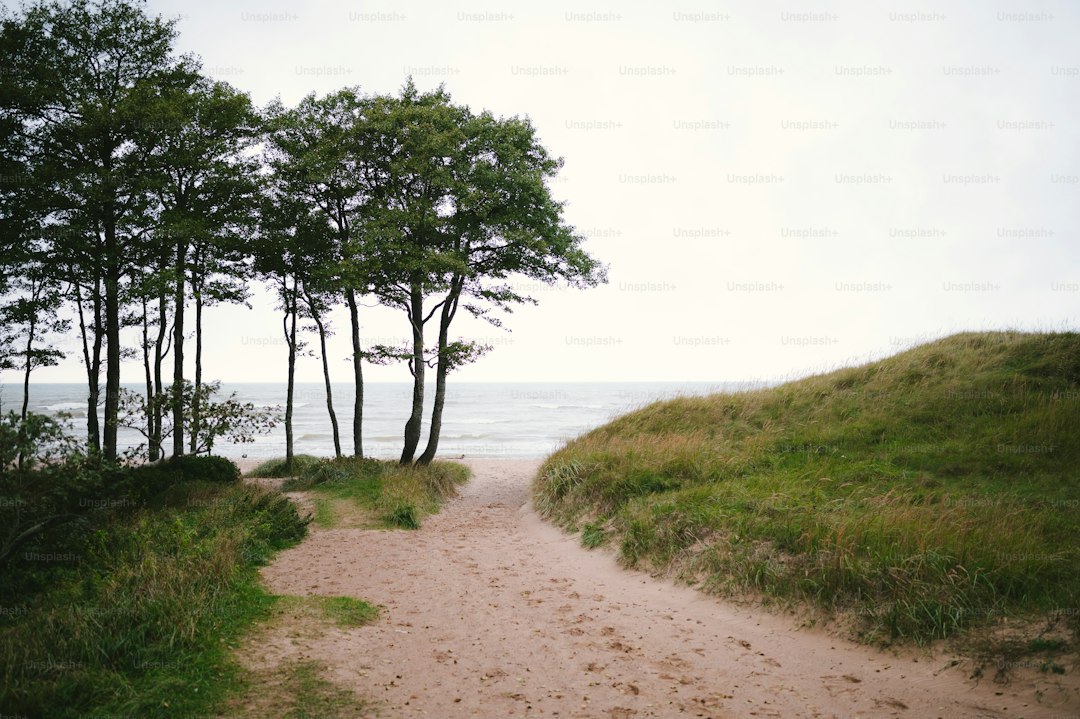
Northumberland’s Wild Frontier: Where Ancient Castles Meet Pristine Sands
You know that feeling when you find a place that hasn't been polished down by the masses yet? That’s Northumberland for me. I’ve spent time looking into why this stretch of the English coast feels so raw, and it really comes down to the Great Whin Sill. This quartz dolerite foundation, formed 295 million years ago, gives the region its jagged, dramatic spine. It’s the reason fortresses like Bamburgh Castle cling to the cliffs the way they do. Archaeologists actually found the Bamburgh Beast here, an 8th-century gold artifact that reminds you this wasn't just some outpost; it was the capital of the Anglo-Saxon kingdom of Bernicia.
The ecology here is just as rugged as the history. If you head over to the Farne Islands, you’re looking at a massive sanctuary for grey seals, with over 2,600 pups born annually. Then there’s the sheer physics of the coast. Take Lindisfarne, where the tidal causeway disappears under the North Sea twice a day. The bathymetry of those sands is so specific that water levels can jump by several meters in minutes, so you really have to time your visit. It’s sobering to think this same beach saw the 793 AD Viking raid that essentially kicked off the entire Viking Age.
But it’s not all just grit and history; there are some odd geographic quirks that make this place special. Beadnell Bay, for instance, is the only harbor on the entire east coast that faces west, which means you get actual sunsets over the water—a rare treat when you’re usually staring at the sunrise. If you’re into stargazing, the Northumberland International Dark Sky Park covers 1,483 square kilometers and holds a gold-tier status that’s hard to beat in Europe. I’ve seen data suggesting you can reach a limiting magnitude of 6.4 there, which is about as clear as it gets.
And honestly, the wildlife is just as isolated as the geography. You’ve got the Chillingham Wild Cattle, a herd that’s been cut off from the rest of the world for over seven centuries, making them statistically rarer than the giant panda. Even the plant life is intense; the Poison Garden at Alnwick keeps over 100 lethal species under lock and key. Whether you’re walking the 100-kilometer path through the young dunes of Druridge Bay or spotting the rare roseate terns on Coquet Island, you’re constantly reminded that this isn't a tourist trap—it’s a living, breathing frontier.
The Norfolk Coastline: Salt Marshes, Big Skies, and Secluded Bays
When you really look at the Norfolk coastline, you realize it’s less of a static map and more of a constant, slow-motion performance of geography. I’ve spent time looking at how the soft, glacial till cliffs here are perpetually shedding sediment into the North Sea, and it’s fascinating because that same erosion fuels the massive, shifting shingle spit at Blakeney Point. Think about it this way: the entire landscape is essentially a living, breathing machine that recalibrates itself with every tide. It’s why you get that famous "big skies" effect—with almost no vertical obstructions on the low-lying terrain, your field of vision stretches to a point where the horizon feels like it’s miles further away than anywhere else in the country.
And it’s not just about the view; the ecology here is surprisingly intense for such a quiet corner of England. If you venture out to the protected sandbanks at Blakeney or Horsey, you’re looking at one of Europe’s most critical breeding grounds for grey seals. Beneath the surface, the seabed is anchored by an incredible system of chalk reefs—the longest in Europe—which support a level of biodiversity that most people completely overlook while they’re busy staring at the dunes. It’s worth noting that the region’s microclimate is arguably one of the driest in the UK, often pulling in less than 600 millimeters of rain a year, which makes those long, exposed walks along the Norfolk Coast Path feel much more manageable than you’d expect.
But there’s a real, tangible edge to this place that you don’t find in the more commercialized coastal spots. Because so many of these secluded bays are tucked behind strictly managed nature reserves, you’re forced to slow down and walk the terrain, which keeps the foot traffic naturally low and protects the nesting grounds of rare birds like the little tern. Even the history here feels tied to the instability of the land; look at the lighthouse in Happisburgh, which has stood since 1791 not just as a landmark, but as a necessary warning against the shifting, treacherous sandbanks that have claimed countless vessels over the centuries. If you’re willing to look closely, you can even catch glimpses of ancient, submerged forests during extreme low tides, where fossilized stumps emerge from the intertidal zone like ghosts from a completely different climate. It’s a place that demands you pay attention, and honestly, that’s exactly why it’s worth the trip.
Beyond the Jurassic Coast: Discovering Dorset’s Quietest Coastal Trails
If you’ve spent any time on the Jurassic Coast, you know the cycle: you battle for a parking spot at Durdle Door, dodge selfie sticks, and eventually wonder if the geology is actually worth the crowd. I’ve found that the real magic in Dorset doesn't happen at the hotspots but along the rugged stretches of the Isle of Purbeck, where the terrain itself acts as a natural gatekeeper. Take the path toward Chapman’s Pool, for instance, where you can see the exact junction where soft Kimmeridge Clay crashes into hard Portland limestone; it creates a geological amphitheater so steep that it naturally filters out the casual day-trippers. Because the access is difficult, you’re left with a silence that’s increasingly rare in Southern England. It’s a complete shift in pace from the commercial hubs just a few miles west.
Let’s look at why this works: the landscape is physically built to discourage mass tourism. You have spots like the Encombe Estate, which is tucked behind a private valley, creating a sheltered microclimate that supports a woodland habitat almost entirely cut off from the beach-going masses. Then there’s the sheer history carved into the rock, like the Dancing Ledge, a flat shelf of stone originally cut by 19th-century quarrymen that now serves as a natural seawater pool. It’s fascinating to walk near Winspit and realize that the abandoned stone caverns beneath your feet—now vital roosting sites for protected bats—were once the industrial engine of the region. You aren't just walking a trail; you’re navigating a centuries-old workspace that’s slowly being reclaimed by the North Atlantic.
The ecosystem here is surprisingly sensitive to that lack of human interference, too. If you wander through the heathland corridors leading to Studland’s Shell Bay, you’re in prime territory for rare reptiles like sand lizards and smooth snakes, species that simply wouldn't survive in the high-traffic areas further down the coast. Even the water behaves differently; at Kimmeridge Bay, the seabed is made of bituminous shale, which creates an oil-like, glassy surface that’s unlike anything else I’ve seen on the UK coastline. And if you want a true sense of suspended time, look at Worbarrow Bay, which sits right behind the abandoned village of Tyneham. Since the residents were evacuated in 1943 for military training, that entire stretch of coast has been frozen, effectively protecting the shoreline from the kind of modern development that has sanitized so many other seaside gems.
The Artistic Allure of the Kentish Coast: Hidden Gems East of London
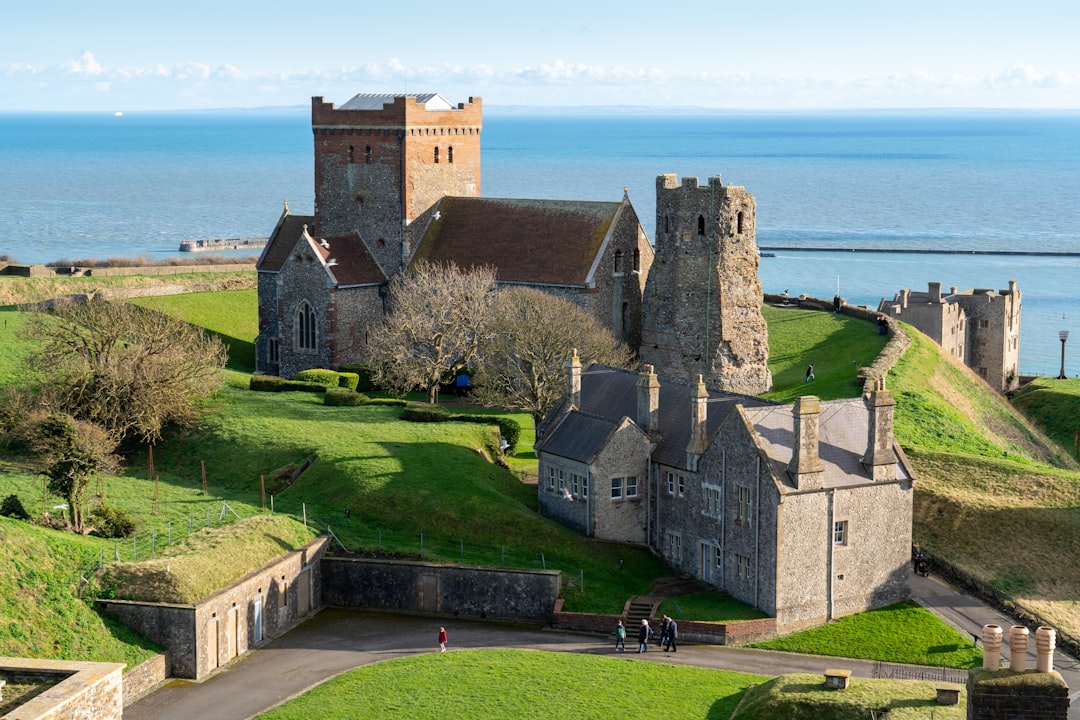
If you’re anything like me, you probably think of the Kentish coast as just the gateway to Europe, but there’s a strange, haunting beauty here that gets completely overlooked by the rush toward the ferry terminals. Let’s look at the Romney Marsh, for instance—a sprawling, surreal landscape that was once hidden beneath the English Channel and is now a rare, prograding coastline where the land has been slowly winning a tug-of-war against the sea for two millennia. It sits on the Dungeness Foreland, which is effectively the largest expanse of shingle in Europe, and honestly, standing there feels like being on another planet. It’s a stark, industrial-meets-nature paradox where the UK's most powerful nuclear power station shares space with a National Nature Reserve, all thanks to a microclimate driven by the meeting of the Gulf Stream and cooler northern currents. You’ll even find the rare medicinal leech thriving in the brackish dikes that crisscross the marsh, a reminder of how specialized this ecosystem really is.
But if you head toward Folkestone, the vibe shifts from wild marshland to something much more human-centric and artistic. The Creative Quarter there is perched on a cliffside that rises nearly 150 meters, giving you a vantage point that clearly shows where the North Downs' chalk meets the Gault Clay. It’s fascinating because this whole area is built on the Folkestone Warren, a massive, ongoing landslide complex that’s been shifting for centuries; that instability is actually a blessing in disguise because it makes the terrain too rugged for heavy modern developers to touch. Further along, the White Cliffs of Dover aren't just a postcard backdrop—they’re a 90-million-year-old archive of microscopic coccolithophores whose calcified shells formed a porous reservoir that literally keeps the region’s water supply running today.
The further east you go toward the Isle of Thanet, the more the coast starts to feel like a collection of geological and historical oddities. You have places like the Shell Grotto in Margate, where millions of individual seashells are set into mosaics that still baffle historians, and the dramatic chalk stacks at Botany Bay that are being eaten away by the North Sea at a rate of a meter a year. Then there’s the site of the Reculver Towers, which serves as a sobering, real-world laboratory for coastal scientists. What was once a Roman fort situated well inland is now precariously close to the edge, as the soft London Clay cliffs suffer from constant saturation and rotational slumping. It’s this constant, visible decay that makes the Kentish coast so compelling—you’re literally watching history wash away into the tide in real-time, and honestly, there’s something deeply grounding about seeing nature reclaim the land so aggressively.
Quirky Seaside Retreats: Stay in England’s Most Unique Coastal Airbnbs
I’ve spent a lot of time looking at the structural engineering of England’s coastal rentals, and honestly, the sheer physics of some of these spots is mind-blowing. If you're staying in one of the Martello Towers in Suffolk, like Tower 17, you’re essentially living inside a defensive machine built from roughly 750,000 bricks. The circular geometry wasn't just an aesthetic choice; it was specifically designed to deflect solid shot from 19th-century naval cannons, which is a wild thing to think about while you're making coffee. Compare that to the sea forts in the Solent, where the engineering shifts from brickwork to 15-foot thick granite walls and armor plating meant to survive 12-inch rifled guns. It’s a completely different level of "sturdy" than your average seaside cottage, and you can really feel that weight when the wind picks up off the Channel.
Then you have the architectural deceptions, like the House in the Clouds in Thorpeness, which I think is one of the coolest engineering pivots in the UK. It looks like a standard, albeit tall, mock-Tudor home, but it’s actually a disguise for a 50,000-gallon steel water tank perched 70 feet in the air. We see similar ingenuity in Shoreham-by-Sea’s houseboat community, where people are living on the hulls of concrete barges from the 1940s. These were built when steel was scarce, and their high compressive strength and natural resistance to marine corrosion make them surprisingly stable platforms for a home. Even the Victorian railway carriages in Selsey tell a story of the 1920s "Bungalow Town" movement, where surplus rolling stock from the London, Brighton and South Coast Railway was repurposed into permanent housing—it's basically the original upcycling movement before it was cool.
I'm always telling people to watch the bathymetry before they book, especially on Mersea Island where your entire schedule is dictated by the Strood. This Roman-era causeway becomes completely impassable when the tide hits 5.0 meters, effectively cutting you off from the mainland, which is a total trip if you aren't prepared for it. It’s a similar story in Morecambe Bay, where the intertidal mudflats are so vast that the "bore" tide can surge at over 15 kilometers per hour across the 310-square-kilometer basin. If you want a more peaceful geographic quirk, though, head to Ness Point in Lowestoft; staying there puts you at the UK’s easternmost longitude, meaning you're technically receiving the first 500 lumens of solar radiation in the country. It’s these specific data points—the speed of the water or the angle of the sun—that turn a simple stay into something much more memorable.
And look, we can't ignore the sheer eccentricity of places like the "Pigsty" in Robin Hood’s Bay, which was built in the 1880s with classical Grecian proportions just to house swine. It’s a perfect example of 19th-century animal romanticism that you just don't see anymore. Or take Seaham, where the beach has the world’s highest concentration of sea glass because the Londonderry Bottleworks used to dump 20,000 shards into the sea every day until 1921. Now, you’re basically walking on a century of industrial history that’s been polished by the North Sea. Whether it’s a converted Somerset lookout tower with a 180-degree visual arc or a Grade II listed signal box on the Cumbrian coast, these stays aren't just about the bed; they're about navigating a physical archive of how we used to defend, power, and move across this coastline.
Planning Your Escape: How to Experience England’s Secret Shores Like a Local
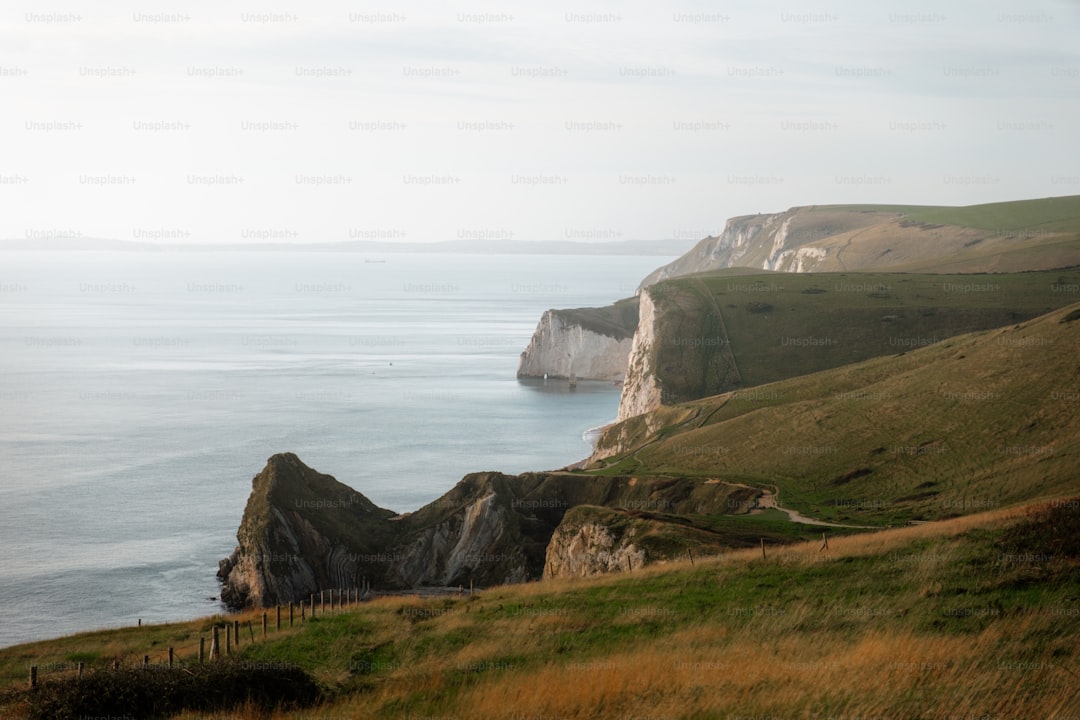
To really grasp the pulse of England’s coast, you have to stop thinking about it as a vacation destination and start seeing it as a dynamic, shifting engineering project. Most people stick to the manicured paths near the major rail hubs, but if you look at the bathymetry and the geological history, you’ll realize the best spots are those where the land is literally fighting the sea. Take the intertidal zones at Formby Point, where 8,000-year-old human footprints emerge from the mud during specific low-tide windows, or the shifting sands of Spurn Point, which moves roughly two meters inland every year. It’s not just about finding a quiet beach; it’s about timing your arrival to match the natural rhythms of the tide and the erosion cycles that expose ancient history. You’re essentially chasing the same ghosts that coastal surveyors and marine biologists spend their entire careers mapping.
Think about the sheer scale of change happening under your feet, like the medieval city of Dunwich, now submerged off the Suffolk coast, or the massive carbon sequestration happening in the salt marshes of the Blackwater Estuary. When you head to these places, you’re not just a visitor; you’re an observer of a landscape that’s actively recalibrating itself. The Severn Estuary, with its world-class tidal bore, or the complex double tides of the Solway Firth, offer a level of raw, kinetic energy that makes the standard tourist traps feel static by comparison. It’s worth noting that these environments are often protected for a reason—be it the endemic Lundy cabbage on Lundy Island or the rare Black Guillemots nesting in the sandstone fissures at St. Bees Head. You’re stepping into an ecosystem that doesn't care about your itinerary, and honestly, that’s where the real connection happens.
If you’re planning your own route, I’d suggest prioritizing areas where the physical geography acts as a natural gatekeeper, keeping the crowds at bay. Whether it’s the massive chalk cliffs at Flamborough Head hosting 13,000 pairs of Northern Gannets or the industrial-meets-nature mystery of the pagoda structures at Orford Ness, these sites demand a bit more effort to reach. You’ll need to watch the tide tables and be prepared for terrain that’s more than just a sandy stretch of beach. It’s about respecting the physics of the coast—the way the sediment moves or the way the cliffs crumble under the pressure of the North Sea. Once you start paying attention to these details, you’ll find that the "secret" shores aren't actually hidden; they’re just waiting for someone who’s willing to look a little closer at the map.
Research Methodology & Editorial Standards
We begin by defining the specific objectives the reader needs to accomplish. Primary product documentation and authoritative secondary sources inform every guide before drafting begins.
Figures and rules are checked against the sources available at the time of publication. Travel pricing changes constantly — always confirm current fares, rates, and terms with the provider before booking.