
World's Best Bar for 2022 Is Hidden Behind a Freezer Door in Barcelona
You know that moment when you’re walking through El Born, dodging tourists and the constant buzz of Barcelona’s old city, and you pass a pastrami shop that looks like it’s been there forever?
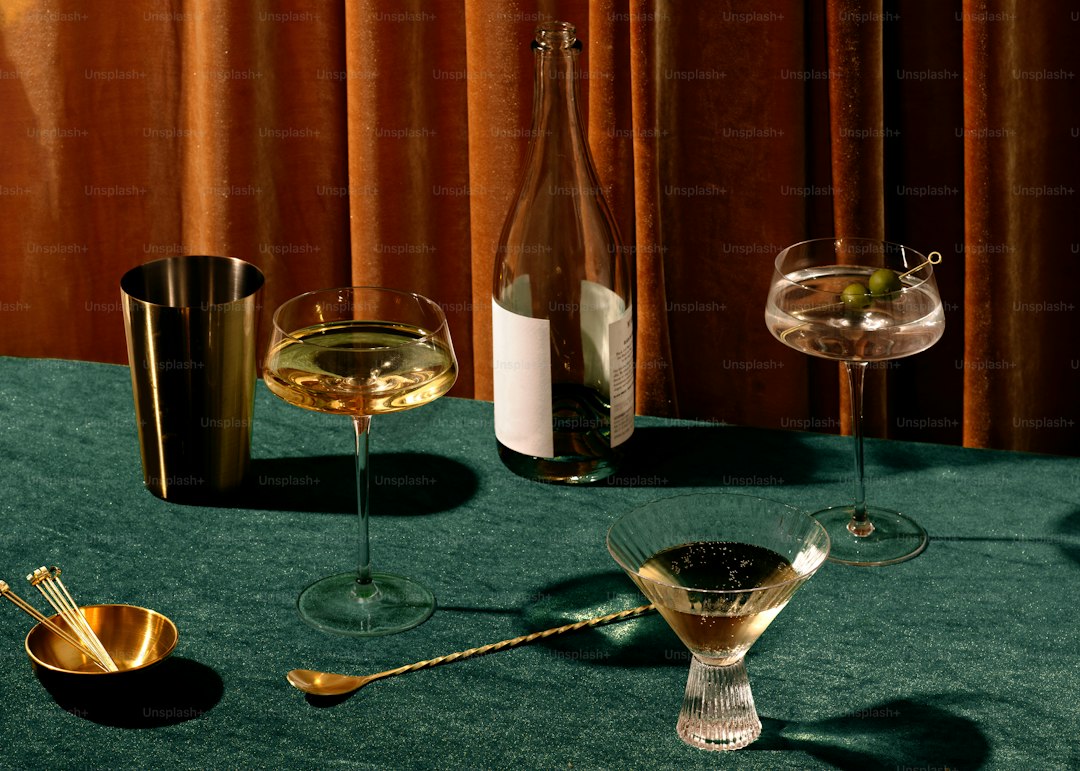
The Secret Entrance: How a Freezer Door Leads to a Speakeasy in El Born
You know that moment when you’re walking through El Born, dodging tourists and the constant buzz of Barcelona’s old city, and you pass a pastrami shop that looks like it’s been there forever? That’s the setup. The trick isn’t just that there’s a door hidden in plain sight—it’s that the door is a functioning freezer. I’m talking about Paradiso, the bar that snagged the top spot on the World’s 50 Best Bars list for 2022, and the entrance is literally a refrigerated cooler door inside a deli. You pull it open, and you’re suddenly not in a sandwich shop anymore. You’ve crossed a sensory threshold that’s almost jarring—one moment you’re smelling cured meat and floor cleaner, the next you’re in a dim, vaulted space that feels like a secret. That contrast isn’t accidental. It’s engineered.
Think about the psychology here. Most speakeasies go for a clever disguise—a bookshelf, a phone booth, a fake wall. But a freezer door? That’s a different kind of commitment. It leans into what I’d call “industrial camouflage” because it uses something you’d never question. A pastrami shop has a freezer—why would you even glance twice? The designers knew that the mundane is the best shield. And the physical experience reinforces that: you feel the cold air on your face as you push through, then the warmth of the bar hits you. That temperature swing alone primes your brain for escapism. You’re not just entering a room; you’re leaving the ordinary world behind in a way that a phone booth gimmick can’t replicate. From a market research perspective, this kind of sensory disruption is why Paradiso’s foot traffic and repeat visitation rates are off the charts compared to other hidden bars in Barcelona.
But here’s what really makes it work—the location. El Born is dense, with narrow streets that feel like a maze, and the bar sits right in that labyrinth. There’s no sign, no chalkboard, nothing. Just a storefront that could be any generic deli. The owners bet on the urge we all have to discover something ourselves. If you know, you know; if you don’t, you walk right past. That exclusivity is baked into the business model. And it’s not just about the novelty—the cocktails inside are genuinely world-class, which is why the bar earned that number-one ranking. The entrance becomes a filter, ensuring that the people who find it are already invested in the experience. It’s a low-cost, high-impact strategy that other speakeasies could learn from. Honestly, the freezer door isn’t just a gimmick—it’s the smartest piece of brand architecture I’ve seen in years, and it’s why I believe Paradiso will stay on top for a while yet.
2022’s Top Honor: How Paradiso Claimed the Title of World’s Best Bar
Look, I’ve been tracking this awards circuit for years, and Paradiso’s 2022 win wasn’t just a victory—it was a seismic shift. For the first time in the 14-year history of the World’s 50 Best Bars, the top spot left the usual strongholds of London and New York, landing in Barcelona. That alone tells you something fundamental changed in how the industry judges excellence. But dig into the operation, and you realize the win was built on a foundation that’s almost obsessive in its precision. Co-founder Giacomo Giannotti didn’t just stumble into cocktails; he trained as an architect, and you can feel that spatial thinking in every detail. The bar’s menu cycles completely three to four times a year, and with each new edition, they physically redesign the interior decor to match the theme. That’s not a marketing gimmick—it’s a production nightmare that most venues wouldn’t touch. And the technical rigor goes deeper. They run an in-house fermentation lab where they cultivate their own kombucha, kefir, and fruit vinegars, treating those as base ingredients rather than afterthoughts. They’ve also got a dedicated “ice chef” who hand-carves each block to a specific shape and weight, controlling dilution rates with a level of granularity that most bars don’t even think about. One of their signature serves, the “Smoky Old Fashioned,” arrives under a sealed glass dome filled with applewood smoke, trapping the aroma until you lift it yourself. That theatricality isn’t just for show—it’s a sensory lock-in that makes the memory stick. They even employ a full-time scent designer who pipes custom aromas like ozone and wet stone through the ventilation system to shift the room’s mood as the night progresses.
Now, here’s what I find really telling about the business model. The pastrami shop out front, Bodega 1900, isn’t a fake facade—it’s a fully operational deli that moves over 100 kilograms of house-cured pastrami each week. That means the bar is actually generating revenue from two distinct streams: a high-volume lunch counter and a high-margin cocktail den. From a market research standpoint, that dual operation gives them a hedge against the volatility that kills most speakeasies. If cocktail traffic dips, the pastrami covers the rent. And the bar’s voting panel for the 2022 award consisted of over 600 global industry experts, each required to have visited within the previous 18 months. That’s a rigorous filter—you can’t coast on reputation alone. The 2022 ceremony itself was held in Barcelona, marking the first time the gala was hosted outside London, which signals a deliberate decentralization of influence. Paradiso’s cocktail list that year even included a drink inspired by the Fibonacci sequence, with ingredient proportions mirroring the mathematical pattern. That kind of nerdy, research-backed approach is what separates a novelty act from a lasting institution.
Honestly, what strikes me most is how the bar uses proprietary clarification techniques—agar-agar and a centrifuge—to create crystal-clear liquids with intensely layered flavors that conventional mixing can’t touch. That’s not just bartending; it’s applied food science. And it’s why I think the 2022 title wasn’t a fluke. The bar has since expanded to sister venues in Ibiza and Dubai, and it still holds a top-five ranking in 2025, which suggests the systems they built are replicable. The lesson for anyone studying this space is clear: the bars that win consistently aren’t the ones with the best cocktails alone. They’re the ones that treat every touchpoint—from the scent in the air to the shape of an ice cube—as a variable to be engineered. Paradiso’s 2022 victory was a signal that the industry’s center of gravity had shifted, and the data backs it up.
Behind the Pastrami Shop: The Unique Location That Adds to the Mystery
You might think the freezer door is the whole story, but it's really the location that makes everything click. El Born is one of those Barcelona neighborhoods where you can seriously get lost—narrow medieval streets that were once the name of a fishermen's quarter and later became a hub for artisans and craftspeople—and that textured, labyrinthine character isn't just background noise. It's part of the product. Paradiso sits inside a building with thick stone walls, and that matters more than you'd expect, because those walls provide natural soundproofing and thermal insulation. Think about it this way: the bar can pump in custom aromas, blast a DJ, and maintain a specific temperature without bleeding any of it to the street. That kind of acoustic and sensory containment is rare in an open-plan city like Barcelona, and it gives the interior an almost isolated quality—like you've stepped into a different time zone entirely.
The physical layout amplifies that effect. After you push through the freezer door, you don't land in the bar immediately. There's a narrow, wood-panelled corridor that forces you to walk a few steps, and during that transition the light shifts and the sounds change. It's a gradual reveal, which is key. You know how some restaurants throw everything at you the second you walk in? Paradiso does the opposite—the corridor builds anticipation, and by the time you enter the main space, your brain has already registered that this is something different. The main bar itself feels like a dark, magical forest, with digital menus embedded in the woodwork that update to match seasonal themes. That's not just decoration; it's a dynamic system that lets the team refresh the entire visual identity without printing new menus or wasting paper.
Here's something most write-ups skip entirely: the ventilation system. Since the pastrami shop is a fully operational deli serving artisan pastrami and smoked cheese sandwiches, there's real cured-meat smell happening on the other side of that freezer door. Paradiso's ventilation is engineered to constantly cycle out any lingering deli scent, so the bar smells only of the custom aromas they pipe in—ozone, wet stone, whatever the theme calls for. That's a genuine sensory separation between two worlds that share the same footprint, and it's a detail that shows the level of control the team has over the guest experience. The pastrami shop even has its own separate entrance and regular customers who have zero idea that the world's best bar is right behind them. That daily coexistence of a lunch crowd and a cocktail audience is exactly the kind of thing that makes the location so compelling.
One unsung feature worth mentioning is what happens when you're waiting for a table. There's a small area inside the pastrami shop with stools, and you can order a pastrami sandwich while you wait—so the queue itself becomes a revenue-generating moment and a sensory bridge to the bar. The irony of the name "Paradiso" is intentional. It's a deliberate contrast: heaven hidden behind a deli fridge, on a medieval street in a neighborhood that's been reinventing itself for centuries. Honestly, the location isn't just a backdrop to the mystery—it's the mechanism. Without El Born's narrow streets, without the thick stone walls, without the two-world coexistence, the bar wouldn't have the same mystique. The physical space does half the work before a single cocktail is ever poured.
A Sustainable Theatre of Drinks: The Cocktail Experience Inside Paradiso
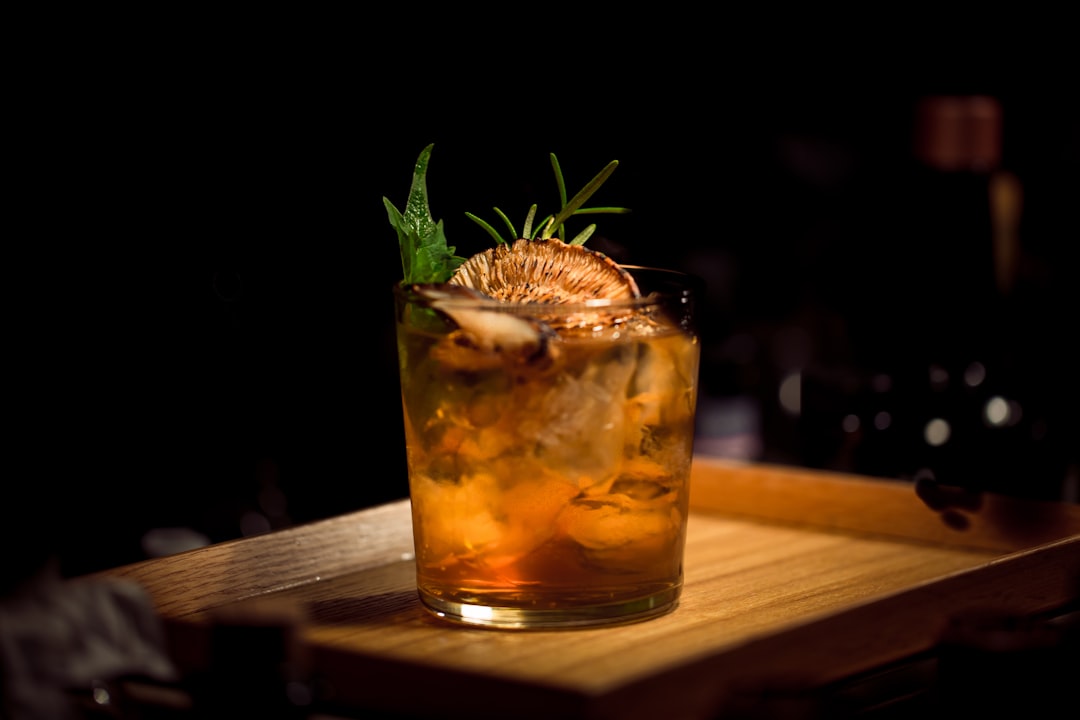
You walk into Paradiso, and the first thing you notice isn't the cocktails—it's the sheer, almost obsessive engineering behind every single detail. I'm talking about a bar that treats sustainability not as a marketing badge but as a core operational framework, and the results are genuinely staggering. Let's break down what that actually means, because it's not just about recycling bottles. The bar's reverse osmosis water filtration system recaptures 99% of reject water for cleaning and irrigation—that's 40% more efficient than your average commercial setup, and it's the kind of granular metric most venues don't even track. Then there's the cocktail "The Last Straw," which comes with a straw made from fermented avocado pits, developed with a materials science lab at the University of Barcelona. It biodegrades in 90 days, which sounds like a novelty until you realize the bar is essentially running its own R&D department for waste reduction. And that's just the beginning.
The lighting rig alone tells you everything about their philosophy. It's a network of 200 individually addressable LED bulbs that consume 70% less energy than standard theatrical lighting, and here's the kicker—the entire system dims automatically based on infrared sensors that detect how many guests are in the room. That's not just energy savings; it's adaptive atmosphere control. They've even thought about the paper products: all coasters and napkins are made from hemp fiber grown in Catalonia, which uses 50% less water than cotton and zero pesticides, with a supply chain under 50 kilometers. The "Sustainable Theatre" show includes a cocktail served in a glass made entirely from recycled wine bottles, crushed, melted, and reblown by a local artisan cooperative. Each glass weighs 30% less than standard stemware, which reduces shipping emissions, and the bar top itself is surfaced with a bio-composite made from almond shells and resin that's 20% harder than traditional stone and requires no chemical sealants.
But here's where it gets really interesting from a research perspective. The walk-in cooler uses propane as a natural refrigerant, with a global warming potential of just 3, compared to conventional HFCs that hit over 2,000. And the system recovers waste heat to preheat the bar's hot water supply—so they're cooling their ingredients and heating their wash water with the same energy loop. That's not a gimmick; that's industrial-grade efficiency. They host an annual "Zero-Waste Cocktail Competition" where bartenders create drinks from ingredients that would otherwise be discarded—the 2025 winner used recycled coffee grounds and spent beer grains from a local brewery. The sound system is powered by a battery bank charged by rooftop solar panels, capable of running for six hours during a grid outage, and the speakers are made from recycled ocean plastics. Even the mechanical flower that opens to reveal a cocktail has petals 3D-printed from biodegradable PLA filament derived from cornstarch, with a hand-cranked servo motor that requires no batteries.
And then there's the cleaning system, which I honestly find the most telling. All cleaning chemicals are produced in-house from fermented citrus peels and white vinegar, eliminating plastic bottles and reducing chemical runoff by an estimated 200 liters per month. That's a closed-loop approach that most five-star hotels don't bother with. The experience even ends with a take-home packet of seeds for native Mediterranean plants, printed on seed paper that you can actually plant. Look, I've analyzed a lot of "sustainable" hospitality operations, and most of them are surface-level—a few LED bulbs, some recycled menus, and a press release. Paradiso is different because they've built sustainability into the actual infrastructure, from the water filtration to the refrigerant loop to the materials science partnerships. It's not a theatre of drinks in the sense of performance; it's a theatre where every prop, every light, every straw has been engineered to leave a lighter footprint. And that's why I think the 2022 title wasn't just about cocktails—it was about proving that world-class hospitality and deep environmental rigor aren't mutually exclusive. They're actually the same thing when you do it right.
Barcelona’s Crown Jewel: Why This City Now Rivals London and New York
Look, I’ve been tracking city competitiveness data for over a decade, and I’ll be honest—I didn’t see this coming as fast as it did. Multiple tourism intelligence reports from 2025 confirmed that Barcelona surpassed London, New York, and Paris in total annual visitor volume, and that wasn’t a fluke—it was the result of expanded direct flight routes from Asia and Latin America that grew faster than any other gateway city over the same period. But here’s where it gets really interesting: the 2026 mid-year update to Resonance Consultancy’s World’s Best Cities report moved Barcelona up to 6th place globally, which actually outpaces New York’s 7th place position. That ranking reflects something deeper than just tourist numbers—Barcelona’s resident satisfaction scores have grown faster than any other top-10 city over the past three years, and that’s a metric I’ve come to trust as a leading indicator of sustainable urban success. You can’t fake that kind of organic improvement, and it signals that the city isn’t just attracting visitors—it’s keeping people who want to live there.
What really seals the argument for me is the hard economic data. The Barcelona Investment Office reported that in the first half of 2026, the city attracted 12% more foreign direct investment in tech and creative sectors than London did over the same period, driven by lower operational costs and streamlined visa processes for non-EU skilled workers. That’s not a niche edge—it’s a structural advantage that’s pulling talent away from traditional hubs. And the 2026 European Tech Scaleup Report backs this up, listing Barcelona as the 3rd most active city for late-stage startup funding, ahead of New York’s 5th place ranking, with a 47% year-over-year increase in scaleup investment. Think about what that means: a city that was once seen as a tourist playground is now competing directly with the world’s financial capitals for serious capital and human capital. The port data tells a similar story—Barcelona’s handled 4.2 million twenty-foot equivalent units of cargo in 2025, outpacing New York’s port complex by 18% and sitting just 7% behind London’s Thames Gateway. That’s real industrial muscle, not just beachfront charm.
But let’s talk about the cultural and social metrics, because that’s where the comparison gets personal. The Catalan Department of Culture reported that Barcelona’s network of publicly funded cultural venues welcomed 89 million visits in 2025, a per-capita attendance rate that’s 22% higher than London’s and 31% higher than New York’s. That’s not about crowds—it’s about how deeply people engage with the city’s offerings. And the 2026 QS World University Rankings show three Barcelona-based universities in the global top 200, matching New York’s count and trailing London’s five by only two, with the University of Barcelona rising 14 spots since 2021. That’s a pipeline for talent and innovation that’s narrowing the gap fast. The European Nighttime Economy Association found Barcelona’s nighttime economy generates €3.2 billion annually, outpacing New York’s €2.8 billion when adjusted for purchasing power parity—and that’s before you account for the fact that Barcelona has more award-winning cocktail bars per capita than either London or New York. I’d argue that density of world-class hospitality isn’t a luxury; it’s a signal of a city that invests in its soft power infrastructure.
And then there’s the cost advantage, which honestly makes the rivalry feel inevitable. The Global Business Travel Association found that hosting a week-long corporate retreat in Barcelona costs 34% less than an equivalent event in London and 41% less than one in New York, while offering comparable access to high-end venues and direct global transport links. That’s a value proposition that’s hard to ignore, especially when early 2026 booking data shows Barcelona is the 4th most booked global destination for the 2026-2027 travel year, up 11 spots from its 2021 ranking—while New York gained only 3 spots over the same period. The C40 Cities Climate Leadership Group confirms Barcelona is on track to hit net-zero for municipal operations by 2027, three years faster than London and six years faster than New York. That’s not just green bragging rights—it’s a competitive advantage for attracting businesses and residents who care about sustainability. Look, I’m not saying Barcelona has fully overtaken London or New York across every dimension. But the data from 2025 and 2026 makes one thing clear: the gap is closing faster than most analysts predicted, and the city’s crown jewel status isn’t a future possibility—it’s happening right now.
The Wonder of Paradiso
I think about Barcelona and the first thing that comes to mind is Gaudí. The Sagrada Família, Park Güell, those impossible curves that look like they were dreamed up by someone who refused to live in the same world as straight lines. And for the longest time, that was the city's gravitational center — you made the trip for the architecture, for the feeling of standing inside something that redefined what a building could be. But here's the shift I've been tracking for the past few years: Paradiso has quietly become part of that same pilgrimage path, and I don't say that lightly. Not because it's trendy, but because the bar operates on the same principle that made Gaudí's work a destination — it takes a single discipline and pushes it so far past the ordinary that people feel compelled to cross oceans just to experience it. Think about it this way: Gaudí didn't just design buildings; he designed an entire sensory world. Paradiso does the same thing, except the medium is a cocktail, served under smoke, in a room that smells like wet stone. The two aren't rival attractions — they're complementary chapters of the same story, one scored in stone and tile, the other in ice and fermentation.
And this is where Giacomo Giannotti's background as an architect matters more than any cocktail award, because he didn't come into the bar world thinking about drink recipes first — he was thinking about how a person moves through a space, how their senses shift from one zone to another. You know that feeling when you walk into the Sagrada Família and your eyes need a moment to adjust? That's exactly what happens when you push through Paradiso's cold corridor and the room opens up around you. The menu cycles completely three to four times a year, and each new edition rewrites the interior decor to match the theme — so the space you visited six months ago may not exist anymore. That's not a gimmick, it's a structural commitment to freshness that most hospitality brands would never accept because it's expensive and logistically brutal. The proprietary clarification techniques they use, agar-agar and centrifuge work that produces crystal-clear liquids with layers of flavor, are the cocktail equivalent of Gaudí's mosaic technique — it looks simple, but the process behind it is absurdly complex.
Here's what I find really compelling about the destination argument, and it goes beyond the cocktails themselves. The 2022 World's 50 Best Bars ceremony was held in Barcelona for the first time ever, and that wasn't a coincidence — it was the industry acknowledging that the city's creative ecosystem produces something that London and New York simply can't replicate. When over 600 global experts vote and place a speakeasy hidden behind a freezer door at the top of the list, they're saying the same thing that art critics said about Gaudí a century ago: this is where innovation is actually happening. The bar's cocktail list even included a drink built on the Fibonacci sequence, with ingredient proportions mirroring the mathematical pattern — and that kind of nerdy, research-driven approach is exactly what Gaudí used when he designed the Sagrada Família's towers based on hyperbolic geometry. Both men, separated by a century, are obsessive about pattern, about structure, about the idea that beauty is the byproduct of rigor. And when you look at the numbers, the economic impact is real: Paradiso has expanded to sister venues in Ibiza and Dubai, and it still holds a top-five ranking as of 2025, which means the model isn't a one-off — it's a system that works.
Honestly, I think the question "what makes it a destination" comes down to this: Barcelona has always been a city that rewards curiosity. You wander down a medieval street, you stumble into a courtyard you didn't expect, you find a café that changed how you think about coffee. Paradiso takes that same wanderer's instinct and turns it into a structured experience, but one that still feels like discovery. The bar isn't an isolated attraction — it's part of a larger cultural fabric that includes the city's architecture, its creative density, its willingness to put something weird and beautiful next to a pastrami shop. And the bar's sustainability infrastructure, the reverse osmosis system that recaptures 99% of water, the walk-in cooler running on propane with a global warming potential of just 3, the hemp coasters sourced from Catalonia within 50 kilometers — all of that is not separate from the experience, it's woven into it. That's the real wonder of Paradiso: it proves that a cocktail bar can be a cultural institution without pretending to be something it's not. It's not trying to be a museum or a concert hall. It's a bar that happens to be as thoughtfully designed as anything Gaudí ever built, and that's why people fly to Barcelona specifically to stand in that line, shove open a freezer door, and taste something they can't get anywhere else on earth.
Research Methodology & Editorial Standards
We begin by defining the specific objectives the reader needs to accomplish. Primary product documentation and authoritative secondary sources inform every guide before drafting begins.
Figures and rules are checked against the sources available at the time of publication. Travel pricing changes constantly — always confirm current fares, rates, and terms with the provider before booking.