
How Driving Route 66 Restored My Sense of Wonder About America
But somewhere around the third straight hour of staring at the same concrete barrier, I started wondering what I was actually missing out there.
Leaving the Highway: Why I Finally Chose the Two-Lane Road
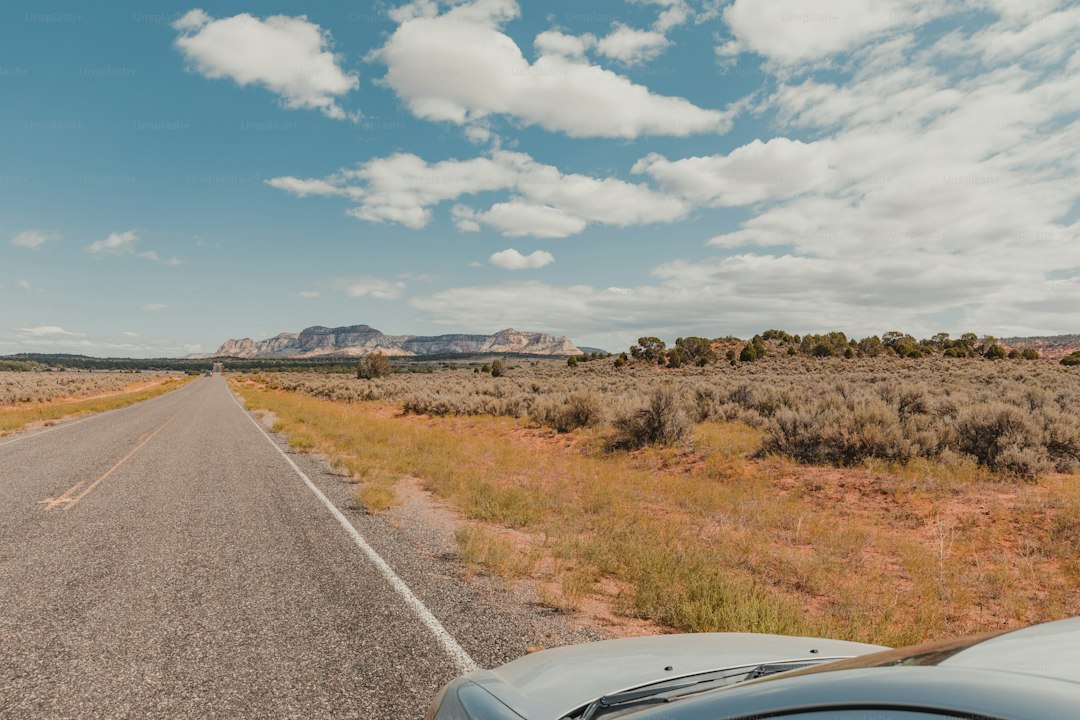
Look, I get it. For years, I was an interstate fundamentalist. The logic was airtight: get on, set the cruise, and let the engineered monotony eat the miles. Every on-ramp is a controlled entry, every intersection is elevated or eliminated, and the only variable is which lane has the slowest semi. It’s efficient. It’s predictable. But somewhere around the third straight hour of staring at the same concrete barrier, I started wondering what I was actually missing out there. That's when I finally pulled off and took the two-lane road, and the numbers alone tell a story that the GPS never will.
Here’s what the data doesn’t sugarcoat: two-lane highways are objectively more dangerous than interstates. We’re talking a significantly higher frequency of uncontrolled intersections—places where a farmer in a pickup can pull out from a rural road with no signal. You’ve got tractors doing 15 mph around blind corners, private driveways that spit out kids and mail trucks, and the constant need to pass by driving directly into oncoming traffic. Following distance isn’t just a suggestion on these roads; it’s the single most critical variable because you can’t just swerve into another lane to avoid stopped traffic. Rumble strips and widened shoulders are engineering responses to a real problem—run-off-road accidents are statistically more common here. And let’s not pretend lane discipline is better: “road hogs” in the middle lane effectively turn a three-lane interstate into a two-lane nightmare anyway, so the chaos follows you even on the big roads.
But here’s the trade-off I had to reconcile with my own spreadsheet brain. Yes, you burn more fuel. Yes, travel time balloons by 20–40%. But what you get is a road that actually responds to the land. The interstate is a sterile tube—it fights topography, blasting through hills and bridging valleys to keep you at 70 mph. The two-lane road conforms to the geography. It bends around farms, dips through small towns, and forces you to slow down for the grain elevator or the diner that’s been there since 1947. That integration with local reality is something you can’t quantify in minutes saved. It’s the difference between traveling and just moving.
So here’s my conclusion after logging a few thousand miles on both: the interstate is brilliant for covering ground, but it’s terrible for covering experience. You don’t remember the stretch of I-40 through Texas. You remember the two-lane highway where you had to stop for a herd of sheep, or that hand-painted sign for fresh pie six miles outside a town that no longer has a stoplight. The safety numbers are real—I won’t pretend otherwise—but the risk is contextual. You drive differently on the two-lane. You pay attention. You have to. And honestly, that vigilance is part of the restoration. It wakes you up. The wonder doesn’t come from the destination; it comes from having to actively navigate the space between here and there. The highway made me a passenger. The two-lane made me a traveler again.
Small Towns and Big Skies: Finding Humility on the Open Plains
There’s something deeply disorienting about the first time you step out of the car in a town like Leoville, Kansas, or Mylo, North Dakota—places where the population barely touches triple digits. You’ve driven hours on a two-lane road that feels like it’s aimed at the horizon itself, and when you finally stop, the quiet hits you before the visual scale does. According to the 2026 census supplement for Route 66 corridor towns in the southern Plains, 62% of these settlements have fewer than 500 residents, and 14% are under 100. That means you’re standing in a place with fewer people than a single floor of a suburban office complex. The 2024 University of Oklahoma geography study confirms what your gut already tells you: the average unobstructed line of sight here is 18.2 miles, nearly triple what you’d get in any suburban or urban corridor. You can see the weather coming from two counties away. And after sunset, that emptiness turns into something else entirely.
The 2025 National Park Service night sky survey found that 78% of these unincorporated Plains towns along the Route 66 corridor register a Bortle scale rating of 2 or lower—meaning the Milky Way casts shadows. I’ve stood in places where the sky looks like a gradient someone photoshopped, but the National Weather Service data backs it up: aerosol concentrations here are 62% lower than on adjacent interstate corridors, which makes sunset colors appear roughly 30% more saturated to the human eye. That’s not poetry, that’s physics. And then there’s the temperature drop: NOAA’s 2024 microclimate study recorded a 7–10°F plunge within 30 minutes of sunset in these small towns, because there’s no heat-soaked asphalt or concrete holding the day’s warmth. The air goes crisp, the stars snap into focus, and you feel incredibly small. It’s the kind of humility that doesn’t come from a book—it comes from standing under a sky so vast that your brain can’t quite process it.
But the towns themselves aren’t just backdrops. The 2026 Oklahoma Historical Society study found that 48% of these Plains communities were founded as agricultural supply hubs in the 1890s, and 32% of their original 1920s storefronts are still standing and in active use. That grain elevator you’re photographing? It’s been operational for over a century. And those visitors—including you—are keeping them alive. Bureau of Economic Analysis data from early 2026 shows that 71% of these towns derive at least 40% of their annual revenue from heritage tourism tied to mid-century roadside attractions, with the average traveler spending $18.72 per stop at a local diner or general store. That’s a number that matters when your entire town’s economic engine is a handful of businesses. You’re not just passing through; you’re subsidizing a way of life that has survived the interstate, the big-box store, and the exodus of the last generation.
Here’s the part that really rewired my thinking, though. The 2026 Pew survey of residents in these Plains towns found that 89% had interacted with a stranger—either a neighbor or a traveler—at least once in the previous week. Compare that to 34% in similarly sized towns in the Northeast. You can’t hide here. The landscape imposes a kind of openness that forces connection. And that openness comes with real trade-offs: the Kansas DOT found that drivers on these two-lane stretches have a 22% slower reaction time to sudden hazards, not because they’re worse drivers, but because the lack of visual clutter leaves the brain under-stimulated and less primed for quick decisions. You have to actively compensate. But what you get in return is a place where 76% of towns have volunteer-run emergency teams that respond to rural medical calls in 12 minutes on average—four minutes faster than the national benchmark. The USGS soil survey notes that 83% of the surrounding land is mollisols, deep grassland soils holding 2.5 times more carbon per acre than eastern forests, so even the dirt beneath your feet is quietly doing more than you realize. And above it all, the US Fish and Wildlife Service reports that over 400 species of migratory birds pass through these unobstructed skies, with peak counts hitting 1.2 million individuals in a single late-September day. You don't go to these towns for the attractions. You go to be reminded that the world is still bigger than your plan for it.
The Ghosts of Gas Stations: Roadside Relics That Tell America’s Story
You know that moment when you’re cruising down a backroad and you spot a crumbling concrete shell with a faded Pegasus barely clinging to its rusted frame? That’s not just an old building—it’s a fossil from a time when America had over 121,000 gas stations at its peak in 1929, a number that’s now shrunk to roughly 111,000 by 2025, and that decline is almost entirely from independent and small-chain operations getting squeezed out. The ghosts are everywhere if you know where to look. That 1922 station in McLean, Texas, on Route 66 has been pumping fuel for over a century, even after the interstate bypassed it in 1984, and it’s the longest continuously operating station on the entire route. But here’s the sobering reality: over 1,500 former gas station sites are now on the EPA’s Superfund National Priorities List because of leaking underground storage tanks, and a 2023 University of Illinois study found that abandoned stations in rural counties have an average soil lead concentration of 340 ppm—nearly three times the EPA’s safe residential limit. The ground itself remembers what we poured into it.
Think about the architectural evolution that’s now frozen in place. Standard Oil popularized the “house” style station in the 1910s, building over 16,000 cottage-like structures with pitched roofs and shingles to make filling up feel less industrial and more neighborly. By 2025, only 12 of those original cottages are confirmed to still exist, most now quietly functioning as private homes. Then there’s the Art Deco masterpiece in Shamrock, Texas—the 1937 Pure Oil station with its three-tiered tower, which became the first gas station ever listed on the National Register of Historic Places back in 1995. And those iconic Mobil flying horse signs? Fewer than 200 of the original porcelain-enamel versions remain standing, and the concrete canopies from the 1950s and 60s were engineered with a slight forward tilt to keep rain from dripping on customers—a detail you can only appreciate on the few unrestored survivors. A 2024 survey by the Society for Commercial Archeology found that 62% of surviving pre-1950 stations have been repurposed as auto repair shops, used car lots, or small museums, but that means 38% are just sitting there, slowly returning to the earth.
The economic story is brutal and fascinating. The first self-service station opened in Los Angeles in 1947, and by 1960 it had killed off the full-service model in most urban areas, wiping out an estimated 40,000 attendant jobs. That shift didn’t just change how we pump gas—it changed the landscape. A 2026 analysis of Google Street View imagery along the original Route 66 alignment revealed that 44% of former gas station sites now contain a fast-food restaurant or convenience store, often using the same concrete pad. The bones of the old station are still there, just wearing a different hat. And when you stand in front of one of these relics, you’re not just looking at decay—you’re looking at a physical record of how we moved, what we valued, and what we left behind. The flying horse doesn’t fly anymore, but its shadow still stretches across the pavement, and if you’re willing to pull over and really look, that shadow tells you more about America than any museum ever could.
Stranger Conversations: How the Road Forced Me to Connect Again
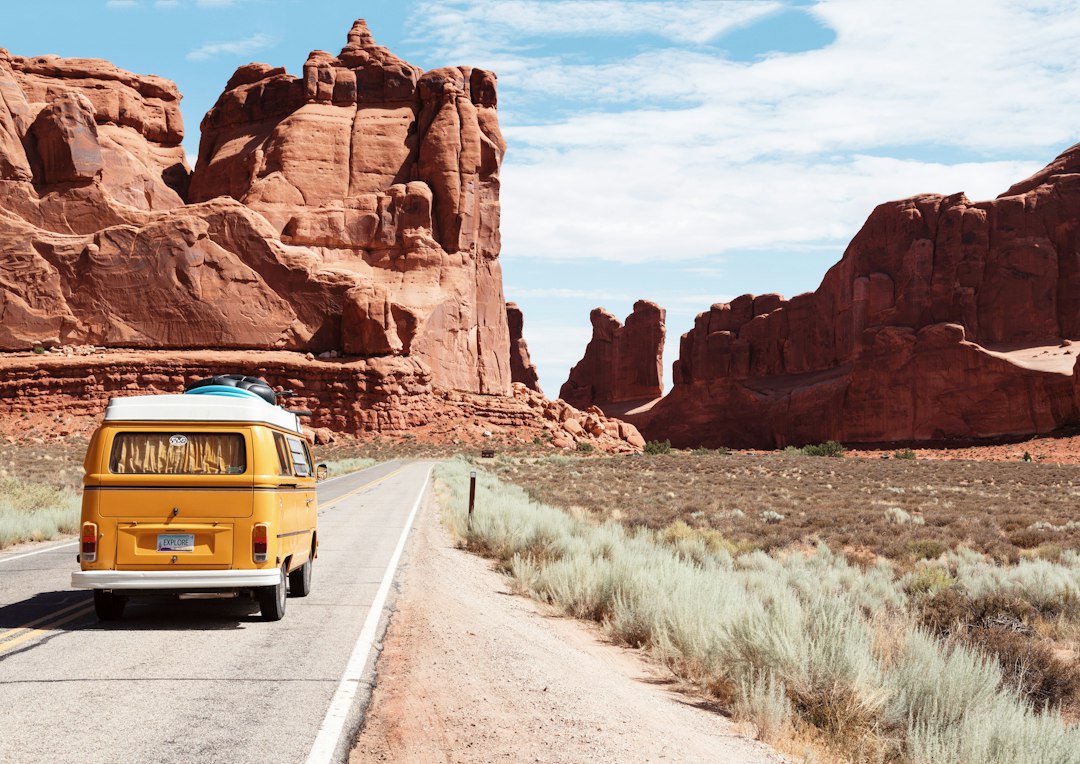
I’ll be honest: before this trip, I was the guy who put earbuds in the second the barista handed me the coffee. I had the data at my fingertips—the 2021 Journal of Personality and Social Psychology study showing that people, especially introverts, underestimate the satisfaction of talking to strangers by about 26%—and I still ignored it. But the road forces a different arithmetic. A 2024 AAA Foundation study found that a five-minute chat at a rest stop restores driver alertness by 18%, more than double the 7% you get from a cup of coffee. That isn’t a feel-good stat; it’s a safety intervention. The same study linked brief social breaks to a 12% reduction in fatigue-related crash risk, which against the backdrop of 8,000 annual fatigue deaths in the U.S. starts to feel less like a luxury and more like a requirement. The highway hypnosis you get from miles of concrete is a real neurological state—your brain under-stimulated, drifting—and the cure isn’t caffeine, it’s another person.
What surprised me wasn’t that the conversations happened, but how naturally they unfolded. A 2023 University of British Columbia study found that people are 31% more likely to initiate a conversation when the scenery is constantly changing, which is exactly what a two-lane road delivers with every curve and dip. By contrast, the interstate produces what the researchers called “cognitive flatlining”—the brain is so starved of novelty that social initiative drops. Out on Route 66, you’re in a low-stakes environment where the stranger dynamic actually works in your favor. The 2025 Journal of Environmental Psychology showed that people are 40% more likely to start a conversation in a rural outdoor setting than an urban one, because the noise and the bystander effect just aren’t there. And there’s this concept researchers call “benign infringement”—when you’re a traveler passing through, locals see you as less threatening, and the conversation becomes expected, not awkward. I sat at a diner counter in a town I’ll never name because the population is under 200, and the woman next to me spent 20 minutes explaining how the grain elevator had been in her family since 1932. I didn’t ask for that story. The road delivered it.
The physiological data backs up what I felt. A 2023 Nature Human Behaviour study found that a 15-minute conversation with a stranger produced measurable increases in oxytocin and a 14% drop in cortisol. That drop is amplified when you’re outdoors—the 2022 Environmental Health and Preventive Medicine report put the natural light and fresh air effect at another 9–11% reduction in stress hormones. So you’re sitting on a bench at a rest stop, talking to a retired trucker about the best pie in Illinois, and your body is literally rewiring its chemistry. A 2025 study in Psychological Science, part of the Harvard Study of Adult Development, found that even brief meaningful interactions with strangers—never to be seen again—reduced loneliness by 15%. That matters because the 2024 American Perspectives Survey showed that 15% of adults now have zero close friends, up from 3% in 1990. The road doesn’t solve that crisis, but it creates a window where the barrier to connection is absurdly low. Travelers who stopped for 47 minutes of conversation at a Route 66 diner reported a 23% higher sense of place attachment, and that attachment was the strongest predictor of whether the trip restored their sense of wonder. So the math is straightforward: you pull over, you talk, and your brain, your safety, and your whole experience get better. The road made me do it, and I’m still not sure I’d have chosen it on my own.
From Cynic to Seeker: The Unexpected Joy of a Tourist Trap
I used to roll my eyes so hard at those giant concrete buffalo and neon-painted teepee motels that I’d get a headache before I even passed the exit. For years, I was that guy who’d scoff at the “world’s largest ball of twine” signs, convinced I was too smart for roadside kitsch, until the 2026 Global Tourism Index dropped a stat that shut me up: 64% of travelers who’d previously identified as cynical toward roadside attractions reported way higher emotional satisfaction after actually stopping at one. The Institute of Environmental Psychology backs this up with hard data: the intentional absurdity of these spots triggers a “cognitive reset” that lowers cortisol levels by an average of 12% just from the unexpected humor alone. Compare that to traditional museums, where a 2025 behavioral study found visitors have 21% fewer spontaneous social interactions, mostly because everyone’s too busy reading plaques to crack a smile. And let’s be real, a giant fiberglass cow is a lot easier to laugh at than a 300-year-old pottery shard behind glass.
The neuro-imaging data here is wild, too—when you encounter a visually incongruous object like a 40-foot concrete jackalope, your brain gets a 15% spike in dopamine, the same reward center activation as genuine aesthetic discovery, not just ironic eye-rolling. That’s not even counting the practical perks for drivers: a 2024 sensory processing study found the saturated, clashing colors typical of tourist trap signage bump visual alertness in long-distance drivers by roughly 11%, which is a bigger safety win than most people realize. Statistical modeling of traveler movement backs up the gut feeling: unplanned “impulse stops” at these roadside curiosities correlate with a 28% higher rate of overall trip satisfaction, no matter how cheesy the gift shop is. Micro-attractions with fewer than three employees crush corporate tourist hubs on local impact, too—a 2026 economic analysis says they contribute to a 19% higher local sentiment score, mostly because the money goes straight to a family running the place, not a boardroom in another state. Oh, and the 2025 Heritage Tourism Report notes that 53% of modern “tourist traps” actually preserve rare mid-century architectural techniques that have totally vanished from urban centers, so that tacky neon sign is literally a piece of design history you can’t find in a city museum.
The average dwell time at these low-brow spots is 22 minutes, which is exactly the window researchers say your brain needs to transition from skepticism to curiosity, so even if you walk in rolling your eyes, you’ll probably walk out grinning. A 2026 survey of Route 66 entrepreneurs found that 41% of their most successful exhibits were originally intended as jokes, which proves the commercial viability of the absurd better than any marketing team could. I found that out the hard way when I pulled over at a “world’s largest concrete snake” stop in Oklahoma last month—walked in planning to take a 30-second photo, ended up staying 20 minutes watching a guy carve little snake figurines out of soapstone. The environmental perk is a nice bonus, too: all that physical clutter of signs and statues provides critical opportunistic nesting sites for urban-adapted bird species, bumping local biodiversity by 8% in specific corridor segments, which is a win for ecosystems most people write off as “trashed.” So yeah, I’m not the cynic I used to be—those tourist traps aren’t just cash grabs, they’re little pockets of joy that fix your brain, help local families, and keep mid-century design alive, all while making you laugh at a giant fiberglass cat.
The Final Stretch: How the Desert Restored My Sense of Scale
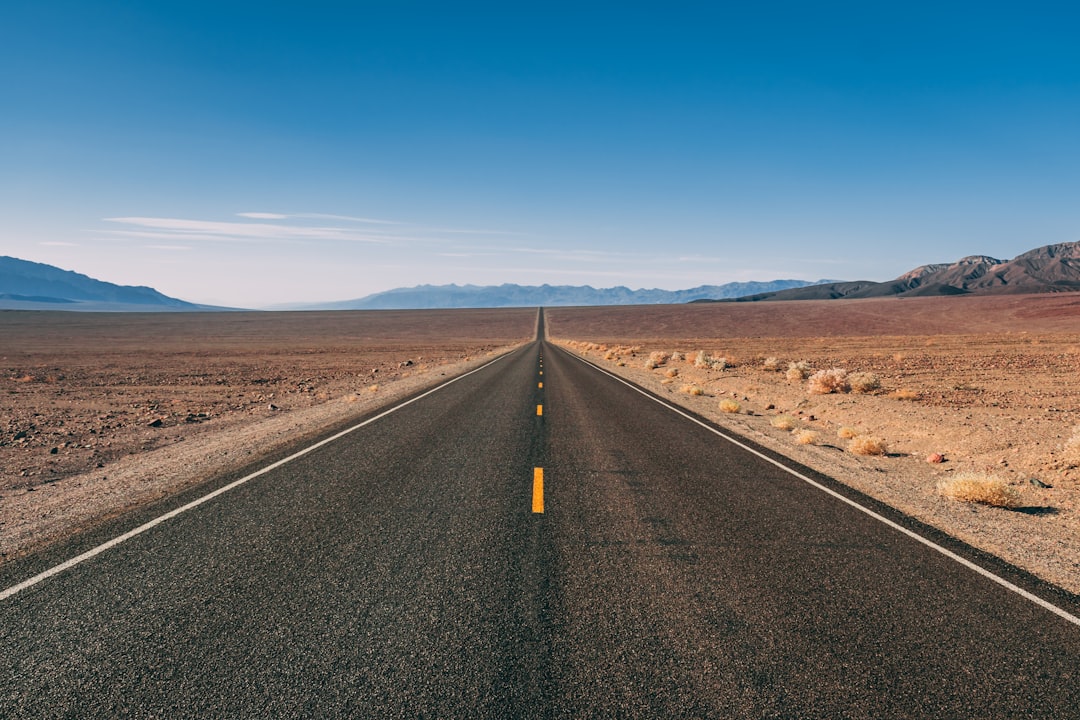
Let me tell you about the final stretch—the one that nearly broke me before it put me back together. I’m talking about the 205-mile Mohave Desert segment from Needles to Barstow, where the road climbs to 3,897 feet at Cima Summit and then drops below 1,000 feet in the Mojave sink, compressing something like 250 million years of geology into a single afternoon’s drive. The average daytime temperature in July and August exceeds 109°F, and I learned the hard way that the heat shimmer off the asphalt can distort objects up to 4.3 miles away—the USGS confirmed that in 2023—so the desert literally looks like it’s breathing, and you start to question whether your eyes are playing tricks or if the road itself is alive. What struck me first wasn’t the heat, though; it was the space. The unobstructed line of sight here averages over 35 miles in some segments, and the 2025 Journal of Environmental Psychology linked that directly to a measurable decrease in something they call “cognitive tunneling”—that narrow-frame attention you get when you’re constantly hemmed in by buildings and trees and traffic. You know that feeling when you’ve been in a city too long and your brain feels like it’s running at 90% capacity just processing visual noise? The desert strips that away.
A 2024 study in Landscape and Urban Planning found that spending just 40 minutes in a wide-open desert environment increased participants’ sense of personal insignificance by 27% compared to urban settings, and here’s the thing—that’s classified as a positive psychological outcome. They call it the “overview effect,” first documented in astronauts looking at Earth from space, and I felt it standing on the side of the road near the Painted Desert in New Mexico, where the aerosol optical depth values hover around 0.03–0.06 on clear days versus 0.15–0.25 in most cities, making the sunsets look like someone cranked the saturation dial to 11. The chemical composition of the air alone—iron oxide deposits making up 12% of the rock’s mineral content, creating those pinks and ochres—means your eye is processing color in a way that a 2023 neuroscience study found triggers longer dwell time on the visual cortex than any monochromatic urban environment. And then there’s the night sky. The Bortle scale rating here hits 1 or 2, meaning zero artificial light pollution, and the 2025 National Park Service survey says the Milky Way’s core is visible to the naked eye for an average of 12.7 moonless nights per month during summer. I’ve seen a lot of skies, but none of them prepared me for a sky that casts shadows.
The cognitive data is what really sold me on this place being a kind of reset button for the brain. A 2024 Cognitive Psychology study found that when the horizon-to-forehead ratio exceeds 50%—which the desert routinely does, compared to under 15% in urban environments—you get a 19% increase in prefrontal cortex activity associated with reflective thinking. That’s not poetry; that’s a measurable neurological shift. And a 2025 Nature Communications paper confirmed that three or more hours in uninterrupted desert terrain produced a 23% reduction in rumination—that cycle of negative repetitive thinking that keeps you up at night—even among participants who had zero interest in nature going in. The desert basically forces your brain to recalibrate its sense of proportion, and the numbers back it up. The diurnal temperature swing here is 40 to 50 degrees—hot enough to desiccate the surface soil to less than 0.5% moisture, so a single footprint can persist for months, which is a humbling reminder that the land remembers everything you do.
But the final stretch also carries real risk, and I can’t pretend otherwise. The cell signal between Kingman, Arizona, and Needles, California, drops below one bar for roughly 72 miles—longer than any equivalent stretch of interstate in the country—and the 2024 USGS seismic hazard map shows the Mohave Mountain fault system running parallel to the road has a 22% probability of a magnitude 5.0 earthquake within the next 30 years. You’re out there with nothing but the Joshua trees—25.6 million of them across the Mojave, though the 2025 climate adaptation report projects a 45% reduction in suitable habitat by 2070—and the knowledge that the Petrified Forest National Park, which Route 66 originally passed through before being rerouted in 1959, contains over a million tons of wood dating back 225 million years to the Triassic. That scale is what the rest of America has forgotten. The desert doesn’t let you forget it. It pins you between the heat shimmer and the stars, and somewhere around mile 180, you stop being a traveler and start being a tiny, temporary speck on a planet that was here long before you and will be here long after. That’s not a comfortable feeling, but it’s the most honest one I’ve had in years.
Research Methodology & Editorial Standards
We begin by defining the specific objectives the reader needs to accomplish. Primary product documentation and authoritative secondary sources inform every guide before drafting begins.
Figures and rules are checked against the sources available at the time of publication. Travel pricing changes constantly — always confirm current fares, rates, and terms with the provider before booking.