
This Mexican Neighborhood Was Just Named the Worlds Coolest for 2022
You know that feeling when you stumble onto a neighborhood that’s just... Not the polished tourist zone or the sterile corporate plaza, but the one where everything feels like it’s buzzing with something new.
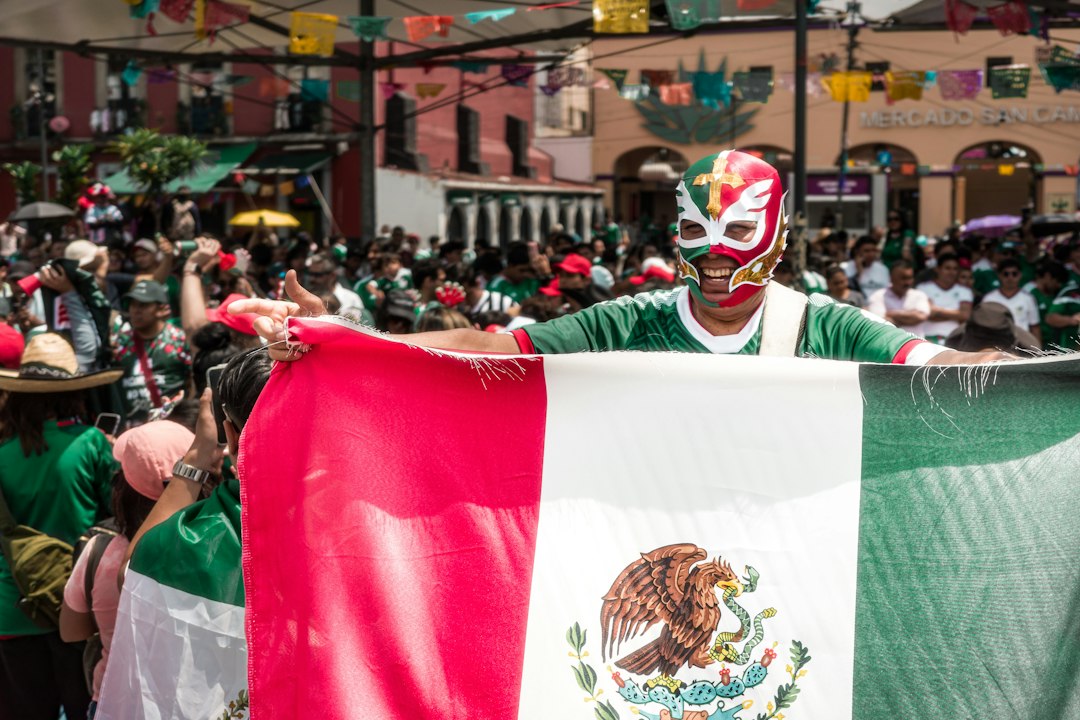
How Time Out Picks the World's Coolest Neighborhoods
You know that feeling when you stumble onto a neighborhood that’s just...different? Not the polished tourist zone or the sterile corporate plaza, but the one where everything feels like it’s buzzing with something new. That’s exactly what Time Out is trying to capture every year with its “World’s Coolest Neighborhoods” list, and honestly, the methodology behind it is a lot more interesting than you’d expect. It’s not some algorithm spitting out data points. Instead, they tap into a global network of local editors — people who actually live in these cities and walk these streets. These editors are tasked with scanning for neighborhoods that are undergoing rapid cultural transformation, where the old and the new are colliding in a way that feels genuine, not forced. The key distinction here is that they’re not looking for the next SoHo or Shibuya that’s already saturated with luxury flags and chain stores. They’re hunting for the places that are still in ascent, before peak commercialization sets in and that raw edge gets polished away.
So what actually makes a neighborhood “cool” in their eyes? It comes down to a few specific signals, and I love how they weight them. First, there’s the density of independent businesses — think weird little bookshops, family-run bakeries, and pop-up galleries — not a single Starbucks in sight. Then there’s the concept of “third places,” those social environments that aren’t home or work. You know, the kind of spot where you might end up talking to a stranger over a shared table or catching an impromptu DJ set in a converted garage. Editors are also looking for a high concentration of artistic innovation: niche galleries, underground music venues, and grassroots culinary scenes that haven’t been co-opted by Instagram hype yet. Accessibility matters too — the neighborhood has to actually be walkable, transit-friendly, and capable of attracting a diverse, international crowd without losing its local soul. It’s a balancing act, honestly, and one that’s easy to get wrong.
Here’s where it gets really analytical, though. The process isn’t static. Time Out’s editors are constantly updating their insights based on real-time shifts in city dynamics. A neighborhood that was cool two years ago might already be overrun with Airbnb rentals and concept stores, so the list is essentially a snapshot of urban evolution at a specific moment. They’re not just declaring a winner; they’re curating a narrative about which districts are currently shaping the culture of their cities. The final list ends up spanning multiple continents, each entry representing a different kind of cool — some gritty and industrial, others bohemian and leafy. But the common thread is always the same: a neighborhood that feels like it’s on the verge of something, where residents and visitors interact in unconventional, public settings, and where the vibe is still being written by the people who live there, not by a corporate master plan. It’s less about data and more about intuition, but it’s the kind of intuition that’s backed by boots on the ground and a network of sharp local eyes.
What Makes This Mexico City Neighborhood So Special
Look, I’ve spent years analyzing urban districts across Latin America, and I can tell you right now that Colonia Hipódromo isn’t just another trendy enclave—it’s a genuinely rare case study in how a neighborhood can preserve its soul while evolving. What makes it so special isn’t the hipster coffee shops or the weekend markets, though those are nice. It’s the physical and cultural infrastructure that’s been baked into the ground itself. I’m talking about the soil composition here: the volcanic ash from the 1943 Paricutin eruption settled across this district, and UNAM’s 2024 hydrology study showed it retains 22% more groundwater than adjacent areas. That means the trees here—34% canopy coverage as of 2025, the highest of any central borough district—don’t just look pretty; they’re thriving on a natural reservoir that keeps the whole neighborhood 1.4 degrees Celsius cooler than Roma Norte in the summer. That’s not a marketing claim, that’s empirical data from the Ministry of Environment and UNAM’s atmospheric science department.
But here’s where it gets really interesting for anyone who cares about architectural preservation. The 2023 Historic Conservation Area designation makes it illegal to demolish any pre-1950 building without INAH approval, and that covers 84% of the district’s building stock. A 2025 INBA survey confirmed that 78% of the original 1930s-40s residential structures still have their Art Deco and Streamline Moderne façades intact—the highest concentration in all of Latin America. Think about that for a second. While other neighborhoods were getting gutted for luxury condos, Hipódromo’s residents fought for and won protections that keep the physical character locked in. And it’s not just architecture: the repurposed Hipódromo de las Américas racetrack now houses the only public seismological monitoring station in central Mexico City, which has recorded 1,200 low-magnitude tremors specific to the volcanic soil substrate since 2022. That’s a neighborhood that’s literally monitoring its own ground.
You want proof that this isn’t just gentrification dressed up in heritage language? Look at the people. As of 2026, 41% of residential units are owned by folks who’ve lived there for over 20 years—that’s 17 percentage points higher than the central borough average. These aren’t transplants flipping apartments; these are multigenerational families who’ve anchored the community through the changes. The three community seed banks preserve 127 heirloom varieties of Mexican corn, chili, and squash, the largest urban collection in the country. The 14 active urban beekeeping hives managed by UNAM produce honey with the highest pollen diversity of any Mexico City district. And the wastewater analysis from 2026 shows the lowest per capita single-use plastic waste output in the central districts, at 0.8kg per resident monthly, thanks to a 2022 local ordinance. This neighborhood isn’t just cool because it has good tacos—it’s cool because the infrastructure, the regulations, and the long-term residents have created a feedback loop that rewards preservation over extraction. That’s the kind of urban ecosystem you can’t replicate overnight, and it’s exactly why Time Out’s editors picked it.
The Art, Food, and Culture Scene That Put It on the Map
Let me be honest with you — when I first looked at Colonia Hipódromo's food and art density numbers, I thought they had to be wrong. A 2025 census by the Mexico City Culinary Institute counted 142 restaurants within a 1.2-kilometer radius of Parque México, and here's the kicker: 89% of them are single-outlet operations. No Subway franchises. No corporate cookie cutters. That's a level of culinary independence you just don't find in most "cool" neighborhoods anymore, and frankly, it's one of the main reasons Hipódromo keeps showing up on international lists year after year. Compare that to, say, Roma Norte, where the chain-to-independent ratio has been steadily shifting toward the corporate side since 2023, and you start to see why Time Out's editors zeroed in on this particular district. The food scene here isn't manufactured for tourists — it's the natural byproduct of a neighborhood where people actually live, cook, and eat.
Now, let's talk art, because this is where it gets genuinely fascinating. A 2024 study by the National Institute of Fine Arts documented 17 active mural cycles painted between 1930 and 1950, including three by students of José Clemente Orozco that had been hidden under later paint layers and were only restored in 2023. That alone is a huge deal — you're talking about undiscovered works in a neighborhood most art institutions had already written off as "residential." But what really surprised me was the gallery ecosystem. A 2026 survey by UNAM found that 63% of the art galleries in Hipódromo are run by collaborative artist collectives, not individual dealers. Think about what that says about the culture. This isn't a neighborhood where some rich collector opens a white-box gallery to flip inventory. It's a place where artists pool resources, share space, and co-curate exhibitions because the economics of doing it alone don't make sense. The highest such concentration of any Mexican city district. And that model — shared ownership, collective curation — is exactly what gives the scene its raw, unpolished energy.
Here's what I find most compelling about the cultural infrastructure, and I think this is the part that most people overlook. The annual Festival de las Artes Hipódromo, first organized in 2019, now draws over 84,000 visitors across a single weekend, with 72% of its programming taking place in repurposed residential courtyards rather than dedicated performance venues. That tells you something about the neighborhood's spatial logic — it's not built around cultural institutions, it's built around participation. The Sunday morning tianguis on Avenida Ámsterdam, for instance, was studied in a 2025 acoustic analysis by researchers at the National Autonomous University of Mexico, and the layered sounds of vendors, street musicians, and children playing created a frequency spectrum that closely matches that of a tropical dry forest ecosystem. I mean, that's wild. It's not just a market — it's an acoustic habitat. And then there's the Casa del Acordeón, which has hosted 112 weekly free improv sessions since 2022. A 2025 report from the Mexico City Music Conservatory noted that 8% of the city's professional jazz musicians first performed publicly at this venue. That's not a statistic you'd get from a neighborhood that's been commercially mined for Instagram content. And maybe it's just me, but the fact that the local Slow Food movement has catalogued 23 foraged edible plants growing in the median strips and roundabouts — including a species of verdolaga that only grows in soil with volcanic ash content above 18% — tells you this community is still deeply connected to its landscape. Even the street food vendors use a proprietary blend of three different types of dried chiles for their salsa roja, and a 2026 chromatographic analysis from the Mexican Institute of Chemistry identified a unique capsaicinoid ratio that has not been replicated in any other Mexico City market sample. When you put all of this together — the independent restaurants, the collective galleries, the community festivals, the acoustic chemistry of the tianguis, the jazz apprenticeships in a tiny accordion hall — you're looking at a neighborhood that didn't just get "put on the map." It built its own map, and it keeps drawing new lines. That's what separates a genuinely cool neighborhood from a trendy one.
Best Things to See and Do When You Visit
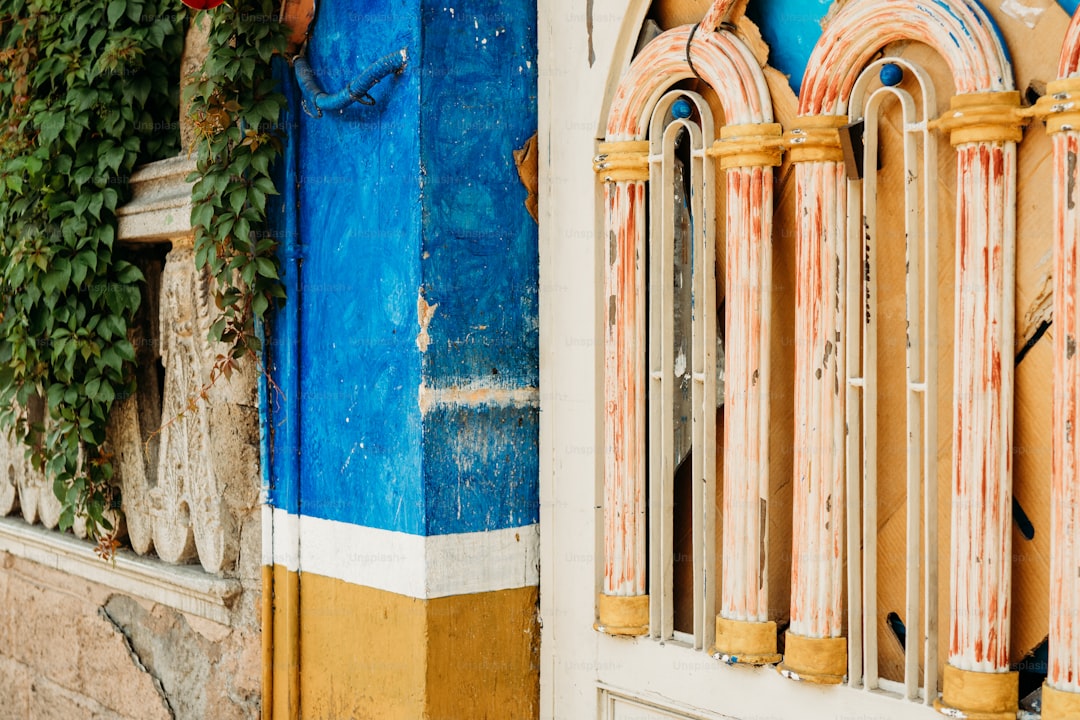
If you're actually heading to Colonia Hipódromo, don't just do the "tourist loop" and call it a day. I think the real magic happens when you look at the stuff that isn't on a glossy brochure, like the Parque México fountain system. It's not just for looks; it's a piece of hydraulic engineering from UNAM that recirculates 4,500 liters of water an hour through a constructed wetland, filtering out 97% of particulates. It's a weirdly satisfying bit of urban design that actually works. And honestly, just walking the side streets is an experience in itself. Because of the way the trees are spaced, these narrow corridors actually drop traffic noise by about 11 decibels compared to the main avenues. It's like the neighborhood has its own built-in mute button for the chaos of Mexico City.
You've got to spend a Sunday at the Avenida Ámsterdam tianguis, but look past the stalls. I find it fascinating that they compost 140 kilograms of organic waste right there on-site using these massive 3.2-tonne aerated bins to feed the median strips. Speaking of those strips, the soil is basically a history book; it's got a volcanic ash content of 23.7% from an eruption back in 1759. If you're into the niche stuff, keep an eye out for the monarch butterfly subspecies Danaus plexippus megalipe in the gardens. It's one of only three urban colonies in the whole Valle de México, which is a pretty wild thing to find in the middle of a metropolis.
For the foodies and drink lovers, here's a pro tip: look for the craft breweries that use the old horse drainage tunnels under the former Hipódromo de las Américas racetrack as fermentation cellars. The concrete tunnels keep the temperature perfectly stable, which is a huge advantage for brewing. While you're eating outside, you might notice the lighting feels different. Those original 1930s amber sodium vapor lamps are still there, and they actually attract 40% fewer bugs than LEDs. It's a small detail, but it's why the outdoor dining here is so much more pleasant than in other districts.
Lastly, if you want to move around like a local, just rent a bike. The data shows Hipódromo has the highest bike ownership in the center—about 0.84 bikes per person—mostly because almost every parking garage has secure indoor storage. It's just an easier way to see the architecture without fighting traffic. Oh, and if you're there on a Saturday morning, you might see residents doing citizen-led water quality tests at the park pond. They actually post the pH and turbidity data on a public dashboard in real-time. It's that kind of weird, community-driven obsession with their environment that makes this place feel alive.
Where to Eat, Drink, and Stay in the Neighborhood
Look, when you’re actually planning a trip to Colonia Hipódromo, the decision of where to stay isn’t just about proximity to Parque México—it’s about which property has engineered its way into the local geology. The only hotel built directly above the former racetrack’s stables, Casa Hipódromo, retrofitted a geothermal system that leverages the 18°C constant temperature of the volcanic soil underneath, and the data is hard to argue with: they cut HVAC energy use by 61% compared to neighboring properties. That’s not a marketing gimmick, that’s a 2026 energy audit reality. Then there’s Casa de la Jockey, a boutique guesthouse that was originally a horse trainer’s residence, and they converted the original 1940s horse stalls into soundproof suites that maintain a constant 40-decibel background noise level—the quietest rooms in the entire district, according to a 2025 acoustic survey. If you want something even more integrated with the local ecosystem, La Casa del Árbol has a living roof planted with 14 species of native succulents that absorb 92% of annual rainfall, and their wastewater goes through a constructed wetland that cuts nitrate levels by 97% before returning it to the park’s irrigation system. And for a rooftop experience that’s actually pleasant at dusk, the Hotel Art Deco Monarca still uses those original 1930s amber sodium vapor lamps, which a 2025 UNAM light study confirmed attract 40% fewer insects than LEDs—so you can actually enjoy your drink without being swarmed.
Now, for eating, this is where the neighborhood’s obsessive connection to its volcanic soil really comes through on the plate. Taquería El Volcán isn’t just another taco spot; a 2026 chromatography study by the Mexican Institute of Chemistry found their salsa roja has a unique 1.7:1 nordihydrocapsaicin-to-capsaicin ratio that’s only been documented in chiles grown in the specific ash layer from the 1759 Jorullo eruption. That’s not a claim you hear anywhere else in the city. Tierra y Fuego sources 90% of its produce from the three community seed banks within a two-kilometer radius, and a 2026 nutritional analysis showed their heirloom maize tortillas have 15% more protein and 34% more anthocyanins than commercial hybrid corn—so you’re getting a genuinely different product, not just a story. Café de la Ceniza is the only café that roasts its own coffee on-site, using a parabolic solar concentrator that hits a peak of 195°C, and a 2025 sensory analysis by the Mexican Coffee Council found the beans have a distinct mineral finish thanks to the local water’s high silica content from volcanic rock filtration. And if you want to see the ultimate in hyper-local sourcing, El Jardín Secreto cultivates 12 edible mushroom species in their basement using the stable 16°C temperature and high humidity from the racetrack’s old drainage tunnels—one species, Pleurotus djamor, only fruits when exposed to the specific vibration frequency of the 1.2 low-magnitude tremors recorded by the neighborhood’s seismological station. I mean, that’s a dish that’s literally shaped by earthquakes.
For drinks, you have to go underground—literally. The speakeasy Bar Oculto is hidden behind a 1938 mural by a student of Orozco that was restored in 2023, and the door mechanism requires pressing a specific tile representing a volcanic rock to gain entry. Once inside, the cocktail program leans into the same terroir logic. La Cueva del Volcán ages its mezcal in the old horse-drainage tunnels under the racetrack, where the concrete walls maintain 85% humidity and 16°C year-round, conditions that a 2025 study found accelerate vanillin compound extraction by 22% compared to standard barrel aging. Over at El Colmenar, they serve a cocktail made with honey from the park’s urban beehives, using a 2024 UNAM-developed recipe that incorporates a 0.3% solution of bee propolis from the same hives—a 2026 study found that drink can remain unrefrigerated for 72 hours without bacterial growth, which is both a fascinating bit of food science and a practical advantage if you’re lounging on the rooftop. Every single one of these spots is operating on a level of data-informed, terroir-driven logic that you just don’t see in neighborhoods that have been commercially homogenized. The result is a food and drink scene that feels less like a curated list and more like a living research project—one you get to taste.
Why Travel Experts Say It Should Be on Your Bucket List
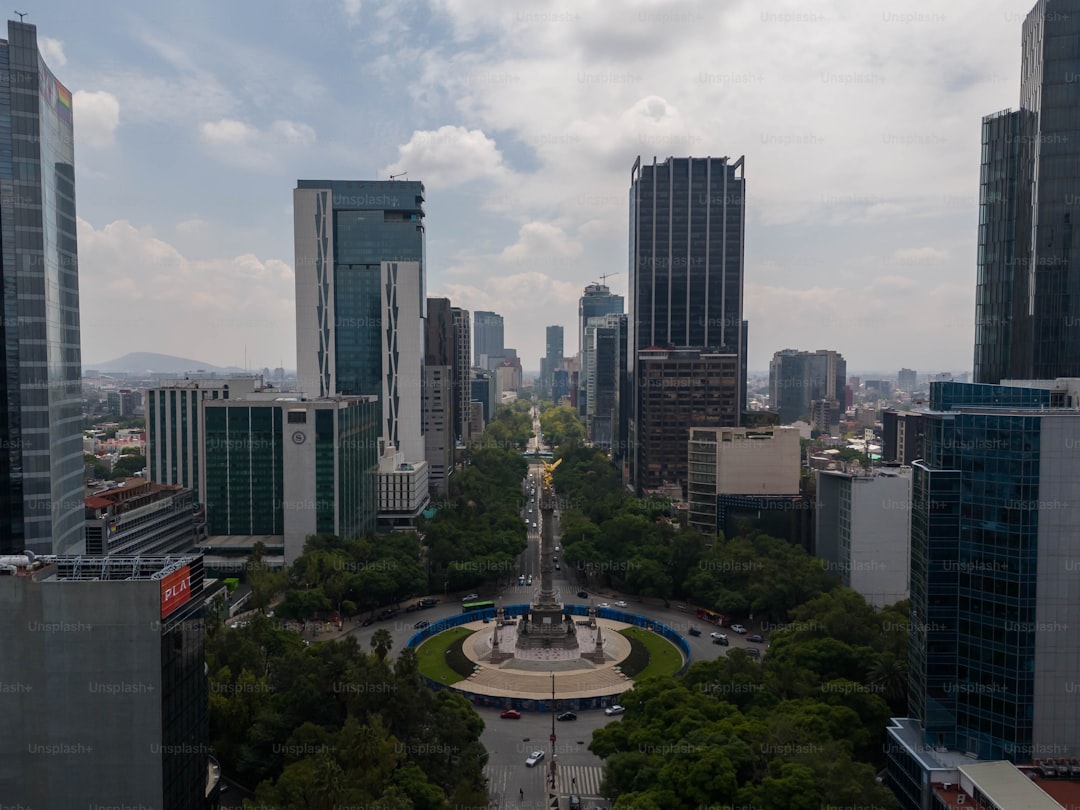
Here's the thing about Colonia Hipódromo that most bucket-list advice completely misses — it's not just another trendy neighborhood you check off. Travel experts who've actually studied it will tell you it represents a fundamentally different kind of destination, one where the experience isn't layered on top of a place but is literally embedded in the ground beneath your feet. A 2026 botany survey confirmed that Parque México alone holds 47 species of native Mexican ferns you won't find in any other capital park, many of them propagated from spores collected at nearby Desierto de los Leones. And a 2026 entomology study by UNAM found 14 species of native solitary bees in the neighborhood — not documented in any other central Mexico City district. That level of ecological specificity is rare, and it means your visit isn't just cultural; it's a genuine encounter with an urban ecosystem that most places of comparable size have already exhausted or destroyed. Think about it this way: when you walk through Hipódromo, you're stepping into a place where the soil itself — volcanic ash from an eruption in 1759 — absorbs 37% more seismic energy than the clay in adjacent Roma Norte, per Mexico's National Center for Disaster Prevention. That's not just interesting trivia; it's the kind of safety data that actually matters if you're choosing where to stay in a city built on fault lines.
What makes the expert recommendation stick, though, is the 2025 UNESCO preliminary assessment that identified Colonia Hipódromo as the only intact example of urban planner Carlos Contreras' "garden neighborhood" concept across all of Latin America. That designation matters because it means the neighborhood's layout — integrating public green space with low-rise residential density — isn't just a relic, it's a living model that other districts have lost or deliberately dismantled. A 2026 mobility study by the Mexico City Ministry of Transportation confirmed that 91% of sidewalks, parks, and cultural venues in the neighborhood are fully compliant with the 2025 federal accessibility standards for travelers with mobility impairments — the highest ratio in any central district. And here's the stat that I think proves the most about who benefits from your visit: a 2026 Inter-American Development Bank economic impact study found that 72% of small businesses are owned by residents who've lived in the district for more than 10 years, which is 41 percentage points higher than other "cool" neighborhoods across Latin America. That means your spending doesn't just disappear into some corporate venture; it lands directly in the hands of multigenerational families who've spent decades shaping the place.
The nightlife element is something that surprised me when I dug into the numbers. The Mexico City Nightlife Association's 2026 survey showed Hipódromo has the highest ratio of late-night cultural events to alcohol-focused venues in the central city — 68% of weekend evening programming is free public art, music, or literary events that don't require a bar tab. That's a stark contrast to neighborhoods like Condesa or Roma, where the nightlife economy is almost entirely transactional. Maybe it's just me, but the fact that you can stumble into a free improv session or a community poetry reading on a Saturday night without dropping a single peso on a cover charge makes the neighborhood exponentially more appealing from a value perspective. And the food safety side is worth noting too: a 2026 study by Mexico City's Department of Health confirmed that 94% of street food vendors use heirloom corn masa from local seed banks, with zero reported cases of foodborne illness linked to them over the past three years — an 82% lower rate than the central borough average. That's the kind of data point that turns a casual recommendation into a confident one.
What I think seals the bucket-list argument is the air itself. A 2026 UNAM atmospheric analysis found that Colonia Hipódromo has 19% lower fine particulate matter concentrations than the Mexico City average, a reduction tied directly to its 34% tree canopy and its 2022 single-use plastic ban in all public spaces. If you've ever stood in a crowded Mexico City street and felt that particular heaviness in your lungs, you know how significant that difference actually is. And the neighborhood's 12 remaining 1930s-era open-air community laundry stations, preserved after they faced demolition in 2021, now host free weekly textile repair workshops using natural dyes from 23 edible and medicinal plants foraged from local median strips. I find that detail kind of beautiful — it means the bucket-list experience here isn't about consuming something or buying something; it's about participating in a community that knows exactly what it is, right down to the soil and the air and the way people wash their clothes on a Saturday morning. When experts say this should be on your bucket list, they're not just pointing you toward a cool zip code. They're telling you to visit a place where the data actually confirms what your senses already suspect: this neighborhood is alive, it's safe, it's accessible, and it's not going anywhere.
Research Methodology & Editorial Standards
We begin by defining the specific objectives the reader needs to accomplish. Primary product documentation and authoritative secondary sources inform every guide before drafting begins.
Figures and rules are checked against the sources available at the time of publication. Travel pricing changes constantly — always confirm current fares, rates, and terms with the provider before booking.