
How to plan the ultimate scuba diving adventure to see the worlds most famous shipwrecks
Ultimately, if you’re diving in areas prone to heavy rain, stick to the shoulder seasons to avoid the massive sediment plumes that roll off the coast during monsoon peaks; it’s the difference between an epic exploration and staring at a wall of silt.
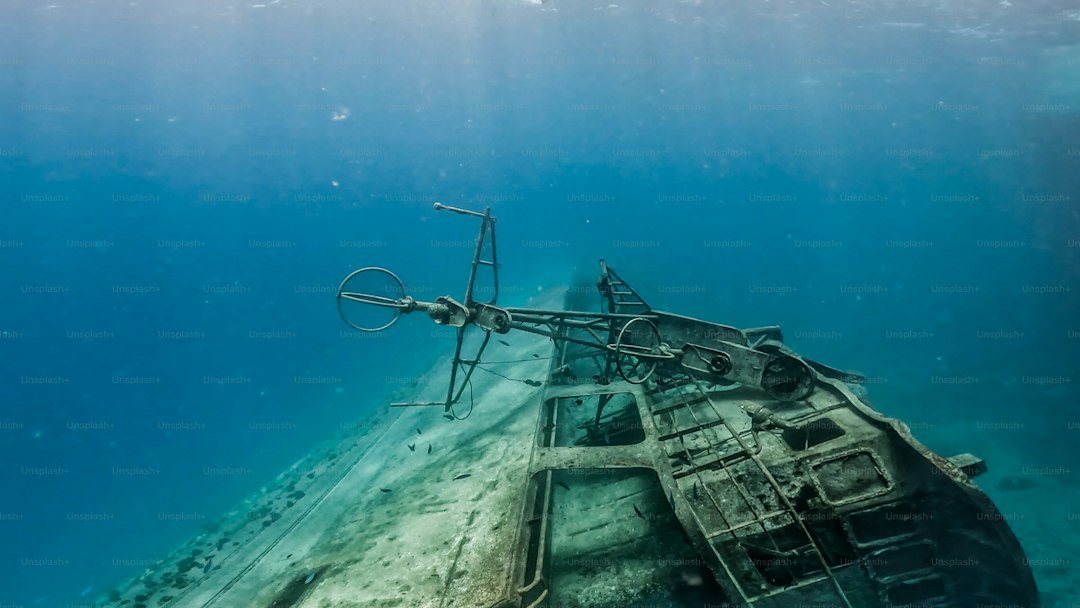
Essential Certifications and Deep Diving Training for Wreck Explorers
When we start looking at the gear and training required for serious wreck exploration, it’s easy to get overwhelmed by the sheer amount of technical jargon. But honestly, if you’re planning to head into the belly of a sunken vessel, you really need to move past standard recreational certifications. It’s not just about getting deeper; it’s about managing the massive jump in risk that comes with being inside a metal structure miles from the surface. You’ll hear a lot about trimix, which is just a blend of oxygen, helium, and nitrogen designed to keep your head clear from narcosis when you’re pushing past 30 meters. It’s an essential tool, but it also forces you to become an expert at gas management because you simply can't afford to run dry when you're navigating a maze of corridors.
One thing I always tell people is that the environment inside a wreck is far more unforgiving than any open-water reef. You absolutely have to master your buoyancy control, specifically with techniques like frog kicking, unless you want to stir up silt and lose all visibility in a heartbeat. I’ve seen enough divers get into trouble because they didn’t practice their line-handling skills; you need to be able to deploy a reel and maintain a continuous path back to the exit even if you can’t see your own hand in front of your face. It’s why agencies now drill into you the importance of redundant systems, like carrying a second dive computer so that a single electronics failure doesn't leave you stranded without a decompression plan.
Beyond just the gear, there’s a heavy psychological component that most people don’t talk about until they’re actually down there. You’re dealing with task loading—managing your life support, checking your gas, and watching your navigation all at once—and you have to keep your cool when things go sideways. Many of the pros now look toward closed-circuit rebreathers, which give you much longer bottom times by scrubbing your exhaled gas, but they require a whole new level of technical discipline to operate safely. If you’re serious about this, don’t treat your training as a box-ticking exercise. Treat it like you’re learning to survive in an alien world, because in a deep-wreck scenario, that’s exactly what you’re doing.
Top-Tier Destinations: Mapping the World’s Most Iconic Underwater Sunken Relics
When I start mapping out a dive trip, I look for sites that offer more than just a rusted hull; I want a historical narrative that hits home. The SS President Coolidge in Vanuatu is honestly the gold standard here, as its 200-meter frame sitting on a steep slope allows you to test your depth limits between 20 and 70 meters. If you prefer a living museum, the SS Thistlegorm in the Red Sea is impossible to beat because the WWII cargo, like those Norton motorcycles, feels frozen in time. Then you have the Zenobia in Cyprus, where you’re swimming past 104 lorries that have essentially become an artificial reef since 1980. It’s a stark reminder of how quickly the ocean reclaims human ambition.
If you’re looking for accessibility, the USAT Liberty in Bali is a total outlier since you can practically walk off the beach to hit the stern in just five meters of water. On the flip side, if you want something that really pushes your technical limits, the Irako in the Philippines offers deep penetration inside a remarkably intact superstructure. For sheer marine life density, I’d point you toward the Yongala in Australia, which is protected by a no-fishing zone that turns the wreck into a highway for giant groupers and eagle rays. It’s a completely different experience compared to the eerie, silent decay you find in places like Scapa Flow, where the cold, low-salinity water keeps the steel of ships like the SMS Kronprinz Wilhelm from falling apart too fast.
Sometimes I think about the history buried even deeper, like the submerged roads of Doggerland beneath the North Sea that connect us to a world before our current maps existed. While the HMHS Britannic in the Aegean is a bucket-list site for many, you have to remember that it’s a protected grave at 120 meters, so it’s more for the history books than your personal logbook unless you have serious permits. Then you’ve got the Fujikawa Maru in Chuuk Lagoon with its Zero fighter planes still resting in the hold, which is just surreal to see in person. I’ve found that comparing these sites helps you decide what kind of diver you really are: do you want the thrill of a war-time cargo hold, or the quiet reflection of a ship slowly becoming part of the seabed? Either way, picking your destination is the first step toward understanding the stories these wrecks are still telling.
Mastering Wreck Diving Safety: Gear Requirements and Risk Mitigation
When you’re planning to head inside a wreck, you have to realize that the environment can turn hostile in a heartbeat. The fine sediment inside, often called moon dust, can drop your visibility to zero in under ten seconds if you aren’t careful with your movement. That’s why you’ll see seasoned divers using a modified flutter or helicopter kick to keep their fin tips well away from the floor. It’s all about maintaining a clean profile, and honestly, you should be streamlining every hose and piece of gear so nothing sticks out more than a few inches. If a stray clip catches on a rusted bulkhead, you’re in real trouble, which is why I always swap out any plastic clips for stainless steel double-enders that won't shatter under the pressure of a deep dive.
Lighting is another non-negotiable area where I see people cut corners to their own detriment. Carrying a primary light with at least 1,000 lumens is the bare minimum, but you really need two independent backups tucked away for when the main one inevitably flickers or dies. Think about the math here: we know that nearly 80 percent of fatal accidents in these environments happen because someone lost their way, making a continuous guideline a statistical necessity rather than a suggestion. And while we’re talking about safety margins, you have to be rigorous with your gas planning. You should be calculating your emergency oxygen based on 1.5 times your planned decompression obligation to cover any gas-sharing needs, and keeping those stage bottles clearly marked with reflective tape is the only way to avoid confusion when you’re low on air.
You also need to be aware of how the physics of the water changes your physiology, especially since you lose body heat 25 times faster than you would in the air. This thermal stress ripples through your whole dive, forcing you to adjust your computer settings for low temperatures to keep your decompression profiles accurate. On top of that, watch your gas density; if you’re breathing something thicker than 6.0 grams per liter at depth, you’re looking at a much higher risk of CO2 retention and the kind of panic that comes with it. I’ve even started looking at heart rate data, which shows that your psychological stress spikes your oxygen consumption more than most realize. Because steel walls kill sound and make acoustic signals useless, keep a slate handy for communication—it’s the only way to stay synced with your buddy when the walls are closing in.
Timing Your Expedition: Choosing the Best Seasons for Visibility and Access
Let’s pause for a moment and reflect on why the calendar is just as important as your gas mix when you're planning a trip to these historical sites. You might think you can just book a flight whenever, but in reality, the ocean is a dynamic, shifting environment that dictates exactly when you’ll actually see those rusted hulls. In Chuuk Lagoon, for instance, the thermal layering during the transition months of April and November often creates a halocline that traps suspended organic matter, effectively clearing the water column for better photography. If you’re heading to the Mediterranean, you’ll want to target the late spring; that timing helps you dodge the massive phytoplankton blooms that hit in mid-summer, which can easily slash your horizontal visibility by half. It’s all about working with the water rather than fighting it.
The physics of the environment varies wildly depending on where you are, and you really need to account for local realities like salinity and wind. The Red Sea is a perfect example where high evaporation rates keep particles settled, making the winter months between December and February the sweet spot for long-range optical penetration. Conversely, look at the North Atlantic, where the summer solstice is your best friend because it gives you the longest window of ambient surface light to illuminate those deep, dark holds in places like Scapa Flow. You should also keep a close watch on the lunar cycle, especially if your target site sits near a narrow channel. The tidal range during a full moon can trigger massive underwater surges that make internal penetration feel more like a washing machine than a controlled dive, so aiming for the neap tide cycle is usually the smarter play for safety.
Beyond just the light and the current, you’ve got to think about the broader ecological shifts that happen throughout the year. In the Pacific, seasonal thermocline shifts often bring up nutrient-rich water that attracts megafauna like whale sharks, but that same upwelling can sometimes cloud your visibility. I’ve found that checking satellite sea-surface temperature data from the previous winter is a great way to forecast how bad the spring algae blooms might get, giving you a two or three-week buffer to adjust your schedule. Even wind patterns, like the Etesian winds in the Aegean during July and August, can turn a calm surface into a logistical nightmare for your boat team, even if the water below is crystal clear. Ultimately, if you’re diving in areas prone to heavy rain, stick to the shoulder seasons to avoid the massive sediment plumes that roll off the coast during monsoon peaks; it’s the difference between an epic exploration and staring at a wall of silt.
Ethical Wreck Diving: Preserving History and Respecting Marine Sanctuaries
When we head down to these wrecks, it’s easy to get caught up in the thrill of the history, but I think we need to shift our mindset to see ourselves as guests in a fragile home rather than just visitors in a museum. These sunken hulls act as accidental sanctuaries where the physical structure stops commercial bottom trawling, allowing life that wouldn't stand a chance elsewhere to actually thrive. You’ll notice that these steel structures often host a higher density of fish than the surrounding reefs, largely because they provide such a perfect, vertical escape for juveniles. But here’s the reality: that environment is incredibly delicate. Every time we exhale against an overhead surface or bump into a bulkhead, we aren't just risking our own safety; we’re potentially triggering the collapse of structures already weakened by decades of corrosion.
I really try to emphasize that maintaining neutral buoyancy isn't just a technical skill—it’s an environmental duty. Think about the sediment inside a ship as a protective seal; when we stir it up, we don't just lose visibility, we can actually accelerate the chemical decay of the steel by introducing oxygen to bacterial colonies that thrive on the hull. We also have to be mindful of what we carry on our gear. Pathogens and invasive species can easily hitch a ride on our fins or suits if we aren't careful about cleaning our kit between sites. It’s also worth remembering that many of these ships are resting places for those lost in conflict, and treating them as war graves is a standard that should go without saying.
There’s also the issue of what we leave behind—and more importantly, what we don't touch. I’ve seen divers tempted to grab a souvenir, but removing even a small piece of metal destroys the archaeological context and breaks the law. Instead, I’ve started bringing a small cutting tool to remove ghost gear or monofilament lines that snag on the wreck, which is one of the most effective ways we can actually help the local ecosystem. I also try to avoid using high-intensity strobes in those dark, confined spaces because the light pollution can really mess with the nocturnal species relying on low-light hunting. If we want these sites to stay intact for the next generation, we have to recognize that our impact matters just as much as our air supply. It’s about leaving the site exactly as we found it, or maybe even a little bit cleaner than we arrived.
Logistics and Planning: How to Secure Permits and Reputable Dive Operators
Securing access to legendary shipwrecks involves far more than just booking a spot on a boat; it’s a complex exercise in navigating international law and high-stakes logistics. If you’re targeting protected war graves, you’ll likely run into the UNESCO 2001 Convention on the Protection of the Underwater Cultural Heritage, which creates a legal layer that effectively overrides standard local permits. You need to be prepared for the reality that a formal maritime archaeological permit can take upwards of six months to process, even if you’re working with the most connected expedition leaders. I always tell people to look for operators who carry specific maritime liability insurance for deep-water technical penetration, as most run-of-the-mill recreational policies won't touch you once you cross the threshold into a hull.
When you’re vetting these shops, don’t be afraid to ask for their emergency protocols, specifically regarding hyperbaric oxygen support for the actual depths you’ll be hitting. A massive red flag for me is an operator who doesn't insist on a pre-dive gas-blending log that cross-references your decompression computer settings with your tank analysis; if they’re casual about the math, they’re casual about your life. For the most remote sites, the gold standard is an operator who uses satellite-linked telemetry to monitor your gas and depth in real-time, essentially acting as an extra set of eyes from the surface. Also, keep in mind that the flag state of the wreck still holds legal jurisdiction, meaning you might find yourself hunting for diplomatic clearance from a government thousands of miles away just to drop anchor legally.
I’ve found that the best outfits are the ones that treat the wreck as a living site rather than just a destination, often maintaining proprietary hazard maps that track structural decay caused by galvanic currents. They’ll usually have a dedicated surface-support crew using acoustic Doppler current profilers to track shifting water conditions, which ensures you aren't fighting a massive surge during your exit. Before you sign anything, demand a written agreement that restricts the use of high-intensity lighting or excessive propeller wash near delicate areas, as these are the quickest ways to destabilize ancient sediment. If the operator doesn't participate in rigorous, recurring safety audits from bodies like Global Underwater Explorers, you should probably keep looking. It feels like a lot of hoops to jump through, but when you’re hanging on a line in the middle of nowhere, you’ll be glad you prioritized those who do things by the book.
Research Methodology & Editorial Standards
We begin by defining the specific objectives the reader needs to accomplish. Primary product documentation and authoritative secondary sources inform every guide before drafting begins.
Figures and rules are checked against the sources available at the time of publication. Travel pricing changes constantly — always confirm current fares, rates, and terms with the provider before booking.