
Exploring the world most mysterious underwater shipwrecks for your next adventure
When we think about shipwrecks, it’s easy to get caught up in the romantic image of a rotting wooden skeleton resting on the ocean floor, but the reality of why these sites survive is a fascinating mix of chemistry and sheer luck.
The Antikythera Mechanism: Unlocking the Secrets of Ancient Maritime Engineering
When you consider the wreckage off the coast of Antikythera, it’s easy to focus on the gold and statues, but the real story is a handful of corroded bronze gears that changed everything we thought we knew about ancient tech. I remember first reading about this and just being floored that two millennia ago, someone had already mastered the kind of differential gearing we didn't think existed until the 16th century. It’s essentially the world’s first analog computer, and honestly, the math required to pull it off is staggering. Imagine having a hand-cranked device that could track the sun, the moon, and even the five planets known to the Greeks with such precision that it predicted solar and lunar eclipses years ahead of time.
Researchers have used 3D X-ray tomography to peer through the grime, revealing that this wasn't just a basic calendar, but a highly sophisticated machine. It featured a brilliant pin-and-slot gear train designed specifically to mimic the moon’s irregular orbital speed, which is a detail that shows just how deep their understanding of celestial mechanics actually went. You can even see how they tracked the Panhellenic Games, turning the device into an ancient athletic schedule alongside its astronomical duties. It’s wild to think that the bronze gear teeth were so miniaturized and precise that they rivaled the complexity of clockwork from the medieval period, essentially rewriting the timeline of human engineering.
The inscriptions on the fragments are the real kicker for me because they function like a literal user manual, labeling the celestial bodies and solar events so the owner knew exactly what they were looking at. Seeing a rotating sphere painted half-black and half-silver to show lunar phases in a digital model really drives home how tactile and visual this technology was. It’s not just some dusty artifact; it’s a machine built to let a user manually crank time forward or backward to see cosmic alignments. Maybe it’s just me, but there is something deeply human about that need to predict the future and map the heavens, even if you’re using nothing but bronze and logic to do it.
Ghost Ships of the Deep: Why We Are Drawn to History’s Submerged Relics
When we think about shipwrecks, it’s easy to get caught up in the romantic image of a rotting wooden skeleton resting on the ocean floor, but the reality of why these sites survive is a fascinating mix of chemistry and sheer luck. I’ve spent time looking into how deep-sea environments act as natural preservation chambers, and it really comes down to the lack of light and oxygen. At those extreme depths, the wood-boring organisms that usually dismantle a ship in shallower waters just can’t survive, leaving the structure remarkably intact for centuries. It’s almost like the ocean decides to hit the pause button on time, creating these weird, stable microenvironments where iron artifacts actually get a form of natural cathodic protection from microbial communities.
Beyond the chemistry, there is something truly addictive about how these sites function as a literal database for human history. When we see a site where the hull is still buried under layers of silt, we aren’t just looking at a pile of wood; we’re looking at a static snapshot of ancient supply chain logistics. I find it incredible that we can now use autonomous vehicles to map out thousands of intact amphorae, which gives us a much clearer picture of agricultural output than any written record from the period ever could. The shift from shell-first to frame-first construction that researchers have tracked in the Mediterranean isn't just a technical detail—it’s a window into how trade efficiency literally changed the economic landscape of the Byzantine era.
But it’s not all static preservation, because the ocean floor is constantly shifting, and that’s what makes the hunt for these wrecks so unpredictable. Sometimes a current will move a sandbank and suddenly reveal a vessel that’s been hidden for a thousand years, reminding us that we’re really just working with the ocean’s permission. I also think about the more modern iron-hulled ships from the nineteenth century, which are currently facing a different kind of threat from ocean acidification. It’s a bit sobering to realize that while the deep sea preserved these ships for generations, modern chemical changes are now accelerating their decay right before our eyes. We aren't just observing history; we’re racing to document it before these relics disappear back into the seabed forever.
Navigating the Abyss: Essential Gear and Training for Wreck Diving
When you’re looking to push past the recreational limits and into the dark, confined spaces of a wreck, you have to realize that standard scuba gear just won’t cut it anymore. I always tell people that the most important piece of equipment you’ll ever carry isn't a shiny new toy, but the redundancy built into your gas supply. Whether you prefer a manifolded twinset or a sidemount configuration, you need a system that ensures you’re never breathing from a single point of failure. Beyond just having enough air, you’ll need to master Trimix—a precise blend of oxygen, helium, and nitrogen—to keep your head clear of narcosis and avoid the dangerous physical toll of high gas density at depth. Keeping your gas density below 6 grams per liter is a hard rule, not a suggestion, because the last thing you want is the exhaustion that comes from fighting thick, viscous air deep in the abyss.
Once you’re inside a structure, the environment shifts from a simple dive to a complex navigation challenge. You’re essentially running a continuous guideline the entire time, treating it like a physical lifeline back to the surface because a silt-out can turn your visibility to zero in a single heartbeat. I’ve seen enough divers get overwhelmed by task loading—trying to juggle reels, multiple high-intensity lights, and computers all at once—to know that cognitive overload is a real, silent killer. You really have to train until operating your backup lights and primary equipment becomes second nature, because if you panic in a confined space, you’ve lost the game. Your lighting isn't just for seeing; it's a safety system, and having at least 50,000 lux for your primary beam is the industry standard for cutting through the thick sediment you’ll inevitably stir up.
The final piece of the puzzle is managing your body’s reaction to the pressure and the clock, which means you have to be religious about your decompression schedule. We rely on algorithms like the Buhlmann ZHL-16C to track our ascent, and honestly, you can't afford to take shortcuts when you’re dealing with inert gas buildup that could lead to serious neurological issues. You might consider using a propulsion vehicle to save your metabolic energy for the return trip, but remember that those machines require a totally different level of precision to avoid smashing into the very ship you’re trying to explore. It’s all about maintaining perfect buoyancy to keep that fine, flour-like silt on the floor where it belongs. If you aren't willing to put in the hours to get your buoyancy and gear configuration dialed in, you aren't ready for the wreck; it's as simple as that.
The Ethics of Exploration: Balancing Discovery with Maritime Preservation
When I think about the thrill of finding a long-lost vessel, I have to remind myself that we’re essentially visiting someone’s final resting place, which makes the whole idea of exploration a lot more complicated than just checking an item off a bucket list. The 2001 UNESCO Convention really hits the nail on the head here by pushing for in situ preservation, meaning we should leave these sites exactly where they are rather than digging them up for a museum shelf. It’s a pretty stark contrast to the old-school treasure hunter mentality, but when you realize that recovering an object often triggers a rapid, destructive chemical breakdown as soon as it hits our oxygen-rich air, you start to see why leaving things be is often the most scientific choice we can make. We’re moving toward a model where the goal isn't ownership, but documentation, and honestly, that feels like the right evolution for how we treat our history.
But it isn’t just about our own behavior, because these wrecks are under attack from forces way bigger than a few curious divers. You’ve got iron-oxidizing bacteria forming rusticles that turn solid hulls into porous, weak structures, and then there’s the issue of ocean acidification, which is essentially eating away at metal artifacts faster than we can study them. It’s wild to think that ships which sat peacefully for a hundred years are now disintegrating because of shifts in water chemistry, and even more alarming is the illegal trade in low-background steel. Some folks are actually out there stripping pre-1945 wrecks for that specific, radiation-free metal to build scientific instruments, which is just a brutal way to treat a war grave.
The good news is that we’re getting way better at being invisible observers. Between high-fidelity photogrammetry and synthetic aperture sonar, we can now map an entire debris field with incredible precision without ever touching the seabed or stirring up the silt. I’ve seen 3D models of these sites that are so detailed you’d swear you were swimming right next to the hull, and that’s a massive win for public access without the physical damage. It’s like we’ve finally found a way to satisfy our curiosity without acting like tourists in a cemetery. If we keep prioritizing these non-invasive tech tools and respect the sovereign immunity that protects these ships, we can keep the past alive without literally watching it crumble under our feet.
Beyond the Antikythera: Other Legendary Wrecks Waiting to Be Found
When we talk about maritime history, the Antikythera wreck often steals the spotlight, but let's be real—that’s just the tip of the iceberg. Estimates suggest there are over three million undiscovered shipwrecks scattered across the ocean floor, forming an massive, untapped archive of our collective past. Most of these vessels are resting in the bathypelagic zone, where the consistent four-degree Celsius temperatures and crushing pressure create a natural deep-freeze that stops biological decay in its tracks. I find it fascinating that in places like the Black Sea, the water is entirely anoxic, meaning there’s no oxygen to support the shipworms that usually turn ancient hulls into dust, leaving organic materials like ropes and textiles perfectly preserved for millennia.
In the Mediterranean, the challenge is often that these wrecks are buried deep beneath layers of sediment, making them invisible to standard cameras. We’re now using sub-bottom profilers to detect those subtle density shifts in the seabed, which is how researchers are starting to pinpoint ships like the lost Athenian fleet. It’s wild to think about how these wrecks tend to congregate in high-energy coastal bottlenecks where storms historically caused navigation errors, essentially creating underwater graveyards that hold the answers to ancient trade routes. We’re also using advanced magnetometry to find nineteenth-century iron vessels that have been completely swallowed by sea grass, essentially hunting for signatures of metal in a sea of natural debris.
The real game-changer right now is the shift toward autonomous underwater vehicles packed with machine learning, which can finally distinguish between a random rock formation and a man-made hull in real-time. It’s a race against the clock, though, because as we’ve discussed, rising carbon dioxide levels in the water are changing the chemistry of the deep, accelerating the decay of metal artifacts that stayed stable for centuries. We aren't just looking for treasure here; we’re trying to catalog this history before the ocean’s changing chemistry claims it for good. It makes you realize that while we’ve spent decades dreaming about these lost ships, we’re finally reaching a point where our tech can actually catch up to the scale of what’s still waiting for us in the dark.
Planning Your Underwater Odyssey: How to Visit the World’s Most Accessible Wreck Sites
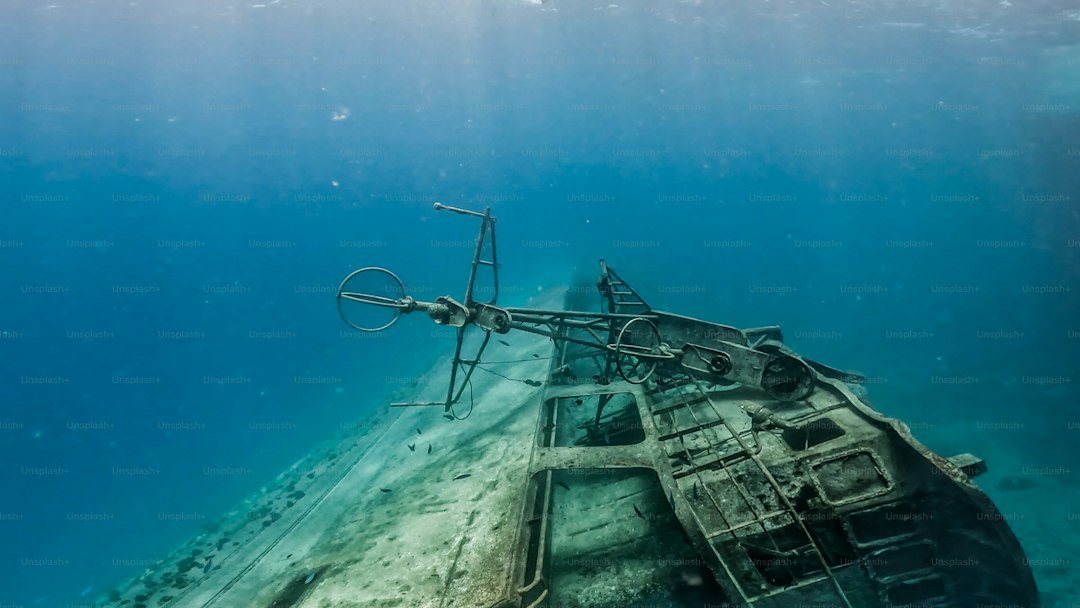
Planning an underwater journey to visit a shipwreck requires a shift in mindset because you’re not just going for a swim; you’re stepping into a high-stakes environment where logistics dictate everything. I’ve found that the most accessible sites, like the USAT Liberty in Bali, offer a unique bridge between casual reef exploration and the intensity of wreck diving, largely because tectonic shifts moved the vessel into a perfect position for shore entry. When you visit places like the SS President Coolidge in Vanuatu, you get the rare chance to see a massive luxury liner that caters to both shallow-water sightseers and seasoned technical divers seeking deep-water challenges. It really comes down to matching your current skill level with the site’s specific topography and the environmental variables that make each wreck a distinct, living laboratory.
If you’re looking at sites like the Kittiwake in the Cayman Islands, you’re dealing with a curated experience where safety features and clear exits make it an ideal spot to build confidence in confined-space navigation. Contrast that with the Zenobia in Cyprus, where the massive cargo of trucks and the ship’s sharp 45-degree list force you to constantly check your buoyancy and spatial awareness in ways a standard reef dive never would. I always tell people that you can't just show up and expect the same conditions everywhere, especially when dealing with wrecks like the Spiegel Grove in Florida, where hurricane activity actually transformed the site’s orientation and current patterns entirely. You really have to account for how these structures interact with their local geography, whether it’s the fresh water of Lake Huron preserving the Sweepstakes or the unique, low-energy currents in Scapa Flow that keep the SMS Markgraf from collapsing.
Before you book anything, you should really think about the specific hazards inherent in these historic sites, like the unexploded ordnance in Chuuk Lagoon that demands a high level of situational awareness. It’s also worth noting that some of the most spectacular wrecks, like the San Francisco Maru, are protected by their own calcified shells of coral, which ironically act as a shield against the rapid oxidation we see elsewhere. You’re essentially acting as a guest in a fragile, shifting history, so your ability to maintain neutral buoyancy and avoid stirring up sediment isn't just about your own visibility—it’s about preserving the site for the next person. Honestly, I think the best way to approach this is to treat the planning phase with as much precision as the dive itself, ensuring you have the right training for the specific type of wreck you're planning to explore.
Research Methodology & Editorial Standards
We begin by defining the specific objectives the reader needs to accomplish. Primary product documentation and authoritative secondary sources inform every guide before drafting begins.
Figures and rules are checked against the sources available at the time of publication. Travel pricing changes constantly — always confirm current fares, rates, and terms with the provider before booking.