
Discover Mauritania Africa’s Most Mysterious Hidden Gem
It's Mauritania's highest point, hitting around 915 meters—though you'll see some sources claim it's closer to 3,281 feet—and it isn't just a pretty landmark.
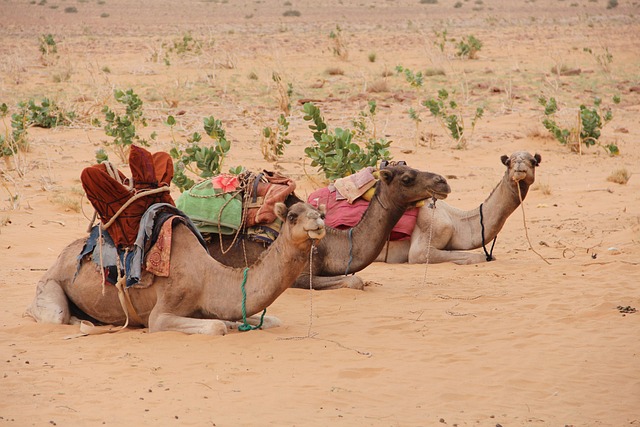
Nouakchott: The Saharan Capital Rising from the Dunes
Look, when you first land in Nouakchott, it doesn't feel like a typical capital city. It's called the "place of the winds," and you'll see why the moment you step outside and notice that weird, beige tint in the blue sky—that's just the Sahara reminding you who's boss. I think of it as a city fighting a war on two fronts; it's literally wedged between creeping sand dunes and a rising Atlantic Ocean. It's a strange, sprawling place that grew from a tiny fishing village of 500 people in the 50s to a massive hub of over a million in just a few decades.
But here's where it gets a bit dicey from an infrastructure perspective. Much of the city sits at or even below sea level, and since there's no real mains drainage system, the whole place is incredibly vulnerable. I've read reports where experts actually suggested moving the entire capital inland because the eroding dunes aren't doing much to stop the water. It's a bit of a gamble, honestly, building a metropolis on a sandy fringe without a proper sewage network, but that's the reality of how quickly it had to grow when droughts pushed nomadic herders toward the coast.
Still, there's a real energy here that you won't find in more planned cities. You've got the Port de Pêche, which is an absolute chaos of tuna and octopus fleets from all over the world, and the Marché aux Tentes where the shops are basically giant canvas tents to keep the heat at bay. It doesn't have a unified architectural style—it's more of a collection of neighborhoods and minarets—but that's part of the charm. If you want to get a feel for the place, just head to the Saudi Mosque or follow the Route de l'Espoir into the interior. Let's get into why this fragile balance makes Nouakchott such a fascinating starting point for any trip.
The Magnetic Mountain of Kediet ej Jill: A Natural Geological Wonder
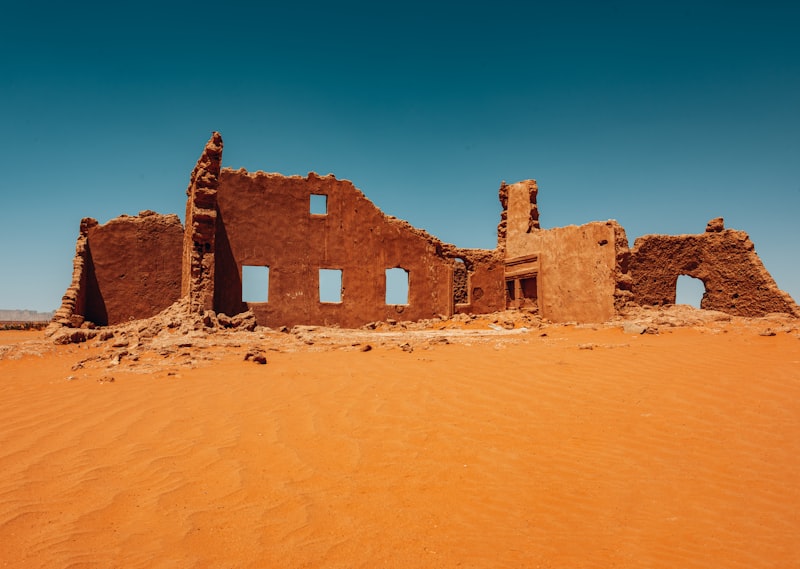
Now, we've got to talk about Kediet ej Jill, because it's probably one of the weirdest geological anomalies on the planet. Imagine driving through the Tiris Zemmour region and seeing this massive peak that looks strangely blue against the orange desert sand. It's Mauritania's highest point, hitting around 915 meters—though you'll see some sources claim it's closer to 3,281 feet—and it isn't just a pretty landmark. The mountain is basically a giant, natural magnet because it's packed with magnetite, a specific kind of iron ore.
Here's where it gets really interesting for anyone who likes the technical side of things. Because the magnetite concentration is so high, the mountain creates its own localized magnetic field that completely messes with your gear. If you're relying on a traditional magnetic compass nearby, forget about it; the needle will just spin or point toward the mountain instead of North. I've seen reports that this interference is so strong it can throw off professional geological surveys and navigation for a good distance around the peak.
Think about it this way: it's like having a massive, prehistoric piece of industrial equipment just sitting in the middle of the Sahara. From a market perspective, this isn't just a curiosity; it's a massive deposit of raw iron ore that has driven the local economy, with the city of Zouérat to the east and Fderick to the west acting as the hubs for this operation. It's a rare case where a site is simultaneously a tourist wonder and a critical industrial asset.
But honestly, the real draw is just how surreal it feels. You've got this blue-tinged mountain that literally fights against the laws of navigation, sitting right next to the Eye of the Sahara. It's the kind of place that makes you realize how little we actually know about the earth's crust. If you're planning a trip, just remember to bring a GPS or a very good map, because your compass is basically useless the moment you get close to the rock.
The Ancient Caravan Cities: Exploring Mauritania's UNESCO Heritage
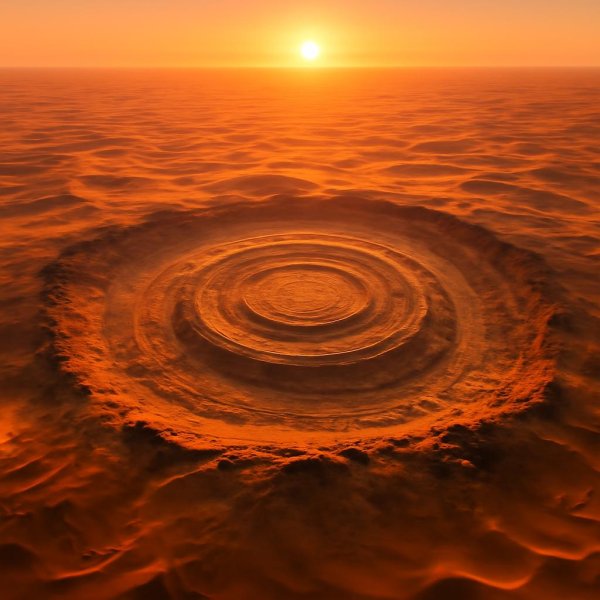
Let's pause for a moment and really think about the "Ancient Caravan Cities" in Mauritania. These aren't just dusty old ruins; they're UNESCO World Heritage sites that were once the beating heart of trans-Saharan trade, a network that connected the Mediterranean world with the riches of West Africa, think gold and salt. We're talking about places like Chinguetti, Ouadane, Tichit, and Oualata, which were crucial hubs for thousands of camels and their traders. Chinguetti, in particular, is a global treasure trove because its private libraries hold thousands of ancient Arabic manuscripts, covering everything from astronomy to medicine, solidifying its reputation as a prehistoric center of Islamic scholarship. Ouadane, on the other hand, was strategically positioned as the gateway to the famous Richat Structure, its stone fortifications a silent testament to the need to protect traders from desert raids.
The architecture itself tells a story of survival, with traditional stone houses meticulously designed to combat the harsh Saharan climate, a practical solution for extreme temperature fluctuations. These weren't just minor trading posts; they were thriving urban centers managing the complex logistics of massive caravan movements. Tichit and Oualata served as vital oases, points where nomadic Berber and Arab traders would exchange salt, a northern commodity, for the coveted gold and ivory from the south. It’s a constant, ongoing battle to preserve these sites against the relentless advance of aeolian processes, with shifting sand dunes threatening to engulf the remaining stone structures.
The UNESCO designation for these cities, often referred to as the "seventh holy city of Islam," speaks volumes about their profound historical and religious significance in educating and shaping the region. These trade routes were more than just pathways for commerce; they were conduits for the spread of literacy and the establishment of administrative systems across vast distances. It’s fascinating to see how many of these ancient libraries are now embracing modern digitization efforts, a critical step to safeguard fragile parchment from the damaging effects of humidity and decay. The very urban planning of these heritage sites demonstrates a sophisticated grasp of oasis water management, an absolutely essential skill for sustaining life and communities in the demanding Adrar region.
The Sahara's Stark Beauty: Desert Adventures and Oases
Let's dive into the raw, untamed heart of the Sahara, because honestly, "stark beauty" doesn't even begin to cover it. This isn't just a vast expanse of sand; it's a landscape sculpted by extreme forces, where survival itself is an adventure, and the promise of an oasis is like finding gold. Think about the sheer scale of it – the largest hot desert on Earth, a place where evaporation rates dwarf rainfall, yet beneath that parched surface lie some of the planet's most significant fossil water reserves, sustaining life in unexpected pockets [8]. It’s this duality, the harshness and the hidden lifeblood, that makes exploring here so compelling.
When you imagine Saharan adventures, you might picture riding across endless dunes, and you wouldn't be wrong, but it’s so much more than just sandboarding or a camel trek, though those are incredible experiences [2, 3]. The desert floor isn't all sand seas; about three-quarters of it is actually rocky plateaus, or hamadas, creating a varied terrain that challenges and rewards exploration [8]. And those dunes? Some can tower over 180 meters, constantly reshaped by relentless winds [8]. This is a place of dramatic temperature swings, too, with daily shifts of over 30 degrees Celsius, a stark reminder of the environment's power [8].
But the real magic happens when you find an oasis, these vibrant hubs of life that feel like miracles in the desolation [1, 3]. Many of these oases owe their existence to ancient underground aquifers, reservoirs of water deposited thousands of years ago, a literal lifeline fed by a bygone era [8]. These aren't just water sources; they're traditional centers of community, often utilizing ingenious ancient systems like foggaras, gently sloping underground channels that deliver precious water to crops [8]. Modern life has also found a foothold here, with the Sahara’s rich oil and mineral resources attracting significant international investment since World War II, creating a unique blend of ancient traditions and contemporary economies [5].
Culture and Tradition: The Rich Heritage of the Moorish People
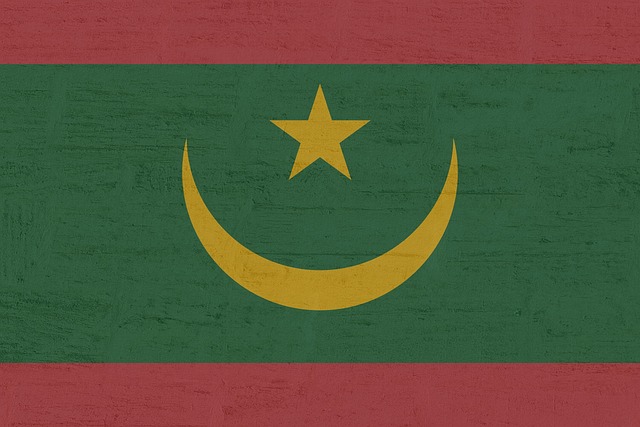
Look, to really get Mauritania, you've got to wrap your head around the Moorish people, because they aren't a monolith. It's a complex social puzzle. When we talk about "Moors," we're looking at a population split primarily between the Beidanes—who're of Arab and Berber origin—and the Haratines, often called Black Moors. Honestly, the term itself is a bit of a linguistic relic, coming from the Latin Maurus, meaning "tawny," but over time, Europe just used it as a catch-all for anyone who was Muslim or had dark skin. It's one of those labels that simplified a very messy, rich reality of genetic and cultural blending.
Think about it this way: this isn't just a local identity; it's a legacy that once shifted the map of the world. Back in 711, Tariq bin Ziyad led a Moorish army across the Strait of Gibraltar, took down the Visigoths, and basically rewrote the history of the Iberian Peninsula. If you've ever visited Andalucia and felt that specific vibe, you're seeing the ghost of this expansion. But back home in the Sahel, that heritage is more about the grit of Saharan survival. It's about the mastery of the dunes and the long-game logistics of trans-Saharan trade.
And then there's the language. You'll hear Hassaniya everywhere—it's a dialect of Arabic that acts as the region's lingua franca. But here's the thing: a huge part of how this culture survives isn't written down in textbooks; it's passed through oral traditions and customary laws. It's a living, breathing conversation between generations. You can see it in the art and the architecture of the Sahel, where Moorish styles crashed into Sub-Saharan influences to create something entirely new.
I'll be honest, the social dynamics between the different ethnic subgroups are still something the country is navigating today. It's not always a smooth ride. But that tension is exactly what makes the culture so layered. When you're sitting there, listening to the rhythm of Hassaniya or looking at the blending of Berber and Arab lineages, you realize you're not just looking at a "tradition," but a survival strategy that's lasted centuries. Let's look at how this identity actually plays out in the daily lives of people you'll meet on the ground.
Why Mauritania Remains One of the World's Best-Kept Travel Secrets
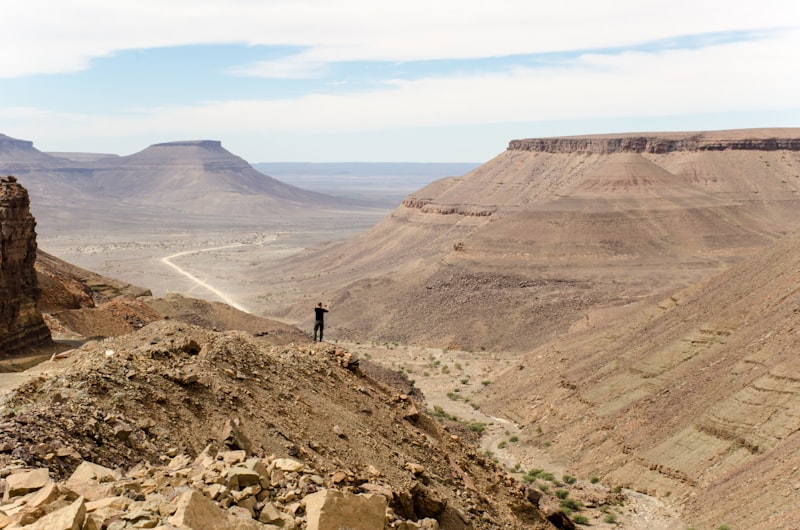
Look, I've spent a lot of time analyzing emerging markets and travel trends, and honestly, Mauritania is a total anomaly. In a world where every "hidden gem" has been geotagged to death on Instagram, this place is one of the few spots left that offers genuine discovery. It's not just that it's under-visited—though it technically is one of the least-visited countries on earth—it's that the barrier to entry is high enough to keep the crowds away but low enough that you can actually get in if you've got a bit of grit. We're talking about a destination that doesn't try to polish its edges for tourists; it just exists in this raw, unfiltered state.
Think about it this way: most "adventure" travel these days is just a curated experience with a safety net. But here? You've got the Iron Ore Train, which is basically a 700-kilometer industrial beast hauling minerals across the Sahara, where the "experience" is literally riding on top of the wagons. It's rugged, it's dusty, and it's completely devoid of the corporate gloss we see in most tourism boards. When you compare that to the sterilized tours of more popular North African hubs, the contrast is wild. You're trading luxury for a level of authenticity that's becoming extinct.
But here's the real kicker—the value proposition isn't just in the adrenaline; it's in the access. You're stepping into a place where you can actually have a real conversation with people without feeling like a walking ATM. Whether it's navigating the weird magnetic glitches near the peaks or wandering through libraries that hold manuscripts the rest of the world has forgotten, you're engaging with history in a way that feels active rather than academic. It's a high-signal environment for anyone who actually cares about culture and geography.
So, why are we highlighting this now? Because as we head further into 2026, the "last frontier" feeling is disappearing everywhere else. Mauritania remains a secret because it demands something from you—patience, curiosity, and a willingness to get a little dirty. But if you're okay with that, the payoff is a trip that actually changes how you see the world. Let's break down exactly how to navigate this place without losing your mind—or your gear.
Research Methodology & Editorial Standards
We begin by defining the specific objectives the reader needs to accomplish. Primary product documentation and authoritative secondary sources inform every guide before drafting begins.
Figures and rules are checked against the sources available at the time of publication. Travel pricing changes constantly — always confirm current fares, rates, and terms with the provider before booking.