
Why Hajj pilgrims were diverted from the new Ogun airport to Lagos
When you look at the Gateway Agro-Cargo Airport, it is easy to get caught up in the big promises of economic growth, but I think it is more helpful to look at the actual nuts and bolts of the place.

Understanding the Infrastructure Readiness of the Gateway Agro-Cargo Airport
When you look at the Gateway Agro-Cargo Airport, it is easy to get caught up in the big promises of economic growth, but I think it is more helpful to look at the actual nuts and bolts of the place. Honestly, the infrastructure here is pretty ambitious; for starters, they built a 4-kilometer runway that is one of the longest in the country, which tells me they are betting big on being able to handle wide-body jets like the Boeing 747-800 without breaking a sweat. It is not just about the concrete, though. They have gone ahead and secured a deal with a Chinese firm to set up an independent power plant right on-site. Think about that—having your own power grid in a region where electricity can be, let’s say, unpredictable, is a massive advantage for keeping those cold storage facilities running and protecting perishable goods.
If you are wondering how they plan to manage the actual flow of goods, they have integrated automated tracking systems into the design to cut down on the time cargo just sits around waiting to move. It is a smart move, especially since the whole place is tied into the Iperu-Ilishan road network, which is designed to handle the heavy trucks that are going to be moving freight in and out all day. But they aren't just winging it on the operations side; the government has brought in specialized aviation consultants to bridge the gap between building the thing and actually running it like a professional hub. It is a clear attempt to make sure that when they say they are ready for commercial operations, the safety protocols and navigation aids actually meet the standards the industry expects.
I find the modular approach they took with the terminals and warehouses particularly interesting, because it means they don't have to build everything at once, but they can scale up once they see what the actual demand looks like. It is a cautious way to grow, which I think is sensible given how volatile the cargo market can be. Plus, they have already cleared the big regulatory hurdles for commercial flights, so the safety and ground handling pieces are legally in place. It is a lot of moving parts, from the fire-fighting stations to the industrial zones, but it feels like they are trying to build a self-contained ecosystem rather than just another airstrip. We’ll see how it shakes out once the volume starts picking up, but the bones of the operation are definitely there.
Addressing Technical Concerns: Why Authorities Pivoted to Lagos
Look, I get it—on paper, the new Ogun facility looks like a dream for regional logistics, but when you're moving thousands of pilgrims in a tight window, being "almost ready" isn't good enough. The Nigeria Civil Aviation Authority is pretty strict about Category 9 fire cover for these international Hajj runs, and the airport just didn't have the certified staff on the ground by our 2026 deadline. Then there's the visibility problem; without an Instrument Landing System Category III certification, those early morning departures were basically a gamble given the thick fog we've been seeing. I'm also seeing reports from international insurance underwriters who were nervous about the Sagamu Interchange being so close to the main gates. They were worried about heavy truck traffic mixing with mass passenger movements, which, if you’ve ever seen that junction at rush hour, is a total safety nightmare.
But it’s not just about the planes landing; it’s about how fast you can process people, and that's where the math really fell apart for the authorities. The National Hajj Commission needs a specific throughput velocity that the current mobile boarding bridges just couldn't hit for those massive wide-body jets. We’re talking about boarding 400 plus people at once, and without enough high-loader units or specialized baggage tugs, the whole operation would’ve stalled on the tarmac. Plus, the airport was missing a dedicated Hajj camp that could handle the 5,000-person capacity needed for medical screenings and those mandatory vaccinations. If you can't house the pilgrims comfortably before they board, you're looking at a logistical disaster before the first plane even takes off.
I think the real deal-breaker, though, was the digital side of the house and the security requirements. The Customs and Immigration setup hadn't been fully integrated into the Advanced Passenger Information System yet, which is mandatory for real-time biometric screening on these international routes. There’s also the issue of the flight paths—regional air traffic controllers noted that Ogun's corridors were tangling with the existing patterns for Lagos. They haven't finalized the airspace deconfliction agreement yet, which makes simultaneous operations way too risky for a high-stakes season like this. On top of that, meteorological data from last year showed crosswind turbulence at the site was actually higher than the safety limits for some of the older, high-capacity planes the Hajj operators use.
When you add in the fact that they didn't have enough on-site Jet A-1 fuel reserves that met purity standards, the move back to Lagos starts to look like the only smart choice. Even the simple stuff like automated check-in kiosks wasn't ready, meaning passenger processing would have taken three times longer than the systems already running at the Lagos hub. It’s one thing to build a long runway, but it’s another to maintain a secure, sterilized perimeter when you're right next to an active industrial zone like Iperu. I’m not saying they won't fix these things, but for the 2026 season, Lagos had the established, high-efficiency infrastructure that Ogun just couldn't match. It’s a classic case of the physical buildings being ready before the technical and regulatory support systems could actually cross the finish line.
The Logistical Challenges of Last-Minute Flight Diversions
When a major flight diversion happens, air traffic control has to recalculate fuel burn rates instantly, factoring in the aircraft’s current weight and the drag from those unexpected holding patterns. Pilots are often forced into a mid-flight weight-and-balance scramble because the new destination’s runway might be significantly shorter than their original target, meaning they have to be absolutely certain their landing distance fits the available pavement. It is a high-stakes guessing game where the math has to be perfect, or you don’t land at all. I’ve seen enough of these cases to know that the pilot’s workload in those moments is honestly overwhelming, especially when you’re balancing safety margins against a rapidly shrinking fuel reserve.
Ground crews have it just as rough, primarily because they aren’t set up for unannounced arrivals. You’ve got to move heavy ground support equipment to accommodate a wide-body jet that wasn't on the schedule, and if the airport doesn't have the right towbar head for that specific aircraft type, everything just grinds to a halt. It’s like trying to fit a square peg in a round hole while hundreds of passengers get increasingly frustrated in the cabin. The gate situation is another nightmare; terminals are built for a steady, predictable flow of people, not a sudden surge of hundreds of passengers who all need to clear customs in a zone that wasn't designed to handle them.
Beyond the terminal, the sheer physics of the logistics can fall apart. Automated baggage systems, for instance, are calibrated for a certain speed and volume, and they almost always jam when you dump an entire wide-body flight’s worth of luggage on them at once. Then there is the security aspect; because local crews at secondary airports often aren't cleared to process international arrivals, those passengers basically become prisoners on their own planes for hours. It’s a massive communication gap, too, with operations centers sometimes taking forty minutes just to tell ground crews what the flight even needs. When you add in potential fuel shortages at the local farm and the fact that crews might hit their legal duty-time limits while sitting on the tarmac, you start to see why these diversions aren't just minor inconveniences—they are absolute logistical collapses.
Impact on Hajj Pilgrims: Navigating Delays and Uncertainty
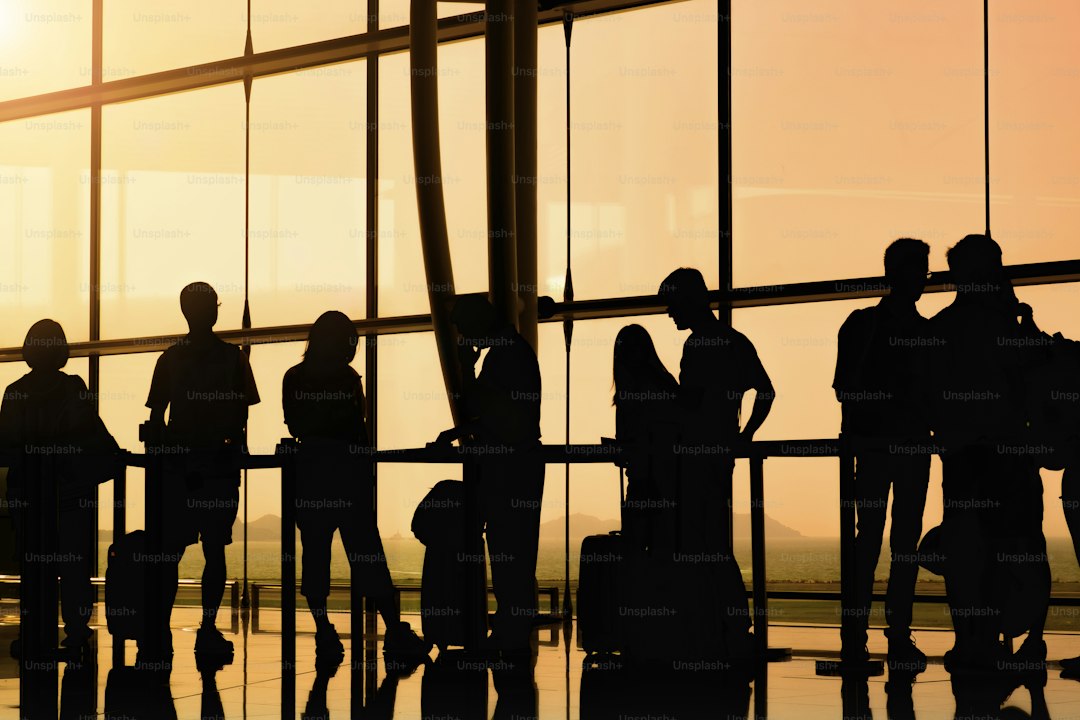
I've spent a lot of time looking at flight data, but you can’t ignore the human side when a massive group of Hajj pilgrims gets diverted at the eleventh hour. It’s not just a change of scenery; for many of these elderly travelers, sitting on a cramped wide-body jet during an extended tarmac delay is a serious health gamble. We’re seeing a real spike in the risk of things like venous thromboembolism—basically blood clots—because people are stuck in those seats way longer than planned. And honestly, the stress of not knowing where you're landing can trigger high blood pressure, especially when you don’t have your usual Hajj medical team right there to help. It’s a mess because these diversions often mean pilgrims miss their window for mandatory vaccinations and health screenings that were supposed to happen at the original terminal.
Think about the baggage situation, too; when you suddenly dump 400 people at an unplanned airport, the luggage systems usually just give up. I’m talking about pilgrims losing access to their ritual items or religious texts right when they need them most. Then there’s the digital headache where the local airport’s system doesn't talk to the Saudi Hajj portal. If the biometric data doesn't sync up perfectly, you’re looking at a total bottleneck once you finally make it to Saudi Arabia. Plus, pilots have to do some pretty frantic math on fuel burn—usually seeing a five to ten percent jump in consumption while they’re circling in holding patterns.
It gets even more granular on the ground because secondary hubs often don’t even have the right towbar adapters for these massive charter jets. You end up sitting on the taxiway for hours just because the airport can't physically pull the plane to a gate. And look, you can’t just order 400 Halal meals on a whim; local catering isn't built to scale like that on twenty minutes' notice. I've seen cases where the flight crew hits their legal duty-time limit while the plane is still parked, which basically grounds the whole trip for another 12 to 24 hours while they fly in a replacement crew.
It’s also a safety concern for the runway itself, since a heavy Boeing 747 might actually exceed the pavement classification number of an alternative runway. Pilots might even have to jettison fuel just to land safely, which is a massive waste and a safety risk in crowded skies. You end up with this situation where the security zones are overflowing with people because the airport wasn't designed for this kind of volume. I guess what I’m saying is that a diversion isn't just a detour; it's a complete breakdown of the pilgrimage experience. It’s hard to stay focused on the spiritual journey when you’re worried about your health, your bags, and whether the plane can even take off again. At the end of the day, these logistical gaps turn a sacred trip into a test of endurance that nobody signed up for.
Regulatory Compliance and Safety Standards in Nigerian Aviation
When you look at the landscape of Nigerian aviation, the shift toward a more rigorous, data-driven safety culture is honestly the biggest story right now. The Nigerian Civil Aviation Authority has moved well beyond simple rule-following, pushing for the universal adoption of the SMS Pro platform to ensure that every single operator is tracking hazards in real time. It is not just about keeping a logbook anymore; airlines now have to prove their digital oversight tools are fully integrated before they can even think about getting clearance for international routes. I think this transition to a proactive, tech-heavy safety model is exactly what the industry needs to move past some of the historical bottlenecks we’ve seen.
But here is where things get technical, because compliance is about much more than just software. You have to look at the physical infrastructure—take the Category 9 fire cover requirement, for instance, which is non-negotiable for anyone wanting to handle wide-body jets. The NCAA doesn't just take their word for it; they audit everything from the response time of firefighting crews to the structural integrity of the runways, checking those specific pavement classification numbers to make sure the concrete can actually take the weight of a heavy aircraft. When you add in the strict fuel quality testing and the need for biometric systems to sync perfectly with the Advanced Passenger Information System, you start to realize how tight the net has become. It’s a complex, high-stakes environment where one broken link in that chain—whether it’s a fuel purity issue or a glitch in the customs software—can ground an entire operation.
Ultimately, this move toward unified digital standards is all about de-risking a sector that has historically been prone to fragmentation. By having bodies like the Nigerian Safety Investigation Bureau working hand-in-hand with the NCAA to stress-test these ground handling protocols, the authorities are trying to build a system where safety isn't just an aspiration, but a built-in feature of the flight path. I’m genuinely curious to see how smaller carriers adapt to these costs, but from an operational standpoint, this standardizing of flight path mapping and meteorological threshold requirements is a major step toward preventing the kind of congestion and mid-air uncertainty we sometimes see in these busy corridors. It’s a lot of pressure on the operators, but for the sake of the passengers, it’s a standard we really can’t afford to compromise on.
Future Outlook: Can Ogun State Facilitate Future Hajj Operations?
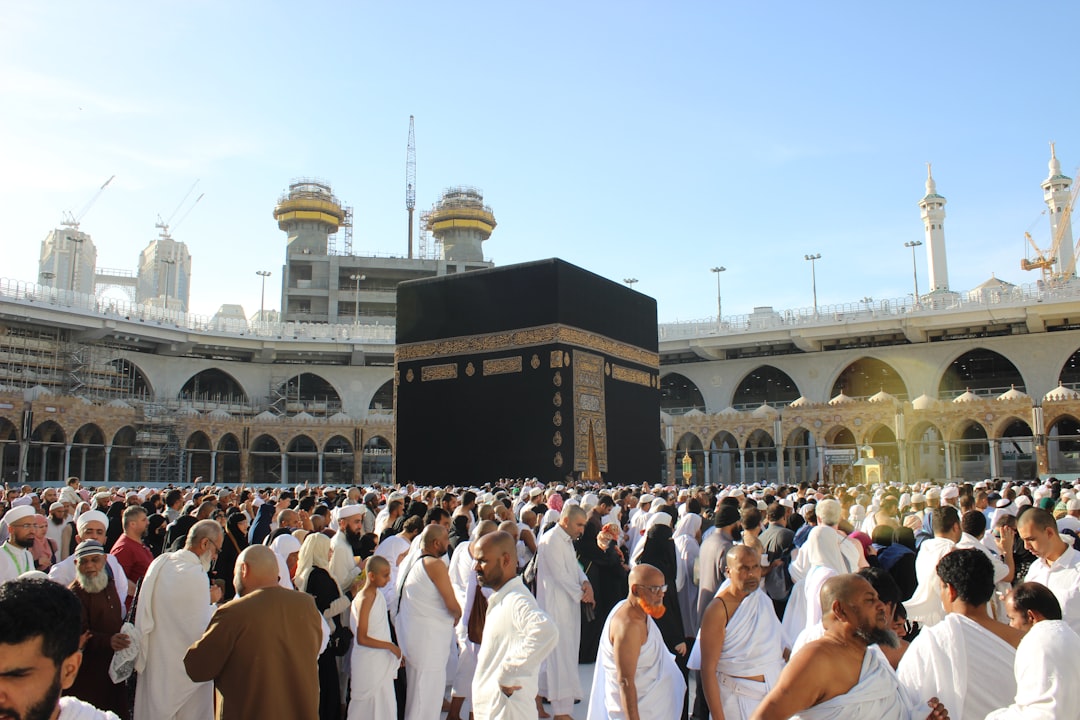
So, where does Ogun go from here? Honestly, I think the "build it and they will come" phase is over; now it's about whether they can hit the specific technical benchmarks required for the heavy-duty Hajj cycle. Look, for this to work, we're talking about more than just a long strip of asphalt. The airport needs to prove its Pavement Classification Number (PCN) can actually handle the massive load of a fully fueled Boeing 777 or an Airbus A330 without the runway literally crumbling under the stress. But it's not just the weight; it's the specialized gear. They need a permanent team of certified ramp handlers who know how to wrestle with the heavy-lift equipment these wide-body jets demand, something you can't just outsource on the fly.
And then there's the sheer speed of moving people. Right now, the goal has to be getting that customs processing time down from a grueling several hours to the global sixty-minute standard. I’m thinking a specialized "green lane" is the only way to make that happen, but that requires a level of inter-agency coordination we haven't seen yet. We also need to see an automated biometrics system that talks directly to NAHCON in real-time, because manual manifest checks are a recipe for disaster when you've got thousands of tired pilgrims waiting in the heat. It sounds like a small detail, but when you’re managing five thousand people at once, those digital links are the difference between a smooth operation and total chaos.
Safety is the other big hurdle, especially if they want to avoid those morning fog delays that plagued the region recently. We’re looking at a full Category IIIb Instrument Landing System installation, which is a massive capital investment but totally non-negotiable for 24/7 reliability. Plus, the state has to secure dual-redundant fuel supply chains. You can’t rely on a single source for Jet A-1 when you have a line of charter planes waiting to go; the volatility risk is just too high. And let's not forget the medical side—Saudi health specs are incredibly strict, so a dedicated medical wing for those mandatory immunizations is basically a prerequisite for any permanent Hajj terminal.
But even if the terminal is perfect, the airspace is still a mess. I’m really watching to see if they can negotiate a formalized Airspace Deconfliction Agreement with the regional ATC hubs to give Hajj flights priority corridors. Without that, they’ll always be playing second fiddle to the Lagos traffic patterns. And honestly, the local roads need a serious upgrade to handle the surge of high-capacity shuttle buses without choking the whole Iperu area. If they can tick all these boxes—the PCN, the ILS, and the "green lanes"—then sure, Ogun could be a major player. But until those technical and regulatory pieces are locked in, I’d bet on Lagos remaining the more reliable bet for the foreseeable future.
Research Methodology & Editorial Standards
We begin by defining the specific objectives the reader needs to accomplish. Primary product documentation and authoritative secondary sources inform every guide before drafting begins.
Figures and rules are checked against the sources available at the time of publication. Travel pricing changes constantly — always confirm current fares, rates, and terms with the provider before booking.