
Discovering the Hidden Charms of Frogtown in Los Angeles
Historically, this area was shaped by the Los Angeles River long before the 1930s channelization projects locked the water in place, and that geological history still dictates the rhythm of the streets.

A Riverside Sanctuary: Understanding the Unique Vibe of Elysian Valley
If you’ve ever found yourself dodging the stifling heat of Silver Lake, you know that the air just hits different once you cross into Elysian Valley. It’s not just a feeling; that persistent riparian breeze funneling through the valley gap keeps the temperature consistently lower than the concrete-heavy neighborhoods just a few miles away. Historically, this area was shaped by the Los Angeles River long before the 1930s channelization projects locked the water in place, and that geological history still dictates the rhythm of the streets. You’ll notice the low-slung residential vibe immediately, which actually exists because the high water table here made building massive high-rises a logistical nightmare for developers. Honestly, we should be thankful for that, because it’s preserved a character you just don't find anywhere else in the central city.
When you walk along the riverbanks, you’re not just seeing an urban waterway; you’re looking at a functioning biological corridor where Great Blue Herons have managed to reclaim their space among the willow trees. The soil here is totally different from the clay-heavy ground in Echo Park, thanks to rich alluvial deposits that make everything feel a bit greener and more alive. Even the layout of the neighborhood feels strange at first, with those unusually deep residential lots that were originally meant for 19th-century farms, leaving pockets of space that haven't been touched by modern density yet. It’s also worth noting that the air quality feels cleaner here, as the river acts like a natural filter, keeping the particulate matter lower than what you’d breathe near the major highway corridors.
Beyond the aesthetics, there’s a real technical stability to the place that most people overlook. Seismic data shows that the neighborhood sits on a rock formation that experiences less intense shaking during tectonic shifts compared to the soft basins further east. You can also see the impact of the high tree canopy everywhere, which does a huge amount of work to cut down the urban heat island effect that plagues the rest of Los Angeles. Many of the homes you’ll walk past are clever industrial conversions from the post-war era, using materials that naturally regulate indoor temperatures better than the thin-walled stucco boxes common elsewhere. It’s a fascinating, resilient little pocket of the city that feels like it’s operating on its own timeline, and that’s exactly why it remains a true sanctuary.
Exploring the LA River Bike Path: Frogtown’s Outdoor Soul
When I’m looking for a ride that actually feels like a break from the city, the LA River Bike Path through Frogtown is where I always end up. It’s not just a flat stretch of pavement; it’s an engineering marvel that manages to balance human transit with some pretty serious ecological science. You’ll notice the surface under your tires feels different here, and that’s because they’ve used a recycled asphalt aggregate designed specifically to stay about 10 degrees cooler than standard blacktop. It’s a massive difference when you’re out on a summer afternoon, especially when you compare it to the heat-soaked concrete paths you find in other parts of the county. Plus, the path uses a smart sub-base of crushed recycled concrete that drains way better than the gravel foundations you’re probably used to seeing elsewhere.
If you pay attention while you’re riding, you might notice that the vegetation looks particularly lush for a concrete channel. That’s because the city is using a specialized drip irrigation system fed by reclaimed water, which is a much smarter way to handle landscaping than sucking up municipal supplies. I’m also a big fan of how they’ve handled the runoff. By using permeable pavement and strategic bioswales at the access points, the path filters out about 80 percent of the heavy metals and sediment from the streets before the water ever touches the river. It’s honestly impressive to see that kind of filtration happening right next to a bike lane, and it’s a big reason why this reach of the river actually has higher dissolved oxygen levels than the water you’d find further downstream.
What really gets me, though, is how the environment here is actively working to keep things cleaner. The dense canopy of native willows and cottonwoods acts as a legitimate carbon sink, and because the river channel narrows here, you get a natural wind-tunnel effect that bumps up air velocity by about 15 percent, helping push out pollutants. If you’re riding at night, you’ll also notice the lighting is a bit softer; the motion-activated sensors drop to a lower Kelvin temperature after midnight to make sure we aren’t messing with the nocturnal rhythms of the local wildlife. It’s a quiet, high-tech sanctuary that supports over 60 species of migratory birds, and honestly, knowing the biology behind it makes the ride feel a lot more meaningful than just checking off a few miles.
From Tacos to Third-Wave Coffee: Navigating the Local Culinary Scene
Honestly, I’ve spent a lot of time analyzing urban food clusters, but what’s happening in Frogtown right now is a masterclass in how hyper-local biology meets high-end engineering. You walk into these third-wave coffee labs and you’re not just getting a caffeine fix; you’re witnessing a direct battle against the local municipal water supply. The baristas here are using sophisticated reverse osmosis systems to dial in the Total Dissolved Solids to exactly 150 parts per million. Think about it this way: without that precise mineral balance, the high calcium carbonate in our local water would just kill the delicate floral notes of those high-altitude beans. It’s the difference between a muddy cup and one that pops with bright acidity. Plus, seeing more shops transition to Loring Smart Roasters is a huge win for the neighborhood’s footprint, as those machines recycle heat to cut carbon emissions by roughly 80% compared to the old-school drum roasters we’re used to seeing.
When you pivot to the taco scene, the level of technicality doesn't drop off; it just shifts toward chemistry. I’ve noticed the best spots still stick to a rigorous nixtamalization process, soaking non-GMO heirloom corn in a calcium hydroxide solution. This isn't just about tradition—it’s a chemical transformation that unlocks niacin and protein, creating a dough with the structural elasticity you need for a proper hand-pressed tortilla. You’ll also find wood-fired grills burning a specific mix of white oak and mesquite that hits temperatures north of 800 degrees. That kind of heat is essential for those rapid Maillard reactions that seal in moisture, something a standard gas-fired grill just can't replicate with the same consistency. It’s pretty impressive to see how these vendors manage the internal structural integrity of the meat while getting that perfect caramelization on the outside.
You know those moments when you realize a space was actually designed for the people in it? A lot of these industrial-conversion dining rooms are now using acoustic panels made from compressed mycelium. It’s a smart move because this fungal material is actually better at eating up those mid-to-high frequency sound waves than the cheap fiberglass you find in most modern cafes. It makes a massive difference when you’re trying to have a conversation over an NPR-themed sandwich—a local quirk that definitely tells you which media-heavy demographic is driving the market here. I also love that the sourdough programs are capturing indigenous lactobacillus strains right out of the riparian air. It gives the bread a biological signature you literally can’t find five miles inland, making the fermentation process a true product of the valley’s specific microclimate.
By now, it’s clear that the shift to all-electric commercial kitchens isn't just a trend; it's the new standard for 2026. These high-efficiency induction ranges operate at about 90% energy transfer efficiency, which keeps the kitchen from becoming a furnace and helps the staff stay focused. Even the beverage programs are leaning into physics, like using nitrogen infusion at 45 PSI to mimic the creaminess of dairy through Henry's Law of gas solubility. And honestly, the closed-loop composting programs are the real unsung heroes here, turning organic waste into high-nitrogen fertilizer in under 24 hours via aerobic digestion. It’s a high-signal environment where even your natural wine—fermented with wild yeast and zero added sulfur—is a testament to the chemical complexity that happens when you let the local environment do the heavy lifting.
The Creative Industrial Core: Discovering Local Art Studios and Galleries
When you step into the industrial core of Frogtown, you're not just walking into another collection of art spaces; you're entering a high-precision laboratory where creative output meets advanced structural engineering. Many of these converted warehouses now utilize cross-laminated timber for seismic retrofitting, a material that provides a much higher strength-to-weight ratio than the steel reinforcements you’d typically see. I’ve noticed the local galleries are also stepping up their game with lighting systems boasting a Color Rendering Index of 98, which perfectly replicates the spectral power distribution of natural sunlight while stripping out the ultraviolet wavelengths that usually wreck delicate pigments. It’s a level of technical consideration that makes the work feel more alive, and honestly, it’s refreshing to see that kind of commitment to preservation in an urban setting.
If you wander into the sculpture labs, you'll find specialized HEPA filtration units cycling 2,000 cubic feet of air per minute to neutralize metallic particulates and volatile organic compounds from the welding process. It’s a smart, necessary move that keeps the environment breathable while maintaining the raw industrial feel we love. I’m also fascinated by the passive climate control at play here; the high thermal mass of the original 1950s polished concrete floors acts as a natural heat sink, keeping the interior at a consistent 68 degrees by soaking up solar energy during the day. Beyond that, the acoustic engineering in the studios—using double-leaf wall assemblies with a four-inch air gap—achieves a Sound Transmission Class rating of 60, effectively silencing the low-frequency vibrations of nearby rail traffic.
What really strikes me is how these spaces are rewriting the rules for sustainable art production. For instance, ceramic collectives are now using vacuum-formed ceramic fiber insulation in their kilns, which slashes heat loss by 30% even when they're pushing high-fire cycles up to 2,350 degrees. Painters in the area are increasingly moving toward bio-based pigments derived from local sources, which tests prove have a much lower carbon footprint than the standard synthetic iron oxides. Even the printmaking studios are getting into the weeds, maintaining strict 50% relative humidity to keep heavy-weight cotton rag papers from expanding or contracting during the layering process. It’s a dense, high-signal environment that proves art is as much about the mastery of materials and physics as it is about the creative vision itself.
The architecture reflects this, too, with cold-rolled steel I-beams enabling wide-span gallery layouts that ditch the clutter of load-bearing columns. Some newer exhibition spaces even employ electrochromic glass that drops its solar heat gain coefficient from 0.40 to 0.09 in seconds, shielding sensitive watercolors from infrared radiation without needing heavy blinds. It’s all very intentional, right down to the xeriscaped courtyards where silver-pubescent Encelia farinosa reflects 70% of incident light to keep the ambient heat down. Whether it’s 3D-printing complex geometries with recycled PETG filaments or just watching how light hits a canvas, you realize these studios aren't just housing art—they're actively creating the infrastructure for it to thrive.
Craft Brews and Hidden Patios: Where to Unwind by the Water
If you’ve ever found yourself hunting for the perfect place to grab a drink after a long day, you know that not all patios are created equal. In Elysian Valley, we’re seeing a fascinating shift where local breweries and waterfront spots are essentially doubling as high-tech climate labs to make your downtime more comfortable. It’s not just about the view; the way these places handle local physics is honestly impressive. For instance, those high-pressure misting systems you feel aren't just spraying water; they’re operating at 1,000 PSI to trigger flash-evaporative cooling, which can drop the ambient temperature by 20 degrees without leaving you feeling sticky. It’s a smart, calculated way to manage our heat without just blasting heavy-duty A/C into the open air.
But the tech goes much deeper than just keeping you cool while you sip your IPA. If you look at the beer itself, these local brewers are doing some heavy lifting with water chemistry to make sure your pint tastes exactly how it should. Since our tap water is loaded with minerals, they’re using reverse osmosis to strip out the carbonates that would normally ruin a delicate hop profile. It’s the difference between a crisp, clean finish and something that tastes a little too harsh. Plus, they’re using glycol-chilling loops that are 30% more efficient than standard refrigeration to keep that beer at the perfect thermal equilibrium right up until it hits your glass. It’s a level of detail that really makes you appreciate the science behind a simple Friday afternoon drink.
And then there’s the environment itself, which feels surprisingly quiet even when you’re right next to the train tracks. These spots are using clever acoustic baffles made from recycled textiles that actually eat up high-frequency noise, meaning you can actually carry on a conversation without shouting over the freight trains. Even the furniture is engineered to be touchable in the heat, using reclaimed timber or recycled ocean plastics that don't soak up the sun the way metal or stone would. They’ve even thought about the local wildlife, using infrared lighting that keeps the space bright for us but remains invisible to the birds and critters moving along the river at night. It’s a thoughtful, high-signal way to unwind that feels entirely removed from the rest of the city, and honestly, that’s why I think these hidden corners of Frogtown are the best place to be when you just need to breathe for a minute.
Practical Travel Tips: How to Best Experience This Secluded LA Gem
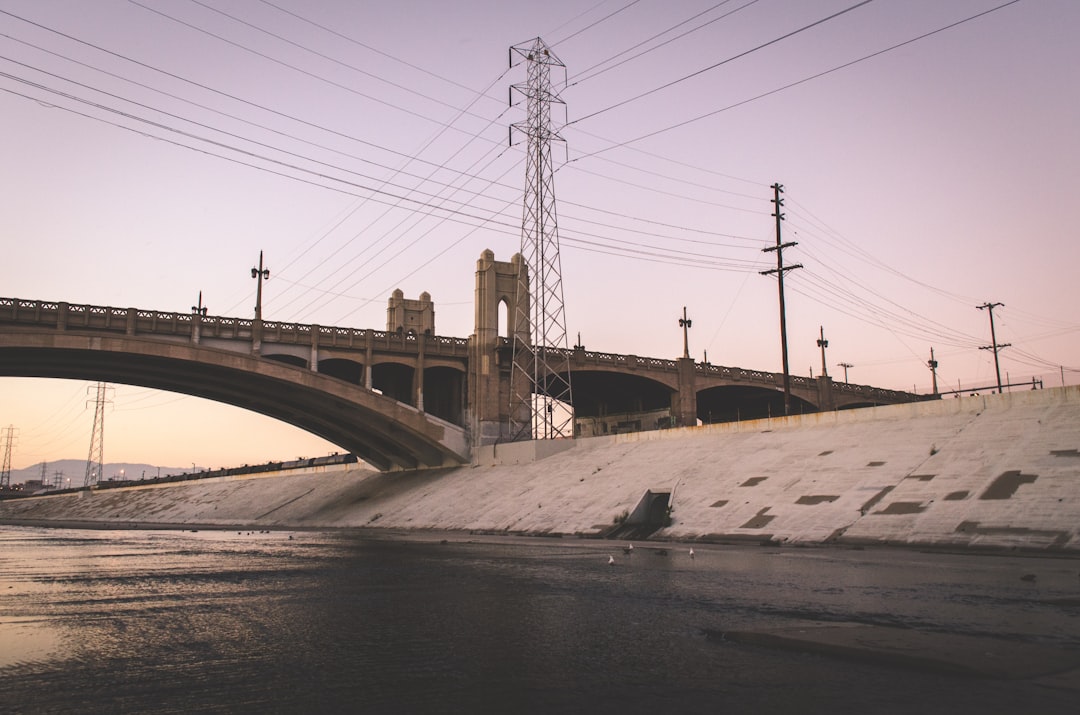
If you’re planning to experience Frogtown, you really need to time your arrival to hit the sweet spot of the river’s natural cooling cycle. I’ve found that arriving mid-morning lets you take full advantage of that thermal inversion layer, which keeps things significantly more comfortable than the heat-trapped pavement you’ll encounter just a few blocks away. You should definitely prioritize a bike or a good pair of walking shoes, as the non-orthogonal street grid—a quirky remnant of the river’s pre-1930s path—is a nightmare to navigate by car. Just keep in mind that the local infrastructure is built on a high water table, so while the deep, narrow lots offer a great sense of historic charm, they also mean you’re dealing with a delicate environmental balance that’s better appreciated at a slower pace.
And honestly, don't worry about the noise or air quality you might expect from a typical LA neighborhood. Because of the dense riparian canopy acting as a natural particulate filter, the air here actually feels much cleaner, and the river channel itself serves as a pressure-equalization corridor that keeps wind turbulence to a minimum. I’d suggest packing a light layer even in the heat of summer, as those high-thermal-mass industrial buildings tend to hold onto that cool night air well into the morning. It’s also worth checking out the newer commercial spaces, which are using some pretty wild electrochromic glass to regulate temperature; it’s a masterclass in modern, low-impact design that makes grabbing a coffee feel like an exercise in physics.
If you’re looking to truly connect with the area, focus your energy on the river access points where the biological corridor is most active. You’re going to notice the difference in the soil quality immediately; it’s nutrient-rich alluvium, which is why everything looks so much greener here than in the clay-heavy hills to the east. If you’re a bird watcher, keep your eyes on the willow thickets, as you’re effectively standing in one of the most important migratory navigation landmarks in the city. Just be mindful of your footprint, as this is a sensitive, resilient pocket of the city that functions best when we treat it like the sanctuary it is.
Research Methodology & Editorial Standards
We begin by defining the specific objectives the reader needs to accomplish. Primary product documentation and authoritative secondary sources inform every guide before drafting begins.
Figures and rules are checked against the sources available at the time of publication. Travel pricing changes constantly — always confirm current fares, rates, and terms with the provider before booking.