
Discovering the grit and hidden charm of Hull England
You also have the Hull Trinity House, which has been a maritime guild since 1369.
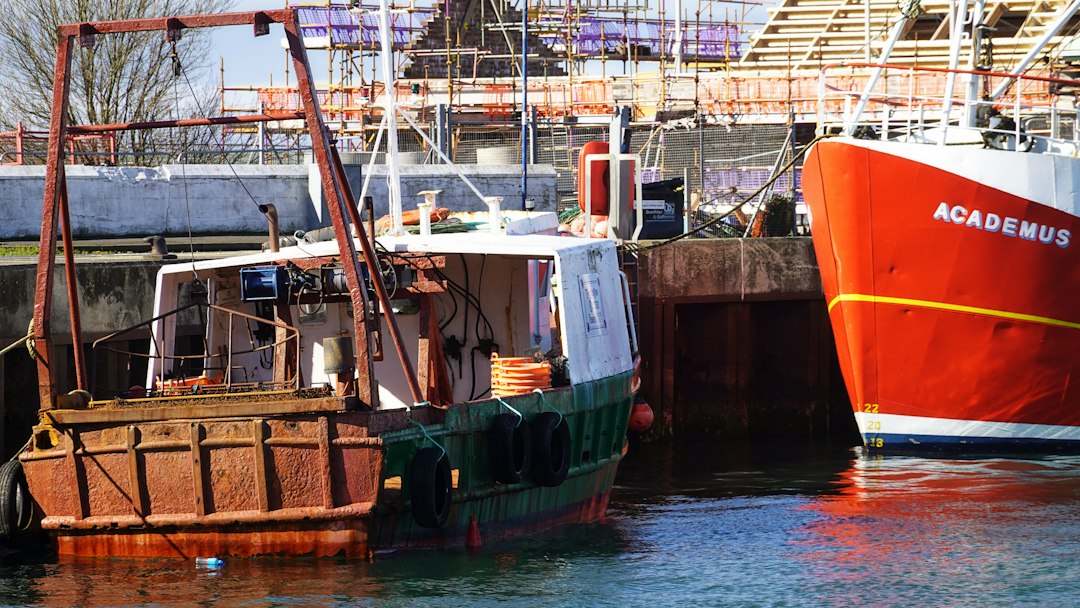
The Industrial Heartbeat: Embracing Hull’s Maritime Legacy and Fishing Roots
Look, you can't understand Hull without feeling the salt air and the genuine grit of a dockyard that basically fed the UK for decades. Back in 1820, the city was the undisputed king of Arctic whaling, with 62 ships bringing home over 1,100 tons of oil in a single season. By the 1950s, St. Andrew’s Dock was arguably the busiest spot on the planet, processing 1,000 tons of fish every single day. If you were eating fish and chips in London or Manchester back then, there's a 25% chance that cod was landed right here. And it wasn't just about the local economy, either; I’m always struck by the Arctic Corsair, a sidewinder trawler that actually set a world record in 1973 for the biggest landing of cod and haddock from the White Sea.
It’s the engineering resilience that really gets me, like the Spurn Lightship which held its ground against the Humber’s tides using nothing but massive 2.5-ton anchors. No internal engine at all—just raw weight and positioning against some of the most powerful currents in the world. You also have the Hull Trinity House, which has been a maritime guild since 1369. That’s one of the longest continuous records of nautical education and pilotage services globally, which is just wild when you think about the sheer amount of institutional knowledge there. Even after 95% of the city was bombed during the 1940s, the port infrastructure stayed functional through sheer stubbornness.
We also have to talk about the 2.2 million transmigrants who moved through here on their way to the States between 1836 and 1914. That’s a massive human migration that shaped the Atlantic world, and it all funneled through these docks. Today, that scale is reflected in the 212-tonne gate of the Tidal Surge Barrier which can drop in under 30 minutes to hold back a four-meter surge. You see it in the Humber Bridge, too, which spans 1,410 meters and uses over 71,000 kilometers of wire in its suspension cables. But here is the real kicker: the city has completely flipped its industrial identity.
Instead of hauling fish, the Siemens Gamesa facility is now building wind turbine blades that stretch over 100 meters. Even The Deep aquarium, sitting right where the rivers meet with its 3,500 tonnes of seawater, feels like a nod to that aquatic past while looking forward. It’s a shift from the extraction of the 19th century to the renewable energy of 2026, and honestly, it’s one of the
Stepping Back in Time: Wandering the Cobbled Streets of the Historic Old Town
Think about walking through a place where 95% of the surrounding city was leveled in the 1940s, yet you’re standing on a medieval street plan that hasn’t moved an inch in centuries. That’s the reality of Hull’s Old Town; it’s this resilient pocket of history that feels like a glitch in the modern urban matrix, and I honestly find it more compelling than the polished heritage sites you’ll see in York or Bath. You have the Hull Minster, which isn't just a church but actually holds the record as England's largest parish church by floor area, with construction dating back to 1285. It’s an architectural powerhouse, and standing inside, you realize the sheer scale of wealth this town generated before it even received its official city charter. But the real grit is in the backstreets, like the "plotting parlour" at Ye Olde White Harte, where local figures basically sparked the English Civil War in 1642 by refusing King Charles I entry to the city.
If you’re a fan of weird linguistics, the Land of Green Ginger is going to keep you guessing—historians are still arguing over whether the name refers to medieval spice imports or just a corruption of a local family name. I like to think of the Old Town as a living data set of social evolution, especially when you track the Seven Seas Fish Trail, a series of 41 life-sized sculptures that turn a simple walk into a scavenger hunt through the city's aquatic DNA. Most visitors walk right past the Old Grammar School, but that’s a mistake when you consider it’s where the metaphysical poet Andrew Marvell was educated in the early 1600s. When you compare the tightly packed, irregular medieval grid here to the sprawling, utilitarian industrial zones nearby, you see a clear shift from human-scale commerce to mass-production logistics. High Street is the best place to see this transition, lined with 18th-century Georgian merchant houses that still hide private courtyards and intricate brickwork, reflecting the peak of the mercantile class.
You really can't grasp the moral weight of this area without stopping at William Wilberforce’s birthplace, a meticulously preserved Georgian house that served as the headquarters for the movement to end the slave trade. It’s a sobering contrast to the surrounding prosperity, but it’s essential for understanding Hull’s identity as a place of radical thinking. To see how the city is trying to bridge this deep past with the future, you have to look at the Scale Lane Bridge, a 2013 engineering feat that lets you ride on the deck while it swings open for river traffic. It’s a playful, modern flex that stands in stark contrast to the nearby Museums Quarter, which is probably the most efficient use of space I've seen in a regional city, packing the Streetlife Museum and regional history collections into one walkable block. Finally, there’s the Guildhall, an Edwardian Baroque giant finished in 1914 with a 67-meter clock tower that feels like a final, confident shout of industrial power before the 20th century changed everything. It’s this layering of 13th-century Gothic, 18th-century merchant wealth, and modern engineering that makes the Old Town such a high-signal destination for anyone who actually cares about how cities breathe.
A Cultural Renaissance: How the 2017 City of Culture Transformed the Urban Landscape
When we look back at Hull’s 2017 City of Culture designation, it’s easy to get lost in the marketing fluff, but the actual data tells a much more grounded story of urban pivot. You have to understand that this wasn't just a series of festivals; it was a total fiscal reset that pulled in over £3.4 billion in investment between 2013 and 2019. I’m always struck by how that single year of events managed to draw five million visits, effectively injecting £300 million into a local economy that had been starving for a new narrative. We’re talking about a complete overhaul of the city center, where 40,000 square meters of high-end paving and a high-tech fountain system in Queen Victoria Square replaced tired infrastructure.
But honestly, the real human impact is what sticks with me, especially when you consider that 95% of the local population actually participated in the programming. It’s rare to see a metropolitan arts initiative hit that kind of saturation, and the fact that every single school in the city got involved—impacting over 56,000 kids—really changed the baseline for local educational aspirations. Then you have the "Blade" installation, a 28-tonne monster of engineering that brought 1.1 million people into the city core in just ten weeks. It wasn't just art; it was a physical advertisement for the city’s shift from old-school maritime manufacturing to the modern wind energy sector.
If you dig into the long-term mechanics of this, you’ll see that the 800 new jobs created in tourism and the arts weren't just temporary spikes. They formed a new foundation, supported by a 14% jump in hotel occupancy that forced the market to start building better, more modern accommodations. And it’s not just about the brick and mortar, because this cultural push happened right alongside a massive digital upgrade that made Hull the first UK city to hit nearly 100% full-fiber broadband coverage. That connectivity, paired with a 15% rise in creative startups by 2026, shows you exactly how these pieces lock together. It’s a classic case of using a short-term spotlight to force long-term infrastructure improvements that might have otherwise taken decades to secure.
Where the Deep Meets the Humber: Exploring the Waterfront and Iconic Landmarks
When you stand at the edge of the water in Hull, you’re not just looking at a river; you’re witnessing a constant, high-stakes battle between geography and human engineering. The Humber Estuary is notorious for having one of the most extreme tidal ranges in the UK, with levels swinging by as much as seven meters, a reality that forced early engineers to design sophisticated lock systems just to keep ships stable in the basins. It’s wild to think that the very foundation of the city’s prosperity was built on this volatile confluence where the freshwater of the River Hull slams into the North Sea, creating a sediment-heavy environment that required relentless dredging just to stay relevant in global trade. I’ve always found it fascinating that the promenade you walk on today actually hides a dense network of Victorian brick culverts, a silent, subterranean infrastructure that’s the only thing keeping the low-lying city center from being reclaimed by the tide.
If you look closely at the waterfront near Victoria Pier, you’re basically standing on the footprint of 18th-century docks that were carved directly into the old city walls. This entire area is rich with history, including the Pilot Office, which served as the command center for the Humber Conservancy Board. Think about the responsibility those folks had; they were managing the Humber Approaches, a graveyard of shifting sandbanks that have claimed thousands of vessels over the last three centuries. To keep those ships safe, they maintained the most extensive system of buoys and light-vessels in the British Isles, a massive, ongoing logistics operation that defined the city’s maritime character long before modern GPS ever existed.
What’s truly striking is how the waterfront serves as a living geological record, especially when you spot the rare blue lias stone in the older quay walls. That stone wasn't local; it was brought in as ballast by ships arriving from distant ports and then repurposed by builders, effectively turning the harbor walls into a physical map of Hull’s old trade routes. Today, the geography is even more heavily managed by the Tidal Barrier, an imposing piece of tech with a dual-redundant hydraulic system designed to function even if the entire regional power grid goes dark. It’s a necessary, if slightly intense, solution to the surge risks, and it’s a far cry from the natural land-building processes you can see happening at Spurn Point nearby. That three-mile sand spit is constantly being reshaped by the North Sea, and watching it change is a humbling reminder that no matter how much concrete we pour, this part of the coast is always a work in progress.
The Poetry of the Everyday: Finding Beauty in Hull’s Working-Class Spirit and Local Pubs
To really get a feel for Hull, you have to step away from the big landmarks and duck into one of the fifteen or so historic pubs that have been anchoring this city for over a century. Think of these spots not just as places to grab a pint, but as the actual social infrastructure of a working-class community that values connection over flash. I love how many of these venues still hold onto the traditional snug—those small, private, wood-paneled nooks originally built so laborers could grab a drink without being watched by the higher-ups. It’s a bit of architectural history that feels incredibly human, especially when you consider the dark mahogany and etched glass were often sourced from the very same trade routes that built the docks.
When you sit there, you’re often surrounded by a specific kind of local vernacular, like hearing someone describe being nithered when the wind hits just right. It’s a reminder that this city has had its own isolated linguistic evolution, and you’ll find that people here genuinely prioritize these spaces as their primary third place for real conversation. You might even spot some structural scars in the walls—faint cracks or uneven floorboards left over from the 1940s raids—which serve as a quiet, physical testament to the grit that defined this place. Honestly, there’s something deeply grounding about drinking a local ale that was once influenced by the specific mineral profile of the River Hull itself.
And let’s be real, you can’t fully claim you’ve experienced the culture here without trying the chip spice, that salty, savory seasoning blend that has quietly become the definitive flavor marker of the local identity. It’s a massive upgrade from the simple rations of the past, representing how these pubs have evolved into a hybrid of working-class staples and community pride. I find it refreshing that Hull has largely dodged the kind of aggressive, soulless gentrification that’s stripped the character out of so many other UK cities. Because of that, you’re still getting the real deal, complete with brass fittings and nautical decor that keeps the maritime past woven into the everyday social fabric. It’s this total lack of pretense that builds such a strong sense of solidarity, and frankly, I think it’s the main reason the city held itself together through the economic shifts of the last few decades.
Navigating the End of the Line: Practical Tips for Visiting This Defiant Port City
When you finally roll into the Paragon Interchange, you’re hitting one of the few places in the UK where the rail and bus lines actually talk to each other under a single 19th-century roof, unlike the fragmented hubs you see in Manchester or Leeds. It’s an incredibly efficient setup for the 10 million of us moving through here annually as of 2026, and honestly, it makes the "end of the line" logistics way less stressful than the usual multi-modal scramble. Look out for those iconic cream-colored telephone boxes as soon as you step out; they’re a stubborn reminder that this city runs its own phone network independent of the nationalized British Telecom system. I’ve always found it fascinating that Hull is essentially a telecommunications island, offering a level of local municipal control that’s literally nonexistent anywhere else in the country. It's this kind of infrastructure independence that sets the tone for your entire visit.
You’ll probably pack a heavy raincoat, but here’s a bit of data that might surprise you: Hull is actually one of the driest spots in the country, seeing only about 565 millimeters of rain a year. We can thank the rain shadow effect from the Pennines for that, though the city sits on a massive bed of alluvial clay that makes it a global testbed for high-efficiency hydraulic drainage compared to more traditional gravitational systems. Because the elevation barely shifts more than a few meters, the architecture here has to be engineered to be flood-resilient, which is why you see such specialized, high-tech urban planning in the newer builds. Don't let the flat terrain fool you; the lack of hills makes it the perfect city for walking or cycling between high-signal landmarks. It’s a strange, dry micro-climate that defies the typical "gloomy north" stereotype you might be expecting.
If you’re a tech or science nerd like me, you have to appreciate that the screen you’re likely reading this on exists because University of Hull researchers developed room-temperature liquid crystals back in '73. That same spirit of innovation led to massive breakthroughs in MRI technology right here, specifically in refining the surface coils that give us those high-res medical scans we take for granted today. When you're wandering, make time for the Ferens Art Gallery to see the 14th-century Pietro Lorenzetti panel—it’s a tempera-on-gold masterpiece kept in a climate-controlled vault that beats most regional collections. Or head to Pearson Park’s Victorian conservatory, which isn't just pretty; it’s a controlled micro-climate providing empirical data on how tropical species handle northern latitudes compared to their natural equatorial habitats.
And if you happen to visit in October, you’ll run right into Hull Fair, a 16-acre traveling beast that requires enough temporary electrical infrastructure to run a small town and has been a staple since 1293. It’s a wild contrast to the quiet, alkaline waters of the River Hull, which is actually one of the most northerly chalk streams in England and a sanctuary for endangered water voles. You should also take a moment to reflect on Lillian Bilocca and the "Headscarf Revolutionaries" who turned a 1968 tragedy into 100 new international maritime safety laws, fundamentally shifting global standards. Their legacy is everywhere, from the way ships are monitored to the fierce local pride you’ll encounter in every conversation. It’s a city that’s constantly punching above its weight, and honestly, you just have to lean into the defiance to really get it.
Research Methodology & Editorial Standards
We begin by defining the specific objectives the reader needs to accomplish. Primary product documentation and authoritative secondary sources inform every guide before drafting begins.
Figures and rules are checked against the sources available at the time of publication. Travel pricing changes constantly — always confirm current fares, rates, and terms with the provider before booking.