
A Journey Through Swedish Design History at the IKEA Museum
To really grasp where IKEA is today, we have to look back at the sheer scrappiness of its start in 1943.
From Humble Beginnings: The Origins of Ingvar Kamprad’s Vision
To really grasp where IKEA is today, we have to look back at the sheer scrappiness of its start in 1943. Most people see the massive blue-and-yellow warehouses and assume it was always a retail giant, but Ingvar Kamprad actually began by selling pens, wallets, and picture frames through a mail-order service. Think about the logistics of that for a second; he wasn’t moving sofas yet, he was sending small goods across the rugged Swedish countryside, often hitching rides on local milk delivery routes to get his packages to customers. It’s that kind of resourcefulness, born from the extreme frugality of his upbringing in the Småland forests, that set the tone for the company’s entire DNA.
You know that moment when a simple, accidental discovery changes everything? That’s exactly what happened in 1956 when a designer pulled the legs off a table just to get it into a car trunk. That tiny, frustrated decision birthed the flat-pack model that would eventually rewrite the rules of global furniture retail. By the time the first physical store opened in Älmhult in 1958, the blueprint was clear: bypass the middlemen, control the supply chain, and make design accessible by making it easy to haul home yourself. It’s fascinating how those early, forced innovations in packaging efficiency still dictate how millions of us furnish our apartments today.
Honestly, it’s worth noting that this wasn’t just about cutting costs; it was about democratizing good design. Kamprad had this obsessive focus on keeping prices low, even when it meant getting creative with everything from chemical sniff tests in a lab to ensure materials were neutral-smelling to sourcing wood from local foresters. I find it pretty impressive that even in 2026, the company is still digging through those original 1950s catalog designs to figure out how to make modern products more sustainable and modular. It’s a rare example of a company that stays connected to its roots even as it scales to a global size. When you walk through the museum today, you aren’t just looking at old furniture, you’re looking at the evidence of a business model that was designed to solve problems that others didn't even realize were obstacles yet.
The Evolution of Iconic Furniture: Tracing the Legacy of BILLY, MALM, and POÄNG
When we talk about the DNA of modern living, we’re really talking about three specific designs that have quietly colonized our homes: the BILLY bookcase, the MALM series, and the POÄNG chair. You’ve likely lived with at least one of these, and there’s a reason for that, as each represents a distinct engineering pivot in how we manufacture and consume furniture. Take the BILLY, which Gillis Lundgren famously sketched on a napkin in 1979 to optimize horizontal storage; it has now sold over 150 million units, making it perhaps the most statistically successful piece of furniture ever produced. It’s not just a shelf, but a machine for living that was recently re-engineered with snap-fit fasteners to cut carbon emissions, showing how a design can stay relevant for nearly half a century.
Then you have the POÄNG, which is a masterclass in material science disguised as a simple lounge chair. Originally called POEM when it launched in 1976, it was Noboru Nakamura’s answer to the challenge of creating a cantilevered frame that wouldn't snap under pressure. By using bentwood birch inspired by Alvar Aalto’s early work, the chair creates a natural flex that is surprisingly durable, with testing labs in Älmhult proving it can withstand 50,000 cycles of use before showing real wear. It’s a perfect bridge between Scandinavian minimalism and Japanese simplicity, offering a tangible example of how high-volume manufacturing doesn't have to mean sacrificing physical integrity.
The MALM series tells a different, more industrial story about how we balance cost with utility in the modern age. By using a clever board-on-frame technique with a honeycomb paper core, this furniture manages to be incredibly lightweight while using 60 percent less wood than solid alternatives. But it hasn't been without its growing pains, especially when the line forced a massive, industry-wide shift in global safety standards for wall-anchoring systems in the mid-2010s. Whether it’s the high-speed, automated production lines in Klippan churning out BILLY units or the iterative feedback loops that refine these products based on millions of user reviews, these aren't just static objects. They represent a constant, living experiment in what we call Democratic Design, where form, function, and sustainability are forced to coexist within a single price point.
Democratic Design: How IKEA Balanced Form, Function, and Affordability
When we look at what makes IKEA tick, we have to talk about Democratic Design, which is honestly more of a survival manual for their business model than just a marketing slogan. It’s a rigid internal rubric that forces five competing balls to stay in the air: form, function, quality, sustainability, and that all-important low price. You might think designers start with a sketch, but they actually start with a price tag. By deciding the final retail cost before a single line is drawn, they force their engineers into a process of reverse engineering that dictates every material choice. It’s a brutal way to work, but it’s the only way they can keep those price points accessible while keeping the business profitable.
Think about how much we put our furniture through, from toddlers climbing on sofas to moving apartments every few years. To make sure their cheaper alternatives don’t just fall apart, IKEA runs these intense testing labs that simulate a decade of home use in just a few days of mechanical stress. They’re literally crushing chairs and testing hinges thousands of times to prove that low cost doesn’t have to mean junk. This is where the circular design philosophy comes in, too—they’re increasingly building pieces that you can actually take apart when you need to, whether to replace a single broken component or to recycle the materials at the end of the product's life.
And then there’s the sheer logistical genius of how they pack these things. They’re obsessed with not shipping air, because shipping air is just burning money and carbon, so they pack everything as densely as humanly possible to keep transport costs—and the final price for you—at rock bottom. They’re constantly swapping in new materials, like wood-fiber composites or recycled agricultural waste, to move away from virgin plastics without letting the costs spike. It’s a constant, quiet tug-of-war between being an affordable global giant and trying to be a responsible steward of the environment. I really think that balance is what keeps the whole thing from tipping over, especially when you consider they aren’t beholden to the same quarterly shareholder pressures as a typical public corporation. Instead, they reinvest everything back into this weird, wonderful, and highly efficient machine that’s been operating since the fifties.
Behind the Scenes: Exploring the Innovation and Prototyping Process
When we peek behind the curtain at how these designs actually come to life, it’s honestly a radical departure from the traditional, sketch-to-factory pipeline. Instead of jumping straight into expensive steel molds, the team uses 3D-printed prototypes and high-density cardboard models to stress-test ergonomics and assembly logic long before a factory line starts humming. It’s a bit like watching a high-stakes chess match; engineers run finite element analysis software to predict exactly how a joint will hold up twenty years down the line, often using generative design algorithms to shave off every unnecessary gram of material. I find the focus on the assembly experience particularly interesting, as they spend a massive amount of time refining those click-in mechanisms to ensure they can survive at least twenty cycles of being taken apart and put back together.
You might wonder if this digital-first approach holds up in the real world, and that’s where their dedicated test labs come in, featuring climate chambers that mimic the brutal humidity and temperature swings found in homes from Singapore to Northern Sweden. It’s not just about durability, though; they’re using motion-capture data to make sure a chair or table actually fits the physiological diversity of people across the globe, rather than just relying on standard measurements. They’re even running blind sniff tests on new composite materials, which sounds quirky, but it’s a necessary step to meet those strict indoor air quality standards we all expect. To me, the most impressive part is the move toward a disassembly-first philosophy, where every product is essentially built to be unbuilt, using bio-based glues that can be dissolved later to reclaim materials.
It’s a constant tug-of-war between keeping the manufacturing cost low and making sure the piece doesn’t feel like a throwaway item. They’re currently using digital twin technology to simulate years of sunlight exposure and household dust, trying to head off potential wear and tear before it ever hits a customer's living room. Even the shipping process is part of the innovation cycle, with engineers performing fatigue testing on flat-pack connectors to ensure the furniture can handle the intense mechanical vibrations of long-haul logistics. It’s a surprisingly technical dance, and honestly, seeing the level of rigor they put into things like simple shelf connectors makes you realize how much engineering goes into keeping that price tag low. If you’re looking for the secret sauce behind their longevity, it’s definitely this obsessive commitment to refining the prototype until it’s essentially indestructible for the average home.
A Cultural Landmark: Understanding IKEA’s Impact on Global Living Standards
Let’s pause for a second and really look at how this blue-and-yellow box has basically rewired our collective psychology. It’s not just about the cheap coffee or the shelves; it’s about the "IKEA effect," that fascinating cognitive bias where we value a basic side table way more because we personally suffered through the assembly process. You know that feeling of pride when the last screw finally fits? That labor creates a unique emotional bond that keeps you from tossing the piece out when you move. But there’s a more calculated architectural trick at play too, known as the Gruen effect, where the winding "long natural path" in stores intentionally disorients you to boost impulse buys by nearly twenty percent. Even the product names—Swedish lakes for bathrooms and towns for sofas—weren't a marketing gimmick, but a clever workaround for Ingvar Kamprad’s dyslexia to help him visualize his inventory through geographic associations.
When you zoom out to the macro level, the sheer industrial gravity of the brand is almost hard to wrap your head around. We're talking about an entity that consumes roughly one percent of the world’s commercial wood supply annually, which is why they’ve quietly become one of the largest private landowners in the U.S. and Europe to protect their supply chain and implement biodiversity standards. It’s a massive environmental footprint, but I find it interesting that they’ve managed to pivot into a net-positive energy producer by 2026, generating a surplus from over 500 wind turbines and 1.5 million solar panels. Think about the leverage there; when they decided to kill off incandescent bulbs years ago, they effectively dictated global energy consumption patterns for millions of households more efficiently than most legislative mandates. They aren't just selling products anymore; they’re setting the baseline for what a "modern" carbon footprint looks like for the global middle class.
The real disruption, though, is happening in how they’re moving beyond the living room and into the actual structure of our cities. Through the BoKlok venture, they’ve already churned out over 15,000 modular homes, applying that famous flat-pack logic to entire timber-frame buildings that can be assembled on-site in a single day. Even their logistics are getting a radical, low-tech makeover, like ditching traditional wooden shipping pallets for recyclable paper versions that are only five centimeters thick. This tiny change allows for much higher product density in every container, cutting costs and carbon in one go without the customer ever noticing. And honestly, considering they feed over 600 million people a year, their shift toward a 50 percent plant-based menu and on-site vertical farming for salad greens shows they’re thinking about the future of food as much as the future of flooring. It’s this weird, holistic approach to global living—from the psychology of a wrench to the engineering of a modular apartment—that makes them a definitive cultural landmark rather than just another big-box retailer.
Beyond the Showroom: Planning Your Immersive Visit to the Älmhult Museum
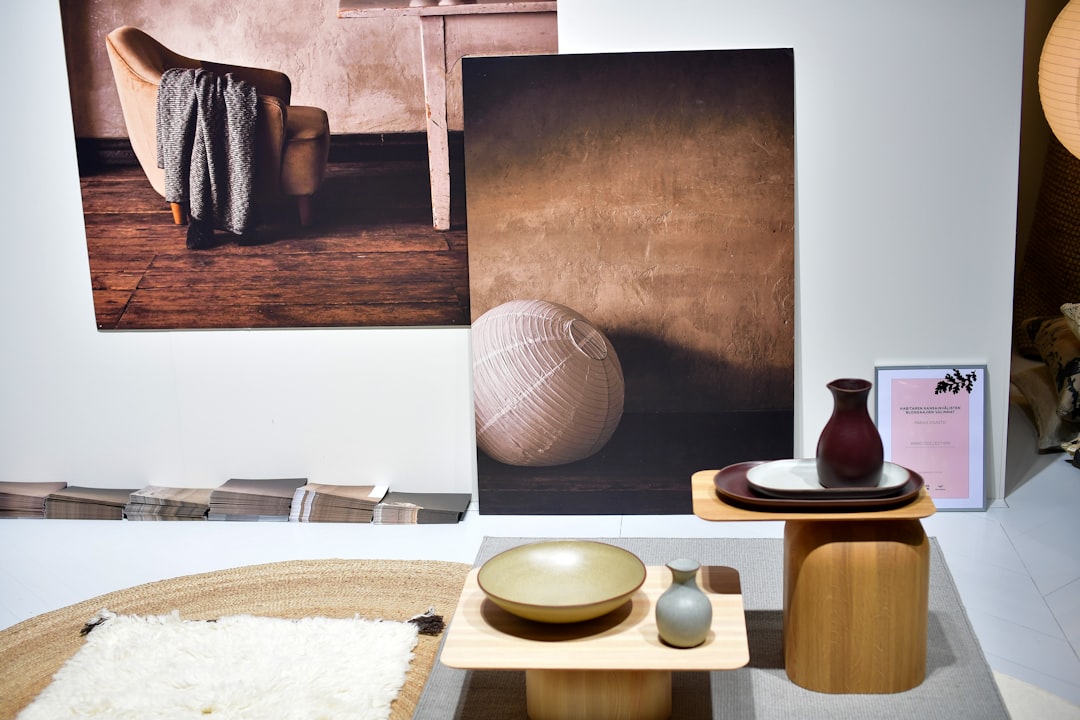
When you’re planning a trip to Älmhult, you have to realize that this isn't just a walk through a static furniture graveyard; it’s a high-tech encounter with the guts of a global design engine. The museum lives in the original 1958 building, but don't let that mid-century shell fool you—the 20,000-square-meter restoration hides some serious engineering, including a Novec 1230 fire suppression system that keeps the archives safe without leaving a trace of residue on the 35,000 physical objects stored in the subterranean vault. You’ll want to spend time at the Digital Catalog Wall, where you can use RFID tokens to pull up any page from 75 years of catalogs, giving you a weirdly satisfying way to see how your own childhood home might have been furnished.
If you’re the type who likes to tinker, the Verkstan workshop is honestly the highlight of the visit because it lets you bridge the gap between history and the future. You can actually use 3D-printing services to recreate obsolete parts for vintage pieces using bio-polyethylene made from sugarcane, which is a surprisingly practical way to keep older furniture out of landfills. While you’re there, check out the haptic-feedback VR stations that simulate living in a 10-square-meter lunar habitat—it sounds like a total gimmick, but it’s a fascinating look at how they’re stress-testing small-space living for potential orbital colonization.
The analytical side of the experience is best captured in the Tillsammans exhibition, where biometric sensors track your heart rate variability to show exactly how specific lighting and wood textures influence your cortisol levels in real-time. It’s a bit jarring to see your own physiological reaction to design, but it proves that their focus on human-centric environments isn't just marketing fluff. Even the restaurant is part of the research, serving as a test kitchen for the Future Food Lab where you can grab carbon-negative meatballs made from fermented mycelium.
And if you’re staying at the adjacent hotel, take a look at the greywater system that recycles 90 percent of its laundry water for the gardens; it’s a masterclass in decentralized utility management that you rarely see in the hospitality sector. Between the AI guides that can pivot through 1.2 million internal documents in 45 languages and the deep geothermal heat pump system keeping the air perfectly humid for the birch veneers, you’re basically touring a living, breathing laboratory. It’s a lot to take in, but if you go with an open mind, you’ll walk away seeing your own living room—and the entire concept of a home—through a completely different lens.
Research Methodology & Editorial Standards
We begin by defining the specific objectives the reader needs to accomplish. Primary product documentation and authoritative secondary sources inform every guide before drafting begins.
Figures and rules are checked against the sources available at the time of publication. Travel pricing changes constantly — always confirm current fares, rates, and terms with the provider before booking.