
Why the North Dakota Badlands deserve a spot on your 2026 travel bucket list
If you’ve ever felt like the modern travel experience is just one crowded queue after another, then Theodore Roosevelt National Park is the reset button you didn’t know you needed.
Experience the Untamed Beauty of Theodore Roosevelt National Park
If you’ve ever felt like the modern travel experience is just one crowded queue after another, then Theodore Roosevelt National Park is the reset button you didn’t know you needed. Honestly, it’s refreshing to visit a place that hasn't been polished into a generic tourist trap, as the park remains largely untamed with most of its 70,000 acres strictly managed to preserve that raw, rugged character. When you stand on the edge of the badlands, you aren’t just looking at scenery; you’re staring into 60 million years of history exposed by the relentless downcutting of the Little Missouri River. It’s a bit humbling to realize that the clay and shale beneath your boots—those deep, rich colors—are actually the result of ancient, underground coal fires baking the earth into what locals call clinker.
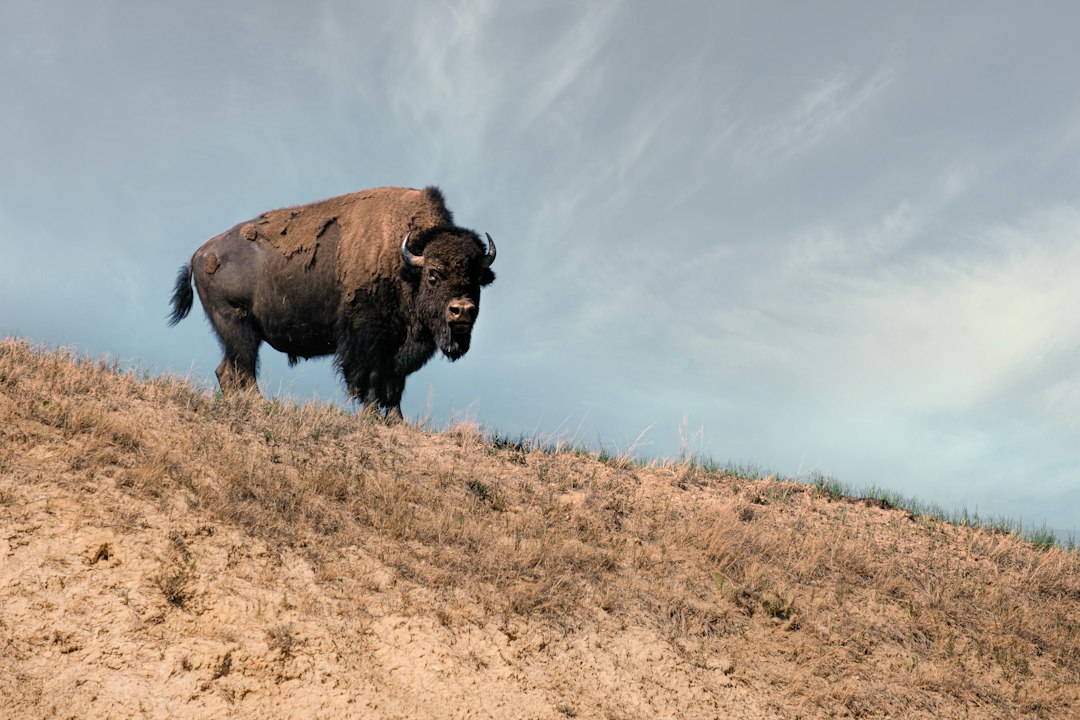
But it’s not just about the geology; the wildlife here hits differently because you’re essentially walking through a living laboratory of conservation. You’ll likely spot herds of American bison, a true success story given how close they came to disappearing entirely, alongside bands of feral horses that have roamed these hills since the early 20th century. If you’re lucky—and patient—you might even catch a glimpse of a black-footed ferret tucked away in a prairie dog colony, which is a rare sight for any mammal enthusiast. I think what really sets this place apart, though, is the sheer lack of light pollution. Because it’s so far from any major city, the night sky here is a legit sanctuary, giving you a view of the Milky Way that makes most other stargazing spots feel mediocre by comparison.
The way the landscape shifts is also something you have to experience to believe, especially if you’re hiking through areas where thermal inversions keep the canyons freezing while the ridges stay surprisingly warm. You don’t need to be an expert mountaineer to appreciate it, either, as there are plenty of accessible viewpoints that put you right in the middle of that dramatic, eroded terrain without needing a week of training. It’s worth noting that the park is split into three distinct units, including the Elkhorn Ranch site where Teddy Roosevelt himself lived as a rancher, which really adds a layer of personal history to the trip. I’d suggest planning your visit carefully, though, because those North Dakota winters can turn the river into a solid block of ice, creating a stark, frozen contrast to the arid, sun-baked landscape you see in the summer. Honestly, if you’re looking for a place to actually disconnect and think, this is it.
Wildlife Encounters: Tracking Wild Horses and Bison in Their Natural Habitat
When you start tracking animals in the Badlands, you quickly realize this isn't a zoo experience where the subjects stay put for your lens. The feral horses here are fascinating because they aren't just run-of-the-mill strays; they carry genetic links back to Spanish horses from centuries ago. I’ve spent time observing their social structures, where a single stallion maintains a tight defense over his harem, and it honestly feels like watching a living piece of history. You’ll find that their movement is dictated entirely by the local vegetation, so focusing your search around sagebrush flats or the riparian corridors near the Little Missouri River is almost always the smartest play.
But if you want to talk about raw power, the bison are in a league of their own. While they look like lumbering giants, these animals are surprisingly agile and can hit speeds of 35 miles per hour if they feel threatened or just decide it’s time to shift grazing grounds. Watching the herd dynamics is a masterclass in collective intelligence, as the cows typically lead the group’s decision-making process to reach the best high-protein grasses. During the rut, you might catch the bulls in a standoff—the head-butting and wallowing displays are intense, but please, keep your distance. You need to stay at least 100 yards away from bison and 25 yards from horses, as these animals remain entirely wild and unpredictable.
It’s also worth remembering that you’re sharing this space with more than just the charismatic megafauna. Prairie rattlesnakes are a constant presence here, acting as a check on small mammal populations, and there’s even a resident mountain lion population that keeps the deer and horse numbers in a natural balance. I’ve found that the best approach is to treat the park like a living laboratory rather than a backdrop for a photo. By respecting the 100-yard buffer and focusing your patience on the riverbanks, you’ll likely see the real, unmanaged interactions that make this place so special. It’s a bit of a commitment to track them properly, but seeing a herd move across that rugged terrain without any human interference? That’s the kind of experience that stays with you.
A Journey Through Presidential History: Retracing the Footsteps of TR
If you’ve ever wondered why Theodore Roosevelt felt such a profound, almost spiritual pull toward the North Dakota badlands, you have to look past the presidential legacy and realize he was originally just a guy looking for a trophy bison in 1883. It’s wild to think that a hunting trip triggered such a massive shift in his life, eventually shaping his entire conservation philosophy. When I think about his time there, I’m always struck by the construction of his Maltese Cross Cabin, which used dovetail-notched ponderosa pine logs specifically to handle those brutal high-plains winds. It wasn't just a shelter; it was a testament to his grit, though that grit was tested hard during the Great Blizzard of 1886. Losing sixty percent of his cattle herd was a gut-punch that pushed him back toward public service, but it’s clear that the silence of these badlands never really left him.
He famously stated that he wouldn't have reached the White House without the tempering fire of this landscape, and when you stand in the same river bottoms where he harvested cottonwood for his Elkhorn Ranch, you start to get why. Archaeologists can still point to the exact foundation stones of his home, and there’s something incredibly human about imagining him there in his custom buckskin shirts, navigating the thorny brush of the Little Missouri. He spent up to 14 hours a day in the saddle, building the kind of physical and mental endurance that later became his political trademark. It makes you realize that his "strenuous life" wasn't just a slogan; it was a way of living he carved out in the mud and dust of the frontier.
Think about the sheer amount of work he packed into that isolation, writing three of his most important books while the frontier was literally disappearing around him. He was deeply observant, too, noting how those petrified wood stumps scattered everywhere proved the land was once a lush, subtropical forest millions of years ago. By choosing longhorn cattle for their ability to forage through deep snow, he showed a practical, analytical side that most history books gloss over. He even started the Boone and Crockett Club while living out there, laying the groundwork for the ethical hunting standards we still talk about today. You can still trace his riding trails through the coulees, and honestly, walking those same paths feels like the closest you can get to understanding the man behind the myth.
Beyond the Crowds: Why the Badlands Are the Ultimate Underrated Escape
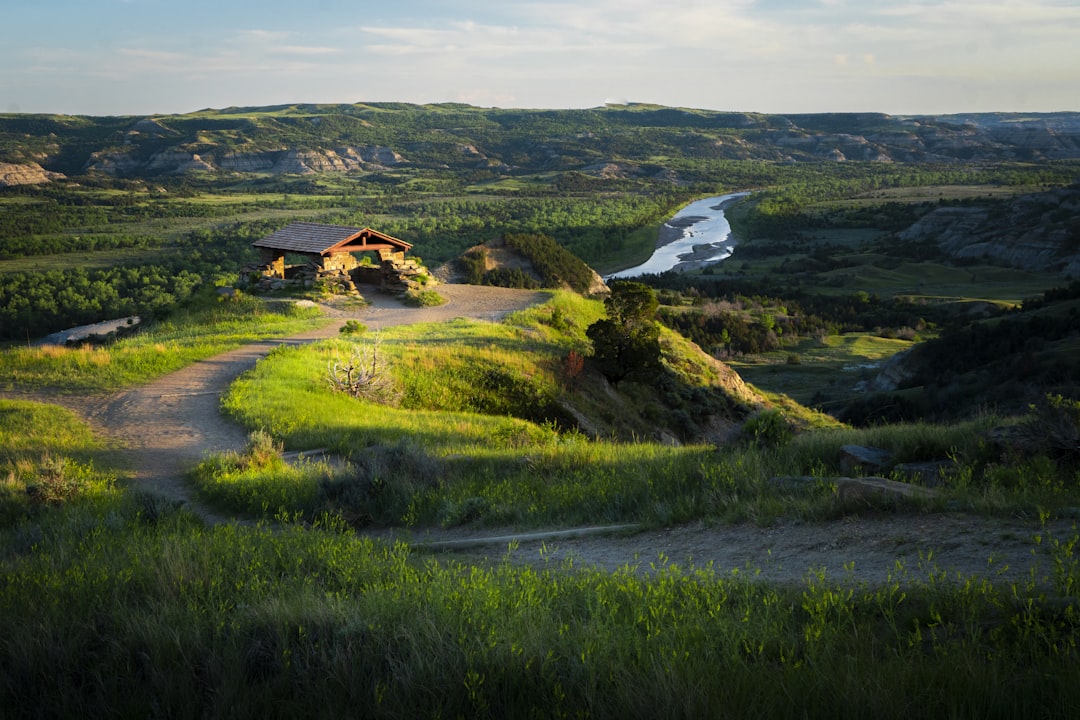
If you’ve ever found yourself planning a trip around the crushing anxiety of sold-out time slots and crowded overlooks, let’s pause and consider why the North Dakota Badlands offer a genuinely different kind of travel experience. While most national parks are currently battling record-breaking visitation numbers, the Badlands remain a rare outlier where you can actually find solitude without needing a backcountry permit to escape the masses. It’s not just about the lack of crowds, though; it’s about the sheer, untamed scale of a landscape that hasn't been re-engineered for mass tourism. When you’re standing there, looking at those exposed coal seams and fossilized redwood stumps, you’re witnessing a geological record that’s mostly left to its own devices.
Think about the way this place functions as a living, breathing machine, largely because the Little Missouri remains one of the few undammed rivers left in the Northern Great Plains. Because there’s no human-made infrastructure holding the water back, the river maintains its natural cycle of sediment transport, which is exactly why the terrain looks so raw compared to the sanitized parks we’re used to seeing. You’ll notice the soil here is a different beast entirely, largely due to the bentonite clay that turns into impassable gumbo after a rain—a simple, physical reality that acts as a natural gatekeeper for the park. It’s funny, but that same clay is what makes the topography so volatile and fast-eroding, constantly shifting the landscape in ways that more stable, forested parks simply don't.
I’m always struck by the biological indicators here, like the incredibly sensitive lichen species clinging to the sandstone, which thrive only because this remains one of the cleanest airsheds in the lower forty-eight. It’s a stark contrast to the smog-heavy vistas you might encounter in more popular mountain destinations, and it’s a quiet reminder that you’re breathing air that hasn't been filtered through industrial corridors. Plus, the way the flora and fauna adapt to these extreme thermal swings—sometimes 140 degrees between seasons—creates these distinct microclimates where you can find lush juniper thickets on one side of a ridge and sun-scorched, barren rock on the other. It’s an analytical marvel of survival, and honestly, seeing how the prairie dogs and cacti manage that cycle is far more interesting than waiting in line for a photo op. We’ll look closer at how this isolation defines the entire experience, but for now, just know that you’re heading into a space where nature still dictates the rules of engagement.
Scenic Drives and Hiking Trails: Navigating the Rugged Great Plains Terrain
When you're planning your route through the North Dakota badlands, you quickly realize that navigating this terrain isn't like walking through a standard forest park. Let's start with the Scenic Loop Drive in the South Unit, which gains nearly 1,000 feet in elevation; it’s honestly one of the best ways to grasp the sheer scale of the prairie ecosystems without burning your legs out on day one. These roads often trace old migratory paths that settlers later adopted for their stability, yet you'll notice how the land itself still dictates exactly where you can go. If you're hiking, you'll want to watch your footing because the high bentonite content in the soil turns the ground into an incredibly slick, dangerous "gumbo" the second it rains. I’ve seen enough people slide around to know that checking local precipitation is a non-negotiable part of your morning routine here.
The trail systems themselves offer a strange, beautiful window into the past, especially when you consider that the routes are often physically temporary. Because geologists observe erosion rates reaching several inches per year in some spots, these paths are inherently ephemeral, meaning they’re subject to seasonal rerouting that keeps even veteran rangers on their toes. When you hike the Petrified Forest Loop, you’re literally walking past massive, ancient conifer stumps from the Paleocene epoch that have been locked in place for millions of years. It’s also common to stumble upon old cattle trails where you can still spot remnants of rusted, barbed-wire fences being slowly swallowed by the landscape. If you're looking for the ultimate test, the Maah Daah Hey Trail stretches 144 miles across the most intense coulees and plateaus you'll find anywhere in the Northern Great Plains.
One thing that caught me off guard is the microclimate variance; you can easily experience a 20-degree temperature swing just by moving from a shaded canyon floor to an exposed ridgeline. This creates a really cool, high concentration of rare wildflowers that bloom in waves depending on the moisture levels in specific soil pockets, but it also makes dressing in layers absolutely vital. Also, don't underestimate the sun—the unique mineral composition of the badlands creates a intense glare that can really fatigue your eyes by midday. Since there’s almost no tree cover to hide under, I’d strongly advise carrying a physical topographic map instead of relying on your phone’s signal. It's a rugged, demanding environment, but for anyone who likes to actually earn their view, it’s about as authentic as it gets.
Charming Gateway Towns: Where to Stay and Dine Near the Badlands
When you’re planning a trip to the North Dakota Badlands, you’ll quickly find that where you set up base camp changes the entire rhythm of your visit. Medora is the obvious choice, acting as the primary gateway, but I’ve always appreciated how it resists the sprawl you see in other tourist hubs. With a population that stays right around 130 people, it feels more like a living museum than a town. You can still see the shadow of the Marquis de Mores’ 1883 industrial ambitions at the 26-room Chateau de Mores, which serves as a stark reminder of the area’s wilder, experimental past.
If you’re looking for a genuine taste of the region, you have to try the pitchfork fondue, where steaks are essentially flash-fried in boiling oil on the ends of pitchforks. It’s a bit of a spectacle, but it’s rooted in the actual, practical history of 19th-century cattle drives. For something a bit more logistical, Belfield acts as a vital junction that’s been funneling supplies into these hills since the Northern Pacific Railroad days. I’d recommend checking the menus there for grass-fed bison, which is almost always sourced from nearby ranches within a fifty-mile radius—it’s about as local as food gets.
If you find yourself needing a bit more substance, Dickinson is just thirty miles east and offers a surprisingly deep dive into the local geology at their dinosaur museum. The fossils there are actually excavated from the Hell Creek Formation, which is a big deal if you’re into the science of the K-Pg boundary. It’s also worth noting that the hospitality scene in these towns is pretty tuned into the park’s dark-sky status. You’ll notice the outdoor lighting is dimmed way down to keep the stargazing pristine, which is a thoughtful touch you don’t find in many other places.
And honestly, the buildings themselves are interesting to look at, especially the older wood-frame structures built from native western red cedar that somehow survives those massive temperature swings. You’ll also find that these towns largely dodge the big corporate chains, opting instead for smaller supply chains that lean on local honey and regional agriculture. It gives the whole area a cohesive, honest feel that makes you feel like you’re actually part of the landscape rather than just passing through it. If you’re trying to disconnect, staying in one of these smaller spots rather than rushing back to a major city is the single best decision you can make for your trip.
Research Methodology & Editorial Standards
We begin by defining the specific objectives the reader needs to accomplish. Primary product documentation and authoritative secondary sources inform every guide before drafting begins.
Figures and rules are checked against the sources available at the time of publication. Travel pricing changes constantly — always confirm current fares, rates, and terms with the provider before booking.