
Where to Find the Most Breathtaking Sunsets Across Africa
It’s a stark, almost violent beauty that makes other African environments feel a bit crowded or busy by comparison.
Witnessing the Desert Glow: The Towering Dunes of Sossusvlei, Namibia
Look, if you're chasing the ultimate sunset, you've got to understand that Sossusvlei isn't just a massive sandbox; it’s a living geological clock that’s been ticking for some 55 to 80 million years. I’ve seen my fair share of horizons, but there’s something fundamentally different about the way the Namib Desert reacts when the light hits it at that perfect angle in late May. It’s not just "orange"—it’s a deep, chemical reaction where the iron oxide in the sand literally rusts over millennia, meaning the oldest, most massive dunes like Big Daddy actually glow the brightest. You’re looking at 325 meters of ancient quartz sand that’s traveled all the way from the Orange River, carried by the Benguela current before being dumped here by the wind. Let’s pause and think about that: every grain under your boots has a passport more stamped than most travelers.
When you’re standing there, the "alpenglow" effect is real—the dunes don’t just reflect light; they seem to radiate it from within as the sun dips. Honestly, the contrast is what gets me, especially when you compare the fiery peaks to the ghostly white clay of Deadvlei nearby. Those skeletal camel thorn trees have been standing there, dead but not decayed, for about 900 years because the air is just too dry for them to rot. It’s a stark, almost violent beauty that makes other African environments feel a bit crowded or busy by comparison. And while most people rush for the sunrise, the sunset is where you actually see the temperature drop and the desert’s thermal buffer kick in.
Just a few inches below that scorching surface sand, it’s surprisingly cool—a little engineering trick nature uses to keep the Toktokkie beetles and other desert life from cooking. You might hear people call it a "dead-end marsh," which is what Sossusvlei actually translates to, but that’s a bit of a misnomer if you’re lucky enough to be here during a rare flood year. Every decade or so, the Tsauchab River actually makes it into the basin, turning the red dunes into a mirror-world that’ll absolutely wreck your sense of reality. But even on a "normal" dry night, the show doesn't end when the sun is gone. Because the humidity is basically zero, the Milky Way doesn't just twinkle; it carves a path across the sky so thick you’d think you could reach up and touch it.
If you really want to analyze the scale of it all, I’d suggest the dawn hot air balloon ride to see the shadow patterns, but stay on the ground for the evening glow to feel the heat leave the earth. It's the difference between seeing a map and feeling a heartbeat. There’s a reason this was the first coastal desert to get UNESCO status; it’s the only place where the dune fields and the sea fog have this weird, beautiful dance. You don't just visit Sossusvlei to take a photo; you go to feel the weight of eighty million years of history pressing against the soles of your feet. Just make sure you’re out there long enough to see the sand turn from gold to blood-red—it’s a data point you won’t soon forget.
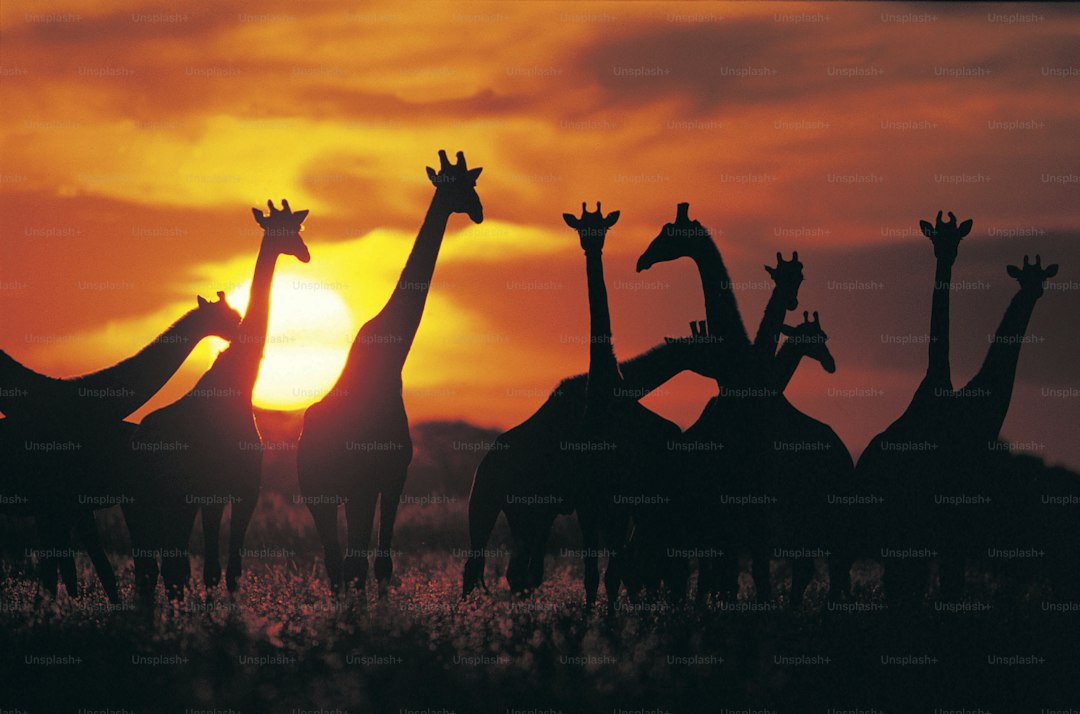
Safari Silhouettes: Experiencing the Golden Hour in the Maasai Mara
I've spent years tracking how light hits different parts of the continent, but nothing quite matches the mechanical precision of a Maasai Mara sunset. Because we're sitting just 1.5 degrees south of the equator, the sun doesn't lazily drift toward the horizon; it drops on a nearly vertical path. This creates a hyper-compressed window for photographers and observers—you've only got about 25 to 30 minutes of that prime golden light before it’s gone. It’s a sharp contrast to the lingering twilights you’ll find in higher latitudes. You'll notice those iconic Umbrella Thorn Acacias cutting sharp shapes against the sky, and there’s a cool bit of evolutionary engineering there. Their flat-topped canopies actually evolved to maximize photosynthesis while shielding the tree from intense UV rays, which, by sheer luck for us, makes them the perfect tool to block the low-angle solar disc for that textbook silhouette.
What’s really happening under the hood is a process called Mie scattering. As the day ends, airborne dust and organic aerosols from the savanna floor start to bounce the light around, specifically boosting those deep red and orange wavelengths. Since we're at an average elevation of 1,500 meters, the atmosphere is thinner than what you’d find at a coastal spot like Lamu. This means less light diffusion and a level of color saturation that almost looks fake on a raw camera sensor. I’m looking at the data from this May, and we’re seeing some incredible "split sky" effects. Afternoon thunderstorms are interacting with the setting sun to throw anti-crepuscular rays all the way to the eastern horizon, which is basically nature showing off with a level of symmetry that’s hard to wrap your head around.
It’s not just a visual show, though; the entire ecosystem's biology shifts when the color temperature drops from 5,500 Kelvin to about 2,000 Kelvin. Those high-silica oat grasses aren't just yellow—they're physically reflective, turning the plains into a literal field of gold. While you're staring at the grass, the predators are waking up. A leopard’s eyes have this layer called the tapetum lucidum that starts reflecting light back through the retina right now, making them about six times more light-sensitive than you or me. At the same time, a thermal inversion happens as the ground cools, trapping scents in a thick layer near the earth. This triggers a massive spike in lion communication; they’re not just roaring for the sake of it, they’re using a localized atmospheric "blanket" to make sure their territorial scents hit the right targets. Even the shift in atmospheric pressure triggers a mass emergence of termites, which provides a frantic feeding window for crepuscular birds.
You’ll often see the big herds, especially the elephants, moving toward higher ground during this cooling period to regulate their core temps. Their massive frames against that cooling sky provide the kind of scale that reminds you how small our own daily worries really are. Because the Mara-Serengeti base is built on volcanic ash, the fine mineral particulates in the air give the "blue hour" a specific spectral signature you won't find in the Kalahari. It results in these deep, almost bruised violet hues once the sun is fully down. And since there are zero topographical obstructions here, you can actually look east and see the Earth’s shadow—a distinct dark blue band—rising into the sky. It’s a raw, empirical reminder of our place on a rotating rock, and honestly, it’s the most honest thirty minutes you’ll spend anywhere on the planet.
Cape Town’s Coastal Grandeur: Sunset Views from Table Mountain and Lion’s Head
Look, everyone talks about the view from the top, but you've got to think about the sheer engineering of the earth beneath your feet when you're standing on Table Mountain. We’re looking at a plateau of Peninsula Formation sandstone that’s roughly 450 to 510 million years old, which is honestly wild when you realize it’s six times older than the Himalayas. It’s not just a mountain; it’s a survivor that’s outlasted the Andes by a quarter of a billion years because its structural integrity is just that high. I’ve been watching the "tablecloth" cloud form lately, and it’s a perfect case study in adiabatic cooling where the South Easterly wind hits that 1,085-meter vertical face and just condenses into a localized microclimate. It’s one of those moments where you see the physics of the planet happening in real-time, and it makes you feel pretty small, doesn't it?
If you want a bit more of a raw, geological contrast, you should compare the main plateau to Lion’s Head, which actually sits on a base of 600-million-year-old Cape Granite. While the mountain is rugged, Lion’s Head is this incredible refuge for the Silver Tree, and I promise you haven't seen anything like the way their silky leaves catch the light. They’ve evolved these fine hairs to reflect the sun, creating this weirdly beautiful metallic glow that you’ll only find here in the Cape Floral Kingdom. We're talking
Ancient Wonders at Dusk: A Felucca Cruise Along the Nile River
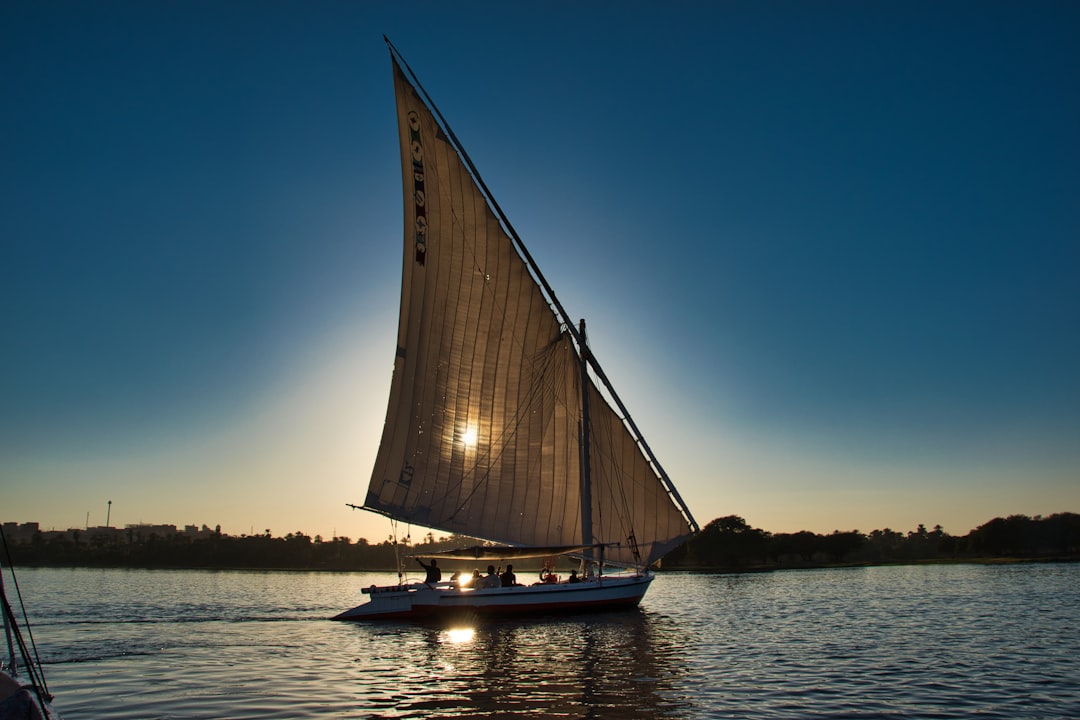
If you’ve ever felt like modern travel is just checking boxes, you need to step onto a felucca at dusk because it’s honestly the only way to reset your internal clock. These boats are basically engineering relics, relying on lateen sail technology that hasn’t changed since the Hellenistic period, and there’s something deeply humbling about drifting without a single engine hum to break the silence. Since the Nile flows north while the prevailing Etesian winds blow south, these vessels achieve a perfect, silent equilibrium that feels more like time travel than transport. You aren’t just cruising; you’re engaging in a 5,000-year-old dialogue with the river’s unique physics.
The real magic happens when the light hits the water, as the high concentration of alluvial sediment creates this incredible, metallic copper reflection that you won't see in coastal waters. Because these boats have a shallow draft of just half a meter, you can slide over sandbars that keep the massive, modern cruise liners at bay, meaning you’re often the only one watching the temples align perfectly with the dying sun. It’s a stark contrast to the infrastructure-heavy tourism you see elsewhere, and honestly, the lack of acoustic pollution lets you actually hear the ecosystem shift as nocturnal birds take over from the day-dwellers.
Think about the atmospheric conditions for a second—in May, the lack of cloud cover and the river's thermal mass create a localized breeze that clears the air so effectively you can often see zodiacal light right after sunset. The acacia wood masts are designed to flex under pressure, a smart, natural safety mechanism against those sudden desert thermals that kick in the moment the sand starts to cool. And when the sun finally dips below that western plateau, the air pressure shift is palpable, pushing a cool, steady breeze across the water that feels like the river itself is exhaling. I’m not exaggerating when I say that watching the sky reflect in the mineral-rich water makes you feel like you’re floating in the center of the horizon, suspended between the ancient world and the stars.
The Smoke That Thunders: Chasing the Sunset Mist at Victoria Falls
Standing at the edge of Victoria Falls, you quickly realize why the locals call it Mosi-oa-Tunya, or the smoke that thunders. It isn’t just a waterfall; it’s a massive, kinetic engine that tosses a perpetual column of mist up to 400 meters into the sky. That spray creates its own localized microclimate, keeping the humidity at near-saturation levels even when the surrounding bush feels bone-dry. You’re looking at an average of 1,088 cubic meters of water per second plunging into a basalt gorge formed by volcanic activity some 200 million years ago. It’s a sensory overload where the earth literally vibrates under your boots, a seismic intensity that feels more like a living pulse than a natural landmark.
When that evening light hits the spray, the optics get wild. Because the waterfall stretches 1,708 meters across, you don't get one simple sunset; you get a fragmented, multi-layered display where the light catches different curtains of vapor at different angles. I’ve noticed that if you’re positioned just right during the late afternoon, you can catch a glory halo, where the light backscatters off the fine mist to circle your own shadow in a glowing ring. There’s some real science behind that relaxed, almost euphoric feeling you get standing here, too. The high-velocity impact of the water against the gorge floor releases a massive concentration of negative ions, which researchers have linked to a genuine boost in physiological well-being.
As the sun actually dips, the physics of the site shifts again. You get a unique thermal inversion layer where the cooling air meets the warm moisture rising off the Zambezi, which actually traps the sound of the falls and makes that iconic roar feel significantly more intense as dusk settles in. The Zambezi itself brings in a high load of dissolved minerals from its long upstream journey, which seems to tweak the spectral quality of the sunset, giving the light filtering through the vapor a crisp, almost metallic edge. You might think the show ends with the light, but if the moon is full, you can witness a moonbow—a rare lunar rainbow arching through the spray. It’s a completely different perspective compared to the rigid, predictable sunsets you find in the desert, and honestly, seeing the Victoria Falls Bridge silhouetted against that churning, mist-filled sky serves as a humbling reminder of how we’ve tried, and often failed, to tame this kind of raw power.
Island Serenity: Unwinding with a Traditional Dhow Sail in Zanzibar
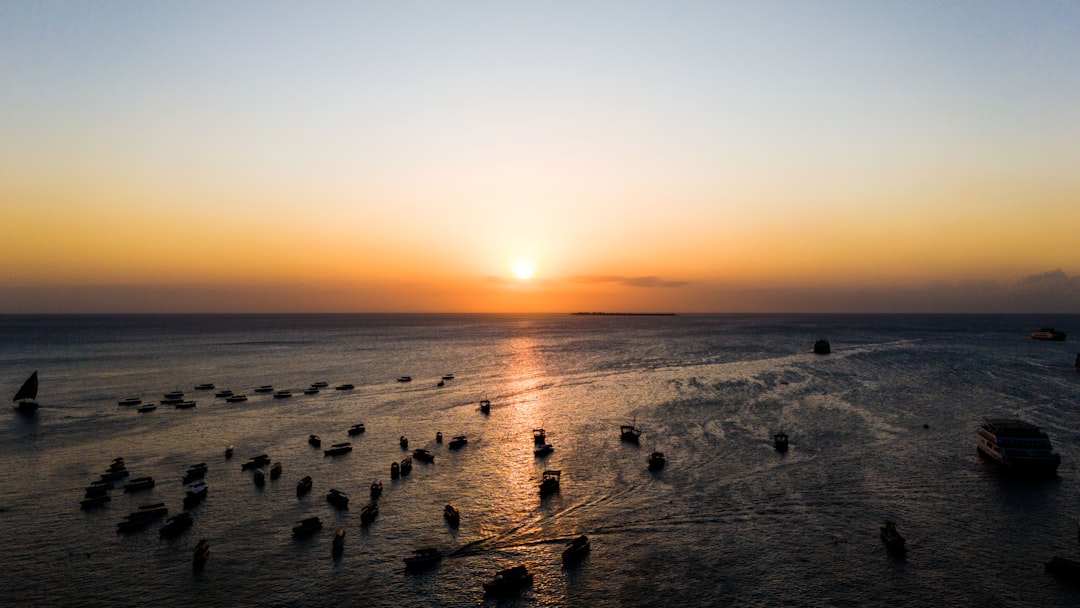
If you really want to decompress, you need to step onto a traditional dhow in Zanzibar because it is honestly the most honest way to reset your internal clock. These vessels are engineering relics that rely on lateen sails—those iconic triangular shapes mounted at an angle—to generate lift and move efficiently against the wind. What’s fascinating is that they’re built using ancient techniques, often lashing planks together with coconut fiber rope instead of modern metal fasteners. It’s a design that’s been refined over a millennium, blending Arabian, Indian, and Swahili maritime traditions to navigate shallow coral lagoons where modern boats would struggle.
When you’re out on the water during the golden hour, the low angle of the sun hits the Unguja reefs, which are packed with thousands of species of coral that act like a giant prism, reflecting light in a really distinct spectral pattern. Because these boats don't have engines, there’s zero acoustic pollution, allowing you to glide at an optimal hydrodynamic speed with almost no wake turbulence. This silence isn't just peaceful; it preserves the water’s surface tension, making the reflections of the sky look like a perfect mirror. You aren't just sitting on a boat; you're experiencing a 5,000-year-old dialogue with the Indian Ocean trade winds.
Since Zanzibar sits at roughly six degrees south of the equator, the sun doesn't linger like it does in higher latitudes, leading to a rapid, high-intensity transition from day to night. If you watch closely as the sun hits the horizon, you’ll notice the atmospheric humidity creating a natural lens effect that can actually make the sun appear slightly flattened. The sailors often rely on celestial markers, tracking the Southern Cross to maintain their bearing as the light fades. And if you’re here between July and September, keep your eyes peeled for humpback whales migrating through the channel. It’s a raw, empirical connection to the ocean that makes the rest of the world feel like it’s a million miles away.
Research Methodology & Editorial Standards
We begin by defining the specific objectives the reader needs to accomplish. Primary product documentation and authoritative secondary sources inform every guide before drafting begins.
Figures and rules are checked against the sources available at the time of publication. Travel pricing changes constantly — always confirm current fares, rates, and terms with the provider before booking.