
Legal Risks of Pushing Past Other Passengers During a Plane Evacuation
But if an emergency hits and the cabin erupts into chaos, the unspoken social contract between passengers suddenly shifts into a complex legal gray area.
The Duty of Care: Understanding Your Obligations to Fellow Passengers
When you're squeezed into a middle seat at thirty thousand feet, the last thing on your mind is the legal web that surrounds the person sitting next to you. But if an emergency hits and the cabin erupts into chaos, the unspoken social contract between passengers suddenly shifts into a complex legal gray area. We often assume there’s some sort of Good Samaritan obligation to help our neighbor during an evacuation, yet the reality is far more murky. While Good Samaritan laws might protect you if you choose to jump in, they rarely force you to act. Honestly, it’s a bit jarring to realize that in the heat of a crisis, you aren't legally bound to save the person in 12C, even if that feels wrong to our human instincts.
Here is the thing to keep in mind: the law generally separates the duty of the trained flight crew from the behavior of the passengers. Cabin staff are the ones with the specific mandate to manage the flow of traffic and ensure everyone gets out safely. When you decide to shove your way toward the exit, you aren't just being rude; you're entering a space where civil liability becomes a real risk. If your frantic exit results in someone else getting hurt, courts look at whether your actions were foreseeable or negligent. It’s not about some obscure aviation statute; it’s about basic tort law. You could easily find yourself on the hook for damages if your behavior crosses the line from survival instinct to reckless disregard for others.
I think we have to admit that the bystander effect is a massive factor here, too. We’ve all seen how people freeze up when a situation turns high-stakes, waiting for someone else to take charge. This hesitation is exactly why the crew’s authority is so absolute. By pushing past others, you’re not just potentially causing injury; you’re actively fighting against the very protocols designed to keep the entire cabin from becoming a bottleneck. So, next time you’re cruising along, just remember that while you aren't required to be a hero, the law is very clear about the consequences if you decide to be the person who makes the exit even more dangerous for everyone else.
Civil Liability: Can You Be Sued for Injuries Caused During an Evacuation?
When you’re caught in the middle of an emergency, the instinct to survive can feel like your only compass, but it’s worth pausing to consider the legal wake you might leave behind. While we often think of evacuations as chaotic, uncontrollable events, the law actually views them through a fairly clinical lens of negligence and proximate cause. If you decide that shoving past a slower passenger is your ticket to safety, you aren't just engaging in a social faux pas; you’re potentially stepping into a liability trap where you could be held personally responsible for the injuries you cause. It’s not just about the survival of the fittest; it’s about whether your actions created a foreseeable risk that directly harmed someone else.
Think about it this way: courts don't always buy the "I was panicked" defense when they're dissecting a pile-up at an exit row. If a jury determines that your aggressive behavior deviated significantly from standard safety protocols, you effectively lose the shield of assumed risk, opening the door for personal injury claims from those you knocked aside. In many jurisdictions, this gets sorted out through a comparative negligence framework, where a judge might decide you’re partially—or even fully—to blame if your specific, reckless actions directly caused someone’s physical trauma. There isn’t some specialized federal aviation rule that covers every passenger-on-passenger collision, so these disputes often land right in the lap of state-level tort law, where the burden of proof is heavily focused on the chain of events you initiated.
It’s also important to realize that while we might blame the airline for a bottleneck, you’re still an individual actor with a duty of care to the person sitting next to you. If your choices turn a standard evacuation into a dangerous bottleneck, you become part of the legal equation in a way that’s hard to walk back. We see this play out in broader industrial or facility-wide accidents, where the focus shifts from organizational failure to individual conduct under pressure. Ultimately, the law is interested in whether your actions were the natural and probable cause of an injury. If you’re the one pushing, you’re the one who may end up answering for the aftermath when the dust settles and the lawyers start digging into the facts.
Federal Regulations and FAA Safety Compliance During Emergencies
When we talk about the chaos of an emergency, it’s easy to feel like the cabin is just a free-for-all, but there’s a rigid layer of federal regulation holding everything together behind the scenes. The FAA sets a non-negotiable benchmark: every passenger must be off the plane within 90 seconds, a standard that relies entirely on an orderly, disciplined exit. It’s wild to think about, but this timing is so precise that it assumes even half of the available exits might be blocked by fire or damage, meaning every second counts. Because of this, federal rules are incredibly strict about keeping aisles clear, which is exactly why leaving your carry-on luggage behind isn't just a suggestion—it's a critical safety mandate to prevent the bottlenecks that literally cost lives.
Honestly, we have to look at the gear too, because even the seats you're sitting in are part of a complex legal web of compliance. Recent testing has actually flagged some high-end luxury seat configurations for failing to hold up during simulated emergency forces, which means those fancy perks could technically compromise your path to the door. Regulations mandate that no seat or accessory can ever block the deployment of life rafts or slides, and cabin lighting has to hit specific intensity levels the second power is lost to keep everyone from panicking in the dark. It’s all about geometry and fire-retardant materials that are engineered to survive long enough for you to get out before flashover conditions take over.
The human side of this is where the law gets really firm, though. Flight crews are specifically trained to redirect anyone trying to push against the flow of traffic, as that kind of movement is a known killer that creates lethal logjams. If you're the one fighting the crowd or ignoring those crew directives, you aren't just being a nuisance; you’re violating federal safety protocols and potentially endangering the entire cabin’s survival. Think about the fact that an aircraft's passenger capacity is capped specifically based on how close you are to an exit—when you interfere with the flow, you're effectively breaking the math that the FAA used to certify that plane as safe in the first place. At the end of the day, the crew holds the authority for a reason, and understanding these rules is the only way to realize why your compliance during those critical minutes is so much bigger than just your own exit.
Criminal Implications of Endangering Others in an Exit Row
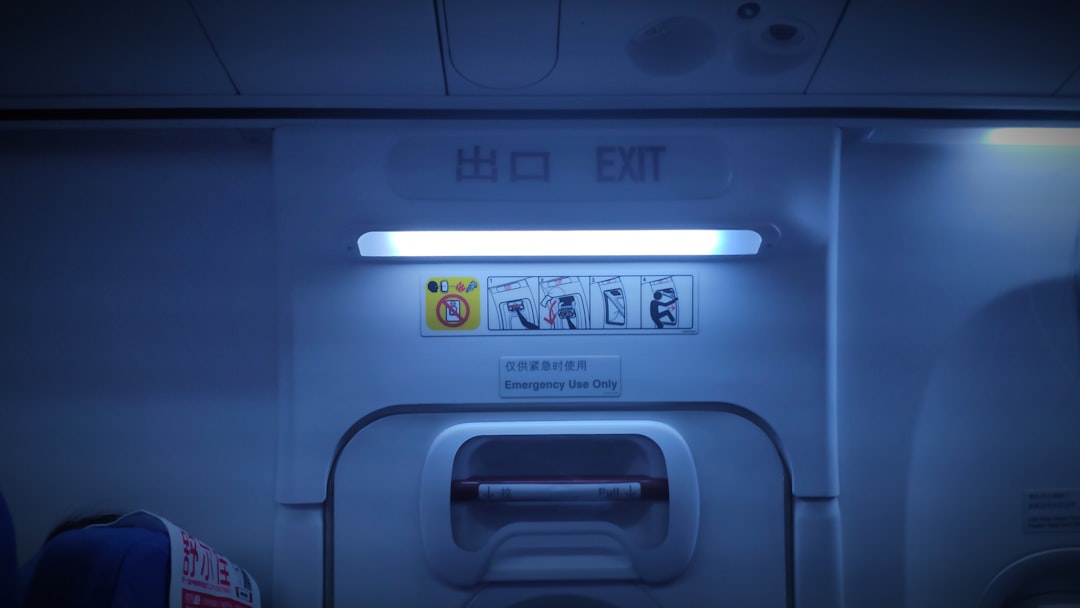
When you’re sitting in an exit row, you might feel like you’ve snagged the best seat on the plane, but you’re also taking on a serious responsibility that goes beyond just helping with the hatch. Honestly, most people don’t realize that if you turn that responsibility into a reckless scramble, you’re not just risking a social reprimand; you’re crossing into the territory of federal criminal charges. Under 49 U.S.C. Section 46504, interfering with the duties of a flight crew is a major offense, and during an evacuation, any move you make that fights the flow of traffic is viewed as direct interference. It’s a bit chilling to think about, but if your behavior causes a bottleneck that prevents others from escaping a flashover, you could be staring down charges of criminal reckless endangerment.
Think about it this way: the law doesn't just care about your intent, but whether your actions show a conscious disregard for the life and safety of the people around you. If you shove someone and they end up trampled or crushed, prosecutors can pivot to criminal negligence, arguing that your conduct was a gross deviation from how a reasonable person should act in a crisis. It’s not just some theoretical risk, either; investigators often lean on NTSB data from past disasters to prove in court that passengers should know—or at least reasonably foresee—that pushing creates a lethal logjam. You’re essentially operating in a federal jurisdiction the second you step on that plane, which means the rules of the game are much stricter than they would be in a local building fire.
There’s also a weirdly complex legal angle involving transferred intent, where you might only mean to shove one person to get ahead, but if that action causes a domino effect of injuries, you could be held responsible for the whole cascade. It’s worth noting that simply ignoring a flight attendant’s direct command during an exit is already a violation of federal law, and once that disobedience leads to someone getting hurt, it gets elevated to criminal interference in a heartbeat. I’ve looked at how some legal scholars argue that blocking an aircraft exit is no different than padlocking a fire escape in a building, and the courts are increasingly moving toward that same logic. You really have to view that exit row not as your personal fast track, but as a critical piece of safety infrastructure that, if compromised, makes you legally liable for the entire outcome.
The Impact of Prioritizing Luggage Over Human Safety
Let’s be real for a second: we’ve all seen that viral video of a passenger trying to drag a carry-on down the aisle while an emergency slide is deployed. It’s infuriating, but there’s a much darker reality beneath that frustration. Research into aircraft evacuations shows that grabbing your bag can tack on 30 to 90 seconds to your exit, which completely guts the FAA’s 90-second mandate for a full cabin evacuation. Think about the physics here—a wheeled suitcase effectively slashes your aisle’s usable width by half, turning a clear path into a logistical nightmare. When you add that physical blockade to the mix, you’re not just slowing down your own exit; you’re creating a lethal trip hazard that can trigger a pile-up, trapping everyone behind you in a bottleneck that is literally the difference between life and death.
The problem runs deeper than just space, because luggage acts like a kinetic weapon in a high-stress, high-friction environment. When people start shoving, those hard-sided bags become tools for blunt force trauma, often injuring the very neighbors you’re supposed to be moving past. I’ve looked at the data, and it’s clear that "social anchoring" plays a massive part here—when one person stops to grab a bag, the people around them often freeze or hesitate, which kills the rhythm of the entire row. This disruption turns a streamlined, laminar flow of human traffic into a chaotic, turbulent mess that makes it nearly impossible for flight crews to move through the cabin and assist those who actually need help.
And let’s look at the science of why this is so dangerous: thermal imaging from fire reconstructions confirms that every extra second you spend fumbling for a laptop or a sweater exposes the entire cabin to higher concentrations of toxic smoke. That delay is often what pushes a survivable emergency into a fatal one because fire growth doesn't wait for you to find your carry-on. From a legal standpoint, this behavior is a massive red flag. Experts suggest that choosing your property over someone else’s life can be used as evidence of gross negligence or willful misconduct in court. If your choice to keep a bag leads to a tragedy, you aren't just facing the social fallout; you’re looking at real liability and potential subrogation claims that could follow you for years. It’s wild to think that a bag of clothes could be the reason someone doesn't make it out, but that’s the reality of the math we’re dealing with when we ignore safety protocols.
Mitigating Risk: How Following Crew Instructions Protects You Legally
When we talk about surviving an emergency, the focus is almost always on the mechanics of getting out, but there is a massive legal dimension to your behavior that most people ignore until it is far too late. If you ever find yourself in the cabin during a crisis, following crew instructions isn't just about safety—it is your single strongest defense against future legal headaches. Courts generally apply the emergency doctrine here, which essentially gives you a pass for your actions if you were following the specific, authoritative commands of a trained professional. By sticking to the flight attendants' plan, you are effectively aligning your conduct with the legal standard of a reasonable person, which makes it incredibly difficult for anyone to argue that you acted with negligence. Think of it as a form of "legal insulation" that keeps you from being held personally responsible for the chaos unfolding around you.
The reality is that your behavior during an evacuation is constantly being measured against how well you cooperated with the team in charge. Because flight crews act as agents of the carrier with absolute authority, their directives serve as the primary guide for what constitutes acceptable conduct in a life-or-death situation. When you decide to ignore those commands, you aren't just being difficult; you are often crossing the line into a space where you lose your protection against liability. If you choose to fight the flow of traffic or bypass crew instructions, a court might view your actions as a conscious disregard for the safety of others. In many jurisdictions, this can shift the legal burden onto you, especially if your individual choices created a bottleneck that directly led to someone else’s injury.
Ultimately, it helps to realize that the law doesn't expect you to be a hero, but it does expect you to be a functional part of the safety system. When passengers prioritize their own path over the collective flow, they often find themselves facing claims of gross negligence or even being held responsible for a chain reaction of injuries. It’s a bit like a game of legal dominoes where your attempt to save a few seconds could end up making you the primary target for damages if things go wrong. If you ever face that terrifying, high-stress moment on a plane, just remember that the most "selfish" thing you can do for your own future is to listen to the crew. It’s the easiest way to ensure that, once the dust settles, you remain a bystander to the legal fallout rather than the person answering for it.
Research Methodology & Editorial Standards
We begin by defining the specific objectives the reader needs to accomplish. Primary product documentation and authoritative secondary sources inform every guide before drafting begins.
Figures and rules are checked against the sources available at the time of publication. Travel pricing changes constantly — always confirm current fares, rates, and terms with the provider before booking.