
Are You Legally Liable for Pushing Past Others During a Plane Evacuation
We’ve all seen those viral videos of people scrambling to grab their carry-on bags while an aircraft cabin fills with smoke, and it makes you wonder: if you’re the one trying to push past the chaos to get to the exit, could you actually end up in court?
The Legal Reality: Can You Actually Be Sued for Pushing During an Evacuation?
We’ve all seen those viral videos of people scrambling to grab their carry-on bags while an aircraft cabin fills with smoke, and it makes you wonder: if you’re the one trying to push past the chaos to get to the exit, could you actually end up in court? It’s a messy question, but here is what the legal reality looks like when survival instincts collide with the courtroom. In tort law, the doctrine of necessity usually acts as your primary defense, essentially arguing that if you’re facing an imminent, life-threatening danger, your physical actions are a reaction to that threat rather than an act of aggression. Courts generally apply an objective standard here, meaning a jury has to decide if a reasonable person would have acted exactly the same way under that kind of extreme pressure. It isn’t about being perfect; it’s about whether your response was what we’d expect from someone trying not to die.
Many states also follow the sudden emergency doctrine, which essentially tells a jury to hold you to a lower standard of care because you didn’t create the crisis yourself. Think about it: when the cabin is filling with smoke, you aren’t making calculated, cold-blooded choices, and the law actually acknowledges that. It recognizes that humans under extreme duress often revert to basic fight-or-flight biological responses, bypassing the social inhibitions we have in everyday life. In fact, expert testimony in these cases often uses fluid dynamics to show that human behavior in a crowded plane isn't just about aggression—it's often just physical pressure waves of people moving as a mass. If someone did try to sue you, the burden of proof is entirely on them to show you acted with malicious intent rather than a reflexive survival instinct, which is a massive hurdle for any plaintiff to clear.
But we have to be realistic about the flip side of this, too. While a private citizen might struggle to win a lawsuit against you, you’ve got to remember that a captain’s authority on a plane is absolute. If your shoving or physical altercation slows down the crew-directed evacuation, you could theoretically face federal charges for interfering with flight operations, which is a whole different level of trouble. Plus, while insurance companies rarely chase after individual passengers for minor injuries because the legal costs just don't add up, those airline terms of carriage you signed when you bought your ticket create their own set of procedural headaches. It’s not that you’re magically immune to everything, but the law is usually smart enough to realize that in the middle of a disaster, you aren't exactly acting like yourself. Honestly, the biggest threat in that moment isn't a lawsuit—it's the danger of the fire itself.
Understanding the Duty of Care: Passenger Obligations in Emergency Situations
When you find yourself staring at an emergency exit sign on a plane, the adrenaline makes it hard to think about anything other than getting out, but it helps to step back and consider what your role actually is in that chaos. We often assume that being a good passenger means helping those around us, but legally speaking, you aren't actually under a mandate to assist fellow travelers at the expense of your own safety. While laws like the Aviation Medical Assistance Act protect healthcare pros who step up to provide care, those protections don't magically apply to the general public during a standard evacuation. In fact, think of it this way: the legal duty of care is really a one-way street, focused almost entirely on the airline’s responsibility to you, rather than a web of reciprocal obligations between passengers trying to make it to the door.
The math behind a safe exit is pretty sobering when you look at the industry standards. Aircraft are designed to be fully evacuated in just 90 seconds, a tight window that relies on a smooth, coordinated flow rather than a mad dash. Research into human movement shows that when we start shoving to get ahead, we create bottlenecks that actually slow down the collective exit speed, mathematically trapping more people in the cabin for longer. You might feel like you’re doing what’s necessary to survive, but if your physical movements directly conflict with the instructions coming from the flight crew, you risk being labeled an obstructionist. It’s a thin line, and the threshold for that classification is lower than you might think if your actions disrupt the established evacuation flow.
We have to acknowledge that when smoke hits the cabin, your brain is going to hit that fight-or-flight switch, prioritizing your own speed over the group's needs. It’s a natural, biological response, yet it’s the exact behavior that triggers the congestion leading to most evacuation injuries. While you aren't legally required to be a hero, you are expected to follow crew-directed instructions, and ignoring them can land you in serious trouble under civil aviation regulations. If things get physical, you’re also walking into a legal minefield where international treaties can complicate how liability is sorted out. Ultimately, the most productive thing you can do for everyone on that plane—including yourself—is to move efficiently without turning the aisle into a contact sport.
The Self-Preservation Defense: When Is Physical Force Considered Legally Justified?
When we talk about the legal side of protecting yourself, it’s easy to get lost in the weeds of courtroom jargon, but the core issue always boils down to a simple question of proportionality. Think about it this way: the law is fundamentally interested in whether the force you used actually matches the danger you were facing. If you’re shoving someone just to snag a better spot in a line, that’s a far cry from using physical force to navigate through a smoke-filled cabin where your life is on the line. Courts generally look at this through an objective lens, basically asking what a reasonable person would have done if they were standing in your shoes during that exact, high-stress moment. It isn't about being perfectly calm or calculated, because the law understands that humans don't exactly operate with steady nerves when the stakes are life and death.
The real challenge in these scenarios is the thin line between a justified reaction and what the legal system might call excessive force. In many places, there’s an expectation that you should try to retreat before getting physical, but that rule often goes out the window when you’re trapped on an aircraft in an emergency. You’re essentially arguing a necessity defense, which means you have to prove that the harm you were trying to avoid—like being caught in a fire—was significantly worse than the shove you gave to someone blocking the exit. It’s an affirmative defense, meaning if you ever ended up in front of a jury, you’d have to provide evidence that your actions were a last resort rather than just a result of panic or aggression.
What’s fascinating to me is how modern trials are starting to pull in behavioral biology to help explain why we do what we do under pressure. Expert witnesses are increasingly pointing to scientific models of crowd dynamics to show that in tight, confined spaces, what looks like a fight is often just a physical pressure wave of people moving as a collective mass. Juries are starting to hear that these reflexive, fight-or-flight responses are fundamentally different from the kind of premeditated assault that normally keeps lawyers busy. Still, you have to remember that this protection usually ends the second the danger passes; if you’re still pushing people after you’ve reached the tarmac, the law is much less likely to see that as a survival instinct. It’s a messy, complicated area of the law, but for most of us, just knowing that the system tries to distinguish between a calculated attack and a panicked attempt to survive is a decent starting point.
The Impact of Panic: How Chaos Affects Criminal and Civil Liability
When we look at how chaos actually shifts the legal landscape during a plane evacuation, it really comes down to whether the law can account for the biological reality of pure, unadulterated panic. Research in cognitive psychology shows that when smoke fills a cabin, your amygdala effectively hijacks your brain, leading to cognitive narrowing where you’re physically incapable of processing complex social cues or long-term legal consequences. It’s not just a bad day; it’s a physiological state where your body’s cortisol and adrenaline levels skyrocket, impairing your fine motor skills and turning your actions into involuntary responses rather than calculated decisions. You aren't making choices in the way a courtroom typically expects; you're operating in a state of sensory deprivation where visibility often drops to less than two meters. I think it’s fascinating—and slightly terrifying—that the law is now starting to weigh these biological realities against the standard of the reasonable person.
Think about the sheer physics of a crowded aisle, too. Studies on crowd dynamics show that when you have more than four people per square meter, the force exerted by the collective mass can easily reach levels that cause broken ribs, making it nearly impossible to distinguish between your individual intent and the massive external pressure of the crowd pushing from behind. This creates a massive headache for prosecutors, as the legal threshold for criminal battery requires intent, yet scientific modeling proves that most physical contact in these scenarios is just a secondary effect of chaotic, involuntary surges. If you’re being shoved into someone else, are you actually liable for the collision? Most experts are starting to argue that what looks like aggression is often just a physical pressure wave, complicating any attempt to pin down individual criminal liability.
We also have to talk about how the social contract essentially evaporates the moment a crisis hits. Behavioral data tells us that the pressure to conform to group norms vanishes for about 85 percent of people within the first thirty seconds of an emergency, rapidly shifting the environment into a state of competitive individual survival. This is where the scarcity heuristic kicks in, leading people to prioritize their carry-on bags because their brains falsely categorize those items as essential for future survival. While this behavior might look like reckless disregard for others, courts are increasingly viewing it as a predictable, biological state. When you’re caught in that feedback loop, it’s not just about you—it’s about how your choices, driven by primal fear, ripple through the entire cabin and shift the liability landscape for everyone else involved.
Beyond Pushing: The Legal Consequences of Prioritizing Carry-On Luggage
When we talk about the legal fallout of an emergency, the conversation usually centers on the shoving, but the real silent culprit is often the overhead bin. Think about it: that rolling carry-on you just had to grab acts as a physical barricade, effectively turning a standard exit path into a series of hazardous pivot points. Data from simulated evacuations shows that a single passenger stopping to retrieve a bag can slash the total flow rate through an exit by nearly 30 percent. In a legal sense, if you’re hauling an item that exceeds allowed dimensions and it traps someone else, a court could argue you’ve breached the airline’s implied safety contract. It’s not just about being in the way; it’s about the fact that your choice to prioritize property over human life becomes a quantifiable, foreseeable catalyst for injury.
The problem gets even more technical when you consider that those bags aren't just dead weight. Cabin ergonomics research highlights that rolling luggage can quickly become unanchored projectiles if bumped, leading to secondary liability claims for physical harm inflicted on bystanders. I find it interesting that forensic analysis now uses time-to-exit variance to argue that the struggle for a bag isn't just a reflex, but a deliberate choice that negates a necessity defense. Modern cabin sensors can even track the exact duration of your overhead bin usage, providing objective data that could dismantle any argument that you were acting in a state of blind, involuntary panic. If you’re standing there fighting with a latch while the cabin fills with smoke, you aren't just losing time—you're leaving behind a digital trail that lawyers will use to prove your intent.
We have to face the reality that this "carry-on delay" is being quantified in ways that make it harder to plead ignorance in court. Some insurance underwriters are already exploring subrogation claims, essentially looking to hold passengers liable for the fallout of their own negligence when their property causes a bottleneck. This is where the concept of proximate cause really hits home, as the moment you pull that bag down, you become the primary architect of the resulting congestion. It’s a harsh perspective, but the legal system is increasingly moving toward a standard where the weight and size of your retrieved luggage serve as evidence of whether you were in a true survival state or just putting personal items above the safety of the group. Ultimately, the law is starting to distinguish between a desperate, primal reaction and a calculated, dangerous decision that puts everyone else at risk.
Precedent and Policy: How Airlines and Regulators View In-Flight Misconduct
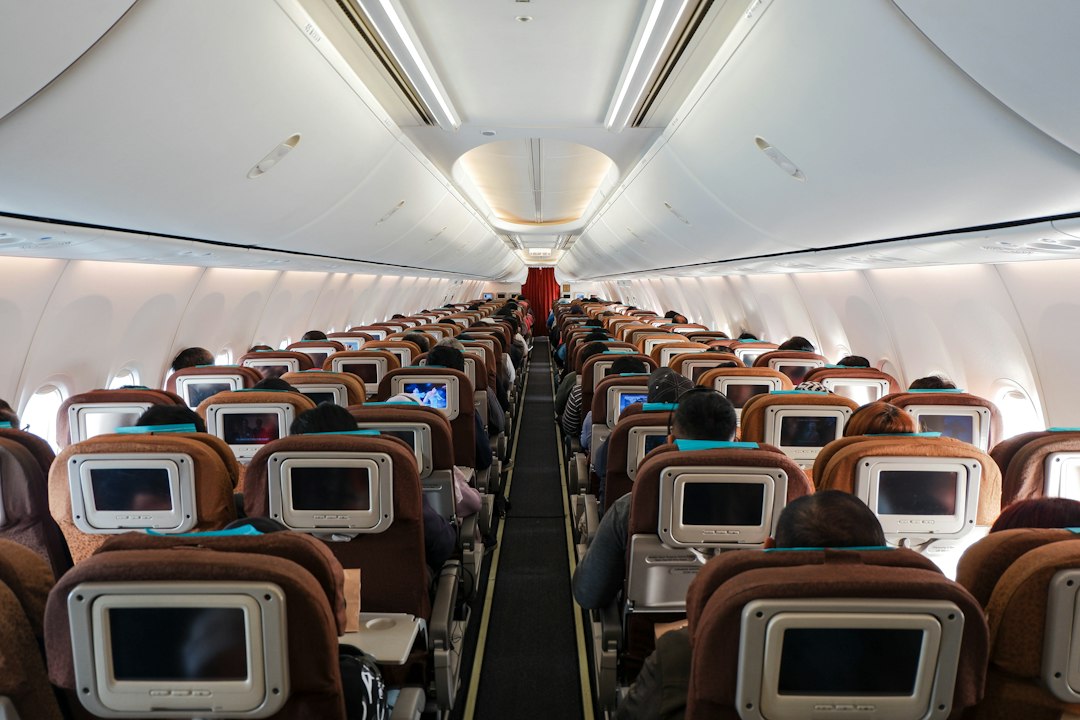
When we look at the high-stakes environment inside a cabin, it’s easy to focus on our own survival, but there’s a complex legal and regulatory framework that effectively turns the plane into a restricted scene the second an emergency is declared. You might not realize it, but the moment a flight attendant signals an emergency, the captain’s authority becomes absolute, and any physical interference you cause can shift from a simple act of panic to a federal charge of interfering with a flight crew under 49 U.S.C. Section 46504. It’s a sobering reality, especially when you consider that regulators often lean on the sterile cockpit rule as a precedent to argue that any distraction during these critical phases is an automatic breach of safety mandates.
I think it’s fascinating how the legal system is starting to use data to judge our behavior, even when our brains are hijacked by that fight-or-flight response. For instance, while some defense attorneys point to the physics of smoke-filled cabins—where speed drops by 40 percent—to argue that your shoving was just a futile attempt to navigate a bottleneck, regulators are pushing back with the concept of constructive notice. This means that, legally, you’re expected to know those pre-flight safety protocols by heart, regardless of how much adrenaline is surging through you. It’s a tough standard, and it essentially forces you to be accountable for your actions even when you’re operating in a state of cognitive narrowing.
There’s also a strange, quiet influence at play called normative social influence, where our brains are wired to copy the aggression of the first person who stands up, which some lawyers are now testing as a defense for individual misconduct. But don't let that fool you into thinking you're off the hook; airlines are increasingly aggressive about documenting every incident to prove they maintained control, often using the Air Transport Association’s guidelines to convince a judge that you failed to comply with lawful crew instructions. To make things even messier, we’re seeing jurisdictions apply comparative negligence, meaning if your luggage blocked the exit, you could actually be held partially liable for the injuries of those trapped behind you. It really comes down to a jurisdictional lottery, where the country of the aircraft's registration determines whether you face a simple fine or something far more severe.
Research Methodology & Editorial Standards
We begin by defining the specific objectives the reader needs to accomplish. Primary product documentation and authoritative secondary sources inform every guide before drafting begins.
Figures and rules are checked against the sources available at the time of publication. Travel pricing changes constantly — always confirm current fares, rates, and terms with the provider before booking.