
I Underestimated a City at 13,000 Feet and Paid the Price
I was wrong, and the science explains exactly why. At 13,000 feet, the partial pressure of oxygen drops by about 40% compared to what you’re used to at the coast.
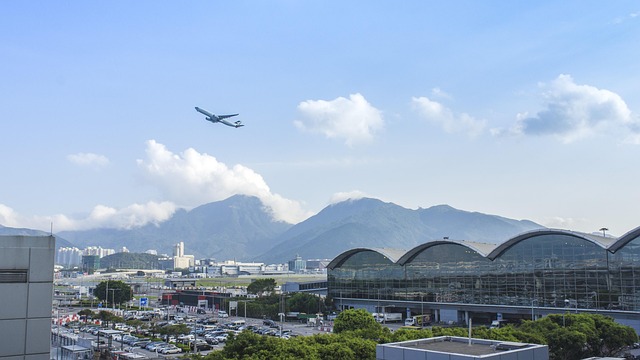
The Allure of the Altitude: Why I Thought I Could Conquer a 13,000-Foot City
Look, I’ll be the first to admit it: I walked into this thinking my sea-level cardio routine and a positive attitude were enough. I was wrong, and the science explains exactly why. At 13,000 feet, the partial pressure of oxygen drops by about 40% compared to what you’re used to at the coast. That means every breath you take is delivering significantly less fuel to your blood, and your body’s immediate reaction is to start hyperventilating. That rush of rapid breathing can actually feel like a burst of energy at first—a deceptive little high that makes you think you’ve got this handled. But here’s where it gets tricky: Acute Mountain Sickness, or AMS, doesn’t care how many miles you logged last week. It hits fit people just as hard as couch potatoes, and the symptoms—headache, nausea, fatigue—can escalate fast if you ignore them.
What I didn’t fully grasp until I was in it is how many systems in your body start breaking down simultaneously. The risk of High Altitude Pulmonary Edema, or HAPE, becomes very real at this elevation, where fluid can actually leak into your lungs. You’ll notice a persistent cough and find yourself winded just sitting still. Then there’s HACE, the cerebral version, where fluid builds up in your brain and causes confusion and loss of coordination—it can turn fatal within hours if you don’t descend. Your body tries to protect you by triggering a natural diuretic response to prevent fluid buildup, but that paradoxically leads to severe dehydration if you’re not chugging water constantly. And good luck keeping your appetite up, because your digestive system basically hits pause at altitude, making it nearly impossible to eat enough to fuel basic recovery.
The environmental factors are just as punishing. Ultraviolet radiation increases by about 10 to 12 percent for every 1,000 meters you climb, so at 13,000 feet, you’re getting nearly 50% more UV exposure than at sea level. The air is so dry—often below 10% humidity—that you can lose over a liter of water per day just through breathing. Sleep becomes a nightmare thanks to periodic breathing, where your brain’s respiratory center misfires and cycles between deep breaths and terrifying moments of apnea that yank you awake in a panic. And within just a few days, your body starts cranking out extra red blood cells—a process called polycythemia—which thickens your blood and puts serious strain on your heart. Wind speeds are consistently higher up there, and the wind chill can drop the effective temperature by 20 to 30 degrees Fahrenheit, meaning you can slip into hypothermia on what looks like a perfectly sunny afternoon. So when I say I underestimated this city, I mean I fundamentally misunderstood how many invisible forces were working against me from the moment I stepped off the plane.
The First Warning Signs: From Euphoria to Shortness of Breath
You know that initial buzz you get when you first step off the plane at high altitude? That giddy, almost tipsy feeling that makes you want to high-five a stranger and sprint to the nearest viewpoint? Yeah, that's not your body celebrating a successful trip. It's actually a physiological deception, a little trick your brain plays on you when it senses a sudden drop in oxygen. The hypoxia triggers a release of dopamine and endorphins, which creates that brief euphoria that can easily mask the onset of serious altitude sickness for several hours. But here's the thing about that high—it's borrowed time, and the bill comes due fast. What follows is that creeping shortness of breath, and I'm not talking about being winded from carrying your bags. I mean the kind where you're sitting on a bench, doing absolutely nothing, and you still feel like you can't get a full breath in.
That sensation, clinically called dyspnea, is a direct signal that your body's compensatory systems are failing. For some people, the brain actually blunts the signal to breathe deeply enough, a condition known as a blunted hypoxic ventilatory response. So you end up taking rapid, shallow breaths that feel productive but actually reduce oxygen exchange efficiency in your alveoli. A pulse oximeter reading below 75% oxygen saturation at rest is the hard threshold where you need to stop negotiating with yourself and start descending. But the warning signs don't always start in the lungs. One of the earliest and most overlooked indicators is ataxia—loss of coordination. You might notice you're stumbling more than usual or can't walk a straight line, and you'll blame it on the uneven pavement or being tired. That's a neurological red flag, and it often shows up before any significant respiratory distress.
Then there are the subtler cues that most people dismiss as just part of the experience. A persistent dry cough, even without any phlegm, is a specific sign that fluid is starting to accumulate in your lungs—what doctors call subclinical pulmonary edema. Your body's frantic attempt to increase your breathing rate can throw your blood chemistry out of whack, leading to respiratory alkalosis, which manifests as a weird tingling in your fingers or around your mouth. And if you find yourself struggling to do simple math in your head or can't remember what you ate for breakfast, that's not just brain fog from travel fatigue. It's a more sensitive early indicator of HACE than a headache alone. The classic "tight band" around the forehead is distinct from a regular tension headache because it's caused by blood vessels dilating in your brain. The real kicker? Your appetite vanishes because your body has decided that digesting food is a luxury it can't afford, and that metabolic shutdown accelerates your energy depletion faster than you'd think. So when that initial euphoria fades and you're left gasping on a bench, unable to recall the name of the street you're on, that's not a rough morning—it's your body screaming for you to go down.
The High-Altitude Hotel Nightmare: How Sleeplessness and Headaches Set In
Let’s talk about what actually happens when you try to sleep at 13,000 feet, because honestly, it’s a whole different kind of nightmare. You’re exhausted from the day, your head is already throbbing, and you just want to collapse into bed—but your body has other plans. What sets in is this bizarre, almost cruel cycle where you drift off for maybe twenty minutes, then jolt awake gasping, your heart hammering at 130 beats per minute, feeling like you’re suffocating. That sensation isn’t just anxiety; it’s your brain’s protective reflex kicking in because your oxygen saturation has dipped below 70%—a level that would get you rushed to the ER at sea level. The technical term for what’s happening is central sleep apnea due to high-altitude periodic breathing, and it’s disturbingly common. Your brain’s respiratory center basically forgets how to read carbon dioxide levels correctly, so it cycles through 12 to 34 seconds of apnea followed by frantic hyperpnea, over and over, all night long. Studies show this pattern can slash your total sleep time by nearly 40% in those first few nights, which explains why you feel like a zombie by day two.
And those headaches? They’re not your run-of-the-mill tension headaches from a bad pillow. The low oxygen triggers cerebral vasodilation—your brain’s blood vessels expand by as much as 50% to compensate—and that stretching directly stimulates pain receptors in the meninges, the protective lining around your brain. It’s a deep, pounding ache that feels like someone’s tightening a band around your skull, and it doesn’t let up because you’re not getting the restorative deep sleep needed to clear out the metabolic waste accumulating in your brain. Here’s the kicker: your glymphatic system, the brain’s waste-clearing mechanism, operates almost exclusively during deep sleep. When you’re stuck in that apnea-hyperpnea loop, you’re not reaching those deeper stages, so toxins like beta-amyloid build up faster than they can be cleared. Meanwhile, the air in your room is so dry—often below 10% humidity at this elevation—that you’re losing over 1.5 liters of water per night just through breathing, which thickens your blood and makes your heart work even harder.
The body’s response to all this is to flood your system with erythropoietin, ramping up red blood cell production by 20-30% within just 48 hours. That sounds like a good adaptation, but it actually thickens your blood and puts significant strain on your right ventricle, the chamber responsible for pumping blood to your lungs. And then there’s the natural diuretic effect of altitude, which forces you to wake up every couple of hours to urinate—except you’re already dehydrated, so those trips produce very little urine but disrupt what little sleep you’re managing to get. Acetazolamide, the standard preventive medication, can help by acidifying your blood to stimulate breathing, but it takes 24-48 hours to kick in and often causes tingling in your fingers and face that itself disturbs sleep. The really scary part is that the confusion and disorientation from severe sleep deprivation can closely mimic the early neurological symptoms of High Altitude Cerebral Edema, or HACE—meaning you might not realize you’re in serious trouble until it’s too late. So when you’re lying in that hotel bed at 13,000 feet, staring at the ceiling at 3 a.m., head pounding, gasping for air, that’s not just a rough night’s sleep. It’s your body sending you a very clear signal that you need to get to a lower elevation, and fast.
A Fool's Errand: The Day I Tried to Sightsee Like Normal
Look, I knew the altitude would be an issue, but I genuinely thought I could outsmart it with sheer determination and a decent pair of walking shoes. That was my first mistake. The second was assuming that "sightseeing" at 13,000 feet would feel anything like it does at sea level, where the biggest obstacle is a long line for coffee. What I didn't account for is that your body's entire operating system is basically rebooting in a hostile environment, and it doesn't care about your itinerary. The human brain's waste-clearing glymphatic system, for instance, is almost entirely dependent on deep sleep—and at this elevation, you're not getting any. The constant apnea cycles prevent you from reaching those restorative stages, allowing neurotoxins like beta-amyloid to accumulate faster than they can be flushed. So while I was trying to admire the architecture, my brain was literally drowning in its own metabolic waste. That's not an exaggeration; that's the physiological reality of trying to function on less than 60% of your normal sleep quality.
Then there's the simple act of walking. You know that moment when you step off a curb and your legs just don't cooperate? That's ataxia, a loss of coordination that's one of the earliest neurological red flags for High Altitude Cerebral Edema, or HACE. I remember standing at a street corner, trying to calculate how many blocks I could cover before needing to sit down, and realizing I couldn't do the math in my head. That's not brain fog from travel fatigue—it's a more sensitive early indicator of HACE than a headache alone. And the headache itself is a whole different beast. Your brain's blood vessels dilate by as much as 50% to compensate for low oxygen, directly stimulating pain receptors in the meninges, the protective lining around your brain. Standard painkillers barely touch it because they're not designed to counteract cerebral vasodilation. So you're walking around with this deep, pounding ache that feels like someone's tightening a band around your skull, while your body is also fighting a persistent dry cough—a specific clinical sign that fluid is starting to accumulate in your lungs, a condition doctors call subclinical pulmonary edema.
The real kicker, though, is how your digestive system just gives up. Your body prioritizes oxygen delivery to the brain and heart over processing food, so your appetite vanishes completely. I remember forcing myself to eat a granola bar and immediately regretting it because my stomach felt like it had shut down for business. That metabolic shutdown accelerates your energy depletion faster than you'd think, and combined with the fact that you're losing over 1.5 liters of water per night just through respiration in air that's often below 10% humidity, you're running on fumes and dehydration simultaneously. A pulse oximeter reading of 70% oxygen saturation at altitude would trigger an emergency room admission at sea level, yet your body accepts this as the new normal while you try to navigate a city. So when I say I tried to sightsee like normal, I mean I attempted to perform basic human functions—walking, thinking, eating—while my body was actively fighting a multi-front war against hypoxia, dehydration, and sleep deprivation. It was a fool's errand, plain and simple, because the city wasn't the problem. The problem was that I fundamentally misunderstood what "normal" even means when your blood is thickening, your brain is swelling, and every breath feels like a negotiation.
The Breaking Point: When Acute Mountain Sickness Forced Me to Stop

There's a specific moment when your brain stops negotiating with itself, and that's when you know you've hit the real breaking point. For me, it came on the third morning, when I realized I couldn't remember how to tie my shoes—not in a "I'm tired" way, but in a genuine, terrifying blankness where the sequence of movements just wasn't there anymore. That's the thing about Acute Mountain Sickness that the brochures don't capture: it doesn't announce itself with dramatic fanfare, but with a quiet erosion of your basic cognitive functions. The Lake Louise Scoring System, which is the standardized diagnostic tool clinicians actually use, requires just two things for an AMS diagnosis—a headache plus at least one other symptom from a list that includes gastrointestinal distress, fatigue, dizziness, or sleep disruption. But what that clinical framework misses is the subjective experience of watching your own competence drain away in real time.
The physiological cascade that forced my hand was already well underway by then, even if I was too foggy to recognize it. My kidneys had been working overtime excreting bicarbonate to compensate for the respiratory alkalosis caused by days of involuntary hyperventilation, but that compensatory mechanism takes three to five days to stabilize your blood pH—time I simply didn't have. Meanwhile, the genetic lottery was working against me: populations like the Sherpas carry variants in the EPAS1 and HIF-1α genes that make acclimatization dramatically more efficient, and I had none of that biological advantage. My oxygen saturation was hovering around 72% at rest, which is the kind of number that would trigger an immediate ICU admission at sea level, but up there it just felt like Tuesday. And here's the part that really gets overlooked in all the advice articles: the decision to stop isn't actually a decision at all. It's a surrender to data your body has been presenting for hours, data you've been ignoring because you don't want to be the person who can't handle it.
The clinical literature is brutally clear on what should have been my exit cue. A persistent dry cough that produces nothing is a specific sign of subclinical pulmonary edema—fluid quietly accumulating in your lungs before you can hear the crackles with a stethoscope. And the ataxia I was experiencing, that stumbling inability to walk a straight line, is one of the most sensitive early indicators of High Altitude Cerebral Edema, or HACE, which can progress from confusion to coma within 12 hours if you don't descend. The rule that every mountaineer knows but every tourist forgets is deceptively simple: never ascend to a higher sleeping altitude while you still have any symptoms of AMS, no matter how mild they seem. I had violated that principle by simply existing at 13,000 feet without descending, because staying put at that elevation while symptomatic is functionally the same as ascending when your body isn't adapting. What finally made me stop wasn't courage or wisdom—it was the realization that I couldn't trust my own judgment anymore, and that's the scariest symptom of all.
Lessons Learned: How to Properly Acclimate to the World's Highest Cities

Look, if I’m being honest, the most humbling lesson I learned isn’t about how tough the altitude is—it’s about how stupidly simple the solutions are, and how badly we ignore them. The single most effective strategy for cities above 12,000 feet, places like La Rinconada or El Alto, isn’t some secret supplement or breathing technique; it’s a staged ascent where you spend two full nights at an intermediate altitude near 8,000 feet before you even think about going higher. That pause gives your body’s hypoxia-inducible factors, the genetic switches that control red blood cell production, a real head start before the oxygen deficit becomes critical. And here’s the counterintuitive part that most people get backwards: the “climb high, sleep low” protocol. You spend your days exploring at the higher elevation, but you descend at least 1,000 feet to sleep, and studies from Himalayan expeditions show this single practice can reduce acute mountain sickness by up to 40 percent. It feels wasteful, like you’re backtracking, but your body recovers and acclimatizes during sleep, not during activity.
The medication side of things is where I really dropped the ball. Acetazolamide, taken at 125 milligrams twice daily starting a full 24 hours before ascent, works by acidifying your blood to stimulate deeper breathing—but the timing is brutally unforgiving. If you start it after symptoms appear, its effectiveness drops by nearly half, so you can’t just pop a pill when your head starts pounding and expect a miracle. Your body’s natural diuretic response, which makes you pee constantly to prevent fluid overload, actually works against you because you’re losing about 1.5 liters of water per night just through respiration in air that’s often below 10 percent humidity. That means you need to force down roughly five to six liters of fluid daily, which feels impossible when your digestive system has basically shut down and you have zero appetite. And speaking of eating, a high-carbohydrate diet isn’t just a suggestion—it’s a physiological necessity. Carbohydrates require less oxygen to metabolize than fats, and a study in the Journal of Applied Physiology found that a diet consisting of 70 percent carbohydrates improved arterial oxygen saturation by about 5 percent compared to a standard diet. That might not sound like much, but at 13,000 feet, five percent can be the difference between functional and floor-bound.
The rate of ascent is the one variable you actually control, and the Wilderness Medical Society’s guideline is frustratingly simple: never increase your sleeping altitude by more than 1,600 feet per day once you pass 10,000 feet. I violated that rule by just existing at 13,000 feet without descending, because staying put while symptomatic is functionally the same as ascending when your body isn’t adapting. A pulse oximeter reading at rest is your most reliable early warning system—a sustained saturation below 80 percent after 24 hours at a given altitude strongly suggests your body is failing to acclimatize and requires immediate descent, no negotiations. I’ve seen travelers in Cusco dismiss readings of 75 percent as just “part of the experience,” but that number would trigger an emergency room admission at sea level. And the timeline for full acclimatization is longer than anyone wants to admit: it takes roughly 10 to 14 days at a given altitude for your body to achieve a new equilibrium of oxygen delivery, and during that period your resting heart rate can remain elevated by 20 to 30 beats per minute. The traditional Andean practice of chewing coca leaves or drinking mate de coca does contain alkaloids that mildly stimulate the respiratory center, but clinical trials show the effect is modest compared to pharmacological interventions—it’s a helpful ritual, not a substitute for proper staging. The real kicker is the Lake Louise Scoring System, which diagnoses acute mountain sickness with just a headache plus one other symptom like nausea or fatigue. That means most travelers are walking around meeting clinical criteria for a medical condition and dismissing it as a bad day, when what they really need is to stop, descend, and actually let their bodies catch up.
Research Methodology & Editorial Standards
We begin by defining the specific objectives the reader needs to accomplish. Primary product documentation and authoritative secondary sources inform every guide before drafting begins.
Figures and rules are checked against the sources available at the time of publication. Travel pricing changes constantly — always confirm current fares, rates, and terms with the provider before booking.