
Southwest 2026 bag fees: $70 round-trip for one checked bag, $160 for two
When you compare options, price the exact itinerary with and without the checked bag in the same booking flow, then read the total after each change.
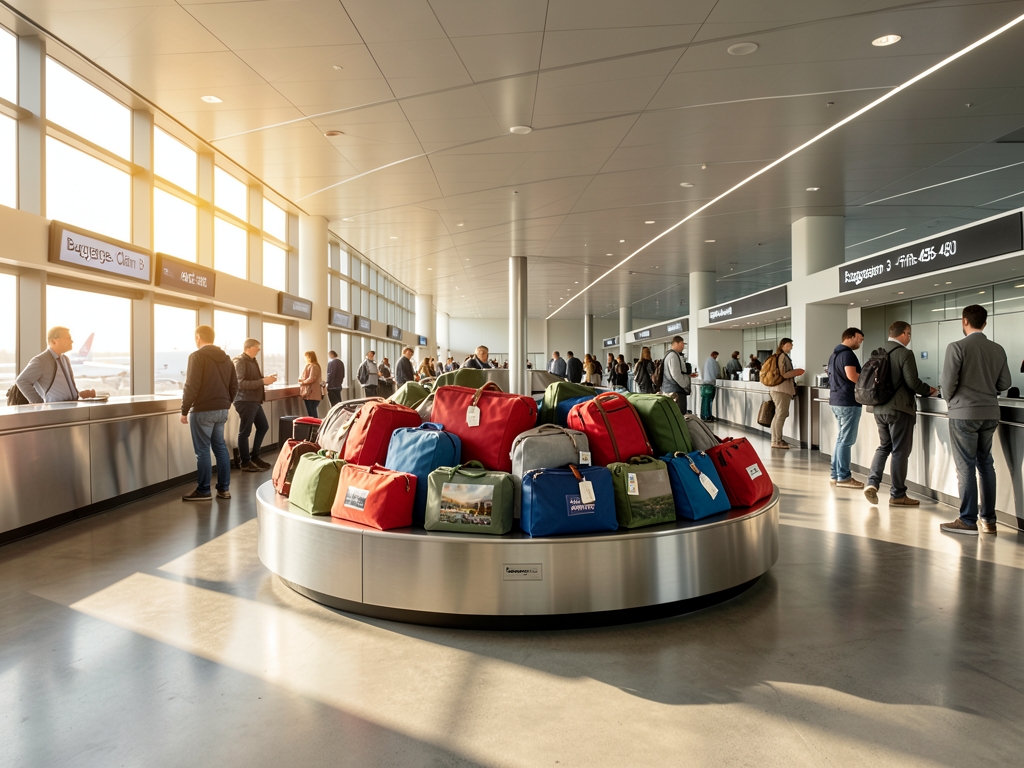
When you compare options, price the exact itinerary with and without the checked bag in the same booking flow, then read the total after each change. If you add a bag, watch whether the checkout adds the charge once or in both directions; if you remove it, confirm the total drops by the same structure. The practical rule is to book the lower displayed total, not a remembered bag number, and to keep the bag charge attached to the ticket you are about to buy.
What the published sources actually say
One Mile at a Time (May 28, 2025) reported $35 for a first checked bag and $45 for a second. The other sources cited here do not publish an independent fee schedule, so treat those two levels as the primary figures and verify the live fee at booking.
My Baggage's allowance page still describes two checked bags free of charge per ticketed customer when the bags do not exceed 50 lbs and 62 inches (L+W+H). It also lists overweight charges of $100 for 51–70 lbs and $125 for 71–100 lbs. Because that page predates or omits the fee change, its size and weight details can remain useful while its price description cannot be treated as current.
| Source | Figure or rule it gives | How to read it |
|---|---|---|
| One Mile at a Time (May 28, 2025) | $35 first checked bag; $45 second checked bag | Primary fee levels repeated across coverage |
| My Baggage allowance page | Two checked bags free if no more than 50 lbs and 62 in; overweight $100 (51–70 lbs) or $125 (71–100 lbs) | Size and weight rules; price may be stale |
| Fondtravels | Confirms 50 lb and 62 in limits; still describes the allowance as free | Dimension check; verify any fee live |
| Thrifty Traveler | Checked bags up to 50 lbs; total size not more than 62 in | Dimension check only |
Fondtravels and Thrifty Traveler both confirm the 50 lb and 62 inch limits, but they do not settle the fee question in the same way. Fondtravels still frames Southwest's allowance as two free checked bags, while the Thrifty Traveler material cited here states the weight and size limits without presenting a fee schedule. Coverage therefore converges on dimensions more clearly than on price.
The useful distinction is between a durable rule and a volatile price. Weight and size limits are repeated consistently, while the fee description depends on when the page was written and whether it reflects the newer checked-bag charge. That is why the fee should be verified in the booking flow for the exact itinerary rather than copied from an allowance page.
Pay, pack light, or ship: options compared
This section compares the three strategies side by side. The practical rule is to price the exact itinerary with and without a checked bag, compare that total with shipping or carry-on-only packing, and book the cheaper total rather than the headline fee. Treat the comparison as a total-cost check, not a fee check.
Option A is to pay for one checked bag round-trip: $70 total on a Wanna Get Away fare. Option B is carry-on only: $0 in bag fees, but the carry-on must fit 24 x 16 x 10 inches and the personal item 18.5 x 8.5 x 13.5 inches, per My Baggage. If both items fit, the paid option has no cost advantage; if a second checked bag is needed, the paid total rises and the carry-on advantage widens.
| Strategy | Cost | Constraint or condition |
|---|---|---|
| Pay one checked bag round-trip | $70 total | Wanna Get Away fare; verify the live fee at booking |
| Carry-on only | $0 bag fees | 24 x 16 x 10 in carry-on; 18.5 x 8.5 x 13.5 in personal item |
| Ship the bag | Quote vs. $70 | Wins only if the trip is long enough that one bag fee is exceeded and the shipment is one-way |
Option C is to ship the bag through a luggage service. Price that quote against the $70 round-trip bag cost; shipping wins only when the trip is long enough that one bag fee is exceeded and the shipment is one-way. A round-trip shipment, or any quote above the bag cost, leaves the paid option cheaper.
Carry-on only at $0 beats the $70 paid option and any shipping quote unless the trip requires checked-bag capacity. Measure both bags at home, including wheels and handles, because a bag that misses the carry-on or personal-item limit can erase the $0 advantage.
Because the "$84 total" framing only holds if you verify the live fee at booking, reprice the exact itinerary before purchase and choose the lower total. If the live fee differs, rerun the same three-way comparison with the new number.
The numbers that decide pay vs pack
For 2026 Southwest itineraries, make the first check a shipping quote, not a guess at the airport. Price the exact trip with the checked bag, then get a quote to ship that same bag before check-in. If the shipping quote exceeds $70, paying the one-bag round-trip baseline is the cheaper total; if it does not, shipping may be the better use of the money. Get the quote before check-in, not after, when the choice has narrowed.
Keep the comparison clean. Use the same itinerary, the same travel dates, and the same number of bags on both sides; a quote built from a different trip is not a break-even test. That baseline is a round-trip total to place beside the shipping quote, not a prompt to skip checking the live total when you book. A threshold only works when both numbers describe the same job.
Weight is the next threshold. My Baggage says checked bags must not exceed 50 lbs and lists overweight charges of $100 for 51–70 lbs and $125 for 71–100 lbs. Both penalties are larger than the one-bag round-trip baseline, so repacking to get the bag to 50 lbs or less can save more than the base fee itself. Weigh the packed bag at home, before the counter adds a charge.
Size needs its own measurement. My Baggage lists 62 inches as the limit when length, width, and height are added together, and says oversized baggage larger than 62 inches, up to 80 inches, incurs an additional charge. Because that charge is additional, a 63-inch bag can cost more than the $35 base fee reported by One Mile at a Time. Measure L+W+H with a tape measure and write the sum down.
Do the quote, weigh-in, and measurement before you pay. If the bag misses either published limit, do not treat the base fee as the final number; fix the weight or size first, or the break-even math changes. These checks turn “pay versus pack” into arithmetic you can verify, not a gamble at the counter.
What the fee coverage does not establish
This section alone lists the gaps: no confirmed $84 total, no confirmed free-bag exception, and no confirmed waiver rules. No source in the available sources confirms an "$84 total" for a round-trip checked bag. Using the cited per-direction levels of $35 and $45, one checked bag round-trip is $70 and two checked bags round-trip is $160, so any $84 figure must be verified on the live booking screen rather than assumed.
The available sources also does not establish any free-bag exception. Some pages still describe two free checked bags, but the provided material does not confirm whether a co-branded card, elite status, fare bundle, or another condition waives the fee. Rely on Southwest's current baggage page and your fare rules instead of older "two free bags" statements.
The available sources does not establish how bag fees interact with changes or cancellations. Whether a fee is refunded, retained, or recharged after a change is not stated in the provided sources, so confirm that detail in the fare rules or on your receipt before booking.
| Gap in coverage | What to verify before paying |
|---|---|
| No confirmed $84 round-trip total | Live bag-fee total on the booking screen; cited levels imply $70 for one bag and $160 for two bags round-trip |
| No confirmed free-bag exception | Current Southwest baggage page and fare rules for card, status, or bundle waivers |
| No confirmed change/cancel interaction | Fare rules and receipt for refund or recharge of bag fees |
Do not treat the absence of a confirmed exception as proof that no exception exists; it means only that the provided coverage does not establish one. Because these are gaps rather than answers, price the exact itinerary with and without the checked bag, compare that total with shipping or carry-on-only packing, and book the cheaper total. If a waiver or an $84 total appears, verify it live before you pay.
One bag, round-trip, two travelers
For two travelers on a 2026 Southwest round-trip Wanna Get Away itinerary with one checked bag each, use the $35 one-way first-bag figure reported by One Mile at a Time as the benchmark, then verify the live line item on the exact itinerary. The bag charges sit on top of the fare, so keep them in a separate column while you price the trip.
| Leg | Math | Bag fees |
|---|---|---|
| Outbound (one-way) | 2 travelers x $35 | $70 |
| Return (one-way) | 2 travelers x $35 | $70 |
| Round-trip total | $70 + $70 | $140 |
Checkpoint 1 is the fare bundle at checkout. Wanna Get Away is the bundle in this example; if the cart shows a higher bundle, read the checked-bag line item on that exact itinerary, because the fee level may differ by bundle. Do not let a marketing page stand in for the cart. I want the number Southwest is actually asking me to pay on this trip, with these travelers and this bag count, before I decide whether the add-on makes sense.
Checkpoint 2 is the scale at home. My Baggage lists a 50 lb limit and a $100 overweight charge for bags in the 51-70 lb range; a 52-lb bag therefore turns a $35 one-way bag fee into $135 on that leg. That is why I repack to 50 lbs or under before I leave, then weigh again after the last item goes in. If the bag is over, the airport is the worst place to discover it.
Pre-booking checklist: [ ] fare bundle confirmed at checkout; [ ] checked-bag line item read on the exact itinerary; [ ] itinerary priced with and without the checked bag; [ ] shipping quote checked for the same bag; [ ] carry-on-only option tested with the bag you would really bring; [ ] lower verified total booked, not the headline fare. I do this before paying any bag fee, because the right answer is the cheaper total I can document, not the total I assumed from the fare page.
Decision rules for paying vs packing light
Use a simple cost check before you commit to any bag option: price the exact itinerary with the bag, without the bag, and with a shipping quote, then book the lowest total. These if/then rules turn that comparison into a quick decision at booking instead of a guess at the airport. The goal is not to avoid every fee automatically, but to pay only when the checked-bag total is the cheapest way to move what you actually need.
If your trip is four days or fewer and everything fits in a carry-on, pack light. My Baggage lists Southwest's carry-on limit as 24 x 16 x 10 inches, so measure the bag you plan to bring, including wheels and handles, before you assume it qualifies. Skipping a checked bag keeps that cost at $0, which beats the $70 round-trip total for one checked bag on a Wanna Get Away fare.
If you need one checked bag, request a door-to-door shipping quote for the same travel dates before you pay the airline fee. When that shipping quote exceeds $70 round-trip, pay the $35-each-way first-bag fee at booking instead of shipping. Make the comparison on matching terms: the shipping quote should cover pickup, transit, and delivery for the dates you need the bag, and the airline total should reflect your full round-trip itinerary. A shipping quote that looks cheaper on the surface can lose its advantage once you add packaging, insurance, or missed-delivery costs, so compare final totals rather than base rates.
If any checked bag weighs more than 50 pounds, repack before you leave for the airport. According to My Baggage, Southwest accepts checked bags up to 50 pounds and charges $100 for overweight bags weighing 51 to 70 pounds. That $100 overweight charge dwarfs the $35 base bag fee, so a scale check at home can prevent a costly counter surprise.
Before you pay, confirm the live bag fee shown during booking for your exact itinerary. If the displayed fee differs from the $35-each-way first-bag fee reported by One Mile at a Time, rerun the same checks with the updated total and choose the lower-cost option. The fee you verify at booking is the number that belongs in your comparison, not a figure remembered from an earlier trip or a headline.
Also worth reading Southwest checked bag fees 2026 JetBlue checked bag fees 2026: $50 JetBlue checked bag fees 2026: $45
What to do next
| Step | Action | Why it matters |
|---|---|---|
| 1 | At booking, verify the live Southwest checked-bag fee for your Wanna Get Away itinerary instead of relying on the $84 total or the $70 round-trip first-bag total. | The $35 first-bag and $45 second-bag figures are stated as of May 28, 2025 and can change. |
| 2 | Price the exact same itinerary with one checked bag and with no checked bag. | This isolates the true incremental cost of checking a bag. |
| 3 | Compare both totals with shipping the bag or packing carry-on only, while checking the 50-pound and 62-inch L+W+H limits. | This prevents paying for an oversized or overweight bag or an unnecessary fee. |
| 4 | If you need two checked bags, use the $160 round-trip two-bag total in the comparison, not $84. | The headline total is not the two-bag cost. |
| 5 | Book the cheaper total, not the cheaper fare. | This follows the canonical decision rule. |
| 6 | Recheck the fee and size/weight limits before final payment for 2026 travel. | Live terms may differ from the May 28, 2025 figures. |
Frequently Asked Questions
How should I compare prices when deciding whether to add a checked bag?
Price the exact itinerary with and without the checked bag in the same booking flow, then read the total after each change.
What should I check in the checkout total after adding a checked bag?
If you add a bag, watch whether the checkout adds the charge once or in both directions; if you remove it, confirm the total drops by the same structure.
Which source should be used as the primary reference for checked bag fee levels?
One Mile at a Time reported the first and second checked bag fee levels, and because the other sources cited here do not publish an independent fee schedule, those two levels should be treated as the primary figures and verified at booking.
What bag size and weight limits does My Baggage's allowance page list for checked bags?
My Baggage's allowance page describes two checked bags free of charge per ticketed customer when the bags do not exceed 50 lbs and 62 inches (L+W+H).
Can the pricing information on My Baggage's allowance page be treated as current?
Because My Baggage's allowance page predates or omits the fee change, its size and weight details can remain useful while its price description cannot be treated as current.
What overweight bag weight ranges are listed on My Baggage's allowance page?
My Baggage's allowance page lists overweight charges for bags weighing 51–70 lbs and for bags weighing 71–100 lbs.
Quick answers
| What did One Mile at a Time report for a first checked bag? | It reported the $35 figure for a first checked bag. |
| What did One Mile at a Time report for a second checked bag? | It reported the $45 figure for a second checked bag. |
| What does My Baggage's allowance page still describe about checked bags? | It still describes two checked bags free of charge per ticketed customer when the bags do not exceed 50 lbs and 62 inches (L+W+H). |
| What overweight charges does My Baggage list? | It lists overweight charges of the $100 figure for 51–70 lbs and the $125 figure for 71–100 lbs. |
| What practical rule does the article give for booking? | The practical rule is to book the lower displayed total, not a remembered bag number, and to keep the bag charge attached to the ticket you are about to buy. |
Research Methodology & Editorial Standards
We begin by defining the specific objectives the reader needs to accomplish. Primary product documentation and authoritative secondary sources inform every guide before drafting begins.
Figures and rules are checked against the sources available at the time of publication. Travel pricing changes constantly — always confirm current fares, rates, and terms with the provider before booking.