
JetBlue checked bag fees 2026: $45 first bag or credit card exception
JetBlue checked bag fees in 2026 run $45–$59 for a first bag, but several rules can erase that charge. The answer changes if your route is transatlantic, you hold Mosaic status or a JetBlue credit card, or you book Blue Plus.
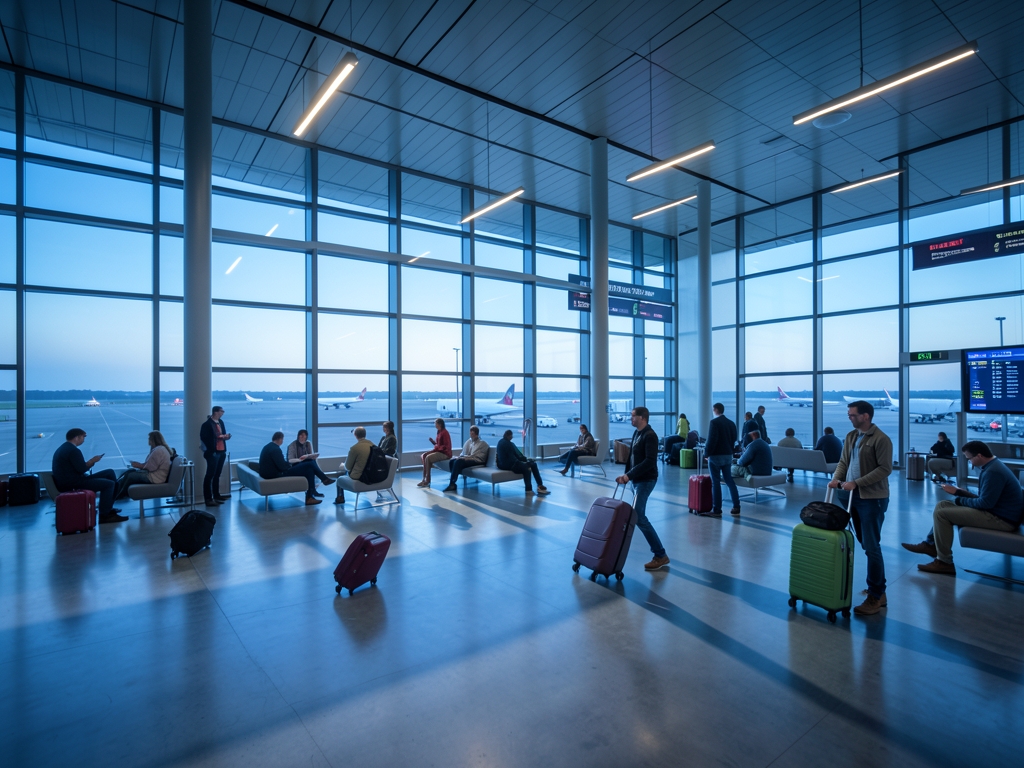
JetBlue checked bag fees in 2026 run $45–$59 for a first bag, but several rules can erase that charge.
The answer changes if your route is transatlantic, you hold Mosaic status or a JetBlue credit card, or you book Blue Plus.
How JetBlue's 2026 bag fee works
JetBlue’s 2026 first checked bag is not a flat fee. The price moves with two things: the route you’re flying and when you pay. Kiwitours’ 2026 rules summary puts the first-bag range at $45 to $59, depending on the date and when you pay — but the source does not break down which payment point lands at which end of that band. That timing mechanism is the part most travelers miss: the same bag on the same trip can cost more depending on when you pay, so compare the fee JetBlue shows at booking against the airport counter price before you commit.
Start with the fare bucket, not the total price you paid. According to Upgraded Points, Blue, Blue Basic, and Blue Extra do not include a checked bag, while Blue Plus includes one. That means a discounted Blue Basic ticket and a pricier Blue Extra ticket can land in the same place at the bag drop: both need a paid bag unless some other benefit applies. Before you compare fares, check the fare name printed beside the price and ask whether that bucket includes a bag.
Next, check who you are on the account, not just what you bought. Upgraded Points lists select JetBlue credit card holders, Mint passengers, and Mosaic members among travelers who get checked bags included. If you hold one of those benefits, the paid-bag question changes: you can book the cheapest fare that still works for your trip and avoid building the bag fee into a higher fare choice. If you’re relying on a card benefit, confirm the current bag allowance in your card terms before checkout, because the exact count is not something to assume from the card’s name alone.
Route is the first filter in the order of operations. Valor Flights notes that JetBlue continues to include a free first checked bag on transatlantic routes, including travel connecting through JFK or BOS to London. So before you enter a card number for a bag, look at the itinerary itself. A transatlantic routing can remove the fee even when the fare bucket would otherwise require one.
For other markets, JetBlue’s own “Bag Limitations for Select Markets” page adds route-specific checks. For Ecuador, the Dominican Republic, Guyana, Haiti, and Trinidad & Tobago, JetBlue lists a 62-inch overall dimension limit and overweight fees above 50 pounds, with bags over 70 pounds not accepted. The page also notes that a third bag or more can only be added at the airport or during check-in for the Dominican Republic and for Guyana, Haiti, and Trinidad & Tobago, and that from Nov 16 to Jan 15, customers on those Guyana, Haiti, and Trinidad & Tobago routes may check a maximum of two bags. For the U.K./Europe, JetBlue lists a third-bag fee of $200/£150/€185. These are separate from the first-bag decision, but they matter if you’re packing for more than one checked piece.
The practical rule is simple: price the bag before you pay it. Check the route, then your status or card benefit, then the fare bucket, then the payment channel. If none of those removes the fee, paying online at booking is the lower-cost end of the Kiwitours range compared with paying at the airport. That is the decision the $45–$59 mechanism creates: not whether JetBlue charges for bags, but whether you let the fee attach at the most expensive moment.
The evidence: fee figures that converge
When you stack the published sources side by side, the first-bag numbers stop looking like scattered anecdotes and start looking like a band. Kiwitours is the only source in this set that publishes the full span for 2026: it puts a first checked bag at $45–$59, paired with the standard 50 lb / 62 linear inch limit. That single range is the anchor for the convergence — not one price quoted as universal, but a documented ceiling and floor from one named source.
Above that base band sits a separate penalty tier, and Thrifty Traveler is the source that names it. It reports a $150 per bag surcharge for bags measuring 63–80 linear inches and for bags that cross the weight allowance. Treat that as a different decision from the first-bag question: the base charge buys you a standard bag, while the surcharge is what a bag outside the standard dimensions or weight triggers. If your luggage is close to the line, measure length plus width plus height before you assume the lower figure applies to you.
The international side is priced on its own track, which is why a domestic band should not be carried over to every itinerary. JetBlue’s own bag limitations page states that on U.K./Europe flights the fee for a third or more checked bag is $200/£150/€185, and that a third bag can only be added at the airport or during check-in. The page also sets a 62-inch overall limit and a 50 lb overweight threshold for those markets, with bags over 70 lb not accepted. That confirms the airline maintains market-specific fee schedules rather than extending one domestic number across all routes.
| Source | What it establishes | Where it fits in your check |
|---|---|---|
| Kiwitours | Full 2026 first-bag band of $45–$59; 50 lb / 62 linear inch standard limit | Only source giving the complete price span |
| Thrifty Traveler | $150 per bag for 63–80 linear inches and for overweight bags | Penalty tier above the base band |
| JetBlue.com bag limitations page | U.K./Europe third-bag fee of $200/£150/€185; market-specific limits | Proof international fees are set separately |
The practical read is that these sources converge on a structure, not on a single checkout total. One source supplies the full first-bag band, another supplies the oversize and overweight tier, and the airline itself supplies the separate international schedule. None of them, in this set, gives you the exact per-route tier for your specific trip — so use the band as your budget envelope and verify the final amount at the moment you pay.
That is also why the order of operations matters more than the headline number. Before you accept any charge, confirm whether your itinerary falls under a market with its own published schedule, then check whether your bag stays inside the standard dimensions and weight. Only after those two checks should you treat the first-bag band as a cost you are actually facing rather than a cost you might avoid.

Options compared: pay vs. restructure
Once you have ruled out a transatlantic itinerary, the decision comes down to three structures: pay the bag fee, buy a fare that bundles it, or let a card or status carry it. The explicit winner for frequent JetBlue flyers is the credit card or Mosaic route, because the bag rides along with you regardless of fare bucket. Blue Plus only wins when its fare premium stays below the fee you would otherwise pay.
Option A — pay the fee. Kiwitours puts the 2026 first bag somewhere in the $45–$59 band depending on route and when you pay, so budget at least $45 each way on a domestic itinerary. One bag, round-trip, means roughly $90 or more in fees on top of whatever fare you bought. That is the baseline to beat. Before you accept it, confirm the exact amount JetBlue shows at booking or in your confirmation, since the source range moves with route and payment timing.
Option B — Blue Plus. Upgraded Points lists Blue Plus as the fare that includes one checked bag, while Blue, Blue Basic, and Blue Extra do not. The check is simple arithmetic at the booking screen: compare the Blue Plus price against the cheaper fare in the same search. If the Blue Plus premium is under $45 one-way, or under $90 round-trip, the bundled bag is the better buy. If the premium runs higher, paying the fee separately costs less. Do this comparison before you choose, because the premium changes by flight and date.
Option C — card or Mosaic status. Upgraded Points also notes that select JetBlue credit card holders, Mint customers, and Mosaic members get checked bag benefits. When you hold one of those benefits, book the cheapest Blue Basic fare available and let the card or status cover the bag. You are not paying a fare premium for a bundle you already have through another channel. This is the route that beats both paying out of pocket and upgrading to Blue Plus for the bag alone.
One caution on the card path: FOX 2 has flagged that travelers sometimes assume a credit card free-bag benefit applies when it does not. Verify the specific card's current bag allowance in its guide benefits before you rely on it, then check that the benefit shows on your reservation. The cardholder benefit and Mosaic treatment are not interchangeable, so confirm which one you actually hold.
The practical order is: check the route, check your status and card, then price Blue Plus against the lowest fare. If a card or Mosaic covers the bag, take Blue Basic and move on. If not, buy Blue Plus only while its premium stays under the per-bag fee you would otherwise pay. Otherwise, pay the fee and keep the cheaper fare.

Costs and numbers that matter
Start with the base number you are trying to avoid. Kiwitours’ 2026 rules summary puts JetBlue’s first checked bag at $45 to $59 one-way, with the exact figure tied to the date and when you pay. The source does not publish which payment point hits which end of the band, so the first practical check is timing: compare the fee JetBlue shows at booking against the airport counter price before you travel, and settle the bag early if booking is the cheaper option.
The number that changes the trip math is the penalty tier. SendMyBag states that a bag over JetBlue’s permitted weight is charged $150 per bag, and Thrifty Traveler puts the same $150 apiece on bags measuring 63 to 80 linear inches. Against a $45 base fee, that is $150 ÷ $45 = 3.33 repeating, or about 3.3 times as much; against the $59 top of the published range, it is $150 ÷ $59 = 2.54 repeating, or about 2.5 times. Either way, a $150 hit dwarfs the base fee, which is why a cheap luggage scale is the highest-return item in this whole calculation — it pays for itself the first time it keeps one bag under the limit.
The hard thresholds are worth writing down before you pack. Kiwitours gives the standard checked-bag ceiling as 50 lb (about 22.7 kg) and 62 inches. Stay at or under both and you are in the ordinary-fee lane; cross either one and the $150 surcharge described by SendMyBag and Thrifty Traveler is the number to plan around. Linear inches means length plus width plus height, so a bag that looks fine in the closet can still fail the tape measure once all three dimensions are added.
Some markets add a harder stop. JetBlue’s own “Bag Limitations for Select Markets” page says that on flights to or from Ecuador, the Dominican Republic, Guyana, Haiti, and Trinidad & Tobago, bags over 70 lb (31.75 kg) are not accepted at all. Those routes also apply overweight fees above 50 lb (22.73 kg) and hold bags to 62 inches (157.48 cm) overall. On those itineraries, the question is not whether to pay $150 — it is whether you can repack before the bag reaches the scale.
One more route-specific check belongs in the same pass: JetBlue’s select-market page notes that boxes and plastic bins are not accepted on international flights, and that third or additional checked bags on several of those markets can only be added at the airport or during check-in, with excess bag fees applying. If your packing plan involves a rigid container or more than two bags on one of those routes, resolve it before you leave home.
The working rule is simple: weigh and measure first, then decide what the bag costs. A $45 to $59 one-way base fee is a manageable line item; a $150 overweight or oversized surcharge is the mistake to engineer around, and a bag over 70 lb on the listed markets is the mistake you may not be allowed to make at all.

What the evidence does not establish
There is an honest gap in what the published material supports, and it matters before you hand over any bag fee. The sources converge on a first-bag band, but they do not publish the exact per-route fee tiers behind it. Kiwitours ties the $45–$59 range to the date and when you pay, without laying out which city pairs land at which price. That means the split is a check you still have to run, not a number you can safely memorize. Before booking, open JetBlue’s Checked Bags fee page and look up your specific origin and destination rather than assuming the low end of the range applies to your trip.
The same caution applies to the credit card free-bag benefit. Upgraded Points reports that select JetBlue credit card holders, along with Mint and Mosaic customers, get checked-bag coverage, but the material here does not spell out the current bag count or settle whether a Blue Basic ticket keeps that benefit. Recent coverage flagged the issue directly — FOX 2’s report, “Got free checked bags via your credit card? You sure about that?”, is a warning that cardholder assumptions have outlived the rules. Verify on jetblue.com or your card benefits page before you count the bag as free; do not rely on memory, an old blog post, or the card’s marketing name.
That verification step changes how you should sequence a booking. If the card benefit or Mosaic coverage checks out for your fare, the cheapest Blue Basic fare may be the rational buy, because the bag is already covered outside the ticket. If the benefits page does not confirm coverage for the fare you are considering, price the bag-inclusive alternative before committing. Blue Plus includes one checked bag according to Upgraded Points, while Blue, Blue Basic, and Blue Extra do not — so the comparison is between a confirmed external benefit and a fare that bundles the bag.
What the available sources also does not establish is second-bag 2026 pricing. The $45–$59 figure is a first-bag range only; it is not a per-bag rate you can multiply by the number of bags in your party. For a second bag, use JetBlue’s own checked-bag fee page as the source of truth, and note that select markets have their own rules. JetBlue’s Bag Limitations for Select Markets page says Ecuador allows a maximum of two checked bags per customer, while Guyana, Haiti, and Trinidad & Tobago have a seasonal two-bag maximum, and U.K./Europe lists a separate fee for a third or more bag.
Those market pages also give you a concrete dimensional check that is worth running regardless of what you pay. JetBlue’s select-market guidance uses 62 inches overall for checked bags and describes overall dimensions as length plus width plus height; it also notes that boxes and plastic bins are not accepted on international flights. SendMyBag and Thrifty Traveler both report a $150 charge for bags over the permitted weight or size, with Thrifty Traveler specifying bags between 63 and 80 linear inches. None of that tells you your route’s first-bag tier, but it does tell you which avoidable add-on to rule out before you pay the base fee at all.

JFK–LAX with one bag
On a JFK–LAX itinerary with one checked bag, start by reading the fare name, not the price. If the quote is Blue Basic, Upgraded Points groups Blue Basic with fares that do not include checked baggage, so the suitcase is an add-on from the first screen; the low fare is not a bundled bag.
Checkpoint two is timing. Kiwitours’ 2026 rules put the first checked bag at $45 to $59 depending on when you pay. The source does not say which payment point lands at which end of that band, so check the price in JetBlue’s booking flow before you fly rather than assuming the airport will match it — paying late can move you within or above the published band, never below it.
Checkpoint three is weight before you leave home. Kiwitours lists a 50 lb checked-bag limit, and sendmybag’s JetBlue fee page charges $150 per bag for overweight baggage. A 52 lb suitcase is therefore 2 lb over before you reach the terminal; repack to 50 lb or treat the $150 as part of the trip cost.
| Checkpoint | Verify | Cost of being wrong |
|---|---|---|
| Fare class | Blue Basic includes no checked bag | Pay the bag fee you thought was included |
| Fee timing | Add the bag at booking, not at the kiosk | $14 one way / $28 round trip |
| Weight | 50 lb or less on your home scale | $150 overweight charge |
The expensive mistakes run in both directions: paying the bag fee when a JetBlue credit card benefit or Mosaic status already covers it, and arriving with a 52 lb bag that turns a $45–$59 bag into a $150 problem. The cheap mistake is only the timing gap.
For this route, Valor Flights’ transatlantic free-first-bag exception does not apply, so the order is status or card first, then the fee. If neither applies, the fee is your number only after the bag is confirmed at 50 lb or less.
Decision rules for 2026 bookings
Apply these rules in order before you pay for any JetBlue checked bag. If your itinerary touches the U.K. or Europe through JFK or BOS, do nothing for the first checked bag: Valor Flights says JetBlue continues to include a free first checked bag on transatlantic routes, and JetBlue's select-markets page lists a third-bag fee of $200/£150/€185 for U.K./Europe flights. That makes the first bag a non-cost; only a third bag triggers the published charge.
| Condition | Rule |
|---|---|
| U.K./Europe itinerary via JFK or BOS | First bag is included; only a third bag costs $200/£150/€185 |
| Mosaic status or JetBlue credit card | Book Blue Basic; do not pay a Blue Plus premium for an included bag |
| No status or card; Blue Plus premium above $45 one-way | Buy the cheapest fare and prepay the bag online |
| More than two bags on U.K./Europe | Price the third bag before booking; it can only be added at the airport or during check-in |
If you hold Mosaic status or a JetBlue credit card, book Blue Basic and skip Blue Plus. Upgraded Points lists Blue Plus as the fare that includes one checked bag, while Blue, Blue Basic, and Blue Extra do not; if your status or card already covers that bag, a Blue Plus premium pays for a benefit you already have.
If you have no status or card and the Blue Plus premium exceeds $45 one-way, buy the cheapest fare and prepay the bag online. Kiwitours puts the 2026 first-bag range at $45 to $59 depending on route and payment timing, so a fare premium above the low end of that range is not justified by the bag alone; prepaying keeps you inside the published timing band. If the premium is below that threshold, Blue Plus may be simpler, but compare the exact fare difference at checkout.
Treat the latest fee increase as a prompt to recheck, not as a fixed new price. Upgraded Points reports that JetBlue has increased checked baggage fees again, so use the current fare and fee screens at booking instead of an old screenshot. The rules above still apply, but the dollar comparison must be refreshed each time.
Keep the bag inside the published limits before you choose pay versus restructure. Kiwitours lists 50 lb and 62 inches for a standard checked bag, while sendmybag.com and Thrifty Traveler list a $150 charge for overweight or oversized bags. A $45–$59 first bag can become a much larger charge if the bag crosses those limits, so weigh and measure before booking.
Also worth reading United and JetBlue Increase Checked Why Major US Airlines Are Increasing FlySafair Baggage Fees 2026: 20 kg
What to do next
| Step | Action | Why it matters |
|---|---|---|
| 1 | Confirm whether your itinerary is transatlantic through JFK or BOS to London before selecting a fare. | Transatlantic routes include a free first checked bag, so you should not pay the first-bag charge. |
| 2 | Check whether you hold Mosaic status or a JetBlue credit card before choosing Blue Basic. | With either exception, your bag is free and Blue Basic becomes the lowest-cost fare choice. |
| 3 | If you lack both exceptions, compare Blue Basic against Blue Plus using the first-bag charge shown above. | Blue Plus includes one checked bag, while Blue Basic, Blue, and Blue Extra do not. |
| 4 | Buy Blue Plus only when its fare premium is below the first-bag charge shown above. | That keeps the bundled bag cheaper than paying the separate charge. |
| 5 | If you stay on Blue Basic, Blue, or Blue Extra, add the bag online at booking rather than at the airport. | The price depends on when you pay, and the airport is the wrong point to add it. |
| 6 | Measure your bag before paying and keep it within 63 linear inches and the allowed weight. | Oversized or overweight bags trigger the $150 per-bag charge instead of the standard first-bag charge. |
Frequently Asked Questions
What can erase JetBlue’s first checked bag charge?
Several rules can erase that charge, including a transatlantic route, Mosaic status, a JetBlue credit card, or booking Blue Plus.
Is JetBlue’s 2026 first checked bag fee a flat amount?
JetBlue’s 2026 first checked bag is not a flat fee because the price moves with the route you are flying and when you pay.
What first-bag price range does Kiwitours give for 2026?
Kiwitours’ 2026 rules summary puts the first-bag range at $45 to $59, depending on the date and when you pay.
What should travelers compare before committing to a bag fee?
Travelers should compare the fee JetBlue shows at booking against the airport counter price before they commit.
Which JetBlue fare buckets include a checked bag?
Blue Plus includes one checked bag, while Blue, Blue Basic, and Blue Extra do not include a checked bag.
Can Blue Basic and Blue Extra tickets both require a paid bag?
A discounted Blue Basic ticket and a pricier Blue Extra ticket can land in the same place at the bag drop, with both needing a paid bag unless some other benefit applies.
Quick answers
| What is the first checked bag fee range for JetBlue in 2026? | JetBlue checked bag fees in 2026 run $45–$59 for a first bag. |
| What two things does the 2026 first checked bag price move with? | The price moves with the route you’re flying and when you pay. |
| What does Kiwitours’ 2026 rules summary say about the first-bag range? | Kiwitours’ 2026 rules summary puts the first-bag range at $45 to $59, depending on the date and when you pay. |
| Which fare buckets do not include a checked bag according to Upgraded Points? | According to Upgraded Points, Blue, Blue Basic, and Blue Extra do not include a checked bag. |
| Which fare bucket includes a checked bag according to Upgraded Points? | According to Upgraded Points, Blue Plus includes one. |
Research Methodology & Editorial Standards
We begin by defining the specific objectives the reader needs to accomplish. Primary product documentation and authoritative secondary sources inform every guide before drafting begins.
Figures and rules are checked against the sources available at the time of publication. Travel pricing changes constantly — always confirm current fares, rates, and terms with the provider before booking.