
JetBlue checked bag fees 2026: $50 first bag - pay or card waiver?
JetBlue's second 2026 bag-fee hike makes the first checked bag $50 each way for most Blue fares, so paying $100 round-trip may beat holding a waiver card or Mosaic status.
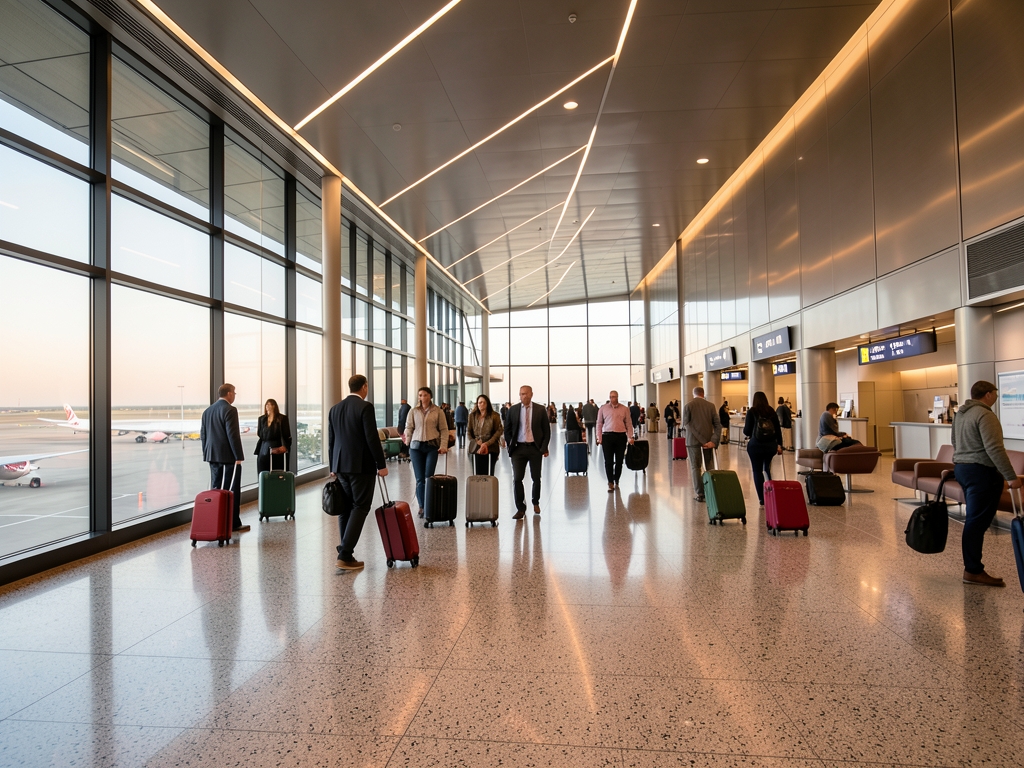
JetBlue's second 2026 bag-fee hike makes the first checked bag $50 each way for most Blue fares, so paying $100 round-trip may beat holding a waiver card or Mosaic status.
The answer changes if you fly JetBlue round-trip about 2 or more times a year, so price your exact fare and date at jetblue.com before booking.
How the $50 fee and waivers work
JetBlue raised checked bag fees for tickets purchased as of November 3, 2026, the second increase in 2026, according to One Mile at a Time and AP. The earlier increase took effect March 31, 2026, when the first checked bag rose from $35 to $39 on off-peak dates, citing jet fuel costs after the Iran conflict, per Deep Arrival; the November change pushed the headline first-bag rate to $50 each way, per AP and Travel Market Report.
The fee is not a property of the bag. It is a ticket rule applied at booking, so the charge attaches to the fare you buy for a specific itinerary and date; the same suitcase can cost different amounts on different tickets. Waivers attach to the fare class, a JetBlue co-brand card, or TrueBlue Mosaic status—not to the bag itself—so eligibility depends on what was purchased and who is traveling, not on what is checked.
Waivers may come from higher fare bundles that include a checked bag, a JetBlue co-brand card, or TrueBlue Mosaic status. Because each waiver is tied to the ticket or traveler profile, a waived first bag on one itinerary does not automatically carry to another; verify the fare rules and traveler details at jetblue.com before paying.
| Waiver source | Attaches to |
|---|---|
| Higher fare bundle (Blue Plus/Blue Extra style) | Fare class |
| JetBlue co-brand card | Cardholder profile |
| TrueBlue Mosaic status | Status profile |
Before booking, price the itinerary's bag fees at jetblue.com for the exact fare and date. The displayed total should reflect the ticket rule and any waiver attached to the fare, card, or status. If the waiver does not appear in the price breakdown, assume it is not applied and do not rely on it at the airport.
If you fly JetBlue round-trip fewer than about two times a year, paying the fee is usually simpler; if you fly two or more round-trips, run the numbers against the card or status cost. Treat the $50 headline as a starting point rather than a universal price, because the March increase was date-specific and the November rule is ticket-purchase-specific.
The evidence behind the $50 figure
The $50 first-checked-bag figure is best treated as a cross-source convergence, not as a single carrier announcement. Three independent outlets reported the same November 3, 2026 purchase-date trigger and the same first-bag level, which is the kind of agreement that makes a fee worth verifying before you book. It also means the date to check is the purchase date, not the departure date.
| Outlet | Published | Reported trigger | Reported first-bag level |
|---|---|---|---|
| AP | Nov 4, 2026 | Effective Tuesday, Nov 3 | Checked bag fees raised for the second time this year |
| Travel Market Report | Nov 4, 2026 | Effective immediately for new purchases | $50 each way |
| One Mile at a Time | Nov 3, 2026 | Tickets purchased as of Nov 3, 2026 | Increase applies; bag fees framed as revenue lever |
AP, publishing November 4, 2026, reported that JetBlue raised checked bag fees for the second time this year and that the increase took effect Tuesday, November 3, weeks before the Thanksgiving and holiday travel season.
Travel Market Report, also publishing November 4, 2026, put the first checked bag at $50 each way and said the change was effective immediately for new purchases.
One Mile at a Time, publishing November 3, 2026, said the increase applies to tickets purchased as of November 3, 2026, and reported JetBlue's framing that bag fees are the lever it uses to raise revenue without raising base fares.
Read together, the accounts agree on the trigger—purchase date rather than travel date—and on the first-bag level. That agreement is useful evidence, but it remains secondary reporting; price the exact itinerary and fare at jetblue.com before booking, because fare-specific rules and exceptions can change. If two outlets had disagreed on either the date or the level, the right move would be to wait for the carrier's own fare rules rather than assume the lower number.
The convergence also does not settle how the fee interacts with waivers, fare classes, or status. Those are separate booking questions, and these sources are best used to confirm the date and headline level rather than every scenario. Use the convergence to decide what to verify, not to skip verification.

Pay per bag vs card waiver
For a traveler on a standard Blue fare, the pay-per-bag option is straightforward: the Associated Press and Travel Market Report place the first checked bag at $50 each way, or $100 round-trip for one bag. Paying at booking or check-in keeps costs variable, which suits travelers who check a bag on JetBlue only occasionally and do not want an ongoing commitment tied to a single airline.
A JetBlue co-brand credit card can waive the first checked bag for eligible cardholders on qualifying itineraries, but the value depends on the card’s current annual fee. Because issuers can change pricing and terms, confirm the annual fee on the issuer’s official page before applying. As a rule of thumb, the waiver’s bag-fee savings offset that annual fee once you take roughly two JetBlue round-trips a year with a checked bag; fewer trips usually favor paying per bag.
TrueBlue Mosaic status also waives checked bags for qualifying members, but the benefit is tied to your tier and account standing rather than a per-trip purchase. Because benefit terms can change, verify your current tier’s baggage allowance in your TrueBlue account before assuming the waiver applies to your next itinerary.
| Option | What to verify before booking | Out-of-pocket bag cost per round-trip (one bag) | Winner by trip frequency |
|---|---|---|---|
| Pay per bag | Confirm the first-bag price for your exact fare and date at jetblue.com. | $100 round-trip ($50 each way, per AP and Travel Market Report) | Fewer than ~2 bag-checked round-trips per year |
| JetBlue co-brand card waiver | Check the current annual fee and waiver terms on the issuer’s page. | $0 bag fee when the waiver applies, plus the card’s annual fee | ~2 or more bag-checked round-trips per year, if the annual fee is offset by savings |
| TrueBlue Mosaic status | Confirm your tier’s baggage benefit in your TrueBlue account. | $0 bag fee when the status benefit applies | Any trip frequency for travelers who already qualify; not typically worth pursuing for bag savings alone |
To choose the lower-cost path, compare the card’s current annual fee against $100 in avoided bag fees for each round-trip you expect to check a bag, and treat Mosaic as a bonus if you already hold the tier. If your travel pattern is uncertain, paying per bag preserves flexibility until your JetBlue trips become consistent enough to justify a waiver-based option.

Costs and numbers that matter
JetBlue’s checked-bag pricing moved twice in 2026, creating a clear arithmetic baseline for anyone booking a Blue fare. According to DeepArrival, the first checked bag rose from $35 to $39 on off-peak dates effective March 31, 2026. Reporting from One Mile at a Time and the Associated Press confirms a second increase for tickets purchased on or after November 3, 2026, lifting the first checked bag to $50 each way. Measured against the pre–March 31 off-peak rate, that is a roughly 43% increase across the year ($50 versus $35).
That $50 each-way figure translates directly into a $100 round-trip bag cost for a traveler checking one bag on both the outbound and return legs. This round-trip threshold is the number to use when you compare paying per trip against any annual product that offsets bag fees, because it reflects the full cost of a single round-trip itinerary rather than a one-way segment.
Second-bag pricing is a separate line item and can change on a different schedule. The available reporting confirms first-bag levels only, so you should check JetBlue’s current baggage fee chart at jetblue.com for your exact travel date and fare before adding a second checked bag to your budget. Treat any second-bag estimate as unverified until you confirm it against the live chart for your itinerary.
The break-even math is straightforward: divide the card’s current annual fee by $100 per bag-checked round-trip to find how many trips it takes to offset the cost. Confirm the actual annual fee on the issuer’s official page and any benefit conditions before relying on that result; if the annual fee is higher, the required trip count rises proportionally.
Applying these thresholds before you book keeps the decision grounded in your own travel pattern. Price your itinerary’s bag fees at jetblue.com for your exact fare and date, then compare that total to the verified annual cost of any fee-waiving option. If you fly JetBlue round-trip fewer than about two times a year with a checked bag, paying the per-trip fee is usually the simpler math; at two or more round-trips, running the break-even calculation against the confirmed annual fee will show whether a waiver-based option pencils out.

What the evidence does not establish
The widely reported $50 first-checked-bag level for tickets purchased as of November 3, 2026, according to One Mile at a Time and the Associated Press, does not settle what every traveler will pay. Several edge cases can break the headline figure, and each requires a booking-specific check rather than reliance on news coverage.
| Edge case | What the reporting does not establish | What to verify before booking |
|---|---|---|
| Peak vs. off-peak travel dates | Whether the November 3, 2026 increase applies uniformly across all travel dates | Price the first checked bag for your exact travel dates at jetblue.com |
| Existing tickets | Whether a ticket bought before the effective date keeps its prior bag fee | Review the baggage terms in your confirmation email or manage-trip view |
| Fare-class exceptions | Whether your specific fare includes a checked bag | Confirm bag inclusion for the selected fare at booking, not from headlines |
Date sensitivity is a documented precedent. DeepArrival reports that JetBlue’s March 31, 2026 increase raised the first checked bag from $35 to $39 on off-peak dates, showing that bag pricing can vary by when you fly. Because the available reporting on the November change does not establish a complete peak-versus-off-peak schedule, the only reliable figure for a given itinerary is the one displayed for your exact dates during booking.
Purchase timing is a separate boundary. One Mile at a Time states that the higher fees took effect for tickets purchased as of November 3, 2026. That framing leaves open how earlier purchases are treated, so travelers holding tickets bought before that date should not assume the new level applies automatically. Check the baggage charges shown in your confirmation email or in JetBlue’s manage-trip tools to confirm which fee governs your ticket.
Fare type can also override the headline. Some premium fare products may include a checked bag, but news summaries do not establish inclusion for every fare or itinerary. Before paying or changing how you book, confirm the bag allowance attached to the specific fare you are selecting at checkout on jetblue.com, since the fare rules shown at purchase control what you will owe.

JFK–FLL with one bag
Consider a concrete booking: a round-trip JetBlue itinerary on a Blue fare with one checked bag each way, purchased after the November 3, 2026 effective date reported by the Associated Press, Travel Market Report, and One Mile at a Time. Because the ticket is bought after that date, the pricing you see at checkout should reflect JetBlue’s current checked-bag levels for that fare and travel date.
Checkpoint 1 — confirm the bag price at booking. On jetblue.com, review the baggage line item for your specific itinerary before you pay. Based on the $50 first-checked-bag level reported by those outlets, the expected cost is $50 each way, or $100 round-trip for one bag. Treat that figure as the baseline unless the booking flow shows a different amount for your exact fare and date.
Checkpoint 2 — confirm whether a waiver applies to you. Before completing the purchase, sign in to your TrueBlue account and verify whether you hold Mosaic status on the account tied to the reservation. If Mosaic status waives the first checked bag for this itinerary, your bag cost is $0 round-trip; paying the $100 round-trip fee in that case would be an avoidable loss.
The cost of getting this wrong runs in both directions. If you assume a waiver applies but your account does not actually qualify for one on this trip, you can face an unexpected $100 round-trip charge ($50 each way). If you assume you must pay but a valid Mosaic waiver is already attached to your booking, you risk giving up $100 round-trip in value by not using the benefit you are entitled to.
For any itinerary, the decision comes down to two quick checks in sequence: price the first checked bag on jetblue.com as priced above, then confirm your TrueBlue Mosaic status before you finalize payment. Verifying both the displayed fee and your waiver eligibility protects you from an avoidable error in either direction.
Decision rules before you book
Before you book, price your itinerary’s checked-bag fees on jetblue.com for your exact fare, route, and travel date. JetBlue’s bag charges can vary by fare type and purchase timing, so the total shown in your booking flow is the number to use when deciding whether to pay per trip or rely on a waiver. Treat that checkout figure as your baseline before comparing it with the cost of holding a JetBlue co-brand credit card or qualifying for TrueBlue Mosaic status.
If you fly JetBlue fewer than two bag-checked round-trips a year, pay the checked-bag fee for each trip and skip the card. When your travel is occasional, the ongoing cost and commitment of a co-brand product are unlikely to make sense for bag savings alone. In this case, the simplest rule is to budget for the fee at booking, confirm the amount during checkout, and avoid taking on an annual fee for a benefit you will rarely use.
If you fly two or more bag-checked round-trips a year, run the numbers before you pay. Compare the co-brand card’s current annual fee and terms, as listed by the issuer at the time you apply, against the bag fees you would otherwise pay on the JetBlue trips you realistically expect to take. This is a forward-looking check: use your planned travel pattern, not a best-case estimate, and confirm whether the card’s waiver applies to your fare and to companions on the same reservation.
If you hold TrueBlue Mosaic status or are booking a premium fare, verify that the bag-fee waiver appears at checkout rather than assuming it is attached automatically. Status, fare benefits, and account details must align with the ticket you are purchasing, so review the baggage line item before you complete payment. If the waiver does not display, pause and confirm your TrueBlue number is attached to the reservation and that your fare qualifies under JetBlue’s current rules.
Applying these rules in order keeps the decision straightforward: confirm your actual checkout price, match it to your expected trip frequency, and validate any waiver on the screen before you buy. That final check protects you from booking on assumptions and ensures your choice reflects the itinerary you are about to ticket.
Also worth reading Top credit cards that offer over one Maximize your travel rewards with Flying Blue Promo Awards: 50% off
What to do next
Frequently Asked Questions
When did JetBlue's November 2026 checked-bag fee increase apply to new tickets?
JetBlue raised checked bag fees for tickets purchased as of November 3, 2026.
What reason did the article give for the earlier 2026 increase?
The earlier increase cited jet fuel costs after the Iran conflict.
Did the March 2026 increase apply to every travel date?
The earlier increase took effect March 31, 2026, and the stated change applied on off-peak dates.
Does the checked-bag fee follow the suitcase or the ticket?
The fee is a ticket rule applied at booking, so the charge attaches to the fare you buy for a specific itinerary and date.
What can provide a checked-bag waiver besides a higher fare bundle?
Waivers may come from higher fare bundles that include a checked bag, a JetBlue co-brand card, or TrueBlue Mosaic status.
What should a traveler do before deciding whether to pay or use a waiver?
Price your exact fare and date at jetblue.com before booking, because the answer changes if you fly JetBlue round-trip about two or more times a year.
Quick answers
| What did JetBlue's second 2026 bag-fee hike do to the first checked bag cost for most Blue fares? | It makes the first checked bag the $50 each way rate for most Blue fares. |
| Why might paying round-trip beat holding a waiver card or Mosaic status? | Because the second 2026 bag-fee hike makes the first checked bag the $50 each way rate for most Blue fares, so paying the round-trip amount may beat holding a waiver card or Mosaic status. |
| When did JetBlue raise checked bag fees for tickets purchased, according to the article? | JetBlue raised checked bag fees for tickets purchased as of November 3, 2026, the second increase in 2026. |
| What happened in the earlier 2026 increase? | The earlier increase took effect March 31, 2026, when the first checked bag rose from the $35 rate to the $39 rate on off-peak dates, citing jet fuel costs after the Iran conflict. |
| How do waivers attach, according to the article? | Waivers attach to the fare class, a JetBlue co-brand card, or TrueBlue Mosaic status—not to the bag itself—so eligibility depends on what was purchased and who is traveling, not on what is checked. |
Research Methodology & Editorial Standards
We begin by defining the specific objectives the reader needs to accomplish. Primary product documentation and authoritative secondary sources inform every guide before drafting begins.
Figures and rules are checked against the sources available at the time of publication. Travel pricing changes constantly — always confirm current fares, rates, and terms with the provider before booking.