
Odyssey cruise ship seizure: Is $99,999 forever cruise worth it in 2026?
The $99,999 Villa Vie Odyssey forever cruise is not worth booking in 2026 while the ship remains seized. It becomes worth considering only after release from seizure and written proof your contract survives operator insolvency.
| Takeaway | Detail |
|---|---|
| $99,999 per cabin is the listed forever-cruise price | The Villa Vie Odyssey 'forever cruise' is priced at $99,999 per cabin. |
| Roughly $500,000 in unpaid fuel debt triggered seizure | The ship was seized in Singapore over about $500,000 in unpaid fuel debt. |
| No money should be sent while the vessel is seized | Do not pay Villa Vie Residences or any residential cruise operator until the vessel is released from seizure. |
| Written contract survival is the release condition | You must verify in writing that your contract survives operator insolvency before paying. |
The $99,999 Villa Vie Odyssey forever cruise is not worth booking in 2026 while the ship remains seized.
It becomes worth considering only after release from seizure and written proof your contract survives operator insolvency.
How the Odyssey seizure actually works
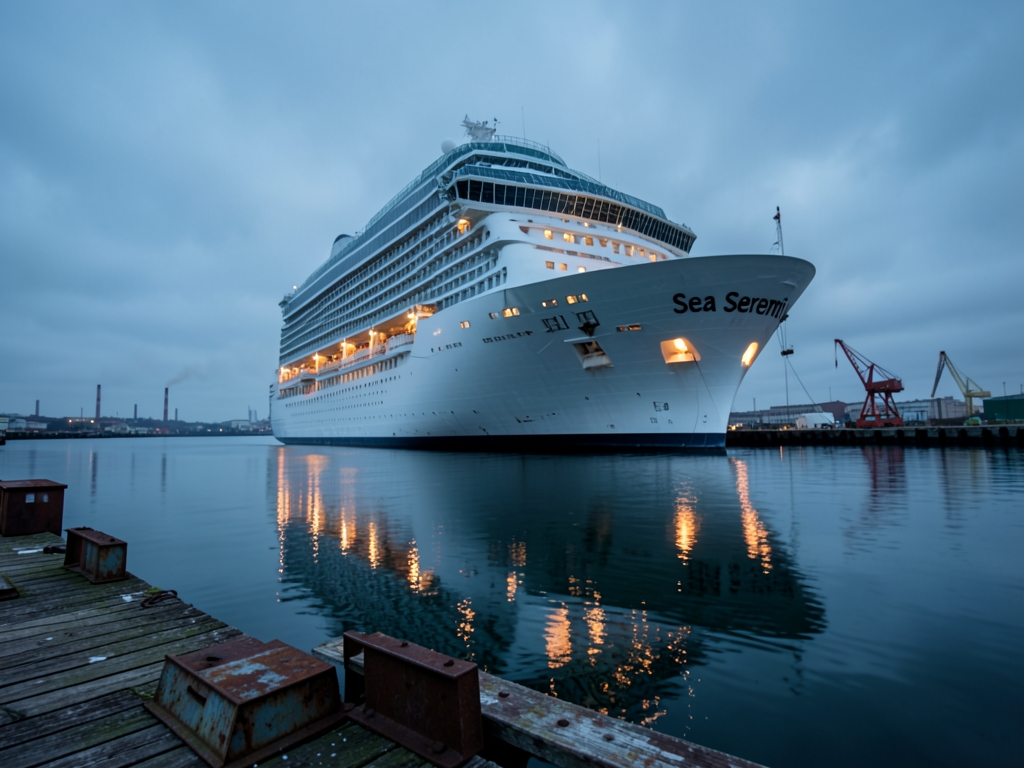
The seizure is best understood as a port-level detention of the ship itself: Singapore authorities are holding the vessel while the operator's unpaid fuel debt remains unresolved. Forbes reports the "forever" cruise ship was seized in Singapore and reportedly owes about $500,000 in unpaid fuel debt, with fuel prices cited as a contributing pressure. For a buyer, the key point is that the asset you would be paying to use is physically unavailable even if a sales contract still exists on paper.
UPI independently corroborates that Singapore authorities seized the embattled "forever" cruise ship, which confirms the detention is an official port action rather than a rumor or a private dispute. The practical check is to ask for written proof that the vessel has been released and is free to sail, not just a company statement that it is "working on it."
NewsCord's 10-outlet comparison reports that the operator ran out of money, which frames the seizure as a symptom of operator distress rather than a temporary fuel-bill delay. The same company that marketed and sold cabins is the entity reported to have exhausted its funds, so the ship's detention and the seller's financial condition are linked risks rather than separate headlines. Aggregation shows breadth of coverage, not verified insolvency; treat the operator's financial condition as reported, not adjudicated, until court or administrator records say otherwise.
| Seizure element | What it means for a buyer |
|---|---|
| Vessel detained by port authority | The ship cannot be used as sold until it is released. |
| Reported unpaid fuel debt | A creditor has leverage over the asset buyers paid to access. |
| Operator reported out of money | The seller's ability to perform is in question. |
Because the detention targets the vessel, a buyer's exposure is not limited to a missed sailing; it is a claim against an operator whose main asset is immobilized. Before sending any money, verify in writing that your contract survives operator insolvency and that the vessel is released from seizure. If the operator cannot provide both, treat the cabin as prepaid, unsecured vendor risk rather than a travel product.
Also do not assume the reported fuel debt is the complete creditor picture. Forbes's "reportedly owes about $500,000" is a reported amount, not necessarily a court-filed total, so ask whether other creditors have claims against the vessel and compare any release documents with your contract's refund and insolvency terms.

The evidence: three sources, one number
The strongest evidence here is convergence rather than a single headline: three separate reports point to the same unpaid-fuel-debt figure. Forbes, surfaced through Google News, reported that the "forever" cruise ship was seized in Singapore, that it reportedly owes roughly $500,000 in unpaid fuel debt, and that rising fuel prices provide context for pressure on operators. That cost context matters because it frames the debt as part of a broader squeeze rather than an isolated accounting slip.
UPI, also surfaced through Google News, independently confirmed that Singapore authorities seized the embattled ship. The value of that second report is agreement on the event itself: two outlets are not merely echoing one press release, but confirming that authorities took action. It does not, by itself, establish the exact debt, the operator's total liabilities, or whether any payment plan exists.
NewsCord went further by aggregating 10 outlets on the operator running out of money. Aggregation is not verification of every underlying claim, but it does show breadth: the story is not confined to one report or one newsroom. For a buyer, that breadth reduces the chance that the seizure is a rumor, even if it does not resolve how much is owed to whom.
| Outlet | What it adds | What it does not prove |
|---|---|---|
| Forbes (via Google News) | Seizure in Singapore, reported unpaid fuel debt, rising fuel prices as context | That the debt is adjudicated or that prices caused it |
| UPI (via Google News) | Independent confirmation that Singapore authorities seized the ship | The debt amount or the operator's total liabilities |
| NewsCord | Aggregation of 10 outlets on the operator running out of money | Verification of each underlying claim |
A useful way to read these three sources is as a ladder of confidence. Forbes supplies the specific reported figure and cost context; UPI confirms the enforcement event; NewsCord shows that multiple outlets are tracking operator distress. Together they support treating the reported debt as the prevailing number in public reporting, not as a court judgment, audited balance, or recovery estimate.
The practical check is to separate "reported" from "resolved." Treat the converged headlines as a screening signal, and require written evidence of release and solvency before any cabin payment. If those documents are not produced, the agreement among outlets is a warning, not a reason to send money.
Options compared: buy, wait, or book elsewhere
The decision is a risk decision, not a travel-preference decision: you are choosing whether to turn cash into a prepaid claim against an operator whose current solvency is in question. Until the vessel is released and you have written confirmation that your contract survives operator insolvency, the default should be to keep your money outside the transaction.
Option A, buying a cabin now, is the highest-risk path. It converts a large upfront payment into an unsecured, prepaid vendor claim while, per Forbes, the operator is reportedly unable to pay fuel bills; if the operator fails, your recovery is uncertain and you have no ship to sail. This is the option the reader rule is designed to prevent.
Option B, waiting, costs only optionality. You risk no new money, you do not lose a right you already hold, and you can re-evaluate after the ship is released and the operator's debts and solvency are verified in writing. For anyone who still wants the residential-cruise model, this is the only defensible first step.
Option C, booking conventional cruises or flights voyage by voyage, is the winner on cash control and reversibility. You pay for travel as you use it, keep funds in your own accounts, and can favor refundable fares or points-funded bookings that limit downside if plans change.
| Option | Cash exposure | What you sacrifice | Verdict |
|---|---|---|---|
| A: Buy cabin now | Full upfront payment at risk | Liquidity and recourse | Avoid |
| B: Wait for release and verified solvency | None new | Early booking priority | Conditional |
| C: Book conventional travel | Per-voyage, refundable or points-funded | Residential-cruise convenience | Winner |
Apply the gate already stated above to these three options: if release and written contract-survival proof are not produced, Option A fails the gate and only B or C remain. A payment made through Option A under those conditions is unsecured credit to a distressed operator, not a travel purchase.
Costs and numbers that matter
As priced above, the $99,999 per-cabin figure functions as a full upfront payment rather than a deposit. The available reporting describes no escrow or refund protection, so the practical exposure is the entire advertised price to an operator whose vessel is entangled in a reported debt dispute.
Beyond the seizure and the reported ~$500,000 unpaid fuel debt covered earlier, the relevant point for a buyer is what an unpaid recurring cost implies: fuel is a continuous operating expense, so a reported unpaid balance suggests operating costs may be outpacing the operator's cash flow. That is a warning sign, not proof of insolvency, and the burden of proof sits with the operator to demonstrate liquidity in writing.
The cost of being wrong is not a partial fee or a change penalty; it is up to the full $99,999 if the ship is sold in a court-ordered sale and the buyer's contract is not honored by a new owner. Compare that single-cabin exposure with the cost of waiting for release and written contract-survival terms before paying anything.
Read together, the two anchor numbers above are a screen, not a verdict: your full cabin payment would rank behind the operator's operating creditors, who include the fuel supplier already reported to be owed money. That ranking is exactly why the pre-payment checklist below requires written release and contract-survival proof before any funds move.
If an operator asks for a smaller "reservation" amount, apply the same test: any prepaid sum is still unsecured unless it is held by an independent escrow and released only after vessel release and contract survival are documented. Without those terms, a smaller number does not reduce the risk; it only reduces the size of the loss.
What the evidence does not establish
Public reporting establishes several hard facts about the Villa Vie Odyssey, but it leaves critical gaps that any prospective buyer must treat as unresolved. Separating what is confirmed from what is unverified is essential before committing funds to a residential cruise operator facing legal and financial distress.
| Status | Claim | Source / verification needed |
|---|---|---|
| Confirmed | The vessel was seized in Singapore. | Reported by Forbes and UPI. |
| Confirmed | The operator ran out of money and is insolvent. | Reported by NewsCord, citing coverage across 10 outlets. |
| Not established | The exact amount of unpaid fuel debt. | Forbes describes the figure as “reportedly” owed; no final, court-verified total is publicly confirmed. |
| Not established | Whether the ship will be released, sold, or reflagged. | Requires a documented court order or official port authority notice. |
| Not established | Whether existing cabin contracts survive a sale or restructuring. | Requires written confirmation from the operator or a court-appointed administrator specifying contract treatment. |
These gaps are not minor details. If the vessel is sold or reflagged, the legal entity responsible for honoring a cabin agreement may change, and a buyer’s ability to enforce that agreement can depend on jurisdiction, creditor priority, and the terms of any restructuring. Without written proof that a contract remains binding on a successor owner or administrator, a payment functions as exposure to an unresolved insolvency process rather than a secured reservation.
The “do not buy” rule is not permanent, but it should only be reconsidered against fresh, verifiable evidence. If a court releases the ship and a verified new funding arrangement is publicly documented, reassess the situation from the beginning: confirm the release through an official notice, obtain the funding terms in writing, and verify that your specific contract survives any change in ownership or control.
Until those conditions are met, treat every marketing claim as provisional. Request dated, written answers to three questions before sending money: Has the seizure been formally lifted? Who is the current legal counterparty to the contract? And what written instrument guarantees your cabin rights if the operator or vessel changes hands? If any answer is verbal, vague, or unavailable, the prudent decision is to wait.
Your pre-payment checklist
Before sending any money, run all five checkpoints in order and treat the checklist as a gate, not a formality: a single fail is enough to stop payment. Keep dated screenshots, PDFs, or emails for every answer, and require the operator to put each confirmation in writing rather than in a sales call or chat message.
| Checkpoint | What to verify | PASS | FAIL |
|---|---|---|---|
| 1. Vessel status | Search Singapore port and admiralty notices for the ship's detention status. | Record shows the vessel is released or cleared. | Detained, arrested, or status cannot be confirmed. |
| 2. Debt resolution | Confirm via court records or operator disclosure that the reported ~$500,000 fuel debt is paid or restructured. | Documented settlement or restructuring. | No documentation, or the debt remains unresolved. |
| 3. Fund protection | Get written confirmation that buyer payments sit in escrow or are refundable on insolvency. | Named escrow holder, account, or refund trigger. | "Contract terms apply," vague language, or confidentiality refusal. |
| 4. Contract survival | Get written confirmation that your purchase agreement survives operator insolvency, reviewed by counsel. | Explicit survival clause you can read and save. | "Subject to change," silence, or no counsel review. |
| 5. Payment reversibility | Verify the payment method and refund path before any transfer. | Escrow, credit card, or another reversible path. | Wire-only demand or no documented refund path. |
Ask for the underlying document, not a summary. For vessel status, save the notice or docket reference; for debt resolution, save the court record, settlement notice, or operator disclosure that identifies the reported ~$500,000 fuel debt and its status. If the operator will not provide a document you can independently locate, mark that checkpoint FAIL.
For fund protection, the answer must name the escrow holder, account, or refund trigger. "Contract terms apply" is a FAIL because it leaves your payment exposed to operator insolvency. If the operator says terms are confidential, that is also a FAIL; a buyer cannot verify protection from a promise that cannot be read.
Treat the five checkpoints as separate gates. A released vessel does not prove the debt is resolved, and a debt document does not prove your money is protected. Each PASS must stand on its own evidence, and each FAIL stops the process regardless of how strong the other four look.
If any checkpoint fails, do not send money, do not accept a "reservation" that requires a deposit, and do not treat a future release date as a pass. Re-run the checklist only after the failed item changes in writing, then keep the new evidence with your original file.
Decision rules for 2026 bookings
The practical version of the do-not-pay rule is simple: no money moves until two conditions are met in writing—release of the vessel from Singapore seizure and proof that your contract survives operator insolvency. Until then, treat a cabin as prepaid, unsecured vendor exposure, not a travel purchase.
If your verification shows the ship is still detained in Singapore—as Forbes and UPI reported—do not send Villa Vie Residences any funds. Book conventional cruises or flights instead, and keep every receipt, quote, and cancellation policy in case you later need to compare recovery options. Pay only for travel you can actually take, with a card or channel that gives you chargeback or supplier-failure protection.
If the seizure is lifted but no audited solvency statement or escrow proof is published, wait at least one full sailing cycle and re-verify before paying. Ask for the release document, the escrow or trust arrangement, and the contract clause that keeps your cabin rights alive if the operator fails. If any answer is verbal, delayed, or incomplete, keep your money and revisit after the next cycle.
If you already paid and the ship is sold, immediately document your contract, payment trail, and correspondence, then file with the insolvency administrator as a creditor. Do not assume a new owner honors your agreement; ask in writing whether it assumes, rejects, or renegotiates residential-cruise contracts, and get the answer before you spend more.
| If the ship is still under seizure in Singapore | Do not send Villa Vie any money; book conventional cruises or flights instead. |
| If seizure is lifted but no audited solvency or escrow proof is published | Wait at least one full sailing cycle and re-verify before paying. |
| If you already paid and the ship is sold | Document your contract and file with the insolvency administrator as a creditor; do not assume a new owner honors it. |
Before any payment, require four written items: vessel-release confirmation, contract-survival language, audited solvency or escrow proof, and a named insolvency contact. If one is missing, the rule is no payment. This keeps the decision mechanical rather than emotional, which matters when a "forever" product is marketed as a lifestyle rather than a secured travel contract.
Also worth reading How to Decide Between Global Entry Vienna Ball Season 2026: Staatsoper Norwegian Getaway's Refurbished
What to do next
| Step | Action | Why it matters |
|---|---|---|
| 1 | Confirm whether the Villa Vie Odyssey has been released from seizure in Singapore before discussing payment with Villa Vie Residences. | The unpaid fuel debt triggered the seizure, so release status controls whether any booking can proceed. |
| 2 | Do not send money to Villa Vie Residences or any residential cruise operator while the vessel remains seized. | Paying during seizure risks losing funds before the ship can sail. |
| 3 | Request written confirmation that your contract survives operator insolvency before paying. | Written contract survival is the required release condition for considering the listed forever-cruise price. |
| 4 | If release or written survival proof is missing, book ordinary cruises or flights instead. | This follows the canonical decision rule and avoids committing to an unavailable forever-cruise cabin. |
| 5 | Save all written communications and contract versions from Villa Vie Residences. | Records help verify what was promised if the operator faces insolvency or dispute. |
| 6 | Reassess the forever-cruise option only after both release and written contract-survival proof are in hand. | Both conditions must be met before the cruise becomes worth considering. |
Frequently Asked Questions
Where is the Villa Vie Odyssey currently being held?
The Villa Vie Odyssey is being held in Singapore, where authorities have detained the vessel at the port level while the operator's unpaid fuel debt remains unresolved.
What factor contributed to the operator's unpaid fuel debt?
Rising fuel prices were cited as a contributing pressure to the operator's unpaid fuel debt that led to the ship's seizure.
Should I send payment to Villa Vie Residences while the ship is seized?
No money should be sent to Villa Vie Residences or any residential cruise operator until the vessel is released from seizure.
What written proof must I obtain before paying for a cabin?
You must verify in writing that your contract survives operator insolvency before making any payment.
Can I use the ship if I have a valid sales contract while it is detained?
No, the asset you would be paying to use is physically unavailable even if a sales contract still exists on paper.
Under what conditions does booking the Villa Vie Odyssey become worth considering?
Booking becomes worth considering only after the ship is released from seizure and you have written proof that your contract survives operator insolvency.
Quick answers
| Is the Villa Vie Odyssey forever cruise worth booking in 2026? | The forever cruise is not worth booking in 2026 while the ship remains seized. |
| When does the forever cruise become worth considering? | It becomes worth considering only after release from seizure and written proof your contract survives operator insolvency. |
| Why was the Odyssey cruise ship seized in Singapore? | Singapore authorities are holding the vessel while the operator's unpaid fuel debt remains unresolved. |
| Should prospective buyers send money while the vessel is seized? | No money should be sent to Villa Vie Residences or any residential cruise operator until the vessel is released from seizure. |
| What must buyers verify in writing before making a payment? | Buyers must verify in writing that their contract survives operator insolvency before paying. |
Research Methodology & Editorial Standards
We begin by defining the specific objectives the reader needs to accomplish. Primary product documentation and authoritative secondary sources inform every guide before drafting begins.
Figures and rules are checked against the sources available at the time of publication. Travel pricing changes constantly — always confirm current fares, rates, and terms with the provider before booking.