
Callao Tarantula Seizure Shows Why Travelers Must Declare Wildlife in 2026
To execute the winner, contact the destination wildlife authority before you pack: email the agency or download its permit instructions from the official page, then follow the application steps exactly as written.
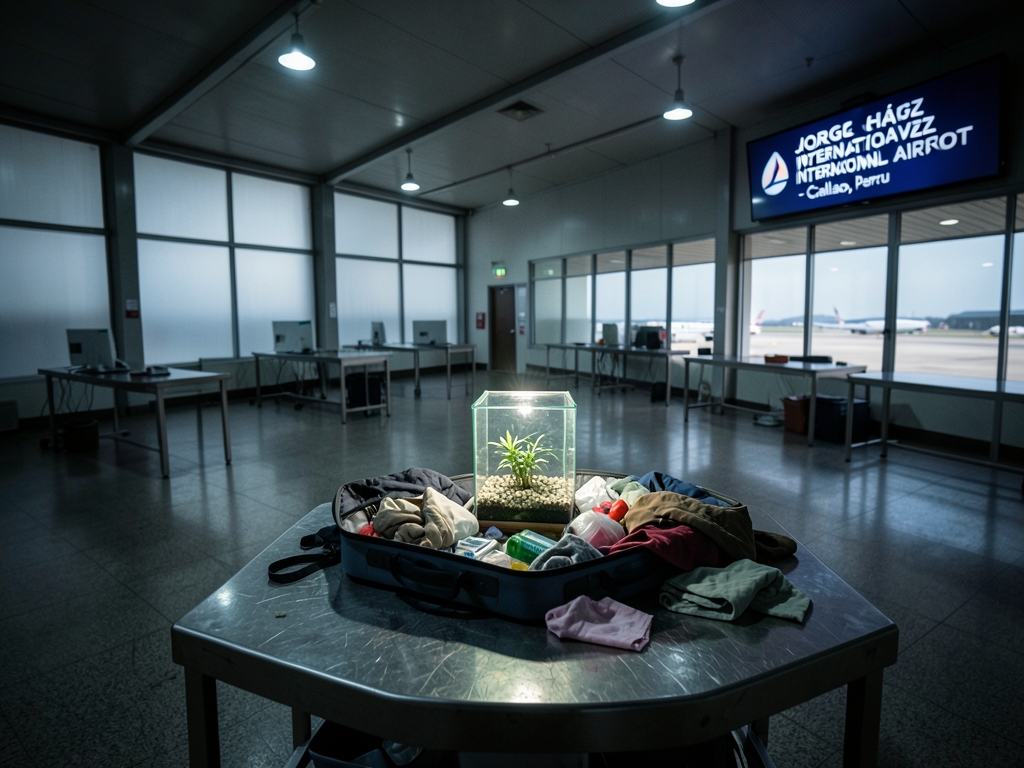
Path C wins because it is the only path that creates a written permit trail before the bag is screened. That trail gives you something concrete to show if an officer asks why the specimen is in your luggage, and it reduces the chance of an airport surprise by moving the eligibility question out of the inspection lane and into the pre-travel stage.
To execute the winner, contact the destination wildlife authority before you pack: email the agency or download its permit instructions from the official page, then follow the application steps exactly as written. Carry the permit number and the issuing office in a format you can present at check-in and at customs. If your itinerary includes a transit stop, repeat the same check for the transit authority, because a permit that is valid at the destination does not automatically satisfy transit rules.
Do not treat an approved permit as a reason to stay silent. Declare the specimen on the customs form even when the permit is approved, and present the permit at the first customs contact. If you cannot confirm the species, the permit requirement, or the declaration rule before departure, do not pack the specimen; use the authority’s written guidance to decide whether to apply, postpone, or leave the item behind.
The Numbers to Check Before Packing
As stated above, the $250,000 headline figure is not supported by the Fox News and New York Post coverage of the 2026 Callao tarantula seizure, which names no $250,000 fine, permit fee, or declaration deadline. Those reports document more than 3,000 tarantulas and, according to Fox News, three travelers facing criminal proceedings. Check the destination and transit customs wildlife pages for any published penalty, fee, or declaration rule rather than relying on the headline number.
Before you pack any animal, animal part, or live specimen, check the destination country’s customs or border authority website and repeat the check for every transit country where you will clear immigration or recheck bags. On each site, open the penalties or enforcement page and search for “wildlife” and “endangered species.” If the page does not publish a penalty range, permit fee, or surrender rule, treat it as not stated and do not substitute the headline figure.
Next, verify the species and the paperwork that controls it. Confirm the scientific or common name used by the destination authority, because common names can map to different legal categories. Check whether the species requires an export permit from the country of origin, an import permit at destination, or a transit document, and save written copies before you travel. If an airline, broker, or seller quotes a fee or timeline, treat it as unverified until you can match it to an official customs, wildlife, or CITES authority page.
Use a simple pass/fail rule at booking and again at packing: if you cannot document the species, the permit status, and the destination or transit declaration requirement from an official source, do not place the item in your luggage. The Callao reporting shows that the real, documented risk in that case was criminal exposure tied to concealed wildlife, not a confirmed dollar penalty from the headline. Your safest number is the one you can cite, date, and carry with you.
What the Story Does Not Prove
Reporting on the 2026 tarantula seizure at Jorge Chávez International Airport in Callao, Peru, establishes that authorities intercepted live specimens hidden in passenger luggage, but it does not establish every penalty or paperwork detail travelers may assume from headlines. According to Fox News and the New York Post, inspectors found more than 3,000 tarantulas concealed in socks and the travelers faced criminal proceedings for alleged wildlife trafficking. None of the available sources states a $250,000 fine, a permit fee, or a 2026 declaration deadline. Treat those three points as verification targets: confirm the applicable penalty range, permit cost, and any filing or declaration timing directly with the destination, origin, and transit authorities before you travel.
The practical risk is that a dramatic seizure story can blur the line between what happened in one case and what rules apply to your shipment or personal baggage. Wildlife controls depend on the species, its life stage or form, the countries involved, the airline’s live-animal policy, and whether the movement is personal or commercial. Before booking or packing any animal, animal part, or live specimen, check the official customs and wildlife pages for every jurisdiction on the itinerary, obtain written permits where required, secure airline approval in advance, and keep copies ready for the first customs contact.
Edge cases do not remove the need for that pre-check; they change where the process can fail. The table below shows how the same pre-check-and-declare rule holds or breaks across common scenarios.
| Scenario | How the rule applies |
|---|---|
| Live tarantula in carry-on | Pre-check-and-declare still wins; verify species rules, airline acceptance, and required permits before packing. |
| Animal part or shell | Pre-check-and-declare still wins if the species is checked; protected status can apply to parts, not only live animals. |
| Transit via a third country | The rule breaks unless the transit permit and transit declaration requirements are checked for that country. |
| Commercial quantity | The rule breaks unless the traveler uses the appropriate import/export broker or commercial clearance route. |
| Declared but no permit | Pre-check-and-declare still wins by surrender at the first customs contact; declaration reduces concealment risk but does not replace authorization. |
Jurisdiction is the final check the articles cannot answer for you. A rule enforced at departure, during transit, or on arrival may come from different agencies, and the required document may differ by species and purpose. If any authority’s requirement is unclear, pause the trip or shipment until you have written confirmation; guessing from a news report is not a compliance strategy.

Tarantula in Socks
Use the 2026 Callao seizure as a worked example of what to verify before you pack any live specimen. According to Fox News and the New York Post, inspectors at Jorge Chávez International Airport in Callao found more than 3,000 tarantulas packed inside socks in the luggage of three travelers during a Tuesday seizure; Fox News reported that the travelers face criminal proceedings. The inputs that matter for your own trip are the same ones visible in that case: the number of travelers, the species and quantity involved, the concealment method, the airport, and the legal status of the shipment at the time of inspection.
Before booking or packing, use this checklist and keep written proof for each step:
| Checkpoint | What to verify | Proof to carry |
|---|---|---|
| 1. Species and permit status | Confirm the exact species and whether it is regulated on the destination and any transit wildlife or customs pages. | Saved page or written confirmation showing the species status. |
| 2. Export and import permits | Match export and import permits to the exact species, quantity, origin, and destination. | Issued permits that name the same species and shipment details. |
| 3. Airline approval | Obtain written airline approval for transporting live animals on your specific itinerary. | Airline confirmation in writing. |
| 4. Customs declaration | Identify the customs declaration line or process you will use at the first point of contact. | Completed form, app entry, or a clear note of the declaration step. |
| 5. Surrender plan | Decide in advance what you will do if a permit, airline approval, or declaration is rejected. | A documented fallback plan to surrender or not transport the specimen. |
The documented outcome in the Callao example is that the tarantulas were seized at the airport. That result shows why the checks must be completed before you reach the inspection point, not after an officer asks questions.
The cost-of-being-wrong comparison is not about guessing a penalty amount. A compliant path usually costs time and administrative effort to confirm species status, secure matching permits, and coordinate with the airline, and it can end with a decision not to travel with the animal. A non-compliant path can cost you the specimens, disrupt or end the trip, and create legal exposure that depends on the species, the jurisdictions involved, and the facts of the case. When the paperwork is uncertain, the lower-risk choice is to verify in writing, declare at first customs contact, or surrender the specimen rather than pack it.

Five Rules for Animal Customs in 2026
This section gives the if/then decision rules that operationalize the canonical rule: before you book or pack any animal, animal part, or live specimen, verify the species and permit status on the destination and transit customs wildlife pages, obtain written permits and airline approval, and then declare or surrender the item at the first customs contact. The 2026 Callao tarantula seizure reported by Fox News and the New York Post shows how quickly a packing decision can become a customs problem, but the rules below are the checks a traveler can control before reaching the airport.
If the species is live, wild-caught, or permit-listed and you cannot name the permit office before check-in, then do not pack it. Start by identifying the specimen as precisely as possible, including its common and scientific name if the seller or breeder provides one. Then use the destination country’s official customs or wildlife authority page to confirm whether that species is restricted, prohibited, or permit-listed. If you cannot point to the issuing office, the application channel, and the document you must carry, treat the item as not travel-ready.
If the seller says “no paperwork needed,” then ask for the destination customs page in writing; if it is not there, walk away. A verbal assurance is not a substitute for an official rule. Ask the seller to send the exact government page that applies to the species, the origin, and your destination, and compare that page against the airline’s live-animal or special-cargo policy. If the seller cannot produce a matching official source, or if the page does not clearly authorize the shipment in passenger baggage, do not buy, accept, or pack the specimen.
If you are connecting through a third country, then check that transit country’s wildlife page before booking; the Callao rule does not cover your connection. A permit or declaration that works for your final destination may not protect you during a layover, recheck, or baggage transfer. Before you pay for the ticket, confirm whether the transit country treats the species as prohibited, requires advance notification, or applies different rules to live animals in checked or carry-on baggage. If the transit requirement is unclear, choose a routing you can verify or leave the specimen behind.
At the airport, keep every written permit, approval, and species record accessible rather than buried in luggage. If any document is missing, expired, or inconsistent with what you are carrying, do not rely on concealment or informal advice. Declare the item at the first customs contact or surrender it through the process offered by authorities; the defensible 2026 traveler decision is to resolve the paperwork question before travel and make the status of the specimen explicit at the border.
Also worth reading How Compression Socks Prevent Deep 7 Best Compression Socks Airport Smuggling Threats What
What to do next
| Step | Action | Why it matters |
|---|---|---|
| 1 | Inventory every animal, animal part, or live specimen you plan to carry and confirm the exact species before packing. | The 2026 Callao, Peru airport seizure involved more than 3,000 tarantulas concealed in luggage; knowing exactly what you are carrying is the first step to avoiding undeclared transport. |
| 2 | Check the destination and transit customs wildlife pages for permit requirements, import restrictions, and declaration rules for that species. | Permit status can differ by country and transit point, and verifying it in advance prevents surprises that can escalate beyond the fixed penalties referenced in the headline. |
| 3 | Obtain written permits and airline approval before travel; if any requirement is unverified, do not pack the item. | Written authorization creates a clear record that you complied with wildlife transport rules, reducing the risk of criminal scrutiny. |
| 4 | At the first customs contact, declare any wildlife item you are carrying, even if you are unsure of its status. | Undeclared wildlife transport can trigger criminal trafficking proceedings, as seen when 3 travelers faced alleged wildlife trafficking charges after the Callao seizure. |
| 5 | Be prepared to surrender unpermitted or unverified wildlife immediately if asked by authorities. | Surrendering an item at declaration is far less severe than concealment, which in the 2026 case involved over 3,000 eggs, hatchlings, and adult tarantulas and potential years in jail. |
| 6 | Keep copies of permits, approvals, and any declaration receipts accessible throughout your journey. | Having documentation ready at each checkpoint helps officials verify compliance quickly and supports your position if questions arise. |
Frequently Asked Questions
When should I contact the destination wildlife authority to obtain a permit for a specimen?
Contact the destination wildlife authority before you pack by emailing the agency or downloading its permit instructions from the official page, then follow the application steps exactly as written.
What permit information should I have available at check-in and customs?
Carry the permit number and the issuing office in a format you can present at check-in and at customs.
Do I need to verify permit rules for a country where I only have a transit stop?
If your itinerary includes a transit stop, repeat the same check for the transit authority, because a permit that is valid at the destination does not automatically satisfy transit rules.
Is it necessary to declare a wildlife specimen on the customs form if I already have an approved permit?
Declare the specimen on the customs form even when the permit is approved, and present the permit at the first customs contact.
What should I do if I cannot confirm the species or permit requirements before departure?
If you cannot confirm the species, the permit requirement, or the declaration rule before departure, do not pack the specimen and use the authority’s written guidance to decide whether to apply, postpone, or leave the item behind.
How does securing a permit before travel affect the airport screening process?
Creating a written permit trail before the bag is screened gives you something concrete to show if an officer asks why the specimen is in your luggage and moves the eligibility question out of the inspection lane and into the pre-travel stage.
Quick answers
| Why is Path C recommended for travelers carrying wildlife specimens? | Path C is recommended because it creates a written permit trail before the bag is screened, giving you something concrete to show if an officer asks why the specimen is in your luggage and reducing the chance of an airport surprise. |
| What steps should a traveler take before packing a wildlife specimen? | A traveler should contact the destination wildlife authority before packing by emailing the agency or downloading its permit instructions from the official page, then follow the application steps exactly as written. |
| Is a traveler required to declare a wildlife specimen if they have an approved permit? | Yes, a traveler should not treat an approved permit as a reason to stay silent and must declare the specimen on the customs form even when the permit is approved, presenting the permit at the first customs contact. |
| What should a traveler do if their itinerary includes a transit stop? | If the itinerary includes a transit stop, the traveler should repeat the same check for the transit authority because a permit that is valid at the destination does not automatically satisfy transit rules. |
| What action should be taken if the species, permit requirement, or declaration rule cannot be confirmed before departure? | If these details cannot be confirmed before departure, the traveler should not pack the specimen and should use the authority’s written guidance to decide whether to apply, postpone, or leave the item behind. |
Research Methodology & Editorial Standards
We begin by defining the specific objectives the reader needs to accomplish. Primary product documentation and authoritative secondary sources inform every guide before drafting begins.
Figures and rules are checked against the sources available at the time of publication. Travel pricing changes constantly — always confirm current fares, rates, and terms with the provider before booking.