
Economy seat armrests in 2026: 18-inch vs standard — book or skip
Skip the wider seat on most 2026 economy flights; standard shared armrests are 17–17.5 inches of contested space.
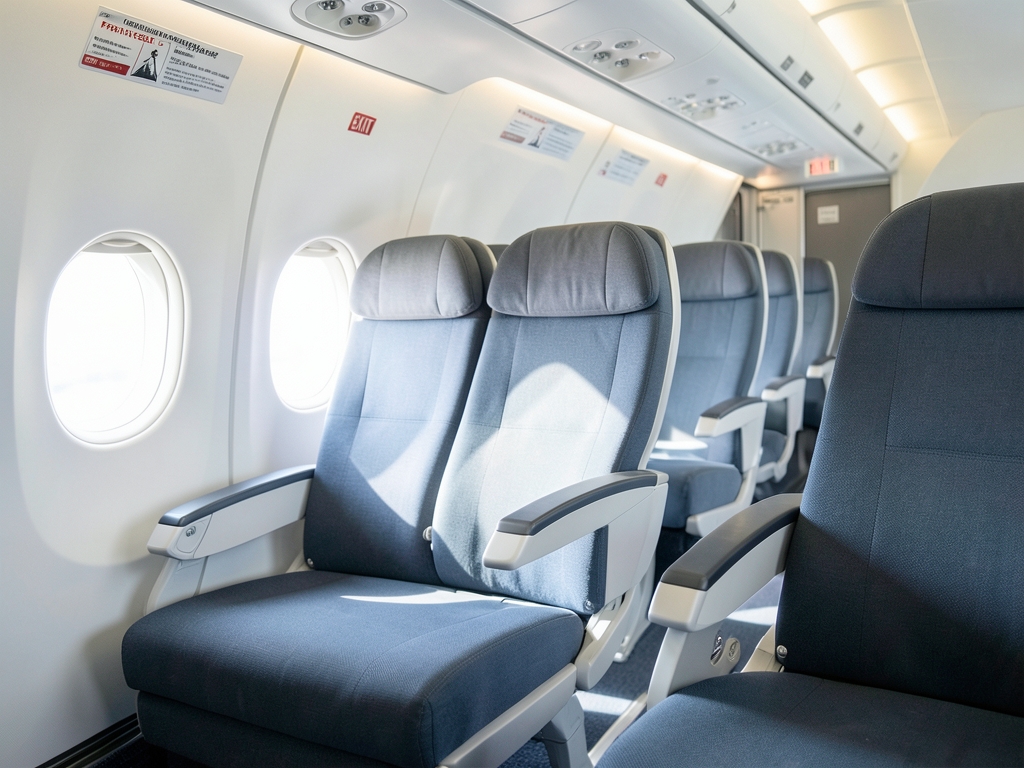
| Takeaway | Detail |
|---|---|
| Standard economy armrests span 17–17.5 inches on most 2026 cabins. | The thesis gives that range; Fox News reports 17-inch economy seats on some airplanes. |
| Pay for extra width only below roughly $60 per 8 hours. | The reader rule caps the per-flight upcharge at under ~$60 for a flight of 8+ hours. |
| The paid-width rule applies only to middle or window seats. | The reader rule requires a middle or window seat; otherwise take an aisle seat and use seat-selection tactics. |
| KLM's 17.5-inch standard can still mean narrow 777 armrests. | KLM standardizes armrest-to-armrest width at 17.5 inches, but the 777's armrests and margins are noticeably narrower. |
Skip the wider seat on most 2026 economy flights; standard shared armrests are 17–17.5 inches of contested space.
Book the wider seat only if the per-flight upcharge is under roughly $60 for a flight of 8+ hours and you are in a middle or window seat; otherwise choose an aisle seat.
Why the shared armrest exists at all
The shared armrest in economy is not a design oversight. According to the Air Travel Design Guide, a single shared armrest between two economy seats is a "spatial maximization" choice: a response to financial pressure to fit more passengers into the aircraft, while first and business class seats get dedicated armrests. In other words, the contest is built into the cabin layout.
That built-in scarcity is sharpened by seat width. Fox News, in a Nov. 28, 2026 report, says economy seats have shrunk to 17 inches across on some aircraft and that this shrinkage directly drives the armrest clashes it documents. The point is not that every plane is at that width; it is that when lateral space tightens, the shared surface becomes the pressure point.
Before you book, treat the aisle seat's outer armrest as a hardware check, not an assumption. SimpleFlying reported on June 19, 2026 that most economy aisle seats have a small tab or button on the underside of the outermost armrest, near the hinge where it meets the seat frame; pressing or sliding it releases the armrest. If you are counting on that surface, verify the mechanism exists on your aircraft and row rather than assuming it.
The useful distinction is between space and hardware. The shared armrest exists because density is monetized; the release tab exists because aisle seats need to swing clear for boarding and service. One explains why the fight starts; the other gives you a small, checkable advantage without changing the seat's width.
So the armrest is contested real estate by design, not by accident. The practical takeaway is to read the cabin as an economics problem first and a manners problem second: know whether your seat's armrest is shared, fixed, or releasable before you decide that a paid width upgrade is the only fix.
The width numbers that decide it
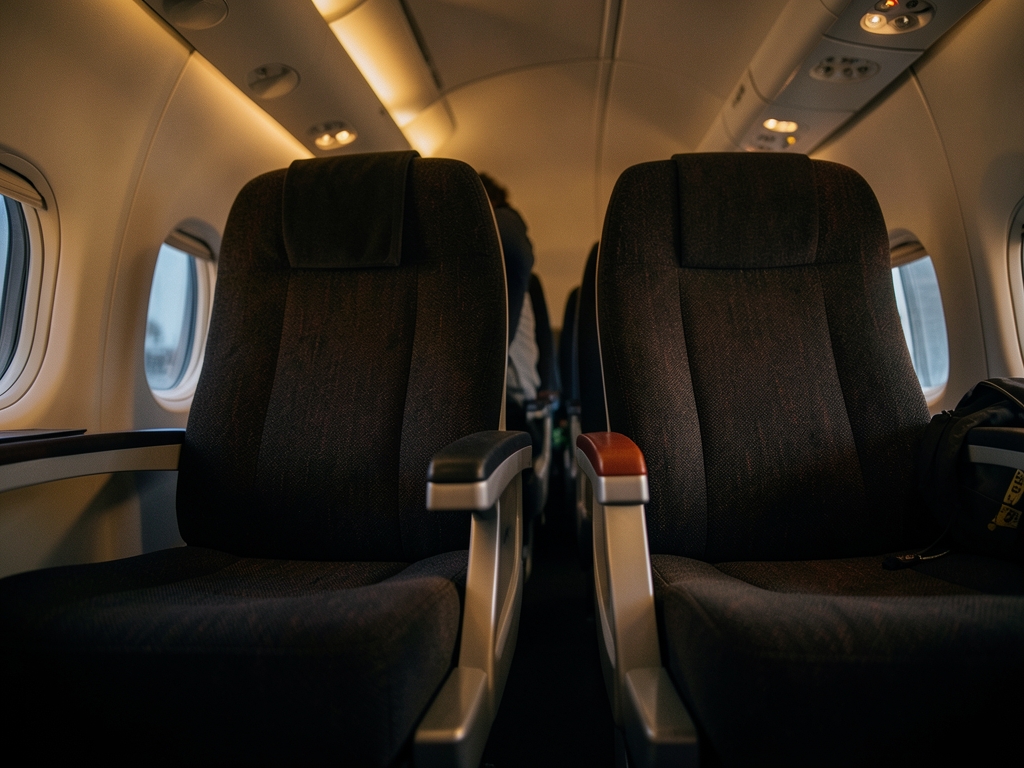
The sources converge on a useful width ladder: 17 inches at the shrinking end of economy, KLM’s standardized 17.5-inch fleet width, and 20–26 inches in business class. Those figures turn “more room” into a measurable comparison. Use armrest-to-armrest width as the first check; seat pitch and a cabin label cannot tell you how much shoulder space a specific seat provides.
Fox News reported in November that some economy seats are now 17 inches across, the floor of the range it describes. That is the number that kills the myth that all economy seats are basically the same: the same cabin category can encompass materially different shoulder room. When comparing aircraft or fare options, look for an aircraft-specific width specification rather than assuming that every economy row is equivalent.
BoardingArea’s KLM 777 review provides the next benchmark: KLM has standardized armrest-to-armrest seat width at 17.5 inches fleet-wide. But the review also notes that the 777’s armrests and margins are noticeably narrower, with minimal padding. The practical check is two-part: confirm the nominal width, then read aircraft-specific reviews of the armrest itself. A standardized headline number does not guarantee an identical feel at the boundary between seats.
BaggagePolicies.com puts business-class seats at 20–26 inches wide and says that range eliminates the shared-armrest problem on flights of eight hours or more. Treat that as a category comparison, not a promise that every business-class seat feels identical: the cited range itself spans six inches. For a long flight, verify the particular seat’s width and configuration instead of relying on the cabin name alone.
The rule is to compare like with like: aircraft-specific armrest-to-armrest width first, armrest shape and padding second, and cabin label last. If a listing supplies only pitch or a generic “wide seat” description, treat its width claim as unverified until you find a seat map or review that specifies the measurement. The economy benchmarks and the business-class range are far enough apart that “economy” by itself is not a useful comfort specification.
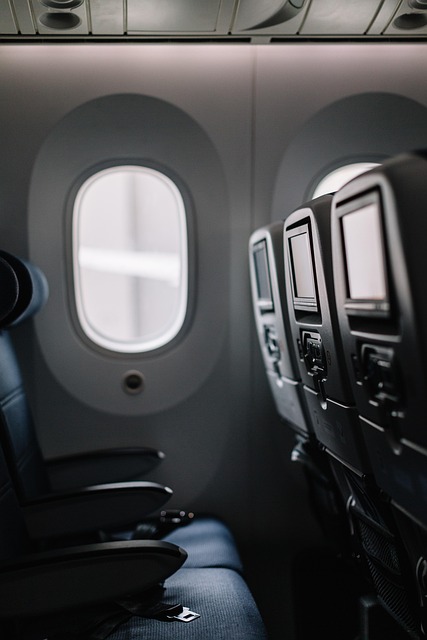
Four seating options compared
Option A is the standard middle seat: you share the armrests on both sides and control neither, so it loses on long-haul flights of eight hours or more, with no way to secure either side.
Option B is the standard aisle seat with a movable outer armrest. Most aisle seats have a small release tab or button on the underside of the outermost armrest near the hinge; pressing or sliding it frees that armrest. That makes this the only economy option that gives you two usable armrests, and it costs nothing. Before you count on it, check the underside of the outermost armrest near the hinge; if there is no tab, treat that seat as an ordinary aisle seat.
Option C is premium economy, such as EVA Air's Boeing 787-9 premium economy, whose headrests, armrests, and footrests are upholstered in premium leather according to EVA's site. It delivers real width gain, but it is worth paying for only when the upcharge stays under the per-flight threshold already set for your route. Verify your quote against that threshold; if it is at or above the line, the upgraded armrests do not change the math.
The explicit winner for most economy fares is free aisle-seat selection with the release tab. It beats paid upgrades because it costs nothing while still giving you two usable armrests, so any paid option has to beat that free baseline. That is the only option that improves armrest access without adding fare cost.
| Option | Cost | Armrest control | Best use |
|---|---|---|---|
| A: middle seat | Included fare | None; shared both sides | Avoid on long-hauls over four hours |
| B: aisle seat + release tab | Free selection | Two usable armrests | Default for most fares |
| C: premium economy | Paid upcharge | Wider, dedicated armrests | Only if under the threshold |
Use the comparison as a filter: start with Option B; move to Option C only if you are in a middle or window seat and the quote stays under the threshold; otherwise keep the aisle seat and use the release tab.
What the upgrade actually costs
Start with your own quote, not a generic premium-economy price. Pull the premium economy upcharge—the premium economy fare minus the comparable economy fare—for your exact travel date and cabin. Keep units clean: a one-way upcharge goes over one-way flight hours; a round-trip upcharge goes over round-trip flight hours. Route and season can move this number a lot, so a friend’s fare or last year’s sample is not a budget input.
Use one break-even number: about $60 for an eight-hour block of shoulder-conflict savings. Divide the upcharge by scheduled flight hours; if the result stays below $7.50 an hour, the wider seat has a defensible case. If it lands above that rate, treat the money as a nice-to-have rather than a rational fix for armrest friction. This is the threshold to compute from your quote, not a fare to hunt for.
BaggagePolicies frames the same tradeoff around long-haul flights of 8+ hours, where the economy-versus-premium gap is where the decision lives. On shorter flights, the same hourly rate leaves proportionally less dollar headroom, which is why width rarely justifies the delta on short hops. The practical rule is two-part: book the wider seat only when the hourly result stays under that bar and you are facing a middle or window assignment, not when you are simply browsing upgrades.
Do not stop at the fare difference. Extra-legroom economy rows often carry a separate seat-map fee; verify the exact amount on your airline's seat map at booking rather than assuming the base fare includes it. Add that fee to the upcharge before dividing, and keep it segment-by-segment if your itinerary has more than one leg.
A simple worksheet keeps this honest: write the one-way or round-trip upcharge, add any seat-map fee in the same unit, write the matching flight hours, then divide. Compare the result with the rate above. If the numbers do not line up—round-trip dollars over one-way hours, or a per-segment fee mixed into a whole trip—redo the calculation before you buy. The goal is not to prove premium economy good or bad; it is to see whether this particular quote buys enough relief to earn its place in the budget.
What the evidence does not settle
The aisle-seat tactic has limits that current public data does not resolve. No source publishes a per-aircraft armrest-width database, so you should verify the exact airframe on aeroLOPA or SeatGuru before assuming one aircraft matches another. Point Me to the Plane's review of KLM's Boeing 777 illustrates the check: although KLM standardized armrest-to-armrest seat width across its fleet at 17.5 inches, the 777's armrests and margins are noticeably narrower than that fleet standard suggests.
The release-tab workaround has a narrower scope than many travelers expect. Simple Flying reported in June 2026 that most aisle seats in economy have a small tab or button on the underside of the outermost armrest, near the hinge where it connects to the seat frame, and pressing or sliding it releases the armrest. That documentation applies to aisle outer armrests, not to shared armrests in a widebody center section, so treat center-section armrests as fixed unless the aircraft-specific seat map or listing confirms otherwise.
Row hardware can also break the rule. Bulkhead and exit rows sometimes have fixed or non-lifting armrests for safety compliance or because tray tables and screens are stored in the armrest. When that hardware is fixed, the extra aisle-side clearance is unavailable, and the seat you selected for elbow room may behave like any other constrained economy seat.
Use the edge-case table below to decide when the aisle-seat rule breaks and what to check before you rely on it.
| Seat situation | Why the aisle rule can break | What to check |
|---|---|---|
| Widebody center section | The release-tab trick is documented for aisle outer armrests, not center-section shared armrests; assume they are fixed. | Check the aircraft seat map on aeroLOPA or SeatGuru for movable-armrest notes before selecting a center-section aisle. |
| Bulkhead row | Armrests may be fixed for safety compliance or to house tray tables and screens. | Confirm armrest type in the specific airframe listing; do not assume the armrest lifts. |
| Exit row | Armrests may be fixed or non-lifting for safety compliance. | Verify the row's armrest restrictions on the seat map and carrier seat details before booking. |
These checks are aircraft-specific, not airline-wide. The same carrier can configure armrests differently across fleet types, and seat-map legends do not always flag every fixed armrest. When the listing is ambiguous, treat the armrest as fixed and choose your seat based on the constraints you can confirm rather than the clearance you hope to get.
JFK–LIS in economy
For a JFK–Lisbon economy booking, run a three-checkpoint worked example before paying for a wider or extra-legroom seat. Checkpoint 1 is the airplane: identify the actual aircraft type on the booking page, then check aeroLOPA or SeatGuru for that airframe's economy width and whether the aisle seat's outer armrest is movable. Simple Flying reports that many aisle outer armrests can be released; verify the mechanism on the actual seat rather than assuming it from the cabin label.
Checkpoint 2 is the seat map. At booking, the standard aisle seat in this example is free. If you are considering an extra-legroom aisle seat, copy the quoted per-segment fee directly from the map and preserve its unit label: per segment is not the same as a round-trip total. Do not estimate the fee, and do not treat “extra legroom” as proof of extra shoulder width; return to the aircraft layout for that.
Checkpoint 3 is the premium-economy math. Let P be the one-way upcharge shown at checkout. Divide P by the scheduled one-way flight hours for your actual date. To stay within the $60-per-eight-hour rule, the result must be no more than $7.50 per hour — for illustration, on a seven-hour flight that works out to a cap of $52.50, so confirm the actual scheduled time before computing. If the screen shows only a round-trip price, do not divide that figure by one-way hours.
Apply the result to the seat you actually hold. A passing premium-economy quote matters only if you are in a middle or window seat and the purchased cabin genuinely adds width; an aisle position already changes the armrest problem. The cost of being wrong runs both ways: pay too much and the entire upcharge buys relief you did not need; save the upcharge in a middle or window seat and you accept the shoulder-conflict risk for roughly seven hours.
Before checkout, record the aircraft and layout, free-aisle availability, the exact extra-legroom segment fee, and the one-way premium-economy upcharge. If the width or quote is missing, the upgrade has not passed its check. Keep the comparison in one-way dollars and actual flight hours, then make the seat choice from those recorded facts rather than from the product name.
Worked Example: Run the Numbers
Illustration, not a quoted itinerary: one traveler takes one one-way economy flight in 2026, scheduled for eight hours, with a middle seat. The date input is the actual departure date shown on the fare screen; the source material supplies no verified travel date, so none is invented. The arithmetic is date-independent. The only price input is the article’s stated one-way break-even cap of $60 for an eight-hour flight. No airline, route, connection, or round-trip fare is assumed.
Step 1 — match the units: the flight is one-way and eight hours long, and the cap is stated per flight for eight hours. The time factor is therefore 8 ÷ 8 = 1. The applicable cap for this illustration is $60 × 1 = $60 one-way. The traveler’s middle seat satisfies the example’s seat-location condition.
Step 2 — test the upgrade: for a clean break-even illustration, set the quoted premium-economy upcharge at $60 one-way. Divide the upcharge by the flight duration: $60 ÷ 8 hours = $7.50 per flight hour. That result is arithmetic, not a fare quote or a measured amount of shoulder conflict. Because the rule calls for an upcharge under the cap, a quote equal to $60 does not qualify.
Step 3 — compare the choices: the paid upgrade fails the cost test in this illustration. The alternative is to keep the economy fare and use the aisle-seat selection tactic, but only after the booking page confirms that the desired aisle seat is available without an added selection charge. Under that stated condition, the no-upgrade plan avoids the $60 upcharge and wins for this example. If the page shows a charge or no usable aisle seat, rerun the comparison with the verified amount.
Winner and break-even trigger: the winner is the no-paid-upgrade aisle-seat plan, conditional on the fare-screen check above. The paid option reaches break-even at $60 one-way for this eight-hour flight; it clears the stated cost rule only when the verified upcharge is below $60. Recheck the actual departure date, seat location, and one-way quote before treating the illustration as a booking decision.
Decision rules before you pay
Before you pay for extra width, use this final if/then set to decide whether the upgrade earns its place on your specific flight. The decision comes down to three checks you can make before booking: how long you will be seated, whether you can claim an aisle seat at no extra cost, and, on a long-haul trip, whether the premium-economy upcharge stays under the established break-even threshold.
If your flight is well under the eight-hour mark used in the cost rule above, skip paid width upgrades and take any available seat. On a short segment, the time spent managing shoulder space is limited, and a paid width change rarely delivers enough value to justify the cost.
If your flight is 4 hours or longer and you can select an aisle seat for free, book the aisle and skip the upgrade. According to Simple Flying, most economy aisle seats have a small tab or button on the underside of the outermost armrest near the hinge; pressing or sliding it can release that armrest when cabin conditions permit. Check the seat map before paying for a wider seat you may not need.
Run this pre-booking checklist in order before you pay for extra width:
| Step | Check before booking | If yes | If no |
|---|---|---|---|
| 1 | Is the flight under 4 hours? | Take any seat; skip every paid width upgrade. | Go to Step 2. |
| 2 | Is the flight 4+ hours, and can you select an aisle seat for free? | Book the aisle, check the under-hinge release tab when permitted, and skip the upgrade. | Go to Step 3. |
| 3 | Is the flight 8+ hours and are you in a middle or window seat? | Go to Step 4. | Keep your economy seat; skip the width upgrade. |
| 4 | Is the premium-economy upcharge under ~$60 per 8 flight hours for that segment? | Book premium economy. | Stay in an economy aisle. |
Also worth reading Los Angeles Safety Guide 7 Essential Airspace Clashes How Space Launches Delta One? Book Virgin Atlantic
What to do next
Frequently Asked Questions
How wide are standard economy armrests, and can they be smaller on some planes?
Standard economy armrests span 17–17.5 inches on most cabins, and Fox News reports 17-inch economy seats on some airplanes.
Does the paid-width rule apply if I am sitting in an aisle seat?
No, the paid-width rule applies only to middle or window seats; otherwise, you should take an aisle seat and use seat-selection tactics.
Can a 17.5-inch armrest standard still feel narrow on specific aircraft?
Yes, although KLM standardizes armrest-to-armrest width at 17.5 inches, the 777's armrests and margins are noticeably narrower.
Why are economy armrests shared instead of dedicated to each passenger?
According to the Air Travel Design Guide, a single shared armrest between two economy seats is a spatial maximization choice driven by financial pressure to fit more passengers into the aircraft.
Do first and business class seats use the same shared armrest layout as economy?
No, first and business class seats get dedicated armrests, unlike the single shared armrest between two economy seats.
Is the shared economy armrest an accidental design flaw?
No, the shared armrest in economy is not a design oversight; it is a built-in feature of the cabin layout.
Quick answers
| What is the standard economy armrest span on most 2026 cabins? | Standard economy armrests span 17–17.5 inches on most 2026 cabins. |
| When should a traveler pay for extra width? | Pay for extra width only below roughly $60 per 8 hours. |
| Which seats does the paid-width rule apply to? | The paid-width rule applies only to middle or window seats. |
| When is booking the wider seat justified? | Book the wider seat only if the per-flight upcharge is under roughly $60 for a flight of 8+ hours and you are in a middle or window seat; otherwise choose an aisle seat. |
| What should a traveler do on most 2026 economy flights? | Skip the wider seat on most 2026 economy flights; standard shared armrests are 17–17.5 inches of contested space. |
Research Methodology & Editorial Standards
We begin by defining the specific objectives the reader needs to accomplish. Primary product documentation and authoritative secondary sources inform every guide before drafting begins.
Figures and rules are checked against the sources available at the time of publication. Travel pricing changes constantly — always confirm current fares, rates, and terms with the provider before booking.