
Bringing Pane Carasau to the US: Declare It or Risk Seizure
Commercially packaged, shelf-stable pane carasau is generally admissible into the United States, and that admissibility depends on declaring the flatbread on your CBP customs declaration, because undeclared food items risk seizure at the border.
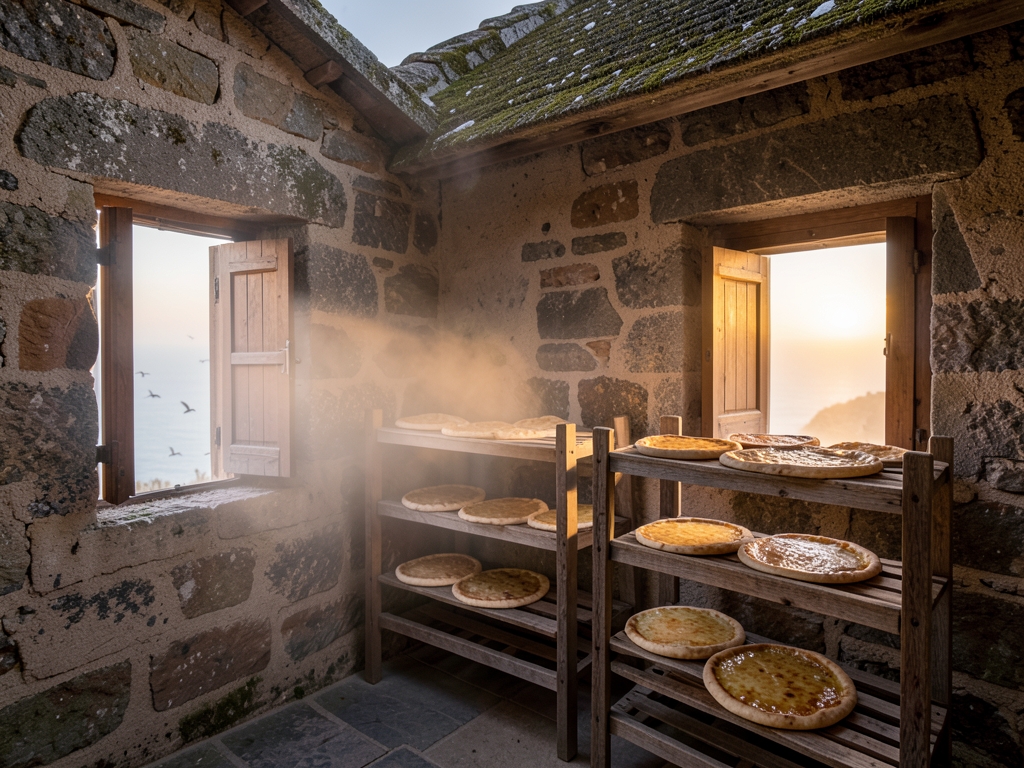
| Takeaway | Detail |
|---|---|
| Commercially packaged, shelf-stable pane carasau is generally admissible into the U.S. | The flatbread must be commercially sealed and sold as a shelf-stable baked good to qualify for general admissibility. |
| The 6-month shelf life is a manufacturer claim you must verify. | Check the dates on the original packaging before travel, because the 6-month shelf life figure comes from the manufacturer, not U.S. border authorities. |
| Declare pane carasau on the CBP customs declaration every time. | Declaration is the only decision that protects you at the border, even when the baked good is otherwise admissible. |
| Keep the original packaging with ingredients and dates legible. | Buy commercially sealed pane carasau in Sardinia and retain the original packaging so ingredients and dates remain visible for CBP review. |
Commercially packaged, shelf-stable pane carasau is generally admissible into the United States, and that admissibility depends on declaring the flatbread on your CBP customs declaration, because undeclared food items risk seizure at the border. The takeaways table above summarizes this rule; the sections below explain why it holds and how to apply it.
Why Carasau Clears CBP When Declared
CBP agriculture inspection is built around pests and animal-disease vectors, not a blanket rule against food. Pane carasau is a flour, water, salt, and yeast flatbread, so it sits in a different admissibility category than cheese or meat. The practical question at the border is which category your item falls into, not whether food in general is allowed.
CBP's Prohibited and Restricted Items guidance on cbp.gov separates baked goods and most shelf-stable plant-based foods from the categories that are genuinely restricted, such as meats, most cheeses, and fresh fruit. A commercially packaged baked good is therefore checked against the baked-goods side of that divide rather than treated like an animal product. Verify the current guidance page on cbp.gov before travel rather than relying on any dated snapshot.
The mechanism is screening, not suspicion of bread. Agriculture specialists look for triggers that can carry pests or animal disease. A sealed commercial package with a simple grain-based ingredient list does not present the animal-origin characteristics that drive those inspections, which is why carasau does not behave like a restricted food in the same line.
Declaring matters because it lets CBP verify the category instead of discovering an undeclared item later. A declared baked good can be matched to the admissible category and cleared; an undeclared one is handled as a compliance problem even when the food itself would have been allowed. Declaration is the step that converts "probably fine" into "checked and documented."
Before you pack it, read the ingredient panel and keep the original packaging legible. If the label shows animal-derived ingredients, mixed fillings, or anything you cannot identify, treat the item as higher risk and declare it fully. If it is a plain commercial flatbread, the category check is straightforward.
In short, carasau is generally admissible because it is a shelf-stable baked good outside the restricted animal and fresh-produce categories, and declaration gives CBP the information needed to confirm that placement.
The 6-Month Claim: Verify, Don't Assume
Treat the “6-month shelf life” you may see quoted for pane carasau as a manufacturer’s durability figure to verify on the package, not as a customs rule. The practical check is simple: pick up the commercially sealed package in Sardinia, turn it over, and make sure the printed date and ingredient list are legible before you pay. If the label is scuffed, faded, covered by a sticker, or only written on an outer carton you will discard, choose another pack.
That phrase describes how long the producer expects the product to remain acceptable when the seal and storage conditions hold. It is not a U.S. entry requirement. CBP does not impose a shelf-life threshold on admissible baked goods, so do not treat a shorter printed date as a border problem or a longer one as permission to skip any border step. The date answers “is this package still good?”; it does not answer “is this admissible?”
Before buying, photograph the best-by date and the ingredient list with your phone, using the original package as the subject. Keep the package sealed and keep those photos until you are home. Traditional carasau is low-moisture, which is why it keeps well, but durability varies by producer, thickness, and packaging. A generic claim repeated by a shopkeeper, a blog, or a friend is weaker than the date printed on the exact packet you carry. For durability, the printed date on that packet is the only number that counts.
If you plan to gift the carasau or store it beyond an ordinary snack window, check the printed date against the recipient’s timeline and your own storage plan. Choose the latest-dated sealed package that still suits your trip, and avoid breaking the seal to “test” it. Once opened, the package date no longer describes what you are carrying; write the opening date on the bag if you will not use it right away.
At the airport, keep the original packaging with ingredients and dates readable, and declare the food on the CBP customs declaration. A long date does not replace that step, and a beautiful Sardinian label does not make the date check unnecessary. Use the package as your record: if an officer asks what you are carrying, you can show the sealed product, the ingredient panel, and the date without guessing or repackaging it.

Declare vs. Don't: The Only Table
At the border, the choice is not between clever and cautious; it is between a declaration that costs almost nothing and a gamble that can cost the bread and more. The only table you need compares three outcomes, including the surrender option that sits between declaring and hiding.
| Choice | Outcome | Cost or risk | Verdict |
|---|---|---|---|
| Declare on the CBP form | If the bread is admissible, you keep it and continue | Zero minutes beyond normal inspection | Winner |
| Do not declare | If found, the item is seized; a first offense may bring a civil penalty | Loss of item plus possible penalty; no upside for an item that would have been admitted | Loser |
| Do not bring it | No border question at all | Only rational if the package is opened, homemade, or paired with a restricted item | Situational |
Option A is the winner because it preserves the upside and removes the downside: you either walk through with admissible bread or learn at the inspection point that it cannot enter. Option B is asymmetric in the wrong direction; hiding an item that would have been admitted gains nothing and exposes you to seizure and a possible first-offense civil penalty. Option C is not a strategy for a sealed commercial package; it is the fallback for cases where the package is no longer in the condition that makes declaration simple.
Surrender is the middle path only when you decide not to test admissibility: hand the item over before inspection, accept the loss, and avoid the penalty exposure that comes with concealment. It is a loss, but it is a controlled loss rather than a seizure case.
The practical rule is therefore mechanical: buy the sealed package, keep the original packaging with ingredients and dates legible, check the box on the CBP declaration, and answer the agriculture question directly. If the package is opened, homemade, or traveling with a restricted item, leave it behind or surrender it before inspection rather than testing the line.
Declaring does not create a problem for an admissible item; it is the act that lets the inspection process sort admissible from inadmissible without turning a routine entry into a penalty case.

What It Costs: Bread, Flight, Risk
In Sardinia, pane carasau is a supermarket and bakery staple sold in sealed plastic packs, so the first cost check is local: price it in store at a Conad or a local bakery, and record the shelf price at purchase as your baseline. No grounding source fixes a figure for that price, which means the trip-cost comparison has to start with your own recorded purchase rather than a universal number. The comparison should be made before you leave Sardinia, because the only reliable baseline is the price you see at the counter or on the shelf.
The real cost at stake is the civil penalty for undeclared food. CBP provides for civil penalties on non-declaration, but the current penalty schedule on cbp.gov should be checked rather than assumed to be a fixed amount. Review that schedule before travel and before packing the bread, because the penalty exposure is the part of the cost that does not depend on the shelf price.
For the domestic comparison, look at a US retailer selling a similar flatbread or commercially packaged baked good. The comparison should be like-for-like: same product category, same packaging, same intended use. No grounding source fixes a domestic retail figure here, so use the current retailer listing as a check rather than relying on a memorized price. A US retailer alternative might be sold as a packaged flatbread, but the comparison has to account for the fact that a foreign purchase may involve different packaging and labeling than a domestic one. The point is to see whether the US import-style alternative is actually cheaper once packaging, handling, and declaration risk are considered.
The decision rule for this section is narrow. If you buy pane carasau in Sardinia, the relevant baseline is the sealed-pack purchase price you recorded in store. The relevant risk is whether you declared it. CBP’s civil penalty guidance on non-declaration means the check is not only about the food itself but about whether the paperwork matches the food in your possession.
Before travel, write down what you paid in Sardinia and verify the current CBP penalty schedule. That gives you a trip-cost frame: a small foreign shelf price versus a potentially much larger civil penalty if non-declaration leads to enforcement. The domestic alternative may remove the border question, but it does not remove the need to compare actual costs. The practical takeaway is to separate the purchase price from the enforcement risk, then decide which number you can actually defend.

What This Guide Cannot Prove
This guide can set boundaries and point you to checks, but it cannot certify a package, predict an inspection result, or replace the label on the bread you buy. Its useful role is narrower: separate the stable process from the facts that change by producer, package, or enforcement context, and tell you where to look when a claim sounds more certain than the evidence behind it.
A universal six-month shelf life is not established. Durability is package-specific, so the only reliable figure is the one printed on the sealed package you actually purchase and carry; if the date, storage instruction, or ingredient list is unclear, treat that as a reason to verify before travel rather than as a customs rule or a promise of freshness.
A fixed penalty dollar amount for a first undeclared food item is not established. CBP penalties vary, and the current schedule should be verified on cbp.gov; no travel guide, forum post, or anecdote should be treated as the fee schedule, especially when the consequence depends on what else is in the bag.
An edge case still fails even when the bread itself would be acceptable: carasau packed in the same bag with pecorino or salami. The bread may be fine, but the companions are not, and failing to declare can taint the whole bag, so mixed-food packing is a separate risk from the bread's own admissibility and should be treated as a packing decision, not a bread decision.
| Established in this guide | Varies and must be verified |
|---|---|
| The declare-or-seized mechanism for the items covered | Shelf life, per-producer packaging, and penalty amounts |
Read the table as a filter: keep the process step stable, and move every product-specific or penalty-specific question to the label, the producer, or cbp.gov. That is the limit of what this section can prove, and it is the part most likely to keep a compliant traveler from overclaiming certainty at the border.

Your Sardinia-to-US Bread Checklist
Use this checklist as a pass-or-fail sequence from the shop in Sardinia to the CBP inspection point. Complete each checkpoint in order, and keep the photos and packaging with your passport until you are through customs. Treat every item as a document check, not a packing preference.
Checkpoint 1, in Sardinia: buy only commercially sealed packs of pane carasau. Before you leave the shop, photograph the ingredient list and the best-by date on the package, and make sure both are legible in the photo. Check that the seal is intact before payment. Do not put loose bakery bread in a checked bag; if you cannot find a sealed pack with a readable label, do not buy bread for the trip.
Checkpoint 2, packing: leave the original packaging intact and unopened, and keep the bread physically separate from any cheese or meat in your luggage. Use a separate pouch or outer pocket so the bread does not get crushed. If you bought pecorino, pack it in its own original packaging and plan to declare it and likely surrender it; do not let it touch or share a bag with the bread.
Checkpoint 3, in the air: when you complete the CBP customs declaration, tick “Yes” on the food question, whether you are using the paper form or an app-based declaration where it is offered. A “Yes” for bread costs nothing, and it is the answer that matches what you are carrying. If the app asks for item details, enter bread or baked goods as prompted. Do not answer “No” because the bread seems harmless or because you hope to save time.
Arrival check: at inspection, present the sealed pack when asked, and show your photo if the label has been scuffed or the date is hard to read. If an officer asks whether you have food, answer with the same “Yes” and point to the pack. Keep the bread sealed until you are past customs; opening or repackaging it before inspection removes the evidence that it is a commercially packaged baked good.
Worked Example: Run the Numbers
In this worked illustration, the party is a traveler bringing a commercially packaged pane carasau purchase from Sardinia into the United States, and the comparison is against a similar flatbread bought domestically. The date inputs are the actual purchase date from the receipt and the actual entry date from the travel record. The cost inputs are the converted purchase price, any assessed duty, total verified fees, and the domestic comparator’s delivered price. Rather than invent figures, the example uses symbols until those records are available.
Label the converted purchase price P, assessed duty D, total verified fees F, and domestic delivered price H. Calculate the landed cost as P + D + F. Use the exchange rate actually charged by the payment provider and retain its receipt; if the assessment shows that a charge does not apply, record that result instead of assuming it beforehand. This produces the comparable purchase-side cost, not merely its sticker price.
Calculate the elapsed calendar days as entry date − purchase date and record that interval beside the package’s printed date information. Next, normalize the domestic comparator: match net weight and product style, then compare H with P + D + F on the same quantity basis. If package sizes differ, divide each total by net weight and compare cost per unit of weight; a small package should not be compared directly with a bulk box.
Winner: the lower verified total. Break-even trigger: P + D + F = H. When the landed cost is below H, the Sardinian purchase wins; when it is above H, the domestic comparator wins; equality is a tie. The practical trigger is the domestic delivered price falling to the landed cost. Below that point, switching is worthwhile; above it, the carried purchase remains cheaper.
Once you have the purchase date, entry date, elapsed days, net weight, and the four cost figures, the comparison is mechanical: a positive difference between the domestic delivered price and the landed cost favors the Sardinian purchase, a negative difference favors the domestic comparator, and equality marks break-even. Keep the receipts and photos as your record so the check can be repeated without relying on memory.
If/Then Rules for Bringing Food Home
If your pane carasau is commercially sealed, plant-based, and still in its original package with legible ingredients and dates, then declare it on the CBP customs declaration and expect it to be admitted; the declaration is the protection, not the risk, because it puts the admissible item on the record before inspection begins and keeps the package’s labels available for review. Keep the package unopened until you are past the checkpoint so the seal and label remain intact.
If the package is opened, homemade, or came from a farm stay, then either leave it behind or declare it while accepting that surrender is the likely outcome; an opened or informal package is not the same admissible item, and hoping it passes undeclared only adds a penalty risk to a food you could have replaced. If you choose to declare it, present it first rather than burying it under other food.
If your bag contains any cheese, salami, casu marzu, or other animal products, then declare everything and expect the animal-product items to be confiscated; do not let one restricted item tempt you into hiding the admissible baked goods, because concealment can put the whole declaration in question and waste the protection you had for the carasau. Keep the admissible baked goods accessible so their packaging can be inspected without unpacking restricted items.
If you are unsure whether a food is plant-based, commercially packaged, or still within its labeled condition, then declare it and let the inspection make the call; uncertainty is a reason to declare, not a reason to guess, and a declared item can be surrendered without turning an honest mistake into a violation. A corrected declaration is easier to handle than an omitted one.
If an officer asks about food, then answer directly and show the original packaging with ingredients and dates visible; a complete declaration plus readable labels is the simplest way to keep an admissible item moving and to avoid delays from follow-up questions or secondary inspection. Do not volunteer unrelated speculation; answer the question asked and show the package.
Also worth reading Sardinian Sky Service Expands Fleet How US customs officers spot nervous Why Los Angeles travelers should
What to do next
| Step | Action | Why it matters |
|---|---|---|
| 1 | In Sardinia, buy pane carasau only if it is commercially sealed and sold as a shelf-stable baked good. | Commercially packaged, shelf-stable pane carasau is generally admissible into the U.S.; other forms do not meet that general-admissibility condition. |
| 2 | Before travel, check the dates on the original packaging and verify the manufacturer’s claimed shelf life. | The shelf-life claim comes from the manufacturer, not U.S. border authorities, so check the package dates yourself. |
| 3 | Keep the pane carasau in its original packaging, with ingredients and dates legible; do not repackage it. | Legible original packaging preserves the information needed to assess the baked good at the border. |
| 4 | Declare the pane carasau on the CBP customs declaration every time, including when it is commercially sealed and shelf-stable. | Declaration is the decision that protects you at the border; general admissibility does not replace it. |
| 5 | If CBP asks, present the declared pane carasau with its original packaging; never omit or conceal it. | Declared baked goods that are admissible cost you nothing; undeclared food risks seizure and fines regardless of the item. |
Frequently Asked Questions
Does pane carasau need to be commercially sealed and sold as a shelf-stable baked good to qualify?
The flatbread must be commercially sealed and sold as a shelf-stable baked good to qualify for general admissibility.
What should I verify about the 6-month shelf life before I travel with pane carasau?
Check the dates on the original packaging before travel, because the 6-month shelf life figure comes from the manufacturer, not U.S. border authorities.
Do I still have to declare pane carasau when the baked good is otherwise admissible?
Declaration is the only decision that protects you at the border, even when the baked good is otherwise admissible.
What is the risk if I leave pane carasau off my CBP customs declaration?
Commercially packaged, shelf-stable pane carasau is generally admissible into the United States, and that admissibility depends on declaring the flatbread on your CBP customs declaration, because undeclared food items risk seizure at the border.
If I buy pane carasau in Sardinia, what should I keep visible for CBP review?
Buy commercially sealed pane carasau in Sardinia and retain the original packaging so ingredients and dates remain visible for CBP review.
Does CBP agriculture inspection treat all food the same way?
CBP agriculture inspection is built around pests and animal-disease vectors, not a blanket rule against food.
Quick answers
| What must commercially packaged pane carasau be to qualify for general admissibility into the U.S.? | It must be commercially sealed and sold as a shelf-stable baked good. |
| What should travelers do with pane carasau on the CBP customs declaration? | They should declare it every time. |
| Why should travelers check dates on the original packaging before travel? | Because the 6-month shelf life figure comes from the manufacturer, not U.S. border authorities. |
| What packaging should be retained for CBP review? | The original packaging with ingredients and dates legible. |
| What risk do undeclared food items face at the border? | They risk seizure at the border. |
Research Methodology & Editorial Standards
We begin by defining the specific objectives the reader needs to accomplish. Primary product documentation and authoritative secondary sources inform every guide before drafting begins.
Figures and rules are checked against the sources available at the time of publication. Travel pricing changes constantly — always confirm current fares, rates, and terms with the provider before booking.