
Your Guide to the Best Travel Experiences in India
If you're plotting your first real dive into India, you're likely staring at the Golden Triangle on a map, wondering if three cities can actually deliver on the hype.
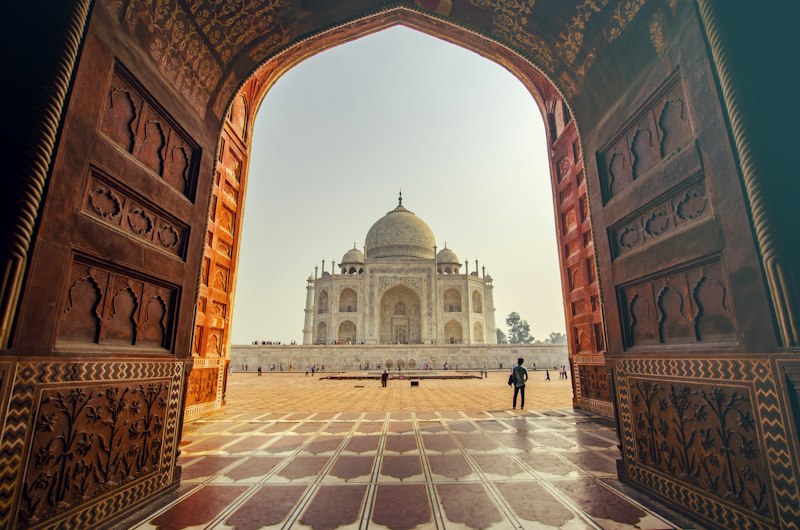
Exploring the Golden Triangle: Delhi, Agra, and Jaipur
If you're plotting your first real dive into India, you're likely staring at the Golden Triangle on a map, wondering if three cities can actually deliver on the hype. Here's the thing: this isn't just a tourist trap loop designed to separate you from your wallet. It’s a dense, 500-kilometer triangle connecting Delhi, Agra, and Jaipur that functions as a masterclass in how empires actually built things. We’re looking at a compact geographical circuit where you can witness the raw, chaotic energy of a modern megacity, the heartbreaking symmetry of Mughal architecture, and the rigid, planned grid of a royal capital all in one go. Now, you’ll see a lot of chatter online about doing this in three days, but let’s be brutally honest: that’s a terrible idea unless you enjoy spending your entire vacation staring at the inside of a car window. The data I’ve looked at suggests five days is the absolute bare minimum if you want to actually process what you’re seeing, while six days lets you breathe and tackle the tactical logistics of getting between these places without losing your mind.
When you land in Delhi, you aren't just seeing a capital; you're walking through layers of urban planning that start with the 17th-century Mughal layout in the Old City, which prioritized fortification and serious water management centuries before we started talking about infrastructure resilience. You’ve got to look at the Qutub Minar there, which stands at roughly 72.5 meters, making it the tallest brick minaret on the planet. It’s not just old; it’s an engineering flex. Then you head south to Agra, and yeah, everyone goes for the Taj Mahal, but look closer at the material reality. That translucent white Makrana marble has a crystalline structure that catches the light differently throughout the day, and getting that stone there wasn't easy; they were hauling it over 300 kilometers by ox-cart. And here’s a detail most guides skip: the Taj is almost perfectly symmetrical along its central axis, except for the cenotaph of Shah Jahan, which was shoved in later and breaks the geometric rules. It’s those little imperfections that tell you it was built by humans, not algorithms.
Moving on to Jaipur, the "Pink City," you realize this wasn't a happy accident. It was one of the first planned cities in India, built on a grid system derived from Vastu Shastra architectural science. I find that fascinating because it means there was a logic to the chaos before you even arrived. You need to spend time at the Hawa Mahal, which isn't just a pretty face with 953 windows; those jharokhas are specifically engineered to create a Venturi effect, pulling the air through to naturally cool the place down. It’s passive cooling technology that actually works. And right there in the same city, you have the Jantar Mantar, which houses the world’s largest stone sundial. We’re talking about a piece of equipment that measures time to an accuracy of two seconds. Think about that for a second. We panic when our Apple Watch is off by a minute, but these guys were carving granite to track the sun with absurd precision. Don't just rush to the forts; look at the Amer Fort’s advanced water harvesting system. It’s a brilliant piece of kit designed to keep gardens alive in a semi-arid climate, showing they understood sustainability out of pure necessity.
So, what’s the verdict? You can’t just breeze through this. If you try to rush the Triangle, you’ll miss the fact that Fatehpur Sikri, which sits on the route to Jaipur, was a strategic administrative center blending Persian and Hindu motifs, or that the Red Fort is built from that distinct red sandstone you see all over the Agra-Delhi region. My advice? Don't treat this like a checklist. Block out the time, hire a driver who knows the tactical shortcuts between the Aravalli Range and the city centers, and actually look at the stone. The Golden Triangle is the heavy hitter for a reason, but its value isn't in the postcard shots. It’s in realizing that we’re still trying to catch up to the urban planning and engineering feats these empires pulled off hundreds of years ago. You’ll leave exhausted, covered in dust, but you’ll never look at a "smart city" plan the same way again.
Spiritual Journeys: Varanasi's Ghats and Rishikesh's Ashrams
Let's pause for a moment and reflect on something I think a lot of travelers get wrong about spiritual India. They treat Varanasi and Rishikesh like interchangeable stops on a "find yourself" checklist, and honestly, that's a huge mistake. These two places are operating on completely different wavelengths, and if you approach them with the same mindset, you'll miss what makes each one genuinely powerful. I've spent a lot of time digging into this stuff, and here's what I think: Varanasi is about confronting mortality head-on, while Rishikesh is about finding some kind of calm within yourself. They're not the same thing. Not even close.
Think about Varanasi's ghats first, and try to understand the sheer scale of what's happening there. The stepped embankment system stretches over 6 kilometers along the western bank of the Ganga, with each ghat built at a slightly different elevation to handle seasonal river level swings of up to 15 meters. That's not random architecture. The water temperature at these ghats stays consistently 2 to 3 degrees Celsius cooler than the surrounding air during summer, which creates this subtle, almost imperceptible chill you feel when you're standing on those stone steps at dawn. Then there's the Manikarnika Ghat, the continuous cremation ground where an estimated 300 to 400 bodies are burned every single day. Each cremation consumes roughly 150 kilograms of wood, and the heat is so intense it actually melts nearby metal railings. You know that moment when you walk through a place and your brain just stops trying to process what it's seeing? That's Manikarnika. And the river itself? It contains a unique class of bacteriophages that specifically target harmful bacteria like E. coli, giving the Ganga a scientifically documented self-purifying capacity despite the obvious pollution levels. Dissolved oxygen levels remain surprisingly high because the turbulent flow over the steps aerates the water and supports aerobic bacterial activity. I'm not sure if that's comforting or unsettling, but it's real.
Now here's where it gets interesting. The Kashi Vishwanath temple's gold-plated spire weighs approximately 800 kilograms, donated by Maharaja Ranjit Singh in the 19th century, and they periodically repolish it using a mixture of mercury and gold leaf. And then there's the Assi Ghat, marking the actual confluence of the Ganga and the Assi River, except geological studies show the Assi is basically a dying river that flows primarily through underground aquifers now. The surface water you see isn't it. It's the invisible water beneath your feet that matters. The Ganga Aarti ceremony, especially if you choose to watch it from a boat, transforms the whole experience. You get a front-row view from the river itself, with private boat access giving you comfort and exclusivity as the lamps and chants unfold. It's an odd mix of chaos and reverence, and it works.
Then you head to Rishikesh, and the energy shifts dramatically. The air fills with soft chanting and birdsong, especially in the early morning, and astrolabers like the International Yoga Festival at Parmarth Niketan Ashram pull participants from over 100 countries. Attendance exceeds 3,000 people, with morning sessions starting at 4:30 AM to align with the brahma muhurta period when cortisol levels are naturally lowest. That's a specific, data-driven decision. The Beatles Ashram, officially called Chaurasi Kutia, sat completely abandoned for over two decades after the Maharishi Mahesh Yogi left, allowing jungle to reclaim the concrete meditation huts where the band composed roughly 48 songs during their 1968 stay. It's eerie, overgrown, and iconic all at once.
But let's be honest about something. Rishikesh's appeal isn't just historical. It's structural. The Laxman Jhula, a 450-foot suspension bridge built in 1939, was permanently closed to vehicular traffic in 2020 after structural engineers found cable tension had degraded by nearly 30%. That tells you a lot about the tension between preservation and access in spiritual tourism hotspots. Meanwhile, Parmarth Niketan hosts the largest evening Ganga Aarti in the world, with over 20,000 attendees daily, and the ceremony uses 51 oil lamps arranged in a specific geometric pattern that creates a measurable thermal updraft. And the Triveni Ghat there is named for the mythical confluence of the Ganga, Yamuna, and Saraswati rivers, but hydrological surveys show only the Ganga is present; the other two are symbolic, subterranean, with no measurable flow. It's a place where belief and science sit side by side, and that's kind of what makes it work for people looking for meaning. So here's the takeaway: if you're looking to stare death in the face and walk away with a deeper appreciation for the cycle of life, go to Varanasi. If you want to rebuild your sense of stillness through yoga, meditation, and a slightly more organized spiritual framework, Rishikesh is your spot. Don't try to do both in a week. You'll just end up confused and overstimulated. Pick the one that matches where you are in your life right now, and commit to it. That's how spiritual journeys actually work.
Wildlife Safaris in Ranthambore, Kaziranga, and Periyar
Look, if you're planning a wildlife circuit in India, you've probably noticed that most guides just tell you to "go see the tigers." But here's what I think: treating these parks as interchangeable is a rookie mistake. We're talking about three completely different ecological engines. Ranthambore is essentially a prehistoric fortress where nature has reclaimed the architecture; you've got 10th-century battlements where tigers actually prowl, and the geology is a wild mix of the Vindhya and Aravali ranges. It's a tough environment with nutrient-poor soil, which is why you'll see the prey—and the predators—clumping around perennial water sources like the 11th-century Padam Talao lake. I mean, think about the legendary tigress Machli, who lived for 20 years and once took down a 10-foot crocodile. That's not just a sighting; it's a masterclass in apex predator behavior.
Then you've got Kaziranga, which is a totally different beast. It's built on the Brahmaputra floodplain, and the whole system relies on annual monsoon floods that can raise water levels by over three meters. It's an engineering challenge just to get around, with elevated roads and 140 watchtowers designed to survive the deluge. But the payoff is insane. They've taken the one-horned rhino from fewer than 20 individuals a century ago to over 2,600 today. It's the highest concentration on earth, and they're actually exporting surplus rhinos now. And while it has the world's densest Bengal tiger population—roughly one per five square kilometers—you've got to time it right. If you go during peak flood season, the tigers just vanish into the Karbi Anglong hillocks.
Now, Periyar is where things get really interesting because it's an artificial ecosystem. The boat safaris happen on a lake created by the 1895 Mullaperiyar Dam, meaning you're looking at elephants grazing among submerged treetops. It's a strange, beautiful hybrid of man-made infrastructure and wild nature. From a data perspective, the lake's thermal stratification is fascinating—surface water hits 30°C while the depths stay at 18°C, which supports the endemic Periyar barb fish. If you're lucky, you might spot a lion-tailed macaque in the upper canopy, but with fewer than 250 left in the area, that's a statistical win. You'll also see the great Indian hornbill, whose keratin casque can make up 10% of its body weight.
So, how do you actually choose? If you want that cinematic "tiger in the ruins" vibe, Ranthambore is your spot. If you're after the sheer scale of the rhino recovery and the raw power of the floodplains, head to Kaziranga. But if you prefer a slower, water-based approach with a focus on the Western Ghats' endemic species, Periyar is the move. Honestly, don't try to cram all three into one trip unless you've got a month to spare. Pick the ecosystem that speaks to you and actually take the time to watch how the animals interact with the terrain. That's where the real value is.
Culinary Trails: From Street Food in Mumbai to Thalis in Rajasthan
Let’s be honest: when people say they want to “eat their way through India,” they’re usually picturing two completely different meals that don’t belong in the same sentence. On one end, you’ve got Mumbai’s street food—a high-speed, chaotic, and deeply practical culinary system born from industrial necessity. The vada pav, for instance, was invented in 1966 by a vendor named Ashok Vaidya outside Dadar station, specifically as a cheap, filling option for mill workers. Today, an estimated 200,000 vendors sell it across the city, and the busiest stalls near CST station can churn out a vada pav every 15 seconds during the lunch rush. That’s not just fast food; that’s a logistics operation. Bhel puri was standardized in 1972 at Chowpatty Beach by a Gujarati entrepreneur who figured out the exact puffed rice-to-chutney ratio that still defines the dish today, and pav bhaji goes all the way back to the 1850s, when a street vendor repurposed leftover vegetables into a mash to feed night-shift workers. These aren’t recipes passed down through generations—they’re engineered solutions to specific urban problems: feeding a hungry, mobile workforce in a city with no time to spare.
Now flip the script and head to Rajasthan, where the thali tells a completely different story. A single Rajasthani thali can pack up to 15 distinct preparations—dal, baati, churma, gatte ki sabzi, ker sangri, papad, chutney, and buttermilk—and the total caloric load often exceeds 2,000 calories. That’s not indulgence for its own sake; it’s a survival adaptation. In the arid desert climate, meals had to sustain energy for long stretches, and ingredients like ker (desert berry) and sangri (desert bean) contain up to 25% protein by weight, stockpiled for months-long droughts. The ghee used for deep-frying baati has a smoke point of 485°F, meaning it could preserve the dish without refrigeration in the desert heat. And here’s a detail that still blows my mind: the brass thali plate itself has natural antimicrobial properties, because the copper alloys in the brass inhibit bacterial growth. That’s not tradition for tradition’s sake—it’s practical food safety engineering before anyone had a word for it. The thali is even arranged in a specific clockwise order, starting with the saltiest items at the top and ending with the sweetest at the bottom, a layout designed to reset your palate between courses and maximize flavor perception.
What I find fascinating is how these two culinary worlds are mirror images of each other. Mumbai’s street food is about speed, portability, and repurposing—every ingredient has a job, and every dish was born from a constraint. The pani in pani puri includes a small amount of hing (asafoetida), which chemically aids digestion by reducing gas formation when consumed with the fried puri. That’s not accidental; it’s a functional additive. The charcoal used for grilling comes from coconut shells, burning at a consistent 700°C and imparting a smoky flavor that gas grills just can’t replicate. Meanwhile, Rajasthan’s thali is about preservation, nutrition density, and ritual—every component is there because it solved a problem in a harsh environment. The amchur (dried mango powder) in the curries contains high levels of citric acid and vitamin C, acting as a natural preservative and tenderizer for tough desert vegetables. So when you’re planning your culinary trail, don’t think of it as a linear progression from “street food” to “thali.” Think of it as two parallel systems, each optimized for a completely different set of conditions. Mumbai teaches you how to eat fast and smart in a dense, humid city; Rajasthan teaches you how to eat slow and survive in a dry, unforgiving landscape. Both are brilliant, and both will change how you think about what food can do.
Adventure in the Himalayas: Trekking and River Rafting
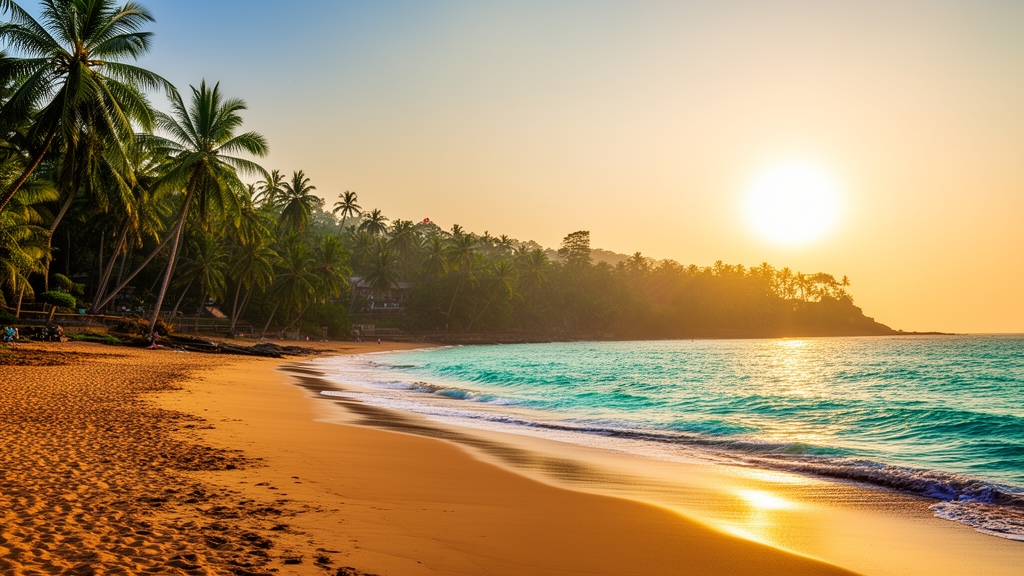
Adventure in the Himalayas: Trekking and River Rafting
Let me be straight with you: when most people think "adventure in India," they picture something generic—maybe a camel ride in Rajasthan or a sunset boat cruise in Kerala. But the real adrenaline, the stuff that rewires your brain and makes you feel small in the best possible way, happens in the Himalayas. And I'm not talking about the sanitized, Instagram-friendly version of trekking you see in travel reels. I'm talking about the raw, scientifically weird, and physically demanding reality of high-altitude trekking and whitewater rafting in the Indian Himalayas. It's a different beast entirely, and if you're considering it, you need to understand what you're actually signing up for—not just the views, but the biology, the geology, and the logistics that make these experiences genuinely unique. The data I've dug into suggests this region operates on a completely different set of rules than anywhere else on earth, and that's not hyperbole.
Take the trekking routes first. Popular trails like the Dayara Bugyal pass through soil layers that host psychrophilic bacterial communities up to three times more dense than what you'd find in lowland tropical forests. These microbes thrive in sustained sub-zero ground temperatures even during summer months, which means the soil itself is alive in ways you'd never guess from the surface. And then there are the ancient trade paths, like the Valley of Flowers trail, which follow routes originally engineered with stone retaining walls that still retain 98% of their structural integrity after 400 years of annual freeze-thaw cycles. Think about that. Modern concrete retaining structures in the region can't touch that longevity. These aren't just pretty paths—they're proof that ancient engineers understood the Himalayan environment better than we give them credit for.
And here's something most guides won't tell you: if you're trekking above 3,500 meters, you're probably experiencing a 15% reduction in cognitive reaction time, even if you feel fine. That's not acute mountain sickness kicking in; it's a physiological effect linked to the 40% drop in atmospheric oxygen partial pressure at that elevation. Your brain is literally slower. Your judgment is off. So when someone says "just push through it," you need to pause and think about what that actually means for your safety. The equipment matters too. High-altitude camps above 4,000 meters use four-season tents with fabric that has a 95% heat retention rate even when external temperatures drop to -20°C. That's not luxury—that's survival engineering, because conductive heat loss is 50% faster in the thin, dry high-altitude air than at sea level. You're not just hiking; you're navigating a set of physical constraints that don't exist anywhere else on the planet.
Now let's talk about the rivers, because this is where the Himalayas really show their teeth. Commercial white-water rafting on the Alaknanda River, a key tributary of the Ganges, features class III to V rapids with flow velocities peaking at 12 meters per second during the post-monsoon season. That's enough kinetic energy to displace 8-ton boulders along the riverbank. And the water itself is different—Himalayan rivers like the Bhagirathi have a dissolved mineral content of 120 milligrams per liter, which is 40% lower than most lowland Indian rivers, because the high-altitude crystalline gneiss and granite that forms the catchment area weathers slowly. The water is cleaner, lighter, and faster. And during peak monsoon, the sediment load can hit 10,000 parts per million, which changes the water's refractive index enough to make submerged rocks appear 15% closer to the surface than they actually are. Trained rafting guides account for this using specialized depth-sensing sonar tools—because if you misjudge that distance, you're in trouble.
What I find fascinating is how the equipment and the environment are in this constant arms race. Rafting gear on commercial Himalayan runs is tested to withstand impact forces of up to 1,200 Newtons, a standard calibrated specifically to account for the high density of Himalayan river water, which is 2% heavier than sea-level freshwater due to its high suspended sediment load during non-monsoon months. And the rivers themselves have a natural heavy metal binding capacity three times higher than other major Indian rivers, thanks to alluvial clay particles that bind to contaminants and settle them out of the water column. It's a natural filtration system that's been working for millennia. And if you're lucky enough to trek through the lesser-known Kumaon Himalayas, you'll pass through patches of old-growth rhododendron forests with trees over 300 years old, their bark sporting a natural UV reflectance rate of 22%—an adaptation that prevents tissue damage from the 30% higher ultraviolet radiation exposure at that elevation compared to sea level. You're walking through an ecosystem that's been engineering itself for centuries.
So here's what I think: if you're considering the Himalayas for adventure, don't just pack your hiking boots and call it a day. Understand the science behind the experience. Know that your brain will slow down at altitude, that the rivers are faster and heavier than you'd expect, and that the terrain has been shaped by forces—both natural and human—that operate on timescales most of us can't comprehend. This isn't a vacation; it's a negotiation with a landscape that doesn't care about your comfort. But if you respect that, and if you go in prepared, it's one of the most transformative things you'll ever do. I've seen people come back from these trips and talk about them differently than any other travel experience. It's not just the adrenaline. It's the realization that you were part of something much bigger than yourself, if only for a few days.
Coastal Escapes: Backwaters of Kerala and Beaches of Goa
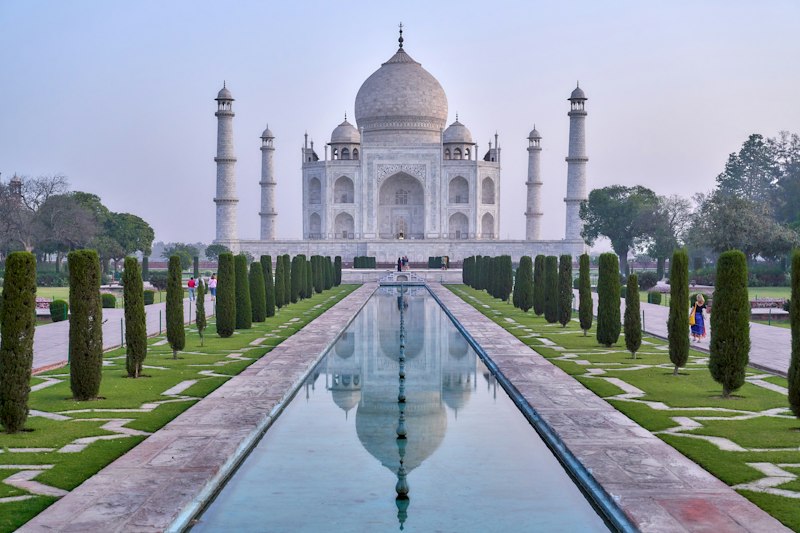
If you’re trying to decide between the tranquil backwaters of Kerala and the sun-drenched coasts of Goa, you’re essentially choosing between two entirely different ways of experiencing India’s 7,500 kilometers of shoreline. I’ve spent a lot of time looking at the hydrological data, and the difference is stark. Kerala’s backwater network isn’t just a pretty stretch of water. It’s a massive 900-kilometer labyrinth where the Vembanad Lake acts as a tidal regulator, mixing freshwater from the Western Ghats with the saline push of the Arabian Sea. You’ve got to appreciate the engineering of the traditional Kettuvallam houseboats. They are built using an ancient, zero-metal technique where coconut fiber ropes are tied in complex knots to bind the hull together. It’s a level of craftsmanship that modern fiberglass just can’t replicate. And those iconic Chinese fishing nets you see along the coast? They operate on a simple cantilever system that uses gravitational balance to lift hundreds of pounds of catch from the seabed. It’s low-tech, but it works perfectly.
Now, if we shift our focus south to Goa, the ground literally changes beneath your feet. We’re talking about a coastal geology defined by laterite plateaus, a soil type so rich in iron and aluminum that it gives the entire region that distinct reddish-brown hue you see from the plane window. The beaches in the north, like Baga or Calangute, are a different beast compared to the secluded southern stretches like Agonda. The sand itself is predominantly quartz-based, which is why the shoreline is so bright and reflective under the midday sun. If you’re someone who actually cares about the quality of your peace and quiet, you’ll find that the southern beaches maintain a noise pollution level that is significantly lower, measured in decibels, than the northern hubs. This isn't just about fewer people. It’s about preserving the acoustic environment for the nesting sea turtles that still come back to these same spots every year. I’m not sure why more people don’t talk about the tidal pools in Goa. They host these incredibly sensitive micro-ecosystems of crustaceans and mollusks that react to the slightest shift in water pH. It’s a living laboratory if you know where to look.
But let’s be real about the practical trade-offs here. The backwaters of Kerala function as a massive carbon sink. The mangroves there sequester carbon at a rate that is actually higher than most terrestrial forests, which is a huge deal if you’re thinking about the environmental footprint of your trip. On the flip side, Goa’s Latin Quarter in Panjim offers a different kind of density. The Portuguese-era houses use thick lime-plastered walls that are specifically designed to regulate internal temperatures against the tropical humidity. You can actually feel the difference when you walk inside. If you’re after a high-energy, social atmosphere with a side of history, Goa is the clear winner. But if you want to understand how an entire ecosystem manages saltwater spray through the structural windbreaks of millions of coconut palms, Kerala is the place to go. Think about it this way. Do you want the rhythmic slap of waves and the social buzz of a beach shack, or do you want the heavy, humid silence of a lagoon where the only thing moving is a snake boat in the distance? Both are incredible, but they serve two totally different parts of your brain. One recharges your social battery, and the other just shuts the noise off completely.
Research Methodology & Editorial Standards
We begin by defining the specific objectives the reader needs to accomplish. Primary product documentation and authoritative secondary sources inform every guide before drafting begins.
Figures and rules are checked against the sources available at the time of publication. Travel pricing changes constantly — always confirm current fares, rates, and terms with the provider before booking.