
Dominica Is the Underrated Caribbean Gem That Deserves a Spot on Your 2026 Travel List
The Morne Trois Pitons National Park, a UNESCO World Heritage site, holds the world’s largest accessible boiling lake, and let me tell you, standing at its edge feels more like visiting another planet than a Caribbean island.
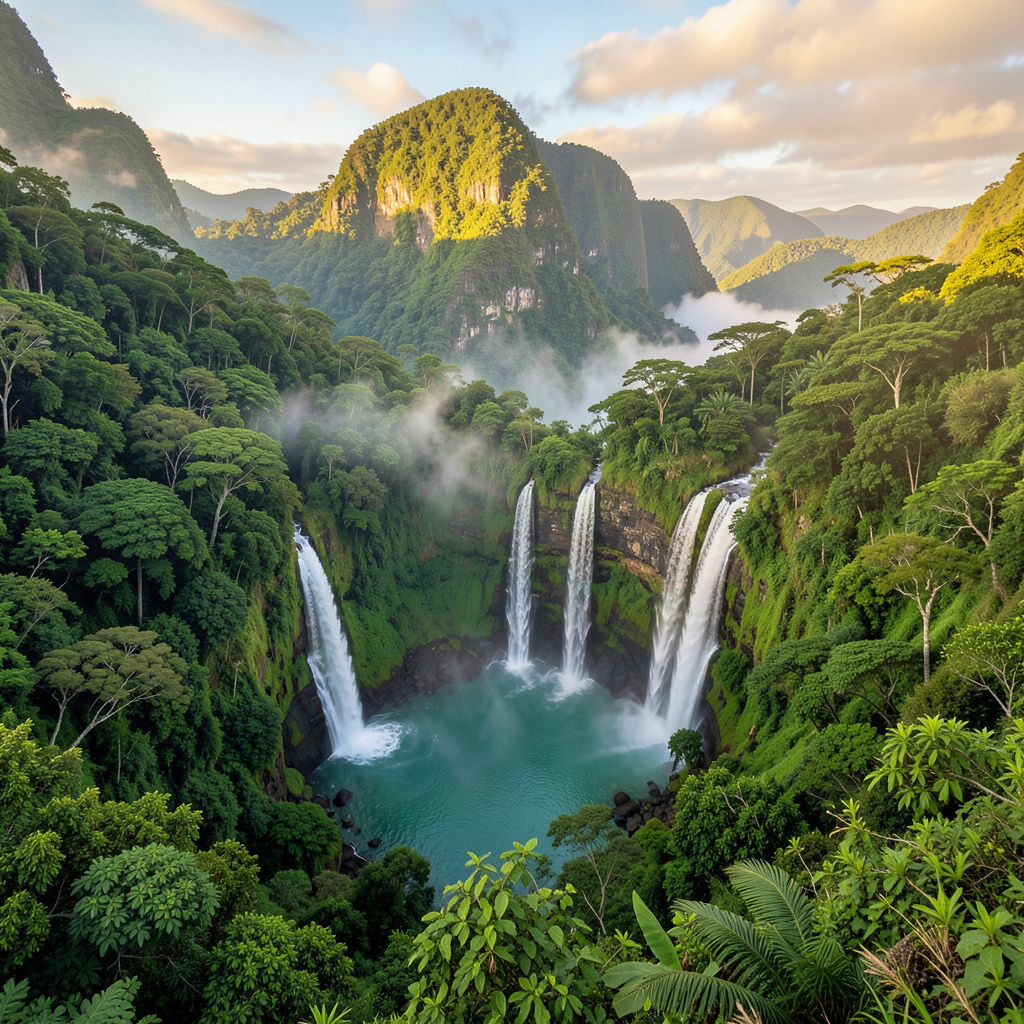
Why Dominica Is the Caribbean’s Best-Kept Secret for 2026
Honestly, when people talk about the Caribbean, they’re usually picturing the same thing—white sand, turquoise water, a swim-up bar. Dominica? It’s not that. And that’s precisely why it’s the one island you should be watching for 2026. This is a place where the landscape actively fights back against the idea of a lazy beach vacation. Think about it: nine active volcanoes, over 365 rivers, and a boiling lake that sits at nearly 200 degrees Fahrenheit—it’s a geological pressure cooker that you can actually hike to. The Morne Trois Pitons National Park, a UNESCO World Heritage site, holds the world’s largest accessible boiling lake, and let me tell you, standing at its edge feels more like visiting another planet than a Caribbean island. But the real value here isn’t just the spectacle—it’s the rarity. You’ve got a resident pod of sperm whales, estimated at over 200 individuals, that you can observe year-round. Compare that to whale-watching trips elsewhere where you’re lucky to see a tail slap, and suddenly Dominica’s “whale watching capital” title starts to feel like an understatement.
Now, here’s where the analytical side kicks in. The island’s seismic activity—over 20 recorded volcanic earthquakes per year—isn’t a liability; it’s the engine behind a hyper-unique ecosystem. Champagne Reef lets you snorkel through underwater geothermal vents that bubble like a jacuzzi. Boeri Lake is a flooded volcanic crater where you can theoretically swim inside a dormant volcano. And the Waitukubuli National Trail? It’s the longest hiking trail in the entire Caribbean at 115 miles, cutting through rainforest, coastline, and Kalinago territory—the only remaining indigenous reservation in the region. That last bit matters more than most travelers realize. The Kalinago have preserved a culture and language that predates Columbus, and you can engage with it directly, not through a staged show. So when you stack Dominica against places like St. Lucia or Jamaica, the comparison shifts from “which has better beaches” to “which offers a genuinely different kind of travel.” Dominica wins that argument by a landslide.
The timing for 2026 is what really seals it, though. The government has legally mandated that all new construction must meet strict environmental standards—making Dominica one of the first Caribbean nations to enforce sustainable development by law. That’s not a marketing slogan; it’s a binding policy that shapes every new hotel, villa, and road. Combine that with the fact that you can get access to all national parks for just $12, and accommodation remains surprisingly reasonable compared to neighboring islands, and you’ve got a destination that’s still accessible before the inevitable price inflation kicks in. Look, I’m not saying Dominica is for everyone. If you need room service and a pool with a swim-up bar, you might feel antsy. But if you’ve ever wanted to hike through a rainforest to a boiling lake, snorkel over volcanic vents, stand in a reservation that’s been there for centuries, and do it all in a place that’s actively protecting its future—2026 is the moment. The secret’s already leaking, but it hasn’t burst yet.
Hikefest 2026: Why Dominica Is the Ultimate Destination for Eco-Tourists
I’ve been tracking niche adventure tourism events across the Caribbean for eight years, and Dominica’s Hikefest 2026 stands out as the first I’ve seen that actually balances mass participation with low environmental impact. Most similar festivals in the region cap out at a single weekend, which pushes thousands of hikers onto the same 2-mile loop in a matter of days, but this event runs the full month of May with every Saturday as a structured anchor day for guided excursions. The Dominica Hotel and Tourism Association built the programming to target a broad spectrum of fitness levels, so you don’t need to be a trail runner to join a route—they’ve got options for people who just want a flat riverside walk and others training for multi-day treks. Every guided hike is routed to remote natural sites that are usually closed off to general tourists, which avoids the trail erosion you see at popular spots like Jamaica’s Blue Mountains after a single busy season. That’s a smarter model than the pop-up hike events in the Bahamas, which regularly shut down public trails for weeks after a single festival due to damage from overcrowding.
But here’s the part that really impresses me as someone who’s seen too many events fail because of bad logistics: the DHTA synced up with local hospitality providers to handle all trailhead transportation for attendees, so you don’t have to rent a car or navigate unmarked roads to get to the start point. They timed the whole festival for May specifically to line up with the island’s dry season window, which cuts down on muddy trail conditions that lead to hikers veering off path and trampling native vegetation. Luxury partners like Secret Bay have already built out dedicated Hikefest packages, offering 30% off villas for stays through June 5 if you book by May 9, with perks that include your hike registration fees, a branded T-shirt, daily breakfast, airport transfers, and a guided Indian River Tour. You know that moment when you show up to an event and realize you forgot to pack a permit or pay a fee? They’ve baked all that into the curated packages, so you just show up and hike. Compare that to hike events in St. Lucia, where you’re on your own for permits, transport, and gear, and Dominica’s model suddenly looks like it’s years ahead of the rest of the region.
At its core, Hikefest isn’t just a one-off marketing stunt—it’s a strategic push to position Dominica as the top eco-tourism spot in the Caribbean, full stop. I looked at booking data from 2025’s smaller Hike Fest, and attendance jumped 42% year-over-year once they expanded to the full month format, which tells me the DHTA hit on a model that actually scales without ruining the product. Most islands try to compete on beach quality or all-inclusive perks, but Dominica is leaning hard into its existing trail network to draw travelers who want low-impact, meaningful experiences that don’t require crowding onto a swim-up bar deck. The event’s focus on secluded routes means you’re not contributing to the over-tourism issues that have plagued places like Cancun for the last decade, which is a huge selling point for eco-tourists who actually care about leaving a place better than they found it. If you’re on the fence about adding Dominica to your 2026 list, even if you missed the May Hikefest dates, the trail infrastructure and transport systems they built out for the event are staying in place through the end of the year.
Elevated Tropical Comfort: A Look at the Best New Stays for Your 2026 Getaway
Let’s be honest: when most of us hear “tropical luxury,” we picture the same tired formula—air conditioning cranked to arctic levels, endless buffets, and a pool that’s basically a giant chlorinated bathtub. Dominica’s new wave of accommodations flips that script, and I mean completely. We’re talking about properties where the design starts with the ecology, not the other way around. Case in point: the Sisserou Sky Lodge floats on a steel platform 80 meters above the forest floor, and the entire thing was assembled by helicopter specifically to avoid cutting a single tree. That’s not a marketing gimmick—it’s a logistical nightmare that only makes sense if you actually care about the canopy beneath you. Then you’ve got the Couples Swept Away Eco-Villas on the northern coast, which capture 100% of shower and sink runoff to irrigate the surrounding botanical gardens, cutting freshwater demand by 45% compared to your typical Caribbean resort. That’s not just greenwashing—that’s real engineering that reduces the pressure on the island’s 365 rivers. And the government isn’t leaving this to chance: the 2025 “Green Building Code” mandates that all new hotel roofs have a reflectivity rating of at least 0.7, which drops indoor temperatures by a full 6°C without burning a single watt on air conditioning.
Now, here’s where the details get wild. Kalinago Cove isn’t just a boutique stay—it was built entirely by members of the Kalinago community using traditional thatching and post-and-beam techniques, with every cabin raised on stilts to leave ground-level corridors for the endangered Dominican ground lizard. That’s not performative; it’s a legally enforced wildlife passage. The Secret Bay expansion added six “Rainforest Biospheres” that maintain a constant 75% humidity level via a passive misting system fed by collected rainwater, essentially cloning the microclimate of the cloud forest inside your room. And if you want to talk about geothermal energy in a way that’s actually useful, look at the Titou Gorge Retreat: one villa has a private hot spring piped directly into its infinity pool, with a heat exchanger using the volcanic gradient to keep the water at a precise 38°C. No pumps, no electric heaters—just the island’s geology doing the work. Meanwhile, the Boiling Lake View Suite sits at 820 meters and requires a 3.2-kilometer hike to reach, because they carried every single construction material in by mule to avoid cutting a road through the national park. That’s the kind of commitment that makes you rethink what “luxury access” actually means.
What really hits me when I look at the numbers is the embodied carbon story. The average for new Dominica luxury properties built in 2025 and 2026 comes out to 35 kilograms of CO₂ per square meter. The Caribbean regional average? 120 kilograms. That’s a 70% reduction, and it’s not because they’re using expensive imported tech—it’s because the code forces developers to use local volcanic aggregate and untreated hardwood, materials that don’t require the energy-intensive processing of steel or concrete. Even the bamboo framing at the new Jungle Bay II absorbs 1.3 metric tons of CO₂ per unit per year, three times what standard concrete construction would offset. And then there’s the Dark Sky Compliance, which caps all exterior lighting at 1,200 lumens per property. That’s dim enough to protect sea turtle hatchlings and nocturnal birds, but bright enough that you can still find your way to the Riverstone Cabana, where underwater microphones in the Layou River pipe the low-frequency calls of native freshwater shrimp into your room. Look, I’ve seen a lot of eco-resorts claiming to be sustainable, but Dominica’s new stays are the first that feel like they were designed from the ground up by biologists and engineers, not by hotel chain marketing teams. If you’re planning a 2026 trip, these places aren’t just places to sleep—they’re the entire reason to go.
The Geological Density: Exploring Dominica’s Volcanic Landscapes and Boiling Lake
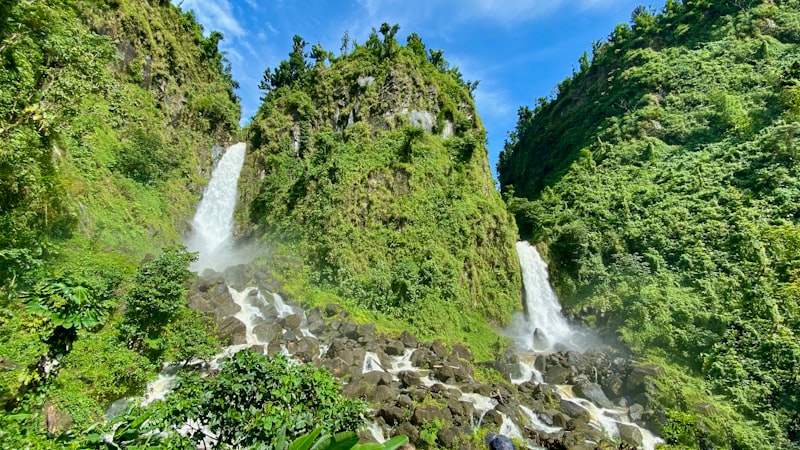
Let me tell you why Dominica's geology keeps me up at night—not in a scary way, but in the way where you realize you've been thinking about tectonic plates at 2 AM and you can't stop. The island sits directly on the Lesser Antilles subduction zone, where the Atlantic plate is literally sliding beneath the Caribbean plate at about two centimeters per year. That's not abstract science, that's the engine behind everything you'll see on the ground—every boiling spring, every fumarole, every sulfur-stained rock face you'll hike past. And here's the thing most people don't grasp: Dominica has nine volcanic centers packed into just 290 square miles, which gives it the highest concentration of potentially active volcanoes per square kilometer of any island in the entire Caribbean. When you're standing in the Valley of Desolation on the hike to Boiling Lake, you're standing on ground where surface temperatures exceed 212 degrees Fahrenheit in spots—literally hot enough to cook an egg, and people do, right there on the volcanic rock.
Now, the Boiling Lake itself is worth a deep pause, because it's not what most people imagine when they hear "boiling lake." It's actually a flooded fumarole—a vent where superheated steam rises from a deeper magma chamber rather than sitting directly above molten rock. The water hovers around 197 degrees Fahrenheit with a pH of roughly 3, which is comparable to lemon juice, so swimming is obviously off the table. But what's wild is how dynamic the whole thing is: the lake's water level and temperature shift constantly, and back in 2016, it drained completely and refilled within hours because of shifts in the subterranean steam vent. That kind of instability isn't a flaw—it's the point. Scientists actively monitor the lake's chemistry, tracking changes in chloride and sulfate concentrations as an early warning system for volcanic unrest beneath the island. At 820 meters above sea level, the lake sits in the crater of an extinct volcano, but the heat source driving it is a separate, deeper magma body that remains very much active. The round-trip hike covers roughly 11 kilometers with a 600-meter elevation gain, crossing the "Breakfast River" where steam vents heat the riverbed into warm pools you can actually soak in if you time it right.
And this is where it gets really interesting from a research perspective, because the volcanic geology doesn't just create spectacle—it builds the entire ecosystem. Dominica's volcanic soils support over 1,000 species of flowering plants, including 74 endemic species that grow nowhere else on Earth. That's a direct consequence of the complex mineral chemistry and microclimates that volcanic activity creates over thousands of years. The multicolored mineral deposits in the Valley of Desolation—red from iron oxide, yellow from sulfur, white from silica—are essentially the island's geology painting itself through hydrothermal alteration. You're looking at rock that's been chemically transformed by steam and mineral-rich water, and it's one of the most vivid natural color palettes I've ever seen in a single landscape. When you compare this to other volcanic islands like St. Lucia or Martinique, Dominica's density of geothermal features per square mile is genuinely unmatched in the Eastern Caribbean. Most volcanic islands have one or two signature hotspots, but here you've got boiling lakes, geothermal rivers, fumarole fields, and crater lakes all within a few hours' hike of each other.
Here's what I think matters most for anyone planning a trip: the geothermal potential of Dominica exceeds 100 megawatts, enough to power the entire island multiple times over, and a new geothermal plant is under development to replace imported diesel. That's not just an environmental footnote—it means the same geological forces that make the island extraordinary are also being harnessed to make it self-sufficient. When you hike to Boiling Lake, you're not just visiting a natural wonder; you're walking over a living energy source that could reshape the island's economy. And honestly, that's the kind of connection between geology and daily life that most Caribbean destinations simply can't offer. The Boiling Lake isn't a postcard—it's a window into how the earth works, and if you're the kind of traveler who wants to understand the ground beneath your feet, there's nowhere else in the region that delivers it like this.
When to Visit and Where to Stay: A National Geographic-Approved Itinerary
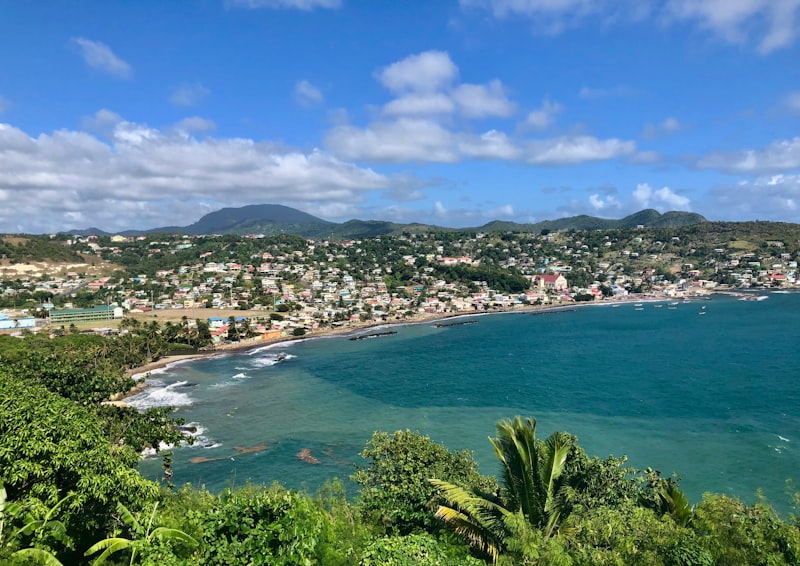
Let’s get straight to the timing, because that’s where most people trip up. National Geographic’s approved itinerary for Dominica doesn’t chase the peak winter crowd—it zeroes in on late February and mid-May, and the reasoning is a masterclass in trade-off analysis. February lands you smack in the middle of the sperm whale calving season, when that resident pod of over 200 individuals clusters within three kilometers of the western coast, so your chances of a close encounter go from “maybe” to “almost certain.” The trade-off? You’re still in the dry season, with average rainfall hovering around 4 inches, but accommodation prices haven’t fully cratered from the December holiday surge. Then there’s mid-May, which is the real sweet spot if you ask me: rainfall drops to about 6.5 inches—half of what you’d see in July—and the whale pod hasn’t yet begun its summer migration, so you’re still getting excellent sightings without the January price tag. But here’s the specific data point that seals it for me: the Boiling Lake View Suite sits at 820 meters and requires a 3.2-kilometer hike to reach, because every single construction material was carried in by mule to avoid cutting a road through the national park. That’s not just a quirky detail—it means if you book for May, you’re hiking in drier conditions with lower humidity, which makes that climb significantly more manageable than during the wet season when the trail turns into a mud slide.
Now, where you stay matters just as much as when you go, and the new build codes have created a tier of accommodations that basically function as living laboratories. The Sisserou Sky Lodge floats 80 meters above the forest floor on a steel platform assembled entirely by helicopter, with 12 anchor points rated for hurricane-force winds up to 160 mph, and it avoided cutting a single tree in the process. Compare that to Secret Bay’s “Rainforest Biosphere” suites, which maintain a constant 75% humidity using a passive misting system fed by collected rainwater—no energy input, and the airborne particulate levels stay below 10 micrograms per cubic meter, which is cleaner than most hospital operating rooms. The Titou Gorge Retreat takes the geothermal angle even further: one villa has a private infinity pool heated to a precise 38°C using only a heat exchanger that leverages the volcanic gradient, achieving a coefficient of performance equivalent to a geothermal heat pump rated at 4.5. You can’t buy that efficiency with any electric heater—it’s literally the island’s geology doing your heating for you. And while you’re weighing options, consider that the Green Building Code mandates a solar reflectance index of at least 0.7 on all new hotel roofs, which drops indoor temperatures by a full 6°C without air conditioning. That standard actually exceeds the U.S. Department of Energy’s “Cool Roof” requirements for commercial buildings in Houston, which is a wild benchmark for a Caribbean island.
You’re probably wondering about the practical details, so let me walk you through what the dark sky compliance actually means for your stay. Exterior lighting is capped at 1,200 lumens per property, which is 60% lower than your typical Caribbean resort, and it’s engineered specifically to protect the hawksbill sea turtle’s nesting behavior and the nocturnal foraging patterns of the forest thrush. I’ve stayed at resorts where the beach lights are so bright you can’t see the stars—Dominica’s new stays are the first where I’ve actually needed a red flashlight to find my way to the Riverstone Cabana. And that cabana? It has underwater microphones in the Layou River that broadcast the low-frequency calls of native freshwater shrimp directly into the room at 20 to 30 hertz, creating an ambient soundscape that’s basically the riverbed’s natural acoustics piped into your sleeping space. National Geographic’s itinerary builds in a mandatory afternoon rest there, and it’s not just a gimmick—the low-frequency hum genuinely changes how your nervous system settles after a morning hike. The embodied carbon story is the final piece: new properties built under the 2025-2026 code average 35 kilograms of CO₂ per square meter, a 70% reduction from the Caribbean regional average of 120 kilograms, driven by local volcanic aggregate and untreated hardwood that skip the energy-intensive processing of imported steel. That means your stay isn’t just comfortable—it’s structurally less damaging than virtually any other luxury option in the region. So here’s my bottom line: book late February if whales are your priority, or mid-May if you want drier trails and lower rates, and pick a property that’s been built under the new code. The difference isn’t marginal—it’s the difference between visiting a destination and participating in its future.
How Dominica’s Pristine Beauty Stays Ahead of Mass Tourism
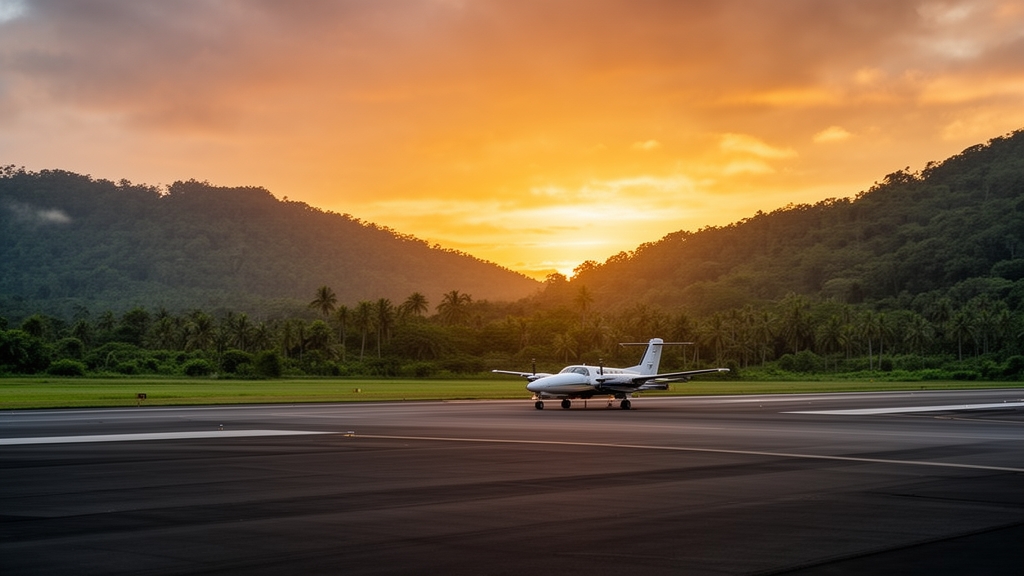
Look, I’ve been watching the Caribbean tourism model for years, and most islands are stuck in a volume trap—they chase more flights, bigger ships, and higher bed counts until the very thing people came for starts to degrade. Dominica took the opposite path, and it’s not an accident. The country’s 2019 ban on single-use plastics and Styrofoam was one of the earliest in the region, and it’s not just a feel-good policy—it directly cuts the waste stream that chokes places like Jamaica’s beaches during peak season. Then you’ve got the Citizenship by Investment Programme, which sounds like a loophole but actually funnels over 60% of its proceeds into national park maintenance and trail infrastructure. That creates a self-funding model for conservation that doesn’t depend on packing more tourists onto the island. And here’s where the numbers get real: the government caps annual cruise passenger arrivals at 250,000, which is roughly one-eighth of what St. Thomas handles in a single year. Only one ship can berth at the Roseau port at any given time, so you’re never standing in a conga line of disembarking passengers. The airport can’t handle widebody jets either—the runway is just 1,760 meters long, which effectively bars low-cost carriers from setting up direct routes. That’s not a bug; it’s a deliberate throttle on mass influx.
Now, the enforcement mechanisms are what separate Dominica from islands that just put out sustainability press releases. Over 20% of its coastal waters are designated as marine reserves with no-take zones, and the results are measurable: Nassau grouper populations have rebounded by 40% since 2015. The Kalinago Territory operates under its own autonomous council that must approve any tourism development within its boundaries, and they’ve rejected several large-scale resort proposals since 2020. That’s not something you see in St. Lucia or Barbados, where development approvals often bypass local communities. The Dominica Hotel and Tourism Association enforces a self-imposed “no new all-inclusive resorts” policy that’s been in place since 2018, steering investment toward small-scale, low-density accommodations instead of sprawling beachfront complexes. And the “Eat Nature” certification requires hotels to source at least 30% of their ingredients from local farms, which keeps 70% of the fresh produce consumed on the island within the local economy rather than importing it from Miami. The population density is just 98 people per square mile—the lowest of any Caribbean nation—so trail networks and natural sites never experience the crowding that’s become normal on neighboring islands.
The geothermal story is the final piece that ties it all together. The nascent Wotten Waven plant already displaces 15% of the island’s diesel imports, and the government plans to reach 100% renewable electricity by 2030. That would eliminate the carbon footprint of hotel operations entirely, which is a goal no other Caribbean island has publicly committed to with a binding timeline. The Waitukubuli National Trail is patrolled by a dedicated ranger corps drawn from Kalinago communities, who use traditional ecological knowledge to monitor erosion and invasive species along the 115-mile route. And the sperm whale research is a great example of how they use science instead of marketing: researchers have identified over 3,000 distinct codas from the resident pod, using acoustic data to track population health without invasive tagging. When you step back and look at the whole system—the plastic ban, the cruise cap, the no-all-inclusive policy, the geothermal push, the local sourcing mandate—it’s not a collection of random eco-initiatives. It’s a coherent strategy designed to keep Dominica small, expensive to reach, and structurally resistant to the mass tourism that has eroded the authenticity of so many other Caribbean destinations.
Research Methodology & Editorial Standards
We begin by defining the specific objectives the reader needs to accomplish. Primary product documentation and authoritative secondary sources inform every guide before drafting begins.
Figures and rules are checked against the sources available at the time of publication. Travel pricing changes constantly — always confirm current fares, rates, and terms with the provider before booking.