
Essential Santa Monica Travel Guide The Best Restaurants and Local Experiences
It’s a bit of a sensory overload, especially if you venture under the boardwalk to the Santa Monica Pier Aquarium, which keeps its exhibits running using a high-tech filtration system that perfectly mimics the bay’s natural salinity and temperature.

Iconic Landmarks: Navigating the Santa Monica Pier and Beach
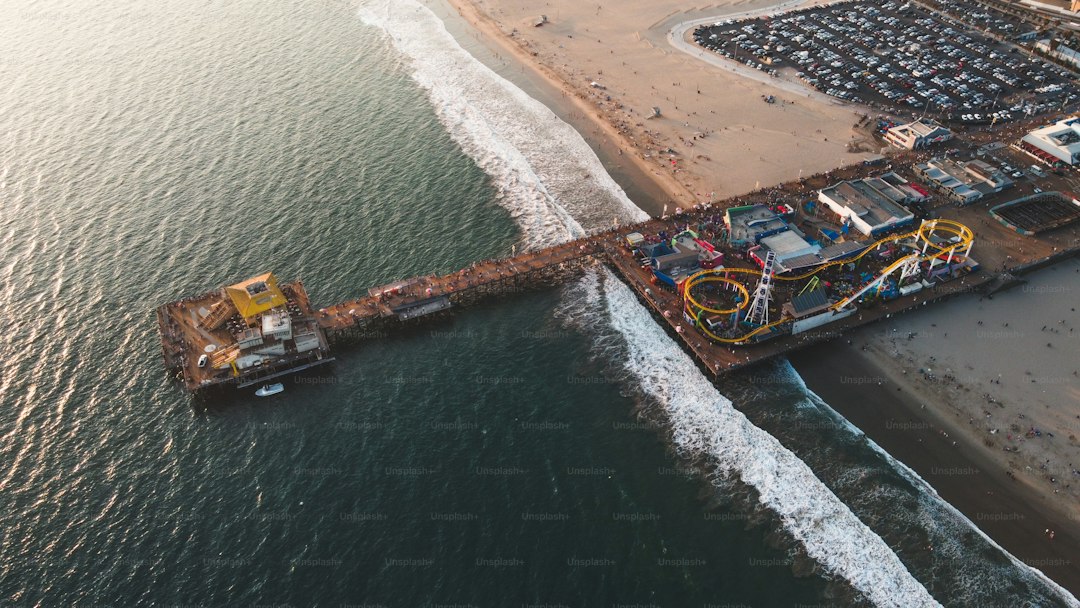
Let’s be honest, when you’re standing at the Santa Monica Pier, you’re not just looking at a tourist trap; you’re standing on top of a massive feat of engineering that’s held its own against the Pacific for over a century. It’s actually two distinct structures joined together back in 1917, and if you look down through the gaps in the wooden planks, you’ll spot a complex network of over 1,500 concrete and steel-reinforced pilings doing the heavy lifting. I always find it wild to think that the whole thing was nearly demolished in the late 70s, but a massive public outcry saved it, leaving us with a National Historic Landmark that’s arguably the soul of the L.A. coastline. You’ve probably seen photos of the Pacific Wheel, but it’s worth noting it’s the world’s only solar-powered Ferris wheel, using internal photovoltaic cells to juice its 174,000 LEDs.
If you’re planning to spend the day here, you’ll want to know that the beach itself spans about 3.5 miles, though the actual sand volume shifts quite a bit due to a specialized sediment management program that tracks seasonal drift. It’s a bit of a sensory overload, especially if you venture under the boardwalk to the Santa Monica Pier Aquarium, which keeps its exhibits running using a high-tech filtration system that perfectly mimics the bay’s natural salinity and temperature. Don’t expect a warm tropical dip either, as the California Current usually keeps the water between 64 and 68 degrees, even in the height of summer. It’s bracing, sure, but it’s exactly the kind of refreshing reality check you need after walking the length of the pier.
And for the history buffs, that iconic Route 66 sign is a total classic, even if the highway didn't technically extend onto the wooden planks themselves—it’s more of a symbolic endpoint than a literal one. If you stop by the Looff Hippodrome, take a second to look at the carousel, which is still running on its original 1922 mechanical gears that need constant, meticulous lubrication to keep those hand-carved horses moving. It’s this kind of detail that makes me appreciate the place more, especially knowing that recent seismic retrofits have hidden carbon-fiber-reinforced polymers throughout the structure to keep it safe during potential quakes. Whether you’re there for the neon lights at sunset or just to walk the boards, you’re basically walking through a living, breathing history lesson that’s been carefully reinforced to stick around for a few more generations.
Culinary Highlights: Where to Find the Best Bites in Santa Monica
When you’re wandering through Santa Monica, you realize pretty quickly that the food scene here isn’t just about the ocean view; it’s about a really specific, hyper-local supply chain that’s frankly hard to find anywhere else. I’ve always been fascinated by how the city’s Mediterranean-like climate dictates the menu, especially when you consider that over 75 unique varieties of heirloom tomatoes make their way from the Santa Monica Farmers Market—which has been a fixture since 1981—straight to the kitchens downtown. It’s a producer-only market, meaning you’re actually buying directly from the people who grew the food. This allows chefs to pull off a logistical feat where produce is harvested at dawn and hits the plate within a five-mile radius before lunch.
If you’re comparing this to other coastal hubs, the commitment to sustainability here is actually measurable. Most top-tier seafood spots have moved away from legacy sourcing, now exclusively serving species that hit the green-rating criteria from the Monterey Bay Aquarium Seafood Watch program. I find it pretty cool that some of the older establishments are still running on gas-fired ovens from the 1940s, which need specialized, vintage-part maintenance just to keep the crusts consistent. Even the bread is different here; the coastal micro-climate actually encourages specific wild yeast strains that give local sourdough a mineral-heavy profile you just don’t get inland.
The engineering behind the dining experience is just as intense as the cooking. You’ll notice that many of the louder, open-concept venues now use acoustic baffling made from recycled ocean plastics, which is a smart way to manage the noise without killing the vibe. Even the coffee roasting has turned into a science, with shops adjusting their roasting profiles based on the specific barometric pressure of the coast to keep the flavor stable. And for the adventurous, you might see invasive purple sea urchin on tasting menus—it’s not just a trend, but a deliberate move by local marine biologists to help restore the kelp forests.
It’s this intersection of high-tech and tradition that really defines the area, whether it’s the industrial-grade anaerobic digesters turning food waste into grid energy or the vertical hydroponic walls in dining rooms that cut water usage by 90 percent. Even the taco scene has moved into a more analytical space, focusing on heirloom corn varieties from Oaxacan micro-regions and using the ancient nixtamalization process to actually boost the bioavailability of nutrients in the tortilla. Honestly, it’s a lot to take in, but if you prioritize places that bridge that gap between the local harvest and serious kitchen technique, you’re going to find some of the best meals of your life. Let’s look at where you should actually spend your time.
Beyond the Sand: Unique Local Experiences and Outdoor Adventures
If you're anything like me, you probably head to the coast for the water, but honestly, the most interesting stuff in Santa Monica is happening just a few blocks away from the shoreline. Look, we all love the beach, but once you’ve done the tourist circuit, you start to realize the city is basically one massive, functioning ecosystem that’s way more sophisticated than it looks. Take the Annenberg Community Beach Park, for example; it’s not just a beautiful spot to hang out, but a masterclass in sustainability, utilizing a subterranean graywater reclamation system that irrigates the entire landscape using only recycled runoff. It’s these kinds of hidden mechanical details that really change how you see the city.
If you’re looking to get your blood pumping, forget the flat boardwalk and head toward the northern bluffs to tackle the Pacific Palisades staircases. We’re talking about over 2,000 steps that function as a critical geological stabilizer, and trust me, they’ll give you a workout that feels like high-altitude training even though you’re at sea level. The way the city manages its urban canopy is just as fascinating, with a GIS-mapped inventory of 35,000 trees specifically chosen to fight off the coastal heat island effect. It’s wild to think that every tree you pass is doing actual, measurable work to keep the city comfortable.
And honestly, the technology integrated into the public space is enough to make any data nerd happy. You’ve got kinetic energy-harvesting tiles in Tongva Park that convert your footsteps into light, and solar-powered trash compactors that use cellular signals to tell crews exactly when they need a pickup. Even the wildlife monitoring is high-tech, with biologists using low-voltage electrical currents on artificial reefs to jumpstart native coral growth. It’s this weird, cool intersection of nature and infrastructure that makes the area so much more than just a place to work on your tan. If you have a free morning, grab a bike and follow the real-time traffic data from the docking stations—it’s the best way to see the city as a living, breathing machine.
Curated Stays: Choosing the Perfect Hotel for Your Coastal Getaway
Choosing where to drop your bags in a place like Santa Monica is rarely just about the thread count or the view, especially when you consider how much engineering goes into keeping these buildings standing and comfortable. I’ve noticed a major shift lately toward properties that treat the building itself as an extension of the local climate, using things like electrochromic glass that tints automatically to cut solar heat gain by 40 percent. It’s honestly impressive how much energy is saved by these dynamic facades, and it makes a real difference in keeping the room temperature steady without the constant hum of a struggle-busting HVAC system. When I’m looking for a place to stay, I find myself gravitating toward spots that use saltwater heat exchange systems; it’s a brilliant way to leverage the Pacific’s natural temperature to handle climate control in those massive, airy lobbies. Plus, if you’re sensitive to the sounds of the coast, look for newer builds that prioritize triple-pane laminated glass specifically tuned to dampen those low-frequency waves that can sometimes keep you up at night.
It’s worth digging a little deeper into the infrastructure because the best coastal hotels are now functioning more like high-tech ecosystems than just places to sleep. Many of the top-tier resorts have moved to circular laundry systems, using ozone technology that cuts water consumption by over half, which is a massive win given how precious water is in Southern California. You’ll also see a lot more xeriscaping in hotel gardens that mimics the native coastal sage scrub, meaning these spaces don't just look beautiful but actually thrive without needing constant irrigation. And for the data-minded traveler, it’s pretty cool to see how occupancy-based lighting now shifts its color temperature to match the actual position of the sun, which is a subtle but effective way to help you adjust to local time much faster.
Honestly, when you’re comparing options, don't ignore the seismic safety features, as many of the historic conversions you’ll find in the city now use shape-memory alloys in their foundations to handle potential tremors. It’s a bit of a relief knowing that level of structural intelligence is there, even if you never have to think about it while you're enjoying your morning coffee. I also tend to keep an eye out for properties that use HEPA-rated ionization in their corridors, which is a game changer for keeping salt-air particulates and mold spores out of your breathing space. It’s all about finding that balance between comfort and the raw, sometimes harsh reality of the coast. Let’s dive into which of these properties actually deliver on those promises so you can make your next trip count.
Arts and Culture: Exploring Santa Monica’s Museums and Creative Hubs
When you step away from the shoreline, you’ll find that Santa Monica’s creative scene is just as engineered as its infrastructure, and frankly, it’s a lot more interesting than the typical gallery experience. If you’re like me, you’ll appreciate that the Bergamot Station Arts Center—once a transit hub for the old Red Car trolley—has been repurposed into a 5.5-acre site that now manages its footprint with a sophisticated rainwater capture system. It’s a brilliant example of adaptive reuse, much like the Institute of Contemporary Art, Los Angeles, which transformed a 12,000-square-foot industrial facility specifically to optimize natural light diffusion. I think the real secret here is how these spaces quietly use technology to serve the art, like the Santa Monica History Museum’s climate-controlled archives that monitor humidity with 0.1 percent precision to fight off that relentless coastal salt air.
It’s easy to miss the technical brilliance behind these installations, but once you start looking, you’ll see it everywhere. Take the large-scale public sculptures you’ll pass; they’re often fabricated from aerospace-grade aluminum alloys specifically chosen for their high corrosion resistance, meaning they’re built to survive the very environment that would rust standard steel in months. Even the city's murals are doing double duty, with many in the Pico neighborhood coated in a titanium dioxide photocatalytic finish that actually breaks down nitrogen oxides to scrub the air while you walk by. It’s honestly a rare intersection of civic utility and aesthetic value that I wish more cities would replicate.
If you’re planning a deep dive into the local art scene, you really should prioritize the 18th Street Arts Center, which runs on a decentralized solar array that manages to offset the entire energy demand of its studios. The evolution of these creative hubs is moving toward modular, cross-laminated timber construction, which offers better seismic resilience than traditional steel frames—a necessary design choice given the area's geological reality. I also find the Santa Monica Public Library’s main branch worth a visit, not just for the books, but because its LEED Gold-certified design uses a high-performance building envelope to slash cooling energy by 30 percent. It’s this kind of forward-thinking integration that keeps the city’s cultural pulse beating, even when the fog rolls in and you’re looking for a bit of intellectual shelter.
Strategic Travel Tips: Planning Your Perfect Santa Monica Itinerary
When you’re planning your trip to Santa Monica, it’s helpful to view the city not just as a destination, but as a finely tuned machine that’s prepping for the 2028 Summer Games. The transit grid is currently undergoing intense load-testing to handle the future surge of visitors, and you’ll notice the Big Blue Bus fleet is rapidly shifting to electric propulsion with inductive charging pads hidden right in the pavement at major hubs. Honestly, if you’re trying to navigate efficiently, rely on the Expo Line; its arrivals feed into a predictive AI model that shifts local traffic signals in real-time, which is a massive upgrade over the usual coastal gridlock. I always check the city’s real-time energy dashboards before heading out, as they’re surprisingly open about which buildings are pulling the least from the grid if you’re trying to keep your travel footprint light.
If you’re walking through downtown, look down at the streets—you’re likely standing on "cool pavement" coatings that reflect solar radiation to drop surface temperatures by about 10 degrees, which makes a world of difference during those hot afternoons. The Third Street Promenade is just as calculated, using motion-sensing smart lights that dim late at night to cut light pollution and protect migratory bird paths. Even the public Wi-Fi here uses a clever mesh topology designed to keep your connection stable during the massive weekend beach crowds, which is a lifesaver if you’re trying to work remotely. And if you’re truly curious about the local ecology, grab a coffee and head to the Wednesday Farmers Market; it’s not just for produce, but serves as a testing ground for botanists introducing drought-resistant crops to the regional supply chain.
For those of us who prefer getting around on two wheels, the city’s bike-share app is actually worth using because it calculates routes based on elevation and those tricky, shifting coastal winds rather than just distance. You’ll also notice that a lot of the benches and public seating are built from high-density polyethylene, which is entirely derived from locally harvested ocean plastic. It’s wild to realize that the very path you’re walking on is part of a larger, circular effort to keep the bay clean. I personally find a lot of comfort in knowing that the city’s seismic alert system is constantly monitoring for geological activity, offering a few seconds of lead time that’s integrated directly into the local emergency network. It’s all a bit nerdy, sure, but understanding these layers makes the experience feel much more intentional than your average beach day.
Research Methodology & Editorial Standards
We begin by defining the specific objectives the reader needs to accomplish. Primary product documentation and authoritative secondary sources inform every guide before drafting begins.
Figures and rules are checked against the sources available at the time of publication. Travel pricing changes constantly — always confirm current fares, rates, and terms with the provider before booking.