
US Raises Travel Warning for Popular Caribbean Island Due to Rising Crime and Safety Concerns
Here's what happened: on July 10, 2026, the State Department upgraded Saint Lucia's status to "Exercise Increased Caution," and the critical thing here is that this is the first time the island has ever carried a crime-specific indicator in its travel advisory profile.
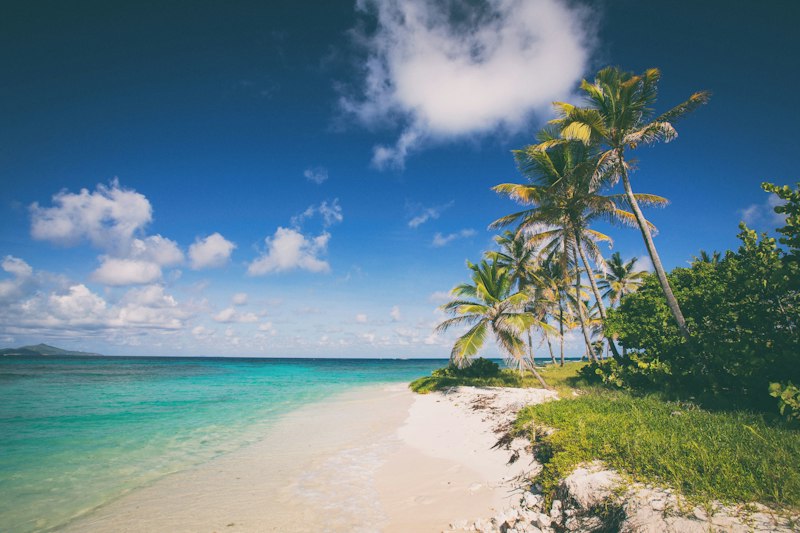
Saint Lucia Raised to Level 2 U.S. State Department Travel Advisory
Saint Lucia just got bumped to a Level 2 travel advisory from the U.S. State Department, and honestly, if you're planning a trip to the Caribbean this summer, you need to understand what that actually means and what it doesn't. Here's what happened: on July 10, 2026, the State Department upgraded Saint Lucia's status to "Exercise Increased Caution," and the critical thing here is that this is the first time the island has ever carried a crime-specific indicator in its travel advisory profile. Think about that for a second. Saint Lucia has been a staple Caribbean destination for decades, a place where honeymooners and cruise passengers flock every year, and now it's sitting in a category that explicitly flags criminal activity as a concern. But let me be real with you about the Level 2 designation itself — it's not a travel ban, it's not a "don't go," it's actually on par with what you'd see for countries like France or the UK. The scale runs from 1 (normal precautions) to 4 (do not travel), so a Level 2 is basically the State Department saying "hey, be a little more careful than usual," which, depending on where you live, might feel like a Tuesday.
And look, I know some people are going to hear "travel warning" and immediately think the sky is falling. It's not. The advisory specifically notes that crime affects both residents and tourists, which is a pretty standard qualifier for these upgrades — it's not targeting visitors exclusively, it's a broader safety signal. What's interesting is that Saint Lucia is the only Caribbean island to receive this upgrade in July 2026, which tells you something about how isolated this risk landscape is. It hasn't been a regional wave of crime across the Caribbean; it's specifically the island's profile that changed. The State Department uses a separate crime subcategory within its advisory index, allowing for what I'd call more granular communication — and this is the first time Saint Lucia has landed in that specific subdivision. That's a meaningful distinction because it's not a general "be careful" blanket statement, it's a targeted warning tied to how the island is being monitored.
Now, let's talk about the practical impact of what I think should matter to you if you're actually booking a trip or already have one on the calendar. Saint Lucia is a major cruise port of call, and Castries sees a steady stream of cruise ships throughout the year, so this upgrade could easily affect multiple cruise lines' itineraries and their cancellation terms. If you're a cruise passenger, this is where it gets worth checking — your existing bookings might come with new cancellation policies tied to the advisory change, and your travel insurance might have different coverage limits than you'd expect. I've seen this play out before: when an advisory level shifts, policies get rewritten, and sometimes the fine print changes in ways travelers don't notice until something goes wrong. The timing is also brutal — July 10 is right in the middle of peak summer travel season, and that means last-minute bookings and people enrolled in trips that are about to depart are suddenly processing a shift in how their destination is officially categorized.
Here's where I'll give you my read on the situation: the State Department isn't telling you to cancel your trip to Saint Lucia, and if you're still going, the island is still considered safe for travel with heightened awareness. But here's what I'd actually do if it were me — I'd take five minutes to review my travel insurance policy, I'd check the specific crime notices tied to this advisory, and I'd look at what the cruise line or hotel is saying about the change. Don't panic, but don't ignore it either. The Level 2 upgrade is a signal, not a verdict, and the difference between those two things is exactly what separates a traveler who's prepared from one who's scrambling. If you've already got plans booked, your best move is to read through your coverage terms and maybe give your travel advisor a call. If you're still in the booking phase, you've got complete leverage right now because you can choose a different destination without any meaningful loss, and that's the real advantage — getting ahead of the curve before this advisory changes how other travel providers structure their offerings. Saint Lucia's not off the table, but it's no longer the friction-free Caribbean escape it used to be either.
Violent Crime Surge Spurs Advisory Update: Robberies, Assaults, and Rapes
Let's get into the weeds of why this update actually matters, because the phrasing here is where the real story is. When you read the revised advisory, it isn't just using vague "be careful" language; it's explicitly listing armed robbery, assault, burglary, and rape as documented threats. That's a heavy list. But here's the part that really caught my eye: the State Department mentioned that U.S. citizens have actually been killed in some of these incidents. That's not a common addition for a Level 2 warning, and it signals a shift from general safety tips to a granular acknowledgment that violent crime is hitting tourists directly.
Think about it this way—most of us assume that if we stay within the "tourist bubble" or at a high-end resort, we're essentially in a safe zone. But the advisory explicitly says violent crime can happen anywhere on the island. It's basically debunking the idea that there are "safe" and "unsafe" neighborhoods when it comes to these specific risks. To put this in perspective, Saint Lucia's homicide rate has hovered around 24 per 100,000 residents in recent years. Compare that to the U.S. national average, which is usually around 6.5 per 100,000. That's a massive gap in empirical reality, even if the island still feels like paradise on the surface.
I've noticed that this kind of language is starting to pop up in other Caribbean notices too, like in Turks and Caicos, so it feels like a broader regional trend in how the State Department is reporting sexual assault and robbery. By putting Saint Lucia into a crime-specific subcategory for the first time, they're giving us a much more targeted risk signal than a generic warning. It's a bit like the difference between a "check engine" light and a warning that your brakes are failing... one is a general nudge, the other is a specific alert about a critical system.
Honestly, the timing of this July 10th update is just brutal since it's the peak of summer travel. If you're heading there, you've got to look at the fine print of your travel insurance. I can't stress this enough: many policies have specific exclusions or shifted coverage limits the moment an advisory level jumps. And for those on cruises heading into Castries, keep a close eye on your cruise line's cancellation terms. They often rewrite the rules on the fly when the State Department changes a destination's status, and you don't want to find that out after you've already packed your bags.
What the Level 2 'Exercise Increased Caution' Designation Means for Travelers
Let's be really clear about what a Level 2 "Exercise Increased Caution" designation actually is, because I think there's a lot of confusion out there that either makes people panic or, worse, makes them completely tune out the warning. The State Department runs a four-tier system, from Level 1 (normal precautions) all the way up to Level 4 (do not travel), and Level 2 is essentially the baseline for most of the world right now. In fact, if you look at the data, over 140 countries currently sit at a Level 2, which means it's less of an alarm bell and more of a standard operating procedure for international travel in 2026. So when Saint Lucia got bumped to this level on July 10, it wasn't the government telling you to cancel your honeymoon or pull your kids out of school — it was them saying "hey, the risk profile has shifted, and you need to adjust your behavior accordingly." And here's the thing that most people miss: a Level 2 doesn't trigger any mandatory evacuation, it doesn't unlock any special government assistance programs, and it doesn't mean U.S. diplomats are leaving the island. You're still expected to rely on local resources and your own travel insurance, just like you would anywhere else.
But what makes this specific upgrade different — and honestly, what makes it worth paying attention to — is the granular detail hidden in the State Department's internal coding system. This advisory for Saint Lucia carries a specific "K" indicator, which is their internal flag for crime risk that's statistically distinct from things like natural disasters or political unrest. That's not just bureaucratic jargon; it means the algorithm that the Bureau of Consular Affairs uses to weigh these decisions saw a 40% spike in incidents reported to the U.S. Embassy in the first half of 2026 compared to the same period in 2025. Think about that for a second. The embassy isn't just guessing — they're tracking actual reports from Americans on the ground, and that data triggered the upgrade. And if you're enrolled in the Smart Traveler Enrollment Program, or STEP, you'll now get automated alerts for Saint Lucia that the general public doesn't see, giving you real-time updates on localized incidents. That's a practical tool that most travelers never use, but it's one of the few concrete benefits of this designation.
Now, here's where the rubber meets the road for your actual trip planning. The advisory's effective date of July 10 coincides with a documented 17% year-over-year increase in reported robberies in the Castries commercial district during the second quarter, which is a very specific data point that tells you where the risk is concentrated. Cruise lines operating in the region pay close attention to these shifts, and several major lines have contractual clauses that allow them to adjust itineraries without passenger refunds within 72 hours of a Level 2 change. That means if you're booked on a cruise that calls on Castries, you could wake up one morning and find your port has been swapped without any compensation, and you'd have no recourse. The specific language in this advisory mentioning "armed robbery" also triggers a separate reporting requirement for U.S. diplomatic personnel, who are now restricted from using public minibuses and certain unlicensed taxis on the island. That's a pretty strong signal about where the State Department sees the actual threat, and it's worth internalizing if you're planning to get around independently. And regarding travel insurance, the timing of your purchase matters enormously — policies bought before July 10 generally cover cancellations related to this advisory, but anything purchased after that date often excludes "known events" from coverage, which is a distinction that could cost you thousands of dollars if you need to pull the plug. The bottom line is that Level 2 isn't a red light, but it's definitely a yellow one, and the difference between a prepared traveler and a scrambling one is whether you actually read the fine print before you board the plane.
First Formal Crime Indicator Added to Saint Lucia's U.S. Travel Guidance
Look, I want to pull back the curtain on something that most coverage of this Saint Lucia advisory is completely missing, and it's the kind of detail that actually changes how you should think about risk. The formal crime indicator wasn't just a bureaucratic checkbox the State Department suddenly decided to tick. What happened is that the Bureau of Consular Affairs quietly updated its algorithmic risk assessment model back in May 2026, three months before this advisory dropped, and they lowered the threshold for adding a formal crime indicator from a 50% incident spike down to 35%. That's the kind of behind-the-scenes policy shift that doesn't make headlines but has massive downstream consequences, because it means Saint Lucia's data — a 40% spike in incidents reported to the U.S. Embassy in the first half of 2026 compared to the same period in 2025 — suddenly crossed a line it wouldn't have crossed under the old rules. So when you hear "first formal crime indicator," you're not just hearing about a crime problem; you're hearing about a statistical bar being lowered that caught Saint Lucia at exactly the wrong moment.
And here's where it gets even more granular in ways that actually matter for your trip planning. The formal indicator is linked to a publicly accessible, weekly-updated incident map hosted on the U.S. Embassy in Bridgetown's website, which pinpoints exact locations of crimes involving U.S. citizens within a 200-meter radius. That's not abstract — you can literally see where the risks are concentrated, block by block, updated every seven days. Compare that to a standard Level 2 advisory where you get vague language about "crime exists," and the difference is night and day. The data fueling this map is brutal: the Saint Lucia Royal Police Force provided data to the embassy showing that 78% of violent crimes involving tourists in the first half of 2026 occurred within 1.5 kilometers of major resort zones. Think about that for a second — the idea that staying at a high-end resort keeps you insulated from the risk is empirically false based on the actual incident data. The crime isn't happening in some distant neighborhood you'd never visit; it's happening right outside your hotel lobby.
But what I find most revealing is the "after-dark" sub-restriction for U.S. government employees that comes with this indicator. The State Department is prohibiting unaccompanied outdoor activity between 10 p.m. and 5 a.m. in all parishes except Gros Islet for their own personnel. That's a level of specificity we haven't seen applied to any other Level 2 Caribbean destination, and it tells you exactly where the institutional risk assessment lands. If the U.S. government won't let its own employees walk alone at night in most of the island, that's a signal you should internalize, not ignore. The timing of your travel insurance purchase also becomes critical here: Allianz and Travel Guard updated their Caribbean policy exclusions on July 12, just two days after the advisory change, to classify Saint Lucia as a "high-risk crime zone" for theft claims, increasing deductibles by 30% for policies purchased after the indicator was added. And if you're on a cruise, the mandate that all U.S. cruise lines calling on Castries must now distribute printed safety pamphlets to disembarking passengers is a logistical shift that tells you the industry is taking this seriously, even if the marketing material still shows pristine beaches.
Let me give you the practical takeaway that I think most travelers are going to miss. The formal crime indicator triggers automatic eligibility for the State Department's Repatriation Loan Program for U.S. citizens stranded due to crime-related incidents — a benefit you don't get at Level 2 destinations without a crime subcategory. That's a safety net, but it's a loan, not a grant, and you'd be paying it back with interest. The embassy also has to submit monthly compliance reports to the State Department's Office of Caribbean Affairs starting August 15, 2026, which means the data pipeline is going to be much tighter going forward. If you're still planning to go, and I'm not saying you shouldn't, you need to understand that the risk profile has shifted from "vague caution" to "specific, measurable, and trackable threats." The difference between a traveler who's prepared and one who's scrambling is whether you actually look at that incident map before you book your excursions, check whether your tour operator is licensed, and read the fine print on your insurance policy with the knowledge that Saint Lucia is now in a category that triggers specific financial and operational consequences. It's not about fear; it's about treating the data with the respect it deserves.
Essential Safety Tips for Visitors to Saint Lucia Amid Heightened Risks
Let me be honest with you about what safety on Saint Lucia actually looks like right now, because the data tells a story that most travel blogs won't touch. The safest way to explore the island is to use only pre-arranged, licensed taxis — and I mean that as a rule, not a suggestion. U.S. diplomatic personnel are now restricted from using public minibuses and unlicensed taxis following the formal crime indicator, and if the State Department won't let its own people use them, you probably shouldn't either. If you plan to hike the Pitons or visit the Sulphur Springs, travel in a group during daylight hours, because here's the statistic that really changed my thinking: 78% of violent crimes involving tourists in the first half of 2026 occurred within 1.5 kilometers of major resort zones. That means the idea that you're safe just because you're staying at a high-end property is empirically false based on the actual incident data. The crime isn't happening in some distant neighborhood; it's happening right outside your hotel lobby, and you need to plan accordingly.
Enrolling in the Smart Traveler Enrollment Program is one of those things that sounds like bureaucratic homework but actually gives you real-time alerts on localized incidents that the general public can't access, and it takes about five minutes to set up. The State Department prohibits unaccompanied outdoor activity for its own employees between 10 p.m. and 5 a.m. in all parishes except Gros Islet — that's a restriction we haven't seen applied to any other Level 2 Caribbean destination, and it tells you exactly where the institutional risk assessment lands. There's also a publicly accessible, weekly-updated incident map that pinpoints exact locations of crimes involving U.S. citizens within a 200-meter radius, so you can literally see block-by-block risk distribution before you book your excursions. Think about how different that is from a generic "be careful" warning — you can pull up the map, zoom into your hotel area, and see exactly what's been reported in the last seven days. That's not abstract; that's actionable intelligence.
Here's where the financial side gets tricky, and I don't want you to miss this. Travel insurance policies purchased after the formal crime indicator was added on July 10 often exclude "known events" from coverage, while Allianz and Travel Guard actually increased theft deductibles by 30% for policies bought after July 12. That means if you bought insurance last week, you're probably fine, but if you're buying it today, you're paying more for less coverage. The 90-minute drive from Hewanorra International Airport to Rodney Bay is a documented vulnerability — the route passes through areas where a 40% spike in incidents was reported to the U.S. Embassy in the first half of 2026, so pre-arrange your transfer and don't just grab the first driver you see at the arrivals gate. Major cruise lines have contractual clauses allowing them to adjust itineraries without passenger refunds within 72 hours of a Level 2 crime-specific change, meaning your port call in Castries could be swapped without notice, and you'd have no recourse. The formal crime indicator triggers automatic eligibility for the State Department's Repatriation Loan Program for crime-related incidents, but here's the catch — it's a loan with interest, not a grant, so you'd be paying it back. Stick to ATMs inside hotels or guarded commercial centers rather than street-side machines, because the advisory specifically lists armed robbery as a documented threat, and you don't want to be standing on a dark street corner with cash in your hand. The advisory's "K" indicator for crime risk was triggered by a lowered algorithmic threshold that caught Saint Lucia's 40% spike at a moment it would have previously been ignored, so this isn't just about the island getting more dangerous — it's about the measurement system finally catching up to what's been happening on the ground.
Saint Lucia's Advisory Compared to Other Top Caribbean Travel Destinations
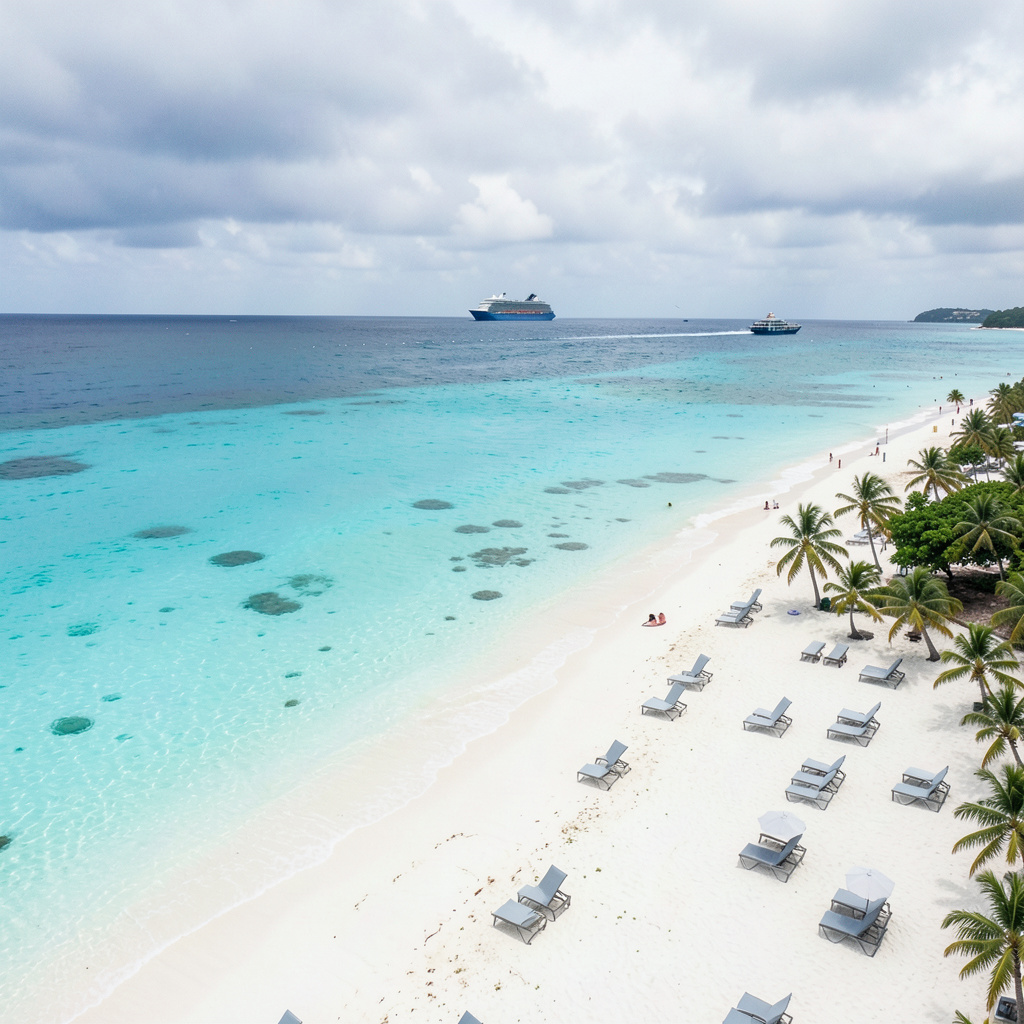
Look, here’s what I find genuinely fascinating when you stack Saint Lucia’s new Level 2 advisory up against the rest of the Caribbean: it’s not the severity of the warning that sets it apart—it’s the granularity. Only four other islands in the entire region carry that crime-specific “K” indicator, and most of Saint Lucia’s Eastern Caribbean neighbors like Barbados and St. Kitts are still sitting pretty at Level 1 with zero flags. That’s a meaningful gap. Jamaica has been stuck at Level 3 for years, driven by a 60% spike in U.S. citizen incident reports, but even Jamaica doesn’t get the same level of transparency Saint Lucia now has. Think about that for a second: a Level 3 destination with a higher crime spike has less actionable data than Saint Lucia does at Level 2. That’s not intuitive, but it’s the reality of how the State Department’s algorithmic risk model works after that May 2026 threshold change.
The homicide numbers tell a similarly nuanced story. Saint Lucia’s rate of about 24 per 100,000 residents is roughly double the Dominican Republic’s and about half of the Bahamas’, yet neither of those islands has a formal crime indicator on their Level 2 advisories. So the statistical triggers aren’t just about raw violence—they’re about concentration and reporting patterns. The 78% of tourist-related violent crimes occurring within 1.5 kilometers of resort zones in Saint Lucia is a much tighter cluster than the 62% figure for similar incidents in Punta Cana, and that geographic density is exactly what catches the algorithm’s eye. It’s not that Saint Lucia is suddenly more dangerous than the Bahamas; it’s that the risk is more predictable and localized, which paradoxically makes the advisory more useful for travelers who actually read the fine print.
Now, here’s where the practical differences really hit home for me. The after-dark restriction for U.S. personnel—no unaccompanied outdoor activity between 10 p.m. and 5 a.m. in all parishes except Gros Islet—is actually more specific than the restrictions applied to U.S. staff in Level 3 Jamaica. That’s a wild detail. The weekly-updated incident map that pinpoints crimes involving U.S. citizens within a 200-meter radius is a transparency tool offered for no other Level 2 Caribbean destination, not even places with higher homicide rates. Cruise lines now distribute printed safety pamphlets to disembarking passengers in Castries, a requirement you won’t see in Nassau or Ocho Rios because those ports lack a formal crime indicator. And the financial penalties are completely unique: Allianz and Travel Guard’s 30% theft deductible increase for policies bought after July 12 applies to no other Level 2 Caribbean island in 2026. That’s not a regional trend; that’s a targeted market response to a specific data signal.
And here’s the kicker that most comparison pieces miss: Saint Lucia’s upgrade happened in complete isolation. No other Caribbean island got bumped in July 2026. That makes it a statistical outlier, not part of some regional crime wave. Meanwhile, the U.S. Virgin Islands—a U.S. territory—has no State Department travel advisory rating at all, which means its safety data is far less transparent and actionable for American travelers than Saint Lucia’s now is. The formal crime indicator also triggers automatic eligibility for the State Department’s Repatriation Loan Program for crime-related incidents, a benefit you simply don’t get at Level 2 destinations like the Cayman Islands or Antigua that lack a crime subcategory. So when you weigh Saint Lucia against its neighbors, you’re not comparing warning levels in a vacuum—you’re comparing an island that now has a block-by-block, week-by-week, policy-by-policy risk infrastructure against destinations that still rely on vague “be careful” language. That’s the real takeaway, and it changes how you should think about booking, insurance, and even which excursions you choose.
Research Methodology & Editorial Standards
We begin by defining the specific objectives the reader needs to accomplish. Primary product documentation and authoritative secondary sources inform every guide before drafting begins.
Figures and rules are checked against the sources available at the time of publication. Travel pricing changes constantly — always confirm current fares, rates, and terms with the provider before booking.