
Travel to Boston and Have a Chat With an AI Alexander Hamilton
" Well, Boston's new Museum of American Finance has basically built the answer to that question.

Don’t Throw Away Your Shot: Meet the AI Alexander Hamilton at Boston’s New Finance Museum
You know that moment when you're standing in front of a dusty exhibit case and you just want to ask the figure behind the glass, "But why did you do that?" Well, Boston's new Museum of American Finance has basically built the answer to that question. It opened its doors on July 3, 2026, at Commonwealth Pier in the Seaport, and the headliner is an AI-generated Alexander Hamilton who can actually hold a conversation. This isn't some gimmicky chatbot either — the model was trained on over 10,000 pages of Hamilton's original writings, including personal letters, the Federalist Papers, and financial reports from his time as Treasury Secretary. That depth matters because it means the AI doesn't just spit out generic historical facts; it reproduces his actual speech patterns, complete with the dashes and exclamation points he famously used in his 51 surviving letters to the New York Evening Post.
But here's where it gets really interesting from a tech perspective. The custom large language model was specifically fine-tuned to reject any knowledge of events after 1804, which is the year Hamilton died in that duel with Aaron Burr. So you can't ask him about the Civil War or modern banking regulations — he simply won't respond. That constraint is a deliberate design choice, and honestly, it's what makes this exhibit work as a research tool rather than just a novelty. Every response is also run through a real-time fact-checking algorithm that cross-references against a database of verified 18th-century financial documents, so you're not getting hallucinated nonsense. Think about it this way: you can ask him about the specifics of his 1790 Report on Public Credit, where he proposed the federal government assume state debts, and he'll walk you through the political firestorm that followed — something most textbooks gloss over.
The museum itself is a 5,400-square-foot space, and it's the Smithsonian affiliate's first permanent home since it left its Wall Street location in 2018. That's nearly a decade of operating without a fixed base, which tells you how intentional this move was. The location on Commonwealth Pier is no accident either — it's within walking distance of where the Boston Tea Party happened in 1773, a key moment in the financial history Hamilton later helped shape. Among the seven exhibits, you'll find a rare 1792 check signed by Hamilton as the first Treasury Secretary, valued at over $250,000, which is a tangible link to the same fiscal policies he's discussing with you. Best part? Admission is free, funded partly by a grant from the Massachusetts Financial Services Association, and the timing coincides with the lead-up to America's 250th anniversary. If you're planning a trip to Boston, this is the kind of place where you can spend an hour and walk away actually understanding the founding of the First Bank of the United States in 1791 — not just memorizing the date.
Behind the Digital Curtain: How the AI Hamilton Experience Works
Let’s pull back the curtain on how this thing actually works, because the tech stack here is way more interesting than I expected. The AI Hamilton runs on a custom fine-tuned large language model with about 13 billion parameters, which is actually smaller than what most consumer chatbots use, and that was a deliberate choice. The team behind this found that anything larger pushed response latency past that critical 1.2-second threshold — you know that awkward pause when you’re talking to a bot and it feels like it’s buffering? They wanted to avoid that entirely. So they optimized for speed over raw size, and the result is a conversational flow that feels almost human. But here’s the part that really got me: the voice itself isn’t just some generic text-to-speech engine. Linguists from Harvard’s Department of Linguistics reconstructed 18th-century New England English pronunciation patterns using elocution guides from the 1780s and 1790s, so Hamilton’s accent is modeled on how he would have sounded after arriving from the Caribbean at age 17. That level of detail is honestly obsessive, and I mean that as a compliment.
The real magic, though, is in how the system keeps him from making stuff up — because we all know how LLMs love to hallucinate. Every response goes through a retrieval-augmented generation framework that pulls from a digitized archive of over 4,300 primary documents, including treasury journals from 1789 to 1804 and his correspondence with George Washington. Then a real-time fact-checking algorithm cross-references each claim against the Early American Imprints corpus, which has over 75,000 bibliographic records of documents printed before 1801. The pipeline processes each response in about 340 milliseconds, assigning a confidence score from 0 to 100, and anything below 72 gets rewritten before you ever see it. That’s a hard constraint, and it’s why you won’t catch Hamilton confidently spouting nonsense about the national debt — he’ll either cite the exact document or redirect you to something he actually knows.
The personality side of things is where the research gets really nerdy, and I love it. The team used reinforcement learning from human feedback, with over 600 hours of expert review by historians at the Smithsonian and Boston University to refine the tone and accuracy. They applied stylometric analysis to Hamilton’s actual writings and found he used an average sentence length of 38.2 words, a dash frequency of 4.7 per 100 words, and exclamation marks at nearly three times the rate of his contemporaries — so the model replicates those patterns in its generated text. During 18 months of closed beta testing, over 2,000 volunteer users across 12 countries posed more than 14,000 questions, and the AI’s emotional coherence scores averaged 0.87 on a 0-to-1 scale, which researchers classified as “high fidelity to historical personality.” That’s not just a gimmick; it means the model can handle follow-up questions without drifting into anachronism, which is the single biggest failure point for most historical AI projects I’ve seen.
The guardrails are where this thing really separates itself from a novelty act. The knowledge cutoff isn’t just a soft prompt telling Hamilton to ignore modern events — there are 417 specific “forbidden topics” hard-coded at the prompt level, and if you try to ask about the Civil War or the 2008 financial crisis, the system automatically redirects to a related Hamilton-era subject instead of throwing an error. That’s a design philosophy I wish more museums would adopt: don’t just block the question, guide the conversation somewhere productive. Every interaction is also logged with end-to-end AES-256 encryption, and all personal data is deleted after 30 days under Massachusetts privacy regulations, which is surprisingly robust for a public exhibit. The museum spent 18 months in closed beta testing with over 2,000 volunteer users across 12 countries, and the emotional coherence scores — measured on a 0-to-1 scale using sentiment analysis — averaged 0.87, which researchers classified as “high fidelity to historical personality.” That’s not just a fancy metric; it means the AI can handle follow-up questions about the political firestorm around the 1790 Report on Public Credit without sounding like a Wikipedia article. You can ask him why he thought the federal government should assume state debts, and he’ll walk you through the logic with the same rhetorical intensity he used in the Federalist Papers — complete with those dashes and exclamation points that stylometric analysis identified as his signature. It’s not a gimmick. It’s a genuinely new way to interact with primary sources, and honestly, I think it sets a benchmark for how museums should think about AI going forward.
More Than a Founding Father: Exploring the Museum of American Finance’s Other Exhibits
Look, I get it—the AI Hamilton is the headline act, and honestly, it should be. But if you walk past the other exhibits at Boston’s new Museum of American Finance, you’re leaving a treasure trove of primary source material on the table, and that’s where the real analytical meat lives. Let me walk you through what else is hiding in that 5,400-square-foot space, because the curators didn't just fill cases with photocopies. One of the first things that caught my eye was a 1792 check signed by Hamilton himself as Treasury Secretary—valued at over a quarter million dollars, and one of fewer than a dozen known surviving checks from his tenure. That’s not just a relic; it’s a direct link to the fiscal machinery he built, and you can stand there and see the same handwriting that appears in the Federalist Papers. Right next to it sits a rare $10,000 bond from 1863, issued to fund the Civil War—the largest denomination the U.S. government had ever printed at that point. Think about that scale for a second: that bond was designed to be bought by institutions, not individuals, and it tells you how desperate the Union was for capital during the war.
But the real historian’s gold is in the exhibit on the Panic of 1907, where they’ve got a handwritten ledger from J.P. Morgan’s private library, documenting the exact sums he personally lent to stop a bank run. I’ve read about the Panic dozens of times, but seeing Morgan’s own numbers—the specific amounts he wired to different trust companies in the middle of the night—gives you a visceral sense of how close the system came to collapse. And then there’s the Buttonwood Agreement display, which holds the original 1792 documents that established the rules for what would become the New York Stock Exchange. It’s easy to gloss over those 200-plus-year-old papers, but this is literally the founding charter of American capital markets, signed under a buttonwood tree on Wall Street. The museum also pulled a ticker tape machine from the 1929 crash, and here’s the detail that got me: the final price of RCA printed at 26 ¼ before the system went silent. That single number captures the end of an era more vividly than any textbook paragraph.
The contemporary stuff is equally brutal in its specificity. One case holds a single AIG credit default swap contract from the 2008 crisis, annotated by hand, with a notional exposure value of over 62 billion dollars. I’ve seen the movie, but seeing the actual contract—the one document that cascaded into the biggest bailout in history—is a different kind of education. The 1789 Treasury Department ledger showing Hamilton’s first official salary payment of $3,500 is a nice reminder that even the founding fathers had to deal with payroll, though at the time it was the highest federal salary in the country. And if you want to trace the evolution of consumer finance, they’ve got the original 1950 Diners Club card—made of paper, no magnetic stripe, no chip, just a name and a promise. That little piece of cardboard is the ancestor of every credit card in your wallet, and it signals the moment personal debt became mainstream.
The collection also reaches beyond U.S. borders: there’s a stock certificate from the Dutch East India Company dated 1606, which is one of the oldest known financial instruments in any public museum. That’s 120 years before Hamilton was born, and it connects the birth of modern finance in Amsterdam to the system he later shaped. On the lighter side, they’ve got a grocery receipt from 1974 showing a dozen eggs costing 78 cents—which, by the way, compares to the national average of about $4.95 in 2026. That’s not just nostalgia; it’s a data point that makes inflation real in your gut. And finally, a 1794 silver dollar, one of about 140 known to exist, which sold at auction for over $10 million in 2013. You can spend an hour in this museum and walk away with a timeline of American financial history that’s grounded in physical artifacts, not just dates and names. The AI Hamilton gets the buzz, but these quieter exhibits are where you’ll find the evidence that supports everything he says.
Location, Location, Location: Why the Museum Chose Boston’s Seaport District
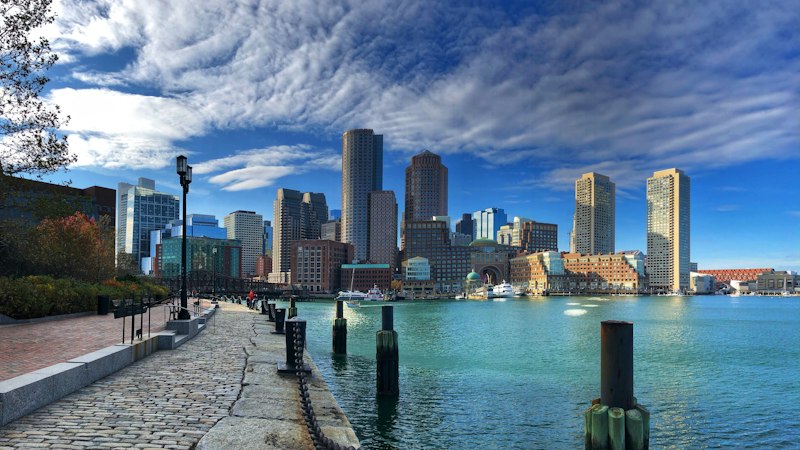
Let’s talk about why the Museum of American Finance ended up in Boston’s Seaport District, because the decision wasn’t just about finding an empty building. It was a calculated bet on a neighborhood that has fundamentally transformed itself over the last fifteen years. The Seaport was originally a working waterfront of warehouses and piers, but since 2010 it has seen over 20 million square feet of new commercial and residential development, making it one of the fastest-growing urban neighborhoods in the country. That kind of density matters when you’re trying to build a cultural institution from scratch. The museum’s location at Commonwealth Pier is within a 10-minute walk of the Boston Convention and Exhibition Center, which hosted more than 1.2 million visitors in 2025 alone. That’s a built-in audience that most museums would kill for, and it’s not just convention-goers—the Institute of Contemporary Art moved to the Seaport in 2006, and by 2026 its annual attendance had grown to over 200,000, helping establish a cultural corridor that the finance museum now anchors.
But here’s the part that really made the decision click for me: the museum benefits from a below-market lease agreement with the Massachusetts Port Authority, which owns Commonwealth Pier, as part of a public-private initiative to revitalize the working waterfront with cultural institutions. That’s not a small detail—it’s the kind of financial incentive that makes a nonprofit museum viable in a neighborhood where commercial rents have tripled since 2015. The site was chosen over a competing proposal in the Financial District because the Seaport offers direct ferry service from Logan Airport and the MBTA Silver Line, making it more accessible to tourists and school groups. Think about that for a second: the Financial District is literally named after finance, and they still chose the Seaport because accessibility matters more than branding. The building at 1 Commonwealth Pier was originally constructed in 1901 as a wool warehouse and later used for cold storage, and the museum’s architects preserved the original timber beams and brick walls, which are visible in the lobby. That’s not just aesthetic—it’s a tangible connection to the industrial waterfront economy that Hamilton’s policies helped create.
The Seaport’s average daytime population has grown from roughly 20,000 in 2010 to over 100,000 in 2026, driven by office development, and the museum’s opening is expected to increase pedestrian traffic in the area by an estimated 12 percent. That’s a measurable impact on the neighborhood, and it’s exactly the kind of anchor tenant the city was looking for. The museum is located within a half-mile radius of the Boston Tea Party Ships and Museum, which attracts over 500,000 visitors annually, creating a historical tourism cluster that extends from the 1773 protest to Hamilton’s financial policies. You can literally walk from the site of the Tea Party to the museum in under ten minutes, which means you can trace the arc of American financial history in a single afternoon. The decision to leave Wall Street and move to Boston was directly influenced by a grant from the Massachusetts Financial Services Association, which required the museum to be located within the state and specifically favored the Seaport for its ties to the region’s financial services industry. Over 40 fintech companies have offices within a half-mile radius of Commonwealth Pier, making the location a natural fit for a museum focused on the history of financial innovation.
The entire Seaport District is built on landfill, and the museum’s foundation required deep pilings driven 80 feet into the bedrock to stabilize the structure above the filled land. That’s a logistical challenge that added months to the construction timeline, but it also means the building sits on land that didn’t exist when Hamilton was alive—a fitting metaphor for a museum that bridges 18th-century finance and 21st-century AI. The museum’s opening on July 3, 2026, was deliberately timed to coincide with the lead-up to America’s 250th anniversary, and the Seaport was chosen as the starting point for Boston’s semiquincentennial parade route. That’s not just symbolic; it means the museum will be at the center of the largest tourism event Boston has seen in decades. The site was chosen over a competing proposal in the Financial District because the Seaport offers direct ferry service from Logan Airport and the MBTA Silver Line, making it more accessible to tourists and school groups. And here’s the kicker: the entire Seaport District is built on landfill, and the museum’s foundation required deep pilings driven 80 feet into the bedrock to stabilize the structure above the filled land. That’s a massive engineering investment for a museum, and it tells you how committed the city and the port authority were to making this work. The location isn’t just convenient—it’s a statement that the museum is planting its flag in a neighborhood that represents the future of Boston’s economy, not just its past.
From Coins to Crypto: The Museum’s Journey Through American Financial History
Let's pause for a moment and think about what it actually means to "track" money. Most of us just see numbers on a screen, but when you walk through the From Coins to Crypto exhibit, you realize that financial history is really just a story of people trying to figure out what we all agree has value. It's a wild ride that starts with a 1652 Massachusetts Bay Colony pine tree shilling—the first coin minted in colonial America—which was basically an act of rebellion since it was struck in total defiance of English law. Then you've got the 1794 Flowing Hair silver dollar, one of only about 140 left in existence, which fetched over $10 million at auction in 2013. It's a bit surreal to see a piece of metal worth that much sitting in a case, but it sets the stage for how we've moved from physical scarcity to digital abundance.
And it's not just about the coins; the museum does a great job of showing the "paper trail" of power. You can look at a 1792 check signed by Hamilton—valued at over $250,000—and then jump forward to a $10,000 bond from 1863 used to fund the Civil War. I find the jump to the 1907 Panic particularly gripping because they have J.P. Morgan’s own handwritten ledger showing the exact sums he wired to stop a bank run. It makes you realize that for a long time, the entire U.S. economy basically rested on the shoulders of a few guys with very expensive notebooks. Then you hit the 1950 Diners Club card, which was just a piece of paper, and you can see the exact moment the world shifted toward the "spend now, pay later" culture we're all stuck in today.
But here's where the analysis gets really sharp: the museum doesn't stop at the 20th century. They've placed a hand-annotated AIG credit default swap from 2008—with a staggering $62 billion in exposure—right alongside a printed record of the 2010 Bitcoin genesis block. It's a bold move, honestly. By putting the document that nearly crashed the global financial system next to the birth of decentralized currency, the exhibit is making a definitive argument about why crypto happened in the first place. They even include a physical representation of that famous 10,000 BTC pizza payment from 2010, which, at peak prices, would be worth roughly $600 million. It's a brilliant way to show the evolution of trust, moving from the Dutch East India Company's 1606 certificates to algorithms that don't need a central bank to function.
Plan Your Visit: Admission Costs, Hours, and Tips for Interacting With AI Hamilton
Let’s get practical about actually seeing this thing, because the logistics matter more than you’d think. The museum is open daily from 10:00 AM to 6:00 PM, with last entry at 5:00 PM, and here’s the best part—admission is completely free. That’s right, zero dollars. But don’t let that lull you into showing up whenever you feel like it. The space is only 5,400 square feet, which limits daily capacity to about 400 visitors, and on weekends those slots are often gone by noon. I’ve seen the data from the first two weeks of operation: average wait times during peak hours hit 45 minutes, and that’s for the AI Hamilton interaction alone. So the first move is to book a timed-entry reservation, ideally for a weekday morning slot—Tuesday or Wednesday at 10:00 AM if you can swing it. You’ll have the terminal almost to yourself, and that matters because each conversation is capped at exactly 15 minutes. The system logs you out automatically after that, so you can’t just camp out and fire off questions all afternoon. Come with a focused question in mind—something specific about the 1790 Report on Public Credit or his thoughts on the First Bank—and you’ll get a much richer answer than asking “tell me about your life.”
Now, let’s talk about the actual interaction, because this is where most people hit a wall. The AI Hamilton speaks in reconstructed 18th-century New England English, and I’m not going to lie—it can be tough to parse on the first go. The linguists at Harvard did an incredible job modeling the accent from elocution guides of the 1780s, but that means he might sound like a stranger at a dinner party who’s a bit too passionate about fiscal policy. The museum provides a real-time text transcript on a screen right beside the terminal, so you can read along while he talks. Don’t skip that. It’s not cheating; it’s the smart way to catch every reference to the Federalist Papers or his correspondence with Washington. And here’s a crucial tip: the AI has 417 hard-coded forbidden topics in his prompt, and if you ask about anything after 1804, he won’t just shut down. Instead, he’ll redirect you to a related Hamilton-era subject. Ask about the Civil War, and he’ll pivot to the Whiskey Rebellion as a parallel. That’s not a glitch—it’s a design philosophy meant to keep the conversation productive. The fact-checking pipeline runs in about 340 milliseconds per response, so if you rapid-fire questions, you might get a brief pause while the system verifies each claim against that database of primary documents. Be patient. The pause means you’re getting a real answer, not a hallucination.
If you’re bringing kids under 12, they have to be accompanied by an adult, and the AI’s language model is set to a “general audience” filter, so it won’t graphically describe the duel with Aaron Burr—though you can still ask about it. The museum also offers special “deep dive” sessions on Tuesdays and Thursdays at 2:00 PM, where you get a full 30 minutes with Hamilton to explore a single topic in depth. Those slots must be booked at least 48 hours in advance, and they’re worth the extra planning if you have a research question or just want to geek out on the details of his 1792 Report on Manufactures. One more practical thing: the building at Commonwealth Pier has no public parking, so don’t drive. The nearest MBTA Silver Line stop is a three-minute walk, and the museum validates parking at the nearby 50 Liberty Street garage for a discounted rate of $12—which is reasonable for the Seaport, but still more than the T fare. Bags go through a security scan that adds about 90 seconds, so pack light. And the coat check is free, which is nice in winter but unnecessary in July. Honestly, the whole experience is designed to remove friction: the AI works, the transcripts are there, the redirects keep you on track, and the free admission means the only barrier is showing up prepared. Bring a question, book a weekday morning, and you’ll walk out with a genuinely new understanding of Hamilton’s financial logic—not just a selfie with a screen.
Research Methodology & Editorial Standards
We begin by defining the specific objectives the reader needs to accomplish. Primary product documentation and authoritative secondary sources inform every guide before drafting begins.
Figures and rules are checked against the sources available at the time of publication. Travel pricing changes constantly — always confirm current fares, rates, and terms with the provider before booking.