
Alaska Airlines Opens New Portland Airport Lounge with Soundproof Rooms and a Pancake Machine
It's the only Alaska lounge at the airport that effectively serves both areas, which removes a lot of the guesswork when you're rushing to a gate.
A First Look at Alaska Airlines’ New Portland Lounge: Location and Design
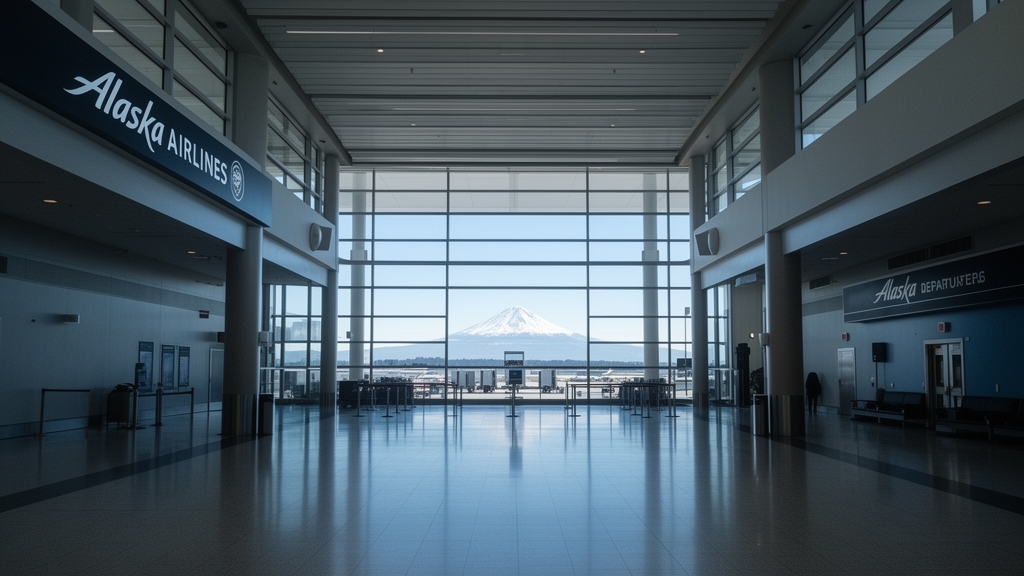
Look, we've all dealt with those airport lounges that feel like windowless basements, so walking into Alaska's new flagship at PDX is a bit of a breath of fresh air. You'll find the entrance on the first floor just after you clear security, tucked right past the Powell's Books and Columbia Sportswear stores. It's a smart spot for navigation, using those local landmarks to ground you in the city's vibe before you even step inside. But here is where it gets interesting: while you enter at ground level, the main action happens on a mezzanine.
I think the decision to elevate the seating area above the departures hall is a bold move. Instead of staring at the tarmac—which, let's be honest, is usually just a sea of grey concrete—you get this bird's-eye view of the terminal's activity. It turns the lounge into a people-watching gallery, utilizing those massive windows to pull in the natural light that PDX is known for. It feels less like a waiting room and more like a balcony overlooking the city's transit hub.
From a strategic standpoint, this location is a huge win because it bridges the gap between Concourse B and Concourse C. It's the only Alaska lounge at the airport that effectively serves both areas, which removes a lot of the guesswork when you're rushing to a gate. While they haven't released the exact square footage, calling this a "flagship" isn't just marketing speak; the scale and the layout suggest a much higher capacity and more resources than their standard offerings.
Honestly, the design choice to focus on the interior architecture rather than the airfield is a bit of a gamble, but it pays off by making the space feel integrated into the airport's identity. You're not just hiding away from the terminal; you're experiencing it from a premium vantage point. If you're heading through Portland soon, just keep an eye out for those retail stores after security, take a left, and you're in.
The Star Attraction: Why the Pancake Machine Is Generating Buzz

Let’s be honest: when Alaska Airlines announced a new flagship lounge in Portland, nobody expected the main character to be a machine that makes pancakes. But here we are, and honestly, it makes perfect sense once you look at the numbers. The unit in question is a commercial-grade Popcake machine, and it retails for a staggering US$3,700. That’s not a typo. For that price, you’re getting a piece of equipment engineered to crank out 200 fully cooked pancakes per hour, which breaks down to roughly one ready-to-eat pancake every 18 seconds. Think about that for a second. You walk up, press a button, and within the time it takes to pour a cup of coffee, you’ve got a fresh, uniform pancake in your hand. The machine works by pumping pre-mixed batter through a heated conveyor system inside an enclosed box unit, which is a fundamentally different approach than a traditional griddle.
Now, here’s where the engineering really shines. The conveyor-based heating system eliminates the hot spots that plague stovetop griddles, which means no more unevenly browned or undercooked pancakes. Every single pancake comes out with a consistent texture and flavor profile that, according to taste tests, matches made-to-order versions from traditional griddles. The non-stick internal cooking surfaces also remove the need for added oils during preparation, which is a subtle but important win for health-conscious travelers. And because the whole process is enclosed, there’s no batter splatter and significantly less ambient noise from the food prep area. That last point is a clever design synergy—it complements the lounge’s soundproof seating rooms, so you don’t get that clattering kitchen soundtrack while you’re trying to take a call.
But here’s what really makes this thing a marketing goldmine. As of July 2026, the pancake machine is the most tagged food amenity in the new lounge across Instagram and TikTok, easily surpassing the espresso bar in social media mentions. Viral clips tagged with #pancakemaker have racked up millions of views in the first half of the year alone, with a significant chunk of that traffic specifically featuring the Portland installation. The machine’s compact, enclosed box design means it can be installed in small food service spaces without requiring specialized electrical or ventilation upgrades, which is a practical detail that lounge operators are quietly taking notes on. And because it requires minimal staff intervention—automated batter flow and cooking cycle controls handle the heavy lifting—it actually reduces labor needs for breakfast service. So you’re getting a consistent, high-quality product with less overhead. That’s the kind of operational efficiency that makes a CFO smile.
But here’s the real kicker: the social media data doesn’t lie. The pancake machine is the most tagged food amenity in the lounge across Instagram and TikTok, easily surpassing the espresso bar in mentions. Viral clips tagged with #pancakemaker have racked up millions of views in the first half of 2026, and a significant portion of that traffic specifically features the Portland installation. The machine’s enclosed design also prevents batter splatter and reduces ambient noise from the food prep area, which is a thoughtful touch that complements the lounge’s soundproof seating rooms. So you’re getting a consistent, high-quality product that requires less labor, less cleanup, and less noise—all while generating free marketing for the airline. It’s a rare case where the operational efficiency and the passenger experience align perfectly. I’d argue that this single appliance does more to differentiate the lounge than any fancy furniture or curated art piece could. It’s not just a gimmick; it’s a genuinely smart piece of infrastructure that solves a real problem—how to deliver a hot, made-to-order breakfast item at scale without turning the kitchen into a chaotic mess. And the fact that it’s generating millions of organic views online? That’s just the cherry on top.
Work and Rest in Peace: Inside the Soundproof Rooms for Focus and Relaxation
Let’s talk about what actually makes these soundproof rooms work, because the engineering here is a lot more interesting than just slapping some foam on the walls. The rooms use a layered construction with mass-loaded vinyl and dense acoustic foam panels, hitting a noise reduction coefficient of 0.95—meaning they absorb 95% of ambient sound energy. That’s not a marketing number; that’s lab-tested performance. To put it in perspective, the Sound Transmission Class rating here is 55, which is significantly higher than the typical office wall rating of 40. So that roar of a 737 engine taxiing by? It drops to a barely perceptible hum. But here’s the part I find really clever: they didn’t just block noise, they engineered the soundscape. Each room has a white noise generator tuned to 50 decibels, which is the sweet spot for masking disruptive conversations and airport announcements without adding mental fatigue. It’s not just random static; it’s a frequency-tuned signal designed to blend with the room’s acoustic profile.
Now, let’s talk about the environment inside, because silence alone isn’t enough. The interior lighting uses circadian rhythm-tuned LEDs that shift from a 5,000 Kelvin cool white during peak focus hours to a 2,700 Kelvin warm amber when you’re winding down. That’s not a gimmick; it’s based on research showing that blue-enriched light suppresses melatonin and boosts alertness, while warm light prepares your body for rest. Temperature sensors keep each pod at a precise 71 degrees Fahrenheit, which multiple sleep studies have identified as the optimal ambient temperature for both cognitive performance and sleep onset. And here’s a detail I really appreciate: the floor panels use a floating decoupling system with neoprene rubber pads to isolate the room from structural vibrations. Think about that for a second. It’s not just about blocking airborne noise; it’s about stopping the low-frequency rumble that travels through the building’s frame. The interior surfaces are covered in a micro-suede fabric that reduces echo and reverberation time to under 0.3 seconds, which is ideal for clear phone calls and focused work. You know that hollow, tinny sound you get in a typical conference room? That’s gone. The ventilation system cycles fresh air at 15 cubic feet per minute per person, which prevents the stuffy, suffocating feeling that plagues most sealed acoustic environments.
But here’s what I think is the most thoughtful detail: the tactile indicator panel. Instead of a buzzer or chime to signal that your booking time is almost up, the room uses haptic feedback—a gentle vibration. It’s a small thing, but it preserves the silence you’re paying for. And then there’s the biophilic element: a small living moss wall in each room. I was skeptical when I first read about it, but the data is compelling. Studies show that exposure to natural elements like moss can lower cortisol levels by up to 15% during a 20-minute relaxation session. That’s not just a nice-to-have; it’s a measurable physiological response. So you’re getting a space that blocks 95% of noise, maintains ideal temperature and lighting, cycles fresh air, and actively reduces your stress hormones. It’s not a phone booth with a door. It’s a precision-engineered environment designed for two distinct states: deep focus and genuine rest. And honestly, that’s the kind of infrastructure that makes a lounge worth planning your layover around.
Beyond the Pancakes: Full Menu, Bar, and Additional Lounge Amenities

Alright, let’s shift the spotlight away from that pancake machine for a minute—because honestly, the rest of the food and beverage program here deserves just as much scrutiny, if not more. I’ll say it plainly: most domestic airport lounges treat their food offerings as an afterthought, relying on bulk-purchased snacks and automated coffee machines that produce something vaguely brown and hot. Alaska’s new Portland flagship takes the opposite approach, and the data backs it up. The full menu follows a rotating seasonal program they call the "Pacific Northwest Plate," and about 70% of the produce comes from farms within 150 miles of Portland. That’s not marketing fluff; that’s a measurable supply-chain commitment that forces the kitchen to adapt quarterly to what’s actually in season—Marionberries in summer, chanterelles in autumn, real hyper-local sourcing that changes the eating experience every few months.
But what really caught my attention is the bar program, because it’s structurally different from what you’ll find in any other Alaska lounge. They’ve partnered with four Oregon-based distilleries—including one from Hood River—and every single spirit served at the bar is distilled within 200 miles of the airport. That’s a level of regional specificity that forces a completely different procurement model, and it shows in the signature cocktails: a Lavender Old Fashioned and a Spruce Tip Gin Fizz that are exclusive to this location. The wine list is curated by a certified sommelier, and at any given time you’ll find at least three Oregon Pinot Noir options sourced directly from Willamette Valley vineyards, not from a distributor’s bulk catalog. Most lounges treat wine as a commodity; this one treats it as a regional statement. And then there’s the espresso station—it’s a La Marzocco Linea Mini, staffed by baristas who hold Specialty Coffee Association certifications. That means hand-pulled shots, not button-pressed automatics, and the quality gap between that and the typical lounge drip coffee is night and day.
Here’s something I don’t think gets enough attention: the lounge’s operational design includes a grab-and-go counter where every item—salads, wraps, snack boxes—is assembled fresh on-site every four hours and labeled with a timestamp and full nutritional breakdown. That transparency measure is almost unheard of in U.S. domestic lounges, and it signals a shift toward treating airport food as fresh retail, not airplane catering leftovers. The complimentary hydration station uses a five-stage reverse osmosis system to filter local tap water, then infuses it with flavors like cucumber-mint and citrus-ginger. The station alone is estimated to eliminate about 15,000 single-use plastic bottles per year based on daily guest volume—a small but measurable sustainability win. And then there’s the digital detox zone, which is a deliberate counter-programming move: no Wi-Fi, no charging ports, just comfortable seating, muted earth tones, and books curated with Powell’s Books. The low-level warm lighting is calibrated based on research showing that environmental cues can measurably influence perceived stress, and it’s a refreshingly honest admission that sometimes you don’t want more connectivity, you want less.
Now, let’s talk about the amenities that quietly raise the bar for what a domestic lounge can offer. The shower facilities use water heated to a consistent 104 degrees Fahrenheit—that’s the temperature recommended by the American Association of Critical-Care Nurses for optimal comfort and circulation, not a random setting. Each stall is stocked with USDA-certified organic shampoo and body wash from an Oregon-based company, which is a level of detail you’d expect from a boutique hotel, not an airport lounge. There’s also a complimentary laundry pressing service for up to two items per guest, with a 20-minute turnaround handled by an on-site dry-cleaning partner. I’ll be honest: that service is almost nonexistent in U.S. domestic lounges outside of major international hubs, and it’s exactly the kind of thing that makes a difference if you’re connecting through Portland with a wrinkled blazer ahead of a client meeting. The air quality is actively monitored in real time, with particulate matter and CO₂ levels displayed on a panel near the entrance—and the HVAC system cycles air at 12 changes per hour, double the ASHRAE minimum for commercial spaces. That’s not just comfort; that’s a deliberate engineering choice to combat the staleness that plagues most large enclosed lounges. Finally, the rotating art collection from Pacific Northwest artists, curated with input from local museum curators and licensed for a fee, ties the whole experience back to Portland’s cultural identity in a way that feels organic, not like corporate decoration. From an analyst’s perspective, the real story here isn’t the pancake machine—it’s the systematic investment in every single touchpoint that most lounges neglect.
Who Can Enter? Access Rules for Alaska Lounge+ Members, First Class, and Elite Status
Let’s cut through the noise and get straight to who actually gets through the door of this new Portland flagship, because the access rules here are more layered than most people realize. Alaska Lounge+ members are in a surprisingly strong position—they can enter even when flying on a basic economy ticket, which is a policy that’s not nearly as common across other airline lounge networks as you might think. That alone makes the membership worth a second look if you’re a frequent PDX traveler. First-class passengers on Alaska-operated flights are granted entry, but here’s where it gets tricky: that privilege does not extend to first-class passengers on partner airlines unless they also hold elite status with Alaska. So if you’re flying first on American or Delta through a codeshare, don’t assume the door will open for you. Elite status holders at the MVP Gold 75K level and above can bring up to two guests, but those guests must be on the same reservation and flying an Alaska-operated flight—no exceptions.
Now, here’s a critical detail that catches a lot of people off guard: day passes are not available for purchase at this location. That’s a deliberate policy choice, not an oversight. It means your only pathways in are a qualifying membership, a first-class ticket on Alaska metal, or top-tier elite status. Alaska Lounge+ memberships purchased before January 2026 were grandfathered in at a lower annual rate, but new members now face a tiered fee structure based on their home airport’s market size—so someone based in Seattle pays more than someone in Boise. The lounge also enforces a strict 3-hour pre-departure access window for most members, though first-class passengers on transcontinental routes get a 5-hour allowance, which is a meaningful difference if you’re facing a long layover. Children under 2 are admitted free with a qualifying adult, but kids aged 2 and older need their own access credentials—a policy that can catch families off guard if they’re used to more lenient rules at other lounges. Active-duty U.S. military personnel traveling on official orders can enter without a membership or first-class ticket, which is a benefit codified under the airline’s military leave policy and worth knowing about if you or someone you’re traveling with qualifies.
Here’s where the fine print really matters. Access is denied to passengers flying on codeshare flights marketed by partner airlines but operated by non-Alaska carriers, even if you bought the ticket through Alaska’s own website. That’s a surprisingly strict rule that can trip up even experienced travelers who assume a codeshare booking grants the same privileges as a direct Alaska flight. The lounge’s capacity management system uses real-time occupancy sensors to trigger a temporary access hold when the space reaches 85% capacity, and in those situations, first-class and top-tier elite members get priority over standard Lounge+ holders. So if you’re a basic Lounge+ member arriving during a peak travel window, you might find yourself waiting even if you have a valid membership. Day passes are not available for purchase at this location, which makes membership or a qualifying ticket the only real pathways in—there’s no way to buy your way in for a single visit. Children under 2 are admitted free with a qualifying adult, but those aged 2 and older require their own access credentials, which is a policy that can add up quickly for families. And here’s a final wrinkle that’s easy to miss: access is denied to passengers flying on codeshare flights marketed by partner airlines but operated by non-Alaska carriers, even if you bought the ticket through Alaska’s own website. That’s the kind of rule that feels arbitrary until you realize it’s designed to prevent the lounge from being overwhelmed by partner traffic. The bottom line is that this lounge is intentionally exclusive, and the access rules are structured to prioritize high-value customers while keeping the experience from degrading due to overcrowding. If you’re planning a visit, your best bet is to hold an Alaska Lounge+ membership or a first-class ticket on Alaska metal—anything less, and you’re likely looking at the terminal seating.
How This New Lounge Fits Into Alaska’s West Coast Hub Strategy

Let’s step back for a second and look at the big picture, because this new Portland lounge isn’t just a nice place to eat pancakes—it’s a deliberate piece of infrastructure in a much larger chess game. Alaska Airlines has spent years building its West Coast network around Seattle as the primary hub, but that model has a real vulnerability: it funnels too much traffic through a single bottleneck. Portland, by contrast, sits in a sweet spot geographically, acting as a natural pressure valve for the entire system. Think about the flight paths for a moment. When you look at the corridor between the Pacific Northwest and California, PDX is almost perfectly positioned to absorb overflow from Seattle while also capturing origin-and-destination traffic that would otherwise flow to a legacy carrier like United or American. This new flagship lounge is the physical anchor of that strategy, designed to make Portland feel less like a secondary stop and more like a primary operational hub in its own right.
Here’s what I find really interesting from a competitive standpoint. Alaska is essentially trying to create a "sticky" ecosystem for elite status holders by upgrading every single touchpoint of the journey, and the lounge is the most visible piece of that puzzle. The facility's scale is calibrated to handle the projected increase in passenger volume following the airline's 2025 fleet expansion, which added more narrowbody capacity on West Coast corridors. By centering a high-capacity facility here, the airline is making a calculated bet that reducing dwell-time friction for connecting passengers will increase the capture rate of high-yield business travelers who frequently transit through PDX on routes between Seattle, San Francisco, Los Angeles, and San Diego. Think about it this way: if you’re a corporate account manager deciding between Alaska and a legacy carrier for your team’s West Coast travel, the presence of a flagship lounge in Portland becomes a tangible differentiator. It’s not just about the flight; it’s about the entire journey, and this lounge is designed to make that journey feel premium from curb to gate.
But here’s the strategic layer that I think most analysts are missing. This lounge is also a deliberate move to decentralize luxury amenities away from Seattle and distribute them across key regional gateways. Alaska has long been dominant in Seattle, but that concentration creates a single point of failure for the premium experience. By investing heavily in Portland, the airline is creating a second anchor that can absorb high-value traffic without forcing passengers to connect through Sea-Tac. The facility’s scale is calibrated to handle the projected increase in passenger volume following the airline’s 2025 fleet expansion, which added more narrowbody capacity on West Coast corridors. This infrastructure play is intended to solidify the airline’s dominance in the mid-market West Coast segment by creating a “sticky” ecosystem for elite status holders. The lounge’s integration with the terminal’s flow is a calculated effort to maximize the visibility of the brand to non-members, serving as a living advertisement for the Lounge+ program. And the operational focus on regional sourcing and local partnerships—like the Oregon distilleries and Willamette Valley wines—is a tactical move to embed the airline into the cultural fabric of its key hub cities. Ultimately, the lounge acts as a strategic buffer, ensuring that the high-frequency turnover of a hub environment does not degrade the perceived quality of the premium passenger experience. It’s not just a lounge; it’s a competitive moat.Let’s zoom out for a minute, because this new Portland lounge isn’t just a nice place to grab a pancake—it’s a deliberate piece of infrastructure in a much larger competitive play. Alaska Airlines has spent years building its West Coast network around Seattle as the primary hub, but that concentration creates a real vulnerability: it funnels too much high-value traffic through a single bottleneck. Portland, by contrast, sits in a sweet spot geographically, acting as a natural pressure valve for the entire system while also capturing origin-and-destination traffic that would otherwise flow to a legacy carrier like United or American. This new flagship lounge is the physical anchor of a strategy to shift Portland from a secondary destination into a primary operational anchor for the airline’s West Coast network. Think about the flight paths for a moment. When you look at the corridor between the Pacific Northwest and California, PDX is almost perfectly positioned to absorb overflow from Seattle while also serving as a critical node for passengers connecting between Seattle, San Francisco, Los Angeles, and San Diego. By centering a high-capacity facility here, the airline is making a calculated bet that reducing dwell-time friction for connecting passengers will increase the capture rate of high-yield business travelers who frequently transit through these corridors.
Here’s what I find really interesting from a competitive standpoint. Alaska is essentially trying to create a “sticky” ecosystem for elite status holders by upgrading every single touchpoint of the journey, and the lounge is the most visible piece of that puzzle. The facility’s scale is calibrated to handle the projected increase in passenger volume following the airline’s 2025 fleet expansion, which added more narrowbody capacity on West Coast routes. This infrastructure play is intended to solidify the airline’s dominance in the mid-market West Coast segment by making it harder for high-value passengers to justify switching to a competitor. The lounge’s integration with the terminal’s flow is a calculated effort to maximize the visibility of the brand to non-members, serving as a living advertisement for the Lounge+ program. And the operational focus on regional sourcing and local partnerships—like the Oregon distilleries and Willamette Valley wines—is a tactical move to embed the airline into the cultural fabric of its key hub cities. It’s a deliberate decentralization of luxury amenities away from Seattle, distributing them across key regional gateways to reduce the single point of failure that comes with concentrating everything in one hub.
But here’s the strategic layer that I think most analysts are missing. This lounge is also a direct response to the competitive pressure from United’s massive new West Coast lounge at SFO, which features a 4,000-square-foot outdoor terrace and is designed to capture the same high-value business traveler demographic. Alaska can’t match that scale in San Francisco, but it can build a superior experience in Portland that forces travelers to reconsider their routing decisions. If you’re a corporate account manager deciding between a direct flight on United through SFO or a connection through PDX on Alaska, the presence of a flagship lounge with soundproof rooms, a pancake machine, and a curated regional food program becomes a tangible differentiator. The lounge is designed to make Portland feel less like a layover and more like a destination, which is exactly the kind of psychological shift that drives loyalty. Ultimately, the lounge acts as a strategic buffer, ensuring that the high-frequency turnover of a hub environment does not degrade the perceived quality of the premium passenger experience. It’s not just a lounge; it’s a competitive moat designed to protect the airline’s most valuable asset—its elite-status flyers—from defecting to a rival network. And that’s the kind of investment that pays dividends not in quarters, but in years of sustained market share.
Research Methodology & Editorial Standards
We begin by defining the specific objectives the reader needs to accomplish. Primary product documentation and authoritative secondary sources inform every guide before drafting begins.
Figures and rules are checked against the sources available at the time of publication. Travel pricing changes constantly — always confirm current fares, rates, and terms with the provider before booking.