
These Are the Military Planes You Absolutely Cannot Miss at the US Air Force Museum
The combat debut came in 1999 during the NATO bombing of Yugoslavia—a nonstop round trip from Whiteman Air Force Base in Missouri to Serbia and back, with multiple aerial refuelings.
The B-2 Spirit: Witness the Stealth Bomber That Changed Aerial Warfare
Let’s start with the obvious: the B-2 Spirit doesn’t look like it should fly. Its bat-like, tailless silhouette—reportedly inspired by a peregrine falcon’s natural low-observability—isn’t just for show. That shape is the direct result of a black project kicked off back in 1979 under the Carter administration, called the Advanced Technology Bomber. And here’s the thing about that design: because there’s no vertical tail fin, the aircraft is inherently unstable. It’s literally falling through the sky at all times, and a quadruple-redundant fly-by-wire system makes micro-adjustments thousands of times per second just to keep it level. That’s a level of engineering compromise most people don’t appreciate—you’re trading aerodynamic stability for near-invisibility, and the computer has to work that hard to make up for it.
Now, let’s talk about the real cost of that invisibility. Each B-2 cost roughly $2.1 billion in 1997 dollars, making it the most expensive aircraft ever built, and only 21 production airframes ever rolled off the line. The radar-absorbent skin is so finicky that it can’t even sit in the rain—the B-2 has to be parked in a climate-controlled hangar whenever it’s not flying, because moisture can cause the material to delaminate and blow its stealth signature. But when it works, the payoff is staggering: its radar cross-section is estimated at around 0.1 square meters, about the size of a small bird. That means it can fly into air-defense shields that would light up any other bomber like a Christmas tree. And it’s not just a sneak-and-peek platform—it can carry up to 40,000 pounds of ordnance, including 16 B61 nuclear bombs, yet only needs a two-person crew to do it.
What I find most fascinating is how obsessive the designers were about hiding every possible signature. The engines are buried deep inside the wing with serpentine air intakes that hide the compressor blades from radar, and the exhaust exits through a long slit that mixes with ambient air to drastically cool the infrared signature. They even added a special fuel additive to suppress contrails, because a visible vapor trail could give away the B-2’s position to enemy fighters or ground observers. The combat debut came in 1999 during the NATO bombing of Yugoslavia—a nonstop round trip from Whiteman Air Force Base in Missouri to Serbia and back, with multiple aerial refuelings. That mission proved the concept wasn’t just a Cold War fantasy; it actually worked in real-world operations. And still, to this day, the B-2 remains the only aircraft in active service anywhere that can carry large air-to-surface standoff weapons while staying stealthy. That’s a monopoly on capability that no other nation has matched, and honestly, I don’t see that changing anytime soon.
Air Force One History: Step Inside the Presidential Fleet's Most Iconic Planes
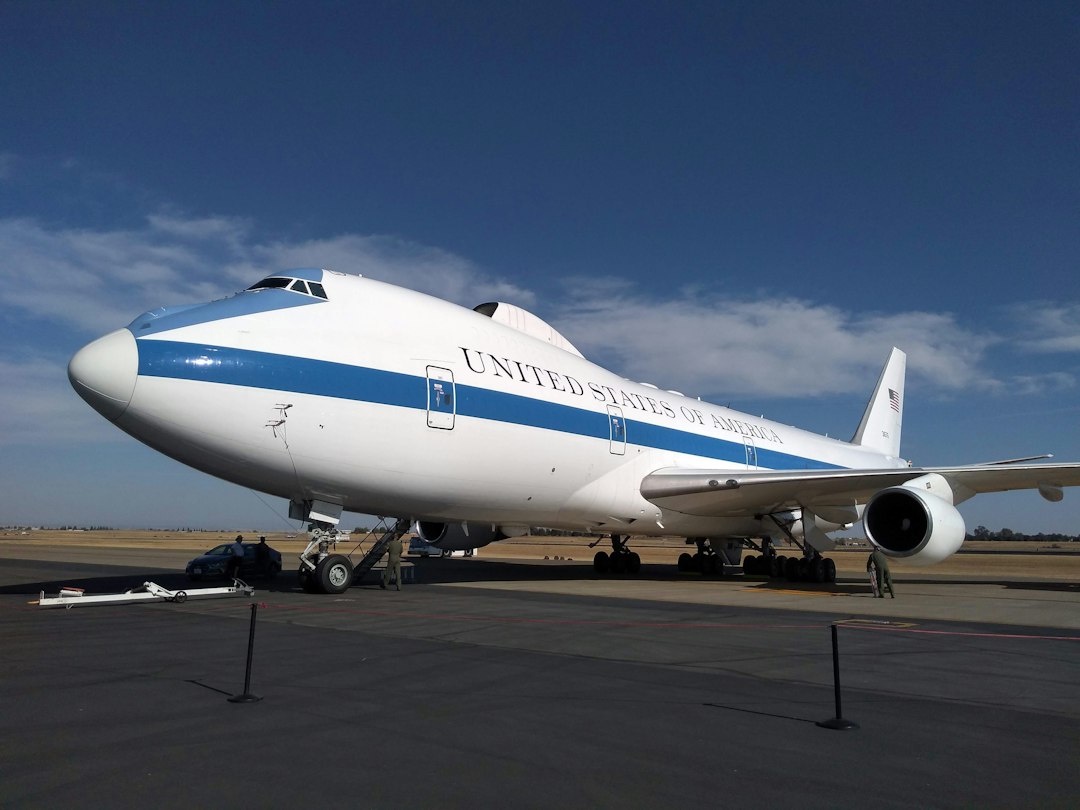
Let’s be honest: when you hear “Air Force One,” you probably picture that iconic blue-and-white Boeing 747 with the sweeping cheatline and the presidential seal on the nose. But the reality is far more complicated—and honestly, more interesting. The call sign “Air Force One” isn’t tied to any single airframe; it’s a radio designation that instantly transfers to whatever U.S. Air Force aircraft is carrying the sitting president, whether that’s a massive VC-25A, a smaller C-32, or even a C-40. That distinction matters because it means the history of presidential air travel is really a story of constant adaptation, aging hardware, and messy compromises. The first jet-powered presidential plane, a modified Boeing 707 designated VC-137 (and later known as SAM 26000), was the one that carried Kennedy to Berlin, flew Nixon to China, and famously had a safe installed specifically for the nuclear “football.” That aircraft also triggered the whole naming convention: in 1963, a commercial flight sharing the same call sign caused confusion, and the Air Force decided no civilian plane would ever share the president’s radio handle again.
Now, let’s talk about the workhorse that’s been carrying presidents since 1990: the VC-25A. These two specially modified 747-200s have been flying for 35 years, and it shows. As of early 2026, the fleet has been dealing with age-related issues—a minor electrical malfunction forced one of them to return to base earlier this year, which is exactly the kind of thing that makes you rethink a 35-year-old aircraft’s reliability. Step inside one, and you’re basically walking into a time capsule of 1980s design: polished wood, plush seating, retro workspaces that feel like a boardroom crossed with a luxury yacht. But the real magic is in the systems you can’t see. Every Air Force One is hardened against electromagnetic pulses, with wiring shielded to survive a nuclear blast’s shockwave—a spec that adds tens of thousands of pounds to the aircraft. The four General Electric CF6-80C2B1F engines each crank out 56,700 pounds of thrust, letting the 747 operate from shorter runways than a standard commercial variant. And the fuselage carries its own retractable airstair plus a belly cargo lift for the president’s armored limousine, so the motorcade is never more than a few feet from the aircraft.
Here’s where the story gets really interesting, and a little controversial. In mid-2026, the Air Force officially retired the VC-25A and replaced it with an interim jet: a Boeing 747 donated by the state of Qatar, retrofitted at a cost of $400 million. The Air Force fast-tracked the conversion, but officials admitted they skipped several planned mission capabilities to hit the delivery deadline. That means the new interim bird doesn’t carry the full suite of defensive systems planned for the next-generation VC-25B, which Boeing is still building. The Air Force’s official line is that “no risk was taken in security, safety, or mission communications,” but let’s be real—you’re essentially flying the president on a plane that’s a known downgrade from the original spec. The interior of the Qatari jet is reportedly more modern, but the press cabin is still stuck in the rear, accessed by a separate set of stairs (a logistical nightmare for journalists trying to file stories mid-flight). And while the VC-25A’s hangar at Joint Base Andrews had climate-controlled storage to protect the sensitive avionics and paint, the new fleet’s maintenance requirements remain classified—which is a polite way of saying “we’re not telling you how fragile it is.”
What I find most telling is the farewell tour. The aging VC-25A made a low pass over a U.S. aircraft carrier in July 2026, officially labeled a routine training flight—but everyone knew it was a symbolic goodbye. The aircraft that carried presidents through the Gulf War, 9/11, and two decades of global diplomacy is now parked, and the interim replacement is a gift from a foreign government. That’s not a knock on Qatar; it’s a reflection of how hard it is to keep a 35-year-old flying fortress operational while waiting for Boeing to deliver the next-gen VC-25B. The new planes are supposed to be based on the 747-8, with even more hardened electronics, advanced countermeasures, and a range that can reach anywhere in the world without refueling. But as of July 2026, those are still years away. So for now, the presidential fleet is a mix of old and borrowed, a flying compromise that’s still the most secure office in the sky—but one that’s running on borrowed time.
The SR-71 Blackbird: Marvel at the Fastest Jet-Powered Aircraft Ever Built
You walk into the Cold War gallery at the Air Force Museum, and there it is—a black, impossibly long shape that looks less like an airplane and more like a serpent that somehow learned to fly. The SR-71 Blackbird doesn’t just sit there; it looms, and the first thing you notice is the skin. It’s wrinkled, almost loose, like it’s wearing a suit two sizes too big. That’s not a manufacturing defect—it’s by design. At Mach 3, the entire airframe stretches up to six inches, and those loose titanium panels expand and seal tight against each other, forming a perfectly smooth surface at operating temperature. The titanium itself? The U.S. had to buy it from the Soviet Union during the height of the Cold War, using front companies to funnel the ore through third countries, because the USSR controlled the world’s best supply. Think about that irony: we built our fastest, most advanced spy plane out of metal we bought from the very people we were spying on.
Now, let’s talk about what makes the thing go. The Pratt & Whitney J58 engines are the strangest powerplants ever bolted onto an aircraft—they’re hybrid turbojet-ramjets that actually get more efficient the faster you fly. On takeoff, they behave like ordinary turbojets, but above Mach 2, bleed air is redirected to bypass the core, effectively turning them into ramjets. At cruise speed, the J58s are pushing air through the inlet at such velocity that the engine is basically doing 80% of the work via compression from forward motion alone, and the turbine section becomes almost an afterthought. The fuel they burn is JP-7, a kerosene so stable it won’t ignite with an open flame—you could drop a lit match into a pool of it and nothing would happen. To start the engines, ground crews inject triethylborane, a chemical that bursts into flame on contact with air, because nothing less extreme can get the JP-7 lit. And that bizarre fuel system doubles as the primary coolant for the entire aircraft—the fuel circulates through heat exchangers to absorb the insane thermal load from the skin, which glows a dull red at Mach 3, pushing 600 degrees Fahrenheit on the leading edges.
The numbers we have on the Blackbird are almost comical. On July 28, 1976, it set the absolute world speed record at 2,193.2 mph—Mach 3.3—and the altitude record at 85,069 feet, both of which stand untouched as of mid-2026. No other operational jet has even come close. Over its 25-year career, the Blackbird was fired upon by an estimated 4,000 surface-to-air missiles, and not a single one hit. It didn’t need countermeasures or jamming; it just accelerated and outran the warheads. One of my favorite stories is the flight from Kadena Air Base in Okinawa to Beale Air Force Base in California, where the SR-71 flew so fast that it crossed enough time zones to land on the previous calendar day relative to its departure—literally arriving before it left. The cockpit canopy is made of heat-strengthened glass rated for 600 degrees, and the pilot wore what was essentially a pressure suit, because at 85,000 feet, the atmosphere is too thin to breathe even with supplemental oxygen. Only 32 Blackbirds were ever built, and 12 were lost in non-combat accidents, but zero were lost to enemy action. That’s a perfect combat record against 4,000 missile shots.
What I think gets lost is just how much engineering philosophy the Blackbird codified. The distinctive chines along the forward fuselage aren’t just for aerodynamics—they generate significant lift and also reduce radar cross-section, making the SR-71 arguably the first operational stealth aircraft in a limited sense. The entire design was built around the idea of trading weight and complexity for raw speed as the primary defense, and it worked so well that no one has tried to replicate it since. As of 2026, the surviving Blackbirds sit in museums, their J58s silent, but those engines still represent a thermodynamic ceiling that no other air-breathing jet has broken. Every time I see one, I’m reminded that we built a plane that could outrace the sun, used fuel that wouldn’t burn, and bought the metal from the enemy to do it. That’s not just engineering—that’s audacity, and it’s exactly the kind of story the Air Force Museum exists to tell.
World War II Legends: From the B-17 Flying Fortress to the B-29 Superfortress
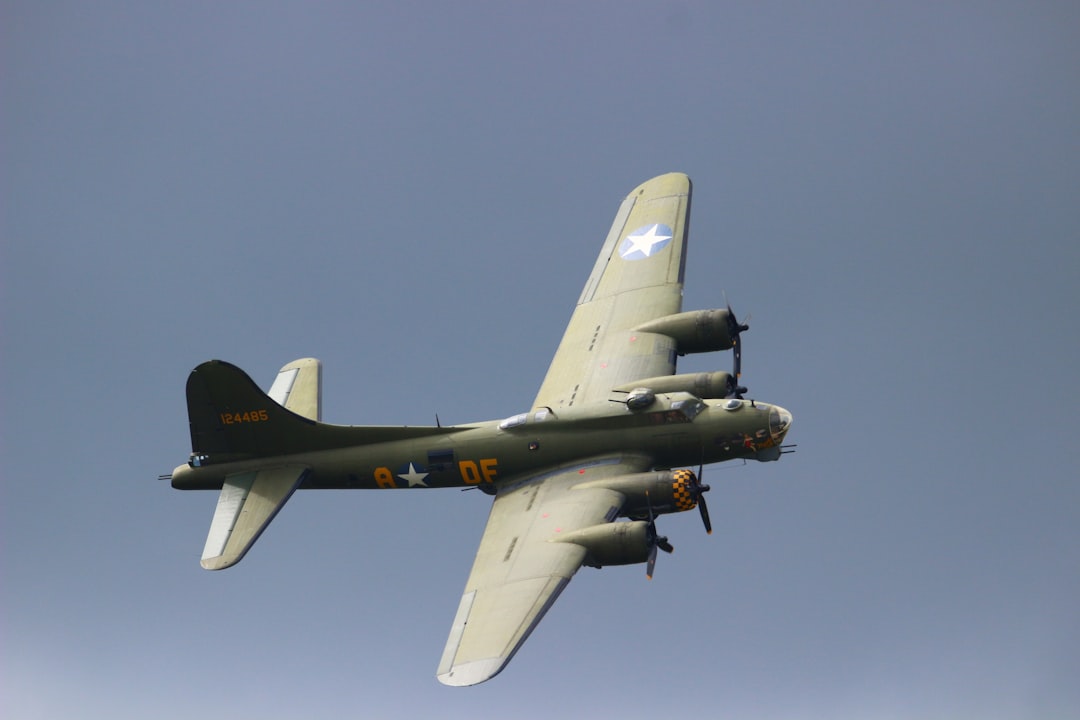
Let’s be real for a second: when most people picture a World War II bomber, they’re imagining the B-17 Flying Fortress—that iconic silhouette with the Plexiglas nose and the tail gunner’s window, taking flak over Germany. But the jump from the B-17 to the B-29 Superfortress isn’t just a step up in size or power; it’s a complete generational leap in engineering philosophy. The B-17 was built to survive. Its aluminum skin was absurdly thin—0.032 inches on some panels, thin enough to push a finger through—yet the airframe could lose a wingtip or a whole tail section and still drag itself back to England. That’s brute-force toughness. The B-29, on the other hand, was built to dominate. It was the first pressurized bomber in service, meaning the crew could fly at 30,000 feet without oxygen masks, while B-17 gunners had to breathe pure oxygen through rubber masks that froze solid at altitude. And the B-29’s remote-controlled turrets were directed by an analog computer called the Central Fire Control System, which calculated lead, range, and ballistic drop automatically—tech that was decades ahead of anything else in the war. The B-17’s later G models carried thirteen .50-caliber machine guns—hence the “Flying Fortress” nickname—but that was a last-ditch fix. The B-29 was designed from the start to be a flying weapons system, not just a box of guns with wings.
Now, let’s talk about the sheer cost of that leap. The B-29 program ran $3 billion in 1940s dollars—more than the entire Manhattan Project—and employed over 100,000 workers across secret factories in Wichita, Renton, and Marietta. The Wright R-3350 engine was the biggest headache: it cranked out 2,200 horsepower per engine, nearly double the B-17’s R-1820, but it ran so hot that early test flights ended with cylinders literally catching fire. Engineers had to forge new cylinder heads and redesign cowl flaps just to keep the engine from melting itself. And then there’s the operational context. The B-17, with a range of about 2,000 miles, could barely reach western Germany from bases in England. The B-29’s range of 3,250 miles allowed it to firebomb Tokyo from Tinian in the Mariana Islands, a 1,500-mile one-way trip. But to get those B-29s into the Pacific theater, crews had to fly them over the Himalayas in Operation Matterhorn—navigating the world’s highest mountain range with rudimentary radar and no reliable maps. More aircraft were lost to that supply route than to actual combat. That’s the kind of logistical hell you accept when you’re building a bomber that costs more than the atomic bomb.
And speaking of the bomb—that’s where the B-29’s engineering really shines. The bomb bay was split into two separate sections specifically to accommodate the long atomic weapons. Little Boy, dropped by the Enola Gay, weighed 9,700 pounds and used a gun-type mechanism; Fat Man weighed 10,800 pounds and relied on an implosion design. Both were nearly as heavy as a fully loaded fighter plane. The B-29’s bomb bay doors had to open simultaneously for a clean drop, requiring a special release mechanism that seems simple in hindsight but was a nightmare to synchronize. Meanwhile, the B-17 carried a crew of ten—pilot, co-pilot, navigator, bombardier, radio operator, and five gunners—and that navigator used a drift meter and a sextant to find targets in the overcast European sky, with accuracy measured in miles, not feet. The B-29’s crew was smaller at eleven, but the aircraft was so automated that the bombardier and navigator sat in a single pressurized compartment, working with radar and analog computers that were straight out of science fiction. You can see the shift: the B-17 was a tough, adaptable platform that learned to survive through sheer grit and field modifications. The B-29 was a purpose-built weapon system designed to end the war by delivering technology that didn’t exist when the war started. Both are legends, but for very different reasons—and the museum does an incredible job of showing you that contrast side by side.
The X-15 Rocket Plane: See the Hypersonic Craft That Touched the Edge of Space
You walk into the Air Force Museum’s research and development hangar, and the X-15 doesn’t immediately scream “spaceship.” It’s small—only 50 feet long, about the size of a fighter jet—and the black Inconel X skin gives it this almost crude, industrial look, like someone welded a missile onto a cockpit and called it a day. But then you get close, and the details start to hit you. That nickel-chrome alloy skin is rated for over 1,200 degrees Fahrenheit, and it had to be, because at Mach 6.7 the leading edges glowed cherry red on reentry. The internal frame is titanium, which in the early 1960s was still a nightmare to machine and weld. And here’s the kicker: the X-15 didn’t even take off under its own power. It was carried to 45,000 feet under the wing of a modified B-52, dropped like a bomb, and then lit a rocket motor that burned through its propellant in about 85 seconds. That gives you roughly 10 minutes of flight from release to landing on a dry lakebed. Think about that—ten minutes total to accelerate to hypersonic speeds, climb to the edge of space, and get back down in one piece. That’s a tighter timeline than most of my morning coffee breaks, and pilots had to make life-or-death decisions in seconds.
Only three X-15s were ever built, and they flew a combined 199 missions between 1959 and 1968. That’s a staggeringly small sample size for a program that essentially wrote the textbook on hypersonic flight. Eight pilots flew above 50 miles—the U.S. definition of space at the time—and earned astronaut wings. Neil Armstrong was one of them. He flew the X-15 seven times before commanding Apollo 11, and you can see the direct lineage: the X-15 used hydrogen peroxide reaction control thrusters to steer in the near-vacuum above the atmosphere, and that same basic system ended up on Gemini and Apollo spacecraft. It’s not a stretch to say the Apollo program learned how to fly in space because the X-15 figured out how to steer where there’s no air. The peak speed, Mach 6.7, was set in 1967 by pilot William “Pete” Knight, and that record still stands as of mid-2026 for any manned, powered aircraft that took off from Earth’s surface. Think about the audacity: a plane that could cross the continental U.S. in under 40 minutes, but each flight was a disposable experiment. The program cost about $300 million in 1960s dollars—a rounding error next to the Apollo budget—yet it generated over 200 technical papers that directly influenced the Space Shuttle’s thermal protection system and every hypersonic vehicle that’s come since.
Now, let’s talk about what it actually took to fly this thing. The cockpit wasn’t pressurized. Above 50,000 feet, the ambient pressure is so low that your blood would boil without a pressure suit, so pilots wore full astronaut-style suits. The landing gear was a joke: a nose wheel and two rear skids that scraped along Rogers Dry Lake, leaving long gouges in the desert floor. After a flight, the ground crew would touch the skin and find it cool enough to handle within minutes, because the Inconel X was that good at radiating heat away. But the trade-off was that the material was brittle and prone to cracking, and each aircraft required extensive overhaul after just a handful of missions. One of the three X-15s was lost in 1967 when pilot Michael Adams experienced a control system failure during a hypersonic test; the aircraft broke apart, scattering wreckage over 50 square miles. That was the program’s only fatality, and it’s a stark reminder that every flight was pushing the absolute edge of what engineering could manage. Even the B-52 drop technique was fraught with risk—if the release mechanism failed or the X-15’s rocket didn’t ignite, you’re falling from 45,000 feet with no engine and a glide ratio of a brick. Not a single pilot ever had to dead-stick that scenario, but the margin for error was razor-thin.
What I find most striking about the X-15 is how it sits at the intersection of brute-force testing and elegant design philosophy. It was built not to win a war or to reach orbit, but to answer a single question: can we survive hypersonic flight, and if so, how? The answer shaped everything from the Shuttle’s tiles to the thermal modeling used in today’s scramjet programs. As of 2026, several companies and defense agencies are chasing Mach 5+ vehicles—Boom Supersonic’s Overture, Lockheed’s SR-72, various Air Force hypersonic weapons—and every one of them owes a debt to that 1960s rocket plane. The X-15 didn’t just touch the edge of space; it defined the engineering dogma that makes hypersonic travel possible. And the Air Force Museum has one of the three airframes, the X-15A-2, sitting right there with its stubby external fuel tanks and white-painted nose from a high-speed test. You can stand next to it and see the scorch marks, the hand-formed rivets, the analog cockpit that looks like a watchmaker’s fever dream. It’s a relic, sure, but it’s also a roadmap. The numbers are still the benchmark. The lessons are still being applied. And the record? Still unbroken.
The F-117 Nighthawk: The World's First Operational Stealth Fighter
Let’s clear something up right away: the F-117 Nighthawk was never a fighter. The “F” prefix was a deliberate deception—a cover story cooked up to hide the fact that this was a precision ground-attack plane designed to slip through Soviet air defenses undetected. I love that detail because it tells you everything about how the program operated: utter secrecy, even in naming conventions. The faceted, angular shape you see on the museum floor isn’t some aesthetic choice from a sci-fi movie; it was a brute-force computational necessity. Back in the 1970s, Lockheed’s Skunk Works could only run radar-cross-section simulations using software that calculated reflections off flat triangular panels—curved surfaces were too mathematically complex for the computers of the era. So they built the plane out of flat plates, each one precisely angled to deflect radar energy away from the source. It’s clunky by modern stealth standards—compare it to the smooth contours of a B-2 or F-35—but it worked.
Now here’s where the compromises get really interesting. Because the F-117 carried no radar and no air-to-air missiles. None. Its only sensors were a forward-looking infrared turret and a laser designator, meaning it could only attack at night in good weather. The air intakes are covered with a grid of tiny, precisely spaced holes that block radar waves from hitting the compressor blades—but that grid also chokes airflow, keeping the plane subsonic. The exhaust system forces hot gases through wide, flat nozzles that mix with ambient air to suppress the infrared signature, but it also makes the aircraft slow and unmaneuverable. Every design choice traded raw performance for invisibility. The radar-absorbent coating is so fragile that ground crews spend hours touching it up after every single mission, and the Nighthawks have to be stored in climate-controlled hangars to keep the material from delaminating. That’s not a rough-weather combat jet; that’s a surgical instrument, and it had to be handled like one.
And yet—when you look at the operational data, the trade-offs were absolutely worth it. During Desert Storm in 1991, F-117s flew only 1.3 percent of all Coalition combat sorties, yet they struck over 40 percent of the strategic targets. That’s not a rounding error; that’s a paradigm shift. A tiny fleet of 59 Nighthawks could walk into the most heavily defended airspace on earth and take out command centers, air defense nodes, and communication hubs on the first night. Only one was ever lost in combat: an SA-3 missile downed an F-117 over Serbia in 1999, and even that required the Serbs to modify their radar tactics specifically to catch it. The pilot ejected and was rescued—but the legend of invincibility was cracked. Still, the Nighthawk’s legacy is undeniable. It proved that stealth wasn’t just a theoretical concept; it was a war-winning capability.
Here’s what most people don’t realize as of mid-2026: the F-117 isn’t really retired. The Air Force officially put them in storage at Tonopah Test Range back in 2008, but multiple airframes are still flying—used as aggressor trainers and testbeds for next-generation sensor and countermeasure systems. The cockpit canopy on display at the museum has a microscopically thin layer of gold deposited on it to reflect radar, giving it that warm amber tint. You can walk right up to it and see the hand-laid composite panels, the crude but effective faceted lines, the grid-covered intakes. And you realize this airplane wasn’t a finished product; it was the proof of concept. Everything that came after—the B-2, the F-22, the F-35, even the upcoming NGAD—exists because the Nighthawk showed that strange geometry and fragile coatings could make an airplane invisible. That’s not just history. That’s the blueprint.
Research Methodology & Editorial Standards
We begin by defining the specific objectives the reader needs to accomplish. Primary product documentation and authoritative secondary sources inform every guide before drafting begins.
Figures and rules are checked against the sources available at the time of publication. Travel pricing changes constantly — always confirm current fares, rates, and terms with the provider before booking.