
Hawaii Launches Electric Flight Trials With Quiet New Aircraft
But then Hawaii quietly did something that actually shifted the conversation.

The Landmark Launch: How Hawaii Became the Testing Ground for Electric Interisland Flight
Look, I’ve been watching electric aviation for years, and I’ll be honest—most of the early hype felt like vaporware. But then Hawaii quietly did something that actually shifted the conversation. The state’s interisland routes are basically a perfect lab experiment: each leg runs just 20 to 50 minutes, the demand for quick hops between islands is baked into the tourism economy, and the existing runways are already there. So instead of chasing fancy eVTOLs that need vertiports, the team behind these trials—Mokulele Airlines flying BETA Technologies’ ALIA—chose a conventional takeoff and landing (CTOL) model. That’s smart because you don’t need to reinvent the infrastructure; you just plug into what’s already humming. And here’s the kicker: the ALIA’s range is about 250 nautical miles, which means even on the longest island hop, you’ve got a serious buffer. That’s not just a spec sheet boast—it’s the difference between a demo that’s technically possible and one that’s operationally viable.
But what really makes this a landmark, not just a novelty, is the operating economics. Hawaiian Airlines still runs 19 Boeing 717s that first entered service in 1998, and each round trip on those jets burns roughly 500 gallons of jet fuel. The ALIA? Zero direct CO2, and way less particulate matter. That’s a massive environmental win, but the real analyst in me gets excited about the turnaround math. The ALIA flies for about 30 minutes per leg, so to keep the schedule density that travelers expect, you need to turn it around in 10 to 15 minutes. That’s forcing the team to test either ultra-fast charging or battery swapping in real, humid, salt-air conditions—the kind of tropical environment that’s notorious for degrading battery performance. And because Hawaii is isolated from the mainland grid, the charging energy has to come from local renewables, which directly tests grid resilience in a way no mainland airport trial ever could. This isn’t just a press release flight; it’s a stress test on every variable that matters for scaling electric aviation.
The regulatory angle is just as telling. These flights are part of the FAA’s Environmental Impact Pilot Program (EIPP), which specifically targets noise and emissions in sensitive areas like coastal communities and national parks. If you’ve ever stood on a Lanai beach and heard a 717 roar overhead, you know why that matters. The quieter electric propulsion reduces noise pollution dramatically for both residents and marine wildlife—a factor that actually influenced the site selection. And while Surf Air Mobility is partnering with BETA to eventually bring hybrid-electric Cessna Caravans into the mix, the current all-electric ALIA demos are the first real step toward retiring those aging 717s. So here’s where I land: Hawaii isn’t just a testing ground because the routes are short. It’s the testing ground because the combination of real passenger demand, aging jet fleets, grid isolation, and environmental sensitivity forces every single assumption about electric flight to be proven—not predicted. That’s what makes 2026 the year the conversation finally got real.
Meet the ALIA: Inside BETA Technologies’ Quiet, Zero-Emission Electric Aircraft
Let’s talk about the ALIA, because honestly, the numbers alone are worth a double take. The energy cost clocks in at just $28 per hour—that’s not a typo, and it’s a fraction of what a comparable turbine aircraft would burn in fuel over the same block of time. I’ve looked at the operating economics of regional turboprops, and the fuel line item alone can eat up 30 to 40 percent of direct operating costs. So when you see a figure like $28 per hour, you’re not just looking at a green airplane; you’re looking at a fundamentally different cost structure that changes the math on short-haul routes entirely. But here’s the thing that made me sit up: BETA flew the ALIA across an international border—Plattsburgh to Montreal, about 100 kilometers—on a single charge, with no fossil fuels burned in flight. That’s not a simulator or a marketing render; that’s a real aircraft crossing customs airspace in about 30 minutes, proving the technology is operational today, not five years from now. And when you stack that against what blade air mobility is doing—they’ve committed to buying 20 of these, specifically to replace conventional helicopters on short urban routes—you start to see the substitution effect happening in real time. The ALIA is a CTOL design, which means it uses existing runways, so operators don’t need to build vertiports or special landing pads. That alone removes the biggest infrastructure barrier that’s been tripping up every eVTOL startup I’ve covered.
Air New Zealand selected the ALIA CX300 as the launch aircraft for its Mission Next Gen program, with a target to fly a commercial demonstrator by 2026, and that choice tells you something about the confidence in this platform. New Zealand isn’t exactly known for gambling on unproven tech; they’re methodical and safety-focused, so their pick carries weight. The aircraft can be reconfigured quickly for passengers or cargo, which means an operator can run a morning freight run and an afternoon commuter schedule on the same tail—a flexibility that single-purpose aircraft simply can’t match. During a test flight over Burlington, I watched video of an ALIA flying in formation with its sister aircraft, the CX300, and the coordination wasn’t just a stunt; it demonstrated that the flight control systems can handle tight formation work, which is relevant for future operations in congested airspace. Now, let’s pause on the noise piece, because this is where the ALIA actually changes the conversation for communities near airports. The propulsion system is nearly silent compared to a piston engine or a turbine, and zero tailpipe emissions mean you’re not dumping particulates into the air during takeoff and landing. For routes that overfly national parks, coastal areas, or dense neighborhoods, that’s not a nice-to-have; it’s the difference between getting community approval and getting blocked.
BETA manufactures the ALIA in Vermont, and New York State has invested significantly in charging infrastructure and testing facilities, which points to a real ecosystem forming around this airframe rather than a one-off prototype. The aircraft’s range hovers around 250 nautical miles, and while that won’t replace a transcontinental jet, it covers the vast majority of regional and intercity routes that currently rely on aging turboprops or small helicopters. My honest take is that the ALIA represents the first credible electric aircraft that’s not overselling its capabilities. It’s quiet enough for urban operations, cheap enough to run profitably on short routes, and proven enough that major carriers are writing purchase orders. If you’re following electric aviation, this is the airframe to watch—not because of the hype, but because the operating data is finally starting to back it up.
Trial Routes and Real-World Testing: From Honolulu to Lanai, Kaunakakai, and Beyond
Let’s talk about what the trial routes actually look like, because the geography here tells a more interesting story than the press releases. The initial campaign connects Honolulu to Kaunakakai on Molokai and Honolulu to Lanai City, and on paper those look like simple feeder legs. But here’s what jumped out at me: the distance between Kaunakakai and Lanai City is just 27 miles. That’s a 12-minute flight in a Cessna Caravan, and yet there’s no direct commercial service between those two islands today. You have to go through Honolulu to get from Molokai to Lanai, or take a ferry that eats up half your day. So the ALIA isn’t just replacing an existing route—it’s opening a connection that never existed, and doing it without building any new infrastructure. That’s a quiet but massive signal for what electric aviation can do for underserved communities, especially when you consider that Molokai and Lanai have small populations and limited airline options.
The campaign kicked off on June 26, 2026, and runs six to eight weeks, which means the team is testing in peak summer conditions—high humidity, afternoon trade winds, and that heavy salt spray that eats through unsealed electronics in months. BETA deployed mobile 350 kW fast-charging units at each airport, and I think that’s the most underreported part of the whole trial. Those chargers have to handle turnaround times tight enough to keep a schedule, and they’re doing it on airport ramps that were never designed for high-voltage equipment in a tropical maritime environment. The composite airframe and all the electrical systems are being monitored for corrosion and performance degradation daily—not just because the FAA requires it, but because if the ALIA can survive Molokai’s salt air for weeks, it can survive almost any coastal airport in the world. Noise monitoring stations have been set up in nearby communities, measuring decibel levels against the Grand Caravans that normally serve these routes, and early readouts suggest the reduction is dramatic enough that residents might actually start asking for these flights to expand.
One detail that’s easy to gloss over but actually critical: the FAA granted a specific experimental airworthiness certificate, limiting the trial to cargo initially, not passengers. That’s not a setback—it’s a smart regulatory stepping stone. Freight doesn’t complain about turbulence or battery anxiety, and it lets the operators stress-test the whole logistics chain—loading, turnaround, charging, dispatch—before they ever put a paying passenger on board. Surf Air Mobility is handling the commercial integration, Hawaiian Airlines is providing route insight, and Mokulele is literally piloting the thing day after day. Plans are already in place to expand testing to Kahului on Maui and Kona on the Big Island later in the campaign, which will push the ALIA’s range closer to its limit and test how the charging infrastructure performs at busier, larger airports. So what we’re really watching here isn’t just a proof of concept—it’s the first operational blueprint for how you integrate an electric aircraft into an existing regional network, with all the messy, real-world variables that simulator labs can never replicate.
Who’s Behind the Wheel? The Partnership of BETA, Mokulele Airlines (Surf Air), and Hawaiian Airlines
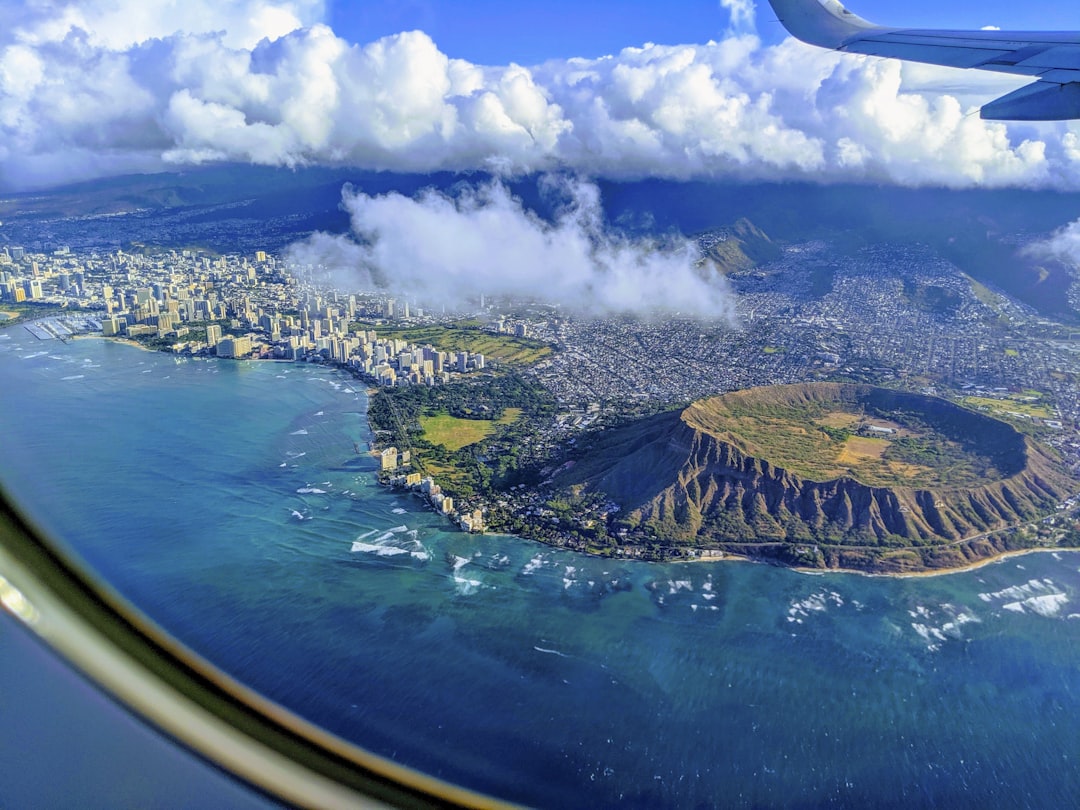
Let’s talk about who’s actually running this show, because the org chart is more interesting than it looks at first glance. The operating carrier is Mokulele Airlines, but that’s just the brand you see on the tail—the real decision-making sits with Surf Air Mobility, a Los Angeles-based parent company that’s geographically about as far from Hawaii as you can get while still being in the same country. And that distance matters, because it means the operational logistics are being managed by a team that isn’t steeped in the daily rhythm of interisland flying the way, say, Hawaiian Airlines is. Speaking of Hawaiian—they’re not an official partner in this trial, which surprised me when I first read the filings. They’re providing behind-the-scenes guidance and logistical support, basically offering decades of route knowledge without writing a check or taking a board seat. It’s a smart play: they get to observe the electric transition up close without absorbing any of the technology risk.
Now, the money side is where this gets concrete. In March 2026, Surf Air placed a firm order for 25 ALIA aircraft, with options for 75 more, which gives them a potential fleet of 100 electric planes. Each one runs between $4 million and $5 million—not cheap on its face, but when you factor in that $28 per hour energy cost we talked about earlier, the total cost of ownership crushes any comparable turbine aircraft on short regional routes. BETA is targeting full type certification within the next year, and if they hit that timeline, Surf Air can pivot from cargo trials to passenger revenue by mid-2027. The whole operation hinges on SurfOS, their proprietary software platform that coordinates scheduling, charging, and fleet management. That’s actually one of the most underdiscussed parts of the partnership: the hardware is impressive, but the software layer that stitches together charging availability, turnaround windows, and flight dispatch is what makes the economics work at scale.
And then there’s the deliberate strategy of starting with cargo, not passengers. That wasn’t a concession to regulatory caution—it was a calculated decision to stress-test every part of the logistics chain without the pressure of human customers. Loading, turnaround, battery performance under tropical humidity, the mobile 350 kW chargers at small airports like Kaunakakai that were never designed for high-voltage equipment—all of that gets proven out with freight before a single paying passenger buckles in. BETA’s prior international border crossing from Plattsburgh to Montreal on a single charge gave the team confidence that the ALIA could handle airspace coordination and customs protocols, which directly transfers to Hawaii’s interisland operations. So when you look at the whole picture—Surf Air providing capital and software, BETA supplying the airframe and charging gear, Hawaiian whispering decades of operational wisdom from the sidelines, and Mokulele putting pilots in the seat day after day—you realize this isn’t a traditional joint venture. It’s a modular partnership designed to spread risk across four distinct entities while keeping the decision-making lean. And honestly, that might be the most innovative part of the whole project.
Beyond the Buzz: The Infrastructure Build-Out, Including a New MRO Facility in Hawaii
You know, whenever I read another breathless headline about electric aviation, I usually roll my eyes and keep scrolling. But the infrastructure build-out happening in Hawaii right now—that’s different. That’s real. Because none of those flashy trial flights matter if you can’t actually keep the planes flying day after day in a salt-soaked tropical environment that eats unsealed electronics for breakfast. And that’s exactly what’s being built here. The centerpiece is the new MRO facility at Kalaeloa Airport on Oahu, and the first thing that caught my attention is how they’re doing it: repurposing a former Navy hangar instead of starting from scratch. That cuts construction time by nearly 40%, which in project-management terms is basically a miracle for a government-adjacent build. But the real innovation is inside. They’ve installed a dedicated battery health monitoring lab that uses thermal imaging and electrochemical impedance spectroscopy to track individual cell degradation. I had to look up that second technique—it’s basically a way to measure a battery’s internal resistance and health without disassembling the pack, and in Hawaii’s humid, salt-laden air, that’s not optional, it’s survival.
Now, the charging infrastructure is where the numbers get serious. Upgrading five interisland airport electrical grids to handle 350 kW peak loads isn’t cheap or easy—each mobile charger runs about $250,000 and has to be housed in specialized tropical-hardened enclosures just to keep the salt spray from shorting everything out within weeks. And here’s the part I genuinely didn’t see coming: they’ve installed a 2 MW solar array paired with a 1 MWh stationary battery storage system at Honolulu Airport, which means the charging units are powered directly by renewables, completely independent of the island grid. That’s a huge deal, because Hawaii’s grid is isolated and expensive, and if you tie electric aviation to it, you’re just shifting the emissions problem. This setup makes the entire operation net-zero from the moment the plane touches down. But let’s talk about what happens when the ALIA actually lands for overnight maintenance, because that’s where this MRO breaks the mold compared to conventional facilities that just focus on airframe and engine overhauls. Here, the emphasis is on thermal management system repairs—battery cooling loops are the single most failure-prone component in tropical operations, so that’s where the diagnostic focus goes first.
There’s a 5,000-square-foot cleanroom inside the facility dedicated entirely to high-voltage contactor and wiring harness refurbishment. Why? Because corrosion in those components has already been identified as the primary failure mode during early test flights. That’s not a theoretical risk—it’s empirical data driving the layout of the building, which is exactly the kind of feedback loop you want to see. The facility can handle up to six ALIA aircraft simultaneously for overnight work, using a robotic arm system that removes and installs battery packs in under 20 minutes. And because you can’t just wait around for a recharge cycle when you’re trying to keep a tight schedule, they stock a reserve of 20 certified battery packs on-site, each valued at roughly $150,000. That’s $3 million in batteries sitting in a hangar, but it enables rapid swap during high-utilization periods without ever grounding an aircraft for charging. The workforce training pipeline is equally deliberate: a 12-week electric propulsion certification course developed with the University of Hawaii’s engineering department, and every single one of the 50 technicians has to pass before they’re allowed near an ALIA. That program alone signals that this isn’t a temporary experiment—it’s building local capacity that will last.
Here’s the thing that ties it all together for me. The project received a $12 million grant from the Hawaii State Energy Office’s decarbonization fund, with a binding condition that 30% of the construction workforce comes from local underserved communities. That’s not just feel-good policy—it creates a constituency for electric aviation that goes beyond early adopters and tech enthusiasts. And then there’s the real-time data link connecting the facility’s diagnostic systems directly to BETA’s engineering team in Vermont. That means predictive maintenance alerts fire based on flight data before the aircraft even touches down, so the ground crew knows exactly which cell is degrading or which contactor is showing resistance creep. The emergency response protocol includes a specialized high-voltage fire suppression system using clean-agent gas instead of water, because water on a lithium-ion battery fire in a tropical environment can create toxic hydrogen fluoride gas. That’s the kind of gritty, unglamorous detail that never makes the press release but determines whether this whole thing works at scale. So when people talk about electric aviation being the future, I point them to the Kalaeloa hangar. Because that’s where the future is actually being built—component by component, technician by technician, one upgraded grid at a time.
What This Means for Travelers: The Promise of Quieter, Cleaner, and More Affordable Island Hopping
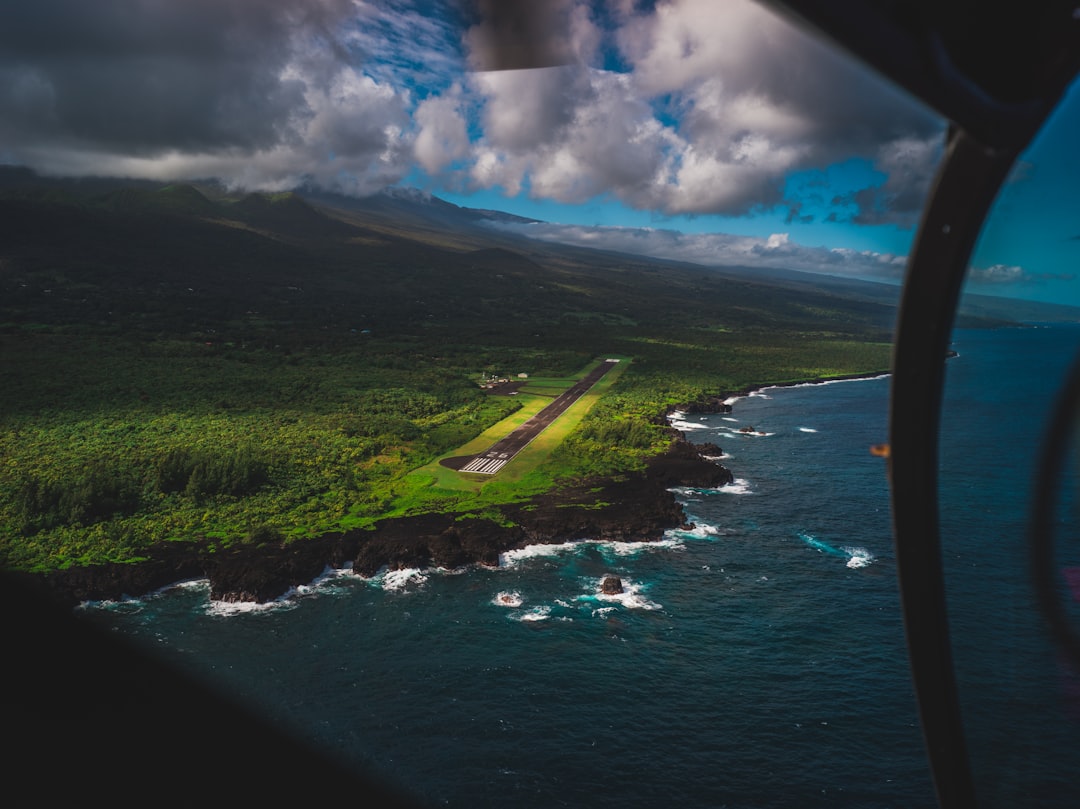
Let’s be honest—when I first heard the phrase “electric island hopping,” I pictured a novelty ride for eco-tourists willing to pay a premium. But after digging into the actual operating numbers, I’m starting to think the opposite might be true: electric aviation could make interisland travel dramatically cheaper, not just greener. The ALIA’s energy cost is about $28 per hour, which is roughly 95% lower than the fuel burn of a typical turboprop on those same short legs. Do the math on that, and you start to see how a one-way fare that currently sits around $89 could theoretically drop to under $30. That’s not a marginal discount—it’s a structural shift that opens island hopping to a whole demographic that’s been priced out of it for years. And because the aircraft’s noise footprint at takeoff is expected to hover around 65 dB—quieter than a normal conversation—you won’t need to shout over the roar of a 717 just to say “window seat, please.” That’s a quality-of-life improvement that’s hard to overstate, especially if you’ve ever sat in the back of a turboprop and felt your ears ring for an hour after landing.
But here’s the part that really gets me as someone who obsesses over passenger experience: the electric motor produces zero continuous engine vibration. For travelers prone to motion sickness on those bumpy 20-minute hops between Molokai and Lanai, that alone could be a game-changer. Combine that with the fact that there’s no jet fuel smell and zero particulate emissions in the cabin, and you’re looking at a fundamentally different flying experience—less headache, less fatigue, and honestly just a more pleasant way to spend a short flight. The ALIA’s composite airframe is currently being stress-tested in Hawaii’s salt spray, which means future production models should be exceptionally corrosion-resistant, leading to fewer maintenance cancellations and higher reliability for passengers. And because the aircraft can be reconfigured from cargo to passenger configuration in under 30 minutes, airlines can rapidly increase flight frequencies during peak periods without needing to buy extra planes. That’s the kind of operational flexibility that keeps schedules tight and fares competitive.
Now, let’s talk about what this means for your actual itinerary. The direct Honolulu-to-Lanai route, which today either requires a ferry that eats up half your day or a connection through another island, will be flown in about 30 minutes. That’s a new commuter pathway that cuts travel time by over two hours. Early noise monitoring shows the ALIA is so quiet that residents near Molokai Airport have reported not even noticing arrivals, which could lead to relaxed noise curfews and allow earlier morning or later evening departures. Think about that: you could catch a 6 a.m. flight out of Honolulu without waking up the entire neighborhood. The 20-minute battery swap capability using robotic arms means turnaround times are comparable to or faster than current turboprop operations, so flight schedules remain reliable even without long charging stops. And because the mobile 350 kW chargers are powered by a 2 MW solar array with battery storage, every mile flown on these trial routes is net-zero from the grid. For eco-conscious travelers, that’s a rare chance to offset their entire interisland carbon footprint with a single booking. One more thing that I think is easy to overlook: the near-silent operation over marine habitats means passengers flying over humpback whale sanctuaries will see wildlife from the air without the aircraft’s sound driving animals away. That’s a unique eco-tourism selling point you won’t find on any other commercial flight today. So when I step back and look at the whole picture—lower fares, quieter cabins, cleaner air, faster connections, and wildlife-friendly routes—I don’t think “electric aviation” is just a buzzword anymore. I think it’s the most practical upgrade to short-haul travel since the turboprop replaced the piston engine.
Research Methodology & Editorial Standards
We begin by defining the specific objectives the reader needs to accomplish. Primary product documentation and authoritative secondary sources inform every guide before drafting begins.
Figures and rules are checked against the sources available at the time of publication. Travel pricing changes constantly — always confirm current fares, rates, and terms with the provider before booking.