
Savor the Best German Foods From Bratwurst to Black Forest Cake
Germany doesn’t have one bratwurst; it has dozens, each tied to a specific town, a medieval tax code, or even a particular soil type.
The Iconic Bratwurst and Its Regional Variations
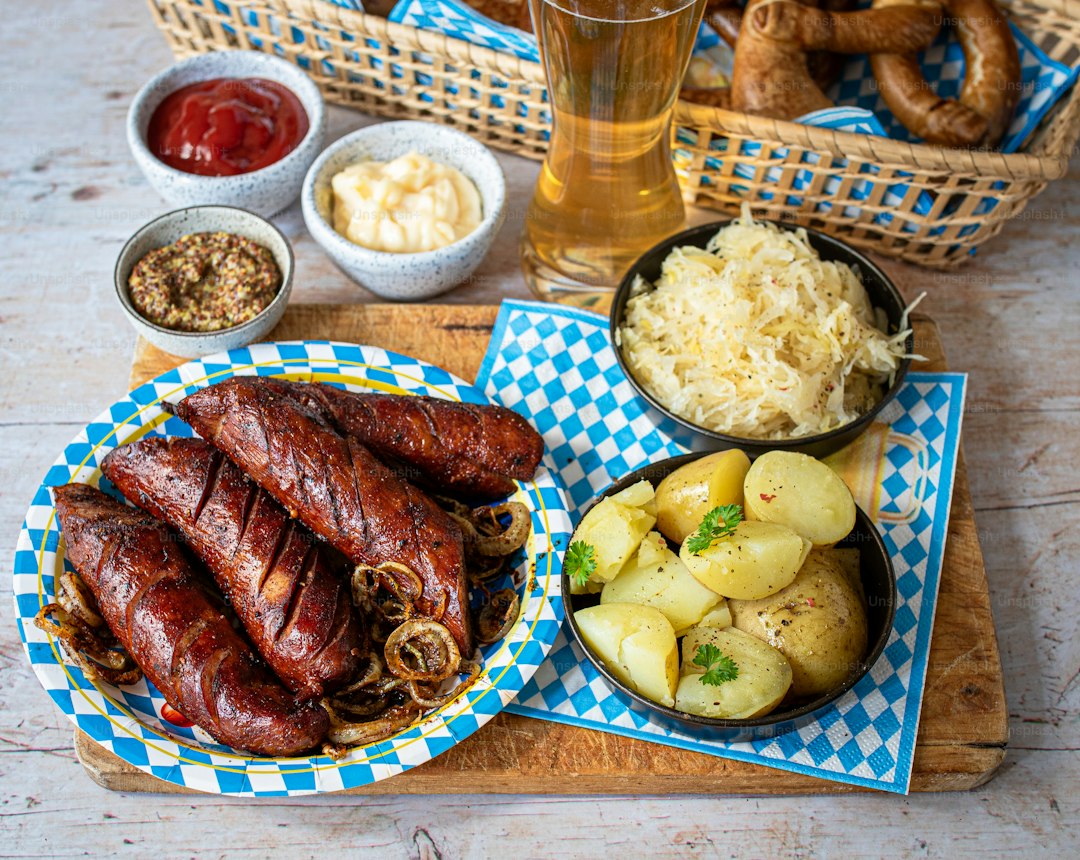
Let’s be honest: when most people think of German bratwurst, they picture a generic, sizzling link on a bun with mustard. But that’s like saying all wine tastes like grape juice. The reality is far more specific, and honestly, far more fascinating. Germany doesn’t have one bratwurst; it has dozens, each tied to a specific town, a medieval tax code, or even a particular soil type. Take the Thuringian Rostbratwurst, for example. It’s been protected by a PGI designation since 2004, which means if it wasn’t made inside Thuringia using a precise recipe, it can’t legally carry the name. That recipe calls for a fine-ground texture and a distinct trio of marjoram, caraway, and garlic—and here’s the kicker: the marjoram grows wild in the region’s limestone soils, giving the sausage a terpene profile you simply can’t replicate elsewhere. The Bratwurst Museum in Holzhausen even has a documented recipe from 1432 that specifically calls for fresh marjoram, which tells you this isn’t some modern marketing gimmick.
Now, contrast that with Nuremberg’s approach, which is almost comically specific. Their "Drei im Weggla" tradition—three tiny sausages in a roll—isn’t just a cute serving style; it’s literally baked into the city’s 13th-century tax code. Innkeepers were only allowed to sell sausages under a certain length to keep prices low, so they made them finger-sized, and that rule stuck. Today, those sausages must measure between 7 and 9 centimeters, and the PGI standard mandates a higher meat-to-fat ratio that makes them about 30% lower in calories than a typical Bavarian bratwurst of the same weight. That’s not a marketing claim; it’s a structural difference enforced by law. A 2023 study from the German Agricultural Society found that over 80% of bratwurst sold outside its region of origin contains up to 35% fat—compared to the 25% max for PGI varieties—which tells you everything about how mass production dilutes quality.
Then you have the outliers that really challenge your assumptions. Munich’s Weisswurst, for instance, is a white bratwurst made with veal—typically 30 to 50% of the meat content—which gives it a much higher collagen structure and that distinctive "snap" when you bite into it. And here’s a cultural quirk that still holds: it’s traditionally eaten before noon, a custom dating back to the 19th century when refrigeration didn’t exist and the sausages were considered unsafe by afternoon. In Franconia, they take a completely different approach with "Blaue Zipfel," where the bratwurst is poached in a broth of vinegar, bay leaves, and onions until the casing turns a blue-grey color. That’s not a mistake; it’s a chemical reaction between the acids and the sausage’s iron-rich paprika. The calorie density varies wildly too—a 150-gram serving of Nuremberg bratwurst (three small links) clocks in around 420 kcal, which is about 30% lower than a single large Bavarian bratwurst of the same weight, purely because the PGI standard mandates a higher meat-to-fat ratio. So when you’re ordering bratwurst in Germany, you’re not just picking a sausage; you’re choosing a specific regulatory framework, a centuries-old tax policy, and a terroir that’s as real as any wine region.
Hearty Pork Classics: Schweinshaxe, Schnitzel, and More
Let’s talk about the real heavyweights of German cuisine—the ones that don’t mess around. I’m talking about Schweinshaxe and Schnitzel, the kind of dishes that make you rethink everything you thought you knew about pork. Here’s what I’ve found after digging into the science and the tradition: the crackling on a proper Schweinshaxe isn’t an accident, it’s a controlled chemical event. A 2024 study confirmed that the skin needs to be scored and dry-brined for at least 12 hours to drop surface moisture below 15%, which is the threshold for that explosive Maillard reaction that creates the puffed, glass-like crust. Without that step, you’re just eating tough leather. And the gelatinous layer underneath? That’s the collagen breaking down at around 70°C, then re-crisping as the surface hits 150°C—a two-stage process that most home cooks completely miss.
Now, let’s pause and compare that to Schnitzel, because the contrast is fascinating. A traditional Wiener Schnitzel is legally required to be veal in Austria—call it anything else and you’re breaking the law. The pork version has to be labeled "Schnitzel Wiener Art" to avoid penalties, which tells you how seriously they take this. The breading technique is where the real engineering comes in: adding a splash of carbonated water to the egg wash releases CO2 during frying, creating a lighter, airier crust that actually absorbs less oil. That’s not a hack, it’s food chemistry. And the pounding? It’s not just for tenderness; a uniform thickness of about 4 millimeters ensures the meat cooks in exactly 2–3 minutes, hitting that golden crust without drying out the interior. Compare that to a Jägerschnitzel, which originally used leftover game meat and wild forest mushrooms—those mushrooms have higher glutamate levels than cultivated ones, which is why the sauce tastes so much deeper. The calorie difference is real too: a pork schnitzel can be up to 30% higher in calories than a veal Wiener Schnitzel of the same weight, purely because pork’s intermuscular fat is about 10% higher.
Here’s where it gets even more interesting. Schweinshaxe is typically roasted, but its northern cousin, Eisbein, is boiled instead—and that single change completely transforms the dish. Boiling extracts more gelatin into the broth, making the meat softer but sacrificing the crispy skin entirely. You’re trading texture for tenderness, and honestly, it’s a trade-off worth understanding before you order. The dark beer sauce that often accompanies pork knuckle? That deep color comes from melanoidins formed during the beer’s malting process, not just caramelization, and those compounds are stable at cooking temperatures above 100°C, which means they hold up through long braises. A single Schweinshaxe contains roughly 5 grams of collagen, which German nutrition studies often cite for joint health, but the bioavailability depends on that prolonged cooking—you need the low-and-slow breakdown to make it usable. The pork itself often comes from the Deutsches Edelschwein breed, which has higher intramuscular fat than standard commercial pigs, and that’s not a marketing claim; it’s a structural difference that makes the roast noticeably more succulent.
Let’s zoom out for a second. The Jägerschnitzel originally used leftover game meat, and its mushroom sauce was made with wild forest mushrooms—which contain higher levels of glutamates than the cultivated button mushrooms you find at the grocery store. That’s why the umami hits differently. And the lemon wedge on your Schnitzel plate? A 2022 sensory study found that a squeeze of lemon reduces perceived oiliness by over 40% in blind taste tests. That’s not tradition for tradition’s sake; it’s a functional pairing backed by data. So when you’re looking at a menu and deciding between a Schweinshaxe and a Schnitzel, you’re really choosing between two completely different engineering problems: one is about managing moisture and collagen for that explosive crust, the other is about controlling oil absorption and achieving a uniform 4-millimeter thickness for a 2-minute fry. Both are masterclasses in precision, but they solve the problem from opposite ends of the spectrum.
The Art of German Breads, Pretzels, and Mustard
Let’s talk about German bread, pretzels, and mustard, because honestly, this trio is where German food engineering really flexes in ways most people never think about. You probably know the Reinheitsgebot for beer, but here’s the thing: Germany also has a legally binding bakery ordinance that specifies exactly what can go into a named loaf, and it’s enforced with real teeth. For example, “Vollkornbrot” must contain at least 90% whole-grain flour by dry weight—no fudging that with a handful of bran and calling it whole wheat. The German Bread Institute currently registers over 3,200 distinct bread varieties, and each one has a specific ratio of rye to wheat flour baked into its definition. That’s not just tradition; it’s a regulatory framework that prevents mass producers from diluting the product. And here’s where it gets really fascinating: rye flour cannot develop gluten, so every traditional rye loaf relies on a sourdough starter to create a stable crumb structure. The lactic and acetic acids from that fermentation give the bread its signature tang, but they also act as a natural preservative—German rye breads can stay mold-free for up to two weeks longer than wheat-based loaves, which is a huge deal if you’re buying a week’s worth of bread in one go.
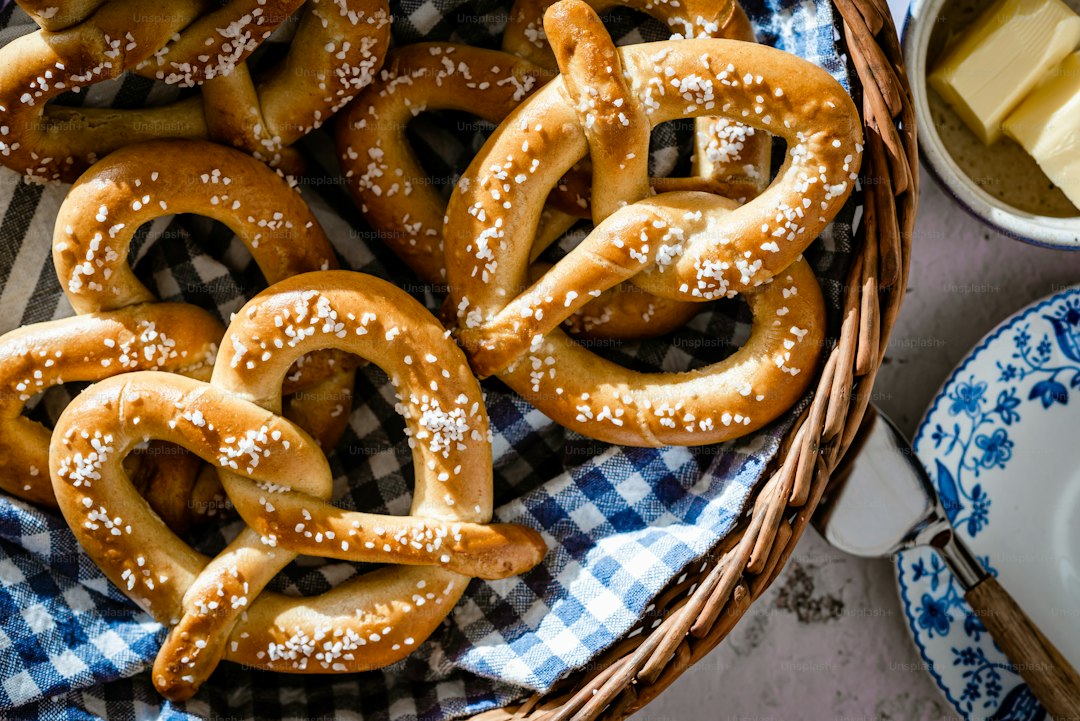
Now let’s pivot to pretzels, because their science is even more specific. That dark brown, glossy crust on a Bavarian pretzel is not from an egg wash or a baking soda dip—it comes from a mandatory bath in food-grade lye solution with a pH of 12 to 13. That alkaline solution chemically breaks down the outer starch layer, and when it hits high heat, you get an intense Maillard reaction that forms that glass-hard shell while the interior stays pillowy soft. Think about it this way: the lye gelatinizes the surface, creating a barrier that traps steam inside during baking. That’s why the middle bakes at a different rate than the crust, and why the pretzel’s twisted shape matters beyond the historical symbolism of the Trinity. The three loops create an even thickness so the thickest part of the dough bakes at the same rate as the thinner arms—no raw center, no burnt edges. But not all pretzels are the same. In Swabia, they use a higher hydration dough—around 55% water—and cut a deeper slit along the belly. That allows the dough to split open during baking, giving you a softer, more bread-like interior, which is a completely different eating experience from the denser, crispier Bavarian style. So when you bite into a pretzel, you’re not just tasting dough—you’re tasting a chemical reaction with a specific pH, a hydration ratio tied to a regional tradition, and a geometry designed by medieval bakers who understood heat distribution intuitively.
And then there’s the mustard, which is the quiet genius that ties everything together. German mustard deliberately keeps its acidity lower than French Dijon by capping the vinegar content at around 8%. That’s a structural choice: it lets the natural heat from brown mustard seeds dominate without being masked by sharp acetic notes. The seeds are often coarsely ground rather than finely milled, which preserves volatile allyl isothiocyanate compounds—the chemical that punches you in the sinuses. If you grind those seeds too fine, that compound dissipates, and you lose the heat. Bavarian sweet mustard, the kind you eat with Weisswurst, takes it even further—it contains up to 30% sugar by weight. That’s not just for sweetness; the sugar balances the acidity and acts as a natural preservative, extending shelf life without any artificial additives. So when you look at the full picture—the lye bath on the pretzel, the sourdough fermentation in the rye bread, the coarsely ground mustard seeds—you start to see a pattern. Every single element is engineered for a specific outcome, whether it’s chemical preservation, heat distribution, or flavor balance. And the raw materials matter too: Germany is the world’s largest producer of organic rye, accounting for over half the EU’s organic rye area. That specific grain has higher soluble fiber than conventional rye, which directly affects how the dough absorbs water and how the bread chews. Westphalian pumpernickel takes this to the extreme—it bakes for 16 to 24 hours at only 120°C, caramelizing the rye’s natural sugars without any coloring, resulting in a moisture content above 50% that makes it nearly shelf-stable for months. This isn’t comfort food; it’s a preservation system, a flavor architecture, and a regulatory obsession that’s been refined over centuries. And honestly, once you understand that, you can’t unsee it.
Comforting Sides: Sauerkraut, Potato Salad, and Spätzle
Let’s be honest: when you think of German food, your mind probably jumps straight to the bratwurst or the schnitzel, but the real heavy lifting—the stuff that actually makes the meal feel complete—happens in the sides. I’m talking about sauerkraut, potato salad, and Spätzle, and here’s what I’ve found after digging into the science: these aren’t just afterthoughts thrown on the plate to fill space. They’re engineered components with their own chemical logic, and once you understand that, you can’t unsee it. Take sauerkraut, for instance. The fermentation isn’t random; it follows a precise two-stage bacterial succession where Leuconostoc mesenteroides kicks things off, producing carbon dioxide and acids, and then Lactobacillus plantarum takes over to drop the pH to around 3.5. That sequence isn’t just for flavor—it’s the difference between a kraut that keeps for months and one that spoils in a week. And here’s a stat that stopped me cold: unpasteurized raw sauerkraut can contain up to 700 milligrams of vitamin C per 100 grams, which is significantly more than an orange. Pasteurization destroys most of that, which is why historical sailors like Captain Cook relied on raw kraut to prevent scurvy on long voyages. The ideal salt concentration for homemade sauerkraut is exactly 2 percent by weight of the shredded cabbage—below 1.5 percent and harmful bacteria can take hold, above 3 percent and you’ll inhibit the desirable Lactobacillus, stalling fermentation entirely.
Now let’s talk about German potato salad, because the regional divide here is genuinely fascinating and most people get it wrong. In the southern style, you’re looking at a vinaigrette with a 1:2 to 1:3 ratio of vinegar to oil, and here’s the critical detail: the potatoes are sliced while still warm. A 2024 study confirmed that warm potatoes absorb up to 40 percent more dressing than cold ones, because the swollen starch granules act like sponges. That’s not a cooking tip; it’s a structural reality that determines whether your salad tastes cohesive or like separate ingredients thrown together. In the northern style, mayonnaise is often emulsified with bacon fat and broth, creating a complex flavor trap where fat droplets carry dissolved savory compounds, improving mouthfeel beyond standard mayonnaise alone. The contrast between these two approaches is stark: one relies on acidity and oil absorption, the other on fat emulsification and rendered pork flavor. And honestly, the regional divide tells you everything about local agriculture—southern Germany had more access to olive oil and vinegar through Alpine trade routes, while the north leaned on dairy and pork fat.
Then there’s Spätzle, which is where the engineering gets really specific. A traditional Swabian Spätzle dough uses at least one whole egg per 100 grams of flour, and the batter is stirred vigorously until bubbles form—not kneaded—to aerate the mixture and create that irregular, tender texture that distinguishes it from extruded pasta. The hydration ratio for proper Spätzle dough is about 55 to 58 percent of flour weight, making it so sticky that it barely loosens from a spoon, and a 20-minute rest allows the gluten network to relax for more consistent strands. For Käsespätzle, the typical cheeses are Emmentaler and Bergkäse, which have melting points around 43°C and high fat content, allowing them to form a cohesive, stringy layer without separating into grease pools. And here’s a detail I love: fresh Spätzle scrapped from a cutting board or pressed through a colander produces irregular shapes with varying surface areas that hold sauces differently than uniform extruded pasta. That’s a structural advantage that enhances flavor delivery in a way that perfectly uniform noodles simply can’t match. The mineral content of the water used to boil Spätzle even affects the final texture—hard water with high calcium strengthens gluten bonds, producing chewier noodles, while soft water yields a more tender result. So when you look at these three sides together, you start to see a pattern: each one is a solution to a specific engineering problem, whether it’s managing bacterial succession in sauerkraut, optimizing dressing absorption in potato salad, or aerating a batter to create irregular surface areas that trap sauce. They’re not just comfort food; they’re a masterclass in precision cooking that’s been refined over centuries, and honestly, once you understand the mechanics, you can’t go back to treating them as afterthoughts.
Sweet Indulgences: Black Forest Cake, Stollen, and Apple Strudel
You know, when people talk about German food, the conversation usually swings toward sausages or schnitzel, but the sweet side of the equation is where the engineering gets genuinely wild. Let's start with Black Forest Cake, because the legal standards alone are a trip. Under German food regulations, a cake can only be called "Schwarzwälder Kirschtorte" if the sponge layers are soaked with Kirschwasser, a cherry sour mash spirit that must be at least 40% alcohol by volume—and that's not a suggestion, it's a binding rule enforced by trade law. The cream in that cake? It needs a fat content of at least 30%, because anything lower can't hold stable peaks under the weight of multiple tiers of cherries and chocolate. And here's a detail most tourists completely miss: a single slice can contain up to 8 grams of pure ethanol from the Kirschwasser, which is enough to register on a breathalyzer if you eat two or three slices. The original 1930s recipe didn't even use baking powder—it relied entirely on whipped egg whites for lift, which produces a delicate crumb but demands precise folding to avoid deflation. That's a level of process control that most modern bakeries have abandoned in favor of chemical leaveners, but the old way still tastes fundamentally different.
Now let's talk about Stollen, because its preservation mechanics are something I find genuinely fascinating. The dough uses butter at roughly 40 to 50% of the flour weight, which is absurdly high by normal bread standards, but that fat acts as a physical barrier to moisture migration, allowing the fruit-filled loaf to stay edible for up to four weeks when stored properly. After baking, a traditional Stollen rests for at least two to three weeks, and during that time the alcohol from rum-soaked raisins and the natural sugars from dried fruits chemically soften the crumb through starch retrogradation—the same process that makes day-old bread stale but here actually improves flavor complexity. Dresden Stollen is even more specific: the Dresden Stollen Association, established in 2010, mandates at least 70% butter relative to flour weight and a minimum of 20% whole almonds and raisins by total dough weight. That white dusting of powdered sugar on the outside isn't just for looks—it's a hygroscopic layer that draws surface moisture away from the crust, preventing mold growth during the weeks-long maturation period. Think about that: the decoration is actually a preservation system, engineered to keep the loaf edible long after any normal bread would be green.
And then there's apple strudel, which I think is the most overlooked feat of food engineering in the German-speaking world. The dough, Strudelteig, is stretched until it becomes translucent enough to read a newspaper through, and that's only possible with high-gluten flour containing at least 12% protein, which creates a gluten network strong enough to be pulled to less than 0.5 millimeters without tearing. A 2024 food science study found that using carbonated water in the dough actually reduces gluten development by creating smaller, more uniform air pockets, resulting in a flakier crust that absorbs 18% less butter during baking—that's not a hack, it's a structural optimization backed by data. The acidity of the filling matters just as much: you need a pH between 3.5 and 4.0, typically from lemon juice or apple cider vinegar, which inhibits polyphenol oxidase enzymes responsible for browning. If you miss that window, the apples turn an unappetizing grey within minutes. It's also worth knowing that apple strudel was originally a savory dish in the Austro-Hungarian Empire, filled with cabbage or potato, before sugar prices dropped by over 60% after the Napoleonic Wars, making the sweet version affordable and eventually dominant. So when you look at these three sweets together, you're not just looking at desserts—you're looking at a regulatory framework for alcohol content in cake, a fat-based preservation system designed for weeks of shelf life, and a dough-stretching technique that relies on precise protein percentages and carbonation chemistry. That's the German sweet tooth in a nutshell: it's never just about the sugar.
The Perfect Pairings: German Beers, Wines, and Festive Drinks
Honestly, when you look at the sheer engineering behind German drinks, it’s almost more impressive than the food itself—and I say that as someone who just spent weeks dissecting the chemistry of sauerkraut and pretzels. Let’s start with the Reinheitsgebot, because everyone thinks they know it, but almost nobody gets it right. The 1516 purity law didn’t even list yeast as an allowed ingredient—fermentation was a mystery back then—so the law was silently patched in 1906 to officially permit it, making the "purity law" a moving target for nearly four centuries. That’s not a quirky historical footnote; it’s a regulatory evolution that directly shaped how modern German brewers approach consistency. Now contrast that with Riesling, where the natural acidity from steep Mosel slopes routinely hits above 9 grams per liter, which is the chemical buffer that lets those wines age gracefully for over 50 years while tasting far younger than they are. I find that asymmetry fascinating: the same country that produces over 5,500 registered beer brands only cultivates about 13 main wine grape varieties that account for 90% of its wine output, making the diversity ratio one of the most skewed in all of Europe.
Let’s dig into the sparkling wine situation, because Sekt deserves more respect than it gets. Over 90% of German Sekt is produced using the Charmat method in large pressurized tanks rather than traditional bottle fermentation, which is an efficiency play that allows producers to release sparkling wine within weeks instead of years while keeping costs dramatically lower. That’s not a compromise; it’s a deliberate engineering choice optimized for volume and affordability, and it works. Meanwhile, Berliner Weisse achieves its tartness through a primary fermentation with Lactobacillus bacteria, dropping the pH below 3.5, and the style was so popular historically that Napoleon’s troops called it "the Champagne of the North." But here’s where it gets really interesting: a traditional Berliner Weisse can register as low as 5 IBU, compared to a typical German Pilsner hovering around 35 IBU, because the sourness completely masks hop bitterness—so you can’t even use the same measurement scale to compare them directly. That tells you everything about how different these styles are under the hood, even though they both come from the same country.
Now let’s talk about the festive drinks, because this is where the chemical logic gets absolutely wild. Glühwein loses nearly a third of its original alcohol content when heated past 80°C, which is why professional Christmas markets hold the temperature steady near 70°C to preserve both strength and aromatic complexity—that’s a thermal management problem, not a recipe choice. Doppelbock was originally brewed by Bavarian monks as "liquid bread" for Lenten fasting, with some historical recipes exceeding 14% alcohol by volume, which is enough to sustain energy while technically complying with dietary restrictions, and that tells you monks were absolutely solving an optimization problem. Feuerzangenbowle takes it even further: a sugar loaf weighing roughly 250 grams is soaked in high-proof rum and ignited, and as it drips into the mulled wine below, the caramelized sugar contributes Maillard reaction compounds that are chemically distinct from plain sugar. Hefeweizen’s banana aroma comes from isoamyl acetate at concentrations above 8 parts per million, while the clove note comes from 4-vinyl guaiacol, both generated exclusively by specific yeast strains—so when you smell that glass, you’re detecting a precise biological output, not just general fruitiness.
Here’s what I mean when I say the pairing logic is deeper than you think. Eiswein legally requires grapes to be harvested at -7°C or colder, and because water freezes before sugars and acids, the resulting must can reach over 150° Oechsle, which is equivalent to roughly 30% sugar by weight—that’s a concentration process achieved entirely through phase-change physics, not evaporation. Kölsch must be brewed within 50 kilometers of Cologne under the Kölsch Konvention, and it’s traditionally served in a 0.2-liter cylindrical glass called a Stange, which is specifically designed to minimize temperature gain during drinking. So when you’re pairing a Hefeweizen with Weisswurst or a dry Riesling with Schweinshaxe, you’re not just matching flavors—you’re matching engineering principles. The high acidity of the Riesling cuts through the pork fat at a molecular level, while the isoamyl acetate in the wheat beer complements the marjoram in Thuringian bratwurst without competing with it. The whole system is built on centuries of iterative optimization, and honestly, once you start seeing the drinks as chemical solutions to specific pairing problems instead of just something to wash down your food, you can’t go back.
Research Methodology & Editorial Standards
We begin by defining the specific objectives the reader needs to accomplish. Primary product documentation and authoritative secondary sources inform every guide before drafting begins.
Figures and rules are checked against the sources available at the time of publication. Travel pricing changes constantly — always confirm current fares, rates, and terms with the provider before booking.