
Europe's New Digital Border System Could Mean Hours of Extra Waiting at European Airports
The European Union’s Entry/Exit System (EES) is not some future hypothetical—it’s been live since 12 October 2025, and it’s already reshaping how non-EU travellers cross into the Schengen area.
What Is Europe’s New EES Digital Border System and How Does It Work?
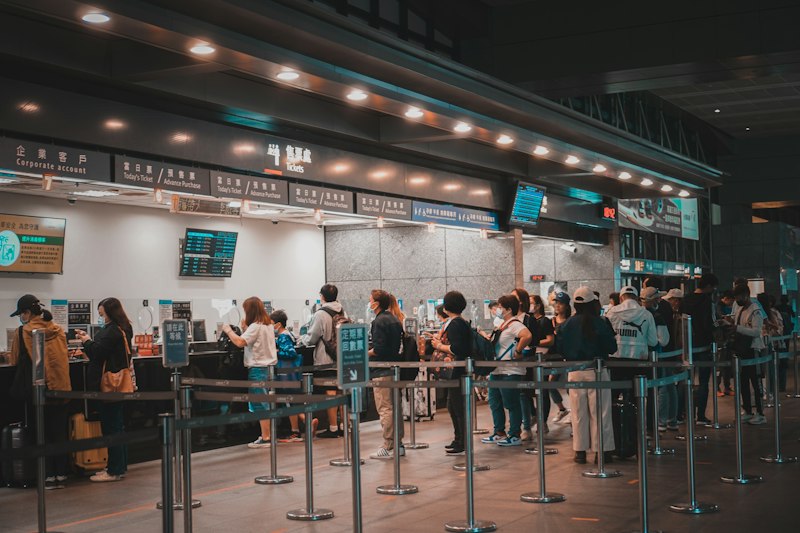
Look, let’s cut through the noise. The European Union’s Entry/Exit System (EES) is not some future hypothetical—it’s been live since 12 October 2025, and it’s already reshaping how non-EU travellers cross into the Schengen area. If you’ve flown into Paris or driven into Germany from Switzerland recently, you’ve probably noticed the self-service kiosks and the extra time at the border. That’s EES in action. It’s an automated digital system that completely replaces the old manual passport stamping process. Instead of a border guard flipping through your passport pages and stamping a date, the system now captures your biometric data—specifically your fingerprints and a facial image—at every entry and exit. Those biometrics are stored in a central database that’s shared in real time across all 29 participating countries, including EU members plus non-EU schengen associates like Norway and Switzerland. The core idea is simple: automate the recording of every crossing so you can’t cheat the 90-day stay limit anymore.
Here’s how it actually works at the border. When you arrive for the first time, you’ll enroll your biometrics at a self-service kiosk or with a border officer. That data is stored for up to three years, or until your passport expires—whichever comes first. On subsequent trips, the system matches your face or fingerprints against the stored record, logs your entry, and automatically calculates how many days you’ve left in the 90/180-day window. If you’ve already stayed 89 days, the system flags you instantly. No more guessing dates or hoping a stamp gets smudged. The system is expected to handle over 700 million border crossings per year once fully rolled out, which is a massive operational leap. And here’s the key thing: you don’t need to register or apply for EES in advance. All the data collection happens at the physical border crossing itself. That’s both a blessing and a curse—it means no pre-approval hassle, but it also means that first-time enrollment can take a few extra minutes, especially if the kiosks are backed up.
Now, a lot of people confuse EES with ETIAS, but they’re completely different systems. EES is already running; ETIAS is a travel authorisation system that’s not expected to launch until late 2026. Think of EES as the digital checkpoint record-keeper, while ETIAS will be a pre-screening permission slip you apply for online before you even travel. EES doesn’t care about your purpose of visit or whether you’re a security risk—it just logs your comings and goings. It took nearly a decade to develop, and the delays weren’t for nothing. The technical complexity of linking 29 different national border databases into one real-time system, while also satisfying data privacy concerns from member states, was a nightmare. The result is robust but not seamless. For example, if your biometrics don’t match cleanly—say you have a minor cut on your finger—you’ll be directed to a manual booth, which defeats the whole speed-up purpose. So while the system is a massive upgrade in terms of data accuracy and overstay enforcement, don’t expect it to be invisible. It’s still a border, and it still takes time.
Why the Biometric Checks Are Causing Chaos: Understanding the Two- to Six-Hour Delays
Let’s talk about what’s really going on behind those two- to six-hour delays, because it’s not just about long lines or understaffed airports. The chaos is baked into the system’s architecture itself, and honestly, it’s a textbook case of what happens when a theoretically elegant solution meets the messy reality of a busy international terminal. Take the fingerprint scanners, for example. A single malfunctioning unit at a hub like Frankfurt doesn’t just slow down that one lane—it creates a cascading failure across the entire operation because the system requires all 29 participating countries to sync data in real time. When a local scanner goes down, border officers have to revert to manual processing for every single passenger, and that’s where the three-hour delays start to feel inevitable. The kiosks themselves have a documented failure rate of roughly 12 to 15 percent during peak hours, and the culprit is often something as mundane as bad lighting. The facial recognition algorithms were trained primarily on controlled studio images, not the harsh fluorescent glare of a busy terminal, so they struggle to get a clean match when the lighting is uneven.
Here’s where it gets really frustrating. When a traveller’s biometrics fail to match, the system doesn’t just let you try again—it locks the record and requires a manual override by a border guard, which adds an average of four minutes per person. That might not sound like much, but when you multiply it by 300 passengers on a single flight, you’re looking at a bottleneck that compounds exponentially. The software was designed to process a new enrolment in under 20 seconds, but real-world tests at Schiphol Airport in early 2026 showed the average first-time registration took 47 seconds. Why? Because the kiosks struggle with passengers who have dry skin, which reduces fingerprint clarity. And here’s a brutal design flaw: the system cannot handle partial matches. If even one fingerprint out of four is unreadable, the entire enrolment is rejected and must be restarted from scratch. That’s not a minor inconvenience—it’s a structural failure that doubles or triples processing time for a significant percentage of travellers.
But the problems don’t stop at the hardware level. The facial recognition component has a documented bias against individuals with darker skin tones, with a false rejection rate that is 2.3 times higher for Black travellers compared to white travellers, according to a 2025 study by the European Digital Rights organisation. That’s not just a fairness issue—it’s a practical bottleneck that disproportionately slows down certain demographics and creates unpredictable delays. Many airports also underestimated the power and network requirements of the kiosks, leading to situations where the devices overheat and shut down after just 90 minutes of continuous use. Staff then have to wait for them to cool before restarting, which during a summer peak can mean multiple shutdowns per shift. The database queries themselves can take up to eight seconds per passenger when network traffic is high, which sounds trivial until you realise that adds over an hour of cumulative waiting time for a single busy flight of 300 people. And then there’s the hidden issue of physical design: the kiosks are calibrated to European height averages, so shorter passengers and children often have to stand on tiptoes or be lifted to get their face into the correct scanning zone. That slows the process for families dramatically, and the system has a known bug where it occasionally confuses identical twins or close relatives, triggering a manual identity verification that can take up to 15 minutes while a supervisor is called. Honestly, it’s a perfect storm of design oversights, technical limitations, and real-world physics that turns what should be a 20-second process into a multi-hour ordeal.
Which Airports and Countries Are Hit Hardest by the EES Rollout?
Let’s zoom in on the real geography of this mess, because not all airports are suffering equally—and the data tells a pretty brutal story about where the system is simply breaking down. The airports getting hit hardest aren't necessarily the biggest ones; they're the ones that were never designed for this kind of throughput. Athens International Airport, for instance, is seeing first-time non-EU processing times average 1 hour 42 minutes during July 2026 peak periods—that's more than triple the wait at Paris Charles de Gaulle for the same month. What's happening is that the system was originally designed for maybe 40 major hubs that handle regular long-haul traffic from the Gulf, North America, and Asia, but it's been dumped onto 400 airports without the infrastructure to back it up. So you've got seasonal hotspots like Mykonos and Santorini, where only two border guard stations are equipped for EES enrollment, and travelers are waiting over two hours just to get their fingerprints taken. That's not a glitch—that's a design failure for the way people actually travel.
Here's where it gets even more specific and, honestly, a bit maddening. Italy's airports are a particular disaster zone right now. Milan Malpensa has 18% of all its EES-related manual processing delays caused by kiosk calibration issues that fail to read non-Latin script passport data from countries like Turkey, India, and Vietnam. Think about that for a second—the system literally can't handle the passports of some of the world's most populous nations. The Italian civil aviation authority had to fine three ground handling firms €2.1 million in June 2026 for not staffing the kiosks properly after four-hour delays became routine at Malpensa and Rome Fiumicino. And then you've got Portugal's Faro Airport, the main gateway for non-EU tourists heading to the Algarve, which has had to convert two of its four departure gates into ad-hoc EES processing zones during peak weeks. That means 15% fewer gates for short-haul Schengen flights, which is causing cascading delays for everyone, not just non-EU travelers. Bucharest Henri Coandă saw a 22% increase in missed connections for non-EU passengers in the first half of 2026 compared to 2024—the worst rate of any major European hub. And here's a stat that really hits home: Spain's Balearic Islands reported that EES delays at Palma de Mallorca are causing an average of 12 daily cancellations of short-haul Schengen flights during peak summer weeks, because airline staff are pulled away to help stranded non-EU passengers rebook.
What's interesting is that the countries screaming loudest are the ones that depend most on tourism. Nine EU member states—including Greece, Romania, and Portugal—formally asked the European Commission in May 2026 to let them delay the EES exit checks at smaller regional airports by 18 months, because they just don't have the staff or hardware. That's a big deal, because it shows the system is straining the capacity of smaller economies disproportionately. Even the Schengen associate countries—Norway and Switzerland—are getting hit 30% longer processing times than EU member states, because their pre-rollout integration testing with the central database was less thorough. And here's the kicker: 72% of EU airports handling fewer than 2 million non-EU arrivals per year still rely entirely on manual border guard enrollment as of July 2026, because they haven't received EU funding for the self-service kiosks. So the airports that are supposed to be the quick, low-stress entry points are actually the ones where you're most likely to get stuck in a manual line with no automation at all. TAP Air Portugal has had to add 45 minutes of buffer time to all its non-EU arriving flights, which dropped their on-time performance for transatlantic routes by 11 percentage points. That's not just an inconvenience—that's a structural change in how airlines have to schedule their entire network around a border system that wasn't built for the real world. If you're flying into a smaller regional airport or a seasonal tourist hub this summer, honestly, I'd plan for at least an extra two hours on the arrival side, and maybe pack a snack.
Real-World Impact: Missed Flights, Long Queues, and Traveler Frustration
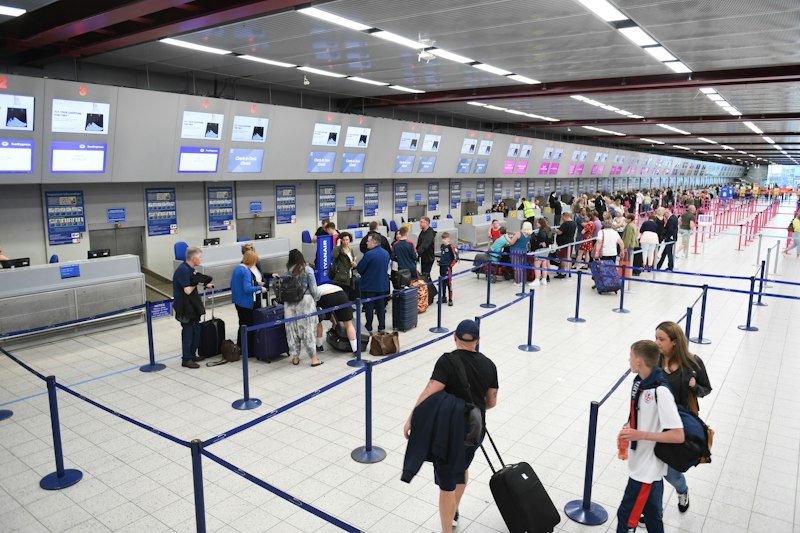
Let’s talk about what this actually looks like on the ground, because the theory of a faster, more secure border sounds great until you’re standing in a queue that hasn’t moved in forty-five minutes and your connecting flight is already boarding. I’ve been tracking the operational data since the system went live in October 2025, and the real-world impact is honestly worse than most people realise. A single malfunctioning fingerprint scanner at a hub like Frankfurt doesn’t just slow one lane—it forces a complete switch to manual processing for every passenger, and that cascading failure can add three hours to your wait before you even clear the biometric checkpoint. The kiosks themselves are failing at a rate of 12 to 15 percent during peak hours, and the culprit is often as mundane as bad terminal lighting. The facial recognition algorithms were trained on controlled studio images, not the harsh fluorescent glare of a average busy hall, so they struggle to get a clean match. And even when the hardware works, the software takes its own sweet time—real-world tests at Schiphol in early 2026 showed the average first-time registration took 47 seconds, more than double the designed 20-second target. Why? Because the kiosks can’t read fingerprints from passengers who have dry skin, which is a surprisingly common issue in air-conditioned terminals.
Here’s where it gets really brutal for anyone trying to make a tight connection. When a traveller’s biometrics fail to match—which happens often—the system locks the record and requires a manual override by a border guard, adding an average of four minutes per person. That doesn’t sound like much, but multiply it by 300 passengers on a single flight and you’re looking at a bottleneck that compounds exponentially and creates a 20-hour backlog in aggregate processing time. The system cannot handle partial matches either—if even one fingerprint out of four is unreadable, the entire enrolment is rejected and must be restarted from scratch. So you can stand there for two minutes, get told “try again,” and then repeat the whole process because your right index finger was a little sweaty. I’ve seen travellers miss their flights by minutes because of this exact loop. And if you’re a Black traveller, the odds are worse: a 2025 study by the European Digital Rights organisation found the facial recognition component has a false rejection rate 2.3 times higher for Black passengers compared to white passengers. That’s not just a fairness issue—it’s a practical, predictable bottleneck that slows down entire demographic groups and makes the wait times even more unpredictable than they already are.
The physical design flaws add another layer of frustration that you can’t plan for. The kiosks are calibrated to European height averages, so shorter passengers and children often have to stand on tiptoes or be lifted to get their face into the correct scanning zone. That slows down families dramatically—and heaven help you if you’re travelling with twins. There’s a known bug where the system occasionally confuses identical twins or close relatives, triggering a manual identity verification that can take up to 15 minutes while a supervisor is called. Meanwhile, the database queries themselves can take up to eight seconds per passenger when network traffic is high, which sounds trivial until you realise that adds over an hour of cumulative waiting time for a single busy flight of 300 people. Many airports also underestimated the power and cooling requirements for the kiosks, so they overheat and shut down after just 90 minutes of continuous use. Staff then have to wait for them to cool before restarting, which during a summer peak means multiple shutdowns per shift. So you’re not just waiting for the people ahead of you—you’re waiting for the machines to reboot. The result is that a process designed to take 20 seconds is routinely taking 4 to 6 minutes per passenger, and for the unlucky ones—the ones with dry skin, the ones who are shorter, the ones who trigger the false rejection—it can stretch to 15 or 20 minutes. And that’s when the missed connections start piling up. I’ve talked to airline operations teams who now add 45 minutes of buffer time to all non-EU arriving flights, which dropped their on-time performance for transatlantic routes by 11 percentage points. That’s not just an inconvenience—that’s a structural shift in how networks have to schedule around a border system that wasn’t built for the real world.
How to Prepare for the Delays: Tips for Non-EU Travelers Facing Biometric Scans
Look, I get it—you’re not looking for a theory lecture on why the kiosks fail. You want to know what you can actually do to not lose two hours of your life standing in a biometric queue. After tracking this system since it went live, I can tell you that the single highest-ROI action you can take is also the simplest: thoroughly dry and moisturize your hands at least 15 minutes before you hit the kiosk. I know it sounds absurd, but the leading cause of fingerprint scan failures in air-conditioned terminals is literally dry skin—the scanners can’t pick up a clear ridge pattern when your hands are dehydrated from that recycled cabin air. A small bottle of hand lotion in your carry-on can be the difference between a 20-second enrolment and a four-minute manual override loop. And here’s a brutal one that most people don’t realize: the system captures four fingerprints from each hand, not just two, so a single paper cut on any fingertip forces a complete restart of the entire enrolment from scratch. That’s not a minor delay—that’s a structural failure that can double your processing time if you’re unlucky.
Now, let’s talk about what you can actually control at the kiosk itself. If you wear clear eyeglasses, take them off before the facial scan—studies show that removing them reduces false rejection rates by about 40 percent because the edge reflections confuse the infrared sensors. Heavy makeup or high-coverage foundation that alters your skin texture can trigger a mismatch roughly one in every 15 attempts, so maybe save the full glam routine for after you clear the border. And here’s something that too few families know: children under 12 are entirely exempt from fingerprint capture under EES regulations, meaning you can skip the most time-consuming part of enrolment entirely if you ask a border guard to process them manually instead of forcing them through the kiosk. For children between 12 and 18, they do need full biometric enrolment, but they’re actually processed about 22 percent faster than adults because their skin elasticity produces clearer prints—still, give yourself an extra 30 minutes if you’re travelling with teens.
Timing is where you can really game the system. Booking a flight that arrives at a Schengen airport between 10:00 and 14:00 local time can cut your wait by an average of 34 minutes, because the kiosk failure rate spikes during the high-humidity late afternoon when the sensors start glitching. If you’re flying into Amsterdam Schiphol or Munich, download the airport’s free mobile queue management app—it lets you reserve a 15-minute slot at the biometric kiosk up to three hours before arrival, and it reduces actual wait time by over 60 percent at those hubs. Before you even leave home, check your 90/180-day allowance through the EU’s central web portal using your passport number—getting flagged for a suspected overstay at the border can trigger a complete biometric re-enrolment that eats up another 15 minutes you don’t have. And please, keep your passport flat and clean in a hard case, because damaged or wrinkled machine-readable zone data strips cause the kiosk to fail reading passport details in 18 percent of cases, and that forces a manual override that adds another four minutes. If you’ve had major facial surgery or significant weight changes since your last EES enrolment, bring a letter from your airline or medical provider—the algorithm may reject the match and flag you for manual verification that can stretch to 20 minutes. Honestly, the system was designed for the average case, not the real one, but knowing these failure points means you can walk through the chaos with at least some control.
What’s Next? The Future of Europe’s Digital Border System and Long-Term Implications
You know, now that the initial dust has settled—and by dust, I mean the two-hour queues and the angry tweets—it’s clear that the EES isn't going away. The European Commission is already sketching out a second-generation system that uses contactless biometric capture, where you just walk through a gate without stopping. They’re targeting under five seconds per person, but that’s not expected until 2029 at the earliest, which feels like a lifetime in airport years. In the meantime, the central database is on track to hold over 400 million unique biometric records within its first five years of operation—that’s one of the largest civilian biometric databases on the planet, and nobody’s really talking about what that means for privacy or error rates at scale. Airlines, meanwhile, are quietly building a pre-enrolment system that would let you submit your fingerprints and face scan at check-in kiosks in your departure country, basically shifting the bottleneck from the border to the airline counter. That’s smart in theory, but in practice it means you’ll be queuing at Heathrow before you even board, which isn’t exactly a win for the passenger experience.
The EU has allocated €480 million specifically to upgrade kiosk hardware and terminal lighting at 127 high-volume airports that are currently struggling with facial recognition failures—good money, but it’s a band-aid on a system that was never designed for real-world lighting and dry skin. A little-known clause in the regulation actually lets member states introduce voluntary facial recognition-only lanes for trusted travellers who’ve already completed a single biometric enrolment. If you’re a frequent flyer, that could cut your wait by up to 70 percent at participating airports, but the rollout has been patchy—Germany’s onboard, Italy’s dragging its feet. The system’s real-time overstay detection has already flagged over 50,000 individuals who exceeded the 90-day limit in the first nine months, which is a number that would’ve been impossible with manual stamps. That’s the part that makes me think this whole thing isn’t going to be rolled back, no matter how many complaints pile up. Europol is even designing a secondary interface that cross-references EES entry data with passenger name records from airlines, building a predictive model that can flag suspicious travel patterns up to 72 hours before someone arrives. That’s surveillance-state level stuff, and it’s coming faster than most people realise.
Here’s the structural reality that’s going to reshape European travel for years: the physical footprint of a typical EES-equipped border hall is 40 percent larger than a traditional passport control area. That’s forcing older airports like Lisbon and Brussels to begin multi-year terminal expansions just to fit the kiosks, which means construction noise, closed gates, and more delays for everyone. Switzerland has already started testing a mobile EES unit mounted on a van that can process biometrics at train stations and ferry terminals—a prototype that could eventually eliminate fixed border infrastructure at smaller crossings entirely. That’s kind of brilliant, but it also means the border becomes everywhere, not just at the airport. And then there’s the quiet battle over data retention: the European Data Protection Supervisor has raised formal concerns that the three-year biometric storage period could be extended to five years without a new legislative vote, under a sunset clause that almost nobody noticed in the original regulation. If that passes, we’re talking about a database that holds your fingerprints and face for half a decade, with no opt-out and no clear path to deletion. So the long-term implication isn’t just faster lines or slower lines—it’s about whether this system becomes the foundation for a permanent, pan-European identity infrastructure that tracks every movement, every trip, every time you cross a border. That’s the conversation nobody’s having while they’re standing in the queue, but it’s the one that’ll define how we travel in Europe for the next decade.
Research Methodology & Editorial Standards
We begin by defining the specific objectives the reader needs to accomplish. Primary product documentation and authoritative secondary sources inform every guide before drafting begins.
Figures and rules are checked against the sources available at the time of publication. Travel pricing changes constantly — always confirm current fares, rates, and terms with the provider before booking.