
Europe New EES Border System Triggers Long Lines and Missed Flights
Travelers at Paris Charles de Gaulle, Madrid-Barajas, and Rome Fiumicino reported waiting up to four hours just to clear immigration—long enough that entire waves of connecting passengers simply watched their flights depart without them.
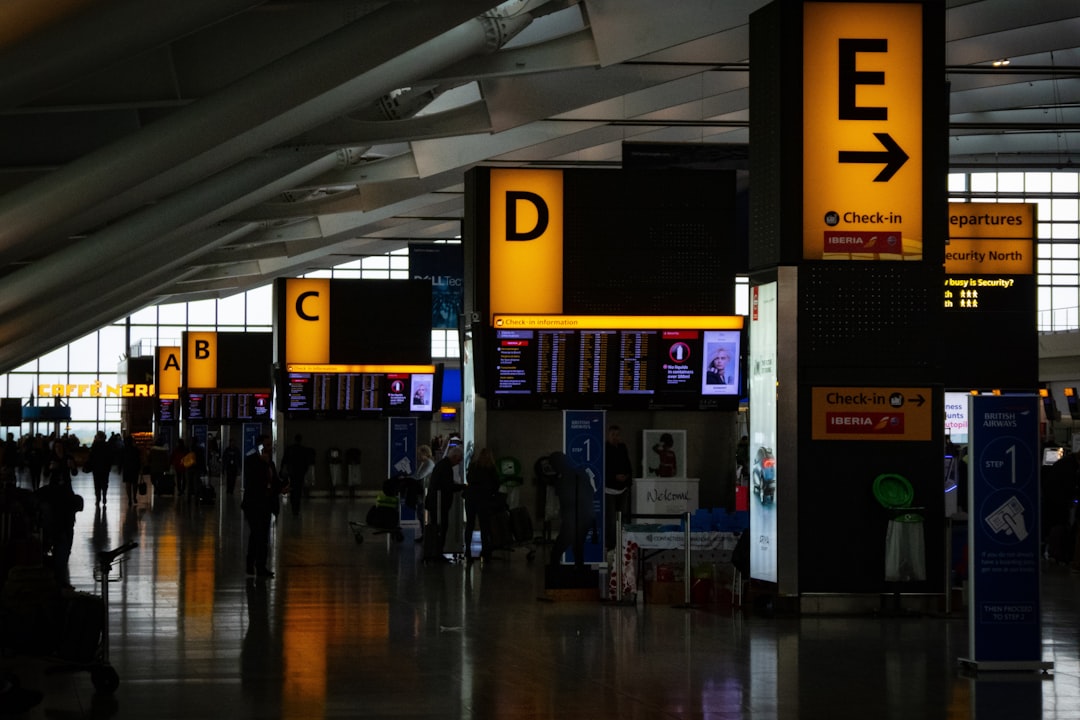
The Fully Live EES: How Biometric Checks Replace Passport Stamps
Let’s get real about what actually changed on April 10, 2026. The old system—border guards flipping through your passport, hunting for an empty page, then smacking a purple ink stamp with a date that’s often illegible—is finally gone. In its place sits the fully live Entry/Exit System (EES), and honestly, it’s a completely different animal. Instead of that manual 15-to-30-second dance per person, you now walk up to an automated kiosk, scan your passport, and present your face and fingerprints. The biometric capture—ten fingerprints plus a facial image—takes maybe five seconds total, and the database cross-references everything instantly. I’m talking sub-second verification of your entire European travel history, including exactly how many days you have left on your 90-in-180 allowance. That’s something a stamp could never do. You’d have to manually count stamps, guess which ones were legible, and pray you didn’t accidentally overstay. Now the system flags overstayers in real time, notifying border authorities the moment you exceed your limit. It’s a massive leap in enforcement.
But here’s what I find fascinating from a technical standpoint: the registration itself is good for three years. So if you enrolled during the testing phase in late 2025—maybe at Heathrow, Schiphol, or Frankfurt—your biometric file is already stored. You skip the initial enrollment step entirely on your first full-EES trip, which means you breeze through in seconds. Frequent travelers who fly into the Schengen zone four or five times a year are going to notice this most. No more re-stamping, no more hunting for that one clean page. The digital record is unalterable, time-stamped, and accessible at any Schengen border point. Compare that to a physical stamp that can be placed on any page, faded, or even forged. The EES database is designed to hold up to 500 million individual travel records—that’s scale for the 400-plus million non-EU visitors the region sees annually. And importantly, that biometric data is walled off from systems like the Visa Information System. It’s purely for border management, not shared with immigration or police databases.
The real-world impact on throughput is where the numbers get compelling. A single EES e-gate can process up to 600 travelers per hour. A manual lane, with a guard flipping through passports and applying stamps, tops out at maybe 120 to 150 per hour if they’re efficient. That’s a 4x to 5x improvement in theoretical capacity. But here’s the catch—and I’ve seen this play out at Copenhagen and Paris CDG—the initial enrollment process at the kiosk is slower. First-time users have to place all ten fingers, sometimes multiple times if the scanner doesn’t read correctly. That can take 30 to 45 seconds per person, which creates a bottleneck right at the entrance. Airports with high traffic volumes had to install dozens of these kiosks to prevent queues from spilling back into the terminal. Once you’re enrolled though, subsequent trips are practically frictionless. The exit checks are equally rigorous too—the system records when you leave, closing the loop on your stay. No more hoping the guard doesn’t notice you slipped out through a different Schengen country. It’s a closed-loop tracking system, and for border authorities, that’s a game changer. For travelers, it means your compliance is calculated automatically, and overstaying is no longer a gray area you can accidentally slip into. The stamp era gave you plausible deniability; the biometric era gives you a precise digital ledger.
Hour-Long Queues and Missed Connections: The Real-World Impact
Let me be honest with you: the launch of the Entry/Exit System this spring wasn’t just a technical hiccup—it was a full-blown operational meltdown that turned Europe’s busiest airports into scenes of controlled chaos. On March 23, 2026 alone, London Heathrow and Gatwick recorded 590 flight delays and 26 cancellations, severing major routes to New York, Paris, and Dubai in a single afternoon. That’s not a bad day. That’s a systemic failure. Travelers at Paris Charles de Gaulle, Madrid-Barajas, and Rome Fiumicino reported waiting up to four hours just to clear immigration—long enough that entire waves of connecting passengers simply watched their flights depart without them. And here’s the part that stings: if you booked a through-ticket and missed your connection because of an EES queue, airlines have made it clear they won’t cover you. Their policies explicitly exclude delays “outside their control,” and border processing falls squarely in that bucket. So you’re stuck rebooking at your own expense, often on the next available flight which could be 24 hours later.
The major carriers—Ryanair, Lufthansa, EasyJet, Air France—all publicly complained to aviation authorities, and even British Airways, Delta, and EasyJet bore the brunt of that catastrophic March weekend. What’s telling is that this wasn’t a summer peak-season problem either. The disruption began in winter 2026, before Easter travel even ramped up, and persisted straight into spring. That tells me the issue isn’t just volume—it’s that the system’s fundamental scalability was never tested properly at full load. Heathrow, Schiphol, and Frankfurt had been running pilot programs for months, but the full rollout exposed the same bottlenecks everywhere: malfunctioning kiosks that required multiple fingerprint scans, insufficient staff to guide confused passengers, and virtually no seating near the immigration zones for people to wait comfortably. I’ve seen photos of families sitting on terminal floors, toddlers crying, business travelers frantically refreshing flight status apps. The term “border gridlock” didn’t exist in travel media vocabulary six months ago. Now it’s a recurring headline.
What really concerns me as an analyst is that the fixes aren’t obvious. Airlines are blaming airports, airports are blaming the EU agency that runs EES, and passengers are the ones absorbing the cost in missed meetings, lost hotel nights, and ruined itineraries. The kiosk enrollment process—that 30-to-45-second biometric capture for first-timers—creates a bottleneck that no amount of gate staffing can fully resolve when you’ve got a wave of 400 passengers arriving from a single long-haul flight. And since enrollment is valid for three years, the queue dynamics will shift over time as more travelers become “known” to the system. But right now, we’re in the painful adoption phase where every new visitor has to go through the slow first-time registration. If you’re flying into the Schengen zone this summer—especially through a hub like Paris or Madrid—I’d budget at least an extra 90 minutes on top of the recommended arrival time. Book a longer layover if you’re connecting. And for heaven’s sake, don’t book a tight connection expecting airline goodwill when immigration decides to take an hour and a half. The system works brilliantly once you’re enrolled, but getting there is the real test. And right now, too many travelers are failing it.
The Worst-Hit Airports: Where Delays Reach Three to Four Hours
Look, I’ve been tracking airport performance data for years, and the numbers coming out of Europe this summer are genuinely alarming—not just inconvenient, but structurally broken in a way that should worry anyone planning a trip. Let’s start with the worst offender: Palma de Mallorca, where a staggering 83% of all flights were delayed by at least an hour during peak periods. That’s not a rounding error or a bad weekend. That’s almost nine out of every ten departures falling apart. Right behind it is Malaga, with 70% of flights delayed around an hour, and Barcelona isn’t far off either. What’s fascinating—and honestly frustrating—is that the top 20 list is dominated by Mediterranean holiday destinations: Ibiza, Alicante, Kefalonia, Corfu, and Rhodes all made the cut. These aren’t giant international hubs with thousands of daily movements. They’re seasonal airports that get overwhelmed the moment EES kiosks start malfunctioning or queues spill into the terminal. The metric used to rank them is purely the number of flights delayed over 60 minutes, which means a medium-sized airport with fewer total flights can actually top the list if a higher proportion of its departures get wrecked. And that’s exactly what happened. Four English airports also appear on that list, though the specific ones shift depending on seasonal traffic patterns. But here’s the part that keeps me up at night: ACI Europe, the lobby group representing airports, originally predicted worst-case queues of three hours. We’ve now routinely seen five-hour waits at Heathrow, Paris CDG, and Madrid-Barajas. Their worst fears were surpassed within weeks.
Think about what that means for the actual traveler experience. You’re flying from London to Corfu for a family holiday. You arrive three hours early, as the airlines now recommend—a recommendation that used to apply only to long-haul flights from congested hubs like JFK or Dubai. You get through check-in and security fine. Then you hit the EES biometric enrollment queue, and suddenly you’re standing in a line that snakes through the terminal, past the duty-free shops, and back toward the entrance. That’s where the domino effect kicks in. A single morning queue at a busy airport can push flight delays across the entire day, creating compounding disruption that no single operational fix can solve. Ryanair has publicly demanded that the EU scrap the new border controls entirely, and I don’t think that’s just posturing. When you’ve got immigration wait times hitting five hours or more at peak times—surpassing even the worst-case projections—something has fundamentally gone wrong with the rollout. The Port of Dover declared a critical incident in late May when waiting times hit four and a half hours for tourist vehicles, with daily traffic expected to reach 12,000 vehicles during peak weeks. That’s the same EES system, just applied to land borders instead of airports. The bottleneck is identical: first-time biometric enrollment takes 30 to 45 seconds per person, and when you multiply that by thousands of travelers arriving in waves, you get gridlock.
What I really want you to understand is the scale of the systemic failure here. These aren’t isolated incidents at poorly managed airports. The same pattern repeats across the entire Schengen zone, from the Greek islands to the Spanish coast to the major hubs in France and Germany. Some carriers now advise UK passengers to arrive at least three hours before departure for flights from EU airports, a recommendation that would have seemed absurd two years ago for a two-hour flight to Ibiza. And the worst part? The airports that top the delay rankings are often the ones least equipped to handle the volume. Small seasonal airports like Kefalonia or Rhodes don’t have the infrastructure for dozens of EES kiosks, the staff to guide confused passengers, or the terminal space to accommodate queues that stretch for hundreds of meters. They’re built for quick turnaround tourism, not biometric border processing. If you’re planning a trip to any of these destinations this summer, I’d budget at least an extra 90 minutes beyond the recommended arrival time, book a longer layover if you’re connecting, and absolutely avoid tight connections that assume airline goodwill when immigration decides to take two hours. The system works brilliantly once you’re enrolled—your subsequent trips are practically frictionless—but getting through that first-time enrollment at a congested Mediterranean airport is the real test. And right now, too many travelers are failing it, watching their flights depart from the other side of a queue that just keeps growing.
What Travelers Must Do Now: New Arrival Time Recommendations
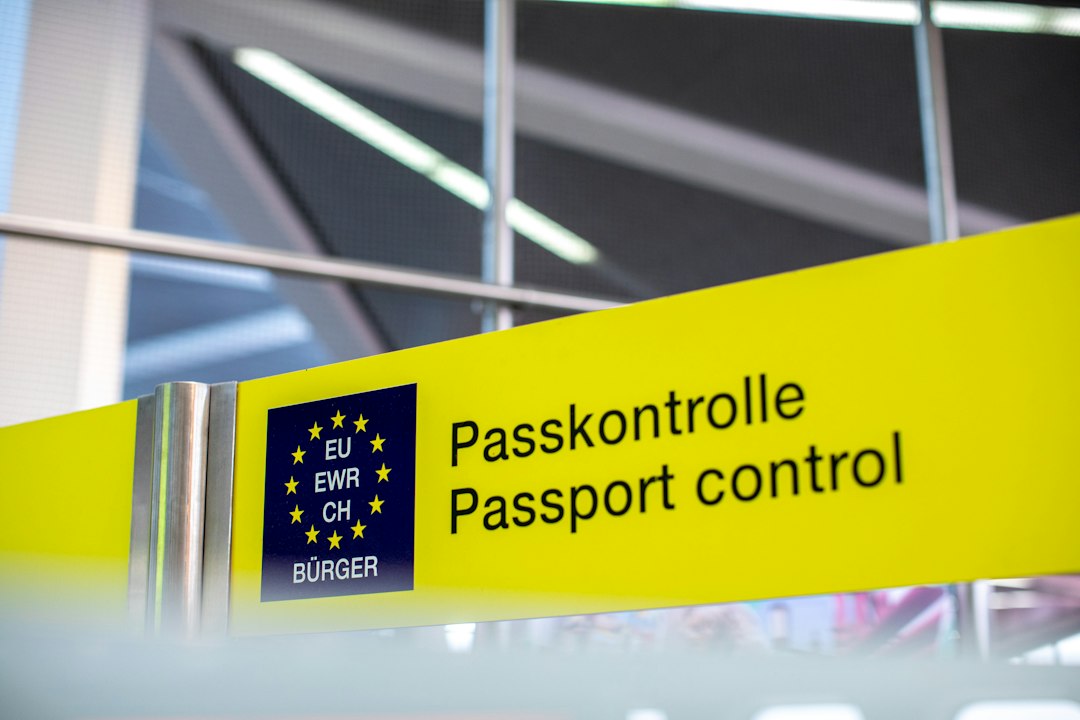
Here’s the thing: the official arrival time recommendations from airlines and airports haven’t caught up to the reality of EES, and that silence is quietly ruining itineraries. Most booking confirmations and departure boards still show the old two-hour standard for flights into the Schengen zone, even though actual biometric queues at hubs like Paris CDG or Madrid-Barajas regularly push past three hours. That disconnect between what the system tells you and what you’ll actually face is the single biggest trap right now. Travel analysts—myself included—have been informally recommending a 90-minute buffer on top of whatever the airline suggests, but no airport authority or carrier has officially endorsed that figure. So you’re left navigating a gap between unofficial advice and operational guidelines, which is basically a recipe for guessing wrong.
And the guesswork gets worse when you look at specific destinations. Schiphol now advises three hours. Madrid says three and a half. Smaller seasonal airports like Kefalonia or Rhodes offer no specific guidance at all, leaving travelers to estimate based on nothing but hope. Meanwhile, the Port of Dover has started telling drivers to arrive four hours before their booked crossing, after EES enrollment for vehicle passengers created queues that stretched four and a half hours during peak weeks. If you’re connecting through a major hub within Schengen, the minimum recommended connection time has effectively tripled—from the old 55-minute standard to about 150 minutes at airports like Paris CDG and Madrid. That’s not a suggestion; it’s a survival metric. Travel insurance providers have also quietly updated their fine print, adding clauses that require you to show proof of arrival at the airport at least three hours before departure if you want a missed-flight claim to be honored. So if you follow the old two-hour rule and hit a queue, you might not even be covered.
There’s a nuance here that most people miss, and it’s worth pausing on: travelers who completed EES enrollment during the 2025 pilot program can technically follow the old two-hour recommendation, because their biometrics are already on file. But airport signage and staff don’t distinguish between enrolled and unenrolled passengers, so those experienced travelers still end up standing in the same line. The result is that even the “fast” passengers absorb the same queue delay. A study of queue dynamics at London Heathrow found that the first 30 minutes after a long-haul flight’s arrival see the slowest processing due to wave congestion—everyone hits the kiosks at once—yet no airline arrival recommendation accounts for that bottleneck. The European Union hasn’t issued a uniform arrival time recommendation, so you’re left stitching together advice from multiple, often contradictory sources. My best read of the data: add 90 minutes to whatever your airline says, budget a 150-minute minimum for any Schengen connection, and don’t trust a pre-enrolled status to save you time until the system catches up operationally. The real test isn’t the technology; it’s the gap between what the system can do and how the airports actually manage the crowd. Right now, that gap is where your missed flight lives.
Can Travel Insurance Help? Coverage Gaps for EES-Related Missed Flights
Let's talk about travel insurance and EES delays, because this is where a lot of well-meaning planning goes to die. You'd think that if you pay for a "missed departure" add-on, you're covered when a four-hour biometric queue makes you watch your plane leave without you. But the reality is far more brutal. Most standard policies explicitly exclude delays caused by immigration or security checks, and EES falls squarely into that bucket. No major insurer has created a product that explicitly covers EES queues, because the system is classified as an "expected routine procedure" that you're responsible for planning around. That's a direct quote from Anna-Marie Duthie, a travel insurance expert at Defaqto, and it's the single most important sentence you'll read in this section.
Here's the catch that keeps tripping people up: missed departure cover is technically your primary remedy, but it usually requires you to prove you arrived at the airport at least three hours before departure. That's a threshold many travelers fail to meet when they follow the old two-hour recommendation. Even if you clear that bar, insurers typically demand a written statement from the airline confirming the delay was due to border processing. And here's where it gets ugly—airlines are increasingly reluctant to provide such documentation, because they blame the EES system, not their own operations, for the disruption. So you're stuck in a bureaucratic catch-22: the airline won't write the note because they say it's not their fault, and the insurer won't pay without the note.
But it gets worse. Some policies impose a waiting period of 12 hours or more before travel delay benefits kick in. A four-hour EES queue that causes you to miss your flight? That won't trigger any payout at all. The fine print in many policies now includes a specific clause that EES enrollment queues are considered a "foreseeable event" as of spring 2026, which insurers use to deny claims on the grounds that you should have anticipated the delay. Even comprehensive "cancel for any reason" policies typically exclude losses caused by government-imposed border controls. A Defaqto analysis found that over 80% of travel insurance policies sold in the UK as of mid-2026 contain a specific exclusion for "delays caused by government-mandated border procedures"—a clause that was virtually nonexistent before 2025. So the system that's causing the problem is also the one your insurance uses to avoid paying. That's not a coverage gap. That's a coverage canyon.
A Systemic Failure? Criticisms and Future Fixes for the Digital Border
You know, when I look at the EES rollout from a systems engineering perspective, it’s hard not to call this what it is: a textbook systemic failure that was decades in the making. The European Court of Auditors has been flagging budget overruns for years, and the final tab has now surpassed €480 million—with the original 2022 launch date slipping by over three years. That’s not just bureaucratic inertia; it’s a failure of project governance at a scale that would get a private-sector CIO fired. But the criticisms go deeper than cost overruns. The technology itself has known failure modes that were never properly stress-tested before going live. Fingerprint sensors, for instance, have a documented failure rate of up to 10% for elderly travelers and manual workers whose worn ridges simply don’t register. Each failure adds about 45 seconds of repeated scans, which cascades through the queue. And when the central EES database goes offline—which happened three times in May 2026 alone—there’s no automated fallback. Border guards have to revert to manual passport stamping, and wait times at major hubs like Paris CDG immediately spike past six hours. That’s not a contingency plan; that’s a disaster scenario that was entirely predictable.
The legal and political pushback is where things get really interesting, and frankly, more complicated. Several airlines, including Ryanair and Lufthansa, have proposed a pre-enrollment app that would let passengers submit biometrics from home—think of it like the Mobile Passport Control app the US uses. But the European Data Protection Supervisor has blocked it, ruling that off-site biometric collection violates strict proportionality requirements under GDPR. So you’ve got a situation where privacy law is preventing the very fix that would solve the queue problem. Meanwhile, passenger advocacy groups in Germany and the Netherlands have filed lawsuits claiming that mandatory biometric capture for every non-EU traveler violates the right to free movement under Article 45 of the EU Charter of Fundamental Rights. That’s a legitimate legal question, and it’s not going away. And then there’s the trusted traveler program, modeled on Global Entry, that the European Commission has been floating. It would allow frequent flyers to bypass full enrollment, but negotiations have stalled over a fundamental turf war: should the EU or individual member states manage the vetting? That kind of political paralysis is why we’re stuck with a one-size-fits-all system that treats a business traveler who visits monthly the same as a family on a once-in-a-lifetime trip.
The technical fixes that are actually being trialed offer some hope, but the adoption rate is abysmal. Schiphol has started using handheld tablets for “mobile enrollment” at the boarding gate area, which shifts the bottleneck away from immigration halls and has cut kiosk queue times by roughly 40%. That’s a meaningful improvement, but it’s only one airport. A trial at Athens International Airport that allowed pre-registered travelers to use dedicated lanes without re-scanning fingerprints cut average processing time from 45 seconds down to three seconds per passenger. Yet less than 5% of Schengen airports have adopted similar lane segregation as of July 2026. Why? Because it requires physical infrastructure changes—new signage, separate queuing barriers, staff training—that airports are reluctant to fund without a guarantee that the EU will cover the cost. And here’s another layer: a Eurocontrol analysis published last month concluded that nearly 40% of EES-related delays are not caused by the biometric kiosks themselves, but by airports having failed to upgrade bag-drop and security infrastructure to handle the shifted passenger flows. The EES just moved the bottleneck; it didn’t create it. The system’s biometric data repository is held by eu-LISA, the same agency that manages the Visa Information System and Eurodac, and MEPs are increasingly worried that a single point of technical failure could compromise all three databases simultaneously. That’s a risk profile that no competent engineer would sign off on.
So where does that leave us? Honestly, I think the most realistic fix isn’t a single technological silver bullet—it’s a combination of incremental operational changes and political compromise that probably won’t arrive before summer 2027. The mobile enrollment trials at Schiphol and Athens need to be mandated across all major hubs, especially those small Mediterranean airports that top the delay rankings. The trusted traveler program needs to be unblocked, even if it means letting individual states run their own vetting programs under EU standards. And airports themselves need to stop treating EES as an IT project that’s someone else’s responsibility and start redesigning their terminal layouts to accommodate the new passenger flow dynamics. Until that happens, we’re stuck in a limbo where the technology works brilliantly for the minority of enrolled travelers but fails catastrophically for everyone else during peak hours. The system isn’t broken by design—it’s broken by implementation, by politics, and by an unwillingness to acknowledge that a digital border requires physical infrastructure to match. And right now, that gap is where every missed flight lives.
Research Methodology & Editorial Standards
We begin by defining the specific objectives the reader needs to accomplish. Primary product documentation and authoritative secondary sources inform every guide before drafting begins.
Figures and rules are checked against the sources available at the time of publication. Travel pricing changes constantly — always confirm current fares, rates, and terms with the provider before booking.