
Airline Profits Set to Plunge as Fuel Costs Skyrocket and Travelers Brace for Higher Airfares
But raising fares is its own problem — demand elasticity is real, and leisure travelers especially will start to pull back once ticket prices cross a certain threshold.
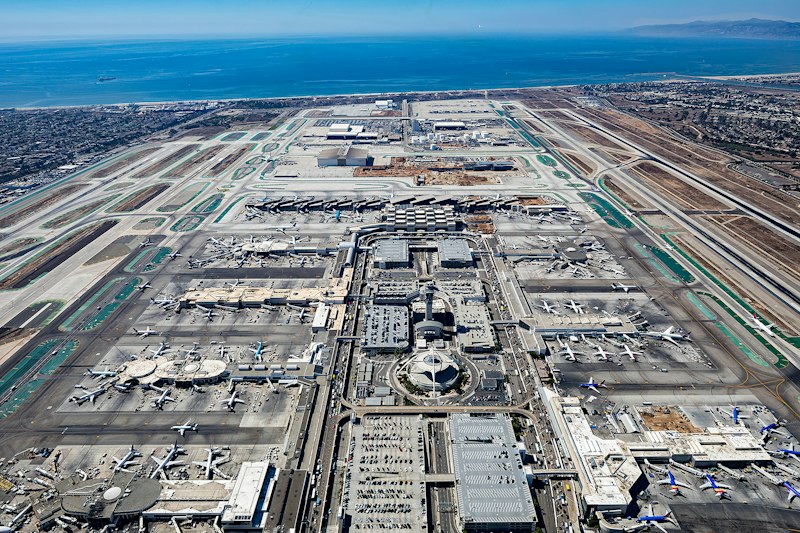
The $100 Billion Fuel Bill: How the Iran War Is Reshaping Airline Economics
Let’s start with the numbers that actually matter. The Pentagon’s bill for the Iran war quietly hit $113.3 billion over just 108 days — that’s roughly a billion dollars a day, and munitions consumption alone ate up somewhere between $26 billion and $47 billion. You don’t need to be a defense analyst to see what that means for the rest of the economy. When the U.S. government spends that much on conflict, it doesn’t just disappear; it ripples through global energy markets in real time. Oil has been sitting above $100 a barrel for months now, and jet fuel — which is basically refined crude with a few additives — has followed right along. In March alone, U.S. carriers saw their fuel bills jump by $1.8 billion. That’s a 56% spike in a single month. And here’s the thing: most airlines had locked in fuel hedges at lower prices earlier in the year, but those hedges are expiring. So the full weight of this surge is just starting to land on their income statements.
For airlines, fuel is typically the single largest operating expense — anywhere from 25% to 35% of total costs depending on the carrier and the route. When that line item jumps by more than half, you can’t just shrug and move on. Margins that were already razor-thin — most network carriers operate on single-digit margins even in good years — get crushed. I’ve been watching this play out in the stock market too: airline shares are down 15-20% since the conflict escalated, and that’s not just panic selling. It’s a rational repricing of earnings expectations. Analysts are slashing their 2026 forecasts left and right because the math simply doesn’t work at these fuel prices unless you raise fares significantly. But raising fares is its own problem — demand elasticity is real, and leisure travelers especially will start to pull back once ticket prices cross a certain threshold. So airlines are stuck between a rock and a hard place: eat the cost and destroy your margins, or pass it on and risk losing customers.
The bigger picture here is even more uncomfortable. Sustained oil above $100 is fundamentally inflationary — that’s not a hot take, it’s basic economics. Central banks in the U.S., Europe, and Asia are now facing a brutal choice: cut rates to support slowing growth, or hold them high to prevent a second wave of inflation. Either option hurts airlines. If rates stay high, borrowing costs for aircraft financing and capital projects rise, and consumer spending on discretionary travel softens. If rates get cut, inflation could reignite, pushing fuel even higher. And then there’s the Strait of Hormuz. The conflict has effectively pinched that chokepoint, threatening not just oil shipments but also the supply chains for aircraft parts, catering supplies, and even the logistics of crew rotations. What we’re seeing is a structural shift — temporary fuel surcharges that were supposed to be emergency measures are becoming permanent line items on airline balance sheets. The entire per-seat revenue model is being rethought in real time. I’m not sure we’ll ever go back to the old economics. The $100 billion fuel bill isn’t just a one-time shock; it’s rewriting the rules of the industry for the foreseeable future.
Profit Forecasts Halved: IATA's Alarming 2026 Industry Projections
Let's sit with that number for a second — $23 billion. On the surface, it sounds like a lot of money, right? But here's what the International Air Transport Association just told us: they've slashed their 2026 global airline profit forecast by nearly half, from $41 billion down to that $23 billion figure. That's not a tweak. That's a gut punch. And when you break it down per passenger, the picture gets even uglier. IATA now estimates the average net profit per traveler will land at just $4.85 for the year. Think about that the next time you pay $15 for a sandwich at the airport — the airline is making less off your entire ticket than you spent on lunch. The global industry margin is now sitting at a razor-thin 2.3%, which basically means there's zero buffer for anything going wrong. A single storm, a labor dispute, a spike in maintenance costs, and you're underwater.
What's really interesting — and honestly a bit terrifying — is the disconnect between demand and profitability. Passenger traffic is still expected to grow by nearly 5% this year. More people are flying. More seats are being filled. And yet profits are collapsing. That's the kind of divergence that keeps analysts up at night. The culprit isn't just fuel, though jet fuel at $102 a barrel certainly isn't helping. IATA's model now accounts for a 12% jump in maintenance and aircraft leasing costs, thanks to supply chain bottlenecks that just won't quit. Spare parts are still hard to get, engines are backed up for months, and lessors are raising rates because they can. So the two things that used to save airlines are both failing at the same time.
Here's where it gets structural. IATA's revised forecast assumes that nearly 60% of the industry's total profit will be concentrated in North America. That leaves Asian and European carriers essentially fighting over scraps, with many hovering right at break-even or worse. The cost of capital for airlines has hit an eight-year high, and the $23 billion profit figure isn't even enough to cover the required return on invested equity across the sector. In plain English: investors are losing money by having it tied up in airlines right now. IATA also quietly revised the global load factor needed for cash flow neutrality up to 83.4%. That's a brutal number for legacy carriers with complex hub networks and premium cabins that don't always fill up. One more disruption in the Strait of Hormuz — and we're talking any disruption at all — and the model suggests the industry tips into an aggregate operating loss. Insurance premiums alone are up $6 billion globally because of the conflict. So when you hear "profit forecast halved," don't think of it as a haircut. Think of it as the industry running on fumes, with the reserve light blinking red.
Why Fuel Remains the Biggest Threat to Airline Bottom Lines
Let’s get one thing straight right out of the gate: fuel isn't just a line item on an airline's income statement — it's the single most volatile, uncontrollable, and structurally dangerous cost in the entire business model. You can negotiate labor contracts, you can optimize scheduling, you can squeeze more seats into a cabin, but you can't negotiate with the price of crude. And here's the kicker that most people miss: jet fuel isn't just "oil" — it requires specialized refining, and a disruption at one major refinery in the Gulf Coast or Singapore can send regional fuel prices spiking 20% overnight, completely independent of what global oil markets are doing. That kind of localized volatility is a nightmare for financial planners, because you can't hedge against a refinery fire in another hemisphere.
Think about the physics for a second. A modern wide-body like the 787 burns nearly 15,000 pounds of fuel per hour during takeoff and climb — that's more fuel consumed in the first ten minutes of a long-haul flight than an entire short regional hop uses from gate to gate. A single 777-300ER flying from Dubai to New York burns about 80 tons of fuel per trip, and at current prices near $100 a barrel, that single flight costs the airline over $60,000 in fuel alone. That's more than the total ticket revenue from a fully booked economy cabin, which means the airline is essentially paying you to fly in the back while praying the premium cabin fills up. And here's where it gets really perverse: airlines have started "fuel tankering" — carrying extra fuel from a cheaper airport to avoid refueling at an expensive one. But that extra weight burns 3% to 5% more fuel per hour, so you're literally burning more fuel to save money on fuel. It's a paradox that keeps operations teams up at night.
The age of the fleet makes everything worse. The average commercial aircraft is now over 14 years old, and an older 737-800 is roughly 15% less fuel-efficient than a new MAX or A320neo. But airlines can't just swap out their fleets because delivery slots for those new, fuel-sipping models are booked years in advance. So they're stuck flying less efficient planes while paying more for the fuel those planes burn. Every kilogram of weight saved saves about $1,000 in fuel costs over a year, which is why you're seeing airlines strip paint off exteriors, remove seatback screens, and carry less water onboard. The most fuel-efficient carrier in the world still emits over 80 grams of CO₂ per passenger-kilometer, and even a 1% efficiency gain across Delta's fleet saves over $50 million annually. But the real killer isn't the price level — it's the volatility. When jet fuel swings more than 10% in a single month, hedging becomes nearly impossible, and the cost of hedging itself has risen to nearly 2% of fuel expenditure. That's a hidden tax on every ticket, and it's not going anywhere.
Rising Ticket Prices: How Airlines Are Passing Costs to Travelers
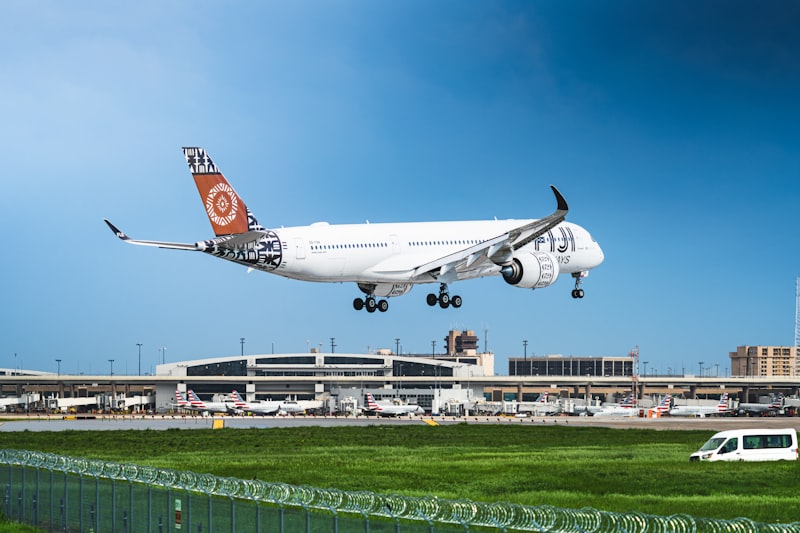
Look, I know it feels like every time you search for a flight, the price has somehow crept up again, and you're not imagining it — but the way airlines are passing these costs onto you is way more sneaky than just raising the base fare. Let's start with the most frustrating one: airlines have quietly started charging a "fuel surcharge" on award tickets, so even if you're using miles for a "free" flight, you're now paying a variable cash fee that can add hundreds of dollars and is directly tied to whatever jet fuel costs that morning. That's not a one-off thing either — these surcharges are baked into the booking system, and they fluctuate with the market, meaning your points aren't worth what they were six months ago. And here's the kicker: carriers are now using dynamic pricing algorithms that recalculate fares every 15 minutes based on real-time fuel costs, so the price you see on your screen can literally change while you're pulling up a comparison tab. I've seen it happen — you refresh the page and the fare jumps $40, and it's not because you hesitated, it's because the algorithm caught a spike in crude.
But here's what most people miss: airlines don't spread the pain evenly across all passengers, and they're very strategic about it. Data shows they typically pass 70% to 80% of a fuel price increase onto long-haul business class tickets, while only 30% to 40% gets added to short-haul economy fares, because they know leisure travelers are more price-sensitive and will just stay home if the ticket gets too expensive. That means if you're flying coach on a two-hour hop, you're actually getting a relative deal compared to the person in the front of the plane on a transatlantic route. But don't think you're escaping entirely — the average checked bag fee in the US has quietly climbed from $30 to $40 per bag since 2022, and that's not a fuel surcharge, it's just a stealthy way to boost revenue without touching the headline fare. Ancillary revenue from fees for seats, bags, and priority boarding now accounts for over 14% of total airline revenue globally, a figure that's doubled in a decade, and a big chunk of that is directly offsetting the fuel costs they didn't want to pass on to base fares. So the price you see advertised is almost a decoy — the real cost is hidden in a dozen little decisions you make during booking.
Then there are the structural changes you probably never notice but pay for indirectly. Airlines have started "schedule padding" — adding 5 to 15 minutes to published flight times to reduce the fuel burned from circling or holding patterns, which means your flight is technically longer than it needs to be, but it saves the airline money that they don't have to pass on to you. Some carriers have even removed ovens and galley equipment from their planes, saving an estimated 40,000 gallons of fuel per aircraft per year, and that cost avoidance is one reason your ticket didn't go up another $20. The rise of basic economy is a direct response to fuel volatility — it lets airlines advertise a low headline price while charging for every single thing separately, making the true cost of a flight wildly variable depending on what you need. And here's a hidden tax you probably never think about: fuel hedging, once a standard practice to lock in prices, has become prohibitively expensive, and the cost of that hedging itself now adds roughly $2 to every ticket sold — it's an invisible insurance premium you're paying whether you know it or not.
The weirdest part is the paradoxes airlines create trying to save money. You've got "fuel tankering" on long flights, where carriers carry extra fuel from a cheap airport to avoid buying expensive fuel at the destination, but that extra weight burns 3% to 5% more fuel per hour, so they're literally burning more fuel to save money on fuel — and that inefficiency gets baked into your fare class. Speaking of fare class, the price you pay now often determines what percentage of the fuel surcharge you absorb, with fully refundable fares taking a larger share than deeply discounted non-refundable ones, which means the more flexibility you want, the more you're subsidizing the airline's fuel bill. At the end of the day, the ticket price you see is the result of a thousand tiny, hidden calculations — dynamic algorithms, segmented surcharges, schedule games, and weight-saving tricks — all designed to make you think you're paying one thing while the real cost is scattered across fees, mile redemptions, and even the length of your flight time. It's a system that's become incredibly opaque, and honestly, the only way to navigate it is to understand exactly where the levers are being pulled.
Resilient Travel Demand Meets Shrinking Margins: What the Numbers Reveal
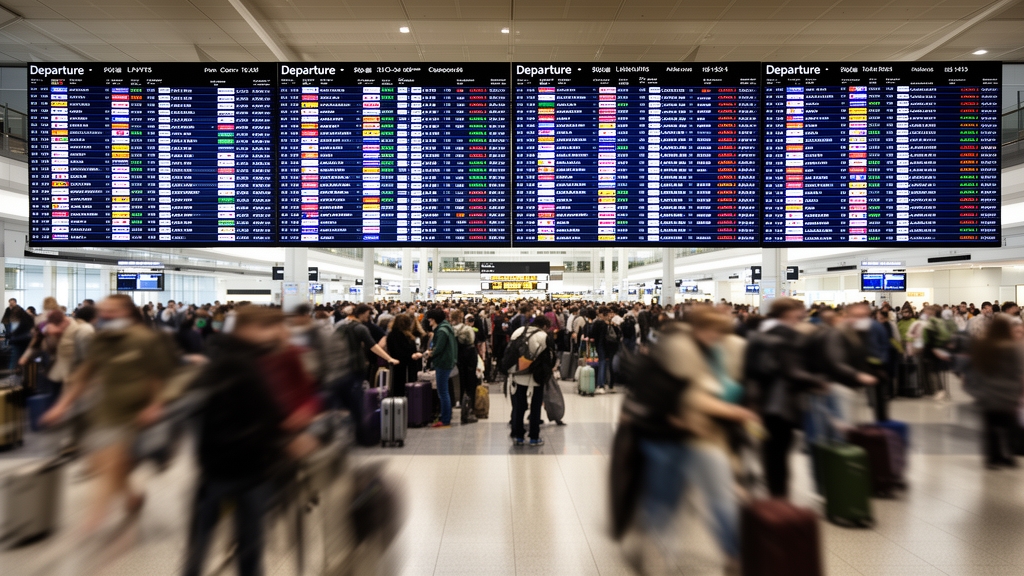
Look, here's the weird part about where we are right now: people aren't stopping. If you look at the data, travel demand isn't just "holding up"—it's actually thriving. I mean, Airbnb is consistently beating revenue estimates and Flight Centre saw leisure sales jump 18% to $5.2 billion recently. We're seeing the rise of what some call a "travelling class," a group of people who've decided that seeing the world is a non-negotiable part of their identity, not just a luxury they do once every few years. Even with everything going on, European hubs saw passenger traffic climb by about 5.4% on average. It's almost like we've collectively decided that the "revenge travel" phase never actually ended.
But here's where the math stops making sense. We're witnessing this massive disconnect where more people are flying, yet the industry's collective profit is getting sliced in half. Think about it this way: the average net profit per traveler is now estimated at just $4.85 for the entire year. Let that sink in. An airline makes less from your entire trip than you'd spend on a mediocre airport sandwich. The global industry margin has compressed to a razor-thin 2.3%. When your margin is that small, you're not really "managing" a business; you're just praying that nothing goes wrong. One bad storm or a single labor dispute and the whole house of cards can flip from a profit to a loss instantly.
And it gets worse when you look at the capital side of things. The cost of capital for airlines is at an eight-year high, meaning that $23 billion in projected global profit isn't even enough to cover the return investors expect on their equity. Honestly, investors are technically losing money by keeping their capital in the sector right now. Then you've got these hidden overheads, like insurance premiums jumping $6 billion globally because of the Middle East conflict. You don't see that on your ticket, but it's eating the margins from the inside out. It's a brutal environment where the top line looks great because the planes are full, but the bottom line is basically running on fumes.
So, how do they survive? They start hacking away at the experience in ways you might not even notice. I've seen carriers quietly ripping out ovens and galley equipment to save weight—which can save 40,000 gallons of fuel per plane a year—and "padding" schedules by adding 10 minutes to flight times just to save on fuel burn. It's a desperate game of pennies. We're in this strange two-speed market where premium travelers are spending more than ever, but the actual machinery of flight is becoming less efficient and less profitable. It's a precarious spot to be in, and I suspect we're only seeing the beginning of this squeeze.
The Future of Airfares: Will Higher Prices Slow Down Growth?
You know that gut-punch feeling when you finally sit down to book a long-awaited trip, only to see the total price has crept up by another twenty percent since you last checked? It’s not just your imagination, and honestly, it’s a lot more complicated than a simple "supply and demand" story. We’re currently sitting in this weird, precarious moment where the industry is betting everything on the idea that we’ll just keep paying more to fly. But as someone who’s spent a career looking at these cycles, I’m starting to wonder if we’ve finally hit the ceiling. The data suggests that the "revenge travel" hype is starting to fray at the edges as the actual cost of the ticket begins to outpace the willingness to pay. When you look at the numbers, it’s clear that airlines are trying to have it both ways: they want the prestige of premium travel but they’re cutting the very corners that make the experience worth the price.
Think about the sheer audacity of the current pricing model. We’re seeing dynamic algorithms that literally change the fare while your page is loading, reacting to crude oil prices in real-time like some kind of high-stakes day trading. And it’s not just the base fare that’s the problem; it’s the death of the "free" flight. If you’re using miles, you’re now getting hit with fuel surcharges that can top five hundred dollars for a single long-haul redemption, which feels like a bait-and-switch for anyone who’s been hoarding points for years. I’ve been tracking how carriers are stripping weight to save a few bucks—removing seatback screens and even scraping paint off the fuselage to save a few kilograms—and it makes you realize just how thin the margins really are. The average profit per passenger has collapsed to less than five bucks, which is less than the tip you’d leave for a decent meal.
But here’s the real question we should all be asking: at what point does the market actually break? We’ve seen airfares jump roughly 20% in the last year alone, and while the CEOs keep telling us this is the "new normal," my research suggests we’re approaching a wall. If you look at the ancillary revenue—those bag fees and seat selection charges that have quietly doubled over the last decade—it’s obvious the airlines are scared to show you the real price upfront. They’re padding schedules and removing galley ovens just to shave a few dollars off their fuel bill, which tells me they don’t actually believe demand is as "resilient" as they claim in their earnings calls. Once the traveling public realizes that a "cheap" flight is actually three hundred dollars more once you add the bags and the seat and the surcharge, the growth we’ve seen is going to hit a massive, brick-wall slowdown. I’m not sure we’re ready for how quickly that sentiment can shift once the credit card bills for these summer trips start rolling in this fall.
Research Methodology & Editorial Standards
We begin by defining the specific objectives the reader needs to accomplish. Primary product documentation and authoritative secondary sources inform every guide before drafting begins.
Figures and rules are checked against the sources available at the time of publication. Travel pricing changes constantly — always confirm current fares, rates, and terms with the provider before booking.