
Air Montenegro Turns to Boeing 737-400 Wet Lease as Embraer E195 Delivery Faces Delays
But here’s the rub: those engines burn roughly 15% more fuel per seat compared to the geared turbofans on the Embraer E195-E2 they were supposed to get.
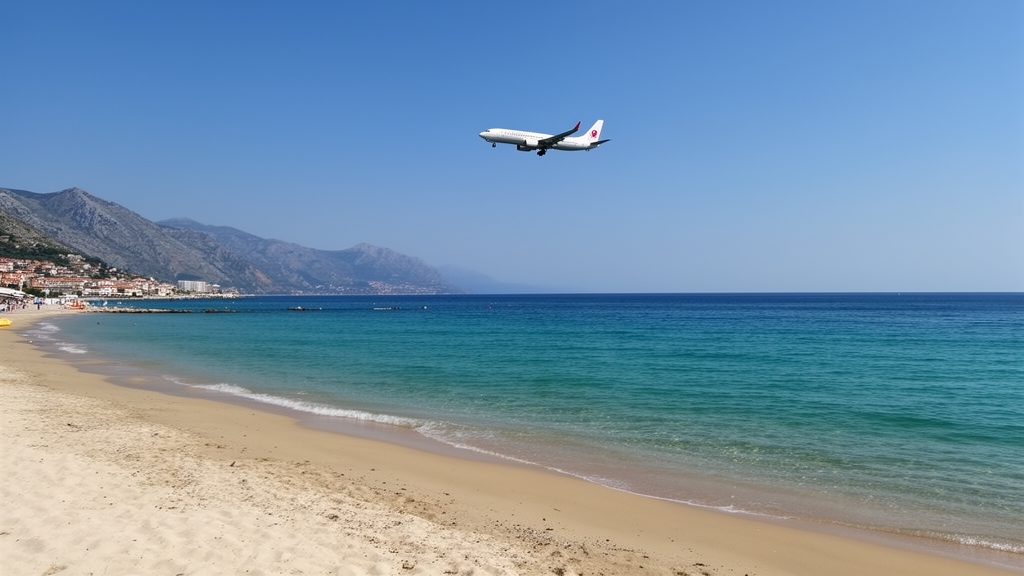
Why Air Montenegro Is Wet-Leasing a Boeing 737-400: The Embraer E195 Delivery Delay Explained
Let’s pause for a moment and really look at what’s happening here, because this isn’t just a simple case of “plane A is late, so we’ll use plane B.” Air Montenegro is effectively running a stopgap operation with a 30-year-old airframe, and the numbers tell a pretty stark story about why that’s a tough pill to swallow. The Boeing 737-400 they’re wet-leasing is a workhorse from a different era—certified back in 1988, powered by CFM56-3C1 engines that push out about 22,000 pounds of thrust each. But here’s the rub: those engines burn roughly 15% more fuel per seat compared to the geared turbofans on the Embraer E195-E2 they were supposed to get. That’s not a small difference when you’re running a thin-margin operation like a small national carrier. The 737-400’s maximum takeoff weight sits at 68,000 kg, which sounds higher than the E195-E2’s 61,500 kg, but the older airframe’s empty weight per passenger is actually worse, meaning you’re hauling more metal and less revenue-generating payload on those short hops around the Balkans.
Now, let’s talk about why they’re even going down this road instead of just waiting for the Embraer. The E195-E2 delay isn’t some random hiccup—it’s a classic supply chain bottleneck that’s been brewing for months. Embraer’s final assembly line in São José dos Campos hit a wall when a single supplier for the wing-to-fuselage join fixture couldn’t keep up, creating a six-month backlog that’s rippled through their delivery schedule as of mid-2026. On top of that, Embraer decided to redesign the overhead bins after feedback from European low-cost carriers who wanted more space for carry-on luggage, which pushed things back even further. So Air Montenegro is stuck in a tough spot: they need capacity now, not in 2027.
But let’s be honest about what they’re giving up here, because the operational trade-offs are significant. The 737-400’s maximum range is about 4,000 km, which is 200 km less than the E195-E2, and that might not sound like much until you realize it forces Air Montenegro to abandon certain long thin routes like Podgorica to London Stansted without a technical stop. That’s a real competitive disadvantage when you’re trying to build a network. The noise profile is another headache—those CFM56-3C1 engines hit around 86 dB at takeoff, compared to the E195-E2’s 82 dB, and that four-decibel difference could be the difference between getting nighttime slots at Tivat or not. And maintenance? Look, the 737-400’s costs are roughly 30% higher per flight hour, partly because the engine overhaul intervals are 20,000 cycles versus 30,000 for the newer Pratt & Whitney engines, and partly because you’re dealing with an airframe that needs more frequent corrosion checks. The auxiliary power unit alone—a Garrett GTCP85-98CK—guzzles 45 kg of fuel per hour on the ground, nearly double what the E195-E2’s Honeywell unit consumes, which adds up fast during turnarounds at Podgorica.
So why go through all this hassle? It comes down to timing and availability. Compare that to the 12- to 18-month lead time you’d face trying to source a comparable narrowbody through a dry lease or purchase, and the calculus becomes clearer. But there’s a hidden cost here that doesn’t show up on the lease agreement. The 737-400 requires a dedicated spare parts pool at Podgorica Airport because the type’s components are no longer manufactured new—you’re relying on salvaged airframes or aftermarket suppliers like AAR Corp to keep things flying. The auxiliary power unit alone, a Garrett GTCP85-98CK, burns 45 kg of fuel per hour on the ground, nearly double what the E195-E2’s Honeywell unit consumes, and that adds up fast when you’re doing multiple turns a day. Maintenance costs are roughly 30% higher per flight hour because the older airframe needs more frequent corrosion checks and the engines have shorter overhaul intervals—20,000 cycles versus 30,000 for the Pratt & Whitney PW1900G. So while the wet-lease solves the immediate capacity problem, it’s a band-aid that comes with a real operational tax. The E195-E2 delay is frustrating, but it’s also a reminder that when you’re a small flag carrier, you don’t always get to fly the shiny new plane you ordered—you fly what’s available, and you make the math work.
How a Wet Lease Differs from a Dry Lease: Operational and Financial Implications for the Airline
Look, to really get why Air Montenegro is doing this, we have to talk about the actual mechanics of a wet lease versus a dry lease. Think of a wet lease—or ACMI, which stands for Aircraft, Crew, Maintenance, and Insurance—as the "hotel stay" of aviation; you just show up and everything is provided for you. You're paying a premium for a turnkey solution where the lessor handles the pilots, the mechanics, and the insurance, which is a lifesaver when you're in a pinch but a killer for your margins. A dry lease is more like renting an empty apartment. You get the plane, but you've got to bring your own crew, manage the maintenance, and figure out the insurance yourself. It's way cheaper in the long run and lets you paint the plane in your own colors, but it takes forever to set up because you need the regulatory infrastructure to manage it.
Here's where it gets tricky from a financial perspective. Wet lease payments are usually just operating expenses—they hit your income statement and you move on. But a dry lease? Under IFRS 16 rules, those often show up as both an asset and a liability on your balance sheet, which can make your debt look way scarier to investors. And don't get me started on the "guaranteed hours." Most wet leases force you to pay for a minimum of 200 to 250 block hours a month. If your passengers don't show up, you're still paying for that plane to sit on the tarmac. With a dry lease, the rent is fixed, so the risk of low demand is entirely on you, but you aren't paying for a crew that isn't flying.
Then there's the operational friction that nobody mentions in the brochures. In a wet lease, you're dealing with the lessor's crew, who have their own labor contracts and ways of doing things, which can lead to some real tension with your own ground staff. Plus, you're stuck with the lessor's livery and seat layout, which can be confusing for your customers—they book an Air Montenegro flight and suddenly they're boarding a plane that looks like it belongs to someone else. And while the lessor handles the big "C and D" heavy maintenance checks, you'll often find yourself arguing over who pays for the small stuff, like a broken tray table or a worn-out seat cover.
Honestly, the biggest hidden cost is the "silent premium." Even though you pay for the fuel in a wet lease, the lessor might have bulk hedging deals they aren't passing on to you, meaning you're likely paying 3% to 5% more for fuel than you would if you owned the plane. But look, when you're facing a delivery delay and your schedule is collapsing, you don't have the luxury of waiting months to vet a dry lease or hire a new crew. You pay the "convenience tax" of the wet lease because it's the only way to keep your slots and keep your passengers moving. It's an expensive band-aid, but when the alternative is canceling flights, it's the only move that makes sense.
Trade Air as the Lessor: What the Boeing 737-400 Brings to Air Montenegro’s Summer Schedule
Let’s get into the lessor side of this equation, because Trade Air isn’t just any random ACMI provider—they’re one of the last operators keeping the Boeing 737-400 alive in European commercial service, and that comes with a very specific set of trade-offs for Air Montenegro’s summer. This particular airframe, registered 9H-TQH, was originally delivered new to Ukraine International Airlines back in 1998, so we’re talking about a 28-year-old plane that’s been through multiple operators before landing with a Slovenian specialist founded in 1994. What’s interesting is the seat count: Trade Air’s 737-400 packs 168 seats in an all-economy layout, which is actually 12 more than the E195-E2 Air Montenegro ordered. That extra capacity sounds great on paper for peak summer demand, but it’s a double-edged sword when you consider the aircraft’s maximum landing weight of 54,885 kg. On hot days at Tivat—where the runway is short and the temperatures can push 35°C—you have to calculate fuel so precisely that you’re almost guaranteed to leave payload on the ground, meaning those extra seats might not be fillable on certain rotations.
Now, here’s where the lessor’s specific operational quirks start to matter for the schedule. Trade Air holds an EASA Part 145 maintenance approval that lets them perform line maintenance at Podgorica, which is convenient, but any serious engine issue means a ferry flight back to their home base at Maribor Edvard Rusjan Airport in Slovenia. That’s a three-hour repositioning flight one-way, and if it happens mid-season, you’re looking at days of downtime. The 737-400’s pneumatic system operates at 38 psi—significantly lower than the 50 psi on the E195-E2—which means ground air conditioning units are less effective during turnaround. In the Adriatic summer heat, that’s not just a comfort issue; it’s a scheduling risk because aircraft can’t cool down as fast, and you might see delays stacking up on quick turns. Trade Air’s crew contracts also cap duty periods at 12 hours, which directly restricts how Air Montenegro can schedule early morning departures from Podgorica followed by late evening returns from places like Istanbul. You lose flexibility on the edges of the day, and that’s exactly when leisure travelers want to fly.
There are some hidden upsides too, if you look closely. Trade Air installed a satcom system on this airframe specifically for the Air Montenegro lease, which allows their maintenance control center in Slovenia to monitor engine performance in real time. That’s a level of proactive oversight you don’t always get with a quick ACMI deal, and it could catch small issues before they become AOG events. But the 737-400’s cargo hold is only 30 cubic meters—15% smaller than the E195-E2’s—which matters more than you’d think for Montenegro’s agricultural exports during summer. Farmers shipping early-season cherries or late-summer figs lose belly cargo revenue, and that’s a missed opportunity for a small flag carrier trying to diversify income. The Garrett GTCP85-98CK auxiliary power unit also draws bleed air directly from the engine’s compressor section during start-up, creating that distinctive high-pitched whine you can hear from 400 meters away. It’s a signature sound of an older generation, and honestly, it’s a reminder that this aircraft’s systems were designed in an era when fuel was cheap and noise regulations were looser. Trade Air has factored the $1.2 million D-check cost into the lease rate, but that expense adds zero residual value to the lessor—it’s pure overhead. For Air Montenegro, the calculus is simple: this plane gets them through the summer, but every flight hour with Trade Air’s 737-400 is a compromise between capacity, cost, and operational constraints that a newer aircraft simply wouldn’t demand.
Filling the Gap: How the 737-400 Complements Air Montenegro’s Existing Fleet Mix
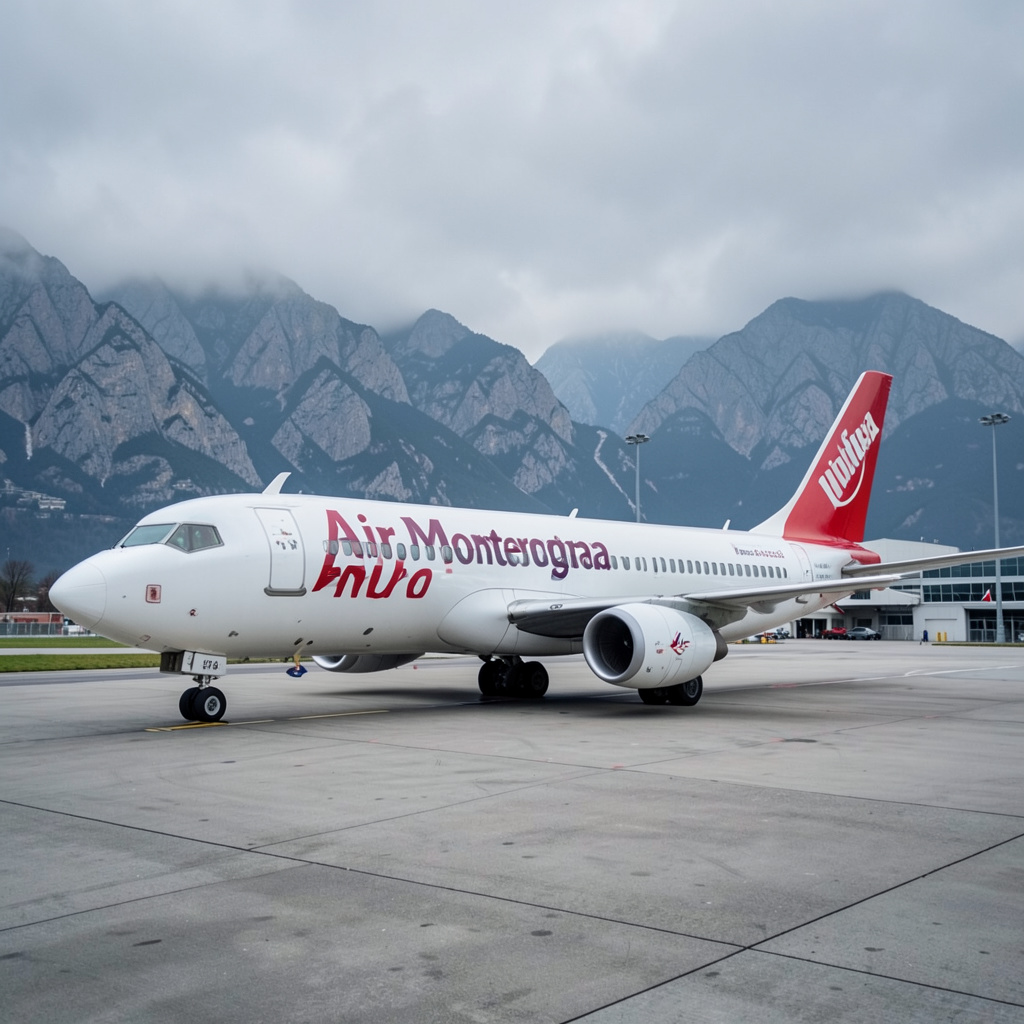
You know, when I first looked at this lease deal, I thought it was just a panic move—a desperate throw of the dice to cover a delivery delay. But after digging into the numbers and the routes, I’m starting to see a different story: the 737-400 actually fills a very specific gap in Air Montenegro’s fleet that their existing jets simply can’t touch. Let me explain. Air Montenegro’s current stable—those smaller regional jets they’ve been flying since the startup in 2021—tops out around 100 to 120 seats. That’s fine for skinny routes like Podgorica to Rome or Tivat to Belgrade, but it’s a real problem when July hits and you’re trying to move 180 people from Istanbul to the coast. The 737-400 brings 168 seats in a single-class layout, which is 12 more than the E195-E2 they ordered, but more importantly, it’s roughly 40 to 50 seats more than anything else they can currently put in the air. That extra capacity isn’t just a nice-to-have; it’s the difference between leaving revenue on the table and actually capturing the peak-demand wave that makes a small carrier’s summer profitable.
But here’s where the complementarity gets interesting—and a little nuanced. The 737-400’s higher empty weight per passenger means it’s actually less efficient on a per-seat basis than even their older Embraers on short sectors, but that math flips when you factor in the sheer passenger volume on high-density routes. Think about it: a 90-minute flight from Podgorica to Istanbul with a 90% load factor generates way more revenue per departure on a 168-seat plane than on a 110-seat one, even if the fuel burn per seat is 15% higher. The real trade-off is flexibility. The 737-400’s noise penalty—that 86 dB at takeoff—rules out nighttime operations at places like Tivat, but it’s perfect for the daytime bank of flights that make up 80% of leisure travel. And the 38 psi pneumatic system? Sure, it makes ground cooling slower, but if you schedule your turns with a 50-minute buffer instead of 35, you can still hit reliability targets. Trade Air’s 12-hour crew duty cap does restrict the schedule—you can’t run a 6 a.m. departure followed by a 10 p.m. return—but that actually fits neatly with Air Montenegro’s existing crew patterns, which are already built around shorter duty days for their smaller fleet.
The cargo hold situation is a perfect example of how this plane fills a specific niche rather than just being a worse version of the E195-E2. At 30 cubic meters, it’s 15% smaller, which means you lose the ability to carry early-season cherries or figs to European markets. But for a carrier that doesn’t have a robust cargo sales team yet—Air Montenegro is still building that side of the business—that lost belly revenue is less painful than you’d think. Meanwhile, the satcom system Trade Air installed for real-time engine monitoring is something Air Montenegro’s own maintenance team has never had access to, and it gives them a data feed they can use to plan around the 737-400’s shorter engine overhaul intervals. Honestly, I think the real genius of this lease isn’t in the aircraft itself—it’s in how it slots into the network. The 737-400 becomes the “heavy lifter” for the core leisure routes during the 20-week summer peak, while their smaller jets handle the lower-frequency, higher-yield routes to secondary cities like Ljubljana or Sofia. It’s a classic fleet-within-a-fleet strategy, except they’re doing it with a 28-year-old airframe that costs more to operate but delivers the one thing nothing else in their lineup can: 168 seats right now, when they need them most.
Passenger Experience and Route Impact: What Travelers Can Expect from the Temporary Aircraft Change
If you’re booked on Air Montenegro this summer, you’re probably wondering what this old Boeing 737-400 actually feels like compared to the shiny new Embraer you were promised. Let’s be real: the moment you board, you’ll notice the difference in the seating layout. Instead of the 2-2 Embraer configuration where you might snag a window without a neighbor, you’re looking at a 3-3 setup with 168 seats. That extra seat in the middle means the aisles are tighter and the seat width shrinks to 17.2 inches, which is a full inch narrower than the E195-E2. Over a two-hour hop to Istanbul, that inch starts to feel a lot bigger. The overhead bins are the old "hat-rack" style, and they’re roughly 30% smaller than what you’d find on a newer jet. If you’re one of the last to board a full flight, there’s a decent chance you’ll be gate-checking your carry-on.
Then there’s the physical toll of flying an older airframe. The 737-400’s cabin is typically pressurized to 8,000 feet, whereas the E195-E2 keeps it closer to 6,000 feet. That 2,000-foot difference in cabin altitude means lower oxygen partial pressure, which can leave you feeling a bit more tired than usual when you land in Podgorica. You might also notice the air feels drier. The older ventilation system recirculates about 50% of the cabin air, while the Embraer uses 100% fresh engine bleed air. It’s a small detail, but if you’re prone to dry eyes or skin, you’ll feel it on these longer Balkan summer days. And noise? It’s just a louder ride. The cabin cruise noise averages 78 dB, which is about 3 dB louder than the E195-E2. It’s the difference between a quiet office and a busy restaurant, and it’s most noticeable if you’re sitting near the back near the galley.
Route-wise, the impact is a bit more technical but still affects your wallet and your schedule. Because the 737-400 has a lower maximum landing weight—54,885 kg compared to the Embraer’s higher limits—Air Montenegro might have to restrict seat sales or fuel loads on hot days at Tivat. If the temperature spikes, don't be surprised if the flight is weight-restricted. The 737-400’s range is also about 200 km shorter than the E195-E2. While it handles the core routes like Podgorica to Istanbul just fine, it means the airline has less flexibility for those "long thin" routes they were hoping to launch. Since the crew are from Trade Air, their service protocols and announcement style might feel a bit different from what the regular Air Montenegro staff usually provide. It’s a subtle shift, but if you’re a frequent flyer, you’ll pick up on the "lessor" vibe pretty quickly. At the end of the day, it’s a functional plane that’ll get you to the beach, but it’s definitely a step back in comfort from the modern regional jet experience we’ve all gotten used to.
Looking Ahead: Air Montenegro’s Long-Term Fleet Strategy Beyond the E195 Delivery Setback
Let’s be honest—when you’re a tiny national carrier that got off the ground in just 3.5 months back in 2021, you don’t exactly have the luxury of a five-year fleet plan sitting in a drawer. Air Montenegro’s founders pulled off one of the fastest airline startups in European history, but that speed came with a cost: they’ve been playing catch-up on fleet modernization ever since. The E195-E2 order wasn’t just a nice-to-have; it was the centerpiece of a strategy to replace aging regional jets and finally give Podgorica and Tivat the kind of efficient, mid-haul connectivity that secondary Western European cities like Birmingham, Lyon, and Stuttgart desperately need. But here we are in mid-2026, with Embraer’s backlog sitting at over 350 undelivered E-Jets E2 family units and at least 15% of those deliveries delayed by six months or more due to persistent supply chain snags in São José dos Campos. That’s not just a hiccup—that’s a structural bottleneck that forces Air Montenegro to rethink everything they thought they knew about their growth trajectory.
So what does the long-term picture actually look like? I’ve been digging into the airline’s publicly stated plans and cross-referencing them with what makes sense operationally, and here’s what I’m seeing. The carrier is openly evaluating the Airbus A220-100 as a potential complement or even alternative to the E195-E2, and honestly, that move makes a lot of sense when you run the numbers. The A220-100 offers about 1,000 km more range than the E195-E2 on similar fuel burn per seat, which opens up routes to the Canary Islands or Scandinavia without needing a technical stop—exactly the kind of network expansion that could extend Montenegro’s tourism season beyond the summer crush. But switching families mid-stream would mean a whole new pilot type rating, different spare parts inventory, and a training pipeline that could take 18 months to stabilize. That’s a massive commitment for a carrier that’s still building its balance sheet. Meanwhile, the wet-lease clause with Trade Air actually includes a transition option: once the E195-E2 finally arrives, Air Montenegro can convert the 737-400 arrangement into a dry lease or direct purchase, potentially cutting long-term costs by 20-30%. That’s a smart escape hatch, but it only works if the Embraer shows up before the 737-400’s maintenance costs eat into those savings.
Now layer in the regulatory pressure, because that’s the wildcard nobody’s talking about enough. The European Union’s Fit for 55 regulation mandates a 55% reduction in greenhouse gas emissions by 2030, and for a small flag carrier that’s already operating older airframes, that timeline is terrifyingly close. The E195-E2 delivers a 25% reduction in fuel consumption per seat compared to the previous generation, which would put Air Montenegro ahead of the compliance curve. But if they end up with the A220-100 instead, they’d actually get even better numbers—the A220 family burns roughly 20% less fuel per seat than the E2, according to Airbus’s own data, though real-world operations can narrow that gap. The airline has also been quietly exploring codeshare agreements with larger European carriers, which would let them offer connecting flights to destinations beyond their own network without adding a single aircraft. That’s a capital-light way to grow, and it fits perfectly with the government’s view of the airline as a strategic tool to boost tourism—which already accounts for about 25% of Montenegro’s GDP—beyond the traditional coastal season.
Here’s the thing that gives me real confidence about Air Montenegro’s long-term direction: they’re not just waiting for one plane. They’ve been building partnerships with regional airports across the Western Balkans—Pristina, Skopje, Tirana—to create a hub-and-spoke network centered on Podgorica and Tivat, using the E195-E2’s range to serve mid-haul routes without needing larger aircraft. That network strategy doesn’t depend on any single airframe; it’s a route structure that can flex as the fleet evolves. The phased approach they’ve outlined—with the E195-E2 (or A220) forming the backbone by 2028, while the 737-400 fills the gap now—shows a level of pragmatic thinking that most small carriers never develop. They’re essentially running a two-speed fleet: a temporary workhorse that burns more fuel but delivers capacity today, and a future core that’s lean, green, and regulatory-compliant. I don’t think they’ll abandon Embraer entirely—the E2’s 25% fuel savings are too compelling for a carrier with thin margins—but I also wouldn’t be surprised if we see a mixed fleet announcement within the next 12 months. Either way, Air Montenegro is doing exactly what a smart flag carrier should do: buying time with a band-aid, investing in network flexibility, and keeping their options open until the supply chain gods decide to cooperate. That’s not just surviving a setback—that’s building the foundation for real, sustainable growth.
Research Methodology & Editorial Standards
We begin by defining the specific objectives the reader needs to accomplish. Primary product documentation and authoritative secondary sources inform every guide before drafting begins.
Figures and rules are checked against the sources available at the time of publication. Travel pricing changes constantly — always confirm current fares, rates, and terms with the provider before booking.