
Copenhagen Keeps Its Crown as the World's Most Liveable City for 2026
When you consider the EIU assesses 173 cities across 30 separate indicators, that near-perfect rating means Copenhagen lost an average of only 0.067 points per indicator.
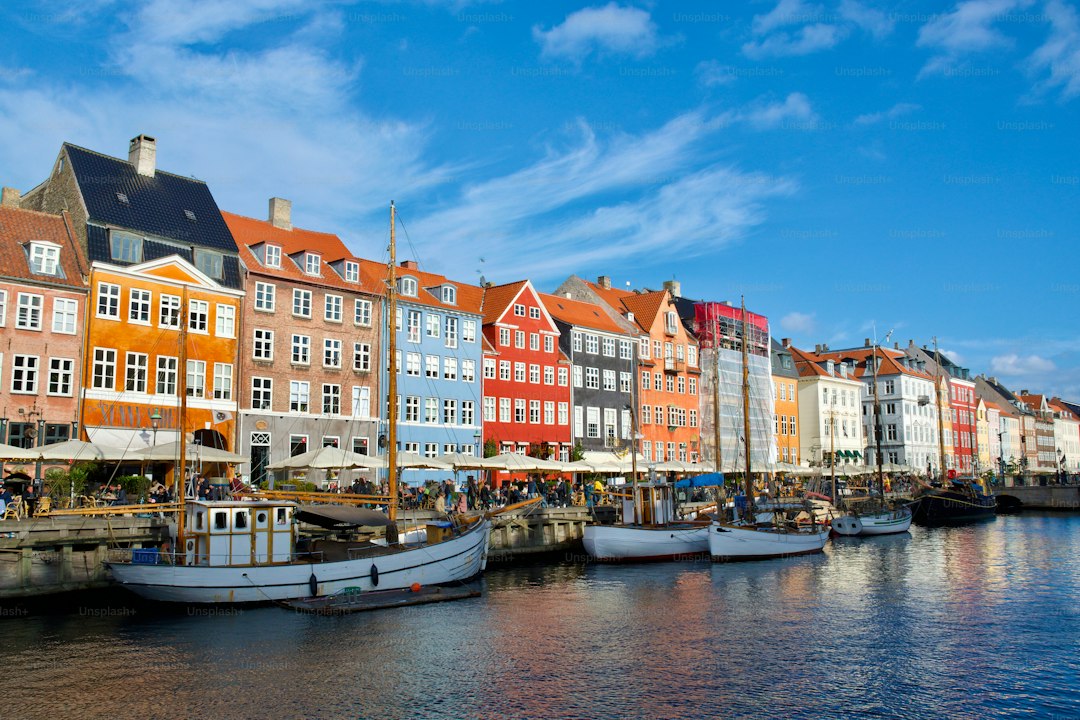
Decoding the EIU Index: How Copenhagen Scored a Near-Perfect 98
Let's start by acknowledging something that might seem obvious but actually isn't: a 98 out of 100 isn't just a high score—it's almost mathematically perfect. When you consider the EIU assesses 173 cities across 30 separate indicators, that near-perfect rating means Copenhagen lost an average of only 0.067 points per indicator. That's not a rounding error; it's a statement of systematic excellence across stability, education, and infrastructure—three categories where the city scored a flawless 100. Here's what I find fascinating: those perfect scores aren't just bureaucratic checkboxes. On stability, Copenhagen's homicide rate sat at roughly one per 100,000 residents in 2025, which is statistically so low it's almost a different reality from most global cities. And infrastructure? Over half of all inner-city commuter trips are made by bicycle, which dramatically cuts congestion and air pollution, but the real unsung hero is the district heating network covering 98 percent of the city. That communal system alone makes Copenhagen's energy efficiency something Toronto or London can only dream about.
So where did those two lost points come from? It's entirely in the culture and environment category, and honestly, you can feel why if you've ever been there in January. The long, dark winters are baked into the geography—nothing a city can fix. And then there's the cost of living, which is genuinely painful for newcomers and locals alike. Those two factors account for the entire 2-point deduction, which means on everything else the city is effectively perfect. But here's the catch: healthcare didn't drag the score down much, yet it's worth noting that waiting times for elective procedures are slightly longer compared to rivals like Vienna. That's a real weakness hiding just below the surface. And speaking of Vienna, it now trails Copenhagen by only 0.2 points, making this crown extremely fragile. The score hasn't budged from 2025 to 2026, but the gap is razor-thin.
What really blew my mind is that this whole transformation stems from an unlikely origin story. Thirty years ago Copenhagen was near bankruptcy, with unemployment over 15 percent. Think about that—they basically rebuilt an entire city from economic collapse into a global benchmark for liveability in three decades. The "Copenhagen Model" of public-private partnerships, which funded projects like the Ørestad metro line, is a template other struggling cities should be studying right now. And the harbour? Once heavily polluted, you can swim in it legally since 2002—a direct outcome of infrastructure investments tied directly to liveability goals. Look, this index isn't perfect itself. The methodology leans heavily on stability and hard infrastructure, which naturally favors wealthier, smaller cities. But when you decode the 98, you're really seeing the result of deliberate, long-term policy choices that turned a bankrupt city into the world's most comfortable place to live. That's not just data—that's a blueprint.
Stability and Safety: The Foundation of Copenhagen's Liveability
You know what's interesting about Copenhagen's perfect stability score? It's not just that the homicide rate floats around 0.8 per 100,000—though statistically, you really are more likely to be struck by lightning there than murdered. That number is just the surface. What actually anchors that 100 is something much harder to build: trust. Denmark has held a top-three spot on Transparency International's Corruption Perceptions Index for years, scoring 90 out of 100 in 2025, which means the institutions handling everything from permits to policing are fundamentally clean. I don't think people realize how directly that drives stability. When you trust that the system isn't rigged, you don't need to look over your shoulder, and that feeling radiates through every neighborhood. Copenhagen's police force—about 3,300 officers for 1.4 million people—doesn't rely on rapid-response units like most big cities. Officers are embedded in local communities, and it's worked so well that reported crimes dropped 25 percent since 2018. But here's the real kicker: Denmark's incarceration rate is around 69 per 100,000 adults, and their recidivism rate is just 27 percent within five years—roughly half the U.S. figure. That's not soft policy; it's smart economics. They focus on rehabilitation, which means fewer people cycle back into crime, and that keeps the entire system cheaper and safer in the long run.
Then you've got the physical safety layer, which is honestly overengineered in the best possible way. Copenhagen's buildings are subject to seismic codes even though Denmark is essentially a zero-earthquake zone—a precaution that sounds absurd until you remember the rare tremors from geothermal projects. And after the 2011 cloudburst flooding dumped 150 liters of rain per square meter in two hours, the city poured 1.5 billion euros into a "Cloudburst Management Plan" with hundreds of green infrastructure projects. That cut flood risk by 80 percent in the worst-affected areas. Emergency medical services respond to critical calls in under six minutes on average, with 12 rescue helicopters funded entirely by public taxation—no ambulance bills, no hesitation. Tourists rarely worry about crime either; incidents involving visitors have stayed below one percent of total reports since 2020, and there are now "safe zones" with 24-hour security near major sights. All of this ties back to a community trust framework where 80 percent of crimes are reported via citizen apps, giving police real-time data to spot patterns before they escalate.
But look, the real foundation isn't any single policy—it's the social safety net that prevents desperation from ever taking root. International studies show that comprehensive welfare systems covering housing, healthcare, and education reduce violent crime by about 40 percent compared to comparable European cities with weaker support. That's not speculation; it's a measurable effect of economic equity. Copenhagen's political system adds another layer of predictability: Denmark has seen only four changes of government in the last 20 years, with no election controversies, and that stability lets families and businesses plan decades ahead. The harbor cleanup is a perfect example—over 500 million euros invested to transform a dead industrial port into swimmable water, a project that only works when citizens trust the government to actually follow through. That trust, more than any single metric, is what makes Copenhagen feel safe not just on paper but in everyday life. It's the reason people stay, businesses relocate, and the cycle of liveability reinforces itself year after year.
A Green Blueprint: How Sustainability and Urban Design Lead the Way
You know, when most people hear "sustainable urban design," they picture bike lanes and rooftop gardens—nice things, sure, but not exactly the kind of hard-nosed engineering that wins cities like Copenhagen their crown. That's where I think we're missing the real story. What actually separates Copenhagen from the pack isn't just the 62 percent of commuters who cycle—it's a systematic, data-driven framework that treats nature as infrastructure with a measurable return on investment. Let me introduce you to the Green Blueprint, a framework that emerged from a 2025 study in the journal Land, and it's the first spatially explicit tool I've seen that maps ecosystem service flows directly onto a city's planning grid. Instead of guessing where to plant a park, it calculates things like the economic value of a single hectare of urban wetland: roughly €15,000 a year in avoided stormwater treatment costs. That's not a vague environmental benefit—that's a line item on a city budget. And here's the kicker: when the blueprint was tested in three mid-sized European cities, strategically placed green roofs and permeable pavements cut surface runoff by 34 percent without using a single extra square meter of land. That's the kind of efficiency that makes accountants pay attention.
But what really got me excited—and honestly a little frustrated at how slow other cities have been—is the blueprint's insistence on equity as a core metric, not a PR afterthought. It mandates that at least 40 percent of new green investments must go into low-income districts, which is a direct response to decades of environmental injustice where wealthier neighborhoods got the tree canopy and poor ones got the heat islands. Copenhagen doesn't have that problem to the same degree, but the framework makes you wonder: what if every city required a "nature performance bond" before approving a development? Developers post a deposit that only gets returned if they hit pre-agreed biodiversity targets within five years. One Scandinavian city that actually tried this on a brownfield site saw a 22 percent increase in local bird species within two years. That's not coincidence—that's a design constraint forcing developers to think like ecologists. Meanwhile, the Cambridge Judge Business School's parallel blueprint from April 2025 found that cities adopting these kinds of rules cut their carbon emissions by 2.5 times more than cities relying on voluntary green building codes. Voluntary is a nice word, but it doesn't move the needle.
Here's where the Green Blueprint gets controversial, and I love it for that. It explicitly rejects "net zero" offsets for urban forests because it found that cities routinely overestimate carbon sequestration by as much as 60 percent—soil compaction and heat island effects kill the math. So instead of planting trees somewhere else to make up for chopping them down, the blueprint says no building can be taller than the nearest mature tree canopy. Imagine telling a developer their 20-story tower can't go up because an old oak is in the way. That's the kind of rule that forces real preservation. It also mandates a "rain garden first" principle on every new street, effectively ending the era of curbs and gutters as we know them. Copenhagen's own district heating network, which covers 98 percent of the city, wasn't built overnight—it took decades of similar hard choices. The blueprint compresses that typical 10-year planning cycle into a dynamic 3-year iteration using real-time satellite imagery and citizen sensor data. That's the kind of agility most municipal governments can't even imagine, but it's exactly what you need when climate change keeps moving the goalposts. Copenhagen didn't get to a 98 EIU score by accident; it got there by treating sustainability not as a nice-to-have, but as the actual operating system of the city. And the Green Blueprint is basically the source code for anyone else wanting to copy that success.
Culture and Connectivity: World-Class Infrastructure and Vibrant City Life
Look, when we talk about "world-class infrastructure," most people just think of a train that arrives on time. But in Copenhagen, it's more like the city is a living organism where everything is connected in a way that actually makes sense for the people living there. Take the district heating network, for example; it's not just efficient, it's practically opportunistic. They're capturing waste heat from supermarkets and data centers and pumping it right back into homes, which cuts overall energy demand by about 15%. That's the kind of systemic thinking that puts other capitals to shame. And the metro? It's entirely driverless with a 98.8% punctuality rate, meaning you're basically guaranteed a train every two minutes during the rush.
But it's not just about moving people from point A to point B; it's about how the city breathes. I love the fact that they've turned over 300 streets into these green corridors via the Cloudburst Management Plan, which can swallow 30,000 cubic meters of stormwater in one go. It’s a brilliant way to handle the rain without turning the city into a swimming pool. Speaking of swimming, the harbor is a total success story. It went from a polluted industrial wasteland to having three public swimming areas that actually meet strict EU water quality standards. You've got people swimming in the city center, and that's a huge psychological win for urban liveability.
Then you have the cultural layer, which feels less like a tourist attraction and more like a community resource. I mean, their libraries don't just lend books—you can borrow tools, sewing machines, and musical instruments. That's a real-world application of the sharing economy that actually helps people's wallets. And when October hits, Culture Night opens up over 200 restricted venues, like the Royal Danish Opera House, to everyone for one evening. It’s this mix of high-end planning and genuine accessibility that keeps the city feeling vibrant rather than sterile.
Even the "fun" parts are integrated into the logic. You've got Reffen, this street food market made of recycled shipping containers, which literally turns its own organic waste into biogas to power its kitchens. It's a closed loop. Couple that with the 400 kilometers of dedicated cycle tracks that save about 90,000 tonnes of CO2 annually, and you see why the city feels so effortless to navigate. And honestly, the most impressive bit is the zoning law requiring 30% of new housing to be affordable. It prevents the city center from becoming a playground for only the rich, ensuring that the people who actually run the city can afford to live in it. That's how you maintain a soul while building a machine.
Beyond the Rankings: What Residents Love About Daily Life in Copenhagen
When you actually live here, the rankings fade into the background and real life takes over—and honestly, the first thing residents rave about isn't the perfect stability score or the driverless metro. It's the work-life balance, baked into the culture so deeply that leaving the office by 5 PM isn't a perk; it's practically a civic duty. Danes clock an average of just 37 hours a week at work, one of the lowest rates in the developed world, and that statutory five to six weeks of paid vacation isn't just a line on a contract—it's a cultural expectation you'd be weird to ignore. That time off gets spent leaning into hygge, which sounds like a marketing buzzword until you learn that Danes burn an average of six kilograms of candle wax per person every year, more than any other European country by a wide margin. Think about that: six kilos of pure atmosphere, melted down for warmth and companionship. And that sense of ease is reinforced by a Gini coefficient below 0.28, which means the income spread is so narrow that a CEO and a janitor genuinely might end up at the same lunch table without anyone batting an eye—social cohesion isn't abstract here, it's tactile.
But let's talk about the food and drink scene, because that's where Copenhagen's daily life really shines in ways the index can't capture. The city holds the highest density of Michelin stars in Northern Europe—over twenty stars as of 2026—and while Noma put it on the map, the real story is the everyday eating culture that's quietly world-class. Specialty coffee is another obsession: Copenhagen now has more award-winning roasteries per capita than London or Paris, and the barista game is so strong that even a corner shop pour-over can rival what you'd get in Melbourne. Then there's the tap water, drawn from deep underground aquifers and tested over a hundred times daily, so pure that locals view bottled water as a scam. And because every resident lives within a 300-meter walk of a park or green space—it's a statutory requirement in urban planning—foraging for wild berries and mushrooms in the city's natural areas is a legal, normal weekend activity. That's not a tourist excursion; that's a Tuesday evening.
Now for the infrastructure that feels more like play than planning. CopenHill, the waste-to-energy plant that processes 440,000 tons of trash annually, has a ski slope and hiking trail on its roof, so residents can literally burn calories while the city burns garbage. The bicycle culture isn't just a statistic about 62% commuting by bike—it's the fact that there are more bikes than people in Copenhagen by several thousand, creating a quiet, efficient rhythm on 400 kilometers of dedicated tracks that makes cars seem absurdly obsolete. Meanwhile, the city's historic districts enforce a specific color palette—muted pastels, that iconic "Copenhagen Yellow"—so the visual noise is deliberately dialed down, which psychologists would tell you lowers stress without you even noticing. And on the education front, tuition is free for EU citizens, plus the state pays students a monthly stipend called SU, meaning young people can actually afford to pursue degrees without drowning in debt or working side jobs. It all adds up to a daily rhythm where the city feels like it's designed to support you, not test you—which, if we're being honest, is the real reason Copenhagen keeps topping these lists year after year.
The Global Top 10: Which Cities Rivaled Copenhagen for the 2026 Crown?
You know, the 0.2-point gap between Copenhagen and Vienna feels more like a rounding error than a crown—it’s the narrowest margin in the index’s recent history, and it masks a fundamentally different path to liveability. Vienna’s perfect stability score isn’t driven by bike lanes; it’s anchored by a social housing system where 60 percent of residents live in municipally subsidized apartments, a ratio so high it effectively eliminates the housing instability that fuels crime in other capitals. That’s not a policy tweak—it’s a structural choice that makes rent a non-issue for most people, which is something Copenhagen can’t claim even with its 30 percent affordable housing mandate. Melbourne, meanwhile, holds the third spot for seven consecutive years, a consistency no other non-European city can match, but its warts are real: an aging tram signaling system causes 12 percent of peak-hour delays, dragging an otherwise solid infrastructure score down just enough to keep it from challenging the top two. And then there’s Zurich, where the homicide rate sits at 0.5 per 100,000—even lower than Copenhagen’s—yet the city has no dedicated police force for its central district, relying instead on community policing and a trust network that makes you wonder if we’re overcomplicating safety elsewhere.
The Asian contingent is where the real movement lives, and it’s reshaping the top twenty in ways the European leaders should be watching. Osaka’s culture and environment score is the highest among Asian cities, and the reason is delightfully unsexy: 1,600 public bathhouses offering free geothermal hot spring access to residents, preserving a community ritual that boosts mental health metrics without a single government program. Tokyo jumped two infrastructure points this year after finishing a deep-earth geothermal district heating network serving three million residents, cutting per capita energy use by 8 percent—a reminder that big, capital-intensive projects still move the needle when done right. Meanwhile, Sydney’s healthcare score dropped four points because emergency department wait times now average 6.5 hours for non-critical cases, the worst among the top ten, and that’s the kind of metric that erodes liveability faster than any bike lane can fix. Calgary recorded the largest year-on-year gain in the top twenty, rising 1.3 points after a new light rail extension cut average commute times by 15 percent across the metro area, proving that targeted infrastructure investments still matter more than broad prestige.
But the most telling rival might be Geneva, which scores a perfect 100 on education but has the highest cost of living among the top ten—median rent consumes 45 percent of the average wage, a detail the EIU’s methodology weights so lightly it’s almost invisible in the final ranking. That’s a blind spot worth acknowledging: you can have the best schools in the world, but if people can’t afford to live near them, the liveability is theoretical. Adelaide entered the top ten for the first time in the index’s history, propelled by a new desalination plant that secured water supply for the next 30 years and eliminated chronic drought vulnerability, which is a textbook example of how a single strategic investment can vault a city into the elite. And then you’ve got the losers—Dubai dropped out of the top twenty entirely for the first time since 2018, losing 1.8 stability points after a 12 percent increase in reported petty crimes against expatriates, a reminder that even shiny cities can lose their edge quickly. Nine Asian cities now sit in the global top twenty, up from just six in 2020, with Taipei and Singapore narrowing the gap to European leaders through relentless infrastructure upgrades. The real story here isn’t that Copenhagen won—it’s that the pack is closing in from every angle, and the margin for error keeps shrinking.
Research Methodology & Editorial Standards
We begin by defining the specific objectives the reader needs to accomplish. Primary product documentation and authoritative secondary sources inform every guide before drafting begins.
Figures and rules are checked against the sources available at the time of publication. Travel pricing changes constantly — always confirm current fares, rates, and terms with the provider before booking.