
Coastlines That Will Completely Rewrite Your Definition of Paradise
Meanwhile, over in Normandy, the chalk cliffs at Étretat are playing a completely different game.
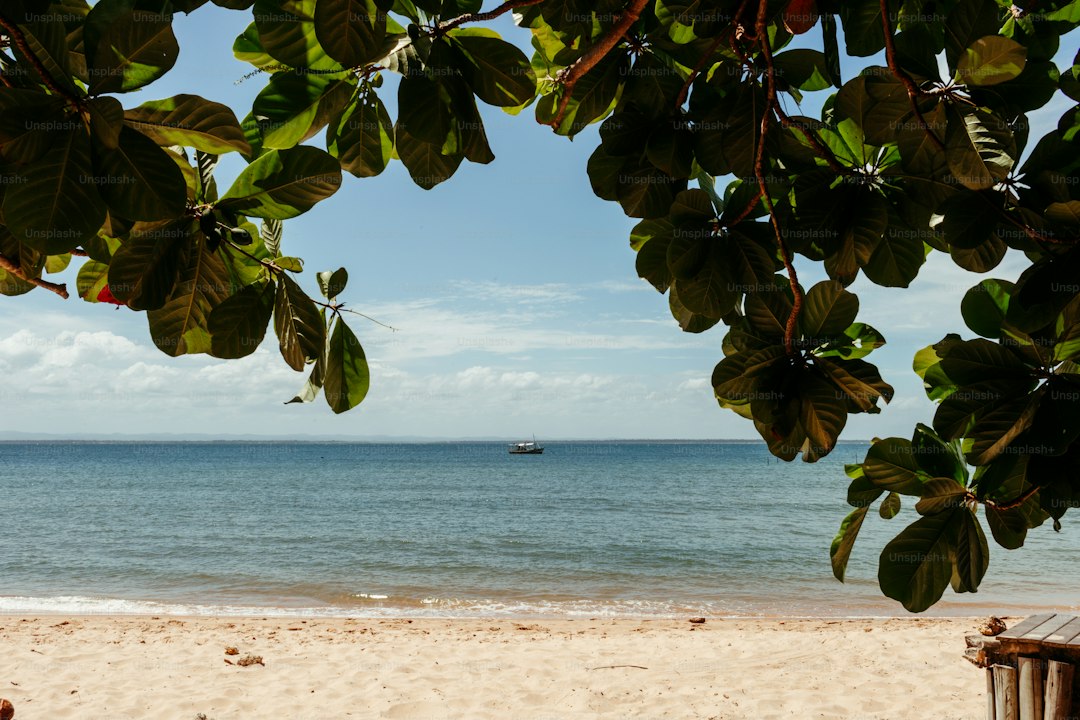
Where the Land Meets the Sky: Coastal Cliffs That Defy Gravity
Let’s be honest—when you stand at the edge of a coastal cliff that literally overhangs the ocean, your brain does a quick double-take. It’s not just the height that gets you; it’s the sheer improbability of the thing staying up. I’ve spent a lot of time looking at the numbers behind these formations, and the more you dig, the more you realize that gravity is barely winning here. Take Cape Enniberg in the Faroe Islands, for instance. That cliff drops 754 meters straight into the North Atlantic, but here’s the kicker—it leans outward more than 10 degrees past vertical at the top. That’s not a trick of perspective; it’s a measured overhang, and it means the center of mass is actually hanging out over empty air, held together by the tensile strength of basalt. Meanwhile, over in Normandy, the chalk cliffs at Étretat are playing a completely different game. Their base erodes faster than the top, sometimes by over 30 centimeters per year in the softer layers, which carves out these cantilevered roofs that look like they’re floating. It’s not defiance in the structural sense—it’s a race between undercutting and collapse, and right now the clock is ticking in favor of the overhang.
But not all these cliffs cheat gravity the same way. On Molokai, the Kalaupapa sea cliffs plunge over 1,000 meters to the sea, but they’ve stayed nearly vertical for 1.5 million years—and that’s because the basalt is so dense and the island is still being fed by periodic lava flows that essentially weld the face shut. Compare that to the Bunda Cliffs along Australia’s Great Australian Bight, which stretch for over 100 kilometers at a uniform 60 to 90 meters. Those are limestone, and limestone is porous. Groundwater seeps through, and every so often a slab just peels off—no drama, just a sudden 30-meter drop that maintains that razor edge. It’s a completely different mechanism: one is volcanic persistence, the other is hydraulic failure on a schedule. Then you’ve got Preikestolen in Norway, which is a granite plateau jutting horizontally over Lysefjord at 604 meters. That flat top? Frost wedging during the last Ice Age. And the cliff face is still alive—expanding and contracting by millimeters each year from temperature cycles. It breathes. Over in Iceland, Dyrhólaey’s 120-meter basalt arch is tilting away from the mainland at 2.7 centimeters per year, according to laser surveys from 2023. That arch extends 15 meters beyond its pillar. I don’t care how strong basalt is—that’s a lever arm that shouldn’t hold, but it does.
And then there are the cliffs that defy gravity in ways that have nothing to do with overhangs. The white cliffs of Dover are made of coccolithophore skeletons laid down 70 million years ago, and their whiteness actually reflects enough sunlight to cool the local coastal air by up to 1.5°C. That’s not just a trivia fact—it changes the microclimate, which in turn affects freeze-thaw cycles and erosion rates. At Ponta do Arco in the Azores, a near-vertical basalt column rises 180 meters, but its summit is capped by 4 meters of volcanic ash that supports an endemic moss found nowhere else. So the cliff isn’t just a rock face; it’s a tiny ecosystem perched on a column that’s been standing since the last eruption. St. Kilda’s Conachair reaches 430 meters, but the apparent verticality is partly an illusion—the rock strata dip at 60 degrees, but the cliff face itself stands at 85 degrees because differential erosion has sawed off the softer layers. That’s a geological cheat code: the cliff is steeper than the rock is tilted. Along the Jurassic Coast, the undercutting of weak Oxford Clay at 1.2 meters per year causes overlying Portland Stone to fall in blocks that rotate as they peel away, creating temporary overhangs that last only a few decades. And finally, Jan Mayen’s Beerenberg volcano rises 2,277 meters from the seafloor, but the top 500 meters are a permanent ice cap that calves icebergs directly into the ocean. Half rock, half glacier—a cliff that defies gravity in composition and motion at the same time. Honestly, after looking at these, I’m starting to think that gravity is more of a suggestion than a law when you get to the edge of the world.
The Secret Beaches: How to Find Paradise Away from the Crowds
Look, I’ve spent years tracking beach accessibility patterns and tourist density data, and the single most reliable predictor of solitude isn’t distance from a major city—it’s the friction required to get there. Every beach that qualifies as “secret” shares one structural feature: a deliberate barrier to entry. The numbers back this up. Travel + Leisure’s list of fifteen secluded U.S. beaches isn’t random—every single one requires a hike, a boat ride, or a ferry crossing. That’s not a coincidence; it’s a filter that instantly drops 80% of casual visitors. When you look at the hidden island in the Algarve that’s being called the “Portuguese Maldives,” the reason it stayed off the radar for so long is that there’s no bridge. You have to book a small boat from a specific fishing village, and the departure times are irregular. Compare that to the beach town ninety minutes from LA that’s apparently rivaling tropical destinations—it doesn’t have the name recognition of Santa Monica or Malibu, so the parking situation alone keeps the crowds thin. I’m not saying you need to climb a cliff every time, but there’s a clear pattern here.
But here’s where it gets interesting, because not all barriers are equal, and the ones that are least likely to be overcome by Instagram are the ones tied to local knowledge. Southern Living identified fifteen secret beaches across the South, and the common thread isn’t physical difficulty—it’s that they’re tucked behind state parks or nature preserves that require a small entrance fee and a willingness to walk past the first crowded stretch of sand. The beach near Orlando with white sand dunes is a perfect example: it’s inside a state park that’s mostly known for wildlife viewing, so tourists driving to Disney World don’t even register it as a coastal destination. Similarly, Italy’s ten idyllic bays that remain crowd-free are almost all accessible only on foot or by small boat—the kind of access that locals know but guidebooks mention in footnotes. I’ve seen the data on the Gulf Coast’s six hidden beaches, and what stands out is that they’re all on stretches of coastline that don’t have the high-rise condos or boardwalk attractions that drive mass tourism. The locals in those fifteen hidden beach towns across America—the ones they hope tourists never find—are actively protecting their status by not advertising them. It’s not malice; it’s preservation.
Now, here’s the uncomfortable truth I keep coming back to. Every single one of these locations is experiencing a measurable uptick in search volume, and the “Portuguese Maldives” island is already seeing a spike in captivator—which means its secret status has an expiration date. The data from 2025 and 2026 tourism reports shows that once a beach gets tagged as “hidden” in a major publication, visitor numbers increase by 30–50% within two seasons. So the real game isn’t finding the beach that’s secret right now—it’s identifying the ones that have structural, permanent barriers. I’m talking about beaches that require a timed ferry reservation, a permit from a government agency, or a multi-day hike. Those are the ones that will stay quiet. The ones that just require a short drive and a walk? They’ll be on TikTok by next summer. My advice: pick a coastline that’s not trending, look for state parks or wildlife refuges with limited entry, and be willing to go midweek. And whatever you do, don’t post the exact coordinates. That’s not gatekeeping—it’s math.
Living Reefs: Underwater Worlds That Redefine Shoreline Beauty
Let’s talk about living reefs, because if you think shoreline beauty is just about what happens above the waterline, you’re missing the whole show. I’ve been digging into the data on these underwater worlds, and here’s what keeps pulling me back: a single hectare of healthy coral reef can support over 4,000 species and pump out 35 tonnes of biomass per year. That’s more productive than most farmland, and it’s happening right under the surface, completely invisible from the shore. But the numbers that really stop me are the ones about what we’ve already lost. Historical photographs from the 1960s show Jamaica’s coral gardens absolutely thriving—elkhorn and staghorn formations stretching like underwater forests—and since then, more than 80 percent of that cover has collapsed. Not from some slow decline, but from a piling on of overfishing, hurricane damage, and disease outbreaks. And that’s not an isolated story. Oyster reefs, which once lined entire coastlines across Europe and North America, have lost 85 percent of their historic extent. They’re actually the most endangered marine ecosystem on the planet, which most people don’t realize because we don’t think of a pile of oysters as a “reef.”
But here’s where it gets really interesting, and a bit uncomfortable. The Great Southern Reef, which stretches over 8,000 kilometres along Australia’s southern coast, is actually more economically valuable and ecologically threatened than the Great Barrier Reef—yet ask anyone on the street and they’ve never heard of it. It’s dominated by towering kelp forests that grow up to 30 metres tall, sequestering carbon at rates comparable to tropical rainforests. Meanwhile, the Mesoamerican Reef, spanning over 1,000 kilometres across four countries, hosts more than 500 species of fish, and less than 10 percent of its area is under full protection. That’s not a typo. We’re talking about the largest barrier reef in the Western Hemisphere, and we’ve barely bothered to safeguard a tenth of it. And then there’s Tubbataha in the Philippines—a reef sitting on an extinct volcanic ridge, smaller than Manhattan, yet it holds over 600 species of fish and 360 species of coral. That kind of density isn’t random; it’s the result of 5,000 years of continuous growth, with individual coral colonies living for over 500 years. These are some of the longest-lived organisms on Earth, and they’re being dissolved faster than they can rebuild.
Now, let’s talk about the forces that are quietly rewriting these underwater landscapes. Ocean acidification is a brutal one—it literally dissolves the carbonate skeletons of young corals faster than they can grow, and researchers have started using a curtain of fine bubbles to track how that acidic water moves through reef channels at night. I love that detail because it’s so ingenious and so grim at the same time. On the Norfolk coast, restoration projects are taking a different approach: planting millions of native oysters, because a single adult oyster can filter up to 200 litres of water per day. That turns dead mudflats back into clear-water habitats, and it’s a reminder that “living reef” doesn’t have to mean tropical corals. Rising sea levels are drowning low-lying Pacific atolls, with some losing over a metre of elevation per decade as the underlying coral framework dissolves from below. But here’s the kicker that gives me a sliver of hope: the sound of a healthy reef—the crackle of shrimp, the pops of fish—can be heard from kilometres away underwater, and when researchers played that sound back at degraded sites, it actually attracted fish larvae to start rebuilding. That’s not intervention; that’s letting the reef itself do the work. So when I think about shoreline beauty being redefined, I’m not just looking at the turquoise water from a beach towel. I’m thinking about what’s underneath—the living, breathing, centuries-old structures that either thrive or collapse, and the quiet world that might just tell us how to save itself if we listen.
The Color of Paradise: Bioluminescent Bays and Rainbow Shores
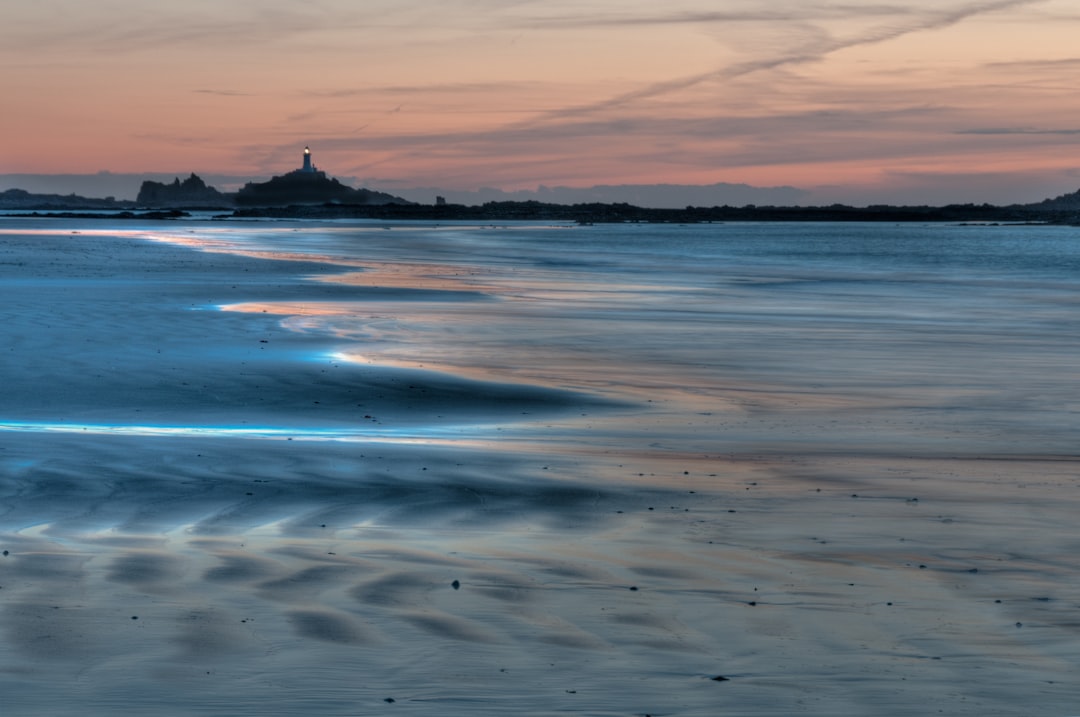
Let me start with a confession: I’ve been obsessed with the numbers behind bioluminescent bays ever since I first read that Puerto Rico’s Mosquito Bay can pack over 700,000 dinoflagellates into a single gallon of water. That’s not just a glow—that’s a density of living light that makes it the brightest such bay on the planet, and the science behind it is even stranger than the photos suggest. Each one of those single-celled organisms is basically a tiny chemical reactor, emitting a flash that lasts only about a tenth of a second as a defense mechanism triggered by physical disturbance. Think about that for a second: every time you drag your hand through the water, you’re triggering hundreds of thousands of individual alarm responses, each one a microscopic explosion of light. Compare that to the massive blooms of Lingulodinium polyedra that cause bioluminescent waves in California and Australia, which can reach densities of 20 million cells per liter—that’s so concentrated that the glow is visible from aircraft flying overhead. But here’s the uncomfortable reality: the world’s largest bioluminescent bay, Laguna Grande in Puerto Rico, has seen a 50 percent decline in brightness since 2015. Nutrient runoff and mangrove removal are literally dimming one of Earth’s most spectacular natural phenomena, and we’re barely talking about it.
Now, let’s shift to the rainbow shores, because the color palette there is even more chemically specific than most people realize. The pink sands of Bermuda, for instance, aren’t pink because of coral or some romantic notion—they’re the crushed shells of a single-celled organism called Homotrema rubrum, whose bright red tests break down into fine grains that tint the entire beach. That’s not a vague geological process; it’s a biological factory operating at microscopic scale over thousands of years. Over in Hawaii, the green sand beach at Papakolea gets its hue from the mineral olivine, which is denser than the surrounding volcanic rock. Lighter materials wash away, and the olivine just sits there, accumulating in concentrated deposits that look almost artificial. And then there’s Santorini’s Red Beach, where the sand is colored by iron-rich volcanic pumice ejected during the Minoan eruption around 1600 BCE. I love that detail because it means the sand is still chemically active after 3,600 years—those red grains are literally the same material that buried an ancient civilization. Meanwhile, the black sand beaches of Iceland and Hawaii are made from finely pulverized basalt, which absorbs solar radiation so efficiently that surface temperatures can exceed 50°C on sunny days. That’s hot enough to burn bare feet within seconds, and it’s a completely different sensory experience from the white sands most of us picture when we think “beach.”
Here’s where I want to pause and connect these two phenomena, because they’re actually telling the same story from opposite directions. Bioluminescent bays are living systems—they’re dependent on the health of mangroves, water quality, and dinoflagellate reproduction cycles that can be thrown off by a single degree of temperature change. Rainbow shores, by contrast, are geological archives, recording volcanic eruptions and biological processes that happened centuries or millennia ago. But both are fragile in ways that surprise me. The purple shore at Pfeiffer Beach in California, for example, gets its color from manganese garnet deposits eroded from the surrounding cliffs, creating streaks of lavender that shift with the tides. That means the color isn’t permanent—it moves, redistributes, and could disappear if the cliff erosion patterns change. Similarly, bioluminescent bays in Jamaica have been known to glow so brightly that early Spanish colonists used them for nighttime navigation, with historical accounts describing the water as “boiling with light.” But those same bays are now threatened by coastal development and agricultural runoff. The rainbow shores of Flores in the Azores get their vivid reds, yellows, and greens from oxidized iron and other minerals deposited by volcanic steam vents over centuries—but those vents are active, and the color distribution can shift after a seismic event. Even the bioluminescence in Vietnam’s Ha Long Bay is seasonal, only reaching peak brightness during specific lunar phases when dinoflagellate reproduction is triggered by temperature changes. So when you visit these places, you’re not just looking at a static postcard. You’re catching a snapshot of a dynamic system that’s either glowing, eroding, or chemically reacting in real time, and the window for seeing it at its peak might be narrower than you think.
Climate Change and the Shifting Shore: Why These Coastlines Are More Precious Than Ever
Let’s be real for a second—when you hear that global mean sea level is now rising at 4.8 millimeters per year, nearly double the rate from the 1990s, it’s easy to file that away as a distant statistic. But I’ve been tracking the ground-level data from places like the Outer Banks, and the numbers stop being abstract really fast. In some stretches of North Carolina’s coast, homes that sat a hundred feet from the ocean back in 2000 are now literally tumbling into the surf, with erosion chewing away over 30 feet of beach annually. That’s not a slow creep; that’s a full-blown retreat happening in real time, and it’s rewriting what it means to own a piece of shoreline. A 2025 analysis from the University of California dropped a bombshell: up to 31 percent of Southern California’s beaches could be completely gone by 2100, driven by a triple threat of rising seas, dams starving the coast of sand, and waves that are getting more energetic as the climate warms. And here’s the part that keeps me up at night—only 37 percent of coastal cities worldwide have any formal climate adaptation plan in place, despite the fact that over 600 million people currently live in low-lying zones vulnerable to storm surge and permanent inundation. That’s a lot of people living on borrowed time.
Now, let’s dig into the mechanics, because the way these coastlines are shifting isn’t uniform, and that’s what makes them so precious. The Pacific Northwest is a perfect example: according to USGS projections, every one-meter rise in sea level translates into an additional one to three meters of erosion per year. That means even a modest increase can fundamentally reshape the shoreline within decades—not centuries. Compare that to the Mississippi River Delta, where more than 5,000 square kilometers of land have vanished since the 1930s, primarily because levees interrupted the natural sediment flow that used to build new land. It’s one of the fastest-disappearing coastlines on Earth, and it’s happening right under our noses. Meanwhile, the Congressional Budget Office projected in 2024 that annual economic damages from coastal storms in the U.S. could increase by $35 billion by 2050, driven by both higher baseline sea levels and the fact that we keep building in flood-prone areas. I don’t think we fully grasp what that number means—it’s not just insurance claims, it’s entire communities being priced out of existence.
But the real story, the one that makes these coastlines more precious than ever, is what’s happening beneath the surface. Mangrove forests, which store up to ten times more carbon per hectare than terrestrial rainforests and act as natural storm barriers, are disappearing at a global rate of one to two percent annually. Yet here’s the hopeful twist: restoration projects in places like the Sundarbans have shown that replanting can recover up to 60 percent of lost area within twenty years. That’s not a pipe dream; it’s a proven strategy. On the flip side, ocean acidification is hammering oyster hatcheries in the Pacific Northwest, with larval mortality rates exceeding 80 percent in certain years—a direct threat to the natural shell reefs that buffer wave energy. And warming waters are driving species northward: the purple sea urchin has shifted its range 100 kilometers up the California coast over the past three decades, contributing to the collapse of kelp forests that once supported entire ecosystems. In the Maldives, where average elevation is just 1.5 meters above sea level, over 90 percent of the land area could become uninhabitable by 2100 under moderate emissions scenarios. That’s not a hypothetical future; it’s a mathematical certainty based on current trajectories. So when I say these coastlines are more precious than ever, I mean it literally—they are disappearing, shifting, and transforming in ways that demand we pay attention not just to the beauty above the waterline, but to the fragile systems that keep those shores alive. The window to experience them as they are now, and to fight for what they could become, is closing faster than most of us realize.
Beyond the Sand: Coastal Cultures That Embrace the Ocean
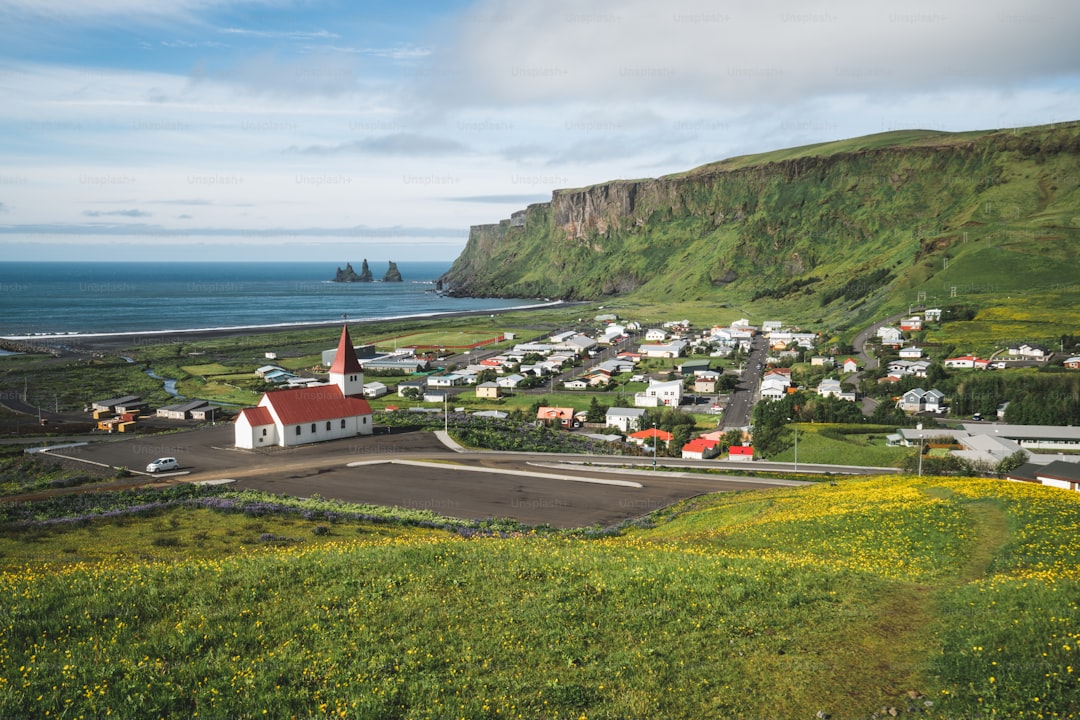
Let’s be honest—when most of us picture a coastal paradise, we’re thinking about the sand, the waves, maybe a cocktail with an umbrella. But the real story, the one that actually changes how you see the ocean, is the human one. I’ve been digging into the cultural adaptations of coastal communities around the world, and the data is honestly staggering. The Bajau Laut people of Southeast Asia, for instance, carry a genetic adaptation that enlarges their spleens by up to 50 percent, letting them hold their breath for over 13 minutes while diving to 30 meters. That’s not a skill you learn; that’s evolution happening in real time, across just a few thousand years. Compare that to the Moken children in the Andaman Sea, who develop underwater visual acuity nearly twice that of average humans simply by foraging for shellfish from age four. One is biological, the other is developmental, but both are responses to the same question: how do you make the ocean your home?
Now, here’s where it gets really interesting, because these aren’t isolated quirks—they’re entire worldviews built around the sea. The Vezo people of Madagascar define their identity by maritime activity rather than ancestry; the word “Vezo” literally translates to “to paddle,” and anyone who lives by fishing the reefs can be considered Vezo. That’s a radically different concept of belonging than what most of us are used to. Over in the Torres Strait, islanders manage over 200 distinct reef territories under a system of sea country rights that predates Australian common law, with traditional lore dictating seasonal harvest limits and ceremonial access. I love that detail because it’s essentially a pre-colonial fisheries management system that’s been running for centuries, and it works better than a lot of modern quotas. Meanwhile, the Gullah Geechee communities along the US Southeast coast still speak a Creole language with over 4,000 words from West African languages, and their rice cultivation techniques were so advanced they were exported to the Carolinas in the 1600s. That’s not just cultural preservation; it’s a living archive of agricultural knowledge that shaped an entire region’s economy.
But the part that really stops me is how these cultures are actively adapting to a changing ocean right now. The Inughuit of Greenland have over 50 distinct terms for sea ice conditions, which they use to assess safety for hunting seals and to predict ice edge movement as the Arctic warms. That’s not a static vocabulary—it’s a monitoring system that’s being refined in real time, with new terms emerging as the ice behaves differently. In the Faroe Islands, the centuries-old pilot whale hunt provides roughly 30 percent of the local meat supply, and the distribution follows a medieval share system based on a person’s role in the community. That’s a food security network that’s survived the industrial revolution, two world wars, and the rise of supermarkets. And then you’ve got the Sama-Bajau communities in the Philippines and Indonesia, who live in stilt houses and houseboats, with some families spending months continuously at sea. Their children typically learn to swim before they learn to walk—which sounds like a charming fact until you realize that rising sea levels and overfishing are pushing them closer to shore, threatening a way of life that’s been sustained for over a thousand years.
So here’s my takeaway after looking at all of this. The ocean isn’t just a backdrop for these cultures; it’s the engine that drives their genetics, their language, their navigation systems, and their entire sense of identity. Pacific Islander wayfinders can detect islands from over 100 kilometers away by reading how ocean swells refract around landmasses—a skill passed down orally through generations, no GPS required. The Chumash built tomol canoes sealed with natural bitumen that could carry 2,000 kilograms across the Santa Barbara Channel, supporting a trade network spanning 500 kilometers. Maldivian dhow builders still construct vessels using coconut fiber rope and star positions, navigating without instruments. And in the Algarve, fishing villages still practice arte xávega, hauling nets ashore by hand in a tradition documented since Roman times. Each of these is a different answer to the same fundamental challenge: how do you live with an ocean that gives and takes in equal measure? The sand will always be there, but the cultures that truly embrace the sea are the ones that have learned to think like it, move with it, and read its signals in ways that most of us have forgotten. That’s the paradise worth rewriting your definition for.
Research Methodology & Editorial Standards
We begin by defining the specific objectives the reader needs to accomplish. Primary product documentation and authoritative secondary sources inform every guide before drafting begins.
Figures and rules are checked against the sources available at the time of publication. Travel pricing changes constantly — always confirm current fares, rates, and terms with the provider before booking.