
Discover the Magic of Argentina A Traveler s Paradise
For me, that's the real magic of Argentina's natural wonders: they don't just show you beauty—they teach you different rhythms of time.
Exploring the Natural Wonders: From Patagonia’s Glaciers to Iguazú Falls
You know that moment when you're standing in front of something so vast it rewires your sense of scale? That's what happens when you move from Patagonia's glaciers to Iguazú Falls—two UNESCO World Heritage Sites that couldn't be more different, yet both deliver the same gut-punch of raw, untamed power. Let's start with Iguazú, because the numbers alone tell a story most people never fully grasp. The name comes from the Guarani words for "big water," and honestly, that's an understatement: 275 individual cataracts spread across nearly 2.7 kilometers, with the Argentine side holding the majority. The real star is Devil's Throat, a U-shaped chasm that drops 82 meters and stretches 150 meters wide—you can hear its constant roar from 30 kilometers away on a clear day. Here’s what I find fascinating from a geological perspective: the falls were formed by a volcanic lava flow that created a basaltic cliff edge, forcing the river to pour over it. That's not just a pretty sight; it's a living lesson in how tectonic and volcanic forces sculpt our planet over millennia.
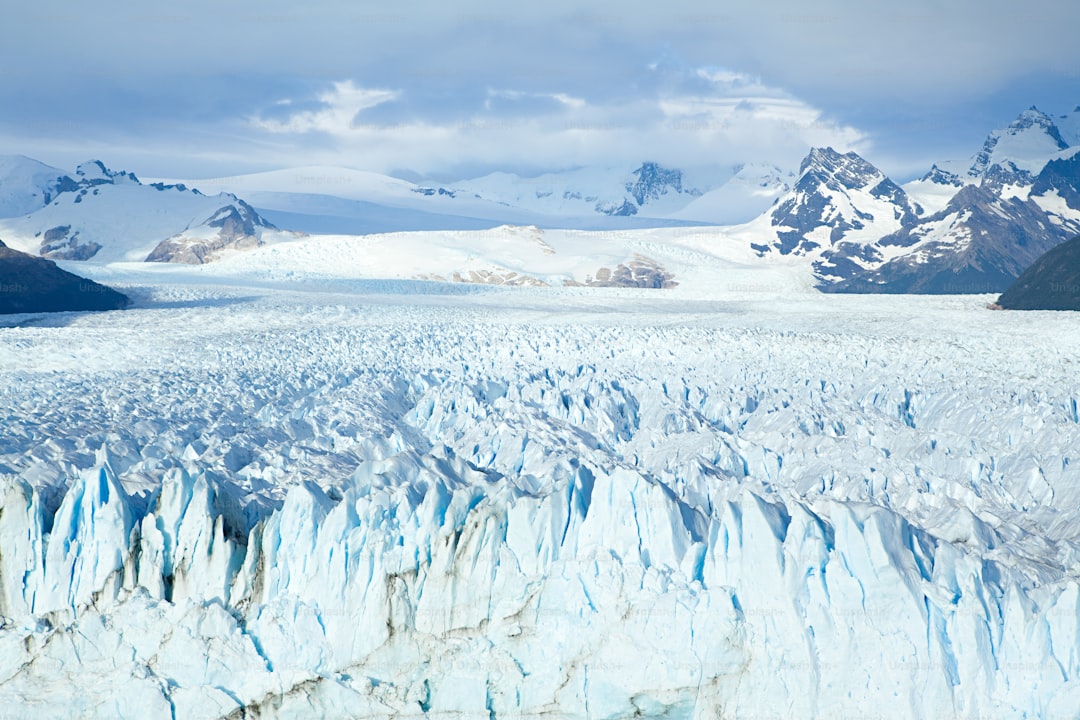
Now, flip the continent to Patagonia, and you get a completely different kind of natural engineering. The Perito Moreno Glacier is one of the few advancing glaciers left on Earth—most are retreating, but this one pushes forward by up to two meters per day. Think about that for a second: a wall of ancient compressed ice standing 70 meters above the water's surface, with another 120 meters hidden below the lake. The iconic blue color you see in every photo? That's from the ice being so densely compressed that it absorbs all light except the blue spectrum. What really gets me as a researcher is the bigger picture: this glacier is fed by the Southern Patagonian Ice Field, the world's second-largest reserve of fresh water after the Antarctic ice sheet. We're talking about a hydrological system that affects global sea levels and regional climate patterns, yet you can walk right up to its edge and hear it crack and groan like a living creature.
But here's where the comparison gets interesting. Iguazú is about sheer volume and relentless motion—water thundering down every second of every day. The Perito Moreno is about slow, grinding persistence—it periodically creates a natural dam across the Brazo Rico arm of Lake Argentino, and when the water pressure builds up enough, you get these spectacular ice bridge collapses that sound like a freight train derailing. Most travel guides just tell you both are "must-sees," but they rarely unpack why they're complementary experiences. One overwhelms your hearing and vision with constant noise and spray; the other forces you to stand still and watch something move at a pace you can barely perceive. For me, that's the real magic of Argentina's natural wonders: they don't just show you beauty—they teach you different rhythms of time. If you're planning a trip, don't choose between them. Do both, and pay attention to how each one makes you feel small in a completely different way. That's the kind of travel that actually changes how you see the world.
The Heartbeat of Buenos Aires: Tango, Architecture, and Nightlife
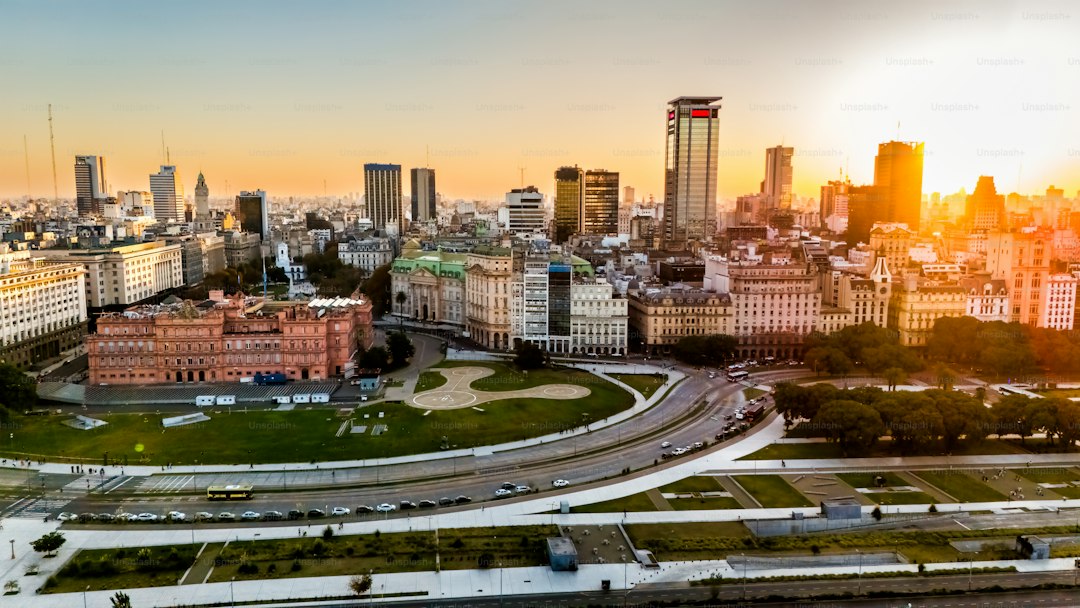
You can’t really say you’ve felt Argentina until you’ve stood on a corner in San Telmo as the sun goes down and the accordion-like sound of a bandoneón starts drifting out of a basement window. That’s the real heartbeat of Buenos Aires, and honestly, it’s way more complex than the postcard version of a couple dancing in a park. We’re looking at a city that functions as a massive open-air museum of European immigration, where the architecture isn't just a backdrop but a physical record of its evolution from a colonial port to a global metropolis. You’ve got this incredible blend of French neoclassical facades and modernist twists that earned it the nickname "Paris of South America," but don't let that fool you into thinking it’s a copy. The Latin American energy here completely overrides the European blueprint, creating a rhythm that’s unique to the Rio de la Plata. If you look at the data, the city’s identity is deeply tied to its geography as a port, which acted as a funnel for global influences and a massive wave of European immigrants in the 19th and 20th centuries. This isn't just history; it’s the raw material that built the social fabric of every neighborhood you’ll walk through.
When it comes to tango, most people make the mistake of only seeing the big staged dinner shows, but as a researcher of urban culture, I have to tell you that’s the equivalent of reading a Wikipedia summary instead of the actual book. The authentic stuff happens in the milongas—the social clubs where the dance is a living, breathing conversation rather than a performance. In places like San Telmo, you’re not just a spectator; you’re in a room where the floor is sacred and the codes of the dance are as strict as any professional guild. I’d argue the pros of hitting these neighborhood-specific venues far outweigh the cons of the comfort found in staged theater productions. You lose the fancy lighting and the English subtitles, but you gain an immersive experience that actually explains the Argentine soul. Tango manifests in two totally distinct forms here: the intimate, almost telepathic social dance and the high-octane professional productions. If you want to understand the city's social hierarchy and its history of marginalization and rebirth, you watch how people move in these rooms. It’s a dense, analytical goldmine for anyone trying to understand how a port city’s struggles turned into its most famous art form.
Then there’s the nightlife, which is where the city’s "Paris of South America" label really gets put to the test against its modern reality. We’re talking about an ecosystem designed to celebrate local community and creativity through a dense network of live music events and specialized bars that often don't even get going until 1:00 AM. Think about it this way: the architecture provides the stage, the tango provides the emotional weight, and the nightlife is the release valve for a city that refuses to sit still. You’ll find that the integration of football culture, tango, and the eclectic building styles creates a unique urban rhythm that defines the daily life of the residents. It’s not just about drinking; it’s about a collective creative output that happens in these specific, often unmarked venues. If you’re planning your trip for 2026, you have to approach this with a researcher’s curiosity. Don’t just hit the landmarks. Go find the basement bars in Palermo or the historic cafes in the center where the waiters have seen a century of political change. That’s where you’ll find the high-signal value that makes a trip memorable. You’re not just visiting a city; you’re stepping into a constant, noisy, and beautiful argument between the old world and the new.
A Culinary Journey Through Argentina: Steak, Wine, and Regional Flavors
Look, I need to be honest with you about something: most people think they understand Argentine food because they've had a steak at a fancy parrilla in Buenos Aires, but that's like claiming you understand jazz after hearing one song on the radio. The real story starts with the beef itself, and the numbers back it up. Argentina's grass-fed Hereford and Angus cattle graze on the natural pastures of the pampas, which means their meat contains significantly higher levels of conjugated linoleic acid and omega-3 fatty acids than the grain-fed stuff you're used to in North America. But here's what really gets me as someone who's spent way too much time studying cooking methods: the quintessential asado isn't even a dish—it's a multi-hour ritual that depends entirely on precise ember management. You're not cooking over direct flames; you're using white-hot coals from quebracho or espinillo wood that burn at a consistent 400–500°C. That's the kind of engineering precision that home cooks and professional chefs alike obsess over, and it's why the texture of a properly grilled Argentine chorizo or entraña is nearly impossible to replicate elsewhere.
Now, let's talk about the wine, because you can't separate the steak from the Malbec and expect to understand the full picture. Mendoza's Malbec vines are planted at altitudes between 600 and 1,200 meters, and that's not just a marketing gimmick—it's a geological and climatological advantage. The intense ultraviolet radiation at those elevations forces the grapes to develop thicker skins, which means deeper color and higher anthocyanin levels than the same grape variety produces in its native France. But here's a detail that most wine guides gloss over: Argentina's wine regions span latitudes from 22°S in Salta down to 42°S in Patagonia, a geographic range that lets harvests occur up to four months apart between the northernmost and southernmost vineyards. In Salta, you've got Bodega Colomé sitting at 3,111 meters above sea level, making it one of the highest commercial vineyards on the planet. The intense diurnal temperature swing there concentrates sugar while preserving acidity, which is a winemaker's dream scenario. And don't sleep on Torrontés, Argentina's signature white grape—it's a genetic cross between the Spanish Muscat of Alexandria and the Criolla Chica grape, first brought over by Jesuit missionaries in the 16th century. That's not just trivia; it's a direct lineage to the colonial trade routes that shaped the country's agricultural identity.
But here's where the regional diversity really starts to challenge your assumptions. The traditional empanada dough changes radically from province to province—in Jujuy they use llama fat, in Salta they enrich it with potato, and in Buenos Aires it's typically a wheat-flour base fried or baked with olives inside. That's not just variation for the sake of it; it's a reflection of the local agriculture and indigenous culinary traditions that survived centuries of immigration. Patagonian lamb, for instance, is roasted whole on a vertical iron cross called an asador criollo, using a wood fire built behind a stone wall to reflect radiant heat. You're cooking for four to six hours with zero direct flame contact, and the result is a tenderness that makes standard oven-roasted lamb taste like a compromise. And then there's dulce de leche, which was apparently invented by accident in 1829 when a maid in General Juan Manuel de Rosas's household left milk and sugar boiling unattended on the stove. I love that story because it's so human—the best things in Argentine cuisine often come from necessity, happenstance, or sheer stubbornness. Yerba mate, with its 1.4% caffeine content, is another example of a ritual that's far more than a beverage: it's a social contract where you share the same gourd and bombilla in a strict rotation, and the person who fails to pass it correctly is basically committing a social faux pas. Argentina is the world's fifth-largest wine producer, but here's the kicker—roughly 85% of its annual output is consumed domestically, with Malbec making up nearly half of the total vineyard area. That means most of the good stuff never leaves the country, and you're doing yourself a disservice if you don't seek out the offal cuts like ubre (cow's udder) and chinchulín (large intestine) at a proper parrilla, where hours of careful grilling transform their high connective tissue into a crisp exterior and creamy interior. So yeah, you can order a steak and a glass of Malbec and call it a culinary journey. But if you're really paying attention, you'll see that every bite, every sip, and every ritual tells you something about the land, the people, and the history that made them.
Adventures in the Andes: Trekking, Skiing, and the Wine Regions of Mendoza
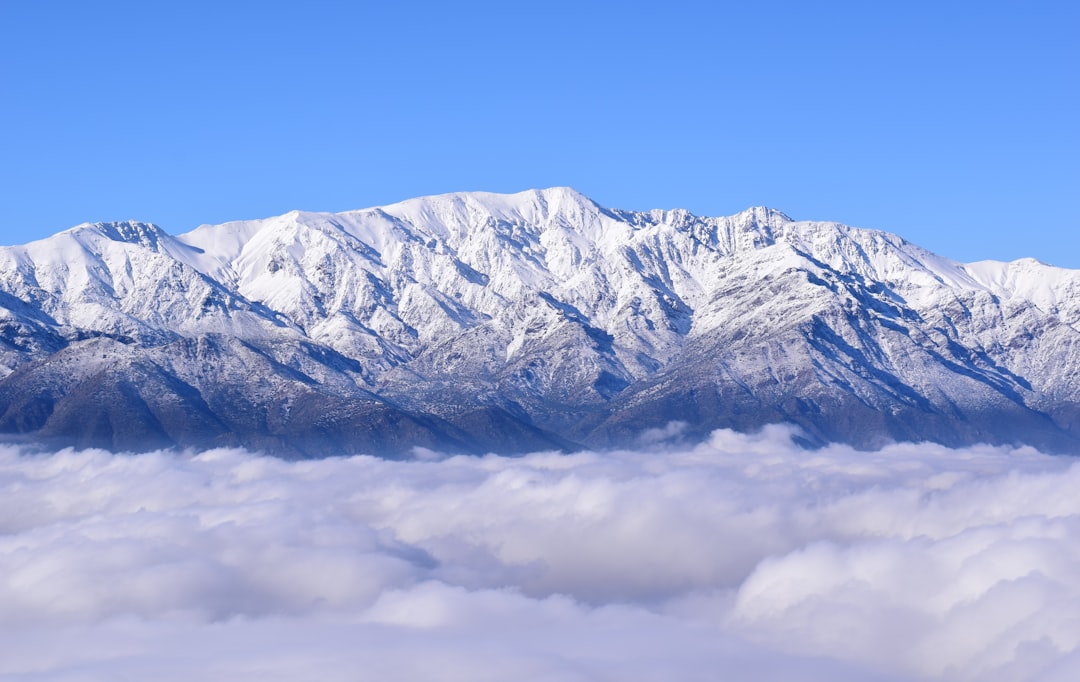
Let’s be real about Mendoza for a second—most people arrive thinking they’re just going to drink Malbec and take a few photos of the mountains, but the Andes here are actually a geophysical laboratory that rewards anyone willing to dig deeper. The Cordon del Plata trek, for instance, offers a direct line of sight to Cerro Aconcagua’s south face, which is almost a vertical granite wall that laughs at hiking boots—you need technical climbing gear just to touch it. That’s the kind of detail that most day-trippers miss because they’re focused on the wine tasting, but the real story is how the entire region operates on a cascade of high-altitude inputs. The Uco Valley’s vineyards sit on alluvial fans formed by glacial moraines, meaning the soil drains so fast that the vines would die without irrigation from meltwater—water that flows through ancient huayco canals dug by the Huarpe people centuries before the Spanish arrived. And here’s the kicker: Mendoza’s wine region gets less than 200 millimeters of rain per year, yet it produces over 70% of Argentina’s wine because eight major rivers fed by Andean snowmelt gravity-feed the entire desert valley without a single pump. That’s not just interesting trivia; it’s a living demonstration of how pre-Columbian engineering and modern viticulture are locked in a hydraulic partnership that’s been running for over 500 years.
Now flip the lens to winter, and the skiing story is equally nuanced. Las Leñas sits at 3,430 meters on its highest lift, which gives it one of the most reliable snowpacks in the Southern Hemisphere because the elevation keeps temperatures below freezing even during warm El Niño years—a huge advantage over lower resorts that get slushy. But the real hidden gem is Vallecitos, the first ski center in Argentina, opened in 1944 just 60 kilometers from Mendoza city, where the original rope tow still runs on a 1942 Ford engine that locals have kept alive for over 80 years. That’s not a museum piece; it’s a functioning piece of mechanical history that tells you more about Argentine resourcefulness than any glossy brochure. And then there’s the Viento Zonda, a dry, warm wind that can spike Mendoza’s temperature by 20 degrees Celsius in under an hour—vintners time their harvests around it because it rapidly concentrates grape sugars, but if it hits too early, it desiccates the berries. It’s a constant gamble between the alpine reliability of the ski season and the desert volatility of the wine season, and both are tied to the same mountain system.
But what really gets me is the ancient infrastructure that still shapes modern adventure. The Inca Trail network in Mendoza includes the Tambo de Picheuta, a pre-Columbian stone way station at 3,100 meters where archaeologists have found maize and quinoa brought from lower altitudes—proof that the Incas managed high-altitude trade routes that predate modern trekking by 500 years. Trekkers in the Potrerillos area often see the rare Andean condor, with a wingspan up to 3.2 meters, using thermal updrafts created by the temperature difference between sunbaked slopes and glacial valleys—essentially the same aerodynamic principle that glider pilots use today. And the trans-Andean railway tunnel at 3,200 meters, once the highest in the Americas, was closed in 1984 after a landslide, but it now serves as a critical migration corridor for guanacos moving between Argentina and Chile, monitored by biologists with camera traps. Whitewater rafting on the Mendoza River adds another layer of complexity—the Potrerillos Dam controls the flow, releasing water on a schedule tied to hydroelectric demand, so rapids can shift from Class III to Class V within an hour depending on when you go. So whether you’re trekking, skiing, or tasting wine, you’re interacting with a system that’s been engineered by geology, history, and human ingenuity for centuries—and the best part is, most tourists never even notice.
Wildlife and Remote Landscapes: The Untamed Beauty of Patagonia and Tierra del Fuego
Let’s be real about Patagonia and Tierra del Fuego: most people picture a postcard of jagged peaks and maybe a penguin or two, but the actual ecological and geological complexity here is mind-blowing once you start pulling at the threads. You’re looking at a region that covers roughly 880,000 square kilometers, which is about a third of Argentina’s total landmass, yet the population density is lower than the Gobi Desert. That alone tells you this isn’t a place you just breeze through—it demands that you respect its scale. The wildlife here has evolved under conditions that would break most species, and the adaptations are nothing short of engineering marvels. Take the guanaco, for instance: its heart is 30% larger relative to its body size compared to lowland mammals, a direct response to the thin, oxygen-poor air at altitudes above 4,000 meters. That’s not a cute fact; it’s a physiological solution to a problem that kills most other animals. And then you’ve got the Magellanic penguin colonies at Punta Tombo, where over 500,000 breeding pairs travel up to 600 kilometers each year to return to the exact same burrow—a homing precision that researchers still can’t fully explain.
Now, here’s where the landscape itself becomes the main character. The Patagonian ice field spans about 16,800 square kilometers and contains over 1,000 individual glaciers, many of which are actively advancing thanks to a unique microclimate created by the Southern Ocean’s cold, moisture-laden winds slamming into the Andes. That’s the opposite of what you hear about most glaciers worldwide, and it makes this region a critical natural laboratory for climate science. The Beagle Channel, named after Darwin’s HMS Beagle, has a tidal range of over 10 meters, and those powerful currents funnel nutrient-rich water that supports one of the densest concentrations of marine invertebrates on Earth. The kelp forests here, dominated by Macrocystis pyrifera, can grow up to 30 centimeters per day and reach lengths over 50 meters, creating a three-dimensional habitat that supports over 200 species of fish and invertebrates. And the marine otter found along these rocky coasts is one of the few fully marine otter species in the world, feeding exclusively on crustaceans and fish in the intertidal zone, with its population density directly correlated to the presence of those giant kelp forests.
But the real kicker is how the climate shapes everything at a fundamental level. Cape Horn experiences an average wind speed of 30 kilometers per hour, with gusts exceeding 100 kilometers per hour on 200 days of the year, and that constant wind has literally sculpted the plants into bonsai-like forms. The southern beech forests, dominated by lenga and ñire trees, are the southernmost forests on the planet and have evolved to survive with less than 600 hours of annual sunshine, relying on their ability to photosynthesize in diffuse, low-angle light. The Strait of Magellan, a 570-kilometer natural passage first navigated in 1520, has a unique salt wedge estuary where freshwater from melting glaciers floats on top of denser seawater, creating distinct layers that harbor completely different plankton communities. And the intense ultraviolet radiation here is so strong that native lichen species have developed unique sunscreen compounds that pharmaceutical companies are now studying for human sun protection. So when you’re standing on a remote coastal ranch in Tierra del Fuego watching shipwrecks rust on dramatic cliffs, or hiking through a lenga forest that looks like something out of a fantasy novel, you’re not just seeing pretty scenery—you’re witnessing millions of years of evolutionary pressure and geological forces that are still actively reshaping the planet. Most tourists snap a photo and move on, but the real value is in understanding how every living thing here, from the Andean condor that can travel 300 kilometers in a day without flapping its wings to the stunted Antarctic beech that lives 500 years at knee height, is a masterclass in survival against the odds.
Practical Travel Tips: Navigating Local Transport, Currency, and Safety
Here's the thing about practical travel in Argentina—most people plan for the sights but completely miss the logistical realities that can make or break your trip before you even get to a glacier. Let me walk you through the transport system first, because it's genuinely one of the most sophisticated in South America but only if you know the code. The SUBE card is your single key to everything, and I mean everything: it uses a near-field communication chip that integrates the buses, the subway, and even some trains into one unified payment system that tracks your transfers and discounts them automatically. You cannot navigate Buenos Aires city efficiently without one, and here's a critical detail most guides skip—you can only reload them at specific kiosks or train stations with cash, so you need to plan that in before your first ride. The Subte itself is the oldest underground railway system in the Southern Hemisphere, opening its first line way back in 1913, and while the cars can feel vintage, the network covers the downtown core with a frequency that rivals most European metros during peak hours. But the real workhorses are the Colectivos, those city buses that run a staggering 24 hours a day on a numbered line system that uses a zoning fare calculation—so a short hop across two neighborhoods costs less than a cross-city diagonal.
Now let's talk about money, because this is where most travelers get burned. Argentina operates a dual currency system that's honestly more like a high-stakes trading floor than a normal economy, with the official government rate and the Blue Dollar rate diverging by sometimes 40 percent or more. The Blue Dollar trades in informal exchange houses called cuevas, and the rate fluctuates daily based on the physical liquidity of US dollar bills in the informal market—crisp, high-denomination $100 bills get you the best rate, while worn or smaller bills get you less. Here's what I'd call a non-negotiable strategy: bring a stack of pristine US $100 bills and exchange about $200 at a time as you go, because Argentine ATMs impose strict daily withdrawal limits for foreign cards that will leave you stranded if you rely on them alone. Cash remains the dominant transaction method in regional provinces, especially once you leave Buenos Aires, because many small vendors and remote restaurants simply don't have the infrastructure for international credit card processing. And do yourself a favor—skip the airport exchange counters entirely, as their rates are terrible, and instead hit a cueva in downtown Buenos Aires once you've settled in, where you'll get the true Blue Dollar rate.
Safety in Argentina is less about violent crime and more about the economics of opportunity, so the strategy is to live low-profile rather than paranoid. Keep your bag in your lap on the Subte, not on the seat next to you or up on the overhead shelf, and keep your phone tucked away when the doors open at busy stations like Callao or 9 de Julio. The ride-sharing apps like Uber and Cabify operate in a fascinating legal grey area here—they compete with licensed taxis in a market where the taxis have powerful union protections, meaning you might get a driver who's nervous about picking you up in certain zones, but the apps do provide a digital paper trail that makes them safer for late-night travel in unfamiliar neighborhoods. Public transport safety follows a predictable curve: it's statistically safest during peak commuting hours when cars are packed and eyes are everywhere, and riskiest late at night in lower-density neighborhoods where pedestrian counts drop.
For long-distance moves, the intercity bus system is where Argentina genuinely excels, with Cama and Ejecutivo seats that recline up to 160 to 180 degrees—literally functioning as beds for overnight hauls from Buenos Aires to Mendoza or Bariloche. But here's a logistical trap: the bus terminals act like massive airport hubs that require your ticket to be printed or digitally verified through a specific QR code system before boarding, and if your phone dies or you can't access the email, you're in for a frustrating conversation with a ticket agent who speaks rapid Spanish. My advice? Print everything at your hotel before heading to the terminal, carry a backup photo of the QR code on a second device, and load your SUBE card with enough balance for at least two days of urban travel before you leave Buenos Aires. The system works beautifully when you respect its quirks, but it punishes complacency hard—so treat your logistics like you're managing a small operation, because in a way, you are.
Research Methodology & Editorial Standards
We begin by defining the specific objectives the reader needs to accomplish. Primary product documentation and authoritative secondary sources inform every guide before drafting begins.
Figures and rules are checked against the sources available at the time of publication. Travel pricing changes constantly — always confirm current fares, rates, and terms with the provider before booking.