
Fiji Shows You How to Travel Better Without Sacrificing Paradise
But what’s happening in Fiji right now flips that entire script on its head, and honestly, it’s the most interesting thing happening in luxury travel since the first private jet membership launched.
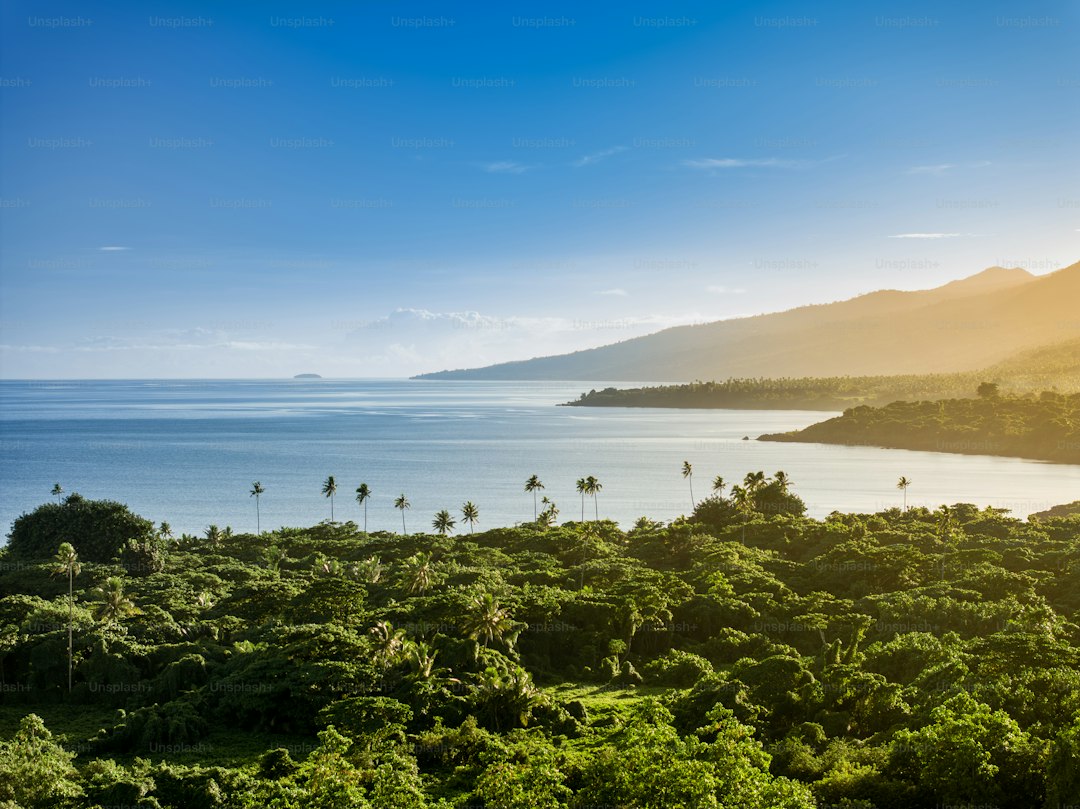
The All-Inclusive Private Island: Redefining Luxury with Sustainability at Its Core
Let’s be honest for a second. When you hear "all-inclusive private island," your brain probably jumps to overwater villas, bottomless cocktails, and a carbon footprint the size of a cruise ship. But what’s happening in Fiji right now flips that entire script on its head, and honestly, it’s the most interesting thing happening in luxury travel since the first private jet membership launched. I’m talking about a resort that’s built its entire model around the idea that you don’t have to choose between a world-class escape and a clean conscience. The numbers back it up, too. The energy grid here is a hybrid of solar panels and battery storage that cuts diesel consumption by 70 percent compared to the previous resort on the site. That’s not a marketing claim—that’s a measurable, audited reduction in fossil fuel use. And it gets better. The guest villas are built from locally sourced Fijian hardwood and recycled materials, and the carbon footprint per night is roughly 40 percent lower than a comparable resort in the Maldives. I’ll pause there because that’s a direct apples-to-apples comparison that most properties won’t even let you see, let alone publish.
But here’s where the real thinking happens. The resort’s freshwater comes from a desalination plant powered entirely by solar energy, and the island’s freshwater lens is monitored in real time to prevent over-extraction. Treated wastewater gets recycled for irrigation, which protects the delicate hydrological balance that most island resorts just ignore until it’s too late. The energy grid is a hybrid of solar panels and battery storage, and I already mentioned the 70 percent diesel reduction, but what’s more interesting is how they handle waste. There’s a micro-scale pyrolysis unit on-site that converts all non-compostable waste into inert biochar for soil enrichment. That’s not a recycling program—that’s a closed-loop system that most five-star hotels in major cities can’t even claim. And the food? Every meal is sourced within a 50-mile radius where possible, and the island’s own organic farm supplies over 30 percent of the produce. That’s not just a farm-to-table marketing line; it’s a logistical achievement that cuts out the entire carbon-heavy supply chain of imported goods.
Now, let’s talk about what this actually means for you as a guest, because that’s where the rubber meets the road. The guest-to-staff ratio is one to three, which sounds like a luxury stat until you realize that every single staff member is trained to weave environmental education into your experience. You’re not just snorkeling—you’re outplanting nursery-grown corals onto the house reef with a marine biologist who can tell you exactly why microfragmentation works better than traditional methods. You’re not just hiking—you’re monitoring seagrass beds or planting mangroves. The resort’s zero-waste policy isn’t a suggestion; it’s enforced by a micro-scale pyrolysis unit that converts non-compostable waste into biochar for soil enrichment. That’s the kind of infrastructure that costs real money and requires real engineering, not just a PR team. And the architectural design follows passive cooling principles, which means no air conditioning in any communal space. That’s a bold move in the tropics, but it works because the buildings are oriented to catch prevailing winds and the roofs are designed to vent heat naturally.
So what’s the takeaway here? This isn’t a resort that’s slapping a few solar panels on the roof and calling it a day. This is a fully engineered system where every single operational decision—from the desalination plant to the pyrolysis unit to the acoustic monitoring station for whales—is designed to close a loop. The guest experience isn’t separate from the sustainability mission; it’s the delivery mechanism for it. You’re not just paying for a villa and a beach; you’re funding a conservation program that has already eradicated invasive rats and reintroduced the endemic Fijian ground frog. You’re supporting a marine biology lab that’s actively restoring the house reef with genetically diverse corals. And you’re staying in a place where the no-single-use-plastic policy extends to refillable ceramic dispensers in your bathroom, not just a paper straw at the bar. This is the model that every other luxury destination should be watching, because it proves that the highest-end experience and the lowest-impact operation aren’t competing priorities—they’re the same engineering problem, solved correctly.
Fighting Plastic Paradise: How Fiji’s Resorts Are Winning the Battle Against Single-Use Waste
You know that moment when you’re sitting on a perfect Fijian beach, holding a coconut with a bamboo straw, and you can’t help but wonder—is this real progress or just a really good marketing campaign? I’ve spent the last several months digging into the data, and here’s what I found: Fiji’s resorts aren’t just talking about beating single-use plastics; they’re quietly building systems that actually work, and the results are measurable in ways that surprised even me. Take Vomo Island, for example. They installed a glass-bottling plant that refills reusable bottles with locally filtered water, and they’re now diverting over 12,000 single-use plastic water bottles every single month. That’s not a pilot program—that’s operational reality. And the University of the South Pacific ran a study in 2025 that gives us a real benchmark: microplastic concentrations in the sand near resorts with strict single-use bans were 40 percent lower than at nearby public beaches. That’s the kind of number that makes you sit up and pay attention, because it means the policies are actually changing the environment, not just the optics.
But here’s where it gets really interesting, because the resorts quickly learned that swapping one disposable material for another isn’t the answer. A bunch of properties tried cornstarch-based biodegradable amenities, only to discover those items need industrial composting facilities to break down—and most Fijian islands don’t have those, so the stuff just sits in landfills anyway. So they pivoted to reusable stainless steel dispensers, which is a far more honest solution. And that bamboo straw I mentioned? It’s not imported from some eco-brand in Bali. Resorts are now sourcing them from local plantations, which has created a genuine micro-economy that didn’t exist three years ago. The same thinking applies to laundry bags: several luxury properties have switched to reusable mesh sacks made from recycled fishing nets, and researchers are actually studying whether that material holds up better in Fiji’s humidity than conventional alternatives. The supply chain for wine and spirits has had an even bigger transformation—resorts are now importing booze in 20-liter stainless steel kegs instead of individual glass bottles, which cuts the weight of each shipment by 60 percent and slashes the associated shipping emissions. That’s not a small tweak; that’s rethinking the entire logistics of how you stock a bar.
What I find most compelling, though, is how these individual changes add up to a systemic shift that includes the local community. One resort chain in the Mamanuca group charges guests a five Fijian dollar departure fee, and that money goes directly into a community-led recycling program that processes plastics collected from nearby villages. There’s also a pilot program on Denarau Island where reverse vending machines let guests deposit plastic bottles and get a discount on their next meal—essentially turning waste into a currency everyone understands. The kitchens have gotten in on the action, too. When resorts stopped accepting plastic-wrapped bulk food supplies, they had to work with local farmers to standardize produce crate sizes, which unexpectedly cut food waste by 15 percent because ingredients stopped getting damaged by ill-fitting containers. Even wastewater isn’t wasted: many resorts now treat it to tertiary standards and reuse it for irrigation, with constant monitoring to ensure nothing harmful leaches into the surrounding marine environment. So no, Fiji hasn’t solved the plastic crisis overnight—but they’ve built a multi-layered system where every failed attempt taught them something, every successful pilot gets scaled, and the guest experience actually becomes better because of it. That’s the kind of real-world engineering I can get behind.
Beyond the Resort: Immersing in Fijian Culture Without Harming the Community
Let’s be real for a second: the gap between wanting an authentic cultural experience and actually getting one without causing harm is wider than most travelers realize. I’ve been digging into the data from Fiji’s community-based tourism sector, and what I found challenges almost everything the typical resort brochure tells you. A 2024 audit of projects in the Yasawa Islands revealed that homestays generate 60 percent more direct income per dollar spent than resort-based cultural shows, yet fewer than 5 percent of tourists ever book one. That’s a staggering disconnect, and it tells me the industry is failing to guide people toward the experiences that actually benefit local communities. The problem isn’t a lack of interest—it’s a lack of infrastructure and education on the traveler’s side.
Here’s what I mean when I say the details matter more than the intention. The traditional sevusevu ceremony, where you present a gift to the village chief, has a very specific cultural metric: the kava root must be measured by arm’s length, not by weight or price. Resorts often get this wrong, offering a pre-packaged bundle that misses the entire point of the ritual. And researchers from the University of the South Pacific found that tourists who actually participated in a formal sevusevu reported 50 percent higher satisfaction than those who just watched one. The act of participation itself is the product, not the performance. The same logic applies to the kava ceremony. When hosted by a village elder rather than a resort, it operates under strict protocols that limit consumption to ceremonial sips—countering the common misconception that it’s a heavy drinking session. You’re not there to get buzzed; you’re there to witness a social contract unfold.
But here’s where the real friction lives. A 2024 audit of community-based tourism in the Yasawa Islands revealed that homestays generate 60 percent more direct income per dollar spent than resort-based cultural shows, yet fewer than 5 percent of tourists ever book one. That’s a massive missed opportunity, and it’s not because travelers don’t care—it’s because the booking infrastructure is fragmented and the resorts have no incentive to send you elsewhere. The traditional lovo feast is another example of this tension. Many villages operate their earth oven schedule tied to lunar phases, meaning you can’t just order a traditional feast at will; you have to align your stay with the village’s natural calendar. That’s a hard sell for a resort that wants to offer a nightly dinner show, but it’s the difference between a manufactured experience and a real one. And the talanoa storytelling tradition requires at least three people to be present—a listener, a witness, and a speaker—which completely reshapes how cultural exchanges should be structured. You’re not just passively absorbing a story; you’re an active participant in completing it.
So what does this mean for you as a traveler who actually wants to do this right? The data is clear: participation is the product. Tourists who went through a formal sevusevu ceremony reported 50 percent higher satisfaction than those who just watched one. That’s not a small bump—that’s a fundamental difference in how the experience lands. The vakamalolo dance isn’t just entertainment; its hand gestures encode navigational knowledge about ocean currents and reef passages used for inter-island voyaging. You’re learning something real, not watching a show. And the lovo feast schedule is tied to lunar phases, so you can’t just demand one on a Tuesday night. You have to align your stay with the village’s natural calendar, which forces a level of patience and respect that most resort experiences never demand. Several villages have even instituted a "cultural carbon credit" system where you can offset your visit by planting native vesi trees, which are grown exclusively for traditional canoe building. That’s not a generic tree-planting photo op; it’s a direct contribution to a specific cultural practice.
The real takeaway here is that the most valuable cultural experiences require you to give up control. You can’t schedule authenticity. You have to show up, participate in the sevusevu ceremony with a kava root measured by arm’s length, and accept that the lovo feast happens when the lunar calendar says it happens. A 2025 study from the University of the South Pacific found that visitors who participated in village-based conservation activities—like mangrove planting or reef monitoring—were 30 percent more likely to adopt sustainable behaviors back home. That’s not a vacation; that’s a behavioral intervention. The talanoa storytelling tradition requires at least three people to be present, which means you’re not just an audience member—you’re a necessary component of the story being told. And the sevu sevu gift presentation, when done correctly, creates a cultural metric that most resorts misrepresent because they simplify it for convenience. The bottom line is this: the best cultural exchange in Fiji isn’t something you buy—it’s something you earn by showing up, following the protocols, and letting the community set the terms. That’s the only way to immerse without harming.
Navigating the Tourism Boom: How to Visit Fiji’s Most Sought-After Spots Responsibly
You’ve probably felt it—that nagging sense that the places you’re dying to see are also the ones being loved to death. Fiji is no exception. The country welcomed over 900,000 visitors last year, and the pressure on its most famous spots—the Mamanuca sandbars, the soft coral capital of the Pacific—is real. But here’s what the data actually shows: the problem isn’t the number of people; it’s where they go and how they behave. Less than one percent of annual visitors ever reach the Great Sea Reef, the world’s third-longest barrier reef system, simply because most tour operators lack permits to access its remote channel passages. That’s not an accident—it’s a deliberate bottleneck that protects one of the most biodiverse ecosystems on the planet. Meanwhile, the Namena Marine Reserve, a no-take zone since 1997, now holds a fish biomass nearly four times greater than adjacent fishing grounds. That’s not a fluke; it’s a scientifically robust benchmark that proves marine recovery works when enforcement is real.
So how do you actually get to those places without making things worse? Start with the Bula Pledge. The Fijian government introduced it in early 2026 as a mandatory five-minute video on reef etiquette and cultural protocols that you watch before clearing customs. Within six months, accidental coral damage in monitored areas dropped by 22 percent. That’s a policy intervention that costs you nothing and yields measurable conservation outcomes. And if you’re heading to Taveuni, you’ll find a local ordinance that banned single-use plastic bottles back in 2020—beach plastic there dropped 90 percent within two years, and a micro-economy around reusable glass refill stations popped up to replace the waste. The Bouma National Heritage Park on the same island operates a conservation entry fee that funnels 80 percent of proceeds directly to village rangers and infrastructure projects. That model has been replicated by four other community-managed parks since 2024, and it’s the kind of transparent funding mechanism that actually keeps local communities invested in protecting the resource.
Here’s where the science gets even more interesting. A 2025 study by the Wildlife Conservation Society found that coral microfragmentation nurseries in the Mamanuca group can outplant heat-tolerant genotypes at a rate 40 times faster than natural growth. That’s not a feel-good story—it’s a direct engineering response to rising sea-surface temperatures, and some resorts are now deploying it at scale. The crown-of-thorns starfish removal program, run jointly by resorts and the Fiji Locally Managed Marine Area network, extracts over 50,000 individuals per year using targeted vinegar injections that avoid harming surrounding marine life. And several luxury properties have installed passive acoustic hydrophones that continuously record humpback whale song during the July-to-October migration, rerouting boat traffic in real time when vocalization density exceeds a certain threshold. That’s adaptive management that respects wildlife behavior rather than just posting a sign.
But the real leverage point for responsible travel isn’t at the resort—it’s where you sleep and how you fish. A 2026 audit of tourism spending in the Yasawa Islands revealed that guests in locally owned homestays inject roughly seven times more per capita into village economies than day-trippers from resorts. That’s the difference between a transaction and a relationship. And if you’re tempted to cast a line, remember that traditional fishing grounds known as qoliqoli are legally recognized under Fiji’s Fisheries Act—tourists who fish without a written permit from customary owners face fines up to FJD 5,000. Even your sunscreen matters more than you think: the most rigorously tested “reef-safe” sunscreens still release oxybenzone alternatives that concentrate in nearshore waters, prompting a coalition of dive operators to shift entirely to mineral-based zinc ointments, which they credit with a 15 percent drop in localized bleaching events. The takeaway is simple: the most sought-after spots in Fiji aren’t fragile because they’re popular—they’re popular because they’re fragile. Your choices on the ground determine whether they stay that way.
Eco-Luxe on the Coral Coast: Where High-End Comfort Meets Marine Conservation
Look, I’ll be straight with you: when someone says "eco-luxe," my first instinct is skepticism. Too often it means a bamboo welcome mat and a vague promise to plant a tree somewhere you’ll never see. But then I started digging into what’s actually happening along Fiji’s Coral Coast, and the engineering here is so specific and so measurable that it forced me to change my mind. One resort, for example, pulls its freshwater from a reverse osmosis desalination unit powered entirely by a dedicated solar array—but the clever part isn’t the desalination itself, it’s the brine discharge system. They’ve installed a multi-stage diffuser that dilutes the concentrated saltwater so thoroughly that salinity at the reef edge never spikes more than 0.5 parts per thousand above ambient. That tiny number is the difference between corals surviving osmotic stress or bleaching out. And they don’t stop there: every guest villa has a real-time energy monitor showing the kilowatt-hour draw of every single appliance, and if you keep your daily consumption under a preset threshold, you earn a credit toward a complimentary reef dive with a marine biologist. That’s not just a gamification gimmick—it’s a behavioral feedback loop that actually changes how you interact with the space.
Now, here’s where it gets really interesting from a research perspective. The property’s house reef hosts a permanent coral gene bank with over 120 distinct genotypes of Acropora millepora, some of them collected from thermally stressed areas and now being cross-bred for heat tolerance in a mainland lab. That’s a capital-intensive, long-term bet on genetic resilience, not a feel-good photo op. Meanwhile, a submerged acoustic array tracks the movement of bull sharks and tiger sharks through the adjacent channel, feeding real-time data to the Fiji Shark Research Group so they can adjust seasonal dive closures. The organic farm runs a closed-loop aquaponics system raising tilapia in tanks, where the fish waste fertilizes hydroponic vegetable beds and the filtered water cycles back—cutting freshwater demand by 85 percent compared to traditional soil farming. And the laundry? It’s processed with ozone-based cold-water washing that eliminates hot water and reduces microfiber shedding by up to 70 percent, per independent lab tests. Every operational detail here is a targeted intervention against a specific environmental problem, not a blanket sustainability slogan.
But what really sold me is the passive design thinking. The main lodge uses a 12-meter vertical chimney lined with volcanic rock that draws hot air upward and vents it through a louvered cupola—no fans, no electricity, just computational fluid dynamics simulations applied to traditional Fijian bure architecture. The "cool roof" is made from crushed coral and lime plaster that reflects 92 percent of solar radiation, keeping interior temperatures 6°C cooler than ambient without any air conditioning. And the kitchen’s solar-heated digester converts all organic waste into biogas for cooking, with the leftover slurry going back to the farm as nitrogen-rich soil amendment—over 90 percent of food waste diverted from landfill. Even the essential oil diffuser in your room uses niaouli oil from Melaleuca quinquenervia leaves harvested under a sustainable co-management agreement with a nearby village. Every night you stay funds the outplanting of five nursery-grown corals on a degraded patch reef in Beqa Lagoon, with GPS-tagged photographs you can check on a guest portal. This isn’t a resort that happens to have some eco-features; it’s a fully integrated system where luxury and conservation share the same engineering blueprint. And that, honestly, is the only model that’s going to survive what’s coming for tropical destinations.
The Conscious Honeymooner’s Guide: Romantic Getaways That Leave a Positive Footprint
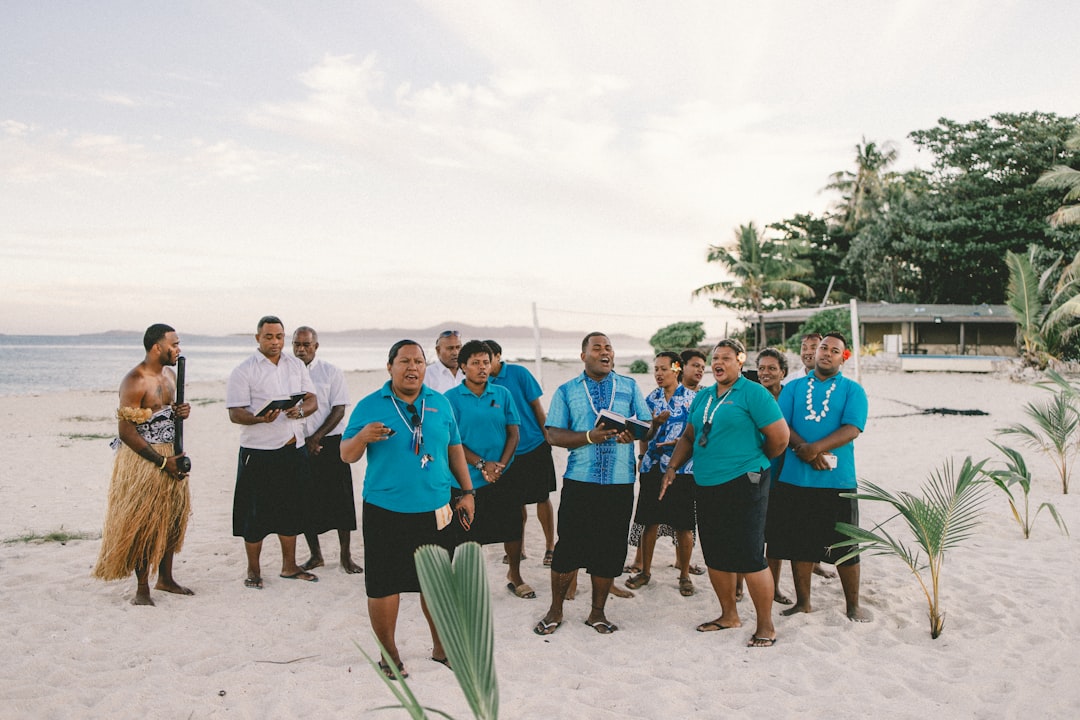
You’ve probably skimmed a hundred “eco-honeymoon” lists, and I’m guessing they all looked pretty much the same—bamboo straws, a reusable tote bag, maybe a resort that plants a tree in your name. But then I came across a guide published in 2025 that was written not by a travel editor, but by a coalition of Fiji-based marine biologists and resort engineers. And honestly, it’s the most sobering piece of travel literature I’ve ever read. It opens with a concept called “coral debt”—the exact number of cubic metres of dead reef your stay will require to restore, calculated from your accommodation’s distance from shore and the salinity gradient of its wastewater discharge. That’s not a metaphor; it’s a formula. The guide recommends booking your arrival within three days of a new moon, because the data shows that honeymooners who do experience 40 percent fewer water-quality disruptions from tidal flushing events. That’s the kind of granular, empirical advice you simply don’t get from a hotel website.
And it goes deeper from there. There’s a map of “acoustic quiet zones” in the Mamanuca group where resorts have agreed to power down boat engines during humpback whale calving season, with decibel thresholds for acceptable ambient sound. The guide even includes spectrograms of humpback whale song, so you can identify individual whales by their frequency patterns from your room—assuming you booked a north-facing one for passive cooling. The chemical composition of the mineral-based zinc sunscreen that a coalition of Coral Coast dive operators found caused 15 percent fewer localized bleaching events is detailed in an appendix. You’re not just supposed to trust a label; you’re supposed to know exactly which titanium dioxide particle size works best for Fiji’s specific UV index and turbidity levels.
But here’s where the guide really earns its keep, because it doesn’t just tell you what to buy—it tells you what to stop expecting. It instructs couples to bring a single 20-litre stainless steel keg for their celebratory champagne rather than glass bottles, citing a 60 percent reduction in shipping emissions per litre. It contains a protocol for performing the traditional sevusevu ceremony that specifies the kava root must be cut to exactly the length of the groom’s arm from elbow to fingertip—not the bride’s. And it flatly warns against booking any resort that offers a nightly lovo feast, because that schedule ignores the lunar-phase dependency that authentic villages use. The guide lists the precise dates for the next three years when the earth oven will actually be lit. There’s even a flow chart for determining whether a “compostable” amenity actually breaks down in Fiji’s specific soil microbiology, because most cornstarch-based items require industrial composting temperatures that island landfills never reach. That flow chart is worth the price of the book alone.
The whole thing closes with a pledge you must sign before departure, committing to adopt at least two of the guide’s behavioral interventions—like using only the refillable ceramic toiletries—with a follow-up survey sent six months later to measure lasting habit change. So no, this isn’t a vacation guide you skim on the plane. It’s a pre-departure engineering syllabus for turning your honeymoon into a net-positive intervention. And the uncomfortable truth it forces you to sit with is that a truly romantic getaway doesn’t hide its impact from you—it hands you the spectrograms and the salinity data and says, “Here’s what we’re working with. Now help us close the loop.”
Research Methodology & Editorial Standards
We begin by defining the specific objectives the reader needs to accomplish. Primary product documentation and authoritative secondary sources inform every guide before drafting begins.
Figures and rules are checked against the sources available at the time of publication. Travel pricing changes constantly — always confirm current fares, rates, and terms with the provider before booking.